

Reviewed · CALLIGRAPHY CLASSES IN BEIJING
Noon Calligraphy Class
Chinese calligraphy turns a simple writing lesson into a quiet cultural activity. At Hutong Calligraphy Class, you learn how brush pressure, ink, rhythm, and space shape each character, then practice your own strokes on rice paper.
I like the central Wangfujing location, which makes this an easy add-on to a day in Beijing. I also like the patient, personal teaching style described by instructors Richard and Li, especially the chance to practice before producing a final piece. The main consideration is time: one hour gives you a pleasant introduction, but not enough room to master a difficult art.
Key points
- Practice before your final piece: You get time to work on basic strokes before creating something to take home.
- Choose your class length: Booking options include 30 minutes, one hour, and 1.5 hours.
- Learn the tools, not just the characters: The lesson covers brushes, rice paper, ink, ink stones, and seal carvings.
- Easy central meeting point: The class meets at Hilton Beijing Wangfujing, at No. 8 Wangfujing Dongjie.
- A calm rainy-day activity: The indoor lesson works well when Beijing weather spoils outdoor plans.
- Small enough to ask questions: The class has a maximum of 15 people and is led by an art teacher.
Why Chinese calligraphy makes a good Beijing activity
Calligraphy is not simply Chinese handwriting with a special brush. It is an art form in which the movement of your hand remains visible in every mark. The brush leaves evidence of speed, pressure, rhythm, and confidence, so even a beginner can see how the writing was made.
That makes this class more rewarding than a quick demonstration. You are not only looking at finished characters. You are handling the tools, making mistakes, repeating strokes, and slowly gaining control. The process gives you a small, practical connection to Chinese culture rather than another passive sightseeing stop.
I especially like the way the activity links language and movement. If you are learning Mandarin, writing a character by hand can help you pay closer attention to its structure. If you do not speak Chinese, you can still appreciate the visual form and the meaning behind the words you write.
The class is suitable for adults and children, but children must be accompanied by an adult. Most people can participate, and the maximum group size is 15. That is not a private lesson, yet it is limited enough for questions and individual guidance.
More Calligraphy Classes in Beijing
- Beijing Calligraphy Class
★ 4.9 · 112 reviews - Chinese Calligraphy Class for Small Group
★ 5.0 · 104 reviews - Beijing Historic City Guided Walking Tour + Calligraphy Creation
★ 5.0 · 59 reviews
Arriving at Wangfujing Dongjie
The meeting point is the Hilton Beijing Wangfujing, at No. 8 Wangfujing Dongjie in Dongcheng District. The Chinese address is 北京东城区王府井东街8号. It is near public transportation, so you can fit the lesson into a wider day in central Beijing without arranging a separate long transfer.
The location is useful for planning. You could schedule the class around a visit to Wangfujing, nearby central sights, or a meal in the area. Since the activity ends back at the meeting point, you are not left searching for a different exit or transport connection afterward.
Give yourself enough time to find the meeting point. The address is clear, but large hotels can have more than one entrance and a busy surrounding area. Your confirmation arrives at booking, so keep the meeting details available on your phone.
Several class times are offered during the day. That flexibility matters in Beijing, where sightseeing plans often change because of weather, crowds, or long distances between sights. The activity is marketed as a noon class, but the schedule includes multiple daily starting times, so check the exact option you select.
The first brush strokes
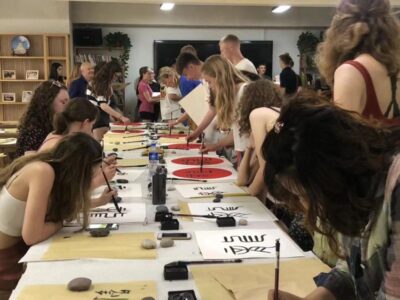
The teacher begins by introducing the basic materials. You learn about the brush, rice paper, ink, and ink stones, along with the role of seal carvings in Chinese calligraphy. These details help explain why the finished work looks the way it does.
The brush is less predictable than a pen. A light touch can create a thin line, while more pressure produces a heavier mark. Ink can appear dark and firm in one stroke, then softer as the brush loses moisture. You are learning to control several things at once, which is why the opening practice matters.
This is also where the class can reset your expectations. You may arrive thinking that writing a few characters will be easy. It is not. The difficulty is part of the fun, because the exercise quickly shows how much control and timing the art requires.
You should expect instruction rather than a free-form craft session. The teacher demonstrates the method, answers questions, and gives you time to repeat it. Richard is described as kind and informative, while Li is praised for clear, practiced instruction that helps you accomplish a lot in a short period.
The teaching style appears especially helpful for beginners. You do not need prior calligraphy experience, and the point is not to produce museum-quality work. The aim is to give you a feel for the tools and a finished example that reflects what you learned.
From practice strokes to a finished piece
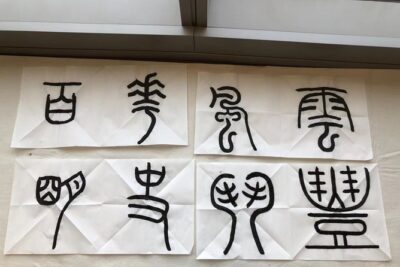
After the basic exercises, you work toward a final piece. This progression is important. You get to make errors on practice paper instead of putting your first uncertain strokes straight onto the work you plan to keep.
The final work gives the class a clear purpose. You are not simply filling an hour with brush exercises. You are building toward something tangible that you can take home, which also makes the activity appealing for families and couples.
The words you write may carry meaning beyond their visual shape. One particularly useful part of the teaching is the explanation of the deeper meaning behind the characters. That context helps you remember the lesson and gives the finished paper more personal value.
Still, keep your expectations realistic. One hour is enough for an introduction and a final piece, not for a full study of Chinese calligraphy. The art depends on steady practice, and even a careful beginner may produce uneven lines. That is normal. The finished work is a souvenir of the experience, not a professional commission.
If you want more time with the brush, choose the 1.5-hour option. The 30-minute session may suit a tight schedule or a younger child, but it will naturally allow less practice. The one-hour class is the middle choice and probably the best fit for most visitors.
Same base, a completely different kind of day out:
- From Beijing: Mutianyu Great Wall Tours with Options
★ 4.9 · 9,216 reviews - Beijing: Forbidden City Tour(Group/Private)-Tickets Included
★ 4.8 · 7,974 reviews - Beijing: T-Square & Forbidden City Group or Private Tour
★ 4.8 · 4,446 reviews - Beijing: Mutianyu Great Wall Daily Tour with Ticket & Lunch
★ 5.0 · 3,056 reviews
A quiet break from sightseeing
Beijing sightseeing can be intense. You may spend hours walking through large public spaces, museums, historic sites, and busy commercial areas. Calligraphy offers a very different pace. You sit down, focus on one stroke, and let the rest of the city wait for a while.
That calm quality is one of the strongest reasons to book this activity. The lesson has been described as almost meditative, with a relaxed mood that becomes quieter as the group settles. You do not need to treat it as a formal meditation session, but the concentrated brushwork can provide a welcome pause.
It also works well on a rainy day. You do not lose a major sightseeing opportunity by choosing an indoor class, and you still spend your time learning something closely tied to China. The experience can be especially useful for a travel day when outdoor plans are less appealing.
The atmosphere is not necessarily silent from the beginning. There may be excitement as people arrive and try the materials. The class then moves toward a calmer rhythm as you begin writing. That change gives the lesson a natural shape, from curiosity to concentration.
What the price includes at $20
At $20 per person, the class is priced as a modest cultural activity rather than a full-day tour. You are paying for the teacher’s instruction, use of the calligraphy supplies, and access to a central Beijing experience that takes about an hour.
The value depends partly on your choice of duration. The one-hour class offers a sensible balance between cost and substance. The 30-minute session may be enough if you mainly want to try the brush and make a quick souvenir. The 1.5-hour option should give you more room to repeat strokes and ask questions, although the supplied information does not specify a separate price for each length.
The supplies matter. You do not need to carry brushes, ink, rice paper, or an ink stone through China, then work out how to use them on your own. The materials are provided during the class, and your final piece can go home with you.
Group discounts are available, which may improve the value for families or larger parties. The maximum group size is 15, so this is not guaranteed to feel private. For a more personal experience, choose a time with fewer bookings if that option is visible when you reserve.
The price does not include other expenses. Plan for your own transportation beyond reaching the meeting point, food, drinks, or any additional activity you add to the day.
Who will enjoy this class most
I would recommend this class to you if you want a cultural activity that is hands-on but not physically demanding. It suits first-time visitors, Mandarin learners, couples, families, and anyone who wants a small souvenir made through personal effort.
It is also a good match for art-minded people. You do not need to be able to draw, but you should enjoy careful repetition and the challenge of making small changes with your hand. The lesson rewards patience more than talent.
Families should note the adult supervision rule for children. The class works for children, but a parent or other adult must stay with them. Younger children may prefer the 30-minute option, while older children with more patience may get more from the one-hour lesson.
I would be more cautious about booking it if you want a long, technical workshop or a detailed study of the Chinese writing system. The class is an introduction. You will learn the basic ideas and make a piece, but you will not become an expert in a single visit.
It may also be less appealing if you want a fast-moving tour with several sights. This is a seated activity focused on one art form. Its value comes from slowing down, not from covering a lot of ground.
How the class compares with ordinary souvenirs
Beijing has no shortage of souvenirs. Many can be bought in minutes. Calligraphy gives you something different because you take home an object connected to your own effort.
The final piece may not be perfect, and that is part of its appeal. You can remember the brush pressure, the careful strokes, and the moment the characters began to look more controlled. The item carries a story that a shop-bought souvenir does not.
The lesson also helps you notice calligraphy elsewhere in China. After practicing brushes and ink, you may look more closely at signs, scrolls, seals, and decorative writing. Even a short introduction can change how you see an art form that might otherwise seem mysterious.
For Mandarin learners, the class adds a physical element to vocabulary study. You are not only hearing or repeating a word. You are learning how its written form is built and how its meaning can be represented through character and composition.
Booking details and cancellation
You can choose from multiple daily class times, then select a 30-minute, one-hour, or 1.5-hour session when booking. The advertised experience lasts about one hour, so check your selected duration carefully before confirming.
Your booking confirmation is issued at the time of reservation. Mobile tickets are accepted, and the meeting point is the Hilton Beijing Wangfujing. The activity returns to that same point when finished.
Free cancellation is available if you cancel at least 24 hours before the local start time. A cancellation made less than 24 hours before the start does not qualify for a refund, and changes within that period are not accepted.
The experience is booked, on average, nine days in advance. That does not guarantee that every class fills early, but it is a useful reason to reserve ahead if your Beijing schedule is fixed or you need a particular time.
Should you book the Hutong Calligraphy Class?
Book it if you want a short, affordable cultural activity that gives you something to do, learn, and take home. The central location, supplied materials, flexible class lengths, and patient instruction make it easy to add to a Beijing itinerary.
I would choose the one-hour session for most people. It should give you enough time to learn the materials, practice the basic strokes, ask questions, and create a final piece without taking too much time from sightseeing. Choose 1.5 hours if you enjoy slow practice, and 30 minutes only if your schedule is tight.
This is not a replacement for a major Beijing sight. It is a thoughtful pause between them. If the idea of learning to write again with a brush sounds appealing, the $20 price offers good value and a memorable way to connect with Chinese culture.
FAQ
Where does the calligraphy class meet?
It meets at Hilton Beijing Wangfujing, No. 8 Wangfujing Dongjie, Dongcheng District, Beijing, China.
What is the Chinese address?
The Chinese address is 北京东城区王府井东街8号.
How long does the class last?
You can choose a 30-minute, one-hour, or 1.5-hour class when booking. The advertised experience is approximately one hour.
What does the class cost?
The listed price is $20 per person.
Are calligraphy supplies provided?
Yes. Supplies for use during the class are included.
What materials will I learn about?
The lesson covers brushes, rice paper, ink, ink stones, and seal carvings.
Can children join the class?
Yes. Children can participate, but they must be accompanied by an adult.
How many people can join the class?
The activity has a maximum group size of 15 people.
Is the class near public transportation?
Yes. The meeting point is near public transportation.
Can I cancel for a refund?
Yes, if you cancel at least 24 hours before the experience start time. Cancellations made less than 24 hours in advance are not refunded.
More Calligraphy & Painting Classes in Beijing
- Beijing Wangfujing Calligraphy Class by Forbidden City
★ 5.0 · 58 reviews - Beijing Culture: Tea Ceremony, Heritage Instrument & Calligraphy
★ 5.0 · 57 reviews - Beijing Wangfujing Calligraphy Class Nearby Forbidden City
★ 5.0 · 56 reviews - Discover Old Beijing: Hutong Walking Tour & Calligraphy
★ 4.3 · 24 reviews
Newly listed around Beijing
- Private Dandong City Day Tour:Hushan Great Wall,Yalu River Broken Bridge,Border★ 5.0 · 3 reviews
- Qinhuangdao Private Day Trip: Shanhaiguan Pass, Old Dragon’s Head and Great Wall★ 4.5 · 4 reviews
- Simatai Great Wall Private Night Layover Tour from Beijng Airport★ 5.0 · 17 reviews
- camp on the Great Wall overnight with sunrise and sunset on the wall★ 5.0 · 11 reviews
- Private Transfer to Mutianyu Great Wall with professional driver★ 5.0 · 19 reviews
- ZANBUS: Trip to the Jinshanling Great Wall Departing at 7:30 AM★ 5.0 · 5 reviews
- Yuxiandu Chinese Royal Cuisine Museum with Show and Royal Banquet★ 5.0 · 4 reviews
- BusDa:Ancient Great Wall &Badaling Great Wall Full-day Bus Tour★ 4.5 · 6 reviews
Calligraphy Classes in Beijing, compared.
Beijing Historic City Guided Walking Tour + Calligraphy Creation
Read our review →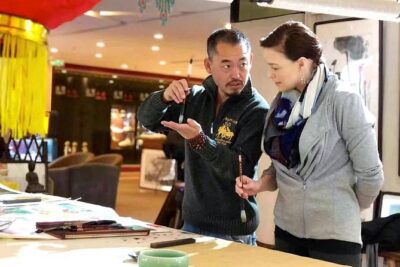
Beijing Wangfujing Calligraphy Class by Forbidden City
Read our review →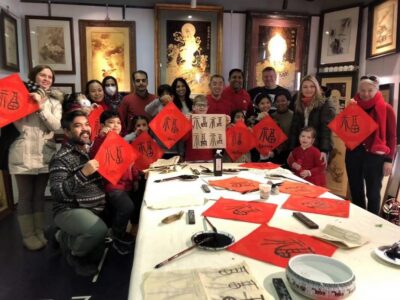
Beijing Wangfujing Calligraphy Class Nearby Forbidden City
Read our review →
Discover Old Beijing: Hutong Walking Tour & Calligraphy
Read our review →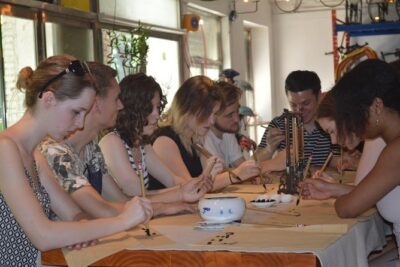
4-Hour Private Tour of Calligraphy Class, Hutong and Dumplings
Read our review →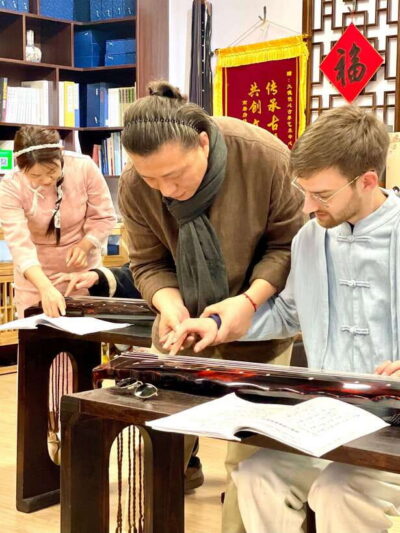
Beijing Hands-On Culture Tour: Tea, Instrument, Calligraphy
Read our review →Browse the lists this tour appears in