
Reviewed · CALLIGRAPHY & PAINTING CLASSES
Beijing Calligraphy Class
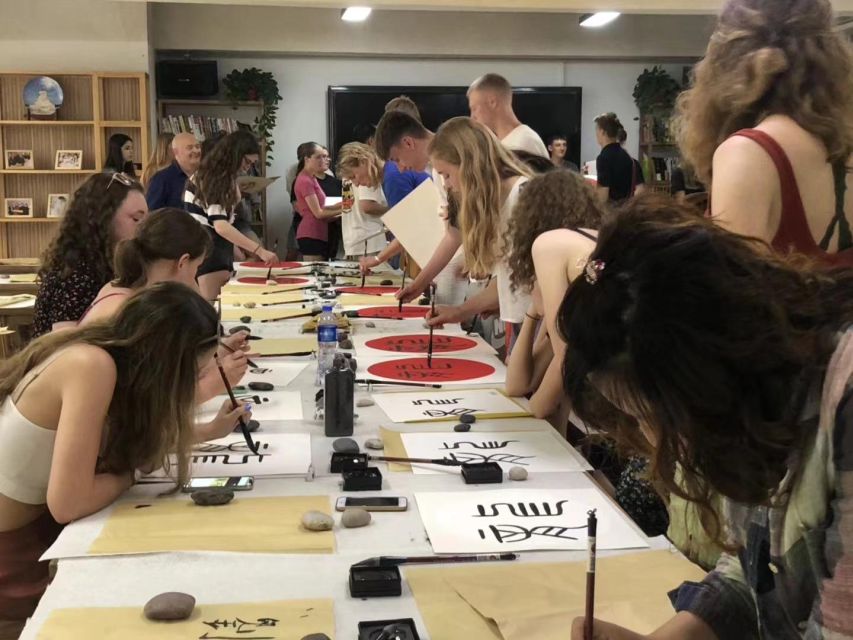
Chinese calligraphy is more than writing neatly. At this central Beijing class, you learn how brush pressure, balance, rhythm, and empty space turn a few strokes into a character with meaning. I like the quiet, meditative pace and the chance to make a piece you can take home. I also like that the lesson works for children and adults, with teachers such as Richard, David, and Li praised for patience and clear instruction.
The main consideration is time. Thirty minutes is enough for a taste, but I would choose the one-hour class if your schedule allows. You need time to learn brush control, practice, ask questions, and finish a presentable character without rushing.
Key Points
- Meet in central Wangfujing: The class begins at the Sun World Dynasty Hotel lobby, close to shops, restaurants, and major sights.
- English instruction: Richard, David, or Li may teach the lesson, depending on the booking and schedule.
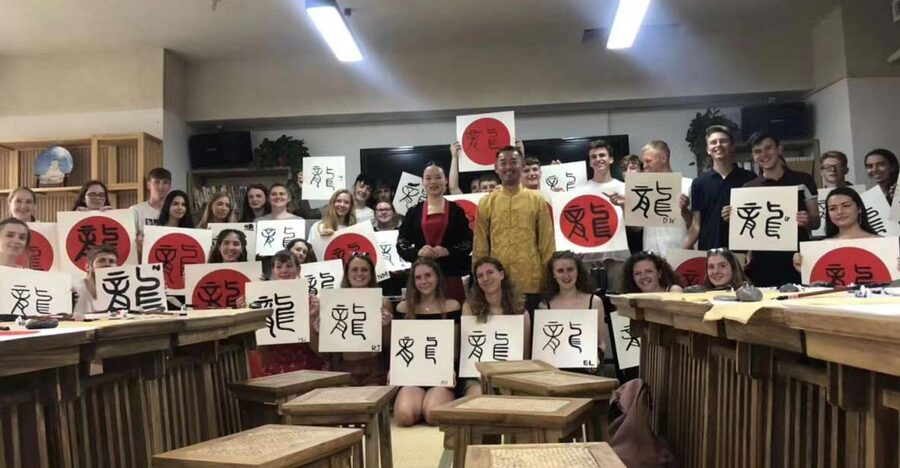
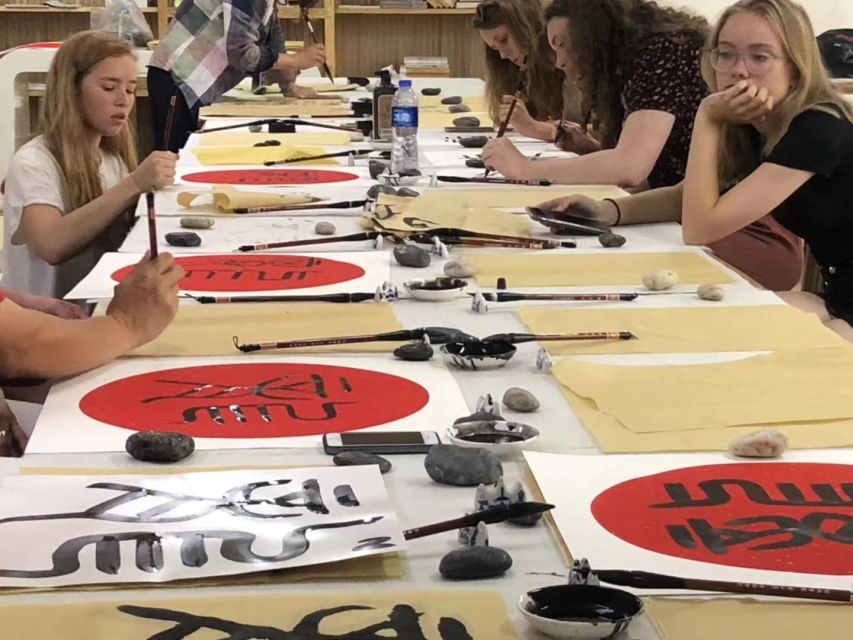
- Practice traditional tools: Use brushes, ink, ink stones, and rice paper during the class.
- Learn the ideas behind the art: The lesson covers balance, rhythm, harmony, Chinese characters, and the role of calligraphy in Chinese culture.
- Choose your pace: Book either 30 minutes or one hour, with the longer session offering more time for practice.
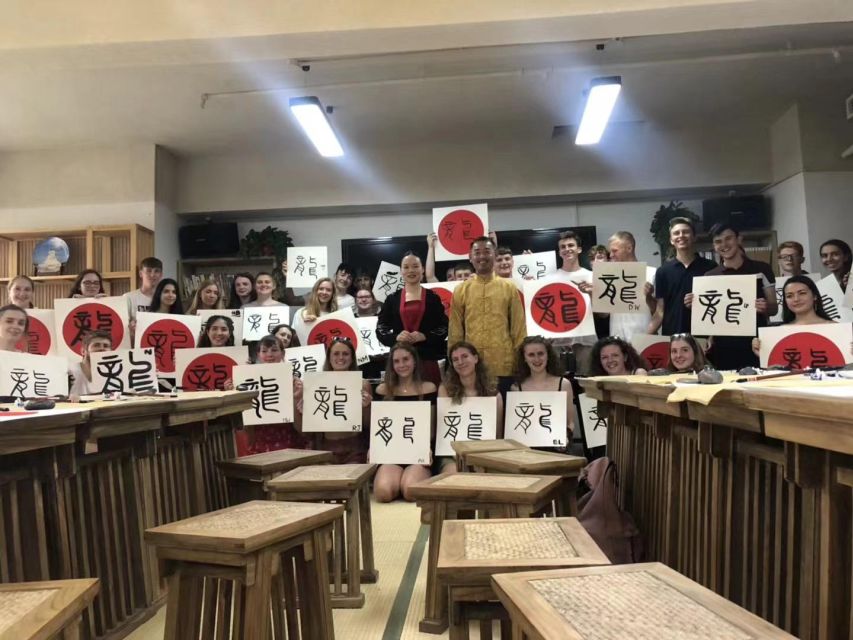
- Take home a personal result: Several participants describe leaving with a finished artwork, including the character fu, along with other small gifts in some cases.
Why This Short Beijing Class Is Worth Your Time
Beijing offers grand palaces, vast squares, and crowded shopping streets. A calligraphy lesson gives you something different: half an hour or an hour of focused, hands-on contact with one of China’s oldest artistic traditions.
You are not simply watching a demonstration. You hold the brush, work through basic strokes, and learn how a character is built. The activity is gentle and practical, so you do not need drawing experience or Chinese-language skills. The teacher explains the process in English and helps you adjust your hand and brush technique.
I especially like the way this experience connects the physical act of writing with Chinese ideas about patience, focus, and calm. The repeated strokes can feel almost meditative. That does not mean the class is silent or overly formal. You can ask questions, talk with the teacher, and learn why certain characters carry particular meanings.
The class receives a 4.9 rating from 112 reviews, and the strongest praise centers on the instructors. Richard is repeatedly described as patient, kind, and encouraging. David is praised for walking participants through each step, while Li receives credit for making the lesson informative and engaging. The names may vary with the teacher assigned to your session, but the teaching style appears to be the main strength of the experience.
More Calligraphy Classes in Beijing
- Chinese Calligraphy Class for Small Group
★ 5.0 · 104 reviews - Beijing Historic City Guided Walking Tour + Calligraphy Creation
★ 5.0 · 59 reviews - Beijing Wangfujing Calligraphy Class by Forbidden City
★ 5.0 · 58 reviews
Meeting at Sun World Dynasty Hotel on Wangfujing Avenue
The meeting point is the lobby of Sun World Dynasty Hotel at No. 50 Wangfujing Avenue in Dongcheng District. This is a useful location for a short activity because it sits in central Beijing and is easy to pair with sightseeing in the Wangfujing area.
If you are staying nearby, walking to the hotel is the simplest option. The meeting point also works well if you are already visiting central Beijing and want a cultural activity that does not consume half a day.
By subway, take Line 5 to Deng Shi Kou Station and use Exit A. From there, walk left for about two minutes, or roughly 180 meters, then turn left at the first traffic light and continue west for about five minutes. The stated walking time from the station is around eight minutes in total.
A taxi is also possible, though Beijing traffic can make a short road journey less predictable. You pay your own taxi or subway fare, so include that small cost when planning your day. The teacher waits in the hotel lobby, which gives you a clear indoor meeting point rather than an uncertain street corner.
The First Lesson: History, Meaning, and Brush Control
The class generally begins with an introduction to Chinese calligraphy and its place in Chinese culture. This opening matters because the activity is not just about copying symbols. Chinese characters can carry ideas, wishes, values, and cultural associations, and the teacher explains some of the meaning behind the characters you practice.
You are also introduced to several calligraphy styles. These include regular script, running script, cursive script, and the style described in the program as seat script. For a first lesson, regular script is likely the easiest place to begin because the strokes are more structured and easier to follow.
The teacher then explains the tools. You use a brush, ink, an ink stone, and rice paper. Each tool changes the way the writing feels. A brush is less predictable than a pen, and the amount of pressure you use can affect the width and shape of a stroke. Rice paper also rewards a steady hand because ink can spread if applied too heavily.
This is where good instruction matters. One participant described learning how to hold the brush and doing hand exercises before writing the final character. That preparation is useful for beginners because the brush may feel unfamiliar at first. You are not expected to produce a perfect character immediately.
Practicing Simple Strokes Before a Finished Character
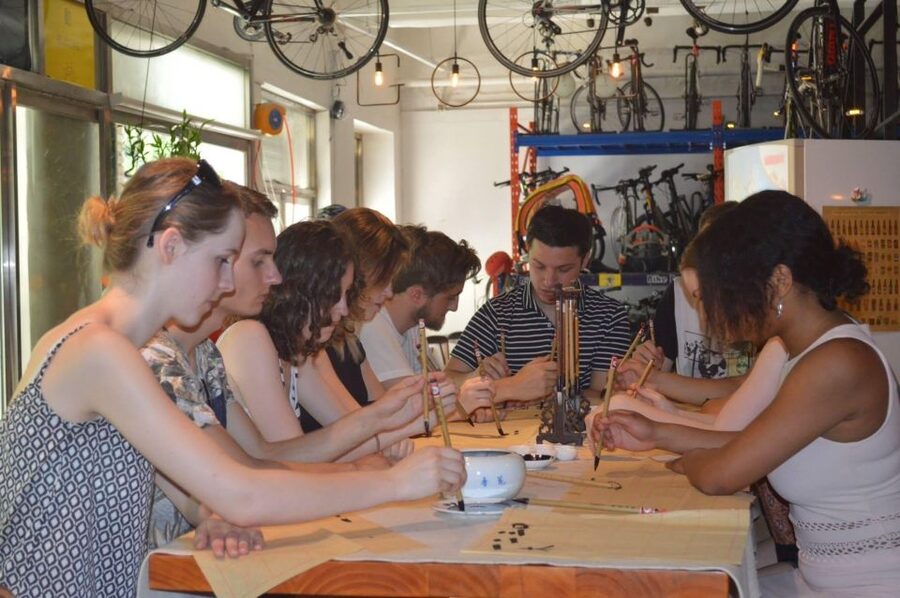
After the introduction, you work through basic strokes and gradually move toward a more complete composition. The teacher pays attention to brush position, pressure, direction, and the order of the strokes.
The practice stage may look simple, but it teaches the central habits of the art. You begin to see why balance matters. A character can have the correct individual strokes and still look awkward if one side is too heavy or the spacing is uneven.
The ideas of rhythm and harmony also become easier to understand once you are holding the brush. Some strokes should be firm, while others should be light or quick. The finished character depends not only on what you draw but also on how the strokes relate to one another.
I would not treat this as a rushed souvenir-making stop. The real value is in the process. You slow down, repeat movements, and get direct corrections from the teacher. One-hour bookings are especially useful here because they leave room to make mistakes and try again.
The 30-minute option can still work if you want a quick cultural activity between other plans. It is a good choice for families with a tight schedule or for anyone who mainly wants an introduction. Just keep your expectations sensible. You will be learning the basics, not mastering calligraphy in one sitting.
Same base, a completely different kind of day out:
- From Beijing: Mutianyu Great Wall Tours with Options
★ 4.9 · 9,216 reviews - Beijing: Forbidden City Tour(Group/Private)-Tickets Included
★ 4.8 · 7,974 reviews - Beijing: T-Square & Forbidden City Group or Private Tour
★ 4.8 · 4,446 reviews - Beijing: Mutianyu Great Wall Daily Tour with Ticket & Lunch
★ 5.0 · 3,056 reviews
Choosing a Character With Personal Meaning
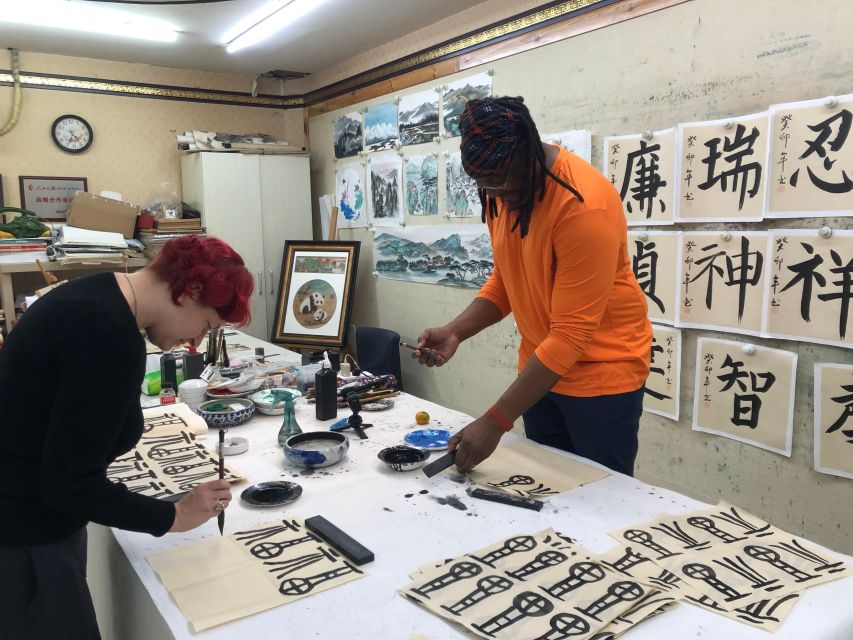
A pleasant feature of the lesson is the attention given to the meaning of the characters. One family created a wall decoration using fu, a character associated with good fortune. The teacher also shared the Confucian saying One World One Heart during that session.
The exact character or saying you work on may depend on the lesson and teacher, so do not assume a specific design is guaranteed. Still, the cultural explanation gives the finished work more value than a random decorative mark.
You can ask about the character you are writing and its meaning. That simple question can turn a basic souvenir into a memory tied to Chinese language, philosophy, and custom. If you are taking the class with children, this is also a useful way to keep the activity connected to learning rather than treating it as only an arts-and-crafts project.
Some participants received their artwork and pencils afterward. Supplies are provided for use during the class, while any take-home items can depend on the arrangement of your session. If taking home a finished piece is important to you, ask the teacher at the beginning what you will be able to keep.
Tea, Conversation, and a Calm Change of Pace
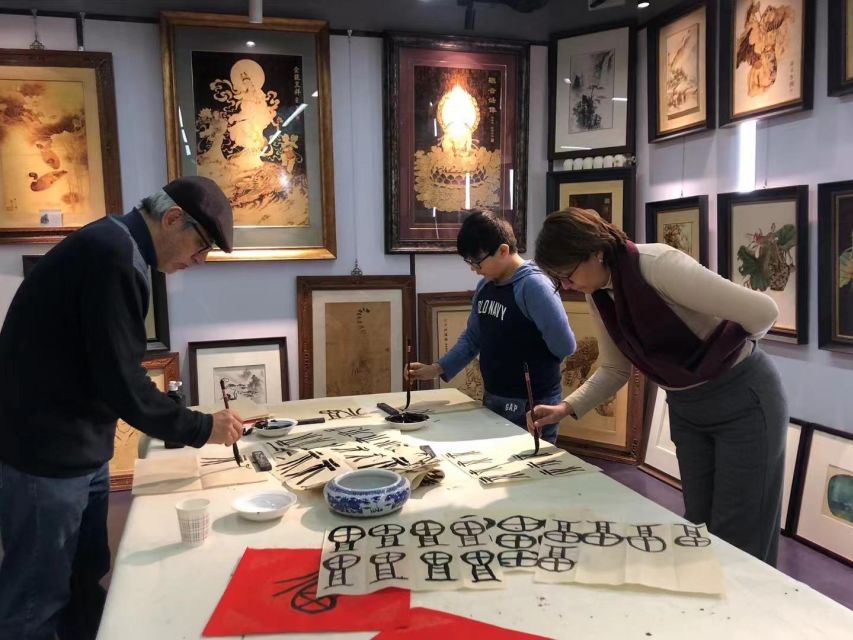
Several sessions included tea and small snacks, and the atmosphere was described as warm, peaceful, and welcoming. These details are not the formal core of the class, but they help explain why the experience feels different from a standard sightseeing stop.
Beijing can be a fast-moving city. After walking through busy streets or visiting major monuments, sitting down with a brush and a sheet of rice paper offers a welcome change of pace. The repetition of the strokes gives you something precise to focus on, while the teacher provides conversation and cultural background.
I would not book this expecting a grand studio tour or a long formal workshop. The activity is compact, and the main setting is the class itself. Its appeal comes from personal attention, a calm mood, and the chance to try a traditional art with guidance.
The teacher’s approach seems particularly important for first-time students. Richard is often praised for patience, clarity, and encouragement. Other sessions identify David or Li as the instructor. The feedback suggests that the lesson is friendly rather than intimidating, which is exactly what most beginners need.
Is the One-Hour Option Better Than 30 Minutes?
For most people, yes. The one-hour class gives you time to settle in, hear the cultural introduction, learn the tools, practice basic strokes, and complete a final piece.
The 30-minute option makes sense in three situations:
- You have a packed Beijing itinerary.
- You are testing the activity before committing more time.
- You are booking for a young child who may prefer a shorter session.
For adults, families, and anyone interested in the art itself, I would choose one hour. A participant who booked 45 minutes to one hour specifically found that amount of time worthwhile. That advice fits the structure of the lesson: the first part is explanation, the middle is practice, and the final part is where your work begins to look intentional.
The longer option also gives the teacher more time to correct your technique. That matters because small adjustments in brush angle or pressure can change the result. You leave with more than a quick demonstration and a better sense of how to continue practicing on your own.
A Good Activity for Families and First-Time Visitors
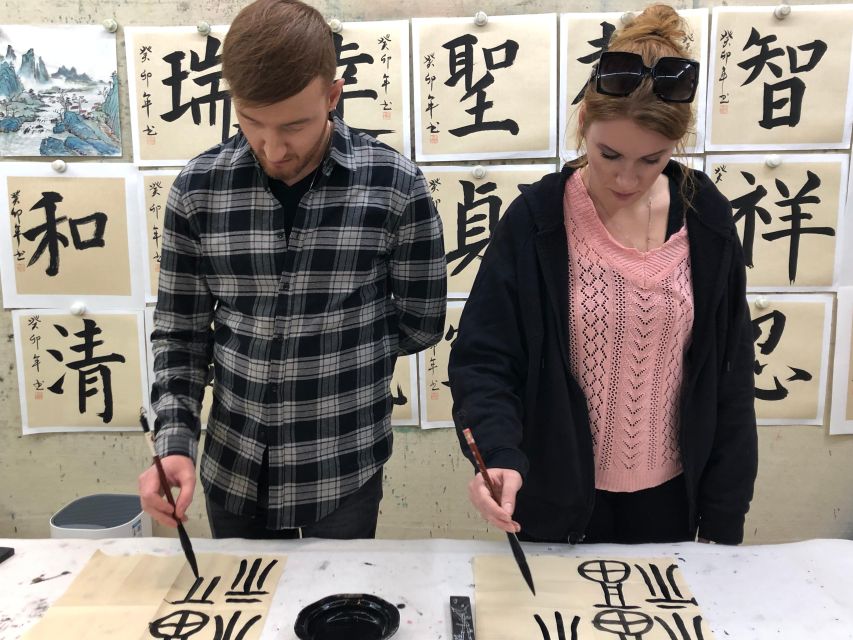
This class suits families particularly well. An 11-year-old participant described the activity as enjoyable, while the adults in the group found the repeated brush strokes relaxing. That combination is useful: children have something hands-on to do, and adults get a calm cultural experience rather than another passive stop.
It also works for solo visitors and couples. A private session may be available depending on the booking, and one participant described having a private lesson with tea and personal attention. Do not assume every booking is private, but the class format can feel personal when the group is small.
You do not need to know Chinese characters before arriving. The teacher introduces the writing system and guides you through the selected work. You also do not need to consider yourself artistic. The lesson is built around controlled practice, not talent.
I would be more cautious about booking it for someone who wants a long, technical course in advanced calligraphy. The short duration limits how much theory and practice can fit into the session. It is best understood as a well-guided introduction and a cultural activity with a finished result.
Cost, Value, and What You Pay For
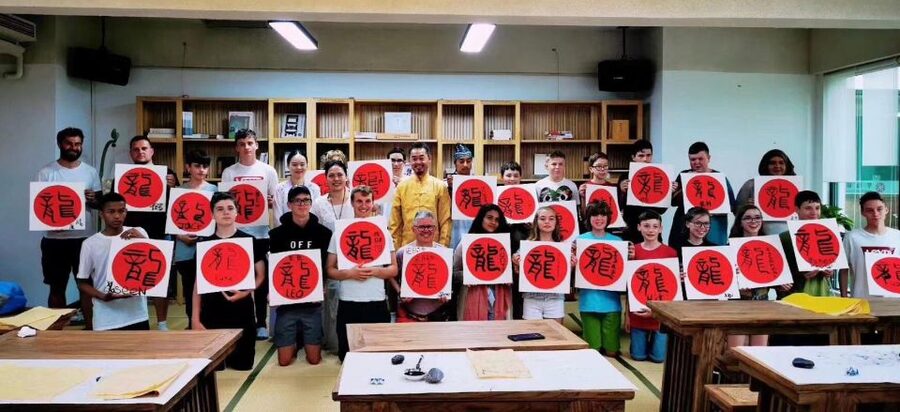
At $20 per person, this is reasonably priced for central Beijing. The fee includes an English-speaking art teacher and the calligraphy supplies used during the lesson. You are not paying only for paper and ink. You are paying for instruction, cultural context, and the chance to work directly with traditional tools.
The value is strongest if you choose the one-hour class. A 30-minute session keeps the total cost low, but the longer lesson gives you more time to practice and absorb the explanation without feeling pressed.
You should budget separately for transportation to Wangfujing and for any personal purchases. Taxi and subway fares are not included, and neither are unrelated expenses. The central location helps keep transport simple, especially if you already plan to visit Wangfujing.
The class also offers free cancellation up to 24 hours before the start time, with a full refund, and you can reserve now and pay later. Those terms are useful when your Beijing schedule may change, though you should still check the available start times before booking.
Practical Tips for a Better Session
Arrive at the hotel lobby with enough time to locate the meeting point. The instructor is expected to meet you there, so checking the spelling of the hotel name and carrying the address in Chinese can make the arrival easier.
If you are choosing between the two durations, select one hour unless your schedule is tight. The additional time is most useful for practice, corrections, and completing a final piece.
Wear something comfortable and avoid arriving with wet hands or items you cannot set down easily. The activity uses ink and rice paper, so follow the teacher’s instructions about where to place the brush and supplies.
Ask questions about the meaning of the character you write. The cultural explanation is one of the best reasons to book this class, and it helps you remember the work after you leave Beijing.
If you hope to take home the finished artwork or receive pencils, confirm what is included at your session. Some participants did receive these items, but the formal inclusions list focuses on the teacher, class, and supplies used during the lesson.
Should You Book the Beijing Calligraphy Class?
I would book this if you want a short, affordable cultural activity in central Beijing, especially if you have already seen the city’s major sights and want something hands-on. It is a strong fit for first-time visitors, families, couples, solo visitors, and anyone curious about Chinese characters or traditional art.
Choose the one-hour option if you want the class to feel complete. Choose 30 minutes only when your schedule demands it or you want a brief introduction.
This is not a substitute for a long calligraphy course, and the short format limits how much you can learn. But at $20, with English instruction, supplies, cultural context, and the possibility of a meaningful finished piece, it offers good value. The calm pace and patient teaching from instructors such as Richard, David, and Li make it an easy addition to a Beijing itinerary.
FAQ
Where does the Beijing calligraphy class meet?
The meeting point is the Sun World Dynasty Hotel lobby at No. 50 Wangfujing Avenue, Dongcheng District, Beijing.
How do I reach the meeting point by subway?
Take Subway Line 5 to Deng Shi Kou Station and leave through Exit A. Walk left for about two minutes, turn left at the first traffic light, and continue west for about five minutes. The total walk is about eight minutes.
How long does the class last?
You can choose a 30-minute class or a one-hour class when booking. Starting times depend on availability.
Is the class taught in English?
Yes. The instructor language is English.
What is included in the price?
The price includes the art teacher, your selected 30-minute or one-hour class, and calligraphy supplies for use during the lesson.
Can I cancel the booking?
You can cancel up to 24 hours in advance for a full refund. The activity also offers a reserve-now, pay-later option.
Newly listed around Beijing
- Beijing: Summer Palace Ticket; fast and smooth★ 3.6 · 38 reviews
- Beijing: Summer Palace, Sacred Road&Ming Tombs Private Tour★ 5.0 · 8 reviews
- Beijing: Summer Palace Entry Ticket★ 3.3 · 3 reviews
- Beijing: Summer Palace Highlight Walking Tour★ 4.8 · 25 reviews
- Beijing: Summer Palace 3 Hours Guided Tour with Entry Ticket★ 4.8 · 4 reviews
- Beijing Private Tour: Summer Palace, Panda House and Options★ 5.0 · 21 reviews
- Beijing: Summer Palace Entrance(combo/tour opt)★ 4.7 · 6 reviews
- Beijing Royal Banquet with Chinese culture prefermance★ 5.0 · 3 reviews
Calligraphy & Painting Classes, compared.
Beijing Historic City Guided Walking Tour + Calligraphy Creation
Read our review →
Beijing Wangfujing Calligraphy Class by Forbidden City
Read our review →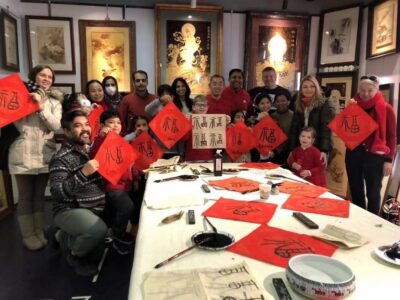
Beijing Wangfujing Calligraphy Class Nearby Forbidden City
Read our review →
Beijing Hands-On Culture Tour: Tea, Instrument, Calligraphy
Read our review →
Beijing liulichang : Learn Calligraphy orCarving from Master
Read our review →Browse the lists this tour appears in