
Reviewed · MUSEUMS
Chengdu: Sichuan Museum – Cultural and Historical Heritage
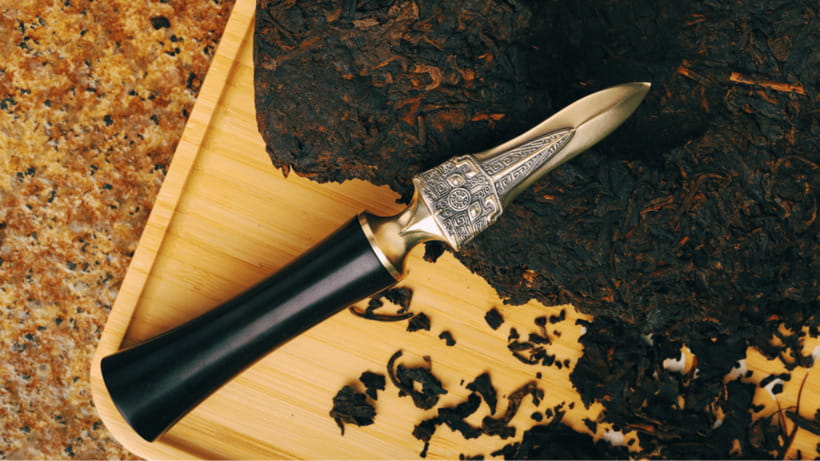
The Sichuan Museum gives you a clear way into Sichuan’s past, from Sanxingdui bronze objects and Han dynasty stone carvings to delicate ceramics, calligraphy, and Tibetan Thangka paintings. Its collection numbers more than 300,000 artifacts, so this is far more than a quick photo stop.
I like the free permanent exhibitions and the museum’s free guided tours. I also like that the building is spacious, with a souvenir shop and a tearoom for a break. The main catch is the booking process: your passport name and number are required, the supplied QR code is not valid for entry, and you must reserve either a morning or afternoon time slot.
Key points to know before you go
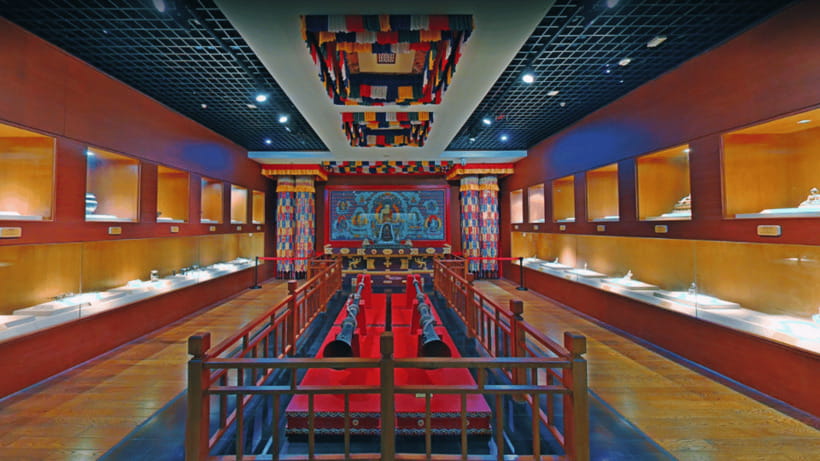
- More than 300,000 artifacts: The collection covers bronze, ceramics, calligraphy, stone carvings, and Tibetan art.
- Sanxingdui displays: Look for objects linked to one of China’s most important ancient archaeological sites.
- Free permanent exhibitions: Your museum admission covers the main long-term displays.
- Free guided tours: Museum-provided tours can add useful context to objects that may otherwise feel unfamiliar.
- Two entry windows: Reserve 09:00 to 12:00 or 12:01 to 16:00.
- Passport details are required: Send your full name as printed in your passport and your passport number in time to keep the booking active.
Why the Sichuan Museum deserves a place in Chengdu
Chengdu is best known for pandas, spicy food, and its relaxed teahouse culture. The Sichuan Museum gives you another side of the city, one shaped by ancient kingdoms, religious art, skilled craftspeople, and long ties between Sichuan and the rest of China.
Founded in 1941, the museum is one of the largest cultural institutions in southwestern China. Its collection has more than 300,000 objects, though you will not see every one during a single visit. The value lies in the range of the displays. You can move from early bronze work to ceramics, calligraphy, Han stone carvings, and Tibetan paintings without leaving the museum.
I find this range useful because Sichuan is not a single-story destination. The province has its own traditions, but it also sits at a crossroads between central China, the southwest, and Tibetan cultural regions. The museum’s displays help you see those links through actual objects rather than a string of dates on a wall.
The museum suits several kinds of visitors. If you already know Chinese art, you can focus on materials, styles, and individual works. If you are new to the subject, the permanent displays offer a broad introduction. Families can choose a few sections rather than trying to see everything, while serious history fans can spend much longer with the collection.
More Museums in Chengdu:
- Private Chengdu Day Tour: Giant Pandas and Jinsha Site Museum
★ 5.0 · 142 reviews - Sanxingdui Museum+Chengdu Panda Base or Jinsha Site Tour
★ 5.0 · 10 reviews - Sanxingdui Museum Small Group Tour with Optional Panda Base
★ 5.0 · 3 reviews
Start with the permanent exhibitions
Your reserved visit gives you access to the museum’s permanent exhibitions. Admission to these long-term displays is free, although the experience itself is listed at about $5 per person for the reservation.
That price needs a little explanation. You are not paying a standard admission charge for the permanent galleries. You are paying for the arranged booking, which reserves your place and helps you meet the museum’s entry requirement. For a museum with free main exhibitions, that is a modest cost, but you should know exactly what it covers.
The permanent galleries are the heart of the visit. They present artifacts from Sichuan and other parts of China, helping you connect local objects with wider Chinese traditions. You might find yourself moving from practical objects to works made for ritual, worship, scholarship, or display.
Give yourself enough time to read the explanations. One of the strongest features of the museum is the amount of information attached to the objects. The displays are not just rows of old items. They are meant to explain how the pieces fit into Sichuan and Chinese culture.
Special exhibitions may require a separate ticket. Do not assume that your reserved entry includes every temporary display. The permanent galleries are included, but ask or check at the museum if you want to see a special exhibition as well.
Sanxingdui artifacts and Sichuan’s ancient past
The Sanxingdui material is one of the museum’s most appealing features. Sanxingdui, in Sichuan, is famous for its unusual bronze objects and distinctive ancient culture. The pieces associated with the site help show that early Sichuan had its own artistic language and religious traditions.
For many people, this section will be the museum’s main draw. The bronze work can feel very different from the familiar images of imperial China. Rather than treating Sichuan as a remote corner of the country, these displays show it as a place with its own strong cultural identity.
You may want to make this section your first major stop. It gives you a useful frame for the rest of the visit. After seeing the early bronze objects, later ceramics, carvings, and paintings become part of a much longer story instead of isolated works.
The museum’s Sanxingdui material also works well for families. The shapes and faces found in ancient bronze art are visually striking, even for children who may not want to read every label. If you are traveling with younger visitors, use the unusual objects as an easy starting point, then add the historical details at your own pace.
Han dynasty stone carvings and the art of daily life
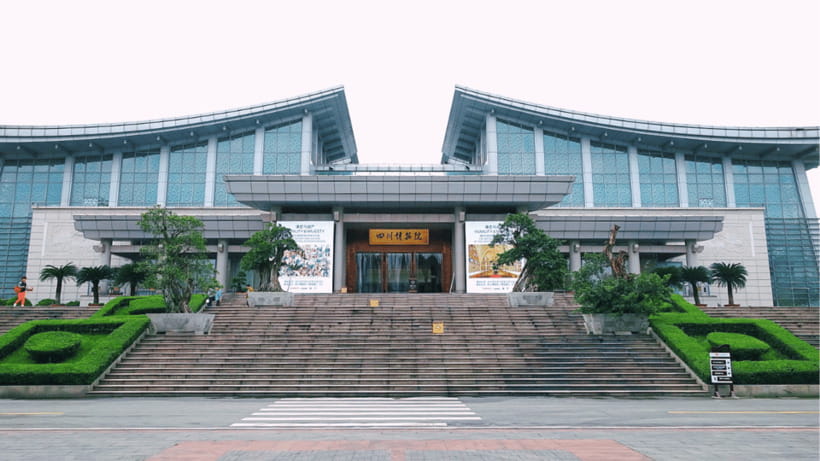
Han dynasty stone carvings provide another important stop. These works offer a look at the way people in ancient China represented society, belief, status, and daily activity in stone.
The carvings are valuable because they sit between art and historical record. They can show more than polished objects made for court or wealthy collectors. Through carved scenes and figures, you might get a sense of the values and visual habits of the Han period.
I would not rush through this section. Stone carvings can seem less immediately dramatic than bronze masks or brightly colored paintings, but the details reward a slower look. Pay attention to repeated figures, gestures, animals, and patterns. These small elements can tell you how the artists organized the world around them.
The displays also help balance the museum’s more famous highlights. If you only seek out Sanxingdui, you will miss a large part of what makes the Sichuan Museum useful. The Han carvings place the province within the broader story of Chinese art and government.
More Historical Tours in Chengdu:
- Between Capitalism & Communism: Hong Kong History Tip Based Tour
★ 5.0 · 234 reviews - Beijing Historical Tour II including Summer Palace, Lama Temple & Panda Garden
★ 4.0 · 187 reviews - Beijing Historical Tour I – Forbidden City, Tiananmen Square & Temple of Heaven
★ 4.0 · 120 reviews - Tour of Jewish Shanghai led by a Jewish History Expert
★ 5.0 · 106 reviews
Ceramics, calligraphy, and the skills behind the objects
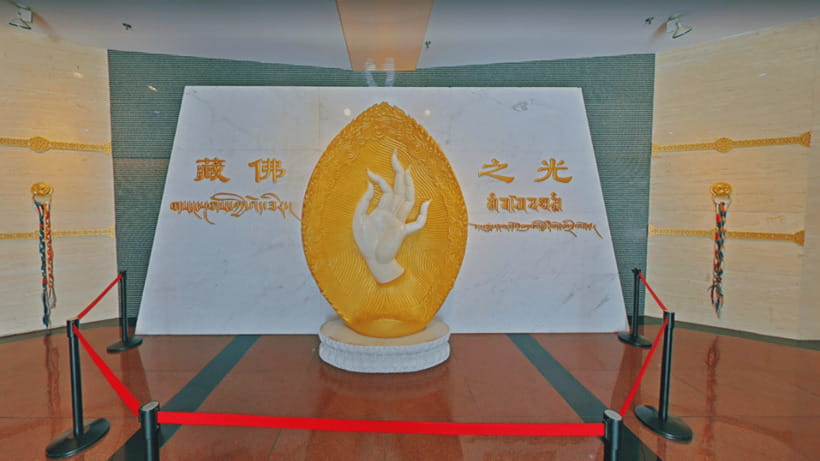
The ceramics section shows another side of Chinese culture. Here, the interest is not only in decoration. Shape, glaze, firing, and use all matter. A bowl or vessel can reveal both technical skill and changing taste.
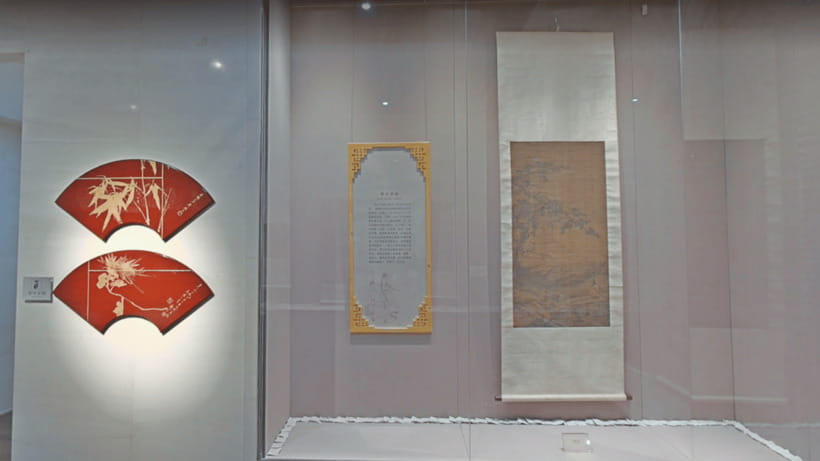
You can also expect displays of Chinese calligraphy. Calligraphy is often difficult for first-time visitors because the visual effect may be easier to appreciate than the written meaning. Take time to notice the brush movement, spacing, and balance of the characters. The work is both writing and visual art.
These galleries are a good reason to use the free guided tours if one is available during your visit. A guide can explain what you are seeing and why a particular form or style matters. Without that help, you may recognize that an object is beautiful but miss the cultural point behind it.
The tour schedule is not specified, so do not plan your entire day around a particular guided session unless the museum confirms the time. Ask on arrival about the next museum-provided tour. If the timing works, it can give structure to your visit. If not, the permanent displays can still be explored independently.
Tibetan Thangka paintings and religious art
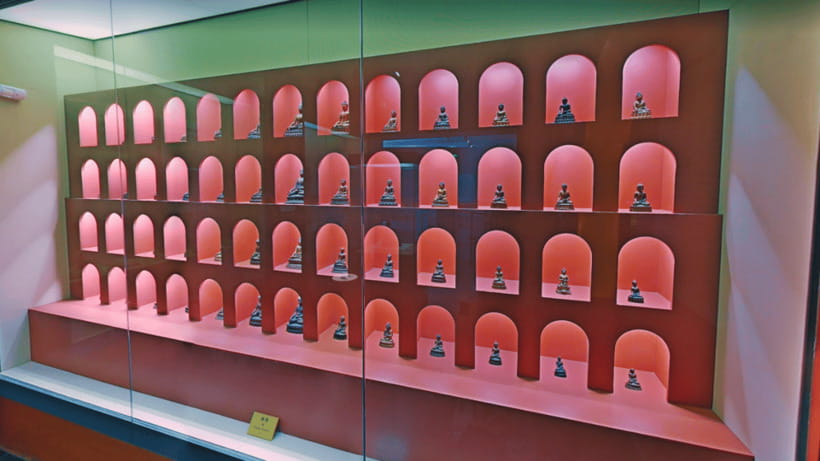
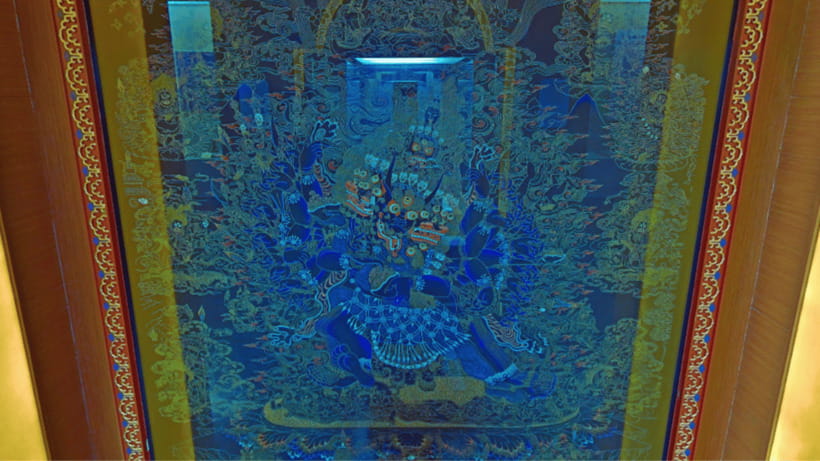
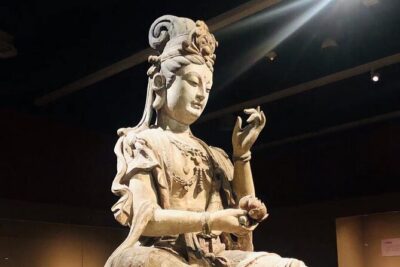
The Tibetan Thangka paintings add a different visual and cultural layer. Thangkas are religious paintings traditionally connected with Tibetan Buddhist practice. Their detail, symbolism, and strong use of color can make them especially memorable for visitors who have mainly seen Chinese ceramics or calligraphy.
Look closely at the organization of each painting. Religious images often contain many figures and symbols, and the arrangement matters. You may not understand every detail at first, but the careful composition and fine brushwork are easy to appreciate.
This section also broadens your view of Sichuan. The province has historic links with Tibetan cultural areas, and the presence of Thangka art points to those connections. The museum is not presenting one narrow version of Sichuan. It is showing several cultural currents that have shaped the region.
Photography is listed among the useful things to bring, but follow the museum’s rules in each gallery. Some displays may have restrictions, especially special exhibitions. A camera can help you remember details, but it should not replace taking time to look at the paintings themselves.
Zhang Daqian’s work and modern Chinese art
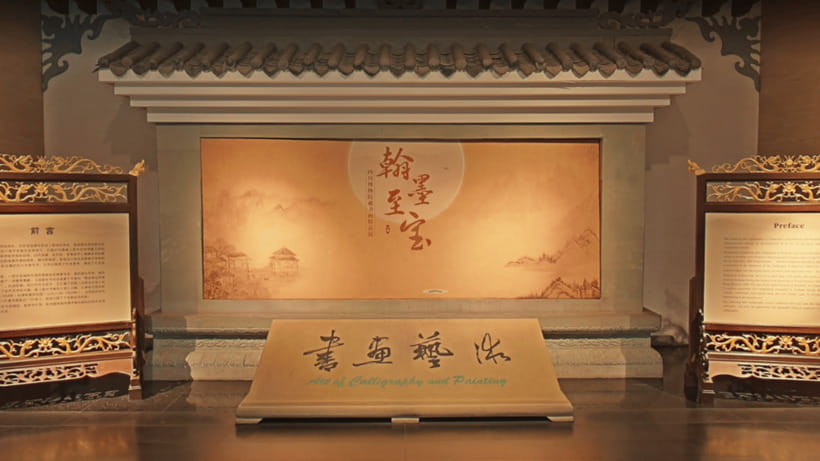
The Sichuan Museum also includes artwork by Zhang Daqian, one of the best-known Chinese artists associated with Sichuan. His work gives the museum a bridge between older traditions and more recent Chinese art.
This is an important change of pace after the ancient collections. You can see how modern artists continued to work with established Chinese ideas while developing their own styles. Zhang Daqian’s presence also reminds you that Sichuan’s art story did not end with the Han dynasty or the imperial eras.
If you are mainly interested in ancient objects, do not skip this section. It helps explain how older painting traditions remained relevant in the modern period. If you already know Zhang Daqian’s work, you may want to spend extra time here and compare it with the calligraphy and painting displays elsewhere in the museum.
Planning the one-day visit
The activity is valid for one day, but your reserved entry is divided into two windows: 09:00 to 12:00 and 12:01 to 16:00. Choose the time that fits your Chengdu plans, then aim to arrive within that window rather than treating it as an open-ended ticket.
A full day is available, but you do not have to spend every hour inside. A focused visit can cover the main permanent displays in less time, while anyone interested in art and archaeology can use the whole day more easily.
Wear comfortable shoes. The collection is large, and you will likely spend a lot of time on your feet. The spacious layout is helpful, but it also means you should expect some walking between sections.
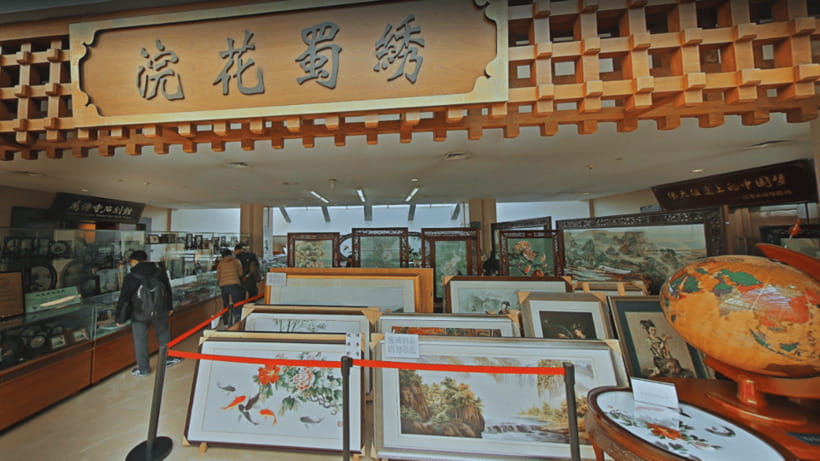
The museum has a souvenir shop and a tearoom. These are practical touches, especially if you plan a longer visit. The tearoom gives you a place to pause after the galleries, while the shop may appeal if you want a physical reminder of the art you saw.
The museum does not allow pets. Bring your passport and camera, and keep your booking information available. Most important, your full name must match your passport exactly.
The booking details that matter
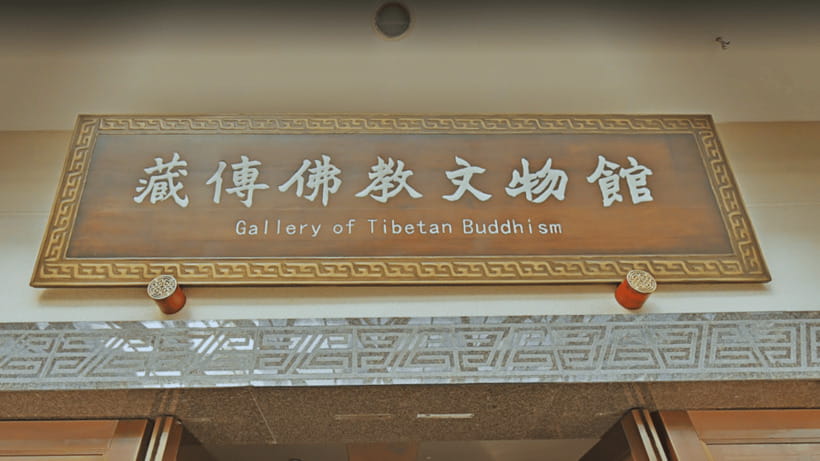
The supplied GetYourGuide QR code is not valid for entry. You need to follow the booking instructions and communicate as requested rather than assuming the QR code alone will open the museum gate.
Send your full passport name and passport number in time to complete the reservation. If those details are not received, the booking can be canceled and a cancellation fee may apply. This is the single most important practical warning.
You must also reserve an entry slot in advance. The two choices are 09:00 to 12:00 or 12:01 to 16:00. Booking ahead is recommended, especially on weekends and holidays, when available slots may be tighter.
Free cancellation is available up to 24 hours before the visit, and you can reserve now and pay later. Those terms are useful if your Chengdu schedule is still changing. Still, do not wait to send the passport information. Flexible payment does not remove the identification requirement.
Who will enjoy this museum most
I would recommend the Sichuan Museum to anyone who wants more than Chengdu’s best-known attractions. It is especially suitable for people interested in archaeology, Chinese painting, religious art, ceramics, or regional culture.
Families can make it work by choosing a few highlights, especially Sanxingdui and the more visual displays. You do not need to understand every label to enjoy the unusual bronze objects and colorful Thangka paintings.
It is also a good choice for a rainy day or for anyone who wants a quieter cultural stop. The spacious galleries, tearoom, and broad subject range make it easier to set your own pace.
The museum may be less satisfying if you want a tightly guided tour with a named personal guide, a fixed route, or transport included. This is a museum reservation with free museum tours, not a full city tour. The experience depends on how much time you give the exhibitions and whether a museum-led tour fits your schedule.
Should you reserve the Sichuan Museum?
Yes, if you want a low-cost cultural stop that explains Sichuan through real objects. At about $5 per person, the value is good because you gain a reserved entry place and access to free permanent exhibitions, with free museum-guided tours available.
Reserve it if Sanxingdui bronzes, Han stone carvings, Chinese calligraphy, ceramics, Zhang Daqian, or Tibetan Thangka paintings appeal to you. Skip it only if your Chengdu schedule is too tight for a museum visit or you prefer a guide-led experience with a guaranteed personal itinerary.
Before booking, check your date, choose the correct entry window, and send your passport details promptly. Those small steps matter more here than the price.
FAQ
How much does the Sichuan Museum experience cost?
The listed price is $5 per person. Admission to the permanent exhibitions is free, while the paid reservation helps secure your museum entry.
How long is the visit valid?
The reservation is valid for one day. You must choose an entry window of 09:00 to 12:00 or 12:01 to 16:00.
Are guided tours included?
Yes. The museum provides free guided tours, although the available tour time is not specified.
Do I need my passport?
Yes. Bring your passport and send your full name exactly as it appears in the passport, along with your passport number, to complete the booking.
Is the QR code valid for entry?
No. The supplied GetYourGuide QR code is not valid for entry. Follow the booking instructions and wait for the required communication or email.
Can I cancel the reservation?
Yes. You can cancel up to 24 hours in advance for a full refund. You can also reserve now and pay later.
Newly listed around Chengdu
- Private Chengdu Highlights Day Trip: Panda Base and City from Xi’an by Train★ 5.0 · 4 reviews
- Jiuzhaigou National Park Tickets Booking★ 4.5 · 4 reviews
- Classic 3-Day Jiuzhaigou Private Tour(Transportation+Tickets)★ 5.0 · 8 reviews
- Private Chengdu Highlights Day Trip: Panda Base and City from Chongqing by Train★ 4.5 · 9 reviews
- Huanglong Scenic Spot Admission Ticket★ 4.5 · 4 reviews
- Visiting Chengdu Panda Base in a Half Day★ 5.0 · 4 reviews
- Panda, Leshan, and Emei Mountain 2-day tour★ 5.0 · 4 reviews
- Classsic sichuan Opera at sichuan Provincial Theater★ 5.0 · 4 reviews
Museums, compared.
Tianmen Square, Forbidden City & Royal Museum Tours
Read our review →
Half-Day Mini Group Xian Tour to Terracotta Warriors Museum
Read our review →
Beijing:Jingshan Park (Palace Museum Garden) Ticket
Read our review →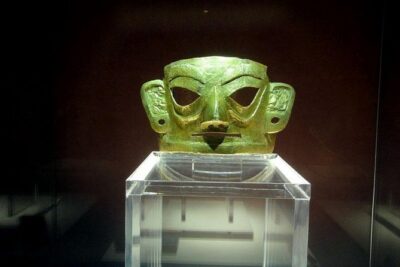
Private Chengdu Day Tour: Giant Pandas and Jinsha Site Museum
Read our review →
Private Xi’an Tour: Terracotta Warriors, Hanyangling Museum, Cave Homes
Read our review →
Beijing Half Day: National Museum of China In-depth Tour with Subway Transfer
Read our review →
Terracotta Warriors Museum Ticket with Professional English-speaking tour guide
Read our review →Browse the lists this tour appears in