
Reviewed · HISTORICAL TOURS
Between Capitalism & Communism: Hong Kong History Tip Based Tour
Hong Kong’s history makes more sense when you walk it in the small space between the harbor and the hills. This two-hour tour links the Court of Final Appeal, HSBC, St. John’s Cathedral, the Mid-Levels Escalator, and Man Mo Temple, turning familiar sights into clues about British rule, Chinese sovereignty, and Hong Kong identity.
I like the way the tour connects big political ideas to physical places, especially the Court of Final Appeal and the banking towers. I also like the personal touch: guides such as Alice, Andy, Armie, and Wingman have brought their own stories of Hong Kong into the walk. The main caution is pace. You cover several stops in two hours, and the hills, stairs, heat, and city crowds call for moderate fitness.
Key points to know before you go
- Hong Kong politics takes center stage: Learn how One Country, Two Systems works in practice at the Court of Final Appeal.
- The route explains Central’s power: Banking, colonial government, religion, and land reclamation all come together in a compact walk.
- Feng shui is part of the city story: The HSBC building and neighboring towers become part of a reported banking rivalry.
- Personal stories add human scale: Guides including Alice, Andy, Armie, and Wingman have shared direct perspectives on life in Hong Kong.
- The route ends at Man Mo Temple: You finish on Hollywood Road, with a street food tasting and local lunch suggestions.
- The price is unusually low: At $2.63 per person, this is a strong-value orientation walk, though it is not a private tour.
Why this walk gives Central Hong Kong a new shape
Many Hong Kong sightseeing walks focus on skyline photos and shopping streets. This one asks a more useful question: who has had power here, and how has that power changed?
The route begins in Central and ends at Man Mo Temple in Sheung Wan. Along the way, you move from courts and banks to churches, escalators, old streets, and a Taoist temple. That sequence gives you a clear sense of how Hong Kong grew from a British colonial outpost into a Chinese special administrative region with its own legal and financial systems.
I especially like the way the tour uses buildings as evidence. The Court of Final Appeal is not just an impressive old structure. It becomes a place to discuss Hong Kong’s legal position. HSBC is not merely a famous bank headquarters. It helps explain finance, land, symbolism, and the city’s habit of building upward and outward.
The political material may be the biggest reason to book. You will hear about British colonization, the 1997 handover to China, and the idea of One Country, Two Systems. The tour also addresses current politics, so expect serious discussion rather than a simple sightseeing script.
The tone depends partly on the guide. Alice, Andy, Armie, and Wingman are names associated with particularly personal, engaging versions of this walk. You may not get the same person, but the format allows a guide to explain Hong Kong through lived experience instead of only dates and official facts.
More Historical Tours in Hong Kong:
- Beijing Historical Tour II including Summer Palace, Lama Temple & Panda Garden
★ 4.0 · 187 reviews - Beijing Historical Tour I – Forbidden City, Tiananmen Square & Temple of Heaven
★ 4.0 · 120 reviews - Tour of Jewish Shanghai led by a Jewish History Expert
★ 5.0 · 106 reviews
Court of Final Appeal: starting with the hard questions
The first stop is the Court of Final Appeal, where you spend about 10 minutes. This is a smart opening because it puts Hong Kong’s political and legal position before the architecture and sightseeing.
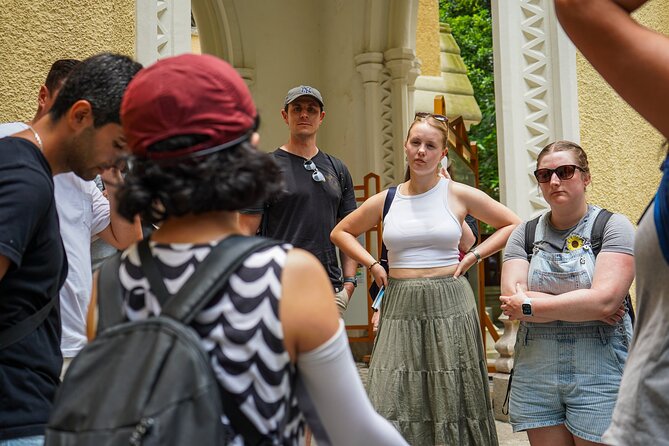
The central question is simple but not easy: how does Hong Kong practice being part of China while retaining separate legal and economic systems? A guide can use this building to explain the practical meaning of One Country, Two Systems, rather than leaving it as a slogan.
You will not enter an attraction with a separate admission fee. The stop is about the setting and the explanation. If you want a tour that avoids politics, this is not the right choice. If you want a clearer understanding of why Hong Kong feels different from mainland Chinese cities, this first stop gives the rest of the walk purpose.
Statue Square and HSBC: finance, lions, and feng shui
At Statue Square, the group spends around 10 minutes discussing Hong Kong’s banking power and the unusual feng shui rivalry among major financial institutions. This is one of the more memorable details on the route because it connects traditional Chinese beliefs with modern corporate architecture.
You then reach the HSBC Main Building for another 10-minute stop. The famous guardian lions are an easy visual hook, but the guide uses the building to discuss much more: Hong Kong’s financial system, its lack of a central bank that prints money, and the city’s long push to create more usable land.
That combination gives you a better way to read Central’s towers. They are not only office blocks. They reflect wealth, competition, planning, symbolism, and the need to fit a growing city into limited space.
Do not expect a banking museum or an interior tour. The value is in the explanation outside, where the building itself becomes part of the lesson. The 10-minute timing also means you will need to listen closely if the group is large or the square is noisy.
St. John’s Cathedral: colonial power and quiet contrast
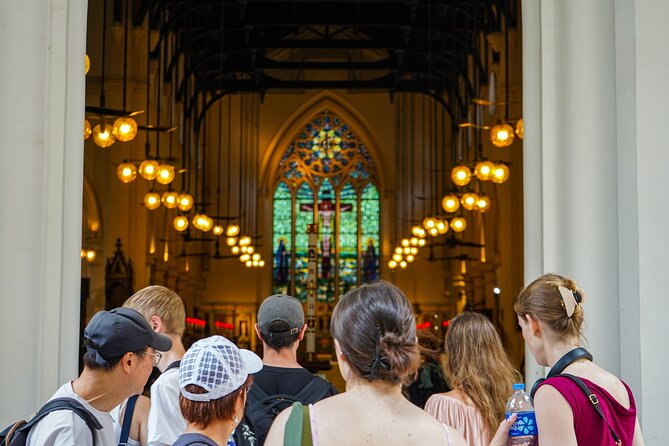
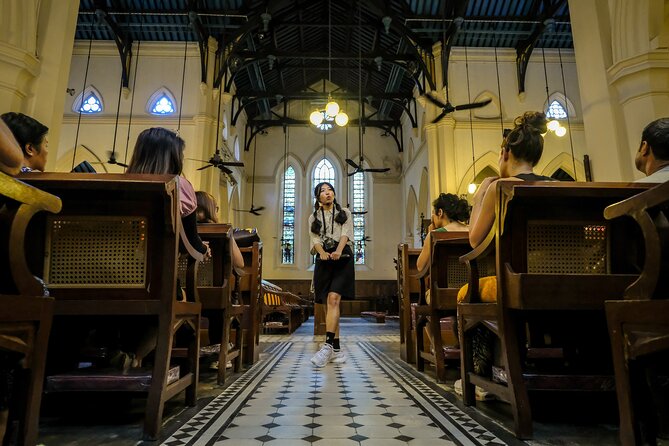
St. John’s Cathedral gets about 20 minutes, making it the longest stop on the route. It is also a useful change of mood after the financial district.
The cathedral is described as Hong Kong’s oldest church, and its presence helps explain the British colonial order. Here, the guide can move from government and banking to religion, social life, and the people who built institutions under British rule.
The stop also includes personal storytelling. Wingman, for example, has been praised for sharing her own story, while other guides have used their experience to put recent Hong Kong history into everyday terms. That personal angle matters because colonial history can otherwise feel remote and official.
The cathedral offers a quieter pause, but remember that this is still a walking tour. The 20 minutes are used for interpretation, not an extended religious visit. You may want to look around, but keep your attention on the guide’s explanation of the building and its place in the city.
A few more Hong Kong days worth a look
- Hong Kong: Dolphin Cruise, Big Buddha & Lantau Island Tour
★ 4.2 · 1,512 reviews - Ngong Ping 360: Cable Car Return Tickets & Combos
★ 4.6 · 1,431 reviews - Lantau Island Day Trip – Big Buddha & Tai O
★ 4.5 · 1,328 reviews - Big Bus Hong Kong Open Top Hop-On Hop-Off Sightseeing Tour
★ 4.0 · 1,077 reviews
Queen’s Road Central: Hong Kong at full speed
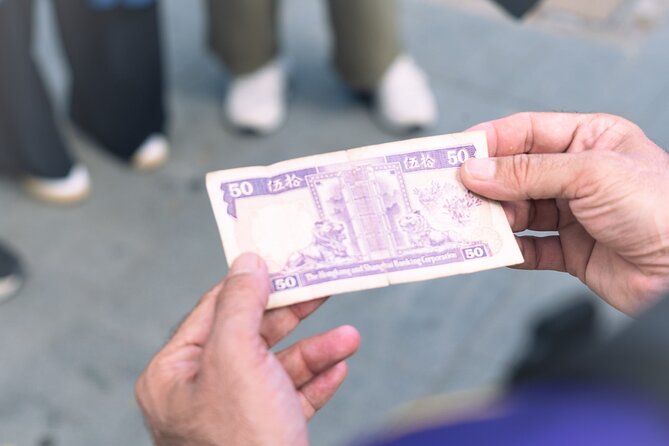
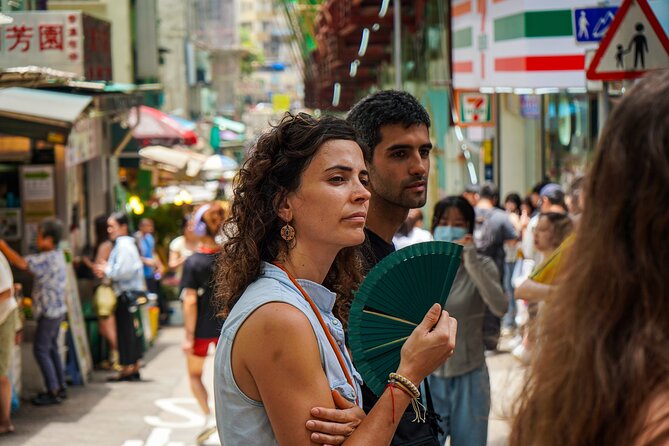
The group then moves onto Queen’s Road Central for about 10 minutes. This is where the city’s daily pressure becomes visible: office workers, expensive commercial space, power suits, and constant movement.
The route is not trying to turn every stop into a grand monument. Queen’s Road works because it shows the ordinary force of Central. Hong Kong’s identity is not only found in old buildings or political speeches. It is also found in the cost of space and the speed at which people move through it.
You will probably notice that the tour is strongest when it links a street scene to a larger idea. Here, the guide can explain how money and status shape the district. The stop is brief, so you will get a pointed explanation rather than a long walk through every side street.
The Mid-Levels Escalator: an 800-meter ride through the hills
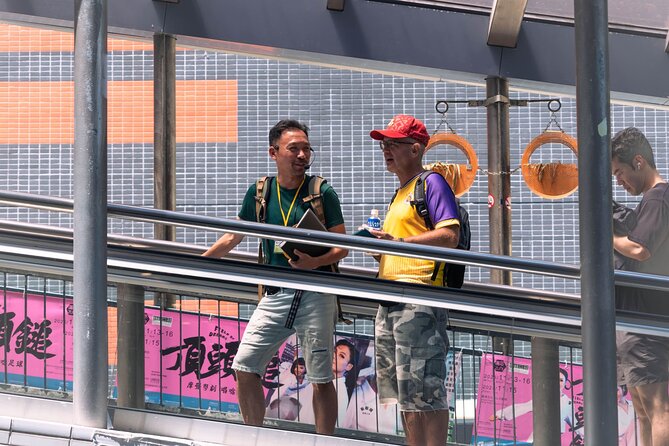
The Central-Mid-Levels Escalators are one of the route’s most practical sights. The system stretches about 800 meters and helped make movement between Central and the steep hills more manageable.
You spend roughly 10 minutes here. That is enough to experience the escalator and understand why it matters, but not enough for a full exploration of all the neighborhoods along its route.
This section also gives your legs a short break from walking, though you should not treat the whole tour as effortless. The route includes city streets, changing surfaces, and hills, and the tour specifically calls for moderate physical fitness. Wear sensible shoes, especially if the weather is warm or wet.
The escalator also shows how Hong Kong solves problems with engineering rather than empty space. The city cannot simply spread out, so it builds systems that move people through steep terrain and dense districts. That is a useful idea to carry into the rest of your stay.
Hollywood Road: from colonial divide to creative street
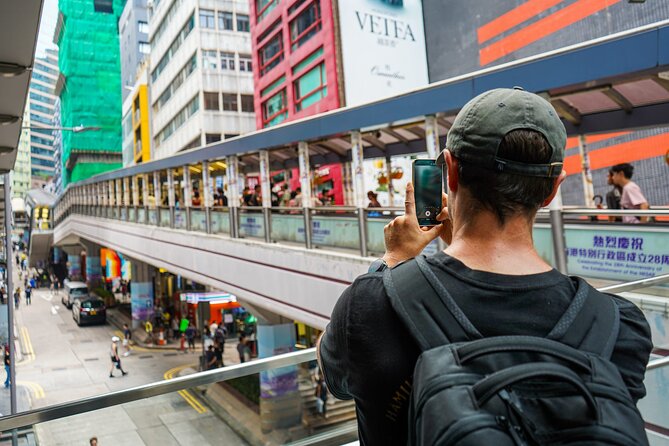
Hollywood Road receives about 10 minutes. The guide presents it as a place where a colonial-era divide has shifted into a creative district with art, food, and street life.
This stop helps connect old Hong Kong with the city you see today. The road is not treated as a frozen heritage zone. Instead, it becomes part of a changing Central and Sheung Wan, where older traditions and newer businesses share the same streets.
You will not have time to browse every shop or gallery during the tour. Think of this section as an introduction. If something catches your eye, make a note and return later on your own.
That is one of the tour’s practical strengths. It gives you a map of places worth revisiting, rather than trying to give you a complete experience of every district in two hours.
Man Mo Temple: ending with law, belief, and food
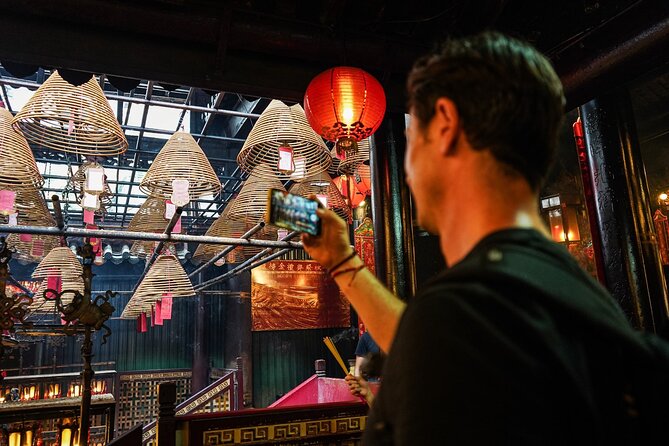
The final stop is Man Mo Temple at 124 to 130 Hollywood Road in Sheung Wan. The tour connects the temple’s scholar and warrior deities with Hong Kong’s changing legal tradition.
The temple gives the walk a strong ending because it brings you back to older Chinese religious culture after the courts, banks, cathedral, and colonial streets. The point is not to claim that Hong Kong has one simple identity. It is to show how different systems have occupied the same small city.
The tour includes a street food tasting, and it ends here. The exact food is not specified, so you should think of it as a small included taste rather than a full meal. You also receive recommendations for a local restaurant lunch, which is useful because the tour begins at 11:00 am and finishes around lunchtime.
The end point is convenient for continuing on foot through Sheung Wan. Hotel pickup and drop-off are not included, so you must make your own way to the start and continue independently after Man Mo Temple.
What the $2.63 price really means
At $2.63 per person, this is an exceptional price for a two-hour guided orientation, especially since a professional local guide and street food tasting are included. All listed sightseeing stops have free admission, so the main thing you are paying for is interpretation, organization, and the guide’s perspective.
The low price also comes with limits. This is not a private walk, and the group can reach 30 people. A larger group may make it harder to ask long questions or hear every word near traffic and crowds.
Still, the value is strong if you are new to Hong Kong or want political and historical context before exploring on your own. The tour can help you decide which districts, buildings, and food spots deserve more time later.
The 97 percent recommendation rate and 4.9 rating from 234 ratings suggest consistently strong satisfaction, with the most praised qualities being clear information, personal stories, engaging guides, and usefulness at the start of a Hong Kong stay. I would place the personal connection above the sightseeing itself. The buildings are good, but the guide’s ability to link them to real life is what makes the walk worthwhile.
The guides and the personal side of Hong Kong
The guide can shape this experience more than the route does. Alice has been singled out for putting the city and its sights into perspective through her personal story. Andy has been praised for explaining Hong Kong’s changing character. Armie has been described as providing a steady stream of information, while Wingman has brought a personal touch to recent history.
These details matter because Hong Kong’s political story can become abstract very quickly. A guide who explains how changes affect daily life gives you something more useful than a list of handover dates.
You should also expect different styles from different guides. Some may focus more on law and politics, while others may give greater weight to culture, food, or personal experience. The shared route keeps the experience focused, but the human element will not be identical every time.
Who will get the most from this experience
I would choose this tour for a first or second day in Hong Kong. It gives you a working map of Central, Admiralty, and the edge of Sheung Wan, along with enough background to make later sightseeing more meaningful.
It suits you if you enjoy:
- History explained through real buildings and streets
- Current politics presented as part of a city walk
- Personal stories from a local guide
- Short stops rather than long museum visits
- A low-cost introduction to Central Hong Kong
- Suggestions for where to eat after the walk
I would be more cautious if you need a slow pace, dislike political discussion, or want extensive time inside each building. The tour is also less suitable if you cannot manage moderate walking and city hills.
You should plan around the 11:00 am start at Central MTR Station, Exit K. A mobile ticket is provided, and the meeting point is near public transportation. Give yourself enough time to find the exit, since missing the beginning could mean losing the political introduction at the Court of Final Appeal.
Practical details that affect your day
The walk lasts about two hours and has a maximum group size of 30. That is a reasonable limit for a city walk, but you should stay close to the guide at crossings and busy streets.
The route requires good weather. If poor weather cancels it, you are offered another date or a full refund. The experience also requires a minimum number of people, so a cancellation for that reason brings the same choice of another date or a refund.
You can cancel for a full refund up to 24 hours before the local start time. Changes or cancellations inside that window are not accepted for a refund, so do not leave the decision until the morning of the tour.
The tour starts at Central MTR Station and ends at Man Mo Temple. There is no hotel pickup or drop-off. Admission tickets are free at the listed stops, and the guide plus street food tasting are included.
Should you book this Hong Kong history walk?
Book it if you want Hong Kong explained through its courts, banks, churches, streets, escalator, and temple rather than through a series of disconnected photo stops. The low price makes it an easy choice for a first-day orientation, and the personal approach from guides such as Alice, Andy, Armie, and Wingman can make recent history feel immediate.
Skip it if you want a private group, a relaxed pace, or a tour built mainly around food. You will cover a lot in two hours, and the political material is central to the experience.
For most visitors who want context, value, and a useful route through Central, I would book it early in the stay. Listen closely at the Court of Final Appeal and HSBC, wear comfortable shoes, and save time after Man Mo Temple for lunch in Sheung Wan.
FAQ
How long does the tour last?
The tour lasts approximately two hours.
Where does the tour begin?
It begins at Central MTR Station, Exit K, on KUnnamed Road in Central, Hong Kong.
Where does the tour finish?
It ends at Man Mo Temple, located at 124 to 130 Hollywood Road in Sheung Wan.
What time does the tour start?
The stated start time is 11:00 am.
Is a guide included?
Yes. A professional local guide is included.
Is food included?
Yes. A street food tasting is included. The tour also provides recommendations for a local restaurant lunch.
Are hotel pickup and drop-off included?
No. Hotel pickup and drop-off are not included.
How large can the group be?
The maximum group size is 30 people.
What happens if I need to cancel?
You can cancel up to 24 hours before the local start time for a full refund. Cancellations or changes made less than 24 hours before the start are not accepted for a refund.
Newly listed around Hong Kong
- 6 Hour Private Shore Excursion Cruise Ship Pick Up Guided Tour★ 5.0 · 8 reviews
- Hong Kong Disneyland: Non-Stop 2-Day Fun Ticket★ 4.5 · 13 reviews
- Big Bus Hong Kong Panoramic Night Tour by Open-Top Bus★ 3.5 · 53 reviews
- The Dragon’s Back Hiking Tour, Hong Kong★ 5.0 · 54 reviews
- The Authentic Hong Kong – Private Walking Tour★ 5.0 · 55 reviews
- Tea Tasting and Pairing Concept Workshop★ 5.0 · 57 reviews
- Victoria Harbour Yacht Night Cruise – DREAMER:Tourguide & Photos★ 4.0 · 58 reviews
- Organic Xiao Long Bao Soup Dumpling Class & Market Walk★ 5.0 · 62 reviews
Historical Tours, compared.

Beijing Historical Tour II including Summer Palace, Lama Temple & Panda Garden
Read our review →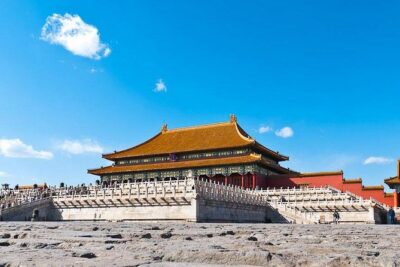
Beijing Historical Tour I – Forbidden City, Tiananmen Square & Temple of Heaven
Read our review →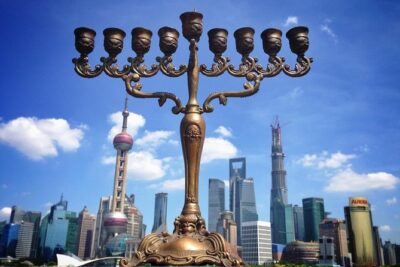
Tour of Jewish Shanghai led by a Jewish History Expert
Read our review →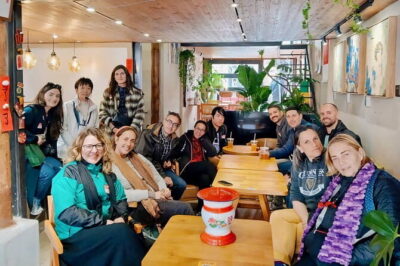
Beijing Historic City Guided Walking Tour + Calligraphy Creation
Read our review →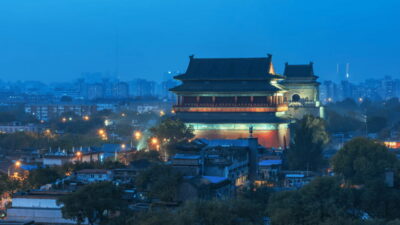
Bell and Drum Towers Entry Ticket—Historic Landmark
Read our review →
Shenzhen History , Culture & Scenic +(Drone Delivery)tour
Read our review →
Classic The Silk Road Half Day Tour: The World Heritage –Mogao Grottoes
Read our review →Browse the lists this tour appears in