
Reviewed · TERRACOTTA ARMY TOURS
Terracotta Warriors Museum Ticket with Professional English-speaking tour guide
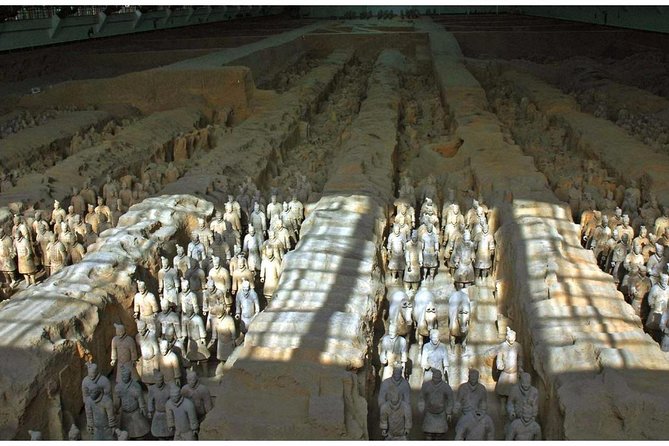
The first sight is the one you came for: thousands of life-size clay soldiers arranged in a vast excavation hall, each face slightly different. This tour puts an English-speaking guide beside you as you move through Pits 1, 2, and 3, rather than leaving you to make sense of Qin Dynasty history on your own. Skipping the ticket line is especially useful when the museum is packed.
I like the focused two to three-hour length, and I like that the admission ticket is included. Guides such as Chelsea, Cynthia, Alice, Freya, Peter, and Wangkai have been praised for clear English, good stories, and help with photos. The tradeoff is that transport and lunch are not included, and a few visitors found the pace rushed or encountered unwanted attempts to sell extra items.
Key points to know before booking
- Three archaeological pits included: You visit Pits 1, 2, and 3, where the scale and arrangement of the army change from hall to hall.
- English explanations matter here: A guide can explain the emperor’s tomb project, the soldiers’ creation, and what you are actually seeing among the crowds.
- Ticket line access is included: Your guide meets you at the museum ticket office and helps you enter without handling the process alone.
- Allow two to three hours: This is a concentrated museum visit, not a full-day excursion with transport and lunch.
- Crowds are part of the deal: The main pit can be extremely busy, especially around national holidays and at opening time.
- Guide quality affects the experience: Chelsea, Cynthia, Alice, Freya, Peter, Jimmy, Nancy, and Wangkai are among the guides praised for strong English and useful explanations, though experiences can vary.
Why the Terracotta Army is worth your time
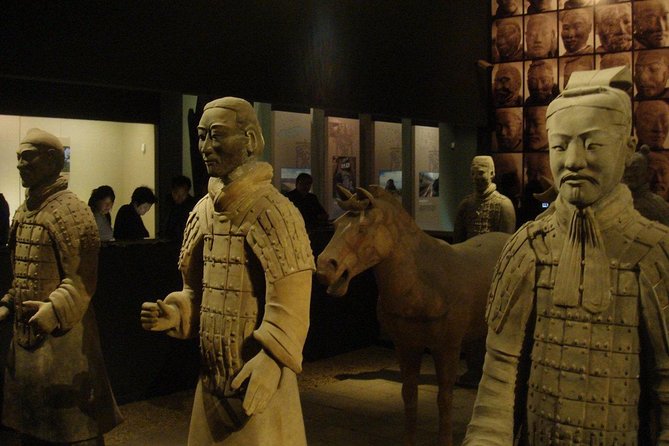
The Terracotta Army is not a small display of ancient statues behind glass. It is an enormous underground military formation built for Qin Emperor Ying Zheng, the ruler who unified China’s six warring states more than 2,000 years ago.
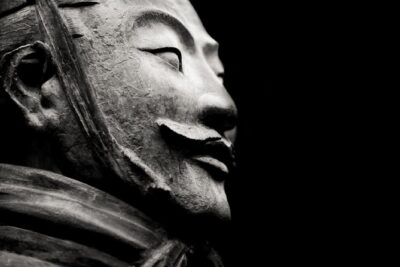
The scale gives the place its punch. You look down into a huge pit and see ranks of soldiers, horses, broken figures, restored figures, and ongoing archaeological work. The soldiers are life-size, and their faces differ in expression and detail. Even after seeing photographs, the real sight has a force that photographs cannot quite carry.
The story behind the site is equally striking. Ying Zheng began building his mausoleum at 13. Nearly 720,000 workers and 38 years were needed to complete the vast project. The army was intended to protect the emperor after death, so the museum offers more than ancient sculpture. It shows how power, belief, labor, and military order came together in early Imperial China.
You can visit without a guide, but the pits do not explain every detail in a way that is easy to follow. A professional English-speaking guide gives you a framework: why the army was made, how the figures were produced, what the excavation has revealed, and how to compare the different pits.
More Museums in Xi'an
- Half-Day Mini Group Xian Tour to Terracotta Warriors Museum
★ 5.0 · 467 reviews - Private Xi’an Tour: Terracotta Warriors, Hanyangling Museum, Cave Homes
★ 5.0 · 101 reviews - Xi’an: Terracotta Army Museum Group Tour
★ 4.5 · 85 reviews
Meeting your guide at the museum
This experience does not include hotel pickup or an air-conditioned vehicle. You make your own way to the museum and meet the guide at the museum ticket office. That arrangement keeps the price lower than a tour with private transport, but you need to plan your route to the site yourself.
The guide’s contact details are provided in advance, and communication through WeChat has been used by some visitors. That can be useful at a large entrance area where many tour groups gather. One guide, Peter, was also praised for meeting visitors outside the museum, helping with tickets, and supplying a small headset so the commentary could be heard more clearly.
The included ticket and line access are the main practical benefits here. You avoid standing alone at the ticket window and then trying to find an English-speaking guide among the crowds. Still, confirm the meeting instructions carefully before setting out. One poor experience involved a booking mix-up, so check the location, local time, and meeting point rather than assuming the booking platform has interpreted your plans correctly.
Pit 1, the great first look
Pit 1 is the museum’s big visual moment. It contains the broadest and most dramatic formation, with long rows of soldiers and horses arranged in military order. From the viewing area, you can see the scale of the excavation and the painstaking work that has gone into putting broken figures back together.
This is where a guide earns the fee. In the crowd, it is easy to stare at the mass of figures and miss the small details. Your guide can point out differences in facial expression, posture, clothing, and rank. You may also learn how the figures were assembled and why no two faces appear exactly alike.
The drawback is crowd pressure. The main hall can be packed, with people gathered along the railings and phones held high for photographs. Several visitors found the site impressive but crowded, and one Italian-language account suggested starting with Pit 2 or Pit 3 before tackling Pit 1 at opening time.
That advice makes sense, but the exact route depends on your guide and the group schedule. If you want time for photographs, say so early. Guides such as Chelsea were praised for helping people get pictures despite the crowds, while another visitor felt rushed through the visit. A clear request for a slower pace can make a difference.
Pits 2 and 3, smaller halls with more detail
Pits 2 and 3 give you a different view of the army. Instead of seeing only the largest mass of restored figures, you can compare layouts and types of units. The changing condition of the excavations also helps you understand that this is an active archaeological site, not a finished stage set.
Your guide should help you notice what changes from one pit to another. Pit 3 is particularly useful for understanding command and formation, while Pit 2 offers another arrangement of warriors and horses. Keep in mind that the exact amount of visible material and restoration can vary from one area to another.
The value of visiting all three pits is comparison. If you only see the famous main hall, you get the spectacle but not the full picture. Moving through the three exhibition areas gives you a better sense of how the army was organized and how archaeologists study the site.
This portion can feel hurried if the group is large or the museum is very busy. Tell your guide if you want more time in a particular pit. The tour is planned for two to three hours, so it is not designed for an all-day archaeological study, but there should be enough time for the principal halls when the visit is well managed.
More Terracotta Army Tours in Xi'an:
- Mini Group Xian Day Tour to Terracotta Army, City Wall, Pagoda and Muslim Bazaar
★ 5.0 · 1,320 reviews - Xi’an: Terracotta Army Mini Group or Private Tour
★ 5.0 · 926 reviews - Xian: Terracotta Army Ticket & Guided Bus Tour with Options
★ 4.6 · 579 reviews - Customized Private Day Tour of Terracotta Warriors and Xi’an
★ 5.0 · 513 reviews
The Bronze Chariots exhibition
The Bronze Chariots exhibition adds a finer, more detailed stop after the larger pits. The life-size army is about scale and military order. The bronze chariots offer a chance to look closely at craftsmanship and at another part of the emperor’s burial complex.
The exhibition is included in the museum visit, and it helps round out the experience. After the broad rows of clay soldiers, the chariots bring your attention to smaller forms and careful workmanship. Your guide can connect this display to the emperor’s tomb project and explain why it belongs in the same story.
You should not expect a second huge excavation hall here. The attraction is detail rather than sheer size. If you are short on time, do not skip the main pits, but make room for the chariot display if your schedule allows.
What your guide adds to the visit
The best guides make this tour feel like a guided reading of a complicated site. Chelsea is repeatedly praised for clear English, patience, answers to questions, and practical tips for food and activities in Xi’an. Cynthia is described as friendly and articulate, with enough historical detail for a useful two-hour introduction.
Alice helped visitors concentrate on the main exhibition areas without adding transport or unrelated attractions. Freya was praised for being engaging and for handling travel delays with patience. Peter helped with tickets, sound, and photo positions. Jimmy, Nancy, and Wangkai were also praised for clear explanations and strong command of the subject.
These details matter because the museum can be noisy and crowded. A guide who speaks clearly, uses a headset, and knows where to pause can save you from missing half the explanation. You can also ask questions instead of simply reading signs and following the group.
There is one caution. A few people felt that guides repeated information, rushed the route, or pushed visits to shops, purchases, or an extra meeting with a local farmer. One visitor had to decline the farmer visit several times. That is not part of the core attraction, so be direct if you want only the museum.
The guide style may also affect how independent you feel. Some people want a concise historical tour and time for photographs. Others prefer a guide who explains every figure and answers questions at length. At the start, tell your guide which approach suits you.
Crowds, timing, and the two-hour format
The advertised duration is about two to three hours. That is a sensible length for the core museum areas, especially if you are fitting the Terracotta Army between other Xi’an sights.
Do not confuse the short format with a quick glimpse. With the ticket, three main pits, and the Bronze Chariots exhibition included, the visit covers the essential areas. But you will not have the leisurely rhythm of a full-day private excursion, especially during a national holiday or a busy weekend.
Crowds are the main variable. The museum can become intensely busy, with thousands of people moving through the halls. A guide can help you keep moving and find better viewing positions, but no guide can make the crowd disappear.
If you care about photographs, say so before the tour begins. One visitor felt hurried and wanted more time for pictures, while others praised guides for finding good photo spots and allowing enough time. That contrast suggests a simple rule: speak up early rather than hoping the guide guesses your priorities.
Is $45.87 good value?
At $45.87 per person, the tour offers a reasonable middle ground. You receive the museum entrance ticket, access to Pits 1, 2, and 3, and an English-speaking guide. For a major archaeological site where the story adds a great deal to what you see, that combination can be worth paying for.
The price looks better if you are uncomfortable dealing with a crowded ticket area or if you want historical context in English. It also saves you from haggling with guides who may approach visitors near the ticket office. You know the cost in advance, and group discounts may be available.
The value is weaker if you already have a strong plan, want to spend a long time photographing every section, or need transportation from your hotel. Since the vehicle and lunch are not included, you must budget separately for getting to the museum and eating afterward.
Some groups turn out very small, even just a few people, while the exact group size is not guaranteed. A small group can make it easier to ask questions and set the pace. A larger group may be less personal, though a good guide can still keep the visit organized.
Who should book this experience?
I would choose this tour if you want the main Terracotta Army experience without paying for a full private day with a car. It suits first-time visitors who want the essential history, a confirmed entrance ticket, and help dealing with the crowds.
It is also a good match for solo visitors and couples who prefer not to negotiate with guides at the museum. The English explanations are especially useful if you want to understand the emperor’s tomb project, not just take photographs of the soldiers.
Families and older visitors may appreciate the focused length, but the crowd and walking pace are worth considering. The tour is listed as suitable for most participants, yet the museum can be busy and physically tiring. Ask for a manageable pace if needed.
I would look elsewhere if your priority is private pit access, hotel transport, lunch, or a long, unhurried archaeological session. Private pit access is not part of the included program, and at least one visitor expected it and was disappointed.
Free cancellation is available until 24 hours before the start time. Changes or cancellations inside that window are not refundable, and poor weather may lead to a new date or a full refund.
Should you book it?
Book this experience if you want an efficient introduction to one of China’s most important ancient sites, with the ticket and an English-speaking guide handled together. The strongest part is the guided interpretation of Pits 1, 2, and 3, especially when you get a patient guide such as Chelsea, Cynthia, Alice, Freya, or Peter.
Before booking, make sure you are comfortable arranging your own transport and lunch. Contact the guide, confirm the meeting point, and state that you want time for photographs and no shopping stops. With those points clear, the $45.87 price gives you a useful, focused visit to the Terracotta Army rather than a confusing wander through a very crowded museum.
FAQ
What is included in the tour price?
The price includes admission to Emperor Qin Shihuang’s Terracotta Warriors Museum, access to Pits 1, 2, and 3, and a professional English-speaking guide.
How long does the experience last?
Plan for approximately two to three hours.
Does the tour include hotel pickup?
No. Hotel pickup is not included. You make your own way to the museum and meet the guide at the museum ticket office or agreed meeting point.
Is transportation included?
No. An air-conditioned vehicle is not included.
Is lunch included?
No. Lunch is not included.
Does the tour include the Bronze Chariots exhibition?
The museum visit includes access to the Exhibition of Bronze Chariots along with the main Terracotta Army areas.
Can I skip the entrance line?
The experience includes guaranteed skip-the-line access for the museum entrance process.
Is private pit access included?
No. The included program covers the regular museum areas, including Pits 1, 2, and 3. Private pit access is not listed as an inclusion.
Can most people participate?
Yes. The experience states that most travelers can participate.
What is the cancellation policy?
You can cancel at least 24 hours before the local start time for a full refund. Cancellations or changes made less than 24 hours before the start time are not refunded or accepted. If poor weather causes the experience to be canceled, you can receive a different date or a full refund.
Newly listed around Xi'an
- Xi’an: Terra-Cotta Warriors Entry with Optional Guide★ 4.0 · 18 reviews
- Authentic Old Xi’an Back Alley Food Tour★ 5.0 · 18 reviews
- 1-Day Terracotta Warriors Tour from Beijing/Chengdu/Shanghai★ 4.9 · 6 reviews
- 1 Day Beijing to Xi’an Terracotta Warriors Tour by Air★ 5.0 · 5 reviews
- Xi’an Xianyang Airport to Hotels:Private transfer with Meet & Great service★ 5.0 · 15 reviews
- Terracotta Army, Big Wild Goose Pagoda&City Wall Full Day Tour★ 4.5 · 47 reviews
- Xi’an: Tang Dynasty Music and Dance Show with Round Trip Transfer★ 4.4 · 8 reviews
- Xi’an Morning Food & Market Tour by TukTuk★ 5.0 · 46 reviews
Terracotta Army Tours, compared.

Mini Group Xian Day Tour to Terracotta Army, City Wall, Pagoda and Muslim Bazaar
Read our review →
Terracotta Army Ticket & Guided Bus Tour with Options
Read our review →
Customized Private Day Tour of Terracotta Warriors and Xi’an
Read our review →
Exclusive Terracotta Army Tour & Local Family Lunch
Read our review →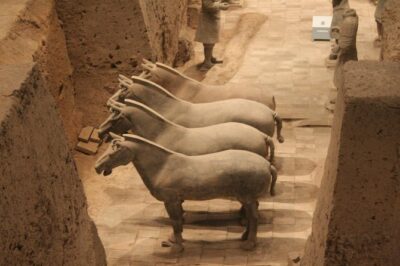
Half-Day Mini Group Xian Tour to Terracotta Warriors Museum
Read our review →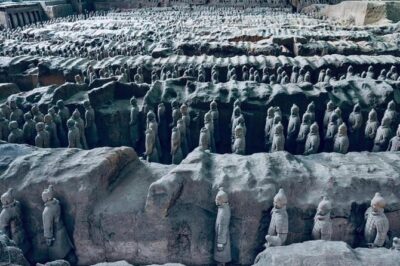
Private Customizable Terracotta Warriors Day Tour with Options
Read our review →Browse the lists this tour appears in