
Reviewed · 7-DAY EXPERIENCES
7 Days Silk Road Adventure with Desert Feast and Historical Sites
The best part of this 7-day Silk Road route is the steady change of scene. You begin beside the Yellow River in Lanzhou, then move through Buddhist caves, imperial temples, desert fortresses, striped rock hills, and finally the Mogao Caves near Dunhuang. I especially like the hands-on mural copying session and the private transport, which makes a long route far easier to manage.
I also like the mix of quiet cultural stops and lively evenings, from Sanpao Tai tea by Zhongshan Bridge to the Dunhuang Night Market and the desert dinner with camel rides, ATVs, a bonfire, and fireworks. The main drawback is the pace: this is a road-heavy trip with several long days, and the desert activities may feel more staged than the cave temples and museums.
Key points at a glance
- Mogao Caves and mural copying: See one of China’s finest collections of Buddhist art, then try traditional painting techniques yourself.
- A full Hexi Corridor route: Visit Lanzhou, Wuwei, Zhangye, Jiayuguan, and Dunhuang in one carefully arranged journey.
- Private transport for your group: Vehicle size changes with party size, from a five-seat SUV to a tourist coach for larger groups.
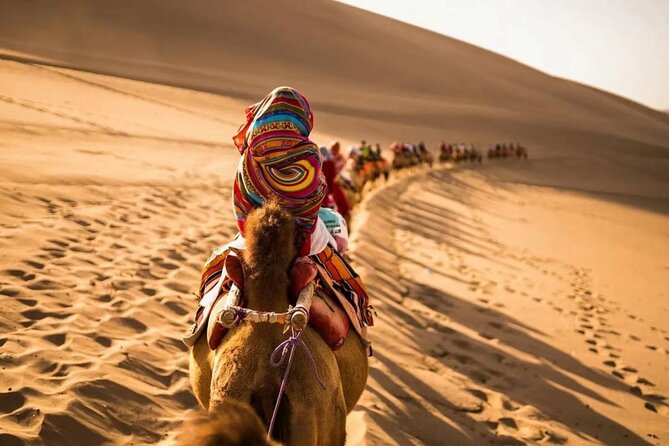
- Desert evening entertainment: Camel rides, ATVs, a meal, bonfires, and fireworks add a playful side to the Silk Road setting.
- Six nights in four-star hotels: Lodging, most meals, attraction tickets, and insurance are included in the $2,499 price.
- A strong Buddhist-art focus: Tianti, Mati, and Mogao offer three very different ways to understand cave temples along the old trade route.
Why this Silk Road journey works
This is not a quick city tour with one famous stop added at the end. The route follows the old Hexi Corridor through Gansu, linking places that once connected China with Central Asia. You see how Buddhism, trade, military power, and local art all met along this narrow passage between mountains and desert.
I like the way the itinerary builds toward Dunhuang. Lanzhou introduces the Yellow River and the province’s collections. Wuwei brings early Buddhist art and Confucian traditions. Zhangye adds a grand temple and the striped Danxia hills. Jiayuguan brings the Great Wall and frontier history. Dunhuang finishes the trip with the Mogao Caves, night market, and desert activities.
At $2,499 per person, the value depends on what you normally pay for private travel in China. The price includes six nights in local four-star hotels, six breakfasts, five lunches, six dinners, entrance fees, private air-conditioned transport, an English-speaking guide, and travel agency liability and accident insurance. You are paying for convenience as much as sightseeing.
The route covers a lot of ground, so this is not the right choice if you want long, slow mornings or several free afternoons. It is a good fit if you want the major Silk Road sights arranged for you and prefer a private vehicle to public transport.
More Silk Road Tours in China:
- Private Customized the Silk Road Tour
★ 5.0 · 20 reviews - 8-Day Silk Road Trip of Dunhuang, Jiayuguan, Zhangye with Accommodation
★ 5.0 · 16 reviews - 3-Day Private Silk Road Tour of Dunhuang: Mogao Grottoes, Yulin Grottoes, Crescent Moon Pool
★ 5.0 · 11 reviews
Day 1: Yellow River views in Lanzhou
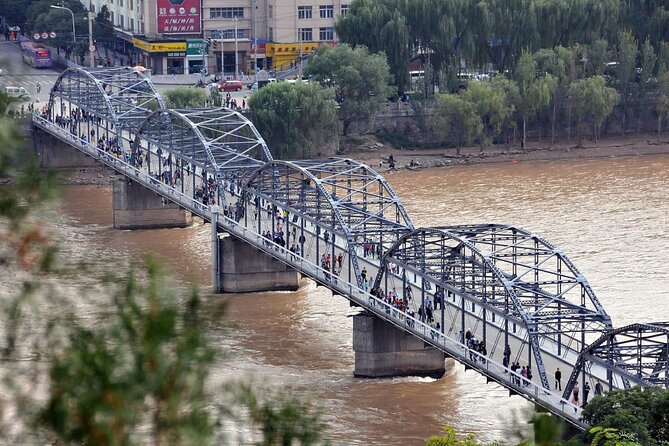
The trip begins with airport pickup in Lanzhou at 9:00 in the morning, although the first listed sightseeing stop is in the evening. That gives you time to arrive, settle in, and get oriented before heading to Zhongshan Bridge, also known as the Iron Bridge of the Yellow River.
This is a gentle first evening. You can walk beside the river, enjoy the lights, and order Sanpao Tai tea, a local Lanzhou tea served in a lidded bowl. The stop lasts about an hour and has no admission fee.
I see this as a useful start rather than a major attraction. After a flight, you will probably appreciate a simple walk more than a packed museum visit. Breakfast and lunch are not included on arrival day, so plan for those on your own. Dinner is included.
Day 2: From Lanzhou museum cases to Tianti grottoes
The Gansu Provincial Museum gives you three hours to put the rest of the trip into context. Its collection includes more than 350,000 cultural relics, with Silk Road objects, Buddhist statues, ancient fossils, and other material from across the province.
The museum matters because the next several days can otherwise feel like a series of impressive but disconnected places. Here you get a broader view of Gansu, from early life and geology to the religions and trade routes that shaped the region. Three hours is enough for a serious visit, though you may need to choose what interests you most.
The afternoon moves to the Tianti Grottoes near Wuwei. These caves date to the late fourth century and are among the earliest Buddhist cave temples in China. The site is often linked with the beginnings of Buddhist art in Gansu.
You have about two hours here. Compared with the Mogao Caves, Tianti is a quieter and less famous stop, which is part of its appeal. I would pay close attention to the sculptures and the setting rather than expect a huge complex with endless rooms. The entrance fee is included.
This is also the first day when the road portion becomes important. The private vehicle means you do not have to organize transfers between Lanzhou, Wuwei, and the cave site yourself. The tradeoff is time spent sitting in the car.
Day 3: Wuwei’s temple and Mati’s cliff caves
Wuwei Confucian Temple offers a change of mood. Instead of Buddhist grottoes, you see a traditional Confucian complex with old architecture and stone inscriptions. The visit lasts about two hours and helps show that Gansu’s cultural story is not only about cave art.
I like this contrast. A trip built around the Silk Road can easily become one Buddhist statue after another. The temple adds education, government, scholarship, and local tradition to the picture.
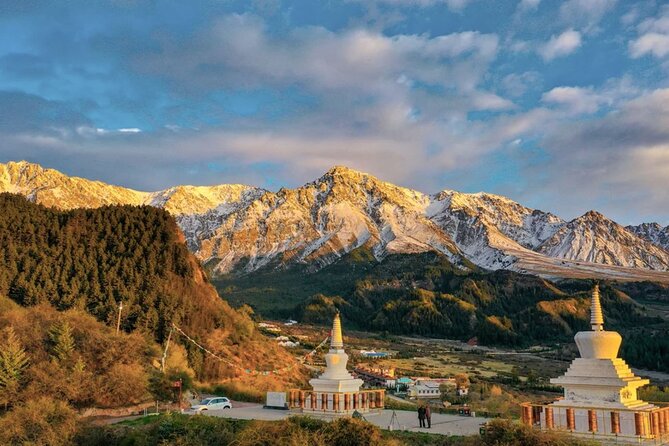
The next stop is Mati Temple, a group of cave temples set along dramatic cliffs near Wuwei. You have three hours to explore the site, view ancient statues and murals, and take in the mountain setting.
Mati is a good place to wear sturdy shoes and allow time for uneven paths. The supplied details do not specify walking difficulty, so you should expect a more physical visit than a museum. The combination of cliffside caves and old religious art makes it one of the more distinctive stops on the route.
With three major cultural visits across two days, the program is full. I would not plan extra sightseeing in the evening unless your group has plenty of energy.
More Historical Tours in China:
- Between Capitalism & Communism: Hong Kong History Tip Based Tour
★ 5.0 · 234 reviews - Beijing Historical Tour II including Summer Palace, Lama Temple & Panda Garden
★ 4.0 · 187 reviews - Beijing Historical Tour I – Forbidden City, Tiananmen Square & Temple of Heaven
★ 4.0 · 120 reviews - Tour of Jewish Shanghai led by a Jewish History Expert
★ 5.0 · 106 reviews
Day 4: Zhangye’s reclining Buddha and striped hills
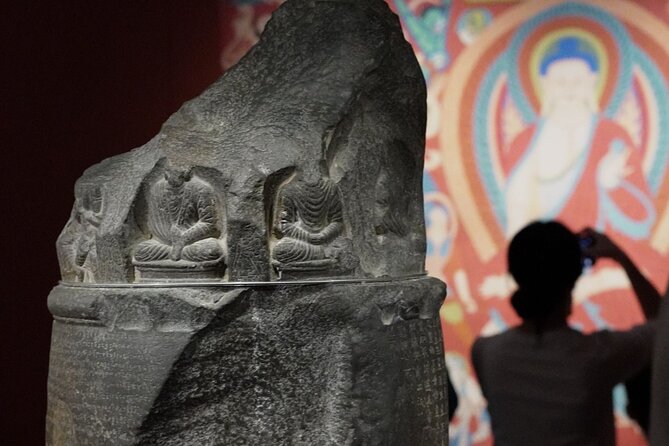
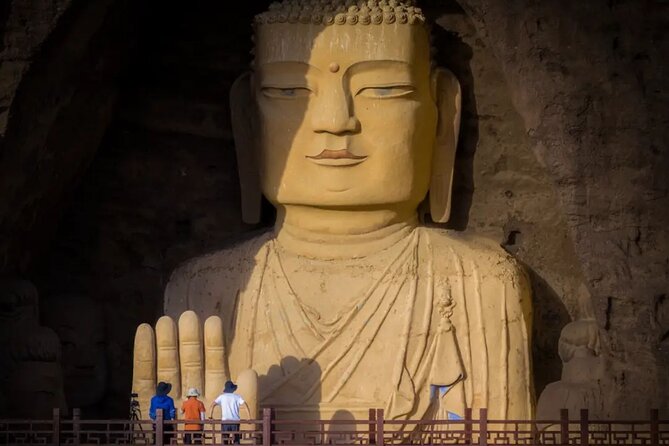
Dafo Temple in Zhangye is famous for its 35-meter-long reclining Buddha. The two-hour visit includes the temple buildings, murals, sculptures, and traditional architectural details.
The scale of the Buddha gives this stop a clear focus. You do not need to wonder what to look for. Still, leave time to inspect the surrounding rooms, since the smaller details can be just as rewarding as the main figure.
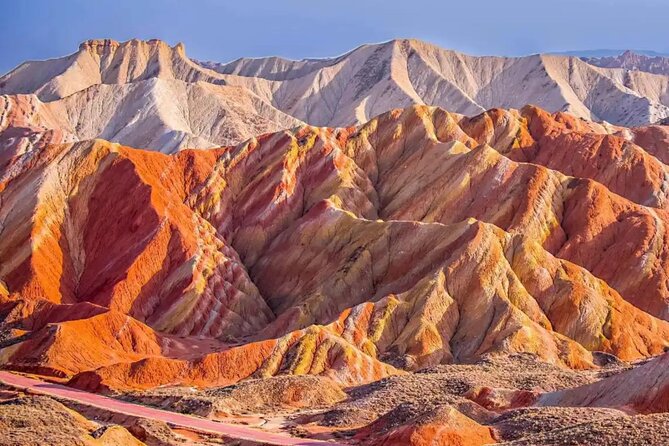
Later, the route heads to Zhangye Qicai Danxia Scenic Spot, known for its red, orange, yellow, and green rock layers. The colors come from geological formations built over millions of years, and the three-hour visit gives you time to view the hills from the scenic area.
This is one of the tour’s strongest visual changes. After several days of temples and inscriptions, the Danxia hills offer wide views and open space. The colors depend on light and weather, so a photograph cannot guarantee the same effect you will see in person.
The stop is also a reminder that the old Silk Road was shaped by nature as much as by people. Mountains, dry plains, and narrow travel corridors influenced where settlements and fortresses could grow.
Day 5: Great Wall defenses and Dunhuang after dark
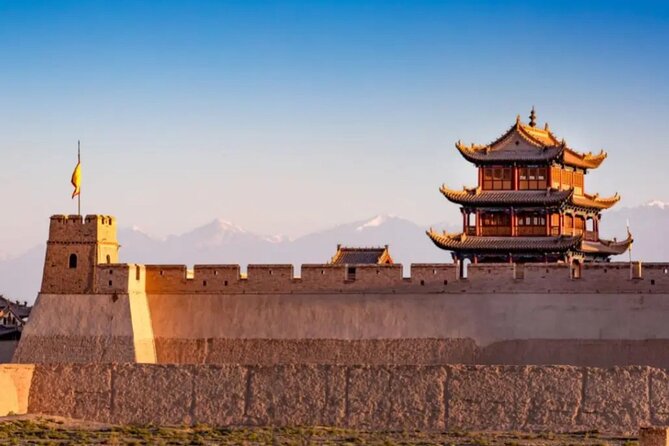
Jiayuguan Fortress is the day’s main historical stop. Known as the First Pass Under Heaven, it marks the western end of the Great Wall system. You have two hours to walk along the walls, see the watchtowers, and understand the fortress as a guarded gateway between China and the lands farther west.
The scale is easier to appreciate from the walls. This was not simply a scenic outpost. It controlled movement through a strategic passage, and the desert setting makes the military purpose plain.
The short visit to Xuanbi Great Wall lasts about an hour. This section was built along steep slopes and offers dramatic views over the mountains and dry country. Because the stop is brief, you may feel that there is more to see than time allows, but it gives you a second look at Great Wall construction in a very different setting.
The evening in Dunhuang shifts from stone walls to food and shopping. Dunhuang Night Market runs for about two hours and has local snacks, handicrafts, and souvenirs. It is a good chance to try regional food and browse without a formal schedule.
I would save room for small bites rather than expect a quiet sit-down meal. Dinner is included during the tour, but the night market gives you the chance to sample things outside the planned meals. Personal expenses such as drinks and shopping are not covered.
Day 6: The Mogao Caves and your own painted panel
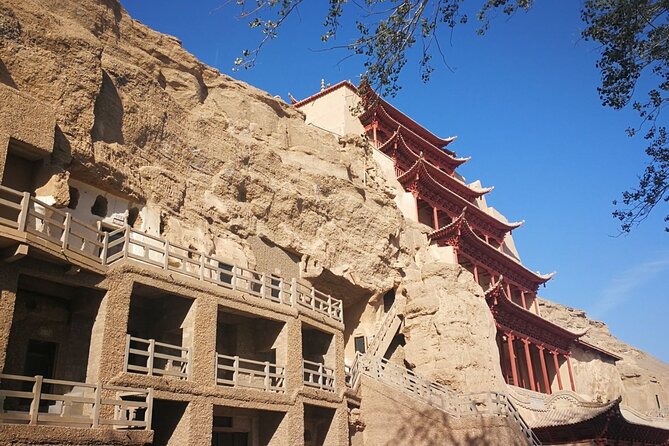
Mogao Caves is the reason many people choose this trip. The site holds more than a thousand years of Buddhist murals and sculptures carved and painted into cliffside caves near Dunhuang.
You have four hours here, which is welcome. The caves are not a place to rush through. Each room can differ in size, color, subject, and condition, and the art rewards patient attention. The guide can help explain what you are seeing, but you should also give yourself quiet time to look.
The Mogao visit is the cultural high point of the week, but it can be intense. You will have already seen Tianti and Mati, which helps you notice how the art and cave settings change from one site to another. The long visit also means this day is not light, even though the route has reached Dunhuang.
The afternoon mural copying experience lasts about 90 minutes. Under an instructor’s guidance, you learn traditional methods and make your own version of a Buddhist mural design.
This is one of the smartest additions to the itinerary. Ancient art can feel distant when you only view it behind barriers. Trying to reproduce the patterns, colors, or lines gives you a better sense of the patience and control required. It is not a full art course, but it adds a personal memory to a day otherwise centered on looking.
The tour also includes a desert camp dinner with camel rides, ATVs, a bonfire, and fireworks. The supplied schedule does not assign this activity to a specific day, so confirm the exact timing with Tangola Travels before booking flights or making outside plans. It is a fun counterpoint to the solemn cave visits, though people seeking a quiet desert evening may find the fireworks and motor activities less peaceful.
Comfort, vehicles, meals, and group size
The private format is a major practical benefit. For two people, the vehicle is a five-seat SUV. Groups of three to five use a seven-seat minivan, six to seven people use a nine-seat van, and groups of eight or more travel in a 15-seat minivan or tourist coach.
That range matters. A private vehicle means your group controls the pace within the planned route and does not have to wait for strangers. Larger parties should ask how much luggage space remains once the seats are filled, since the vehicle size is based on group size.
You stay six nights in local four-star hotels. The description does not name the hotels, so I would request the property names and locations if that matters to you. Breakfast is included on six mornings, along with five lunches and six dinners. Breakfast and lunch on arrival day are not included, and lunch and dinner on the final day are also your responsibility.
An English-speaking guide is included. The available feedback praises the guide service and describes guides as making the history easy to follow, but no complete guide name is provided. If you have specific language or subject needs, ask Tangola Travels to confirm the guide assigned to your dates.
What the $2,499 price really buys
At first glance, $2,499 is a sizeable price for seven days. The better question is what you would have to arrange separately: airport pickup, intercity transport, local transfers, six hotel nights, entrance tickets, meals, a guide, and insurance.
For a private tour covering this much ground, the package has practical value. The entry fees for the major sites are included, as are the vehicle and most meals. Group discounts are offered, so the per-person cost may work better for three or more people sharing the private arrangement.
The value is weaker if you dislike scheduled touring or want to choose your own restaurants and hotels. Drinks, laundry, optional services, and other personal expenses are extra. You should also budget for any snacks or souvenirs at Dunhuang Night Market.
Cancellation terms are fairly strict close to departure. You receive a full refund if you cancel at least six full days before the start time. Cancellation two to six full days ahead allows a 50 percent refund, while cancellation less than two full days ahead is nonrefundable.
Who should book this route
I would recommend this tour to anyone who wants a first, well-organized look at Gansu’s Silk Road sites without solving every transfer. It suits people who value private transport, a clear schedule, major Buddhist sites, and a mix of culture with light adventure.
It is especially good for a small group of friends or family members. The private vehicle and group discounts make the arrangement more attractive when several people share the trip.
I would hesitate if you have limited mobility, dislike long road days, or want to spend several hours at each site without a fixed departure. The program includes many places, and most stops have a set time. The schedule is designed for coverage, not for lingering.
Should you book the 7-day Gansu Silk Road tour?
Book it if you want the Mogao Caves within a wider story that includes Wuwei, Zhangye, Jiayuguan, and the Yellow River. The mural session, private transport, desert dinner, and included tickets add real value to a route that would be difficult to arrange independently.
Skip it if your priority is a slow holiday, flexible meals, or deep time in one city. For the right person, this is a strong introduction to Gansu: demanding in pace, generous in sights, and full of sharp changes between temple halls, mountain caves, fortress walls, painted hills, and desert night.
FAQ
Where does the tour begin?
The tour begins with pickup at Lanzhou Airport in Lanzhou, China. The stated start time is 9:00 am.
Where does the tour end?
The tour ends with a transfer to Dunhuang Airport on Day 7, based on your flight schedule.
How long is the experience?
The tour lasts approximately seven days and includes six nights of accommodation.
Is this a private tour?
Yes. Only your group participates in the private tour or activity.
What type of vehicle is provided?
Two people travel in a five-seat SUV. Groups of three to five use a seven-seat minivan, six to seven use a nine-seat van, and groups of eight or more use a 15-seat minivan or tourist coach.
Are attraction tickets included?
Yes. Entrance fees for the listed attractions are included, including the Gansu Provincial Museum, Tianti Grottoes, Wuwei Confucian Temple, Mati Temple, Dafo Temple, Zhangye Danxia, Jiayuguan Fortress, Xuanbi Great Wall, and Mogao Caves.
Are meals included?
Six breakfasts, five lunches, and six dinners are included. Breakfast and lunch on arrival day are not included, and lunch and dinner on the final day are not included.
What is the cancellation policy?
You can receive a full refund when canceling at least six full days before the experience start time. Canceling two to six full days ahead allows a 50 percent refund. Cancellations less than two full days before the start are not refunded.
More Week-Long Trips from China
- 7 Days Lhasa to Kathmandu Overland Small Group Tibet Tour via EBC
★ 5.0 · 188 reviews - 7-Day TaiChi & Qigong Wellness Retreat in China
★ 5.0 · 20 reviews - 7 Days Private Tour of Beijing, Xian, Shanghai by Bullet Train
★ 5.0 · 4 reviews - 7Day Sanjiang+ZhaoXing+Huangguoshu Waterfall private Tour
★ 3.5 · 3 reviews
Newly listed around China
- Glass Bridge,Yuanjiajie Avatar Mountain&Tianzi Mountain day tour★ 5.0 · 30 reviews
- 1-Day Zhangjiajie National Forest Park(Avatar) and Tianmen Mountain Private Tour★ 5.0 · 5 reviews
- All Included Classic Private Day Tour for Avatar & Tianzi Mount★ 5.0 · 16 reviews
- VIP Mini Group:Avatar Mountains & Tianmen Mountain & Glass Bridge★ 5.0 · 5 reviews
- Yuanjiajie Avatar and Tianzi Mountain and Rice Field Village Tour★ 5.0 · 4 reviews
- 5-Day Private Zhangjiajie Ultimate Experience Tour★ 5.0 · 6 reviews
- Tianmen Mountain National Forest Park Tickets★ 5.0 · 3 reviews
- Zhangjiajie Tianmen & Glass Bridge Private All-Inclusive Tour★ 5.0 · 26 reviews
7-Day Experiences, compared.
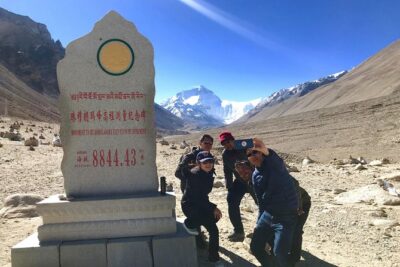
7 Days Lhasa to Kathmandu Overland Small Group Tibet Tour via EBC
Read our review →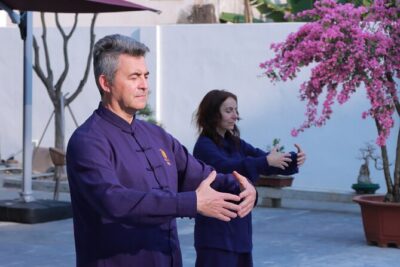
7-Day TaiChi & Qigong Wellness Retreat in China
Read our review →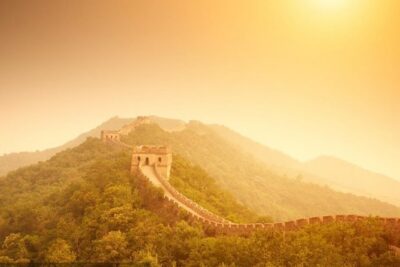
7 Days Private Tour of Beijing, Xian, Shanghai by Bullet Train
Read our review →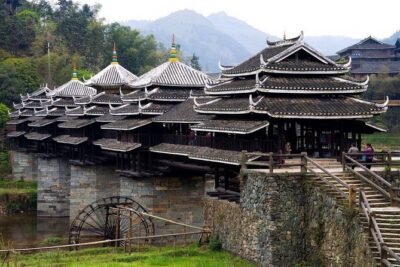
7Day Sanjiang+ZhaoXing+Huangguoshu Waterfall private Tour
Read our review →Browse the lists this tour appears in