
Reviewed · SILK ROAD TOURS
8-Day Silk Road Trip of Dunhuang, Jiayuguan, Zhangye with Accommodation
The great appeal here is the sweep of the route. In eight days, you cross the Hexi Corridor from Dunhuang to Zhangye, moving from Buddhist cave art and desert springs to Han Dynasty ruins, the western end of the Ming Great Wall, and Zhangye’s striped Danxia hills. The Mogao Caves and Crescent Moon Spring are the early highlights, while Jiayuguan and Zhangye add a strong mix of military history and Buddhist art.
I like that the price of $2,199 includes seven nights, all 21 main meals, air-conditioned transport, bottled water, admissions, airport or railway transfers, and local guiding. I also like the practical planning by Steven Kang, whose communication and care are repeatedly praised, along with the chance to visit less familiar places such as Yulin Caves and Suoyangcheng.
The main consideration is the pace. Several days cover large sections of western Gansu, and the route includes stairs, outdoor walking, desert conditions, and long sightseeing blocks. This is not a lazy hotel-based holiday, but it is a useful choice if you want the major Silk Road sites handled in one private trip.
Key points to know before booking
- The route runs from Dunhuang to Zhangye, with airport or railway pickup and final transfer included.
- The Mogao Caves visit includes the Digital Film Center, followed by a smaller pagoda and an evening performance when the show is operating.
- Desert time includes Crescent Moon Spring and a camel ride, although the desert portion can be hot, dusty, and physically tiring.
- The itinerary reaches remote Silk Road remains, including Yumen Pass, Yulin Caves, and Suoyangcheng.
- All breakfasts, lunches, and dinners are included, which makes a major difference in places where arranging meals and menus can slow you down.
- This is a private tour, so only your own group participates, with child seats and wheelchair support available if requested.
A practical route across western Gansu
This trip follows one of the most rewarding sections of the old Silk Road. You begin in Dunhuang, an oasis town long linked with trade between China and Central Asia, then continue east through Jiayuguan and finish around Zhangye.
The route is not simply a string of famous photo stops. It shows how trade, religion, military power, and desert travel shaped this part of China. Buddhist murals appear beside old military gates. A fragile spring sits below bare dunes. Later, brightly colored rock formations and a vast Buddhist statue change the mood again.
You receive a private vehicle with air-conditioning and bottled water. That matters in Gansu, where outdoor sites can be exposed and some transfers are substantial. The tour also includes your admissions, so you are not repeatedly reaching for cash at each entrance.
At $2,199 per person, the value depends on how much independent planning you would otherwise need. Seven nights of hotels, seven breakfasts, seven lunches, seven dinners, transfers, transport, guides, and entrance tickets are included. You are paying more than a simple hotel-and-transport package, but far less in daily decision-making. For a first visit to this region, that convenience is a real part of the value.
More Silk Road Tours in Dunhuang:
- Private Customized the Silk Road Tour
★ 5.0 · 20 reviews - 3-Day Private Silk Road Tour of Dunhuang: Mogao Grottoes, Yulin Grottoes, Crescent Moon Pool
★ 5.0 · 11 reviews - Dunhuang Private Silk Road Day Tour: Mogao Caves, Crescent Spring
★ 4.5 · 7 reviews
Day 1: A simple arrival in Dunhuang
Your guide meets you at Dunhuang Airport or Dunhuang Railway Station and takes you to the hotel by comfortable car, van, or bus. The first day is intentionally light, giving you time to settle into the hotel rather than rushing straight to a monument.
The accommodation in Dunhuang is described as a comfortable four-star hotel. Hotels in Jiayuguan and Zhangye are also included, with air-conditioning and bottled water provided.
This arrival plan works well if you are reaching Dunhuang by air or train from another Chinese city. Your passport details are required when booking, and children must travel with an adult. If you need a wheelchair or infant seat, request it in advance.
Day 2: Mogao Caves, White Horse Pagoda, and an evening show
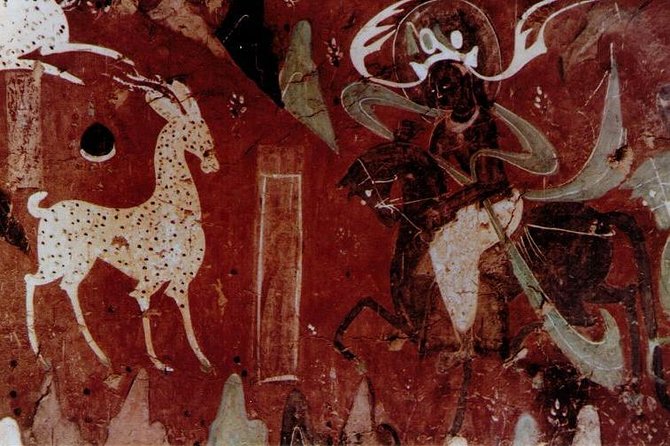
The Mogao Caves are the cultural center of the trip. The complex contains 492 grottoes, around 45,000 square meters of murals, and about 2,400 painted statues, though not every cave is open on every visit. The scale alone helps explain why the site deserves several hours.
Your visit also includes the Digital Film Center. This is useful because it gives you background before entering the caves and helps explain the wider importance of the site. Inside, you can expect a mixture of painted figures, murals, and carved spaces rather than one single grand chamber.
I would treat this as a day for careful looking, not quick photographs. Cave visits are controlled, and the art is the point. Your guide can add context about the religious images and the Silk Road setting, while the film center helps you understand what you are about to see.
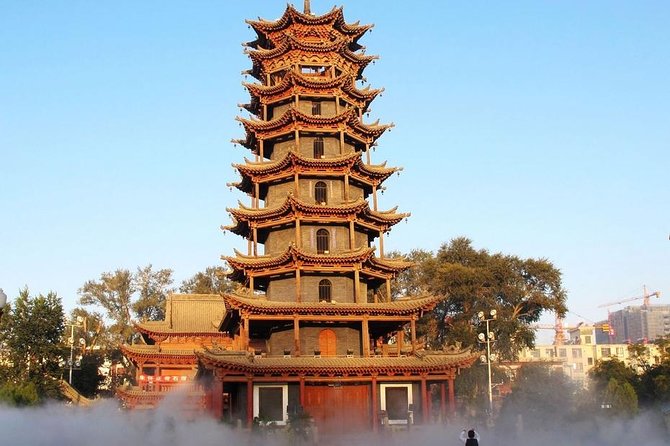
After lunch, you visit the White Horse Pagoda. The stop lasts about 30 minutes, so it is a brief contrast to the Mogao Caves. Its compact scale makes it easy to fit into the day without taking energy away from the main visit.
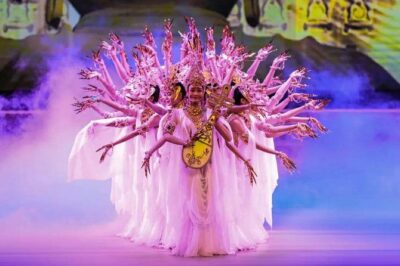
In the evening, the Dunhuang Theater presents the Silk Road dance drama. It is an enjoyable way to see the region’s past presented through music, movement, costume, and stage design. The performance is not available from November through March, so the schedule changes in the colder months. If you book for winter, do not count on this show being part of the evening.
Day 3: Han frontier ruins and the singing dunes
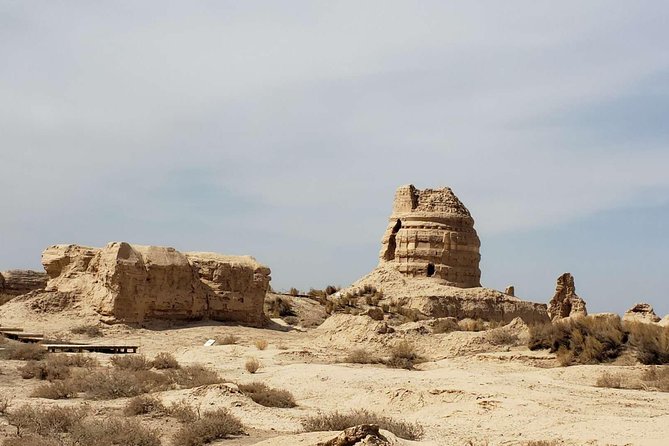
Yumen Pass and the nearby remains of the Han Dynasty Great Wall show the defensive side of the Silk Road. The Han government built walls and frontier installations to protect the border and support movement toward the western regions.
This is a more stripped-back historical stop than the Mogao Caves. You see open country, old walls, and traces of a frontier system rather than a restored palace or polished museum. That is precisely its value. The setting helps you picture how exposed travel and trade could be in ancient Gansu.
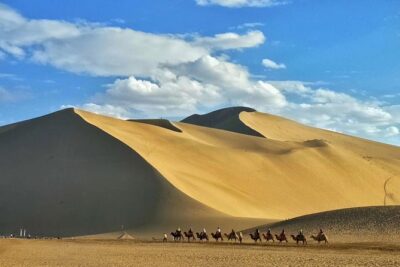
Later, the route turns to Mingsha Shan, also called the Echoing-Sand Mountain or Singing-Sand Dunes. Here you visit Crescent Moon Spring, a striking body of water set beside the dunes. The contrast between blue water and bare sand gives the stop its visual force.
A camel ride is included as part of the desert visit. It is an optional-feeling highlight for many people, but you should prepare for a dusty and bumpy experience. Wear shoes that can handle sand, protect yourself from the sun, and carry only what you need.
The desert portion lasts about three hours. That is enough time for the spring, dunes, and camel activity, but you may find the heat tiring, especially in the warmer months. The site is scenic and memorable, yet it is not a cool, shaded park. Plan your energy accordingly.
A few more Dunhuang days worth a look
- Dunhuang Private Day Tour Mogao Grottoes, Singing Dunes and Crescent Moon Spring
★ 4.5 · 6 reviews - Dunhuang Day Tour: Mogao Grottoes, Singing Sand Dunes and The Silk Road Show
★ 5.0 · 4 reviews - Your Private Gold Medal Tour Guide Service
★ 5.0 · 3 reviews - Classic The Silk Road Half Day Tour: The World Heritage –Mogao Grottoes
★ 4.5 · 3 reviews
Day 4: Yulin Caves and the ruins of Suoyangcheng
Yulin Caves are often described as a sister site to the Mogao Caves because of their related religious content, artistic style, and painted forms. This stop gives you another chance to see Buddhist cave art without treating Mogao as the only important site in the region.
The two-hour visit is valuable for comparison. You can look at how artists worked across related cave traditions and how religious art changed from one site to another. The quieter setting may also appeal if you prefer places with a stronger sense of age and distance from the main tourist circuit.
After lunch, you visit Suoyangcheng, once an important Silk Road stop. The ruins were added to UNESCO recognition in 2015, and the site helps connect the art and architecture of Dunhuang with the practical network of settlements, roads, and supply points that supported long-distance movement.
The ruins cover an open area, so expect sun and walking. This is not a quick indoor museum visit. Its interest grows when your guide explains how a settlement functioned within the corridor, which is one reason a private guide adds value here.
You then transfer toward Guazhou. Day 4 is one of the more remote parts of the trip, and it suits people who want more than the best-known Dunhuang attractions.
Day 5: Jiayuguan Pass and the Overhanging Great Wall
The route continues to Jiayuguan, home to one of the most famous military sites in western China. Jiayuguan Pass is known as the western end of the Ming Dynasty Great Wall, and the associated museum helps explain the role of the pass within the old frontier system.
The pass is more structured and restored than the Han remains you saw earlier. That makes it easier to read, but it can also feel less raw. I like the pairing because you get both kinds of experience: the weathered remains of an earlier frontier and a later fortified gateway with clearer walls and towers.
You also visit the Overhanging Great Wall. The name reflects its steep position and the climbing involved. The planned visit lasts about 90 minutes, but the physical effort may matter more than the clock. Wear shoes with a firm grip and take your time on the steps.
This is a good day for anyone interested in how the Great Wall changed from one dynasty to another. It is also a day when a private vehicle is welcome, since you do not have to work out separate transport between the pass, museum, and climbing section.
Day 6: Zhangye Danxia and painted tomb bricks
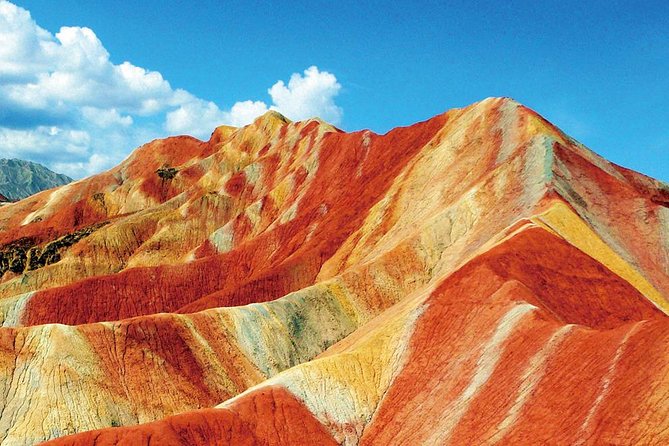
Zhangye Danxia Geopark brings a major change of scenery. The colored rock formations are the visual star of the trip, with bands and folds that look almost painted when viewed from the park’s outlooks.
The visit is scheduled for about eight hours, making this one of the longest sightseeing days. That amount of time gives you room to see the area without reducing it to one roadside photograph. Bring sun protection and comfortable footwear, since outdoor viewpoints can involve walking and waiting in exposed conditions.
The day also includes painted bricks from Wei and Jin Dynasty tombs. These images cover subjects linked with politics, the economy, military life, and culture. They offer a different kind of color from the Danxia rocks, created by human hands rather than geology.
The combination works well, but the day may feel full. If you prefer slow travel with long café breaks, this is not the gentlest section. If you want Zhangye’s most famous natural site plus an important art and archaeology stop in one day, it is efficient and worthwhile.
Day 7: Zhangye’s Giant Buddha and Horse Hoof Temple
The Giant Buddha Temple in Zhangye contains what is described as the largest Nirvana Buddha in Asia. The scale of the image gives this visit a strong focal point, but the temple is also useful for understanding Zhangye as a Buddhist center rather than simply a base for the Danxia park.
The Horse Hoof Temple Grottos add another religious site to the route. The name is linked to the deity horse footprints associated with the place. Like Yulin and Mogao, the grottos connect art, belief, and the difficult geography of western China.
The listed sightseeing time for this day is relatively short, so the schedule appears more focused than Day 6. You will want to listen closely to the guide because the stops are about more than taking a quick look at a large statue or a cave entrance.
This is also a useful day for anyone who has enjoyed the Buddhist art earlier in the trip. The sites are not interchangeable. Each adds another setting and artistic tradition to the story.
Day 8: Pingshanhu Grand Canyon and onward travel
The final morning takes you to Pingshanhu Grand Canyon. It provides one last outdoor setting before the trip ends and gives the route a natural closing point after the desert and Danxia scenery.
After lunch, you transfer to Zhangye Airport or Zhangye Railway Station. The operator can help arrange high-speed train tickets, but the ticket itself is not listed among the included services, so confirm the details before you travel.
The final transfer is a useful feature if Zhangye is one stop in a longer China itinerary. You can continue by air or rail instead of returning to Dunhuang, which saves time and avoids retracing the route.
Food, hotels, and the value of a private tour
All seven breakfasts, lunches, and dinners are included. This is more than a convenience. Food arrangements can take time when you are moving through less familiar parts of China, and the included meals remove repeated decisions from a busy route.
Vegetarian meals are available if requested when booking. You should also provide any other dietary requirements in advance. Since the meals are included, ask the operator for details about typical menus if you have strict dietary needs.
The hotels are air-conditioned, and bottled water is provided. That is important in a region with desert visits, exposed ruins, and summer heat. The accommodation is described as four-star in Dunhuang and as the best available hotels in Zhangye and Jiayuguan, though exact hotel names are not provided.
The private format is one of the strongest reasons to choose this tour. Only your group participates, so the schedule can feel more personal than a large coach trip. The guide arrangement also received strong praise for prompt communication, careful planning, and attention to individual needs. Steven Kang is the key contact associated with organizing these journeys.
Who should book this Silk Road trip?
I would recommend it to you if you want a broad first look at western Gansu without arranging every train, hotel, meal, transfer, and admission yourself. It suits people who value cultural sites as much as scenery and who are happy to spend full days on the road or outdoors.
It is also a strong option for small groups, families, and school groups. Infant seats and wheelchair support are available, though you should request them ahead of time and discuss the walking demands of specific sites.
I would think twice if you want a slow itinerary with free afternoons. The route is packed, the attractions are spread across the province, and some visits involve stairs, desert conditions, or open-air ruins. The winter schedule also lacks the Silk Road show from November through March.
The cancellation terms are straightforward: cancel at least 24 hours before the local start time for a full refund. Poor weather can lead to a new date or full refund, and last-minute changes within 24 hours are not accepted.
Should you book it?
Book this trip if you want the Silk Road story told through its strongest western Gansu sites: Mogao’s cave art, Yumen Pass, Crescent Moon Spring, Suoyangcheng, Jiayuguan, Zhangye Danxia, and the Buddhist temples.
The best reason to choose it is the combination of coverage and ease. You get remote ruins and major monuments, but the practical work of transport, meals, hotels, and admissions is handled. At $2,199, it is most worthwhile for a first visit, a private group, or anyone who would rather spend the trip looking at caves and ruins than solving logistics.
If the long days concern you, ask about the exact vehicle, hotel names, walking requirements, and meal arrangements before paying. For an active, culture-focused journey through a less familiar part of China, this is a well-planned route with unusually strong variety.
FAQ
How long is the Silk Road tour?
The tour lasts approximately eight days and includes seven nights of accommodation.
Where does the tour begin and end?
It begins with pickup at Dunhuang Airport or Dunhuang Railway Station. It ends with transfer to Zhangye Airport or Zhangye Railway Station after the visit to Pingshanhu Grand Canyon.
What meals are included?
Seven breakfasts, seven lunches, and seven dinners are included.
Is transportation included?
Yes. The tour includes an air-conditioned vehicle, bottled water, and port pickup and drop-off.
Are the entrance tickets included?
Yes. Admission tickets for the listed attractions are included.
Is the Silk Road dance show available all year?
No. The Silk Road show at Dunhuang Theater is not available from November through March.
Can vegetarian meals or accessibility equipment be arranged?
Vegetarian meals are available if requested at booking, and you should provide any other dietary requirements in advance. Wheelchairs and infant seats are available if needed.
Newly listed around Dunhuang
- Your Private Gold Medal Tour Guide Service★ 5.0 · 3 reviews
- 3-Day Private Silk Road Tour of Dunhuang: Mogao Grottoes, Yulin Grottoes, Crescent Moon Pool★ 5.0 · 11 reviews
- Dunhuang Private Day Tour Mogao Grottoes, Singing Dunes and Crescent Moon Spring★ 4.5 · 6 reviews
- Classic The Silk Road Half Day Tour: The World Heritage –Mogao Grottoes★ 4.5 · 3 reviews
- Dunhuang Private Silk Road Day Tour: Mogao Caves, Crescent Spring★ 4.5 · 7 reviews
- Private Customized the Silk Road Tour★ 5.0 · 20 reviews
- Dunhuang Day Tour: Mogao Grottoes, Singing Sand Dunes and The Silk Road Show★ 5.0 · 4 reviews
Silk Road Tours, compared.
3-Day Private Silk Road Tour of Dunhuang: Mogao Grottoes, Yulin Grottoes, Crescent Moon Pool
Read our review →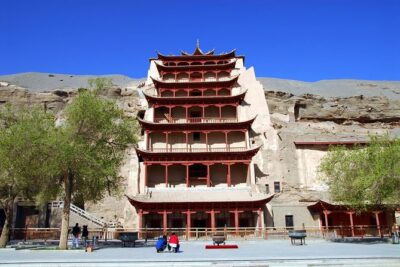
Dunhuang Private Silk Road Day Tour: Mogao Caves, Crescent Spring
Read our review →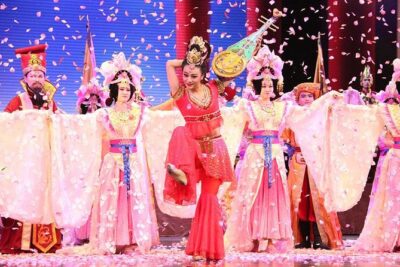
Dunhuang Day Tour: Mogao Grottoes, Singing Sand Dunes and The Silk Road Show
Read our review →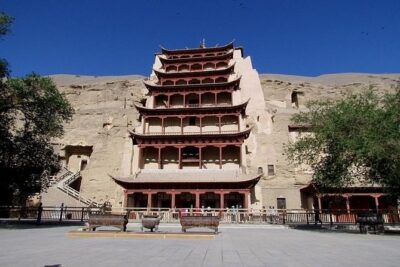
Classic The Silk Road Half Day Tour: The World Heritage –Mogao Grottoes
Read our review →Browse the lists this tour appears in