
Reviewed · HISTORICAL TOURS
Chongqing 1949 Ticket Epic Historical Spectacle
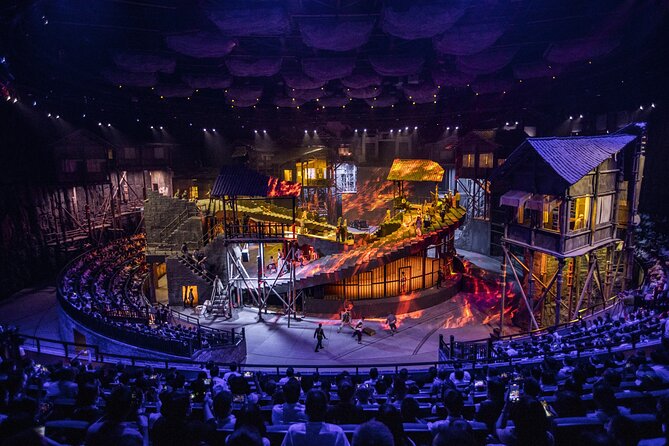
The first thing to know about Chongqing 1949 is its scale. This is not a small stage show with a few actors and painted scenery. More than 700 live performers work across a rotating stage, with water, fire, choreography, and special effects used to tell the story of Chongqing during a crucial year in China’s revolutionary past.
I like the 360 degree stage design, which gives the production a moving, changing viewpoint. I also like that the show uses theater technology to support the history rather than simply presenting a lecture. The main consideration is language: if you do not understand Chinese, you will need a translator headset, and the fixed seating areas may not offer the same view as the rotating sections.
Key Points
- More than 700 performers create a full-scale historical production rather than a small cultural performance.
- Sections A and B rotate, with Section B generally offering the best overall viewing angle.
- Water, fire, and special effects turn the story into a large visual event.
- Ciqikou provides the ticket redemption point, making this easy to pair with time in the old district.
- The show lasts about 1 to 2 hours, a manageable evening activity in Chongqing.
- A translation headset helps non-Chinese speakers follow the story and speeches.
A large stage for Chongqing in 1949
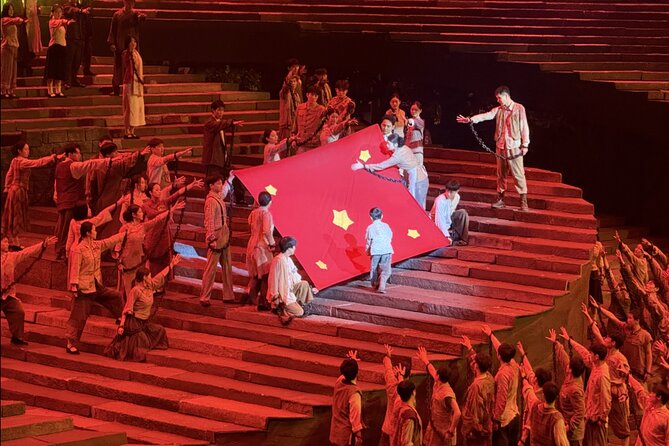
Chongqing 1949 focuses on the city’s events and spirit during 1949, a year with major revolutionary importance in China. The production presents that period through drama, music, movement, and large group scenes. You are not simply watching actors speak from one fixed platform. The production shifts around you, using the theater itself as part of the storytelling.
That matters because Chongqing is a city of dramatic scale. Its steep streets, layered neighborhoods, and major wartime and revolutionary associations give the setting a strong sense of place. This performance uses theater technology to make that history physical and immediate.
You should expect a polished stage production rather than a quiet museum presentation. The show is designed for a broad audience, including visitors who may know little about Chongqing’s 1949 story. Its visual language is easy to grasp: large formations, emotional scenes, sudden changes in lighting, and effects that make the action feel close.
The historical subject is serious, but the presentation is highly theatrical. That combination will suit you if you want cultural context with plenty of movement and spectacle. If you prefer a small documentary or a traditional spoken drama, the scale may feel overwhelming.
More Historical Tours in Chongqing:
- 2Day Wulong Karst Park+Dazu Carvings World Heritage Private Tour
★ 5.0 · 4 reviews - Chongqing: Historical Blocks, Temple, and Mountain Tour
★ 5.0 · 4 reviews - Between Capitalism & Communism: Hong Kong History Tip Based Tour
★ 5.0 · 234 reviews
How the rotating seats change the view
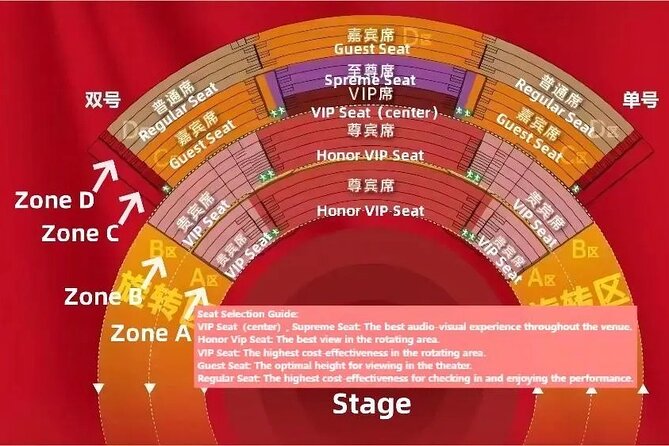
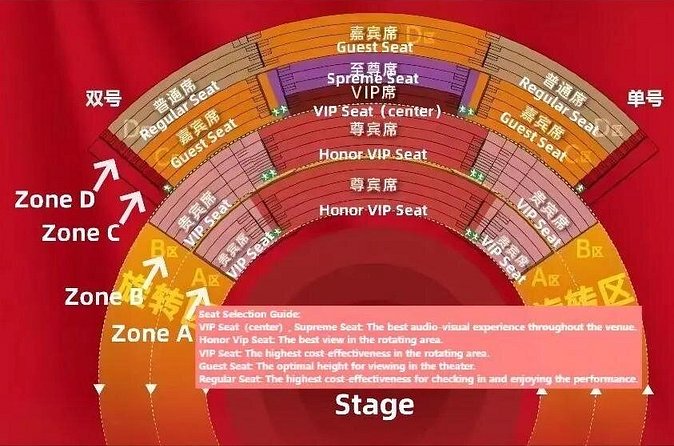
The theater divides seating into four sections. Sections A and B have rotating seats, while Sections C and D remain fixed. This is one of the most important details to understand before paying for your ticket.
Rotating seats allow the production to appear from different angles as the stage changes. Instead of watching every scene straight on, you may be turned toward a new part of the performance area. That setup helps the show create its 360 degree effect and makes the audience feel connected to more than one side of the action.
Section B is generally considered the strongest choice for viewing. The reason is practical: it usually provides better angles and a more complete visual experience. If you have a choice, I would focus first on Section B, then look at Section A. The exact seat arrangement should be checked on the seating chart before booking because the layout matters more here than it would in an ordinary theater.
Sections C and D are fixed. That does not make them poor seats, but your viewpoint will be less flexible. You will watch the production from one general direction rather than being turned with the action.
The rotating seats are also worth considering if you are sensitive to motion. The supplied information does not specify how much the seats move or how often they turn, so you should check the local seating guidance if that is a concern. The unusual arrangement is a major part of the production, not a minor theater gimmick.
Water, fire, and 700 performers
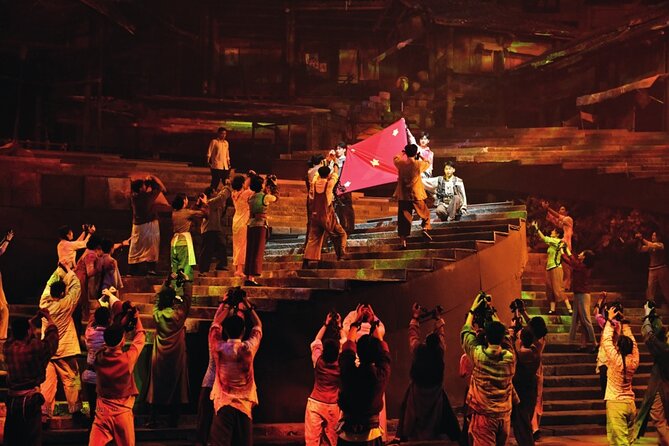
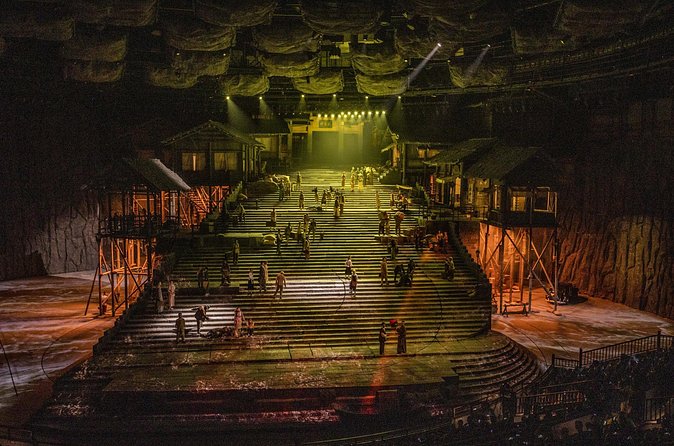
The show’s main visual force comes from its combination of people and machinery. More than 700 live performers take part, giving the production the size of a pageant or grand historical drama. Large groups can suggest military formations, public gatherings, or the pressure of major political change without relying on long explanations.
Then the technical effects take over. Water and fire are used alongside lighting and other stage effects to create moments of danger, urgency, or emotional weight. These are not small decorative touches. They are central to the way the performance moves from one scene to the next.
I like this approach because it gives you several ways to follow the story. If you miss a line of dialogue, the staging may still show you what kind of moment you are watching. The choreography, crowd movement, and changing scenery carry much of the meaning.
At the same time, the effects can compete with the history. A production this large may leave you remembering the fire, movement, or mechanical changes more clearly than every historical detail. That is not necessarily a problem, but you should choose this show for its combination of history and spectacle, not as your only source for understanding Chongqing in 1949.
The balance is especially important for international visitors. One viewer from California needed a translator headset but was still able to follow the performance. That suggests the production communicates well through action and visuals, but you should still arrange translation support if you do not speak Chinese.
Starting at Ciqikou
The ticket redemption point is in the Ciqikou Residential District in Shapingba District. Ciqikou, also known as Porcelain Port, is a well-known historic area of Chongqing and gives the experience a useful setting before the curtain rises.
The listed start time is 4:00 pm. The available information identifies Ciqikou as the meeting and ticket redemption location, so plan to reach that area with enough time to collect your paper ticket and find the theater arrangements. Do not treat the 4:00 pm time as a casual suggestion. A large production with assigned sections is easier when you are not rushing.
Ciqikou is also a sensible place to build into your afternoon. You can spend time there before the show, then continue to the performance from the same general area. The information provided does not give a precise walking route between the redemption point and the theater entrance, so confirm the local instructions when you collect your ticket.
The district is near public transportation, which helps. Chongqing can be difficult to read at first because of its hills, layered roads, and dense urban layout. Starting from a known transit area is simpler than trying to locate a theater with no local directions.
Keep your paper ticket safe after redemption. The ticket is the item included with your booking, and no extra services are listed. Food, transportation, personal expenses, and any other services are not part of the price.
A few more Chongqing days worth a look
- Chongqing Wulong National Park Private Tour
★ 5.0 · 87 reviews - Chongqing: Two Rivers Night Cruise- Yangtze & Jialing Rivers
★ 4.5 · 64 reviews - Chongqing deep explore & private car service including meals
★ 4.9 · 51 reviews - Chongqing: 1-day Essential Guided City Tour without Car
★ 5.0 · 44 reviews
Is the $41.06 ticket good value?
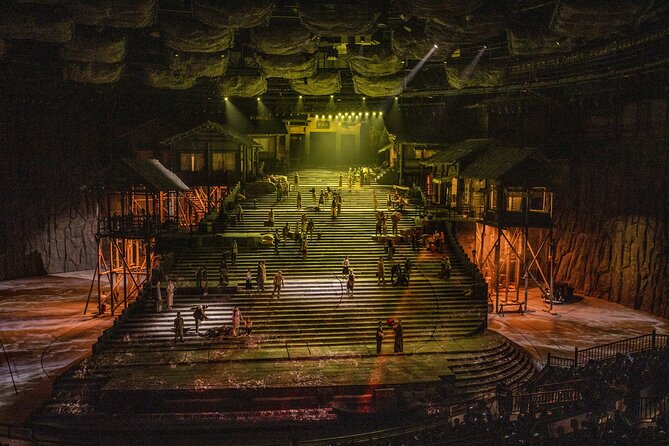
The listed price is $41.06 per person. That is not the price of a basic local stage performance, but the scale explains the cost. You are paying for a large theater production with hundreds of performers, specialized seating, rotating stage technology, water, fire, and other effects.
For me, the value depends on what you want from an evening in Chongqing. If you enjoy major productions and want an easy way to encounter revolutionary history through performance, the ticket offers a substantial amount of entertainment for a 1 to 2 hour show. The production is also more distinctive than a standard concert or ordinary historical display.
The value is less clear if your main aim is detailed historical instruction. The show is built to move and impress, not to provide a quiet, step-by-step explanation of every event. You may leave with a stronger emotional and visual sense of the period than a precise list of dates and political developments.
Your seat also affects value. Section B generally gives the best overall viewing angle, so a lower price in a fixed section may not be the best bargain if the difference is small. Check the seating chart carefully and think about the view you want, not just the ticket category.
The booking terms are strict. This ticket is non-refundable and cannot be changed after purchase. That makes it important to confirm your date, start time, section, and number of tickets before paying. Since the show is often booked about 15 days ahead, you should not assume last-minute seats will be easy to find.
Following the story without Chinese
Language is the biggest practical question for many international visitors. The performance tells a Chinese historical story, and the main language is not specified in the supplied details. However, a translation headset is available, and an English-speaking visitor was able to follow the show with one.
You should arrange the headset before the performance begins rather than waiting until the first scene. A headset can help with speeches and plot points, while the visual action, choreography, and stage effects offer additional clues about what is happening.
This is not the same as watching a performance in your own language. Translation may lag behind the action, and you may miss some wordplay or emotional detail. Still, the production’s large movements and clear physical staging make it more approachable than a dialogue-heavy play.
I would recommend it to visitors who are comfortable receiving history through images and performance. If you need every line translated perfectly, the experience may feel less satisfying. If you can follow the broad story and let the stage carry part of the meaning, the headset should make the show workable.
Who will enjoy Chongqing 1949 most?
This experience is a strong fit for you if you like history presented on a grand scale. It should also appeal to families and mixed-age groups because the show offers movement, music, performers, effects, and changing scenery rather than relying only on spoken explanation.
It is useful for first-time visitors who want a cultural activity that connects to Chongqing itself. The show is not a generic stage spectacle with no local subject. Its focus is the city in 1949 and the revolutionary spirit associated with that period.
You may enjoy it less if you want a short, quiet, traditional performance. The show’s machinery and large cast are the point, so the production can feel intense. Fixed seating may also be a compromise if you hoped for the full rotating experience.
Most travelers can participate, and the venue is near public transportation. The provided information does not give details about wheelchair access, child pricing, dress rules, or exact theater facilities, so ask locally if any of those points matter to you.
My practical booking advice
Before booking, check three things. First, confirm that your date and start time work because the ticket cannot be refunded or changed. Second, look at the seat chart and favor Section B if available. Third, plan how you will reach the Ciqikou ticket redemption point by 4:00 pm.
Give yourself enough time in Ciqikou. You will have a calmer start if you are already in the district instead of crossing the city at the last minute. Public transportation is nearby, but Chongqing’s complicated urban layout can make a simple trip take longer than expected.
Also decide how much historical detail you need. The show can give you a strong sense of the era through drama and stagecraft, but it should not replace a museum visit or historical reading if you want detailed background.
Should you book Chongqing 1949?
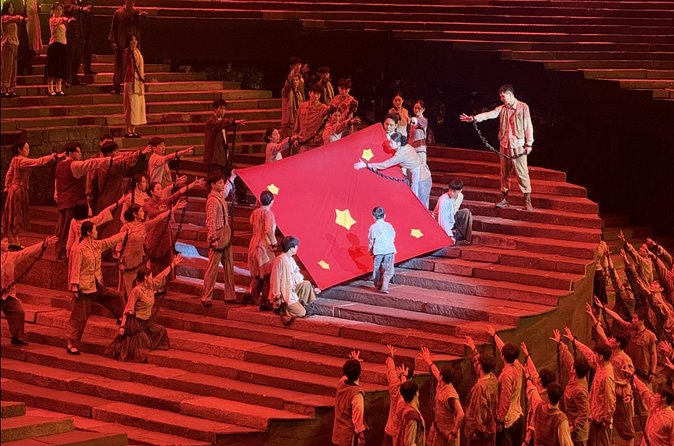
Book this experience if you want a big, technically ambitious theater production tied directly to Chongqing’s revolutionary past. The rotating seats, 700-plus performers, water, fire, and dramatic staging give it a scale you will not find in an ordinary city performance.
I would especially recommend Section B, a translator headset for non-Chinese speakers, and an afternoon plan that begins in Ciqikou. Skip it if you dislike loud or highly theatrical shows, need flexible cancellation, or want a quiet history lesson instead.
At $41.06, the ticket is best viewed as an evening of historical theater and spectacle. For that purpose, it offers a distinctive way to experience Chongqing.
FAQ
Where does the experience take place?
The ticket redemption point is in the Ciqikou Residential District, Shapingba District, Chongqing, China, postal code 400038.
What time does the experience start?
The listed start time is 4:00 pm.
How long does Chongqing 1949 last?
The performance lasts approximately 1 to 2 hours.
Which seating sections rotate?
Sections A and B have rotating seats. Sections C and D have fixed seating.
Which section generally offers the best view?
Section B generally offers the best viewing angles and overall visual experience. Check the seating chart for the exact arrangement.
Is the experience suitable for people who do not speak Chinese?
A translation headset is available for non-Chinese speakers. The visual performance also uses choreography, stage movement, and special effects.
What is included in the ticket?
Admission to the performance is included. Services not specifically mentioned are not included.
Newly listed around Chongqing
- Yangtze River Cruise from Yichang to Chongqing Upstream in 5 Days 4 Nights★ 4.5 · 14 reviews
- 4D3N Victoria 5-star Yangtze Cruise★ 5.0 · 3 reviews
- Private Customized Tour: Chongqing City Highlights in One Day★ 5.0 · 11 reviews
- Chongqing Private Day Tour to Wulong Karst National Geology Park★ 5.0 · 7 reviews
- 2Day Wulong Karst Park+Dazu Carvings World Heritage Private Tour★ 5.0 · 4 reviews
- Private Day Tour to Ciqikou, Liziba, Jiefangbei etc. in Chongqing★ 4.5 · 5 reviews
- Chongqing Private Tour Pandas City Must See Hot Pot All in one★ 5.0 · 3 reviews
- Chongqing Wulong Exploration Private Day Tour With the Lunch★ 5.0 · 6 reviews
Historical Tours, compared.
Between Capitalism & Communism: Hong Kong History Tip Based Tour
Read our review →
Beijing Historical Tour II including Summer Palace, Lama Temple & Panda Garden
Read our review →
Beijing Historical Tour I – Forbidden City, Tiananmen Square & Temple of Heaven
Read our review →
Tour of Jewish Shanghai led by a Jewish History Expert
Read our review →
Beijing Historic City Guided Walking Tour + Calligraphy Creation
Read our review →
All inclusive Two-Day Xi’an private Heritage Tour
Read our review →
2-Hour Beijing Private Forbidden City Tour: History & Highlights
Read our review →
Xi’an Full Day Sightseeing Tour – Shaanxi History Museum, Big Wild Goose Pagoda, Ancient City Wall
Read our review →Browse the lists this tour appears in