
Reviewed · HUTONG TOURS
Immerse Yourself:Chinese Calligraphy Experience in Beijing Hutong
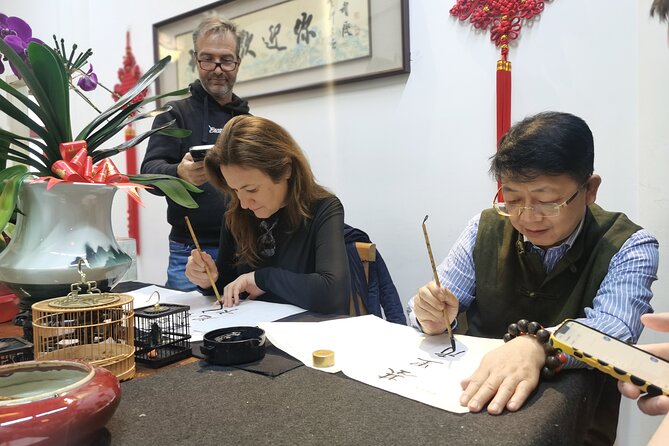
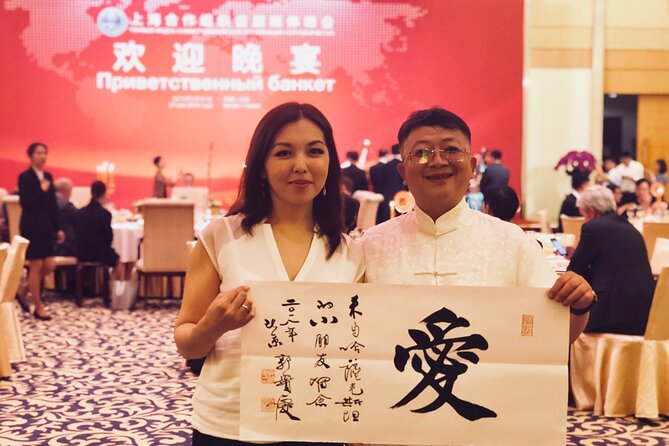
Chinese calligraphy turns a short Beijing activity into something you can carry home. In one hour, you’ll learn basic brush techniques, study the shape of at least 10 Chinese characters, and create your own work under the guidance of Master Guo Baoqing. You do not need to speak Mandarin to take part.
I like two things here. First, the lesson is hands-on, not a lecture about an art you only watch from across the room. Second, the small maximum group of 10 should give you a better chance to receive personal help as you hold the brush and form each stroke. The main consideration is time: one hour gives you a useful introduction, not a full course in calligraphy.
Key points about the Beijing hutong lesson
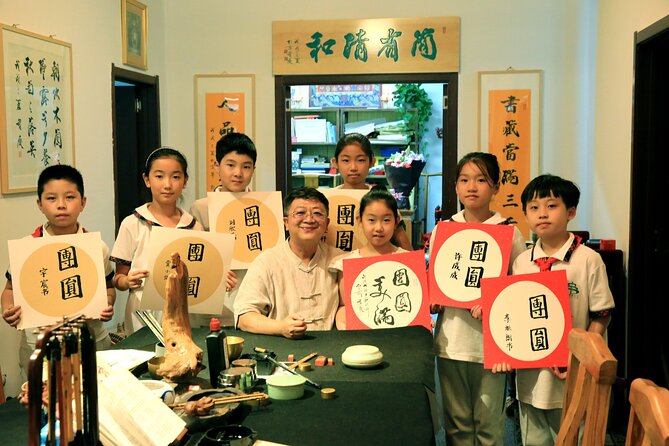
- Master Guo Baoqing leads a supportive, hands-on introduction to Chinese calligraphy.
- You learn at least 10 Hanzi, even if you begin with no Chinese language skills.
- Brushes, ink, and other calligraphy supplies are provided during the session.
- The group is limited to 10 people, keeping the class more personal than a large demonstration.
- The activity starts and ends at 71-3 Ci Qi Kou Da Jie in Beijing’s Dongcheng District.
- The price is $55 per person for about one hour, with transport and gratuities extra.
What this one-hour Beijing calligraphy class is really about
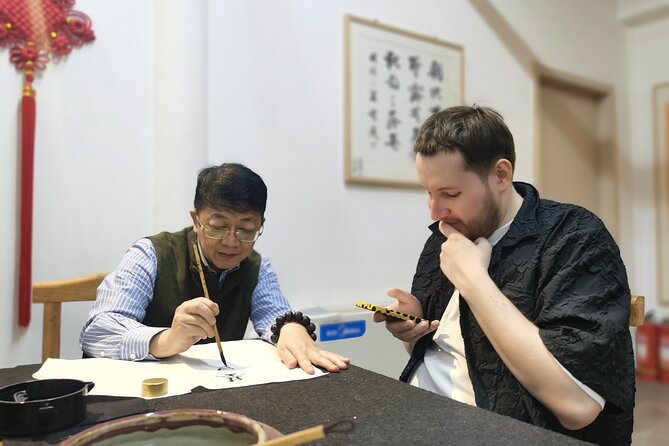
Many Beijing sightseeing plans are built around grand gates, temples, courtyards, and palaces. This class gives you a quieter way to meet Chinese culture. Instead of looking at finished calligraphy behind glass, you learn how the work begins: with a brush, a controlled stroke, and attention to the shape of each character.
That difference matters. Chinese characters are not simply letters written in another alphabet. Their form, balance, and order on the page are part of the art. The class introduces those ideas in a practical way, so you can see how language and visual design fit together.
You will receive the supplies needed for the activity. The lesson covers the tools, the background of calligraphy, and basic methods for using the brush. From there, you practice strokes and characters before producing your own pieces.
The pace is suitable for a first try. You are not expected to arrive knowing Mandarin or understanding Chinese writing. The stated goal is that even a complete beginner can learn at least 10 Hanzi during the session. That makes this a useful choice for families, couples, and curious first-time visitors who want more than another photograph from Beijing.
More Calligraphy Classes in Beijing
- Beijing Calligraphy Class
★ 4.9 · 112 reviews - Chinese Calligraphy Class for Small Group
★ 5.0 · 104 reviews - Beijing Historic City Guided Walking Tour + Calligraphy Creation
★ 5.0 · 59 reviews
Meeting Master Guo Baoqing at 71-3 Ci Qi Kou Da Jie
The class begins at 71-3 Ci Qi Kou Da Jie, Dong Cheng Qu, Beijing 100051. It also ends at the same meeting point, so you do not need to arrange a separate pickup after the lesson.
The activity is near public transportation, but the price does not include a taxi or subway fare. You should plan your route before setting out and allow enough time to find the address. A mobile ticket is provided, which is useful when you are moving between Beijing sights and do not want to carry printed paperwork.
Master Guo Baoqing is the named teacher for this experience. His approach is described as supportive and hands-on, which is important in calligraphy. A beginner can understand the general idea of a brush stroke, then still struggle with pressure, direction, and spacing. Direct guidance helps you correct those small points before they become habits.
The group limit of 10 is another practical advantage. It is not a private class, but it is small enough to avoid the feel of a mass demonstration. If you want frequent one-to-one attention, a smaller group would be better, but this size should allow for personal instruction while keeping the price below that of a private lesson.
Handling the brush and learning the basic tools
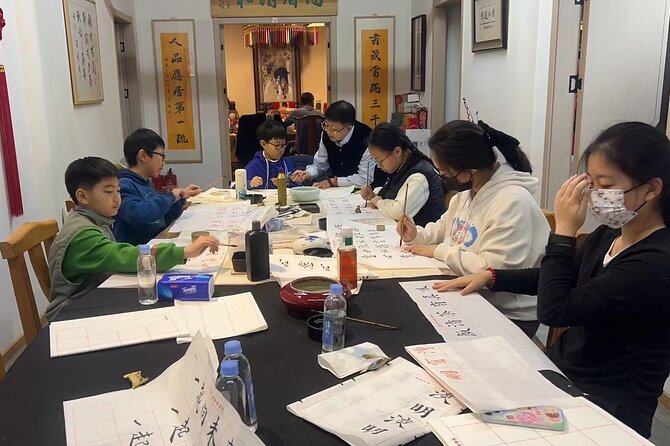
The first part of the session introduces the materials and the role each one plays. Supplies are included, so you do not need to purchase brushes, ink, or paper before arriving. That makes the activity easy to add to a sightseeing schedule.
The tools are not just props. Each one affects the final mark. The brush allows changes in pressure and direction. Ink creates different tones and strengths. Paper records every movement, including the places where your hand hesitates. You begin to understand why calligraphy rewards patience and control.
You will also receive an introduction to the art’s background and techniques. The lesson is brief, so do not expect an advanced study of different calligraphy schools or a long discussion of Chinese art history. The value is in getting close to the process and trying the movements yourself.
I like this format for visitors who tend to lose interest during long cultural talks. You have a clear task in front of you. You listen, watch, try the stroke, and adjust your hand. The activity remains focused from start to finish.
Practicing strokes before forming 10 Hanzi
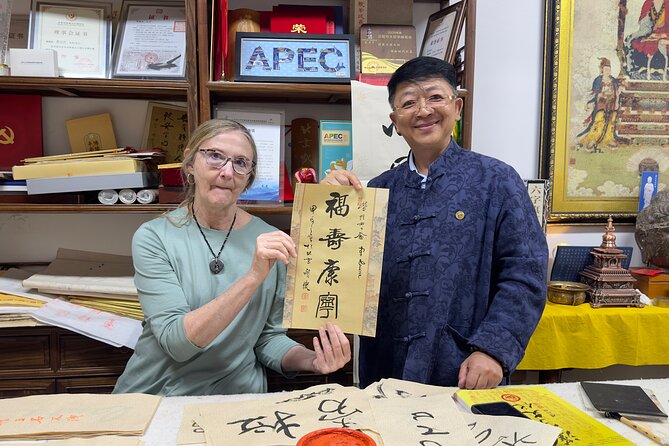
The class teaches brush strokes before moving into characters. That sequence is sensible. A Chinese character is made from individual strokes arranged in a particular order, so practicing the basic movements gives you a foundation for the symbols that follow.
You will work with the shape and balance of the characters, not only their meaning. Calligraphy asks you to notice how much space a character occupies, how the strokes relate to one another, and how the whole mark sits on the page. This is why the activity can be rewarding even if you are not studying Mandarin for practical conversation.
The promise of at least 10 Hanzi is a strong feature for beginners. You will leave with a small set of characters that you can recognize and write, rather than only a general impression of Chinese writing. The exact characters are not specified, so you should not book this expecting a particular vocabulary list.
For children, this can be especially engaging. The lesson turns unfamiliar symbols into something they can make with their own hands. Parents should keep expectations realistic, though. The class is an introduction, and young children may need help staying patient during the slower parts of brush practice.
More Hutong Tours in Beijing:
- Beijing Hutong Walking Food and Beer Tour at Hidden Restaurants
★ 5.0 · 1,132 reviews - Temple Heaven, Summer Palace, Lama Temple, Hutong Bus Tour
★ 4.7 · 319 reviews - Temple of Heaven, Summer Palace, Lama Temple, Hutong Tours
★ 5.0 · 311 reviews - Beijing Private Hutong Food Walking Tour
★ 5.0 · 299 reviews
Creating your own calligraphic pieces
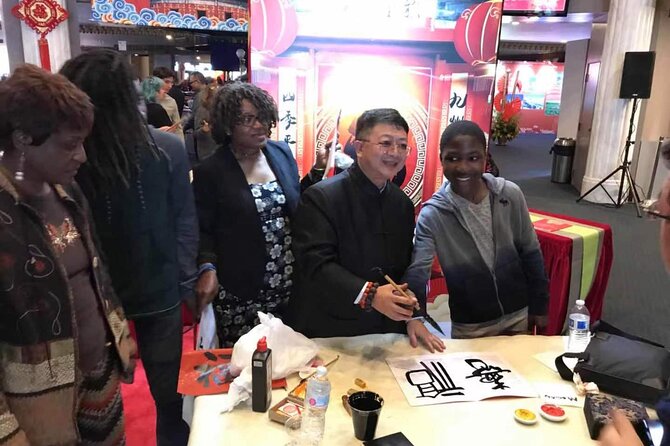
The session gives you the chance to make your own calligraphic work. This is the point at which the lesson becomes personal. You are no longer only copying marks for practice. You are using the techniques from the class to produce something connected to your time in Beijing.
The finished piece may not look like the work of a trained calligrapher, and that is part of the appeal. The activity gives you a better sense of how much skill lies behind polished examples. You can also see your own progress within a short period, from uncertain first strokes to more deliberate characters.
The class has a meditative quality because the brush requires slow, careful movement. That does not mean every minute will feel calm. Beginners often concentrate hard, and the pressure to form a character correctly can be demanding. Still, the need to focus on one stroke at a time offers a welcome change from Beijing’s busy streets and packed sightseeing stops.
I would treat the finished work as a meaningful souvenir rather than a decorative masterpiece. It records what you learned and gives you a physical reminder of the city that is more personal than a standard gift-shop purchase.
Why the $55 price can make sense
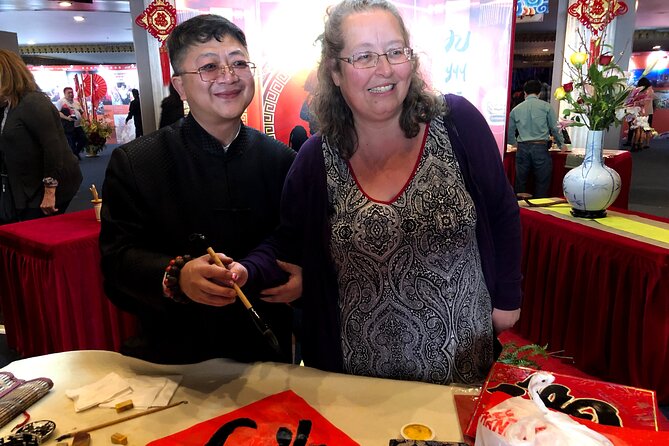
At $55 per person, this is not the cheapest one-hour activity in Beijing. The price includes the one-hour calligraphy lesson, supplies, and admission to the hutong calligraphy experience. It does not include subway or taxi costs, and gratuities are not included.
The value depends on what you want from the hour. If you only want to watch a short demonstration, $55 may feel high. You are paying for guided participation, materials, instruction, and the chance to produce your own work. For a visitor who wants a cultural activity with a clear result, the price is easier to justify.
The small group also matters when considering cost. A large class can offer a lower price, but you may receive little personal correction. With a maximum of 10 people, this experience aims for a more direct connection with the teacher.
I would compare it with the cost of another guided activity in Beijing, not with the price of buying brushes or practicing characters on your own. The purpose is not simply to acquire supplies. It is to receive an organized introduction from a teacher and make use of your limited holiday time.
Who will get the most from this experience
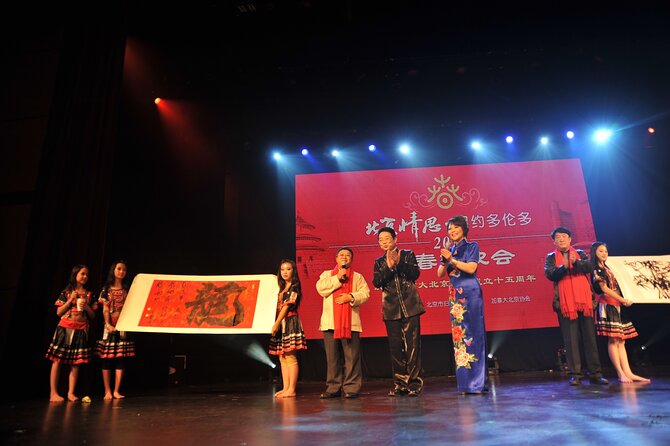
This activity suits you if you want to:
- Try a traditional Chinese art without needing previous experience.
- Learn a small amount of Mandarin through written characters.
- Take home a personal piece made during your visit.
- Add a quiet cultural lesson to a schedule filled with major sights.
- Give children a focused activity with a clear, creative task.
- Meet a local teacher in a small group setting.
It is also a good fit for visitors who enjoy learning by doing. If you prefer a detailed museum display, a long historical explanation, or a full-day workshop, this one-hour format may feel too short.
The class is less suitable if you are looking for a broad tour of Beijing’s hutongs. The meeting address is in a hutong area, but the activity described here centers on calligraphy. Do not assume it includes a walking tour, transportation, or visits to several traditional attractions.
Timing, transport, and small practical details
The experience lasts about one hour. That makes it easy to place between other plans, but you should allow extra time for reaching the meeting point and finding the exact address. The lesson itself is short enough to fit into a morning or afternoon, though the booking information does not specify a particular daily start time.
You receive confirmation when you book. The mobile ticket is convenient for a trip when most of your reservations are stored on your phone. Keep the meeting address available offline if your mobile connection may be unreliable.
The experience requires good weather. That may seem unusual for a calligraphy lesson, but it is part of the stated operating conditions. If poor weather causes cancellation, you will be offered another date or a full refund. The activity also requires a minimum number of participants, so a cancellation can occur if that minimum is not reached.
Free cancellation is available up to 24 hours before the start time. If you cancel less than 24 hours in advance, you will not receive a refund, and changes made inside that period are not accepted. The cut-off follows Beijing local time, so check the clock carefully if you are booking from another country.
Most people can participate, and the experience is near public transportation. No special accessibility details are provided, so you should contact the provider if you need specific assistance before booking.
How it fits into a Beijing visit
Calligraphy works best as a pause in a larger Beijing itinerary. You might place it on a day when you are already exploring traditional areas, then use the lesson to look at Chinese writing with more attention afterward. Even a character on a shop sign can feel less mysterious once you have practiced the basic structure yourself.
The class also adds variety. Beijing sightseeing can involve long walks, large public spaces, and dense historical information. A one-hour brush lesson changes the pace without demanding a full day. You sit, concentrate, and work with a teacher before returning to the city.
I would not choose this as your only cultural activity in Beijing. It does not replace major museums, historic sites, or a longer exploration of hutong life. It does add a personal layer to those experiences, especially if you are interested in how Chinese language appears in art and daily life.
Should you book this Beijing calligraphy experience?
Book it if you want a short, practical introduction to Chinese culture and like the idea of learning at least 10 Hanzi while making your own work. The named teacher, Master Guo Baoqing, gives the class a personal focus, and the 10-person limit should help keep the instruction active rather than purely observational.
Think twice if your schedule is tight, transport costs matter, or you want an advanced workshop. The $55 price is reasonable for guided practice and included supplies, but it is more than you would pay for a simple demonstration. For most first-time visitors who want a meaningful souvenir and a calm break from Beijing’s major sights, this is a worthwhile one-hour addition.
FAQ
How long does the Chinese calligraphy experience last?
The activity lasts approximately one hour.
Where does the experience start and finish?
It starts at 71-3 Ci Qi Kou Da Jie, Dong Cheng Qu, Beijing 100051, and ends back at the same meeting point.
Who teaches the calligraphy class?
The experience is taught by Master Guo Baoqing.
Do I need to know Chinese before joining?
No. The activity is designed for beginners, and you can learn at least 10 Chinese characters even if you are starting without Chinese language skills.
Are calligraphy supplies included?
Yes. Calligraphy supplies for use during the activity are included in the price.
What happens if I need to cancel?
You can receive a full refund if you cancel at least 24 hours before the experience start time. Cancellations or changes made less than 24 hours in advance are not refunded or accepted.
More Calligraphy & Painting Classes in Beijing
- Beijing Wangfujing Calligraphy Class by Forbidden City
★ 5.0 · 58 reviews - Beijing Culture: Tea Ceremony, Heritage Instrument & Calligraphy
★ 5.0 · 57 reviews - Beijing Wangfujing Calligraphy Class Nearby Forbidden City
★ 5.0 · 56 reviews - Noon Calligraphy Class
★ 5.0 · 47 reviews
Newly listed around Beijing
- Shore Excursion: 2-Day Private Beijing Sightseeing Tour from Tianjin Cruise Port★ 5.0 · 6 reviews
- Private Transfer: Tianjin Xingang International Cruise Home Port to Beijing Hotel★ 5.0 · 6 reviews
- Tianjin Private Day Trip to Forbidden City and Mutianyu Great Wall by Bullet Train★ 5.0 · 5 reviews
- Bullet Train Private Tour: Beijing Tiananmen Square, Forbidden City & Great Wall★ 5.0 · 3 reviews
- Private Great Wall Tour from Tianjin Cruise Port★ 5.0 · 8 reviews
- Private One Way Tianjin Port Transfer to Beijing including Great Wall Sightseeing★ 5.0 · 4 reviews
- Shanghai to Beijing Bullet Train Ticket with Hongqiao Station Transfer★ 5.0 · 5 reviews
- Private Mutianyu Great Wall Tour with Bullet Train Experience★ 5.0 · 3 reviews
Hutong Tours, compared.
Beijing Hutong Walking Food and Beer Tour at Hidden Restaurants
Read our review →
Temple Heaven, Summer Palace, Lama Temple, Hutong Bus Tour
Read our review →
Temple of Heaven, Summer Palace, Lama Temple, Hutong Tours
Read our review →


Beijing City Walk: Explore Hutongs Life and Old Beijing
Read our review →Browse the lists this tour appears in