
Reviewed · TEA CEREMONIES
Xi’an Calligraphy & Tea Ceremony – Dive into Ink & Brush Artistry
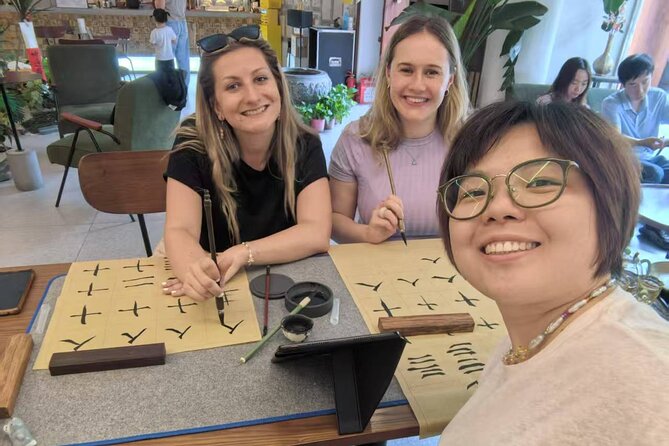
Chinese calligraphy is not a quick photo stop here. You sit down, pick up the brush, and make your own work. The session begins with jasmine tea and incense, then moves through the story of Chinese writing before you practice characters such as dragon, love, and martial.
I like two things in particular: the small group of six or fewer, which gives Yunyun time to help with your brush technique, and the useful keepsakes you make yourself. Yunyun brings more than 20 years of calligraphy practice and speaks excellent English. The one drawback is that this is a long, focused indoor workshop, not a broad Xi’an sightseeing tour.
Key points to know before booking
- You create three personal souvenirs: a painted folding fan, named bookmarks, and a traditional scroll painting.
- Yunyun leads the session: she is a native Xi’an travel planner with more than 20 years of calligraphy practice and international experience.
- The writing lesson has a clear progression: you start with basic strokes and work toward meaningful Chinese characters.
- The cultural setting matters: jasmine tea, snacks, incense, and the writing tools help frame calligraphy as a traditional scholarly art.
- The group stays small: no more than six people attend, so the session can remain hands-on rather than becoming a demonstration.
- It works well in Xi’an heat: the workshop offers a calm indoor alternative when outdoor sightseeing becomes uncomfortable.
Why this Xi’an workshop feels different from a sightseeing stop
Many Xi’an activities put you in front of famous sights. This one puts a brush in your hand. For around three hours, you are not simply looking at Chinese culture. You are trying to reproduce a small part of it, with all the uneven lines and wobbly characters that come with learning a new writing tool.
That makes the workshop a good change of pace after the Terracotta Warriors, city walls, or a day of walking. You can sit, listen, practice, and ask questions. The setting also gives you a chance to think about Chinese writing as an art form, not just a communication system.
Yunyun is central to the experience. She has practiced calligraphy for more than 20 years and works as a Xi’an travel planner. Her background with visitors from more than 50 countries should help her explain unfamiliar ideas in clear English. One particularly useful detail is that she uses pictures and maps when explaining cultural subjects, so the session is not limited to technical brush instruction.
The tone is friendly and personal. Yunyun is described as funny, kind, and open to requests, and she speaks excellent English. That matters when you are trying to understand both the hand movements and the meaning behind the characters.
More Tea Ceremonies in Xi'an:
- Xi’an Noodle Making and Tea Tasting Experience
★ 5.0 · 6 reviews - One-Day Hangzhou Dragon Well Tea Culture & West Lake Private Tour
★ 5.0 · 98 reviews - Traditional Chinese Tea Ceremony Experience
★ 4.7 · 74 reviews
Tea, incense, and a scholar’s working atmosphere
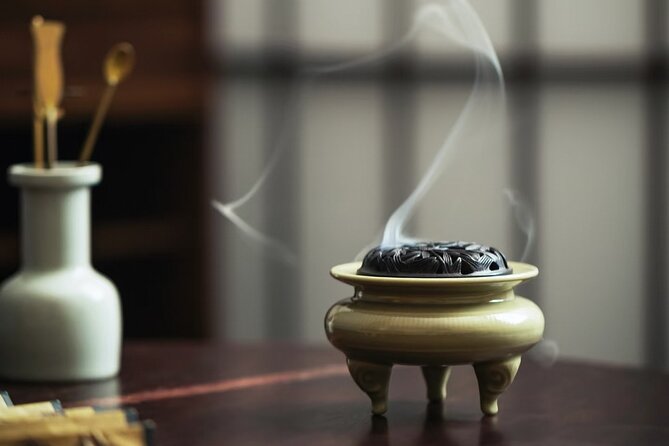
The first 20 minutes set the mood with a jasmine tea ceremony, snacks, and an incense ritual. This is not a full historical reenactment, and you should not expect a long formal ceremony. Instead, it gives the workshop a measured beginning before the brush and ink come out.
The tea is also a practical introduction to the pace of the activity. Calligraphy rewards patience. You are not rushing from one stop to another, and the opening helps make that clear. The incense adds another traditional touch and helps the room feel different from an ordinary art class.
I like this opening because it connects the tools to a wider cultural setting. Ink, paper, brush, and inkstone can otherwise seem like craft supplies. Here, they are part of an old scholarly tradition that also included tea, quiet concentration, and careful presentation.
The food is listed as jasmine tea and snacks. No detailed menu is provided, so you should not book this as a food tour. Think of the refreshments as a pleasant part of the welcome rather than a substantial meal.
A 3,000-year lesson in how Chinese characters changed
Next comes a 25-minute explanation of Chinese writing. An interactive character wall shows how characters developed from oracle-bone forms to modern script. Yunyun uses examples such as 家, meaning home, to show how a character can change shape while keeping its central idea.
This is one of the strongest parts for anyone who wants context. Without it, practicing a character can feel like copying a decorative symbol. With the history in place, the marks have a visual story. You begin to see why Chinese calligraphy is tied to meaning, shape, balance, and movement.
The lesson also helps you understand the difference between writing a character correctly and making it look pleasing. The activity focuses on traditional brush and ink methods, so you will be working with line weight, stroke order, spacing, and control rather than simply tracing a printed outline.
At 25 minutes, this section should be long enough to give the practice meaning without taking over the workshop. If you mainly want to produce a souvenir, the historical explanation may feel slower than expected. I think it is worth paying attention, since it makes the final artwork more personal.
Practice begins with simple strokes
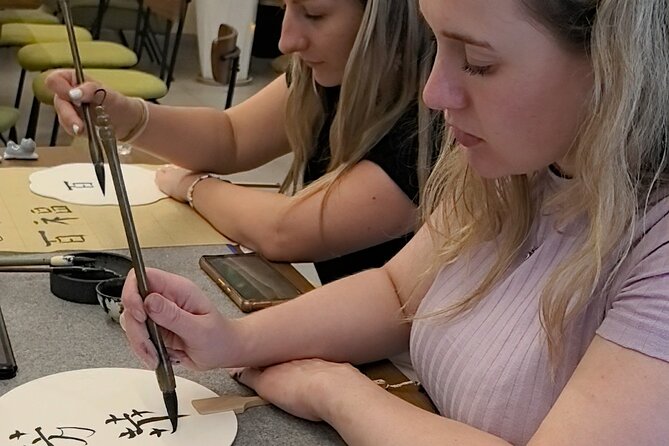
The main practice period lasts about 1 hour and 10 minutes. You work at your own station with the basic materials provided: brush, ink, paper, and inkstone. Yunyun starts with fundamental brush handling before moving toward individual characters.
The sequence includes simple forms such as 一, 十, 大, 小, 米, and 永. These examples give you a useful progression from basic lines and shapes to characters requiring more control. You also practice meaningful characters connected to Chinese ideas, including 龙 for dragon, 武 for martial, and 爱 for love.
I like the way this structure gives you several small wins. You do not begin by being handed a complicated phrase and told to copy it. You first learn how the brush responds, then build toward larger characters. That approach should suit complete beginners, including people who have never held a Chinese calligraphy brush.
You should also keep your expectations realistic. A three-hour class will not turn you into a calligrapher. Your early strokes may be uneven, and the ink may not behave exactly as you want. That is part of the appeal, but anyone seeking museum-quality work should understand that the final pieces are beginner creations with your own hand in them.
The small group makes a real difference here. With six people or fewer, Yunyun can watch how you hold the brush and offer individual corrections. A larger class could turn this into a demonstration. This format gives you a better chance to ask about a particular stroke or character.
More Calligraphy Classes in Xi'an:
- Beijing Calligraphy Class
★ 4.9 · 112 reviews - Chinese Calligraphy Class for Small Group
★ 5.0 · 104 reviews - Beijing Historic City Guided Walking Tour + Calligraphy Creation
★ 5.0 · 59 reviews - Beijing Wangfujing Calligraphy Class by Forbidden City
★ 5.0 · 58 reviews
Making a fan, bookmarks, and a scroll
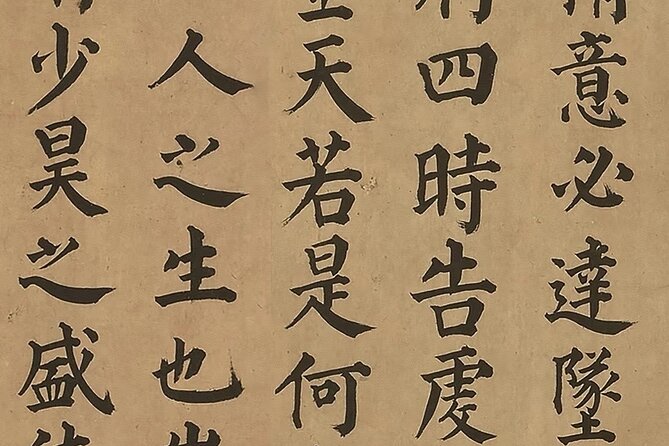
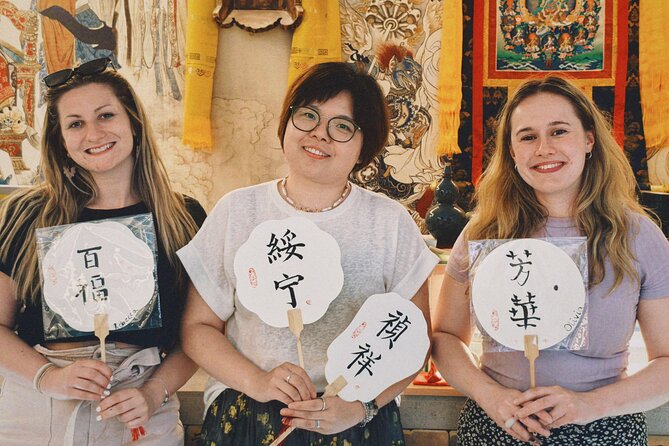
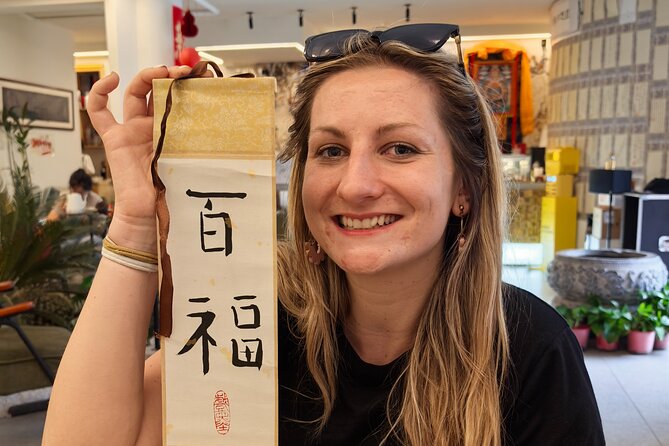
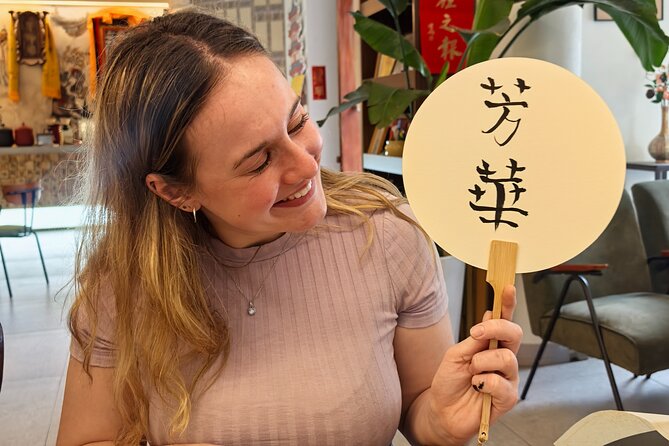
The final creative session lasts about 1 hour and 15 minutes. This is where the earlier practice becomes something you can take home. You design and paint a folding fan with selected Chinese characters, create personalized bookmarks using your Chinese name, and make a traditional scroll painting.
The fan is likely to be the most memorable keepsake because it is both decorative and useful. You can choose characters that mean something to you, rather than accepting a generic souvenir. The bookmarks add a smaller, practical reminder of the lesson, while the scroll gives you a more formal piece of traditional-style artwork.
The personalized Chinese name is an especially nice detail. It gives the bookmarks a connection to you, instead of simply reproducing a famous phrase. If you have a particular sentence or idea in mind, the activity is described as allowing a chosen short sentence on the fan, so it is sensible to discuss your preference with Yunyun during the session.
This part can take concentration. Ink cannot always be corrected once it is on paper, and the fan, bookmarks, and scroll all require time. You may want to enjoy the process rather than chase perfect results. The value is not just the finished object. It is the fact that you made it after learning what the marks mean.
What the $69 price includes
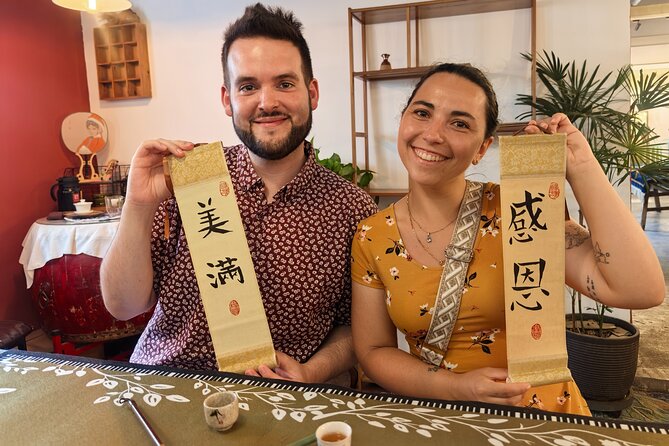
At $69 per person, this is priced above a short demonstration but below many private art lessons. The fee includes the instructor, jasmine tea and snacks, all writing materials, and three pieces of take-home artwork. You are not expected to buy a brush, ink, paper, or inkstone separately.
The small group improves the value. A class of six or fewer gives you more personal attention than a large cultural presentation, and the session occupies roughly three to three hours and 20 minutes. That works out to a full afternoon activity rather than a brief stop.
The strongest value comes from combining instruction and finished items. A folding fan and bookmarks alone might be easy to buy in Xi’an, but purchasing them is not the same as painting them. The scroll also records what you learned, including the characters and brush habits you practiced.
The price makes less sense if you want a fast introduction lasting under an hour, or if you are mainly interested in famous Xi’an landmarks. In that case, your money may be better spent on a walking tour or museum visit. If you want a quieter cultural activity with a personal result, the fee is reasonable.
Timing, meeting point, and the practical side
The session begins at 2:00 p.m. at 15 An Ju Xiang in Beilin District, Xi’an, with the activity ending back at the same meeting point. It is near public transportation, and a mobile ticket is available, which keeps the arrival process simple.
Allow enough time to reach the address. The information supplied gives the street address but does not provide a landmark, detailed directions, or pickup service. I would confirm the exact meeting instructions after booking rather than assume the studio is easy to identify from the main road.
The afternoon start is useful for two reasons. It leaves your morning open for another Xi’an sight, and it places the workshop during the hottest part of the day. One person specifically chose the activity because Xi’an temperatures can reach about 40 degrees Celsius, making a long period outside difficult. The air-conditioned or indoor conditions are not explicitly promised, so confirm the setting if heat is your main concern, but the workshop itself is a sensible break from outdoor touring.
Most people can participate, according to the activity information. No special skill level is required. You should be comfortable sitting for extended periods, following brush demonstrations, and working carefully with ink.
Free cancellation is available up to 24 hours before the 2:00 p.m. start for a full refund. Changes or cancellations inside that window are not accepted for a refund. The activity also requires good weather, and a weather cancellation results in a different date or a full refund.
Who will get the most from this experience?
I would recommend this for first-time visitors who want to make something personal in Xi’an. It suits couples, families with older children, solo participants, and anyone who enjoys hands-on cultural classes more than passive sightseeing.
It is also a good choice for people who want a break from the city’s major sights. After several hours of crowds, traffic, and monuments, sitting down with tea and ink can reset your day. The 2:00 p.m. start gives you room to pair it with morning sightseeing, though the total duration means you should not schedule another fixed activity too tightly afterward.
The workshop should appeal to anyone interested in Chinese language, art, or philosophy. The selected characters are not random decoration. Dragon, martial, love, home, and other simple forms connect the writing practice to ideas you can remember after leaving Xi’an.
You may want to skip it if you dislike slow, careful work or if you want a tour that moves through several city attractions. This is a focused studio session. The setting is intimate, and the reward comes from concentration, not from covering a long list of sights.
The final verdict on Yunyun’s calligraphy session
I would book this if you want an authentic, personal activity and have room for a relaxed afternoon. The combination of tea, incense, character history, guided practice, and three handmade souvenirs gives the $69 fee a clear purpose.
Book it especially if you value excellent English explanations, personal help, and a keepsake with your own imperfect brush marks. Skip it if your Xi’an schedule is already packed with landmark visits or if you would rather spend your time outdoors.
The best reason to choose it is simple: you leave with more than a photograph. You leave with a fan, bookmarks, and scroll that show what you tried, what you learned, and how your own hand handled Chinese ink.
FAQ
How long does the Xi’an calligraphy and tea activity last?
The session lasts approximately three hours to three hours and 20 minutes. The listed sections take about 20 minutes for the welcome, 25 minutes for the character history, 1 hour and 10 minutes for practice, and 1 hour and 15 minutes for the final artwork.
What time does the activity begin?
It starts at 2:00 p.m. local time.
Where does the activity start and finish?
It starts at 15 An Ju Xiang, Beilin District, Xi’an, Shaanxi, China, postal code 710001. The activity ends back at the same meeting point.
Who teaches the calligraphy session?
Yunyun leads the activity. She is a native Xi’an travel planner with more than 20 years of calligraphy practice and speaks English.
What is included in the price?
The price includes jasmine tea and snacks, the calligraphy instructor, all writing materials, a painted folding fan, personalized bookmarks, and a traditional scroll painting.
How many people can join?
The maximum group size is six people.
Can I cancel for a full refund?
Yes. You can cancel at least 24 hours before the local start time for a full refund. Cancellations and changes made less than 24 hours before the activity are not accepted for a refund.
Does the activity depend on the weather?
Yes. The activity requires good weather. If it is canceled because of poor weather, you will be offered another date or a full refund.
Newly listed around Xi'an
- Xi’an Terracotta Warriors, City Wall and Tuktuk Food Tour★ 5.0 · 6 reviews
- Xi’an Vegetarian Food Tour★ 5.0 · 5 reviews
- Xi’an to Mt. Huashan Private Charter Service★ 5.0 · 4 reviews
- Terrracotta Warriors Museum Shuttle Bus with English Guide★ 4.5 · 6 reviews
- Three Day Xi’an Adventure private Tour with Mt.Hua★ 5.0 · 7 reviews
- All inclusive Two-Day Xi’an private Heritage Tour★ 5.0 · 33 reviews
- ZANBUS: Xi’an Qin Terra-cotta Warriors Bus Tour Departs at 8/9 AM★ 5.0 · 4 reviews
- Xian Terra-cotta Warriors Private Tour with Pickup from Airport or Train Station★ 5.0 · 4 reviews
Tea Ceremonies, compared.

One-Day Hangzhou Dragon Well Tea Culture & West Lake Private Tour
Read our review →



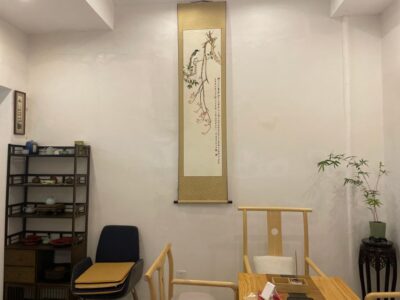
Chinese Tea ceremony in Beijing Hutong courtyard
Read our review →
Leshan Buddha + Panda Base or Old Tea House Private Day Tour
Read our review →
Day Tour to Discover the Secrets of Hangzhou’s Tea Culture
Read our review →Browse the lists this tour appears in