
Reviewed · WALKING TOURS
Shanghai Propaganda and History Walking Tour
Shanghai’s political past comes into sharper focus through original propaganda posters, personal belongings, and the streets where early Communist-era life unfolded. This three-hour walk links the Shanghai Propaganda Poster Art Center with Soong Ching Ling’s former home, then adds wonton soup and a mile of French Concession architecture.
I like the clear mix of museum time and street life, and I like that the guide explains the images rather than leaving you to guess at their meaning. The main consideration is pace: you will walk for much of the tour, including about 1.2 kilometers on Wukang Road, so comfortable shoes matter.
Key points
- 6,000-plus original posters: See political art from the 1940s through the 1990s, including the Mao period.
- Two sharply different historic stops: Compare public political messaging with Soong Ching Ling’s private life and work.
- A local food break: The tour includes a bowl of Chinese wonton soup.
- French Concession streets: Walk past European-style buildings along Wukang Road.
- Small-group format: The tour allows a maximum of 15 people.
- Simple afternoon timing: Meet at Jiangsu Road Metro Station at 1:00 pm and finish at Soong Ching Ling’s former residence.
Why the posters tell Shanghai’s political story so well
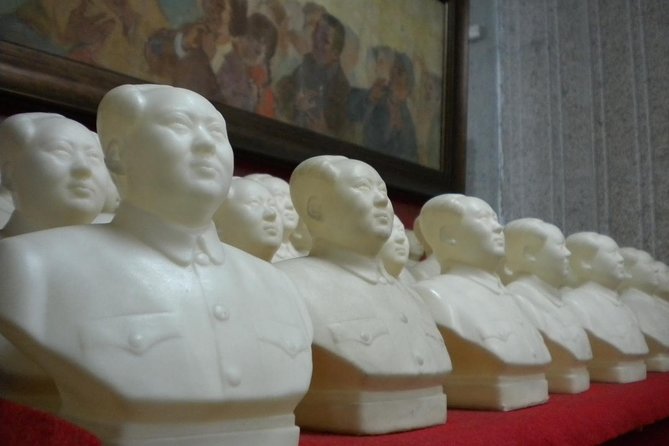
The first major stop is the Shanghai Propaganda Poster Art Center, a private museum in the former French Concession. Its collection contains more than 6,000 original posters dating from the 1940s to the 1990s.
That range matters. You are not looking at one short political moment. You are seeing changing messages from the years before the People’s Republic, through Chairman Mao’s time, and into later decades. The posters show how government ideals, social campaigns, and political movements were presented to ordinary people.
I find propaganda art especially useful for understanding a country because it shows the public language of its time. A textbook may explain a campaign in a few paragraphs. A poster shows you the faces, clothing, slogans, colors, and behavior that authorities wanted people to notice and follow.
This is also where the guide earns the tour price. Without explanation, the museum could become a room full of striking but unfamiliar images. Your English-speaking guide provides the political setting and explains what the posters were trying to communicate. One guide named Alana received particularly strong praise for explaining both the posters and the wider history during the walk.
The museum was founded by Yang Pei Ming, who began collecting posters as a hobby in 1995. That private origin gives the stop a personal quality. This is not simply a large state museum with a formal national story. It grew from one collector’s interest and now presents a substantial record of political visual culture.
Allow about an hour here. The material can be emotionally serious. The tour presents the hardships experienced by Chinese people in earlier periods, along with the hope for a better life that appeared in official imagery. I would not choose this stop only for colorful wall art. Its value comes from the tension between idealized public messages and the difficult history behind them.
More Walking Tours in Shanghai
- Shanghai Highlights Walking Tour With A Real Local
★ 4.9 · 153 reviews - Shanghai Breakfast Walking Tour of Former French Concession
★ 5.0 · 139 reviews - Private Shanghai Evening Street Food Walking and Cruise Tour
★ 5.0 · 123 reviews
Soong Ching Ling’s residence adds a human scale
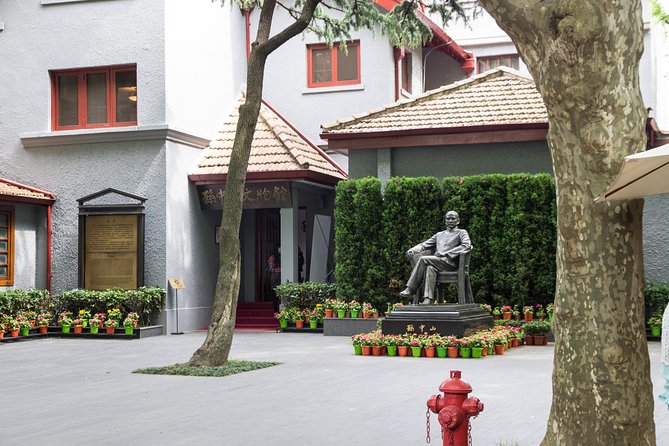
The second historic stop is the former residence of Soong Ching Ling, located near the poster center. Soong Ching Ling was the wife of Dr. Sun Yat-sen, and the house presents her life achievements along with the history of the Republic and the early Communist period.
This visit changes the tone of the afternoon. The poster museum focuses on public persuasion and political movements. The residence gives you a closer look at a person’s life, work, and historical position. Together, the two stops help connect national events with real people and daily experience.
I like this pairing because it avoids presenting history as a list of dates. You first see how an era tried to shape public thought. Then you enter a home associated with one of the key figures linked to China’s political transition.
The tour information does not give a precise length of time inside the residence, so the guide controls the flow of this part. Your overall second section includes the residence, the food stop, and the walk along Wukang Road. That means you should expect a fairly active afternoon rather than a slow museum visit with long periods to yourself.
Wonton soup breaks up the history lesson
At some point during the walk, your guide takes you to a local shop for a bowl of Chinese wonton soup. It is a modest inclusion, but it makes the route feel more connected to present-day Shanghai.
The soup is included in the tour price, while dinner is not. Think of it as a light local snack rather than a full evening meal. If you need a substantial lunch or dinner, plan that separately.
Food also gives the guide a natural pause point. Three hours of political history and walking can become tiring, especially if you are taking notes or listening closely. A bowl of wonton gives you time to reset before the final street walk.
The exact shop, serving size, and menu details are not specified, so I would not book this tour as a food experience. The food is a pleasant part of a history walk, not its central purpose.
Wukang Road shows another side of Shanghai
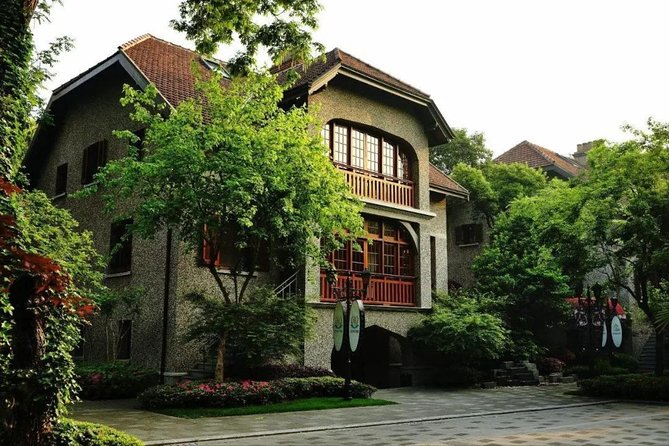
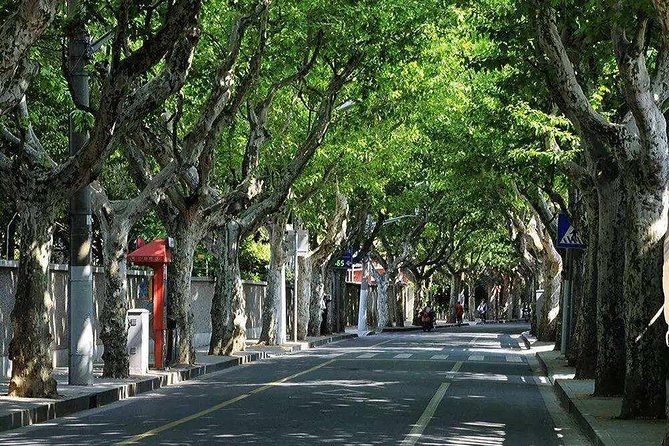
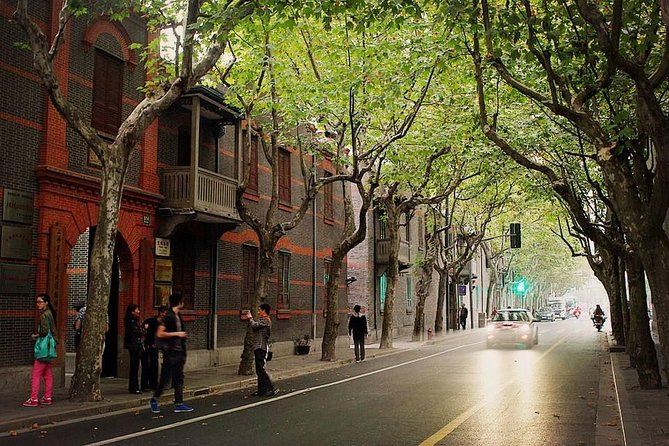
After the indoor visits and soup stop, you walk along Wukang Road for about a mile, or 1.2 kilometers. This road is known for well-preserved European-style buildings, with historic structures on both sides.
The architectural section gives the tour welcome variety. You move from political posters and memorial rooms to balconies, facades, and street views. The French Concession setting also helps explain why Shanghai feels so different from many other Chinese cities. You are not simply moving between attractions by vehicle. You are seeing how the district itself carries layers of foreign and Chinese influence.
I would pay close attention to the route here. The walk is not just a transfer between stops. The guide can connect the buildings and streets to the area’s past, while you get a more ordinary view of Shanghai than a bus-based sightseeing trip would provide.
You should wear comfortable shoes. The tour lasts about three hours and includes a substantial amount of walking. Most people can take part, but the route may not suit you if you prefer seated sightseeing or have difficulty walking for this length of time.
The tour ends at the north gate of Soong Ching Ling’s former residence, at 1843 Huai Hai Zhong Lu. That separate end point is useful if you plan to continue exploring the area, but it means you should not expect to return to Jiangsu Road Metro Station with the group.
More Historical Tours in Shanghai:
- Tour of Jewish Shanghai led by a Jewish History Expert
★ 5.0 · 106 reviews - 4-Hour Private Shanghai Art and History Tour
★ 5.0 · 8 reviews - Private Full Day Tour: Shanghai Colonial History Tour
★ 5.0 · 6 reviews - Shanghai Uncommon Historic Sites Tour
★ 5.0 · 3 reviews
What the $73.60 price includes
At $73.60 per person, this is not the cheapest way to spend an afternoon in Shanghai. The value depends on how much you want interpretation rather than simple admission to attractions.
The price includes an English-speaking guide, entrance fees, and Chinese wonton soup. The tour also has a maximum group size of 15, which is small enough for questions and easier movement through indoor spaces. Hotel pickup and drop-off are not included, so you must reach the starting point on your own.
I think the price makes the most sense for first-time visitors who want a clear introduction to Chinese political history but do not want to arrange two museums, a food stop, and a French Concession walk independently. The guide supplies the connections among these pieces.
If you already have strong background knowledge and prefer to read museum labels at your own pace, you may find the cost harder to justify. The tour’s main product is explanation and context. If you skip the guide, you lose much of what makes the route worthwhile.
Meeting at Jiangsu Road makes the afternoon straightforward
The tour starts at Jiangsu Road Metro Station at 1:00 pm. The meeting point is centrally located and near public transportation, which keeps the arrival simple. There is no hotel pickup, so allow enough time to reach the station.
The afternoon departure also works well after a morning of sightseeing. You can eat lunch before meeting the guide, then use the included wonton as a later snack. Since the tour ends at Soong Ching Ling’s former residence rather than at the starting station, plan your next stop from the end point.
A mobile ticket is provided, and confirmation is sent at booking. Children must be accompanied by an adult. Service animals are allowed, and most people can participate.
The maximum group size is 15. That is worth noting because the route includes museum rooms, local streets, and a small food stop. A smaller group generally makes it easier to hear the guide and keep the walking pace together, although 15 is still a group rather than a private outing.
The guide’s role is central to the experience
This tour depends heavily on the quality of the guide. The posters use visual language that may not be obvious if you cannot read Chinese or do not know the political events behind each image.
Recent feedback singled out Alana for her clear explanations and friendly manner. One booking was made only 48 hours before the tour, and Alana contacted the guests within hours. That suggests communication can be prompt, though guide assignments can change, so you should not assume Alana will lead every departure.
A good guide makes the difference between looking at old posters and understanding why they were produced. The same applies to Soong Ching Ling’s residence. You will gain more from the rooms and displays when someone links them to the Republic, Sun Yat-sen, and the early Communist period.
If you want a tour built around open discussion, ask questions as you walk. The small maximum group helps, but the three-hour schedule still requires the guide to keep moving.
What may not suit every visitor
The subject is serious. You will hear about political movements, hardship, and the difficult conditions faced by Chinese people in earlier times. The tour also presents the official hopes for a better life, so it is not simply a collection of grim facts.
The walking can be another drawback. You visit two indoor sites, but the experience includes movement through local streets and roughly a mile on Wukang Road. Wear shoes you can walk in comfortably, and do not count on the wonton serving as a full meal.
There is also limited flexibility. The tour begins at a fixed time, follows a planned route, and finishes at a different location. That structure is helpful if you want an organized afternoon, but less appealing if you prefer to linger at one museum or change plans as you go.
Finally, the tour does not include dinner or hotel transfers. Those are small details, but they affect the total cost and your evening plans.
Who should book this Shanghai history walk
I would recommend this tour to you if you want political context presented in plain English, enjoy walking through historic districts, and prefer a guide to connect the pieces. It is especially useful if the Shanghai Propaganda Poster Art Center is high on your list but you want help interpreting what you see.
It also suits visitors who want more than landmark photographs. The route combines a private poster collection, a former political figure’s residence, local soup, and French Concession architecture. That mix gives the afternoon a clear shape and keeps it from becoming a single-subject museum visit.
Families can join, provided children are accompanied by an adult, though parents should consider the serious subject matter and amount of walking. The tour is also a reasonable choice for solo visitors who want a small organized group and an English-speaking guide.
I would look elsewhere if your main goal is food, shopping, or a relaxed architecture walk. Those elements appear here, but they support the political history theme rather than replace it.
Should you book this tour?
Book it if you want to understand Shanghai through its political images, personal stories, and old French Concession streets. The strongest reasons are the large collection of original posters, the thoughtful pairing with Soong Ching Ling’s residence, and the guide’s role in explaining material that would be easy to misread on your own.
At $73.60, the tour is fairly priced when you use the included admissions, guide, and wonton soup. Just arrive ready to walk, meet at Jiangsu Road Metro Station by 1:00 pm, and remember that the tour finishes at the residence rather than returning to the starting point.
If those conditions suit your plans, this is a focused and useful way to spend three hours in Shanghai.
FAQ
How long does the Shanghai Propaganda and History Walking Tour last?
The tour lasts approximately three hours.
Where does the tour begin?
It begins at Jiangsu Road Metro Station in Changning District, Shanghai.
What time does the tour start?
The scheduled start time is 1:00 pm.
Where does the tour end?
It ends at the north gate of Soong Ching Ling’s former residence, at 1843 Huai Hai Zhong Lu.
What is included in the tour price?
The price includes an English-speaking guide, entrance fees, and Chinese wonton soup.
Is hotel pickup included?
No. Hotel pickup and drop-off are not included. You need to reach the centrally located meeting point yourself.
How large is the group?
The tour has a maximum of 15 participants.
Newly listed around Shanghai
- shanghai Disney tour★ 5.0 · 12 reviews
- shanghai Disney+shanghai one day city highlights tour (two days)★ 5.0 · 4 reviews
- Zhujiajiao Water Town and Shanghai City Highlights Private Day Tour★ 5.0 · 3 reviews
- Zhujiajiao Water Village & Seven Treasure Town Day Tour from Shanghai★ 4.0 · 8 reviews
- Zhujiajiao Water Town Private Tour with Local Farm Visit and Fruit Picking★ 5.0 · 3 reviews
- Zhujiajiao Water Town Self-Guided Tour with Private Transfer from Shanghai★ 5.0 · 7 reviews
- Xitang Water Town Self-Guided Tour from Shanghai with Private Transfer★ 5.0 · 5 reviews
- Xitang Water Village Sunset Tour with Riverside Dining Experience from Shanghai★ 4.5 · 45 reviews
Walking Tours, compared.
Beijing Hutong Walking Food and Beer Tour at Hidden Restaurants
Read our review →
Private Beijing Walking Tour of the Forbidden City with 7 Options
Read our review →
Dark Side of Hong Kong – Kowloon Caged Homes Walking Tour
Read our review →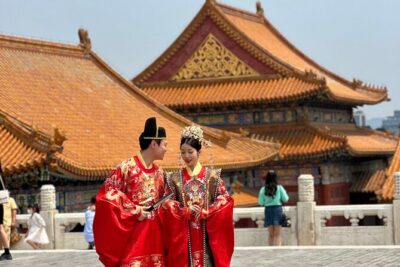
Forbidden City Private Walking Tour with Optional Sights
Read our review →
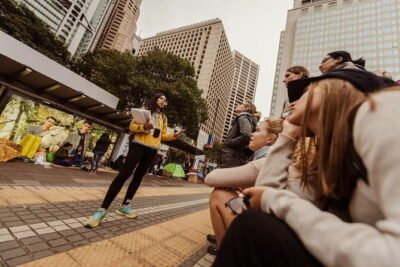
Introduction to Hong Kong: Central Tip Based Walking Tour
Read our review →
Shanghai Highlights Walking Tour With A Real Local
Read our review →Browse the lists this tour appears in