
Reviewed · WALKING TOURS
Introduction to Hong Kong: Central Tip Based Walking Tour
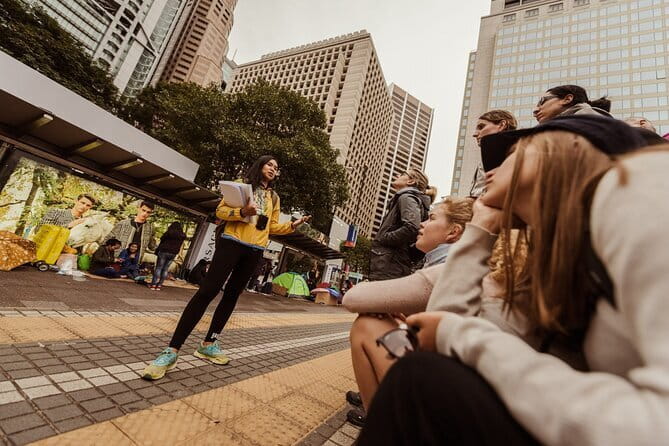
Hong Kong’s story comes into focus when you walk from the Court of Final Appeal to a smoky temple in Sheung Wan. This two-hour route links courts, banks, colonial buildings, steep hills, food streets, and incense coils, showing how the city’s politics and daily life meet on the same pavement.
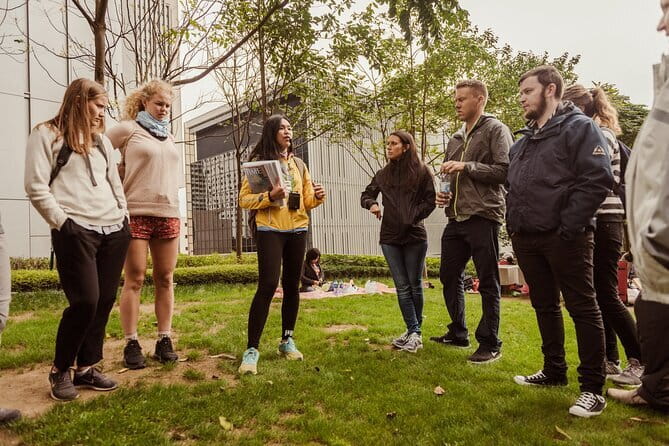
I like the way the tour pairs big ideas with visible places, especially the legal system at the Court of Final Appeal and the Feng Shui contest between HSBC and the Bank of China. I also like the personal angle. Guides such as Andy and Stephen explain Hong Kong through local experience, not just dates and building names.
The main consideration is that this is a tip-based walk, not a fully prepaid sightseeing tour. The $2.63 booking price is excellent value, but you should plan to tip the guide. Food and drinks are not included, and the group can reach 30 people.
Key points at a glance
- See Hong Kong’s political story in real places: Learn how British Common Law, Chinese law, and One Country, Two Systems meet at the Court of Final Appeal.
- Read the skyline through Feng Shui: Compare HSBC and the Bank of China from Statue Square and hear how design became part of their financial rivalry.
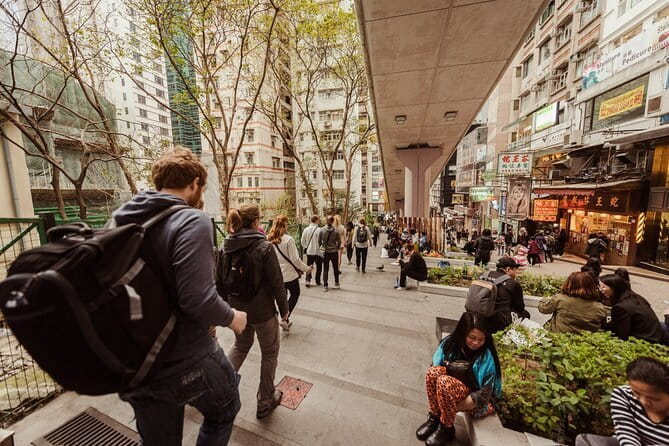
- Ride the Central-Mid-Levels Escalators: Follow Hong Kong’s practical answer to steep hills and dense urban growth.
- Connect street food with culture: Hear about wonton noodles, egg tarts, and other local staples around Wellington Street.
- Take part in temple customs: At Man Mo Temple, the guide shows you how to offer incense, ring the bell, and strike the drum.
- Get strong value from a short walk: The tour costs $2.63 to book, lasts about two hours, and has free cancellation up to 24 hours before departure.
Why this Central walk works so well
Many city walks give you a string of buildings and a few dates. This one tries to connect the pieces. You begin in Central, the financial and political heart of Hong Kong, then move toward Old Town Central and Man Mo Temple.
That change of setting matters. Early stops deal with courts, banks, colonial power, and sovereignty. Later stops deal with rent, transport, noodles, neighborhood life, and religious practice. You get a useful contrast between the institutions that shaped Hong Kong and the everyday habits that keep the city moving.
The route is also well suited to a first visit. You do not need to know Hong Kong’s history in advance. The guide explains the political background while pointing to buildings you can see at close range. The walk gives you a framework for later exploring Central, Sheung Wan, and the Mid-Levels on your own.
The pace is roughly ten minutes at most stops, with 15 minutes at Man Mo Temple. That suggests a steady overview rather than long lectures inside each location. If you prefer a slow architectural study or extended museum time, this may feel brisk. If you want a clear introduction without giving up half a day, the timing works well.
More Walking Tours in Hong Kong
- Dark Side of Hong Kong – Kowloon Caged Homes Walking Tour
★ 5.0 · 418 reviews - Full-Day Private Customized Walking Tour of Hong Kong
★ 5.0 · 106 reviews - Hong Kong: Kowloon Street Market & Food Culture Walking Tour
★ 5.0 · 105 reviews
Court of Final Appeal: law made visible
The walk starts at Central MTR Station, Exit K, at 11:00 am. From there, the first stop is the Court of Final Appeal, where the guide explains the relationship between Hong Kong’s British Common Law tradition and Chinese Continental law.
This is a smart opening because it introduces the legal question behind much of Hong Kong’s modern identity. The discussion also covers One Country, Two Systems, a subject that can feel abstract when discussed in a classroom or news report. Here, you are standing at the city’s highest court while hearing how different legal traditions operate side by side.
The stop lasts about ten minutes and admission is free. You should expect an exterior-focused explanation rather than a court visit, since no admission ticket is included. The value comes from the setting and the guide’s explanation of what the institution represents.
Statue Square and the Feng Shui contest
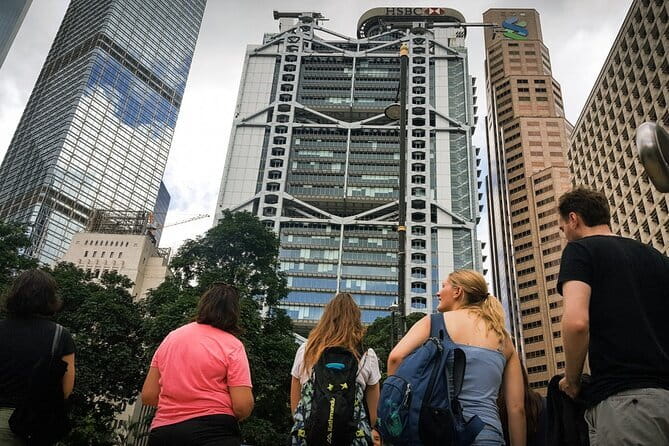
Statue Square brings the city’s financial story into view. From here, the guide compares HSBC with the Bank of China, two buildings that represent different periods and forms of power.
The focus on Feng Shui gives the stop a local angle. Instead of treating the towers as ordinary pieces of modern architecture, the guide explains how their design and position were seen as part of a contest for financial strength. HSBC represents British colonial influence, while the Bank of China signals Chinese sovereignty and economic power.
I like this stop because it gives you something to watch for after the tour. You can look at the buildings not only as engineering feats, but also as statements about authority, money, and identity. The information is presented in a short ten-minute segment, so you will not get a full architectural lecture. You will get a memorable way to read Central’s skyline.
HSBC Main Building and the changing harbor
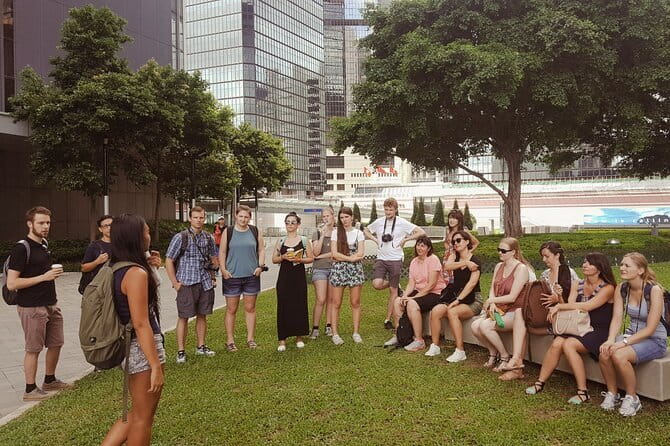
At the HSBC Main Building, the story turns to money and geography. The guide explains Hong Kong’s monetary stability, the role of the bank, and the currency peg. The famous guardian lions provide an easy visual anchor for the discussion.
The stop also connects the building to Hong Kong’s changing coastline. Since 1842, reclamation has altered the relationship between Central and Victoria Harbour. That point helps explain why the city can feel both intensely old and startlingly new. The pavement beneath you may be historic, but the ground itself is part of an ongoing process of expansion and rebuilding.
Again, admission is free and the visit lasts about ten minutes. This is a good place to ask questions if you want to understand how finance affects ordinary life in Hong Kong. The walk will not take you inside the bank as a visitor attraction, so the experience depends on the guide’s storytelling and the exterior view.
Same base, a completely different kind of day out:
- Hong Kong: Dolphin Cruise, Big Buddha & Lantau Island Tour
★ 4.2 · 1,512 reviews - Ngong Ping 360: Cable Car Return Tickets & Combos
★ 4.6 · 1,431 reviews - Lantau Island Day Trip – Big Buddha & Tai O
★ 4.5 · 1,328 reviews - Big Bus Hong Kong Open Top Hop-On Hop-Off Sightseeing Tour
★ 4.0 · 1,077 reviews
St. John’s Cathedral and Hong Kong’s colonial chapter

St. John’s Cathedral brings the British period into a more personal setting. The guide discusses British possession beginning in 1842 and the eventual handover to China in 1997.
The tour also includes the guide’s own Hong Kong story. That personal perspective is one reason the experience can feel more useful than a list of historical events. Guides Andy and Stephen are specifically associated with strong, helpful explanations, but the guide assigned to your departure may vary.
The cathedral stop lasts about ten minutes and does not require an admission ticket. You should treat it as a historical pause rather than a formal religious tour. The key benefit is hearing how colonial rule, local identity, and the handover continue to shape the city.
Queen’s Road Central and the cost of living
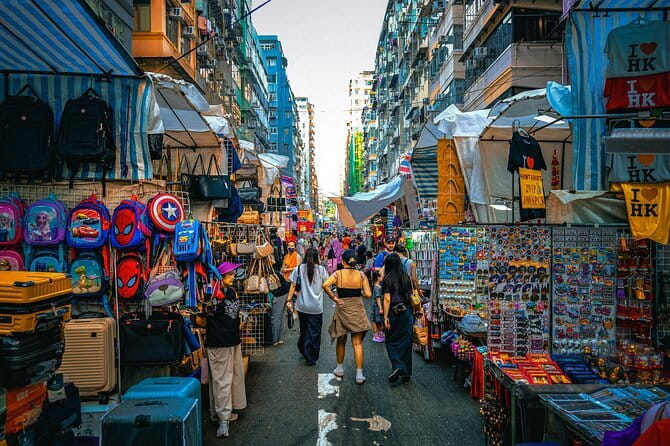
At Queen’s Road Central, the subject becomes less grand and more immediate: rent. Hong Kong’s extreme rental economy has shaped the city’s buildings, streets, and living arrangements.
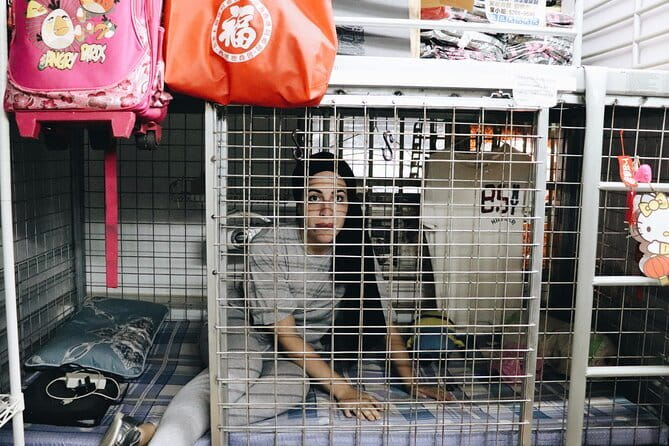
The guide explains subdivided living units, a difficult reality created by high housing costs. This is one of the most useful parts of the walk because it moves beyond famous towers and temples. You begin to see density as more than a visual feature. It affects the size of homes, the use of old buildings, and the pressure placed on residents.
The stop takes about ten minutes. You will not tour a subdivided unit, and the experience does not promise a detailed housing policy discussion. Still, the subject gives you a clearer understanding of why Hong Kong’s streets can feel so compressed and why vertical space matters so much.
Central-Mid-Levels Escalators: a practical city machine
The Central-Mid-Levels Escalators are one of the most enjoyable parts of the route because they turn urban planning into something you can use. The system connects Central with the steep hillside neighborhoods above it and is described as the world’s longest outdoor escalator system.
The guide explains why the government developed it and the engineering problems involved in linking sharply different elevations. You also experience the system directly rather than simply viewing it from a distance.
The escalators are not one continuous ride from bottom to top in the simple sense. The important point for you is that they form a major public route through the city. They help explain how Hong Kong adapts to hills, limited ground space, and heavy foot traffic.
This portion may be less comfortable in poor weather, since the experience requires good conditions. Wear shoes suited to walking, even though the escalator offers a break from climbing. The route remains urban and active, so stay close enough to hear the guide.
Wellington Street and the food you should try later

Wellington Street introduces Hong Kong through food. The guide talks about wonton noodles, egg tarts, and other dishes, explaining what they reveal about local culture.
No food or drink tasting is included, so think of this as a useful orientation rather than a food tour. That can actually work in your favor. You hear what to look for, then choose where and when to eat according to your own schedule. The guide provides a list of nearby food options, which is helpful if you want to continue exploring after the walk.
I would keep this list handy and ask questions about portion size, timing, or which dishes best fit your plans. Since the stop is about ten minutes, it will not cover every aspect of Hong Kong cuisine. Its real value is helping you connect familiar foods with local habits and history.
Man Mo Temple and a hands-on finish
The route ends at Man Mo Temple, at 124 to 130 Hollywood Road in Sheung Wan. This is the most sensory stop, with incense coils and a neighborhood atmosphere that feels far removed from the banks a short distance away.
The guide leads you through the basic practice of offering incense, ringing the bell, and striking the drum. That hands-on element makes the temple more approachable. You are not simply looking at an old building and trying to guess what happens inside. You receive practical guidance on how to take part respectfully.
The temple stop lasts about 15 minutes, the longest single stop on the route. It is a fitting ending because it brings the tour back to daily life and popular belief. After hearing about law, currency, sovereignty, and rent, you finish with a living local practice.
The tour ends here rather than returning to Central. That is useful if you want to continue along Hollywood Road or explore Sheung Wan. It also means you should plan your next destination from Man Mo Temple, not from the original meeting point.
What the $2.63 price really means
At $2.63 per person, the booking price is remarkably low for a two-hour guided walk. You receive a professional local guide, city context, and personal stories. You also cover a broad part of Central and Old Town without paying entry fees at the listed stops.
The important detail is the tip-based format. The booking price is not the full measure of what the guide earns, so you should budget an additional tip if the experience serves you well. The low upfront cost makes it easy to fit into a Hong Kong itinerary, but it should not be treated as a completely free tour.
Food, beverages, and anything not specifically included are extra. The tour also has a maximum group size of 30 people. That is large enough that you may not receive constant one-to-one attention, especially on busy streets, but the number remains manageable for a walking overview.
Timing, meeting point, and practical planning
You meet at Central MTR Station, Exit K, on an unnamed road in Central, at 11:00 am. The meeting point is near public transportation, which makes it practical if you are already staying in Hong Kong or arriving by MTR.
Allow about two hours, though you should avoid booking a tightly timed activity immediately afterward. Street crossings, group movement, and questions can affect the pace. The route ends at Man Mo Temple, not back at the station.
Most people can participate, and service animals are allowed. The experience requires good weather, and it also requires a minimum number of participants. If poor weather or low enrollment cancels the walk, you are offered another date, another experience, or a full refund.
You can cancel for a full refund up to 24 hours before the local start time. Changes or cancellations inside that 24-hour window are not accepted for a refund.
Who should book this walk
I would choose this tour for a first or second day in Hong Kong, especially if you want the city’s main ideas explained before exploring alone. It suits people who enjoy history, architecture, urban planning, food culture, and short walks with frequent stops.
It is also a good choice for anyone who wants a local viewpoint on political change. The guide’s personal stories add a human layer to subjects such as the 1997 handover and One Country, Two Systems.
You may want a different experience if you are looking for a dedicated food tasting, a long temple visit, a private guide, or a slow photography walk. The group may reach 30 people, and the low price reflects the tip-based structure rather than a private service.
Should you book it?
Yes, if you want a clear, inexpensive introduction to Central Hong Kong that connects famous buildings with ordinary life. The best parts are the unusual range of subjects, the personal guide perspective, the Feng Shui explanation, the escalator ride, and the practical temple customs at the end.
Go in with realistic expectations. You are booking a brisk group overview, not a private history seminar or a meal-inclusive tour. Budget a tip, wear comfortable shoes, and keep time after the walk to explore Hollywood Road and Sheung Wan. For $2.63 plus your chosen tip, this is a strong way to get your bearings and learn how Hong Kong’s past still shapes its streets.
FAQ
How long does the walking tour last?
The tour lasts approximately two hours.
Where does the tour begin?
It begins at Central MTR Station, Exit K, in Central, Hong Kong.
What time does the tour start?
The stated start time is 11:00 am.
Where does the tour end?
The tour ends at Man Mo Temple, 124 to 130 Hollywood Road, Sheung Wan, Hong Kong.
What is included in the tour?
A professional local guide and insights and personal stories about Hong Kong are included.
Is food included?
No. Food and beverages are not included.
How much does the tour cost?
The listed booking price is $2.63 per person. It is a tip-based walking tour, so you should also plan for a tip.
How many people can join the tour?
The maximum group size is 30 travelers.
Can I cancel for a full refund?
Yes. You can cancel at least 24 hours before the experience start time for a full refund.
What happens if the tour is canceled?
If poor weather or an insufficient number of participants causes cancellation, you are offered a different date or experience, or a full refund.
Newly listed around Hong Kong
- 6 Hour Private Shore Excursion Cruise Ship Pick Up Guided Tour★ 5.0 · 8 reviews
- Hong Kong Disneyland: Non-Stop 2-Day Fun Ticket★ 4.5 · 13 reviews
- Big Bus Hong Kong Panoramic Night Tour by Open-Top Bus★ 3.5 · 53 reviews
- The Dragon’s Back Hiking Tour, Hong Kong★ 5.0 · 54 reviews
- The Authentic Hong Kong – Private Walking Tour★ 5.0 · 55 reviews
- Tea Tasting and Pairing Concept Workshop★ 5.0 · 57 reviews
- Victoria Harbour Yacht Night Cruise – DREAMER:Tourguide & Photos★ 4.0 · 58 reviews
- Organic Xiao Long Bao Soup Dumpling Class & Market Walk★ 5.0 · 62 reviews
Walking Tours, compared.
Beijing Hutong Walking Food and Beer Tour at Hidden Restaurants
Read our review →
Private Beijing Walking Tour of the Forbidden City with 7 Options
Read our review →
Dark Side of Hong Kong – Kowloon Caged Homes Walking Tour
Read our review →
Forbidden City Private Walking Tour with Optional Sights
Read our review →
Shanghai Highlights Walking Tour With A Real Local
Read our review →
Beijing City Walk: Explore Hutongs Life and Old Beijing
Read our review →Browse the lists this tour appears in