
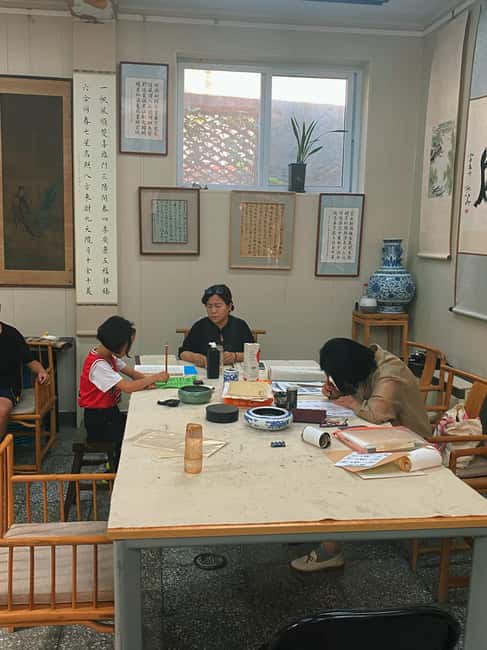
Reviewed · CALLIGRAPHY & PAINTING CLASSES
Beijing liulichang : Learn Calligraphy orCarving from Master
Liulichang’s old lanes lead to a quiet workshop where you stop being a sightseer and make something with your own hands. I like the choice of three distinct art forms, and I like that the finished piece is personal rather than a factory souvenir. The small-group format also gives you time with the artisan instead of a quick demonstration.
The main consideration is time. In two to two and a half hours, you can learn the basics, but you will not become a master. Seal carving needs patience, and the studio is reached on your own, since transportation is not included.
What makes this experience worth your time
- Walk through Liulichang East Street first, so the workshop has a sense of place rather than feeling like an isolated class.
- Choose calligraphy, silk fan painting, or seal carving, depending on whether you prefer brushwork, color, or careful carving.
- Practice before touching the final stone, an especially useful feature for first-time seal carvers.
- Work with an artisan and English-speaking support, with Bruce Gao named as a host in the experience.
- Take home a handmade keepsake, including a Chinese name chop, written proverb, or painted round fan.
- Book a private or small group, a good choice if you want more questions answered and more time at the table.
Start at Liulichang’s small square entrance
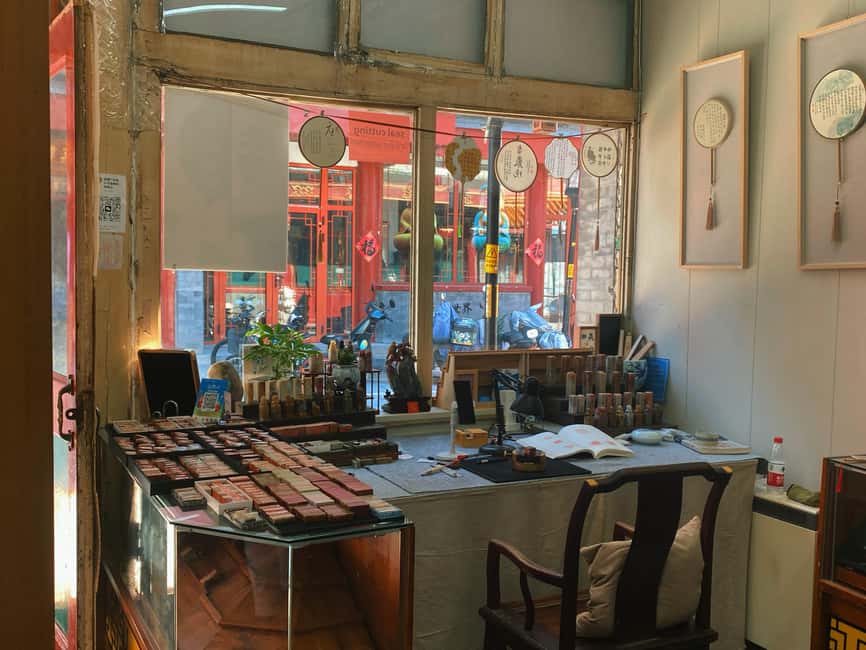
Your meeting point is the small square at the entrance to Liulichang East Street. Look for the guide holding a Sino-Voyages sign. This matters in a city as large as Beijing: you are not expected to find an anonymous studio on your own, but you do need to reach Liulichang independently.
The experience begins with a short walk through the district. Liulichang is known for its old art and book shops, and this opening stroll gives you a little context before the hands-on work begins. It is not a long sightseeing tour, so do not book it as a replacement for a major Beijing city tour. Think of it as a useful introduction that helps connect the workshop to the neighborhood around it.
I like this order. You first see the setting where Chinese calligraphy, painting, and seal culture belong. Then you sit down and try the techniques yourself. The transition from street to studio is part of the pleasure.
Your guide can speak English or Chinese. Bruce Gao is identified as one of the people involved in the experience, and a small group allows more direct help than a large scheduled class. If you need detailed instruction or have questions about the characters you choose, a private booking may suit you best.
More Calligraphy Classes in Beijing
- Beijing Calligraphy Class
★ 4.9 · 112 reviews - Chinese Calligraphy Class for Small Group
★ 5.0 · 104 reviews - Beijing Historic City Guided Walking Tour + Calligraphy Creation
★ 5.0 · 59 reviews
Three ways to make your own Chinese artwork
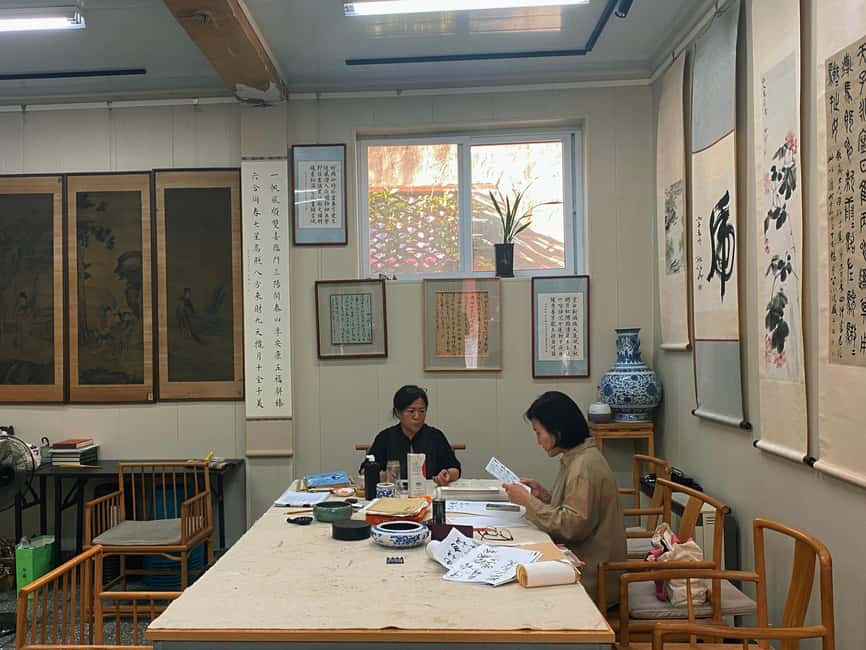
You choose one principal activity. Each option gives you a different kind of souvenir and a different pace at the table.
Calligraphy: slow brushwork on rice paper
Calligraphy is the most direct introduction to Chinese brush art. You learn how to hold and control the brush, then practice strokes before writing a meaningful Chinese proverb or your own name on rice paper.
The appeal is not simply decorative. Chinese calligraphy depends on pressure, speed, spacing, and the movement of the whole arm. Even a short lesson shows you why a few characters can require such care. You may arrive expecting to copy a symbol and leave with a better sense of how written Chinese can also function as visual art.
This is a good choice if you want a calm activity with a clear result. It also suits anyone who would like a personal name or saying rather than a fixed image. The finished sheet is light and easy to pack, though rice paper still deserves protection from creases.
Calligraphy can also serve as preparation for seal carving. One person who combined the two activities used brushwork to practice the characters that would later go onto the stone. The schedule is built around one chosen workshop, so ask ahead if you hope to include both in a substantial way.
Fan painting: a useful work of art
The fan option uses a delicate silk round fan. You choose a classic motif such as bamboo or orchids, then paint your own design under guidance.
This choice has a different feel from calligraphy. You are working with an image and color rather than concentrating only on brush lines and characters. Bamboo and orchids are traditional subjects, so the activity gives you a simple entry into familiar Chinese artistic themes without requiring prior drawing experience.
The fan is also a practical souvenir. It is a piece you can display or use, though its delicate surface means you should pack it with care. If you want to make something pictorial and do not want to carve stone, this may be the best fit.
Do not expect a full painting course in a couple of hours. The value is in learning a few basic movements, making a guided design, and understanding how the material responds. Your final work will be your own, but the class is meant for beginners rather than trained artists.
Same base, a completely different kind of day out:
- From Beijing: Mutianyu Great Wall Tours with Options
★ 4.9 · 9,216 reviews - Beijing: Forbidden City Tour(Group/Private)-Tickets Included
★ 4.8 · 7,974 reviews - Beijing: T-Square & Forbidden City Group or Private Tour
★ 4.8 · 4,446 reviews - Beijing: Mutianyu Great Wall Daily Tour with Ticket & Lunch
★ 5.0 · 3,056 reviews
Seal carving: the most unusual choice
Seal carving is the most distinctive option. You create a Chinese name chop, a small stamp traditionally used as a personal signature. You learn the characters, practice the technique, and carve your own seal under the artisan’s supervision.
This activity takes more patience than it may first appear. A small stone leaves little room for error, which is why practice stones are provided before you work on the final piece. That preparation is one of the strongest practical features of the class. You can get used to the tools and movement without immediately risking your finished keepsake.
The seal is also more than a souvenir with a Chinese character on it. It connects your name to an old form of personal marking. You can use the finished chop on paper or keep it as a small object that recalls your time in Beijing.
I would choose seal carving if you enjoy careful handwork and want the most unusual result. It may frustrate you if you prefer quick results or have limited patience for repeated practice. The slower pace is part of the point.
What the workshop feels like in practice
The studio is described as traditional and tranquil, away from the crowds. You are given the materials for your selected activity, and the artisan shows you how to begin. No previous experience is needed. Curiosity is enough.
Expect a hands-on class, not a performance where you sit quietly and watch someone else work. You make the strokes, paint the fan, or handle the carving tools yourself. The instructor offers corrections and encouragement as you go.
The small-group setting is important here. With brushwork and carving, a little personal guidance can make a large difference. You may need help with posture, pressure, character shape, or tool control. A large class could turn this into a generic craft lesson, but the stated format is designed for personal attention.
Language support is available in English and Chinese. If your Chinese is limited, the guide can help with communication between you and the artisan. Bruce Gao and his team are associated with the experience, and direct assistance is especially useful during seal carving, where instructions need to be clear.
A review of the seal-carving format described several interpreters helping with communication and plenty of practice on other stones before the final engraving. That detail should reassure beginners. You are not simply handed a stone and told to manage it alone.
Why the handmade souvenir matters
Beijing offers no shortage of things to buy. A workshop souvenir has a different value because you take home an object connected to your own effort.
With calligraphy, the meaning may come from the proverb or name you select. With fan painting, the design reflects your brushwork. With seal carving, the unevenness or small imperfections can be part of its character. You are not purchasing a flawless professional piece. You are making something that carries evidence of the afternoon you spent learning.
That distinction helps explain the price. At $75 per person, this is not the cheapest way to fill two hours in Beijing. You are paying for instruction, materials, a guided neighborhood introduction, and a finished object. The price is easier to justify if you value participation and want a souvenir with a story.
It is less compelling if you only want to see Liulichang or buy Chinese art. You can visit the district without booking a class. This experience earns its cost through the time at the worktable and the personal help, not through the short walk alone.
Timing, group size, and practical planning
Allow two to two and a half hours. That gives you enough time for the Liulichang introduction, instruction, practice, and completion of your selected artwork.
Choose your art form before you arrive if possible. Calligraphy is a good match for quiet concentration. Fan painting suits you if you want color and a visual design. Seal carving is best for someone who enjoys precision and does not mind working slowly.
Transportation is not included. Plan your route to the Liulichang East Street meeting point and leave enough time to find the small square entrance. The guide will be holding a Sino-Voyages sign, but a punctual arrival still matters because the group begins with the neighborhood walk.
Private and small-group formats are available. A private session may be worth considering for families with older children, couples wanting a more personal activity, or anyone who wants extra help with character selection. Children under five are not suitable for the experience. The activity is wheelchair accessible.
You may cancel up to 24 hours before the start for a full refund, and you can reserve now and pay later. Those terms are useful if your Beijing plans may change, but they do not remove the need to check the available starting time when booking.
Who will enjoy it most
I would recommend this to you if you want a quieter cultural activity between major Beijing sights. It works particularly well for people who prefer making something to collecting photographs.
It is also a good fit for first-time visitors who want a simple introduction to Chinese artistic traditions without committing to a long course. The instructor handles the basic teaching, and the materials are supplied. You do not need to bring specialist tools or know how to write Chinese.
Families should consider the pace and the age of the children. Young children under five are not suitable, and even older children should be interested in careful handwork. Seal carving requires attention, while fan painting may be easier for someone who wants a more immediate visual result.
Couples and small groups can choose different activities and compare the finished pieces afterward. If everyone wants a different art form, confirm how the session handles the choices before booking, since the experience is presented as a choice of one main workshop.
The limitations to keep in mind
This is a short introduction, not a full apprenticeship. You will learn basic techniques and complete a small piece, but you should not expect advanced instruction or museum-quality work.
The Liulichang walk is brief. If you want a detailed study of Beijing’s old bookshops, antique trade, or architecture, you will need more time in the district before or after the class.
The price does not include transport. That is a minor issue if you are already planning to visit Liulichang, but it adds planning for anyone coming from another part of Beijing.
Finally, your result may look like a beginner’s work. That is not a flaw in the experience, but it is worth understanding before you book. The aim is to learn, make, and carry home something personal. It is not to produce a perfect professional artwork.
Should you book the Liulichang workshop?
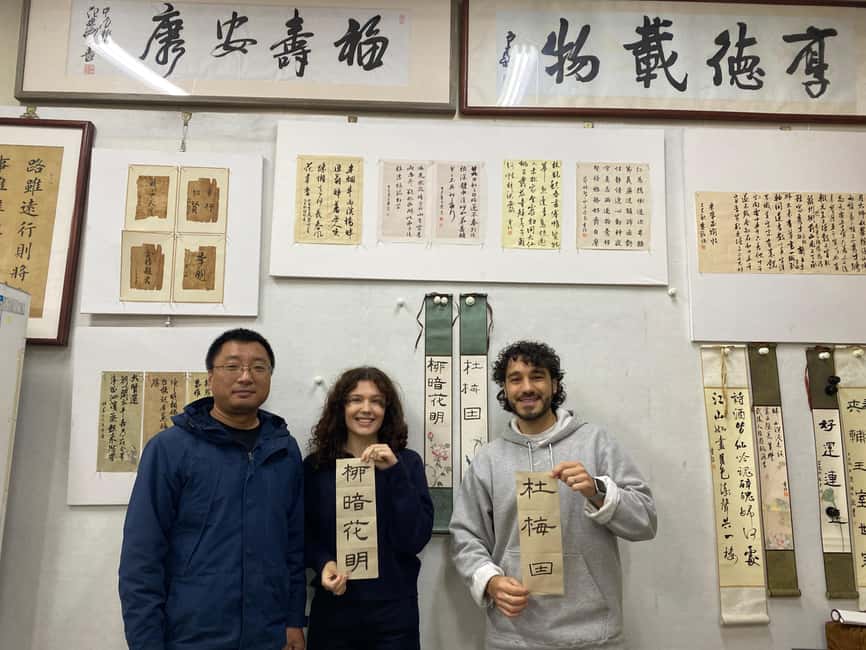
Book it if you want active cultural time, a small group, and a handmade souvenir that you create yourself. I especially recommend the seal-carving option if you like careful work and want something less common than a standard Beijing memento. The practice stones and patient instruction make it approachable.
Choose calligraphy if you want the calmest activity and a personal written keepsake. Choose fan painting if you prefer a picture and a functional object. At $75, the experience offers fair value for the materials, artisan guidance, neighborhood introduction, and finished work, but it is not the right choice if you only want a quick look at Liulichang.
FAQ
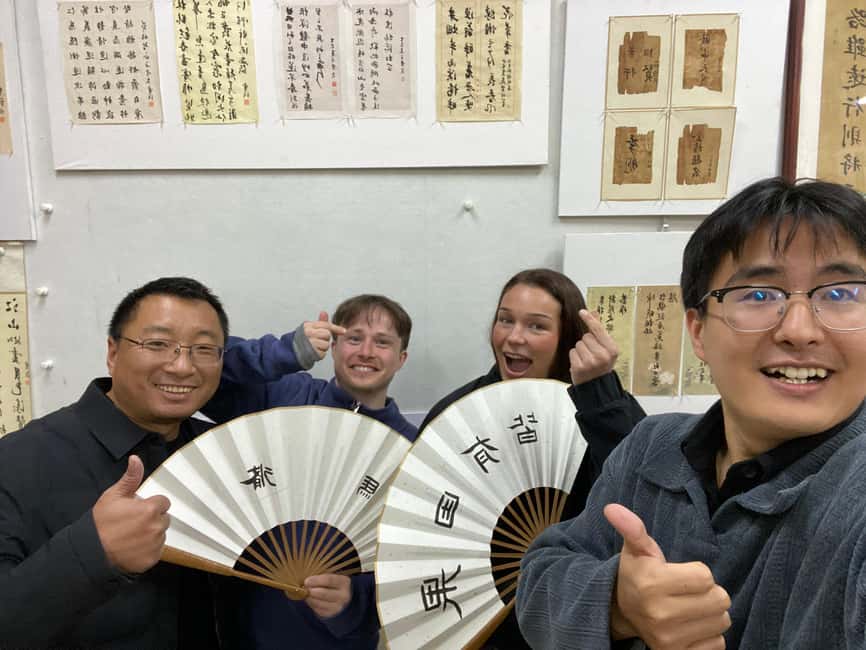
Where does the experience meet?
Meet at the small square entrance of Liulichang East Street. Look for the guide holding a Sino-Voyages sign.
Is transportation to Liulichang included?
No. Transportation to the meeting point is not included.
How long does the workshop last?
The full experience lasts about two to two and a half hours, including the short Liulichang walk and the workshop.
Which activities can I choose from?
You can choose calligraphy, silk round fan painting, or seal carving.
Do I need previous artistic experience?
No. Prior experience is not required, and curiosity is encouraged.
What languages are available?
The experience is offered in English and Chinese.
Can I take my artwork home?
Yes. You receive the handmade artwork created during your selected workshop, including your personalized calligraphy, painted fan, or carved seal.
Is the experience suitable for young children and wheelchair users?
Children under five are not suitable. The experience is wheelchair accessible.
More Calligraphy & Painting Classes in Beijing
- Beijing Wangfujing Calligraphy Class by Forbidden City
★ 5.0 · 58 reviews - Beijing Culture: Tea Ceremony, Heritage Instrument & Calligraphy
★ 5.0 · 57 reviews - Beijing Wangfujing Calligraphy Class Nearby Forbidden City
★ 5.0 · 56 reviews - Beijing Hands-On Culture Tour: Tea, Instrument, Calligraphy
★ 5.0 · 6 reviews
Newly listed around Beijing
- Beijing: Summer Palace Ticket; fast and smooth★ 3.6 · 38 reviews
- Beijing: Summer Palace Entry Ticket★ 3.3 · 3 reviews
- Beijing: Summer Palace Highlight Walking Tour★ 4.8 · 25 reviews
- Beijing: Summer Palace, Sacred Road&Ming Tombs Private Tour★ 5.0 · 8 reviews
- Beijing: Summer Palace 3 Hours Guided Tour with Entry Ticket★ 4.8 · 4 reviews
- Beijing Private Tour: Summer Palace, Panda House and Options★ 5.0 · 21 reviews
- Beijing: Summer Palace Entrance(combo/tour opt)★ 4.7 · 6 reviews
- Beijing Royal Banquet with Chinese culture prefermance★ 5.0 · 3 reviews
Calligraphy & Painting Classes, compared.
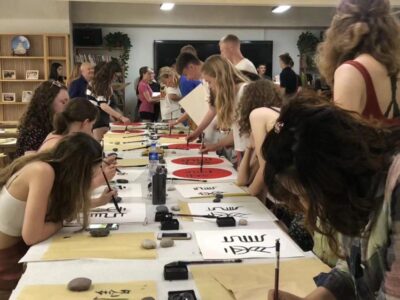
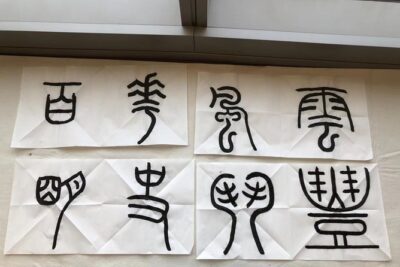
Beijing Historic City Guided Walking Tour + Calligraphy Creation
Read our review →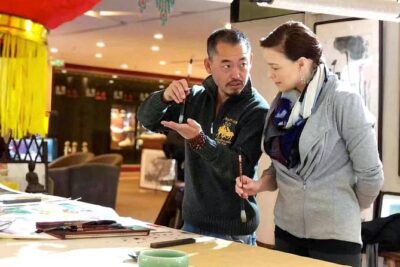
Beijing Wangfujing Calligraphy Class by Forbidden City
Read our review →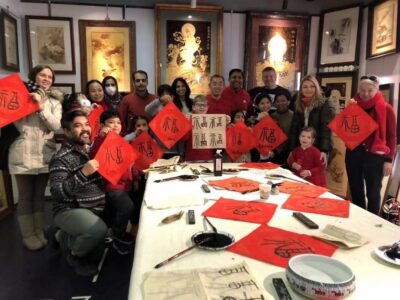
Beijing Wangfujing Calligraphy Class Nearby Forbidden City
Read our review →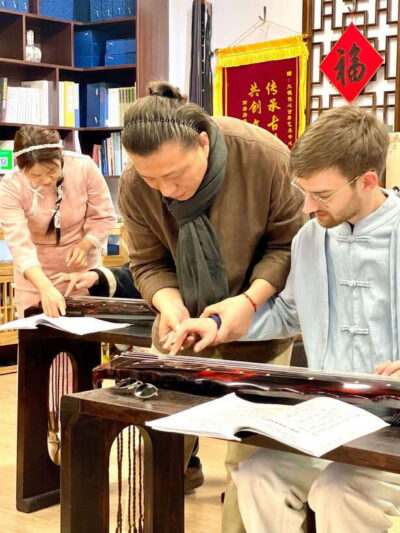
Beijing Hands-On Culture Tour: Tea, Instrument, Calligraphy
Read our review →Browse the lists this tour appears in