
Reviewed · WALKING TOURS
Private 2-Hour Walking Tour of Shanghai’s Jewish Ghetto
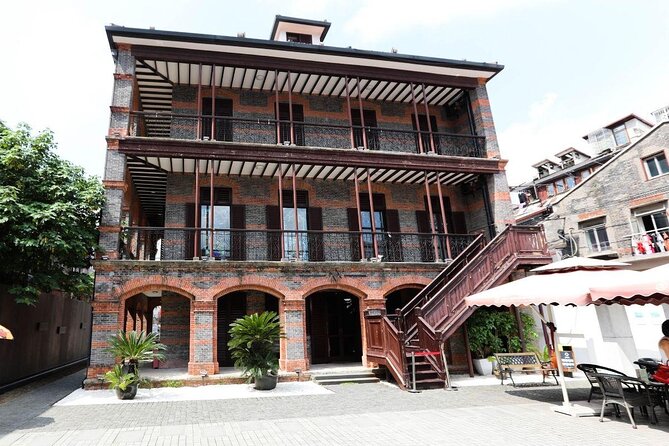
Shanghai’s Hongkou District holds one of the city’s most moving stories: Jewish refugees found shelter here during years of persecution and war. This private walk connects the Jewish Refugees Museum at Ohel Moishe Synagogue with old lanes, a memorial park, former aid offices, and everyday neighborhood life.
I like the personal scale of the tour, especially when a guide such as Mason can show the rooms his grandfather rented to Jewish refugees. I also like the chance to see a part of Shanghai far from the usual sights, including local shops, seafood stalls, rustic restaurants, and Xiahai Temple. The main caution is that the two-hour schedule can feel short, and some guides spend less time on Jewish history than you may expect.
Key points to know
- Ohel Moishe Synagogue: The Jewish Refugees Museum occupies the site of a former synagogue that served refugees during turbulent years.
- A private walk: Only your party takes part, so you can ask questions and request more time for subjects that matter to you.
- Hongkou beyond the museum: You walk through old residential lanes, Huoshan Park, local shops, and areas connected with refugee life.
- Guides vary in depth: Annie, Mason, Mary, and Zoe have received especially warm praise, but the historical detail can depend on your assigned guide.
- Xiahai Temple included: The Buddhist temple adds local religious and neighborhood context, though it may feel off-topic if you want a strictly Jewish-history tour.
- Two hours, no hotel pickup: You meet on Changyang Road, use public transportation to reach the start, and return to the meeting point.
Why Hongkou’s Jewish story matters
Shanghai’s former Jewish Ghetto was not a sealed-off European-style ghetto in the usual sense. It was a neighborhood where Jewish refugees lived under difficult conditions, particularly during the Second World War, alongside Chinese residents and other communities.
The area received Jewish people fleeing persecution in Europe and Eastern Europe. The story includes refugees from places such as Russia, Iraq, and Iran, as well as people who arrived during the Nazi period. One striking thread is the role of the Japanese ambassador to Austria, who issued visas that helped thousands of Jewish people escape to Shanghai.
A good guide helps you connect those large events to narrow streets and modest buildings. You begin to picture crowded rooms, shared facilities, and families trying to build a life in a city far from home. That connection is the main reason to take the walk rather than simply visit the museum alone.
Still, you should set your expectations carefully. The tour is only about two hours. Some of that time is spent inside the museum, and some is used for a Buddhist temple and modern neighborhood life. If you want a long, detailed account of Jewish settlement in Shanghai, you may find the visit too brief.
More Walking Tours in Shanghai
- Shanghai Highlights Walking Tour With A Real Local
★ 4.9 · 153 reviews - Shanghai Breakfast Walking Tour of Former French Concession
★ 5.0 · 139 reviews - Private Shanghai Evening Street Food Walking and Cruise Tour
★ 5.0 · 123 reviews
Meeting on Changyang Road
The tour begins at a pre-arranged point on Changyang Road in Yangpu District. Hotel pickup and drop-off are not included, so you need to make your own way there. The location is near public transportation, which helps, but you should allow time to find the exact meeting point.
Communication before the walk has not always been smooth for every booking. I recommend confirming the meeting instructions clearly and saving the guide’s contact details if they are provided. The company has also sent detailed directions by email and helped visitors find the right subway afterward, so the level of support can be good when arrangements are clear.
Your guide is an English-speaking local, and the walk is private for your party. That matters here. You are not trying to hear a guide over a large group, and you can ask about your own family, religious, or historical interests.
The guide is not necessarily Jewish. For some people, that is no problem and may offer a useful Chinese perspective on the district. If you want a guide with a personal Jewish connection, ask before booking. The quality of historical explanation can vary from one guide to another.
Ohel Moishe Synagogue and the Jewish Refugees Museum
The first major stop is the Shanghai Jewish Refugees Museum, located at Ohel Moishe Synagogue. This is the heart of the tour and the place where the refugee story becomes most concrete.
The synagogue attracted Jewish refugees during turbulent times. Inside, exhibitions explain the arrival and daily lives of Jewish people in Shanghai, the role of the religious community, and the pressures created by war and persecution.
I would plan to spend your full attention here. Even if the museum is fairly easy to follow on your own, a guide can point out details and place the exhibits in the wider setting of Hongkou. The best guides build a clear timeline, explain why people came to Shanghai, and show how the local Jewish community fit into a mixed neighborhood.
This stop can also be emotional. Some people visit because a parent or grandparent spent years in Shanghai after fleeing Europe. One family connection described a father who remained in China for eight years and could not leave. For those with a direct link, the synagogue may be the most important stop in the city.
The drawback is the amount of guided time. Several people have felt that the museum’s own displays and volunteer explanations did much of the work. If your main goal is simply to see the museum, you can visit it independently. You pay for the private tour because it adds the walking route, local context, and access to places you may not find on your own.
The former Joint Distribution Committee area
After the synagogue, the walk passes the American Jewish Joint Distribution Committee. This organization helped Jewish refugees with relief and support, and its presence shows that survival in Shanghai depended on more than finding a room.
Your guide should explain what help the center offered and how international Jewish aid operated in the district. This is a useful bridge between the synagogue as a place of worship and the neighborhood as a place of daily survival.
The stop may be brief, since the experience covers several locations in a short period. Ask questions here if aid networks, refugee housing, or the practical problems of starting over interest you. A private guide gives you room to shape the conversation.
Same base, a completely different kind of day out:
- Authentic Local Food Tour in Central Shanghai
★ 5.0 · 1,382 reviews - Zhujiajiao Water Town and Shanghai City Private Day Tour
★ 5.0 · 1,016 reviews - Private Shanghai Full Day City Tour with Old and New Highlights
★ 5.0 · 995 reviews - Shanghai: Hop-on Hop-off Bus Ticket and Optional Attractions
★ 3.4 · 692 reviews
Huoshan Park and the refugee memorial
Huoshan Park offers a quieter pause in the route. The park includes a monument remembering Jewish immigrants, giving you a place to stop and reflect before continuing through the surrounding streets.
This is one of the tour’s strongest transitions. The museum presents documents and objects. The park gives the story physical space. You are no longer only looking at an exhibit. You are standing in the district where refugees lived, worked, worshipped, and tried to carry on.
The park is also a welcome change of pace during a walking tour. You can ask the guide to explain the memorial and the local setting rather than rushing straight to the next stop. On a rainy day, the experience can still work, but the outdoor sections will be less comfortable. Wear practical shoes and bring protection from rain or strong sun.
Walking the old residential lanes
The most distinctive part of the tour may be the walk through local lanes and older residential areas. Here, the Jewish story shares space with present-day Shanghai.
You may pass traditional homes, craft shops, fresh seafood stalls, and rustic restaurants. The guide explains how local residents live today and may point out the kinds of buildings connected with refugee housing. This gives you something a museum cannot: a sense of scale and neighborhood texture.
Some guides have arranged access to residential interiors. Mason reportedly took visitors into his own home to show rooms his grandfather rented to Jewish refugees. Annie has also taken people into homes where refugees lived, including a meeting with an elderly Chinese couple. These moments are not guaranteed, but they show the special value of a private local walk when the guide has strong ties to the area.
Be respectful here. You are walking through someone’s home neighborhood, not an open-air museum. If residents invite you inside, follow the guide’s lead, ask before taking photographs, and remember that ordinary life continues around the historical sites.
This section also explains why the tour appeals to people who want more than a museum visit. You see the district as a living place, with Chinese residents carrying on routines that have little to do with tourism. At the same time, if you want a precise list of surviving Jewish buildings, ask your guide early. Some people have wished for more specific sites and more time in the old homes.
Xiahai Temple and the wider neighborhood
The walk ends at Xiahai Temple, sometimes known in the past as the fish man’s temple. It is a Buddhist temple away from the main tourist route, and the guide explains its religious role and place in the neighborhood.
The temple adds a useful Chinese perspective. The Jewish Ghetto was never isolated from the rest of Hongkou, and a Buddhist site shows the religious and cultural setting surrounding the refugee community. A guide such as Annie may explain Buddhist customs while walking through the temple, giving you a better sense of local life.
But this is also the tour’s most divisive stop. If you book because you want Jewish history from start to finish, the temple can feel unrelated. Some people would prefer more time at refugee homes, the Peace Hotel, or other Jewish sites. The tour description includes Xiahai Temple, so you should know about this before paying.
You can ask your guide how much time will be spent there and whether the route can focus more heavily on Jewish locations. Since the tour is private, your request may be possible, though no change is guaranteed.
Guide quality and the personal side of the walk
The strongest part of this experience is the guide. Annie has been praised for clear directions, excellent English, warmth, and a willingness to adjust the walk to personal interests. She has also shared photos after the tour and helped visitors understand the mix of communities that passed through Hongkou.
Mason has received similar praise for his personal connection to the district and for explaining the persecution that pushed Jewish refugees toward Shanghai. Zoe has been credited with answering questions, adding detail, and taking extra care with the route. Mary has helped people continue their sightseeing by showing them the right subway afterward.
Those examples also point to the uncertainty. Not every guide has the same command of Jewish history. Some young local guides are pleasant and helpful but rely heavily on the museum’s own information. In a few cases, explanations have felt out of sequence or insufficiently sensitive to the meaning of the site.
I suggest sending a short note when you book. Explain whether you want family-history research, wartime history, architecture, refugee housing, or present-day Chinese life. That gives the operator a better chance to match the tone of the walk to your needs.
Is $131.28 per person good value?
At $131.28 per person, this is not a cheap museum visit. The price makes the most sense for a small party that values private guiding, local access, and the chance to ask questions without waiting for a group.
For one or two people, the cost may feel high for only two hours, particularly if the guide adds little beyond the museum’s displays. Group discounts may improve the value for families or friends traveling together. Because this is a private activity, the per-person price should be considered alongside the number of people in your party.
You are paying for more than admission. The package includes the private walk, an English-speaking local guide, the museum, and Xiahai Temple. Food, drinks, transportation to the meeting point, and hotel transfers are not included.
The value rises sharply if you receive a guide with strong local connections. A visit to a former refugee room or a thoughtful explanation of the neighborhood can make the experience memorable. The value falls if the walk feels like a guided visit to a museum you could have handled alone.
The tour is often booked about 21 days ahead, which suggests you should not leave it until the last minute if your Shanghai schedule is tight. Free cancellation is available up to 24 hours before the start time. Changes or cancellations inside that window are not accepted for a refund.
Who should book this Hongkou walk?
I would choose this tour if you want a compact introduction to Shanghai’s Jewish refugee story and also want to see ordinary Hongkou life. It suits people with family connections, visitors interested in wartime migration, and anyone who prefers a private walk to a large group outing.
It also works well if you want a local guide to help with the city’s public transportation and neighborhood layout. The route is near public transportation, most people can participate, and service animals are allowed.
I would think twice if your only aim is the museum. You may be happier visiting Ohel Moishe Synagogue independently and spending your saved money on a longer specialist tour. I would also be cautious if you expect a strictly Jewish itinerary, since Xiahai Temple takes up part of the limited time.
Should you book it?
Book this tour if you want the museum plus the streets around it, and if personal stories matter as much as formal exhibits. Try to request an experienced guide such as Annie, Mason, Mary, or Zoe, though no specific guide is guaranteed.
Skip it if you mainly want a self-guided museum visit or a detailed, specialist account of every Jewish site in Shanghai. For most people, the best reason to book is not the entry ticket. It is the chance that a good local guide will connect Ohel Moishe Synagogue, old homes, Huoshan Park, and present-day Hongkou into one understandable human story.
FAQ
How long is the Jewish Ghetto walking tour?
The tour lasts approximately two hours.
Is this a private tour?
Yes. Only your party participates in the activity.
What language does the guide speak?
The tour includes a local English-speaking guide.
Where does the tour begin?
The meeting point is on Changyang Road, Chang Yang Lu, in Yangpu District, Shanghai.
Where does the tour end?
The activity ends back at the meeting point.
Is the Jewish Refugees Museum included?
Yes. Admission to the Shanghai Jewish Refugees Museum at Ohel Moishe Synagogue is included.
Is Xiahai Temple included?
Yes. Admission to Xiahai Temple is included as part of the walking route.
Are food and drinks included?
No. Food and drinks are not included.
Does the tour include hotel pickup and drop-off?
No. You must make your own way to the meeting point, and hotel pickup and drop-off are not included.
Can I cancel for a full refund?
Yes, if you cancel at least 24 hours before the experience begins. Cancellations made less than 24 hours before the start time are not refunded.
More Short Outings in Shanghai
- 2-Hour Chinese Calligraphy with an Artist in Shanghai, China
★ 5.0 · 46 reviews - 2-Hour Private Chinese Ink and Brush Painting Workshop in Shanghai
★ 5.0 · 15 reviews - Private 2-Hour Shanghai Lanes and Alleyways Walking Tour
★ 4.5 · 14 reviews - 2-Hour “Ancient & Modern” Beijing Sidecar Tour (Day /Night)
★ 5.0 · 36 reviews
Newly listed around Shanghai
- shanghai Disney tour★ 5.0 · 12 reviews
- shanghai Disney+shanghai one day city highlights tour (two days)★ 5.0 · 4 reviews
- Zhujiajiao Water Town and Shanghai City Highlights Private Day Tour★ 5.0 · 3 reviews
- Zhujiajiao Water Village & Seven Treasure Town Day Tour from Shanghai★ 4.0 · 8 reviews
- Zhujiajiao Water Town Private Tour with Local Farm Visit and Fruit Picking★ 5.0 · 3 reviews
- Zhujiajiao Water Town Self-Guided Tour with Private Transfer from Shanghai★ 5.0 · 7 reviews
- Xitang Water Town Self-Guided Tour from Shanghai with Private Transfer★ 5.0 · 5 reviews
- Xitang Water Village Sunset Tour with Riverside Dining Experience from Shanghai★ 4.5 · 45 reviews
Walking Tours, compared.
Beijing Hutong Walking Food and Beer Tour at Hidden Restaurants
Read our review →
Private Beijing Walking Tour of the Forbidden City with 7 Options
Read our review →
Dark Side of Hong Kong – Kowloon Caged Homes Walking Tour
Read our review →
Forbidden City Private Walking Tour with Optional Sights
Read our review →
Introduction to Hong Kong: Central Tip Based Walking Tour
Read our review →
Shanghai Highlights Walking Tour With A Real Local
Read our review →Browse the lists this tour appears in