
Reviewed · 2-HOUR EXPERIENCES
2-Hour Chinese Calligraphy with an Artist in Shanghai, China
Chinese calligraphy becomes far less intimidating when you hold the brush yourself. At InkMoon in Shanghai, artist Lucy guides you from the story of Chinese scripts to your own finished folding fan, using the same basic tools and brush movements that have shaped this art for centuries.
I like the small maximum of eight people, which leaves room for patient help, and I like the finished fan or scroll, a useful souvenir with your own hand behind it. The class also gives you a quiet break from Shanghai’s busy streets.
The main drawback is finding the studio. It sits in a lane near Jing’an, and the last part can feel confusing. Follow the directions carefully, allow extra time, and use the provided house numbers once you enter the lane.
Key points at a glance
- A hands-on Chinese art class: You handle the brush, ink, paper, and other traditional tools rather than simply watching a demonstration.
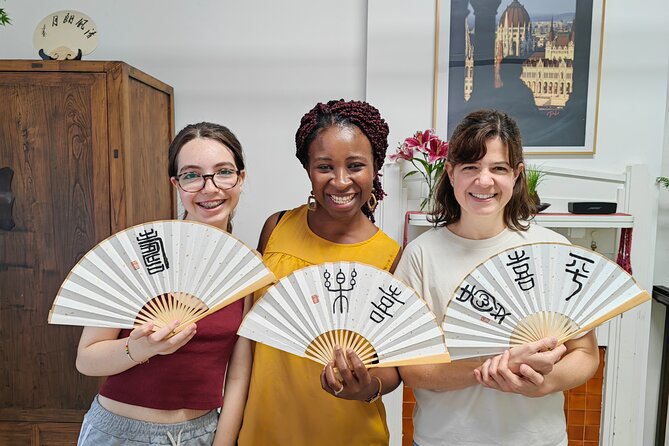
- A personal folding fan: Your final project features a Chinese character you choose, giving you a souvenir with a real connection to the class.
- Instruction from Lucy: The English-language teaching is patient, clear, and adjustable for complete beginners, children, and returning students.
- A small class setting: The maximum group size is eight, so you can receive individual help with brush pressure and stroke shape.
- Flexible scheduling: Morning, afternoon, and evening sessions make it easy to fit the class around a day in Shanghai.
- A central but slightly tricky meeting point: The studio is near Jing’an and public transportation, though the lane entrance needs careful attention.
Why two hours of calligraphy is time well spent
Shanghai can fill a day with grand buildings, shopping streets, museums, and crowded roads. This class gives you something different: a chance to slow down and make one small thing carefully.
That matters because Chinese calligraphy is not simply handwriting with a fancy brush. The movement, pressure, angle, and speed of each stroke affect the final shape. Even a basic character asks you to pay attention in a way that sightseeing rarely does.
You do not need artistic training or previous practice. The session starts at the beginning and builds in manageable steps. If Chinese characters look like a wall of mystery from a distance, the workshop gives you a way through it, one stroke at a time.
The class takes place in English, and tea or coffee is included. Those are modest details, but they help create a relaxed pace. You can ask questions, make mistakes, and try again without feeling rushed through a standard demonstration.
More Calligraphy Classes in Shanghai:
- Shanghai: Zhujiajiao Water Town with Calligraphy Experience
★ 5.0 · 17 reviews - Private Qibao Ancient Town Walking Tour with Tea Tasting and Calligraphy Experience
★ 5.0 · 4 reviews - Beijing Calligraphy Class
★ 4.9 · 112 reviews
Entering the InkMoon studio near Jing’an
The meeting point is at Yugucun, at the north gate, on Yuyuan Road in Jing’an District. The location is near public transportation and close to Jing’an Temple and shopping areas, making the class fairly easy to combine with other plans.
The address is specific, but the final approach is not necessarily obvious. The studio sits along a lane, and finding the correct entrance may take a little patience. Lucy has supplied directions from the nearby metro station, and the house numbers inside the lane help once you are in the right place.
I would not schedule this with only a few minutes between the metro and the start time. Give yourself a cushion, especially if you are unfamiliar with Shanghai’s lanes and address system. Once you arrive, the studio offers a calm change of pace from the city outside.
The space has been described as spacious, welcoming, and suitable for study. Tea or coffee and quiet background music may be part of the atmosphere, but the real focus remains the brush, ink, and paper.
First lesson: the story behind Chinese scripts
The workshop opens with a brief introduction to Chinese calligraphy and the way Chinese culture views the art. This is not a long academic lecture. It is a useful frame for understanding why calligraphy is treated as more than a method of writing.
Lucy uses examples of respected works and explains different script styles. You may hear about regular script and seal script, among other forms, and see how their shapes and movements differ.
This opening section gives meaning to the practice that follows. Instead of copying a symbol without context, you begin to see that a character can carry choices about balance, rhythm, and age. Later, when you notice calligraphy in museums, temples, shops, or on signs, you will have a better idea of what you are looking at.
The historical portion is brief, which suits a two-hour workshop. If you want a full art-history course, this is not it. If you want enough background to make the hands-on work more interesting, the introduction does its job.
The brush, ink, paper, and basic movements
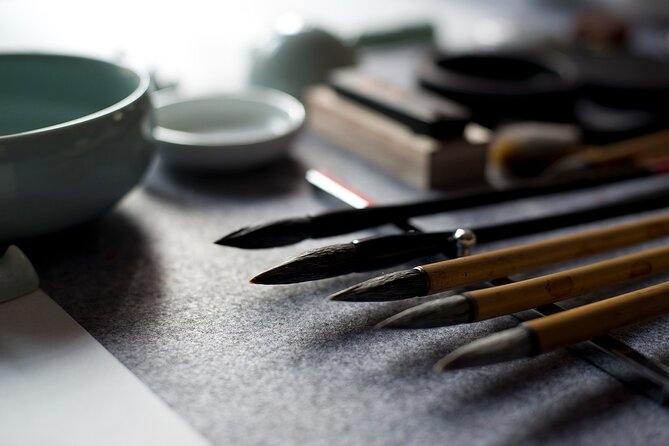
Next comes the practical lesson. You are shown the tools of Chinese calligraphy and how to hold and use them. The class includes the materials and equipment, so you can arrive empty-handed.
The brush is more sensitive than a normal pen. Pressure changes the width of the line. Speed affects the mark. The angle of the brush and the order of each movement also matter. A stroke that looks simple on a finished character can be surprisingly hard to reproduce.
Lucy demonstrates the basic techniques, then gives you time to try them yourself. This is where the small class size matters. Individual corrections can help you understand why a line became too thick, too thin, too fast, or uneven.
The first attempts may not look polished. That is part of the point. Calligraphy rewards repeated practice, and the workshop gives you a friendly introduction rather than pretending you will master the art in one sitting.
Parents should note that children can take part. One family class included children aged 5, 9, and 12, with each child leaving with a positive memory and a finished example. The class can suit young learners, though each child’s patience and interest will naturally vary.
More short outings in Shanghai:
- Private 2-Hour Walking Tour of Shanghai’s Jewish Ghetto
★ 4.0 · 33 reviews - 2-Hour Private Chinese Ink and Brush Painting Workshop in Shanghai
★ 5.0 · 15 reviews - Private 2-Hour Shanghai Lanes and Alleyways Walking Tour
★ 4.5 · 14 reviews - 2-Hour “Ancient & Modern” Beijing Sidecar Tour (Day /Night)
★ 5.0 · 36 reviews
Practice time before the final artwork
Before you make the final piece, you warm up with repeated strokes and characters. This step is easy to underestimate. It gives you time to become comfortable with the brush before a permanent mark goes on the fan or scroll.
You may work through basic movements and try the character you have selected. Lucy shows you how to form it and offers corrections as you practice. Her teaching style is gentle and encouraging, which helps if you feel that your first marks look more like brush accidents than art.
One useful feature is the ability to ask about the writing style you prefer. The standard final work may use a traditional form such as seal script, but one student chose regular script instead and received help adapting the final piece. That suggests some flexibility, although your exact options should be discussed during the class.
The ink flows quickly, so the process can feel both easier and harder than expected. Putting ink on paper is simple. Making a balanced, attractive stroke takes control. You will probably leave with a clearer sense of why calligraphy is practiced over years, not just admired for a few minutes.
Making your personalized folding fan
The final stage is the most satisfying because you create something to take home. You write a Chinese character of your choice on a traditional folding fan, with guidance from Lucy as you work.
The fan makes a practical souvenir. It is small, light, and connected to the place where you learned the technique. In hot Shanghai weather, it can even be useful during the rest of your visit.
Some sessions also include work on a scroll or script roll. The exact final format may vary, but the central idea remains the same: you produce a personal piece rather than buying a ready-made item from a shop.
This is not a calligraphy factory line. You are not handed a prefinished object with your name added at the end. Your own brush movements remain visible, which is why the finished piece feels more meaningful, even if it contains a few beginner’s imperfections.
Lucy helps you refine the work and aims to make sure you are comfortable with the result. That support is important. A final piece can be intimidating when you have only just learned the basics, so having an artist guide the process keeps the experience fun rather than stressful.
What the $50 price includes
At $50 per person, the class offers solid value if you want an activity rather than another sightseeing stop. The price includes the two-hour lesson, tools, materials, instruction, and tea or coffee.
You are also paying for access to a local artist’s time and attention. With a maximum of eight people, the session is more personal than a large demonstration. That matters in calligraphy because small corrections to grip and pressure can change the result.
The value is strongest for anyone who wants to understand the craft and leave with something made during the visit. If you only want a cheap souvenir, a shop will be less expensive. If you want a short cultural activity with instruction and a finished item, the class makes more sense.
A few sessions may run longer than the stated two hours when questions and practice continue. You should not count on extra time, but the teaching style appears more generous than strictly clock-watching.
Who should book this class
I would recommend it to first-time visitors who want a quieter activity between major sights. It also suits people who have already seen Shanghai’s main landmarks and want a more direct connection with local art.
Families can consider it, particularly if children enjoy hands-on projects. The class is also a good fit for solo visitors because the small group makes conversation and individual instruction easier.
You do not need to speak Chinese. The workshop is conducted in English, and the teaching focuses on showing as well as explaining. You also do not need to prepare a character in advance, though thinking about a favorite Chinese character beforehand could make the final stage easier.
People with an existing interest in painting or brushwork may want more than this introduction provides. The class covers the basics, not advanced training. Still, it can give you a sound starting point and enough technique to continue practicing at home.
Timing, transport, and practical planning
You can choose a morning, afternoon, or evening session. That flexibility is useful in Shanghai, where weather, meals, shopping, and museum hours can shift your plans.
The class starts and ends at the same meeting point. It is near public transportation, and its Jing’an location makes it possible to pair with nearby sights. Jing’an Temple and shopping centers are within the broader area, so you can build a half-day around the workshop without crossing the city.
The main planning issue is the lane entrance. Do not assume that reaching Yuyuan Road means you have arrived at the studio door. Read the directions carefully and allow time to identify the north gate and the lane address.
A mobile ticket is provided, and booking confirmation arrives at the time of reservation. Service animals are allowed, and most people can participate. The group limit is eight, which keeps the activity intimate but also means a date could depend on reaching the minimum number of participants.
Free cancellation is available if you cancel at least 24 hours before the local start time. Changes or cancellations inside that window are not accepted for a refund, so keep that cutoff in mind when arranging a busy Shanghai itinerary.
What you will take home besides the fan
The finished artwork is the obvious souvenir, but the better takeaway is a new way to look at Chinese writing. After the class, a character on a wall or museum scroll may seem less like decoration and more like a record of movement and intention.
You also leave with a few basic ideas you can continue at home. The experience does not promise mastery, and it should not. It gives you a first grip on the brush, a sense of how the tools work, and a practical reason to keep looking at calligraphy.
That makes the class more lasting than many short craft activities. You are not just filling two hours. You are gaining a lens for parts of Chinese culture that can otherwise pass by unnoticed.
Should you book the Chinese calligraphy workshop?
Book it if you want a personal, low-pressure cultural activity with a real object to take home. Lucy’s patient teaching, the small group, and the chance to choose your own character are the main reasons this class earns its price.
Skip it if your schedule is packed with major attractions or if you expect advanced calligraphy instruction. The location requires careful navigation, and two hours will only introduce the art.
For most people, though, this is a smart Shanghai pause: practical, affordable, and more memorable than another quick stop at a souvenir shop. Bring a little patience, follow the directions, and accept that your first brush strokes may wobble. That is how the lesson starts.
FAQ
How long is the Chinese calligraphy class?
The workshop lasts approximately two hours.
Where does the class meet?
It meets at Yugucun, North Gate, on Yuyuan Road in Jing’an District, Shanghai, at 愚园路361弄3-127号.
Where does the activity end?
The class ends back at the meeting point.
Who teaches the workshop?
The workshop is taught by a local artist named Lucy. Some supplied information spells her name Lucie.
Is the class taught in English?
Yes. The workshop is conducted in English.
What does the $50 price include?
The price includes instruction, all calligraphy tools and materials, and tea or coffee.
What will I make during the class?
You will create your own artwork on a traditional folding fan featuring a Chinese character you choose. Some sessions may also include a scroll or script roll.
Can beginners join?
Yes. The class begins with basic history, tools, and techniques, and most people can participate.
How many people can join the class?
The activity has a maximum of eight participants.
Can I cancel for a full refund?
Yes, if you cancel at least 24 hours before the experience start time. Cancellations or changes made less than 24 hours beforehand are not accepted for a refund.
Newly listed around Shanghai
- shanghai Disney tour★ 5.0 · 12 reviews
- shanghai Disney+shanghai one day city highlights tour (two days)★ 5.0 · 4 reviews
- Zhujiajiao Water Town and Shanghai City Highlights Private Day Tour★ 5.0 · 3 reviews
- Zhujiajiao Water Village & Seven Treasure Town Day Tour from Shanghai★ 4.0 · 8 reviews
- Zhujiajiao Water Town Private Tour with Local Farm Visit and Fruit Picking★ 5.0 · 3 reviews
- Zhujiajiao Water Town Self-Guided Tour with Private Transfer from Shanghai★ 5.0 · 7 reviews
- Xitang Water Town Self-Guided Tour from Shanghai with Private Transfer★ 5.0 · 5 reviews
- Xitang Water Village Sunset Tour with Riverside Dining Experience from Shanghai★ 4.5 · 45 reviews
2-Hour Experiences, compared.
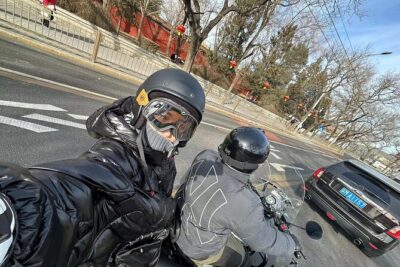
2-Hour “Ancient & Modern” Beijing Sidecar Tour (Day /Night)
Read our review →
Private 2-Hour Walking Tour of Shanghai’s Jewish Ghetto
Read our review →
2-Hour Beijing Private Forbidden City Tour: History & Highlights
Read our review →2-Hour Private Chinese Ink and Brush Painting Workshop in Shanghai
Read our review →
Private 2-Hour Shanghai Lanes and Alleyways Walking Tour
Read our review →

2-Hour Beijing Private Jingshan Coal Hill Park and Beihai Park Walking Tour
Read our review →Browse the lists this tour appears in