
Reviewed · WALKING TOURS
Dark Side of Hong Kong – Kowloon Caged Homes Walking Tour
Hong Kong’s gleaming towers tell only half the story. This two-hour Kowloon walk takes you through Sham Shui Po and Prince Edward, where a small apartment may be split into several units and a rooftop can reveal a side of the city rarely shown on a sightseeing route.
I like two things here: the tour connects cramped housing to land supply, postwar growth, and economic policy, and it uses real streets, markets, charity work, and a rooftop view to make those issues easier to grasp. Guides such as Alice, Isaac, Grace, Summer, and Wind are praised for clear answers and a thoughtful manner.
The main drawback is that this is an educational walk, not a photo stop parade. You do not enter an occupied caged home. The small flat is a staged display, and parts of the tour involve listening in the street, so anyone expecting a dramatic attraction may find the $32.82 price high.
What makes this Kowloon walk worth your time
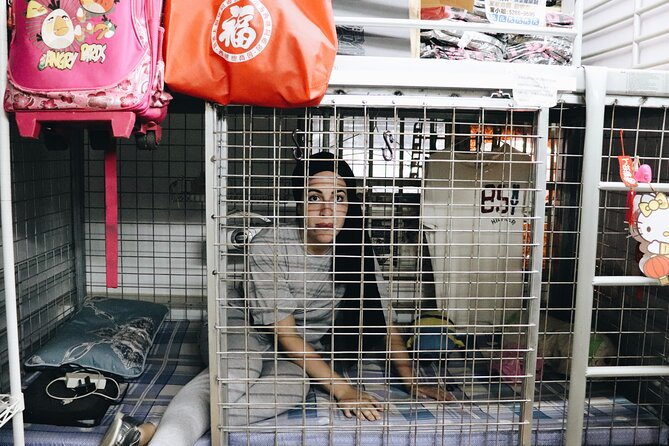
- A 100-square-foot display flat: See how a tiny subdivided unit can hold a kitchen, bed, and living area.
- The housing crisis explained on location: Learn how land shortages, population growth, and Hong Kong’s economic model shaped today’s pressure.
- A sharp contrast in one street: New apartments priced around US$1.5 million can sit beside dense blocks of subdivided units.
- A rooftop view of everyday Hong Kong: Look across Sham Shui Po from above, beyond the polished postcard image.
- A serious but balanced tone: The tour focuses on housing, work, migration, and policy rather than treating hardship as entertainment.
- A useful finish at SoCO: Discuss possible solutions with a charity that has advocated for marginalized people for about 50 years.
Starting near Prince Edward, where the story gets personal
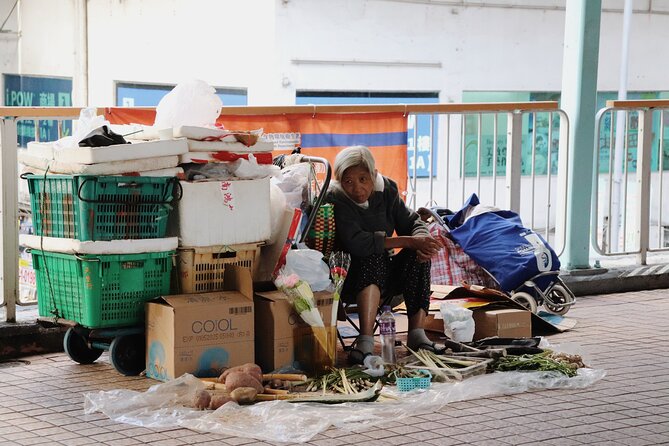
The walk starts at 11:00 am on Nathan Road near Prince Edward. This is a convenient place to begin because the area quickly shifts from major roads and transport links into older streets, markets, and dense residential blocks.
Your guide begins with the basic question: how did Hong Kong become the least affordable city in the world, as the tour presents it? The answer is not reduced to one villain or one bad decision. You hear about postwar population growth, limited land, and a low-tax capitalist system that helped create great wealth while leaving many residents under heavy housing pressure.
That setting gives the walk a useful frame. You are not simply shown a small room and asked to feel shocked. You are asked to consider how a city can have world-class finance and property prices beside households living in spaces of roughly 100 square feet.
The group can reach as many as 30 people. That is large enough for a lively exchange, but it can make street explanations harder to hear, especially near traffic. Stay close to the guide and position yourself where you can see any visual material being used.
More Walking Tours in Hong Kong
- Introduction to Hong Kong: Central Tip Based Walking Tour
★ 5.0 · 202 reviews - Full-Day Private Customized Walking Tour of Hong Kong
★ 5.0 · 106 reviews - Hong Kong: Kowloon Street Market & Food Culture Walking Tour
★ 5.0 · 105 reviews
Cedar Street and the mathematics of a tiny home
At Cedar Street, the guide explains the basic mechanics of subdivision. A typical 500-square-foot apartment may be divided into five units of about 100 square feet each. The numbers are simple, but seeing the surrounding buildings helps turn an abstract statistic into something physical.
The point is not that every apartment follows this exact pattern. Rather, the example shows how high rents and limited supply can push landlords and residents toward increasingly tight arrangements. For a minimum-wage family, one small room may need to serve as sleeping area, kitchen, storage space, and living room.
This is one of the tour’s strongest early stops because it gives you a scale for the rest of the walk. Keep that 100-square-foot figure in mind as you look up at the blocks around you. The buildings may appear ordinary from the pavement. The pressure is largely inside.
Ki Lung Street and the causes behind the crisis
At Ki Lung Street, the guide sets the housing problem against Hong Kong’s modern growth. The discussion covers the surge in population after the war, scarce buildable land, and the way a low-tax capitalist economy developed.
I appreciate this section because it avoids presenting the crisis as a strange local failure. The same forces can appear in major cities around the world, but Hong Kong makes them especially visible because land is limited and property prices are so extreme.
This is also where the tour becomes more than a walk through an older neighborhood. You are encouraged to think about how public policy, private property, wages, and land use affect daily life. If you enjoy economic or political context, you will probably get more from this stop than from a standard city tour.
If you prefer nonstop movement, it may feel slow. The guide spends time explaining rather than rushing from one sight to the next. That is part of the value, but it requires attention.
Inside the staged 100-square-foot flat
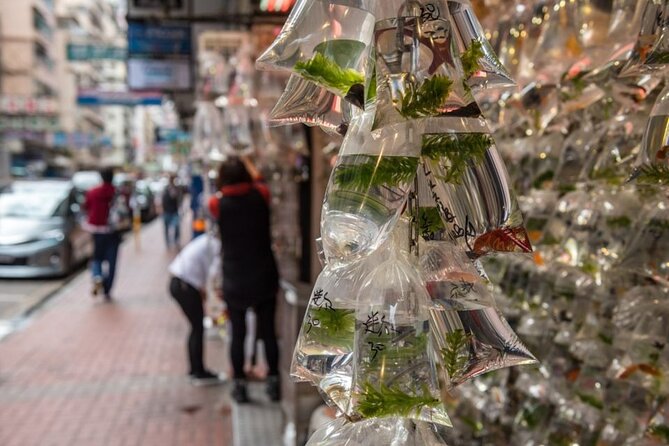
The Cedar Street display unit is the tour’s most direct visual example. You step into a small subdivided flat arranged to show how a kitchen, bed, and living space might fit into roughly 100 square feet. A caged-home setup for one resident is also shown.
Be clear about what this means. You are not entering someone’s current home, and the tour does not take you through occupied cage homes. The unit is staged to illustrate the conditions and layout. One visitor felt this limited the content, and that is a fair concern if you expect access to an actual residence.
Still, the display has a practical use. It lets you see the lack of separation between basic household functions. A statistic about room size can slide past you. A space where a bed, cooking area, and belongings compete for the same few feet is harder to dismiss.
Please keep your camera and behavior respectful. The tour deals with real housing conditions affecting working people and families. It is best approached as a lesson in urban life, not as a chance to collect shocking images.
Same base, a completely different kind of day out:
- Hong Kong: Dolphin Cruise, Big Buddha & Lantau Island Tour
★ 4.2 · 1,512 reviews - Ngong Ping 360: Cable Car Return Tickets & Combos
★ 4.6 · 1,431 reviews - Lantau Island Day Trip – Big Buddha & Tai O
★ 4.5 · 1,328 reviews - Big Bus Hong Kong Open Top Hop-On Hop-Off Sightseeing Tour
★ 4.0 · 1,077 reviews
Lui Seng Chun and the guide’s own housing perspective
At Lui Seng Chun, the guide discusses the challenge of finding housing in Hong Kong. The most useful part of this stop is the personal angle. Guides have spoken about navigating the city’s property market themselves, which brings the subject down from policy language to ordinary decisions about rent, space, and location.
The quality of the walk depends heavily on who leads it. Alice has been praised for a clear and genuine approach, while Isaac is noted for answering many questions and pacing the information well. Grace is especially good at pointing out small street details and explaining the stories behind them. Summer is described as friendly, passionate, and well prepared, and Wind has also made a strong impression.
That range matters because the subject is serious. A guide who only recites figures can make the walk feel cold. A guide who relies only on emotion can leave you without useful context. The best sessions combine facts, personal experience, and room for questions.
Yee Kuk Street and the harder side of Sham Shui Po
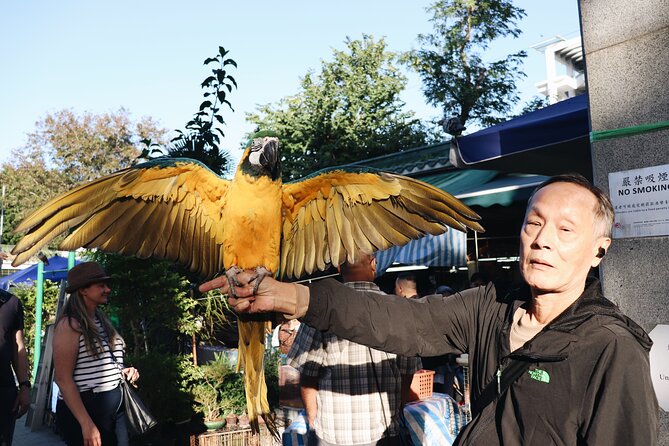
Yee Kuk Street brings you into the backstreets of Sham Shui Po. Here, the guide discusses illicit links between the drug and sex trades. This is the most uncomfortable part of the route, and it adds a reminder that housing pressure is tied to wider social problems.
The tour does not present these streets as a spectacle. The point is to show how poverty, insecure housing, and marginalization can overlap. You may find this section less visually tidy than the markets and older architecture, but that is precisely why it matters.
Use discretion with photography. The walk passes through working neighborhoods, not an open-air exhibit. Ask your guide before photographing people, storefront activity, or sensitive locations.
Hai Tan Street and the sharpest contrast
At Hai Tan Street, the tour places two versions of Hong Kong almost side by side. New apartments priced at around US$1.5 million can rise next to dense clusters of subdivided units and caged homes.
This is probably the clearest visual lesson of the route. You do not need a long lecture to understand the contrast, but the guide helps explain why it exists and what it means for people who work in the city yet cannot afford much space near their jobs.
I like that the walk does not suggest every resident in an older building is helpless or that every new apartment represents wrongdoing. The useful question is how a city handles such a wide gap in housing options and wealth. The scene gives you a reason to keep thinking after the tour ends.
Pei Ho Street and the rooftop view
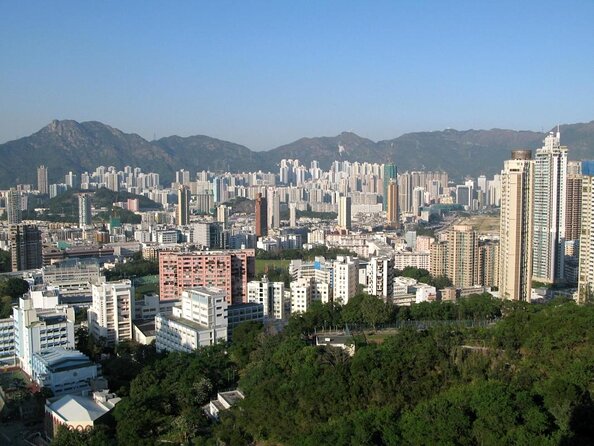
At Pei Ho Street, you climb to a rooftop in central Sham Shui Po. From above, you can see the tightly packed housing and rooftop structures that are easy to miss from street level.
This stop adds variety to the route. Most of the walk asks you to look at doors, windows, markets, and building fronts. The rooftop lets you understand density as a whole. It also gives you a different view of Hong Kong than the usual harbor skyline.
The climb is one reason the tour asks for moderate physical fitness. The experience is still a short urban walk, but you should expect stairs, pavement, heat, and time on your feet. On a hot day, the route can feel demanding even though some stops are indoors or sheltered.
SoCO and a more useful ending
The final stop is SoCO, a charity with about 50 years of work advocating for marginalized people. Here, the conversation turns toward solutions and the city’s future.
Ending at an organization rather than a scenic viewpoint is a good choice. It keeps the tour from leaving you with only sadness or surprise. You get a chance to consider advocacy, housing policy, and what could change.
Do not expect a full policy seminar. The tour is about two hours, and the guide must cover several locations. But this last discussion gives the route a constructive direction and makes it easier to place what you have seen in a wider social context.
The walk ends at Sham Shui Po MTR Station. That is useful if you want to continue exploring the neighborhood, find lunch, or return easily to another part of Hong Kong.
What the $32.82 price really buys you
At $32.82 per person, this is not the cheapest way to spend two hours in Kowloon. You can walk through Sham Shui Po on your own for little or no cost.
What you are paying for is interpretation. A guide links the apartment sizes, streets, markets, rooftop view, and charity visit into one story. You also get access to the staged display flat and a structured route that would be difficult to build from a casual walk.
I consider the price fair if you value context and ask questions. It is less convincing if you mainly want famous sights, food tastings, or a chance to enter real homes. The route has no hotel pickup, and the fee includes the local guide rather than transport or meals.
The 96 percent recommendation rate and 4.8 rating from 418 ratings suggest a strong overall response, but the lower ratings point to an important limit: some people want more physical content and less explanation. Read the tour as an urban issues class conducted outdoors, and the cost makes more sense.
Practical details for a smoother walk
Book with the right expectations. The tour starts at 11:00 am near Nathan Road and Prince Edward and lasts about two hours. It finishes in Sham Shui Po, so plan your day around ending there rather than returning to the starting point.
Wear comfortable shoes and prepare for a moderate amount of walking. Hong Kong can be hot, and one session became more manageable because several stops took place indoors or in air conditioning. Carry water and allow extra time if you plan to explore the markets afterward.
A mobile ticket is provided, and confirmation is received at booking. Service animals are allowed, and the route is near public transportation. The maximum group size is 30, so ask questions promptly if the group is full.
Free cancellation is available up to 24 hours before the start time. Changes made within 24 hours are not accepted. The activity requires good weather and a minimum number of participants. If the operator cancels for weather or insufficient numbers, you are offered another date, another experience, or a full refund.
Who should book this Kowloon experience?
I would choose this tour if you want to understand Hong Kong beyond Victoria Harbour, luxury shopping, and skyscrapers. It suits readers interested in housing, economics, migration, social policy, street photography, and the daily lives of working people.
Families with older teenagers may also find it useful. One 16-year-old joined the walk and found it difficult but worthwhile. The subject is heavy, so younger children may not get much from it.
I would skip it if you want a light morning, a food-focused outing, or direct access to occupied homes. You should also know that the word dark in the title signals the tone. This is not an upbeat sightseeing loop.
Should you book the Dark Side of Hong Kong walk?
Book it if you want a serious, grounded explanation of how housing pressure shapes Hong Kong. The strongest parts are the staged 100-square-foot unit, the contrast between expensive new apartments and cramped homes, the rooftop view, and the guides’ ability to connect facts with personal experience.
Do not book it expecting poverty as a tourist attraction or a tour of real residents’ homes. You will see examples, streets, and social contrasts, then spend plenty of time listening and asking questions.
For me, the tour earns its place in a Hong Kong itinerary because it gives you a better sense of the city’s people and pressures. It may not be comfortable, but it is useful. If you want more than the postcard, this is a smart two-hour choice.
FAQ
Where does the tour start?
It starts at 11:00 am on Nathan Road near Prince Edward in Hong Kong.
Where does the tour end?
The tour ends in Sham Shui Po, at or near Sham Shui Po MTR Station.
How long does the walk last?
The experience lasts approximately two hours.
What is included in the price?
The price includes a local guide and a mobile ticket. Hotel pickup, hotel drop-off, transport, and meals are not included.
Will I enter an occupied caged home?
No. The tour uses a staged 100-square-foot subdivided flat and shows a caged-home design for illustration. You do not visit an occupied caged home.
Is the tour suitable for everyone physically?
The tour requires a moderate level of physical fitness. Expect urban walking and a rooftop visit. Service animals are allowed.
Can I cancel for a full refund?
Yes. You can cancel at least 24 hours before the start time for a full refund. Cancellations or changes made less than 24 hours before the start time are not accepted.
Newly listed around Hong Kong
- 6 Hour Private Shore Excursion Cruise Ship Pick Up Guided Tour★ 5.0 · 8 reviews
- Hong Kong Disneyland: Non-Stop 2-Day Fun Ticket★ 4.5 · 13 reviews
- Big Bus Hong Kong Panoramic Night Tour by Open-Top Bus★ 3.5 · 53 reviews
- The Dragon’s Back Hiking Tour, Hong Kong★ 5.0 · 54 reviews
- The Authentic Hong Kong – Private Walking Tour★ 5.0 · 55 reviews
- Tea Tasting and Pairing Concept Workshop★ 5.0 · 57 reviews
- Victoria Harbour Yacht Night Cruise – DREAMER:Tourguide & Photos★ 4.0 · 58 reviews
- Organic Xiao Long Bao Soup Dumpling Class & Market Walk★ 5.0 · 62 reviews
Walking Tours, compared.
Beijing Hutong Walking Food and Beer Tour at Hidden Restaurants
Read our review →
Private Beijing Walking Tour of the Forbidden City with 7 Options
Read our review →
Forbidden City Private Walking Tour with Optional Sights
Read our review →
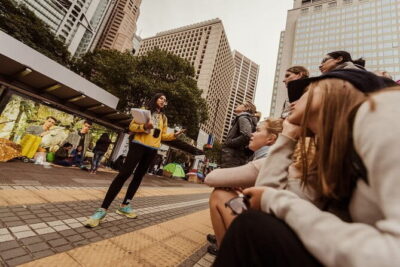
Introduction to Hong Kong: Central Tip Based Walking Tour
Read our review →
Shanghai Highlights Walking Tour With A Real Local
Read our review →
Beijing City Walk: Explore Hutongs Life and Old Beijing
Read our review →Browse the lists this tour appears in