
Reviewed · COOKING CLASSES
Biang Biang Noodles Cooking Experience
Xi’an’s most memorable food lesson may be the one that leaves flour on your hands. This small-group outing begins at Sa Jin Qiao market, then moves to a quiet courtyard near the City Wall, where you make Biang Biang noodles from dough to finished bowl. The noodle pulling is the star. It takes strength, timing, and a bit of patience.
I like the market visit because it gives the cooking lesson a useful local setting, and I like the maximum group size of eight, which should make hands-on instruction easier. Guide Michael has helped guests begin the day with a market trip, produce shopping, and explanations of unusual ingredients. The main consideration is that private transportation is not included, so you need to reach the meeting point yourself.
Key points to know before booking
- Start at Sa Jin Qiao Subway Station Exit B: The meeting point is on Line 1, and the activity returns there at the end.
- Shop before you cook: You visit a local market to see vegetables, seasoning fruits, spices, meats, and cooking utensils.
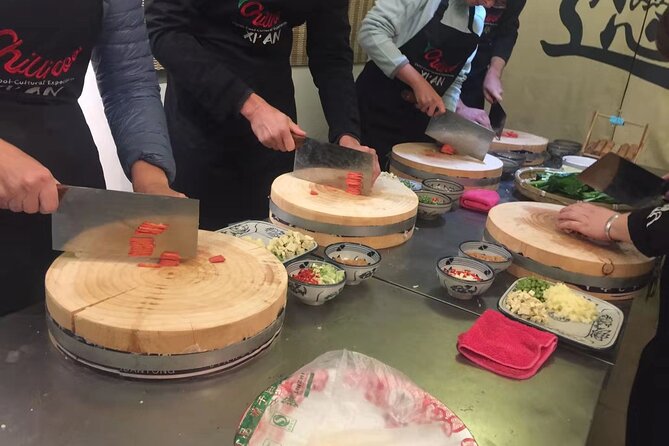
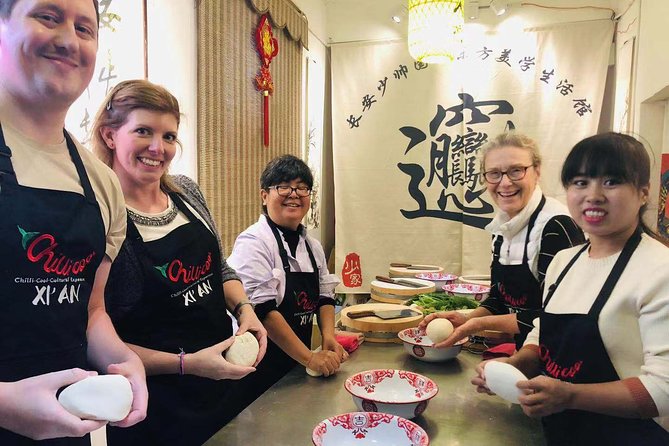
- Make noodles from scratch: You mix flour and water, shape the dough, cut strips, pull them long, boil them, and add sauce and hot oil.
- Small group format: No more than eight people join, making this a better fit for anyone who wants direct help with the dough.
- Food and extras are included: Lunch or dinner, snacks, green tea, a recipe, and a certificate are part of the experience.
- Book ahead for preferred dates: The activity is booked about 55 days in advance on average, and group discounts are available.
Why the noodle lesson is the main event
Biang Biang noodles are not a tidy, delicate dish. The dough is pressed into a round, flat shape, cut into strips, and then pulled into long noodles by hand. That final step requires real force and technique, so you should expect a practical lesson rather than a quick demonstration followed by a meal.
I like this format because you see the full chain of the dish. You do not simply eat a bowl in a restaurant and leave wondering how the wide noodles were made. You handle the dough, learn the basic ratio of flour to water, work on the shape, and then see how the sauces and hot oil finish the dish.
The activity is listed at about three hours and 30 minutes, although the overview also describes it as a three-hour tour. I would set aside the full three and a half hours. That gives you enough time for the market, the tea stop, the lesson, the meal, and the dessert snacks without rushing.
More Cooking Classes in Xi'an
- Xi’an: Great Tang Dynasty Night Show & Dumpling Meal Option
★ 4.4 · 177 reviews - Xi’an Tang Dynasty Show Ticket Optional Dumplings or Royal Dinner
★ 4.5 · 75 reviews - Half-Day Xi’an Biang Biang Noodles Cooking with a Market Visit
★ 5.0 · 48 reviews
Meeting your guide at Sa Jin Qiao
Your guide meets you at Sa Jin Qiao Subway Station Exit B on Line 1. This is the one part of the day where planning matters most. Private transportation is not included, so you need to make your own way to the station and arrive at the assigned time.
The activity ends back at the meeting point. That makes the start and finish easy to understand, but it also means you should not arrange a separate pickup at the courtyard. Give yourself a little extra time to find Exit B, especially if you are not familiar with Xi’an’s subway system.
An English-speaking guide leads the experience. Michael is named in the available tour information and has guided a market visit followed by the cooking lesson. Since this is a small group, you should have a better chance to ask questions and get help when your dough needs attention.
Sa Jin Qiao market, where the meal begins
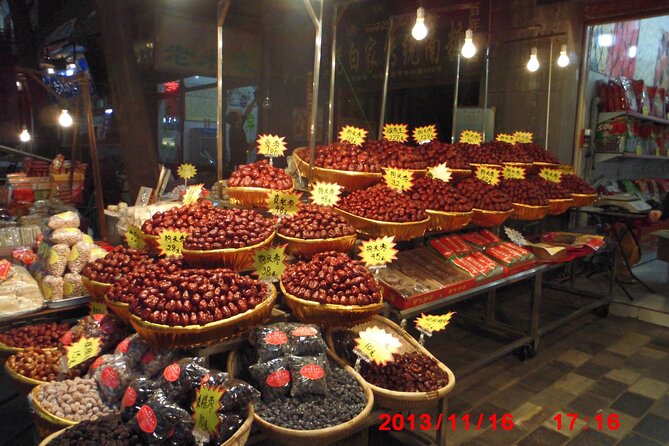
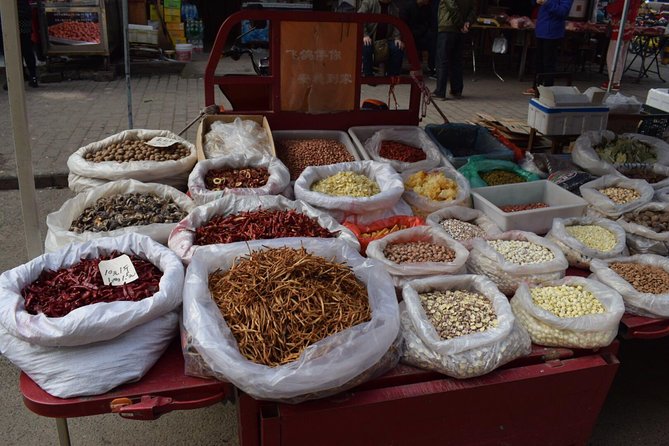
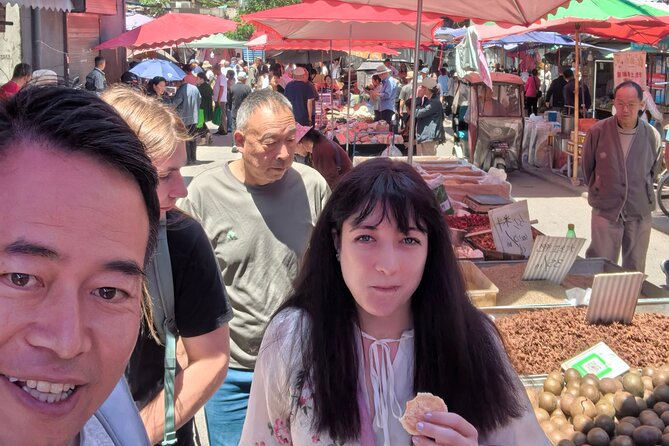
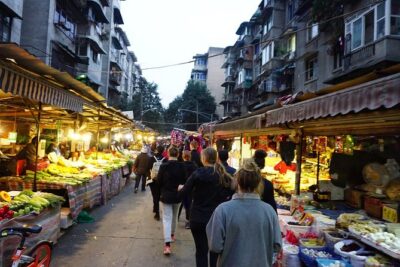
The first stop is a local market near the meeting area. Instead of starting with a prepared lecture about Xi’an food, you begin among ingredients that appear in everyday cooking. You can expect vegetables and seasoning fruits arranged for sale, spices kept in old bags, fresh meat hanging on walls, and cooking tools used in local kitchens.
This is a useful stop because it gives you a little context for the dish you are about to make. You see ingredients as products, not just as names on a menu. Your guide can point out spices and other items, and the market visit also introduces you to the pace and layout of a local morning market.
Do not treat this as a sightseeing market with a long list of monuments. Its value is practical. You are there to look closely at food, learn what goes into local cooking, and understand the setting behind the meal.
The market may be lively and crowded at times, but the information provided does not promise a fixed list of stalls or a set number of tastings. That is worth keeping in mind. You should expect observation and explanation, not a full market meal or a shopping excursion.
Green tea in a courtyard near the City Wall
After the market, you go to a private courtyard near the City Wall. The change of pace is part of the appeal. You leave the market activity behind, sit down, and receive a cup of fresh green tea before the cooking starts.
I like this pause because the class is not packed into one hurried sequence. The tea gives you time to settle in, look around, and prepare for the hands-on work. It also makes the experience feel more connected to a home-style setting than to a formal cooking school.
The courtyard is described as quiet and off the usual sightseeing path, but the tour information does not provide a specific architectural history or a promise of a City Wall visit. You should see it as the cooking venue, not as a separate historical attraction.
Same base, a completely different kind of day out:
- Mini Group Xian Day Tour to Terracotta Army, City Wall, Pagoda and Muslim Bazaar
★ 5.0 · 1,320 reviews - Xi’an: Terracotta Army Mini Group or Private Tour
★ 5.0 · 926 reviews - Xi’an Evening Food Tour by TukTuk
★ 5.0 · 715 reviews - Xian: Terracotta Army Ticket & Guided Bus Tour with Options
★ 4.6 · 579 reviews
Mixing flour and water the right way
The cooking begins with the dough. You mix flour and water in a certain ratio, which is one of the basic skills behind the noodles. The precise measurements are taught during the lesson, and you work through the process rather than receiving a finished ball of dough.
This step can look simple. It is not. Dough texture affects how easily it can be pressed, cut, and pulled, so paying attention here matters more than racing ahead. If you want to repeat the dish at home, this is one of the parts worth watching closely and writing down.
The experience is especially suitable for people who enjoy learning by doing. You may not produce perfect noodles on the first attempt, and that is part of the point. The guide’s role is to show you how the dough should be handled and to help you move through the steps.
Cutting, pulling, and boiling the Biang Biang noodles
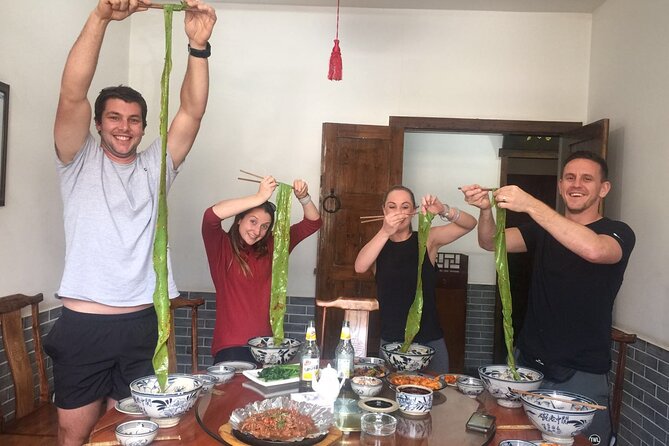
Once the dough is ready, you press it into a round, flat shape and cut it into strips. Then comes the most recognizable part of the lesson: pulling the strips into long noodles.
This takes strength and technique. The dough must stretch without breaking, and the movement needs to be controlled. It is easy to underestimate the physical part until you try it. The process gives the class its sense of fun, but it also gives you a clearer idea of why handmade noodles have a different texture from factory-made ones.
After pulling, the noodles are ready for boiling. The sequence is satisfying because you can trace your work from raw flour to the cooked base of the meal. You are not just adding a garnish to a prepared dish. You make the central ingredient yourself.
The tour information does not state how many individual bowls you make or how much time each person gets at every stage. With a group limit of eight, the setup should allow for personal participation, but the exact rhythm can vary by group.
Sauce, hot oil, and your finished bowl
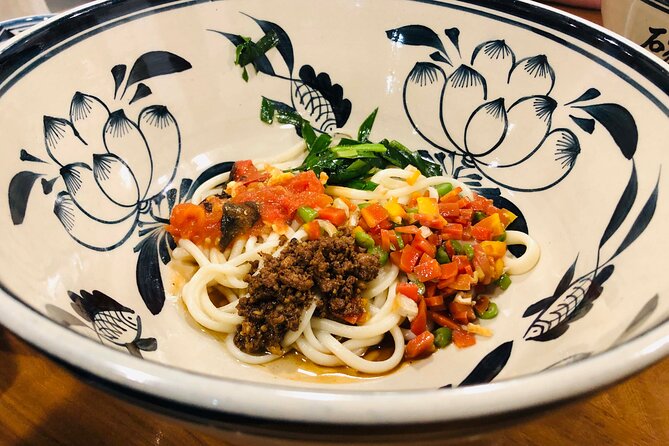
The cooked noodles are covered with prepared sauces, followed by hot oil poured over the top. This brings together the wide noodles and the strong finishing flavors that make the dish distinctive.
The hot oil is an important cooking step, so follow the guide’s instructions carefully. The experience includes food preparation, but it is not described as a professional kitchen certification class. You are learning a traditional dish in a friendly, practical format.
Then you eat what you have made. That meal is included in the price, with lunch or dinner depending on the option you choose. Snacks are also included, and fruit or local snacks are served as dessert after the noodles.
I like that the meal comes at the end of the work. You have a clear reward for the effort, and you can judge the noodles by eating them fresh. If you are seeking a formal restaurant tasting with several courses, this is not that kind of outing. The focus is one local noodle dish, prepared and eaten by you.
What the $75 price really covers
The listed cost is $75 per person. That is more than you would pay for a simple bowl of noodles in Xi’an, so the value depends on how much you want from the day.
You are paying for more than lunch. The price includes an English-speaking guide, the market visit, the courtyard setting, the cooking instruction, the meal, snacks, green tea, a recipe, and a certificate. The small group size also matters. A cooking class with no more than eight people gives you a better chance to work directly with the dough than a large demonstration would.
The price does not include private transportation. You need to cover your own route to Sa Jin Qiao Subway Station, though the meeting point is near public transportation. If you are already using the subway, that keeps the logistics fairly simple.
For me, the strongest value is the combination of market context and hands-on cooking. If you only want to eat local noodles, $75 is high. If you want a half-day activity that teaches you how to make the dish and gives you a recipe to try later, the cost is easier to justify.
Group discounts are available, so check the booking terms if you are arranging the activity with family or friends. Since it is booked around 55 days in advance on average, I would not wait until the last minute if your Xi’an schedule is fixed.
Who will enjoy this Xi’an food experience
This outing suits you if you like food classes, local markets, and activities where you use your hands. It is also a good choice if you have already seen major Xi’an sights and want an experience built around daily food culture.
Families and small groups may appreciate the limited number of participants, though the provided information does not specify a minimum age or special child arrangements. Anyone with an interest in noodles will find the pulling technique especially rewarding.
It may be less suitable if you want a private tour, since the experience is a small group rather than a guaranteed one-party booking. It may also disappoint you if you expect private transportation, a long historical tour of the City Wall, or a broad menu of dishes.
The activity includes food, but no dietary information is provided. If you have allergies or follow a restricted diet, ask the provider before booking rather than assuming the sauces or ingredients can be changed.
Practical details that affect your day
Confirmation is provided when you book, and the activity offers a mobile ticket. You can cancel for a full refund if you do so at least 24 hours before the local start time. Cancellations or changes made within 24 hours are not accepted for a refund.
Wear something comfortable for handling dough. The supplied details do not specify a dress code or special equipment, but flour, water, and sauce are part of the work, so clothing that can handle a little mess is sensible.
Plan around the full 3.5-hour duration. The market visit, tea break, dough work, noodle pulling, boiling, meal, and snacks all take time. Since the activity returns to Sa Jin Qiao, it is easy to continue elsewhere in Xi’an afterward once you have allowed for the full schedule.
My recommendation for booking
I would book this experience if you want more than a meal and enjoy learning a dish from the first step to the last. The market visit gives the class a local setting, the courtyard tea stop slows the pace, and the noodle pulling provides a memorable skill you can try again at home.
The $75 price is reasonable for the full package, especially with a group capped at eight and food included. It is not the right choice if your priority is a cheap lunch, private transport, or a major sightseeing route.
Choose it for the hands-on cooking, the market ingredients, and the chance to eat your own Biang Biang noodles. Book early, arrive at Sa Jin Qiao Subway Station Exit B on time, and allow the full three and a half hours.
FAQ
Where does the Biang Biang noodles experience start?
It starts at Sa Jin Qiao Subway Station Exit B on Line 1 in Xi’an.
Where does the activity end?
The experience ends back at the meeting point at Sa Jin Qiao.
How long does the experience last?
The listed duration is approximately three hours and 30 minutes. The overview also describes it as a three-hour tour, so allow the longer time.
What is included in the $75 price?
The price includes an English-speaking guide, lunch or dinner depending on the selected option, snacks, green tea, the cooking lesson, a recipe, and a certificate.
Is transportation included?
Private transportation is not included. The meeting point is near public transportation.
How large is the group?
The activity has a maximum of eight travelers. Group discounts are available.
Newly listed around Xi'an
- Xi’an Terracotta Warriors, City Wall and Tuktuk Food Tour★ 5.0 · 6 reviews
- Xi’an Vegetarian Food Tour★ 5.0 · 5 reviews
- Xi’an to Mt. Huashan Private Charter Service★ 5.0 · 4 reviews
- All inclusive Two-Day Xi’an private Heritage Tour★ 5.0 · 33 reviews
- Terrracotta Warriors Museum Shuttle Bus with English Guide★ 4.5 · 6 reviews
- Three Day Xi’an Adventure private Tour with Mt.Hua★ 5.0 · 7 reviews
- ZANBUS: Xi’an Qin Terra-cotta Warriors Bus Tour Departs at 8/9 AM★ 5.0 · 4 reviews
- Xian Terra-cotta Warriors Private Tour with Pickup from Airport or Train Station★ 5.0 · 4 reviews
Cooking Classes, compared.
Half-Day Chengdu Cooking Class with a Local Market Visit
Read our review →
Great Tang Dynasty Night Show & Dumpling Meal Option
Read our review →
Organic Chinese Dumpling Class with Market Walk
Read our review →
Xi’an Tang Dynasty Show Ticket Optional Dumplings or Royal Dinner
Read our review →
Organic Xiao Long Bao Soup Dumpling Class & Market Walk
Read our review →
Lijiang Naxi Cuisine Cooking Class & Market Visit
Read our review →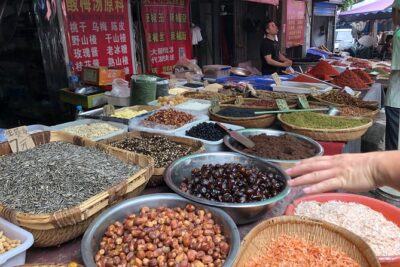
Half-Day Xi’an Biang Biang Noodles Cooking with a Market Visit
Read our review →Browse the lists this tour appears in