
Reviewed · HISTORICAL TOURS IN BEIJING
Beijing: Bell and Drum Towers Entry Ticket—Historic Landmark
The most memorable part of this visit is the chance to see Beijing’s old timekeeping system in its original setting. At the Drum Tower, you can climb to the top for a possible five-minute performance, while the Bell Tower holds a 63-ton Ming Dynasty bell, known as the King of Ancient Bells.
I like the freedom of exploring both towers without being tied to a group schedule. I also like the useful English PDF guide, which gives you historical context while you look at the buildings, drums, and bell.
The main drawback is that this is a self-guided entry ticket, not a guided tour. The drum performance schedule can change, and communication may be harder for some foreign visitors, so check the onsite timing when you arrive.
Key points to know before you go
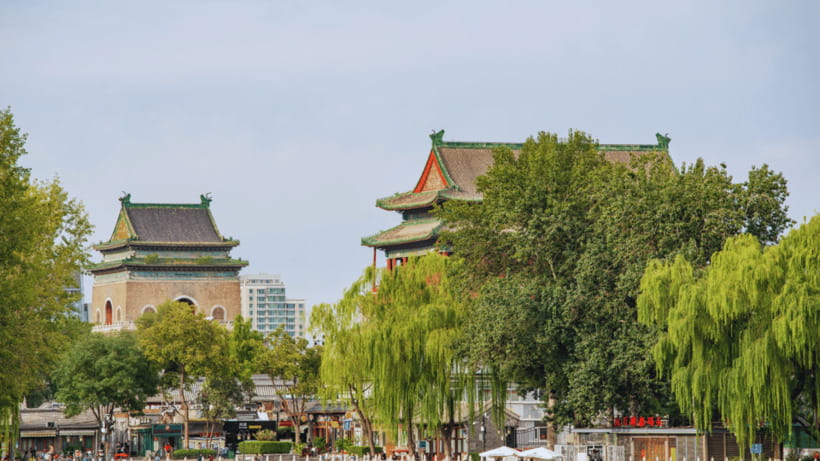
- See the King of Ancient Bells: The Yongle-era bell weighs 63 tons and is the centerpiece of the Bell Tower.
- Climb the Drum Tower: Reach the top for a chance to watch a five-minute drum performance.
- Explore 25 historic drums: The Drum Tower preserves a large collection tied to Beijing’s old daily time system.
- Use the English PDF guide: You receive background information without paying for a live guide.
- Plan up to four hours: The ticket gives you time to visit both towers at an easy pace.
- Bring identification: Your passport or ID card is required for entry.
Why Beijing built two timekeeping towers
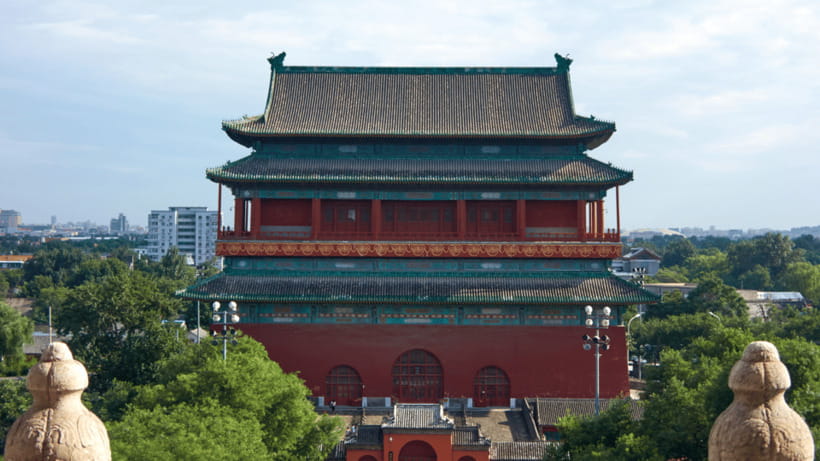
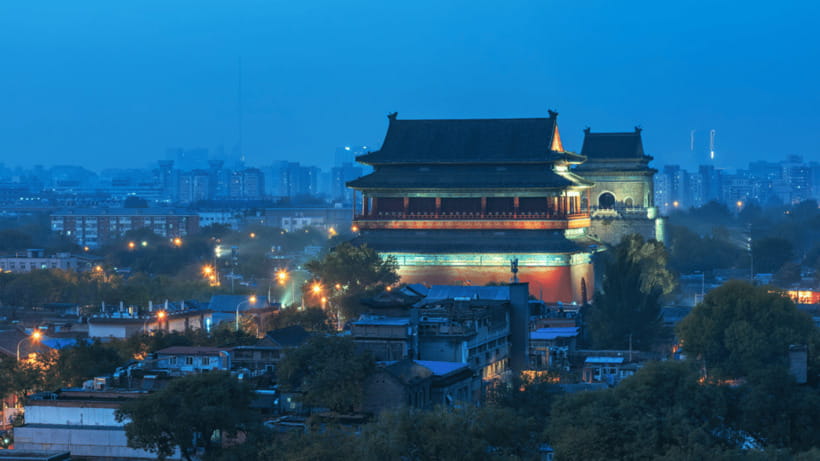
Beijing’s Bell and Drum Towers once gave the city its daily rhythm. The old system used a dusk drum and a morning bell, helping people mark the start and end of each day before modern clocks and public announcements.
The towers were first built during the Yuan Dynasty and later took their present importance during the Ming and Qing periods. Their position at the northern end of Beijing’s central axis was not accidental. These were working civic buildings, placed where their sound could carry across the imperial city.
That practical role helps make the visit more interesting than a simple look at old architecture. You are seeing the machinery of daily life in imperial Beijing. The towers once helped signal when gates closed, when people began their day, and when the city moved into its nighttime routine.
The two buildings also form an unusual north-south pair. Bell towers in China are often paired with drum towers, but Beijing’s complex is especially large and well preserved. The full protected site covers 12,597 square meters, giving you more to explore than the main exhibits alone.
More Historical Tours in Beijing
- Beijing Historical Tour II including Summer Palace, Lama Temple & Panda Garden
★ 4.0 · 187 reviews - Beijing Historical Tour I – Forbidden City, Tiananmen Square & Temple of Heaven
★ 4.0 · 120 reviews - Beijing Historic City Guided Walking Tour + Calligraphy Creation
★ 5.0 · 59 reviews
Entering the Drum Tower and its 25 drums
Start with the Drum Tower if you want the most active part of the visit. The building contains 25 drums, each connected to the old practice of announcing the time.
The drums are the visual highlight here. Their scale and arrangement help you understand how much sound the building once produced. This was not a small ceremonial display. The tower served a practical purpose, and its equipment was built for a city that depended on strong, repeated signals.
Climbing to the top is worthwhile if stairs are comfortable for you. From above, you can look across the surrounding part of central Beijing and get a better sense of the tower’s place in the city plan. The climb also brings you closer to the performance area.
A drum performance may take place during your visit. The supplied schedule describes a five-minute show, but the exact time can vary according to onsite arrangements. I would check the timing as soon as you enter, then plan the rest of your visit around it.
The performance is the strongest reason to time your visit carefully. Several highly positive comments focused on the drumming, with one person calling it unforgettable and others saying the demonstration was the part not to miss. The show is short, so arriving late could mean missing it.
Do not treat the Drum Tower as only a stage for the performance. Give yourself time to look at the structure, the drums, and the way the building was designed to project sound. The display gives useful context for understanding why drums were so important in the old capital.
Seeing the 63-ton bell at the Bell Tower

The Bell Tower offers a quieter contrast. Its central object is the enormous Ming Dynasty bell made during the Yongle era. Weighing 63 tons, it is described as the King of Ancient Bells and is considered the largest ancient bell in China.
The scale is difficult to understand from a photograph. In person, the bell’s size makes its original purpose clear. It was designed to produce a sound powerful enough to travel through the city, not simply to decorate a religious or civic building.
The Bell Tower also gives you a chance to focus on craftsmanship. The bell reflects the technical skill and imperial resources available during the Ming period. Look closely at its surface and construction rather than rushing through for a quick photograph.
The Bell Tower is less active than the Drum Tower, which suits visitors who prefer a slower stop. You can study the bell, read the historical material, and compare its purpose with the drums across the complex.
Together, the two buildings explain the full system. The bell marked the morning, while the drum signaled dusk. Visiting only one tower would leave the story incomplete, so the combined ticket has real value.
A self-guided visit with useful historical context

This is not a live tour with a guide. Your ticket includes an English PDF guidebook instead, giving you background as you walk through the complex.
That format works best if you enjoy setting your own pace. You can stop for photographs, spend extra time with the bell, or wait for the drum performance without holding up a group. You also avoid the fixed commentary and limited stop times that come with a conventional tour.
The PDF is especially useful because the buildings are historic rather than interactive. Without context, you might see a large bell and a room full of drums, then leave without understanding how they fit into Beijing’s old civic system.
I would read the guide before entering or keep it ready on your phone. That way, you can connect each building to the larger story as you move through it. Since no live guide or audio guide is included, the PDF carries much of the interpretive work.
The tradeoff is simple. You get privacy and flexibility, but you must take responsibility for your own understanding. If you want a guide who can answer questions, explain details in person, or organize the visit for you, this ticket will feel limited.
Same base, a completely different kind of day out:
- From Beijing: Mutianyu Great Wall Tours with Options
★ 4.9 · 9,216 reviews - Beijing: Forbidden City Tour(Group/Private)-Tickets Included
★ 4.8 · 7,974 reviews - Beijing: T-Square & Forbidden City Group or Private Tour
★ 4.8 · 4,446 reviews - Beijing: Mutianyu Great Wall Daily Tour with Ticket & Lunch
★ 5.0 · 3,056 reviews
How much time to allow at the towers
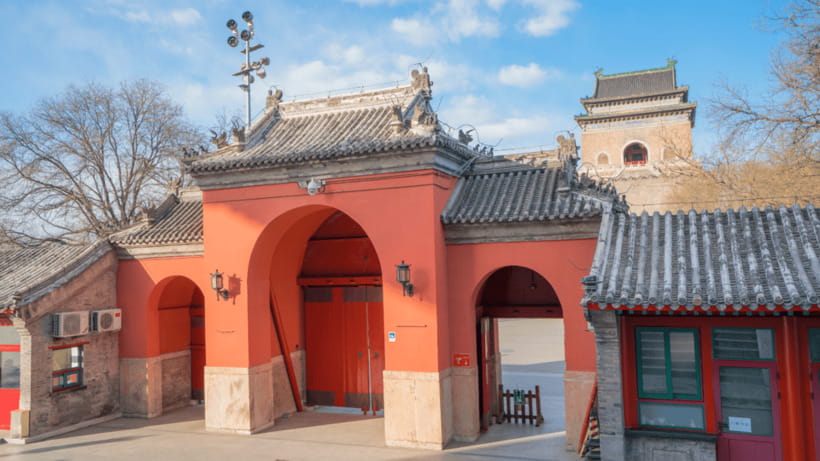
The listed duration is four hours, which gives you plenty of room for both towers at a calm pace. You do not need to race from one building to the next, especially if you want to wait for the drumming.
A sensible visit could include:
- Time at the Drum Tower and its 25 drums
- The climb to the upper level
- The five-minute performance, if the schedule matches your visit
- A close look at the Bell Tower and its 63-ton bell
- Reading the English PDF guide and taking photographs
- Extra time to appreciate the architecture and central location
The four-hour window is also useful if the first available performance time does not suit your arrival. Since the exact schedule may change, flexibility matters more than trying to follow a strict minute-by-minute plan.
The ticket includes skip-the-ticket-line access, which saves time at a central Beijing attraction. You still need to bring your passport or ID card, so keep the same identification used when booking close at hand.
What the $13 price really gives you

At $13 per person, this is a reasonably priced cultural stop in central Beijing. You receive admission to both towers, the English PDF guide, and skip-the-ticket-line access.
The value comes from the pairing. A ticket to one building alone would give you only half of the old timekeeping story. Here, you can compare the sound-producing drums with the huge morning bell and understand how the two worked together.
The price is especially fair if you care about history, architecture, photography, or traditional Chinese culture. It also works well as a shorter cultural activity alongside other central Beijing sights.
The value is weaker if you expect a full guided experience. There is no live guide, no audio guide, and no promise that the drum performance will happen at the exact moment you arrive. You are paying for access and flexibility, not personal instruction.
The free cancellation period also lowers the risk of booking ahead. You can cancel up to 24 hours in advance for a full refund, and the reserve now, pay later option lets you keep your plans flexible. These terms are useful when your Beijing schedule is still moving.
When the drum performance matters most
The drum show deserves special attention because it is the part most likely to turn a quiet historical visit into a memorable event. The performance lasts about five minutes, so it does not take over your day, but it gives the Drum Tower a direct connection to its original purpose.
I would ask about the performance time immediately after entry. The information available says the schedule can vary, and the exact onsite arrangement matters more than a general timetable.
If the show is not running during your visit, the towers are still worth seeing for the architecture and historic displays. But if you have a choice of starting times, select one that gives you a reasonable chance of reaching the top before the performance.
The short length is helpful for families and people working around a busy Beijing itinerary. It is also easy to fit into a longer visit to the surrounding central city area.
Who will enjoy this Beijing landmark

This ticket suits you best if you like historic buildings that explain how a city functioned. You will get the most from it if you are happy reading a guide on your own and setting your own pace.
It is a good match for:
- History and architecture enthusiasts
- Photographers looking for distinctive imperial structures
- Visitors interested in Chinese traditions and city life
- People who want a central cultural stop without a full-day tour
- Families who enjoy a brief live performance
- Independent visitors who dislike organized group schedules
It may not suit you if you need a live English-speaking guide or want a detailed explanation at every stop. It is also less appealing if you have no interest in historic timekeeping, traditional instruments, or imperial architecture.
Communication can be a practical issue. One positive booking experience praised clear WhatsApp communication, while another noted that communicating as a foreign visitor could be difficult. Keep your booking details and identification available, and do not rely on a long in-person explanation at the entrance.
Practical tips for a smoother visit
Check the drum performance time first. This is the one detail that can shape the rest of your visit, and the onsite schedule may differ from what you expect.
Bring your passport or ID card. Entry requires identification, and forgetting it can create an avoidable problem.
Download or open the English PDF guide before you begin. A self-guided visit is much easier when you are not trying to load the information while standing inside a busy historic building.
Wear shoes suitable for stairs. The Drum Tower visit includes a climb to the top, and the upper level is important for both the view and the possible performance.
Allow more than a quick photo stop. The two towers work together as a pair, and rushing through one of them weakens the experience. Four hours gives you enough time to look carefully without making the visit feel like a major tour commitment.
Should you book the Bell and Drum Towers ticket?
Book it if you want an affordable, flexible look at one of Beijing’s most distinctive historic complexes. The 63-ton bell, the 25 drums, and the chance to see the five-minute performance give the visit enough substance for a dedicated stop.
I would especially recommend it to independent visitors who want cultural context without joining a group. The English PDF helps, and the included access to both towers makes the $13 price sensible.
Skip it if you need a live guide, dislike stairs, or have very little interest in old city traditions. Otherwise, check the performance schedule, bring identification, and give yourself enough time to see both sides of Beijing’s ancient clock.
FAQ
What is included in the Bell and Drum Towers ticket?
The ticket includes entry to both the Bell Tower and Drum Tower, along with an English PDF guidebook.
Is a live tour guide included?
No. The activity does not include a live guide or an audio guide. It is designed as a self-guided visit supported by the English PDF.
How long does the visit last?
The listed duration is four hours. You can use that time to visit both towers, read the guide, take photographs, and wait for the drum performance if needed.
Can I see a drum performance?
You may see a five-minute drum performance from the Drum Tower top. The exact time can vary according to the onsite schedule, so check the timing after arrival.
How many drums are in the Drum Tower?
The Drum Tower housed 25 drums, which are part of the historic display.
How heavy is the ancient bell?
The Ming Dynasty Yongle-era bell weighs 63 tons. It is known as the King of Ancient Bells.
What identification should I bring?
Bring your passport or ID card for entry.
Can I cancel the booking?
Yes. You can cancel up to 24 hours in advance for a full refund. The reserve now, pay later option also lets you delay payment while keeping your plans flexible.
Newly listed around Beijing
- Beijing: Summer Palace Ticket; fast and smooth★ 3.6 · 38 reviews
- Beijing: Summer Palace Entry Ticket★ 3.3 · 3 reviews
- Beijing: Summer Palace Highlight Walking Tour★ 4.8 · 25 reviews
- Beijing: Summer Palace, Sacred Road&Ming Tombs Private Tour★ 5.0 · 8 reviews
- Beijing: Summer Palace 3 Hours Guided Tour with Entry Ticket★ 4.8 · 4 reviews
- Beijing Private Tour: Summer Palace, Panda House and Options★ 5.0 · 21 reviews
- Beijing: Summer Palace Entrance(combo/tour opt)★ 4.7 · 6 reviews
- Beijing Royal Banquet with Chinese culture prefermance★ 5.0 · 3 reviews
Historical Tours in Beijing, compared.

Beijing Historical Tour II including Summer Palace, Lama Temple & Panda Garden
Read our review →
Beijing Historical Tour I – Forbidden City, Tiananmen Square & Temple of Heaven
Read our review →
Beijing Historic City Guided Walking Tour + Calligraphy Creation
Read our review →Browse the lists this tour appears in