
Reviewed · MUSEUMS
Shaanxi History Museum Qin-Han Branch English guide service
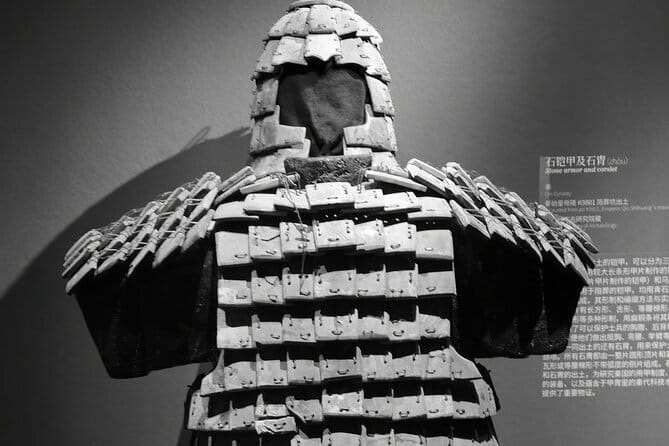
The Qin-Han branch gives Xi’an’s ancient story room to breathe. Instead of moving through every period of Shaanxi history, you focus on the Qin and Han dynasties, the two eras that shaped China’s early imperial system. I especially like the clear historical focus and the chance to see a modern museum surrounded by the mausoleums of those same dynasties. I also like that guides such as Jackie and Michael use the metro with you, rather than leaving you to sort out the journey alone.
The main consideration is distance. The museum is in northern Xi’an, not beside the Bell Tower, and the full outing can run closer to four hours than three. The $80 price makes the most sense if you want English explanations and transport help, not simply admission to the galleries.
Key points at a glance
- Qin and Han focus: Follow the rise of China’s first major imperial dynasties without being rushed through all of Shaanxi’s history.
- Guides Jackie and Michael: English-speaking guides explain political change, social life, officials, culture, and the meaning behind the objects.
- Bell Tower meeting point: Begin at 7W5W+QRJ near Xi’an’s Bell Tower, then travel to the northern branch by public transportation.
- Small group size: The maximum is 10 people, which gives the guide more room to answer questions than a large coach tour.
- Three to four hours: Admission, bottled water, and guiding are included, but brunch, lunch, and personal spending are not.
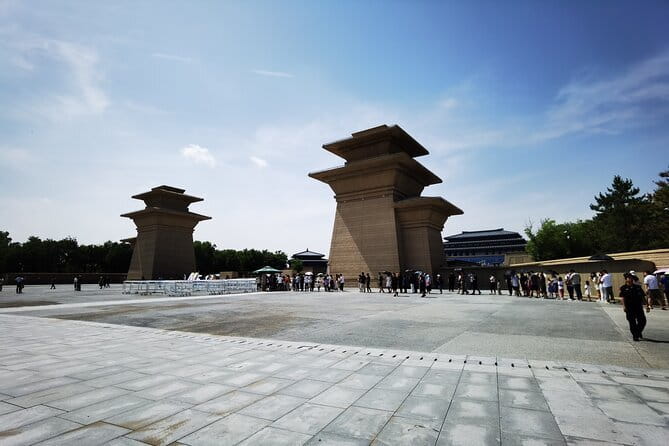
- Mausoleum setting: Imperial tombs around the museum help connect the displays with the physical world of Qin and Han Xi’an.
Why the Qin-Han branch is worth your time
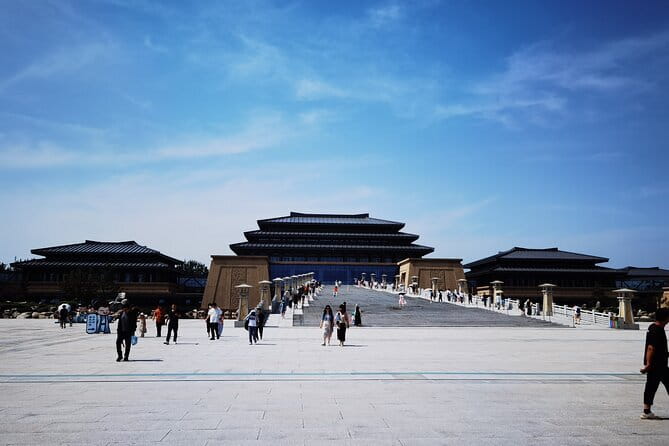
Xi’an has no shortage of ancient history. The challenge is making sense of it. At the original Shaanxi History Museum in the city center, you move through a broad chronological story of Shaanxi and Xi’an. The Qin-Han branch takes a different approach: it concentrates on two dynasties and explains why they mattered to the development of China.
That narrower focus is useful. The Qin dynasty was short, but it created an imperial model that later rulers would use. The Han dynasty lasted far longer and developed the government, culture, and social order that shaped much of early Chinese civilization. With a guide, you can connect individual objects to those larger changes instead of simply admiring old bronze, pottery, stone, and burial goods.
I like this format for a first serious look at Chinese history. You are not asked to remember a long list of dates without context. The guide can explain how power shifted, how officials fit into the system, and how daily life changed from Qin rule to Han rule.
The setting adds another layer. Imperial mausoleums are scattered around the museum, so the subject is not trapped inside glass cases. You are looking at Qin and Han material in an area still marked by their burial traditions. That does not turn the museum into an archaeological site visit, but it gives the surroundings a useful sense of place.
More Museums in Xi'an
- Half-Day Mini Group Xian Tour to Terracotta Warriors Museum
★ 5.0 · 467 reviews - Private Xi’an Tour: Terracotta Warriors, Hanyangling Museum, Cave Homes
★ 5.0 · 101 reviews - Xi’an: Terracotta Army Museum Group Tour
★ 4.5 · 85 reviews
Meeting at the Bell Tower and reaching the museum
The official starting point is the Bell Tower of Xi’an, at 7W5W+QRJ in Beilin District. This is a sensible place to meet because it is central and close to public transportation. The activity ends back at the same meeting point, so you should plan the rest of your day around that return rather than assuming the museum will be your final stop.
The Qin-Han branch is in northern Xi’an. The guide takes you by subway or another available public transport option, and this is one of the service’s practical strengths. Xi’an’s transit system is useful, but a trip to a less familiar museum can involve station choices, transfers, and figuring out the right exit. Jackie has been praised for handling the metro journey in both directions, and Michael has also helped make the transport side easy.
Allow more time than the basic three-hour estimate if you want to ask questions, move at a relaxed pace, or deal with a busy station. One outing with Jackie lasted almost a full day because of the time spent getting around and exploring. That is not the stated normal duration, but it is a useful warning: public transportation and conversation can stretch the schedule.
You should also confirm the exact pickup details before setting out. The meeting point is near the Bell Tower, not necessarily a hotel pickup. Pickup is offered as a feature, but the supplied meeting information names the Bell Tower as the start and end point. If you need a different pickup arrangement, settle that before the tour begins.
What you see inside the Qin-Han galleries
The museum’s main strength is its organization. It presents the Qin and Han periods in a way that links objects to government, society, belief, and imperial power. You can expect the guide to explain not only what an object is, but why it mattered.
The Qin section helps you understand the force of unification. Qin rule is often reduced to the first emperor and the famous terracotta figures, but this museum focuses on the wider system. A good guide can place Qin achievements and strict rule within the larger story of state building.
The Han section gives you a longer period to consider. The dynasty expanded and adjusted the institutions created under the Qin, while developing its own political and cultural identity. The guided visit is particularly useful if you want to follow changes in official life, social structure, and the relationship between rulers and subjects.
Michael has been praised for explaining Chinese history and culture in strong English, with careful attention to notable officials and changes in political and social dynamics. That detail matters if your interest goes beyond emperors. You can ask how administration worked, how society was ordered, and why certain people and ideas became important.
The galleries may also help you place China in a wider world setting. The museum presents the Qin and Han periods against the background of world history, rather than treating China as an isolated story. The guide can help you understand the period as part of broader changes in the ancient world.
The precise objects shown can vary with gallery arrangements, but you should expect a museum experience rather than a live reconstruction or outdoor archaeological tour. If you want the Terracotta Army above all else, this is not a replacement for visiting that site. If you want a more structured explanation of the dynasties that produced China’s early imperial culture, it is a strong complement.
Why an English guide changes the visit
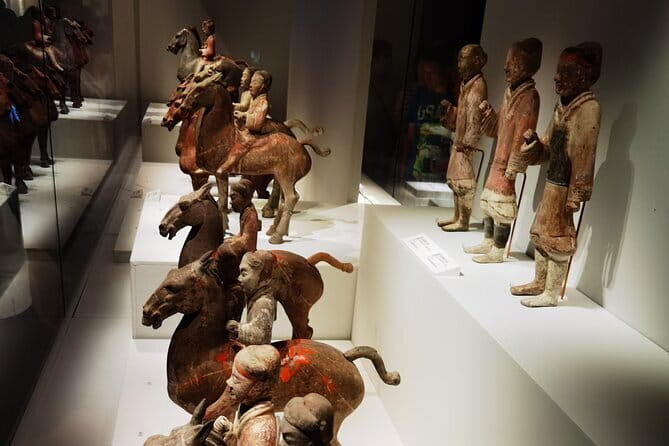
A museum can display beautiful objects and still leave you wondering what you are looking at. Labels may identify a date or material, but they do not always explain the human choices behind the object. This is where the guide adds value.
Jackie is described as clear, patient, caring, and passionate about history. That combination is useful in a museum where names, dates, and political changes can quickly blur together. Jackie has also helped with practical problems outside the history lesson, including a Didi issue, which suggests the service can be useful beyond the galleries.
Michael brings a similar strength, with particular attention to historical background and cultural meaning. He has guided private groups of three, and the maximum group size for this experience is 10. A small group gives you a better chance to ask about a confusing display or pause when a particular subject catches your interest.
Guide quality can vary by departure, so you should not assume you will receive a particular person unless the booking confirmation names Jackie or Michael. Still, the repeated emphasis on clear English, patient explanations, and historical detail makes the guiding component the main reason to choose this tour over a simple museum ticket.
I would especially recommend the guide if Chinese history is new to you. You can still appreciate the building and displays on your own, but the political and social connections are easier to follow with someone explaining the sequence. If you already study the Qin and Han periods, you may prefer independent time and find the $80 cost less appealing.
Same base, a completely different kind of day out:
- Mini Group Xian Day Tour to Terracotta Army, City Wall, Pagoda and Muslim Bazaar
★ 5.0 · 1,320 reviews - Xi’an: Terracotta Army Mini Group or Private Tour
★ 5.0 · 926 reviews - Xi’an Evening Food Tour by TukTuk
★ 5.0 · 715 reviews - Xian: Terracotta Army Ticket & Guided Bus Tour with Options
★ 4.6 · 579 reviews
Three hours, or a longer half-day?

The stated duration is about three to four hours. That usually gives you enough time to travel from the Bell Tower, visit the main displays, and return without using your entire day. I would still reserve a half-day, particularly if you like to stop for questions or take notes.
The experience includes museum admission, bottled water, and guide service. It does not include brunch, lunch, or personal expenses. There is no meal built into the schedule, so eat before meeting or plan food after you return. A small bottle of water is provided, but it is sensible to carry anything else you need for several hours out.
You need a moderate level of physical fitness. The trip involves public transportation and walking through a sizeable museum. No special physical challenge is described, but you should be comfortable standing, walking between galleries, and managing the transit portion.
One useful detail is that the museum has not been described as overwhelmingly crowded. That can make the Qin-Han branch attractive if you find the city-center museum too busy. Still, crowd levels change, and the branch requires advance reservation. The main Shaanxi History Museum and the Qin-Han branch both require reservations, so do not treat this as a place to visit casually at the last minute.
Some senior visitors may qualify for free admission under local arrangements, but the activity price includes an admission ticket. If that applies to you, confirm the current policy before paying for a guided package. The guided explanations and transport assistance may still be useful, but the value calculation changes if you do not need the ticket.
Is $80 a fair price?
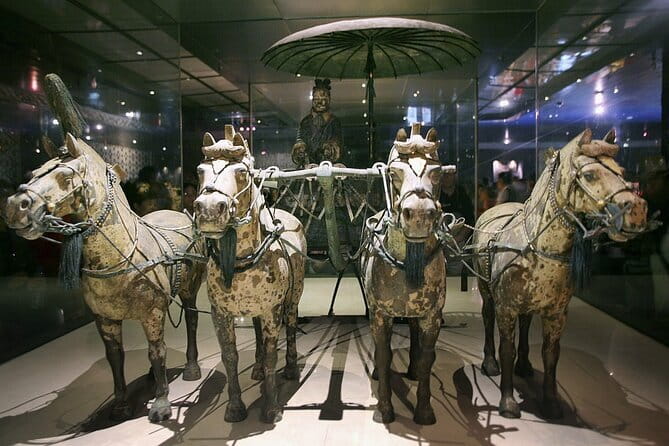
At $80 per person, this is not the cheapest way to enter a museum. You are paying for more than the building, though. The cost covers admission, an English-speaking guide, bottled water, and help with the trip from the Bell Tower to the northern branch and back.
I see the value most clearly for first-time visitors to Xi’an, couples or families who want a private or small-group explanation, and anyone who finds Chinese public transit intimidating. The history is dense enough that a good guide can turn a quiet museum visit into a coherent lesson.
The price is harder to justify if you already speak Chinese, have studied the Qin and Han periods, or are happy using the subway and reading displays independently. It may also be less attractive for seniors who can receive free admission and do not need transport help.
Group discounts are available, and the maximum group size is 10. For a larger family or a small party of friends, the per-person cost may compare favorably with hiring a private guide separately. For one person who simply wants to see the museum, the package is a premium choice.
The strongest value is not the ticket. It is the interpretation. Michael’s ability to explain officials and shifts in society, and Jackie’s clear approach to both history and local logistics, are exactly the services that make the price easier to accept.
Who should book this experience?

I would choose this tour if you want Chinese history explained in plain English and prefer a focused subject to a very broad museum survey. It suits you especially well if the main city-center branch is fully booked, if you want to avoid its potential crowds, or if you have already seen other major Xi’an sights and want a quieter historical day.
It also works for families with older children who need a story to connect the objects. The Qin and Han periods can feel remote, but a guide can make political systems and social changes easier to discuss.
History students and museum regulars should think carefully. The branch may still interest you, but the guided pace and fixed return to the Bell Tower give you less freedom than visiting alone. Ask in advance if the guide can adjust the emphasis toward officials, society, art, or wider world history.
You should not book it expecting the Terracotta Army, a meal, or a full-day tour of every Qin and Han site around Xi’an. The experience is a museum visit with public transportation and English guidance. The nearby mausoleums provide context, but they are not presented as separate stops in the schedule.
Cancellation is free up to 24 hours before the start time. Cancel later than that, or request changes within the final 24 hours, and the payment is not refunded. That is worth noting before you reserve, especially if your Xi’an schedule is still changing.
My booking advice
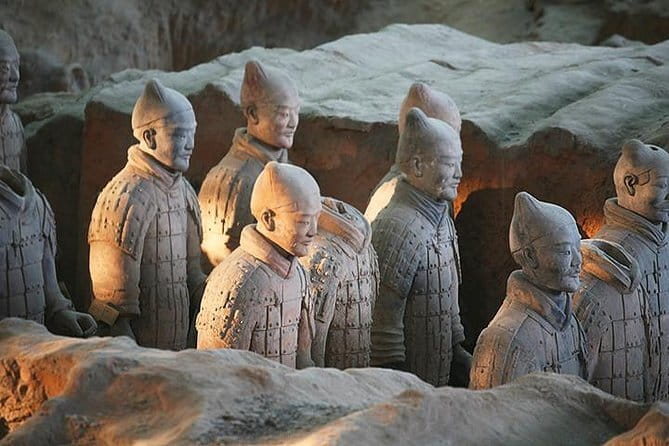
Book this experience if you want the Qin and Han dynasties explained rather than simply displayed. The combination of a small group, included admission, English guidance, and help with the metro solves several common problems at once.
Skip it if your main goal is a quick museum visit, you already know the subject well, or the $80 price feels high for a three-hour outing. For everyone else, the Qin-Han branch offers a thoughtful alternative to Xi’an’s better-known central museum, with guides such as Jackie and Michael adding the context that labels alone cannot provide.
FAQ
Where does the experience begin?
It begins at the Bell Tower of Xi’an, at 7W5W+QRJ in Beilin District, Shaanxi, China.
Where does the experience end?
The activity ends back at the meeting point near the Bell Tower.
How long does the museum experience take?
The stated duration is approximately three to four hours, though transportation and extended discussion can make the outing longer.
Is admission included?
Yes. Museum admission, bottled water, and guide service are included.
Is transportation included?
The guide helps you reach the Qin-Han branch using public transportation, and the meeting information identifies the Bell Tower as the start and return point.
How far in advance should I reserve?
The experience is booked about 21 days in advance on average. Reservations are required for both the city-center Shaanxi History Museum and the Qin-Han branch, so advance planning is sensible.
More Historical Tours in Xi'an
- All inclusive Two-Day Xi’an private Heritage Tour
★ 5.0 · 33 reviews - Xi’an Full Day Sightseeing Tour – Shaanxi History Museum, Big Wild Goose Pagoda, Ancient City Wall
★ 4.5 · 26 reviews - Xi’an Half-Day City Tour – Shaanxi History Museum and Big Wild Goose Pagoda
★ 3.5 · 4 reviews - Private Xi’an History Day Tour:Terracotta Warriors Huaqing Palace
★ 5.0 · 4 reviews
Newly listed around Xi'an
- Xi’an Terracotta Warriors, City Wall and Tuktuk Food Tour★ 5.0 · 6 reviews
- Xi’an Vegetarian Food Tour★ 5.0 · 5 reviews
- Xi’an to Mt. Huashan Private Charter Service★ 5.0 · 4 reviews
- Terrracotta Warriors Museum Shuttle Bus with English Guide★ 4.5 · 6 reviews
- Three Day Xi’an Adventure private Tour with Mt.Hua★ 5.0 · 7 reviews
- All inclusive Two-Day Xi’an private Heritage Tour★ 5.0 · 33 reviews
- ZANBUS: Xi’an Qin Terra-cotta Warriors Bus Tour Departs at 8/9 AM★ 5.0 · 4 reviews
- Xian Terra-cotta Warriors Private Tour with Pickup from Airport or Train Station★ 5.0 · 4 reviews
Museums, compared.

Tianmen Square, Forbidden City & Royal Museum Tours
Read our review →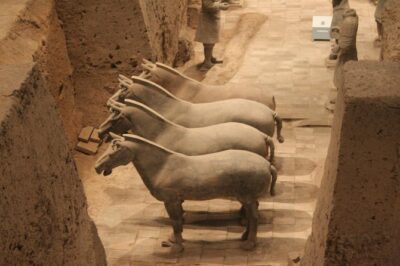
Half-Day Mini Group Xian Tour to Terracotta Warriors Museum
Read our review →
Beijing:Jingshan Park (Palace Museum Garden) Ticket
Read our review →
Private Chengdu Day Tour: Giant Pandas and Jinsha Site Museum
Read our review →
Private Xi’an Tour: Terracotta Warriors, Hanyangling Museum, Cave Homes
Read our review →
Beijing Half Day: National Museum of China In-depth Tour with Subway Transfer
Read our review →
Terracotta Warriors Museum Ticket with Professional English-speaking tour guide
Read our review →Browse the lists this tour appears in