
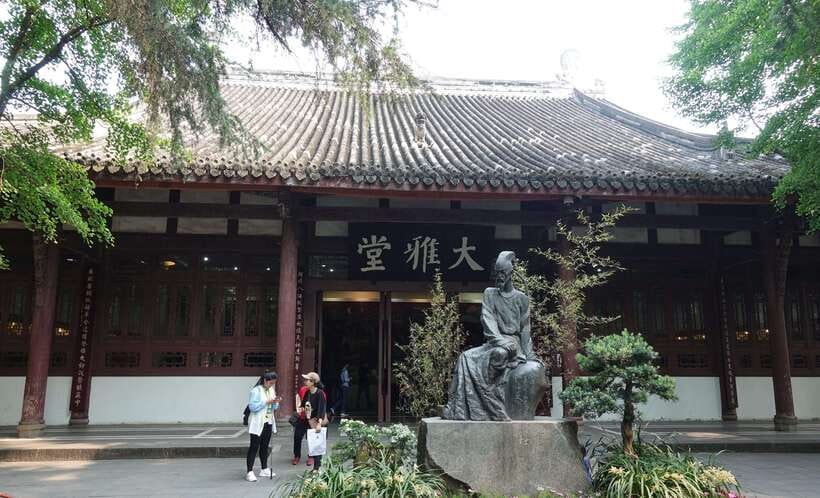
Reviewed · MUSEUMS
Chengdu: Du Fu Thatched Cottage Museum Ticket for Adult
Du Fu Thatched Cottage is more than an old literary site. It is a calm garden complex where you can trace the life of China’s great Tang Dynasty poet through halls, stone inscriptions, bamboo paths, and a rebuilt thatched home. Du Fu wrote more than 240 poems here, many reflecting war, hunger, duty, and daily life during a troubled period.
I like the mix of serene gardens and serious history. I also like that your admission includes the full museum grounds, not just one room or monument. The main drawback is that this is an admission ticket rather than a guided tour, so you need some background to get the most from the displays.
Key points
- Du Fu’s Chengdu home: See the area linked to the poet’s nearly four years beside Huanhua Stream.
- Poetry History Hall: View a statue of Du Fu and plaques bearing famous calligraphy.
- Classical garden setting: Walk among bamboo, streams, corridors, and traditional buildings.
- Gongbu Shrine: Find Du Fu honored alongside Huang Tingjian and Lu You, two poets connected with Sichuan.
- 30,000 museum items: The collection includes old editions, manuscripts, and translations of Du Fu’s work.
- Simple flexible entry: Use your passport or e-voucher at any main gate during the 09:00 to 18:00 opening period.
Why Du Fu’s Chengdu years matter
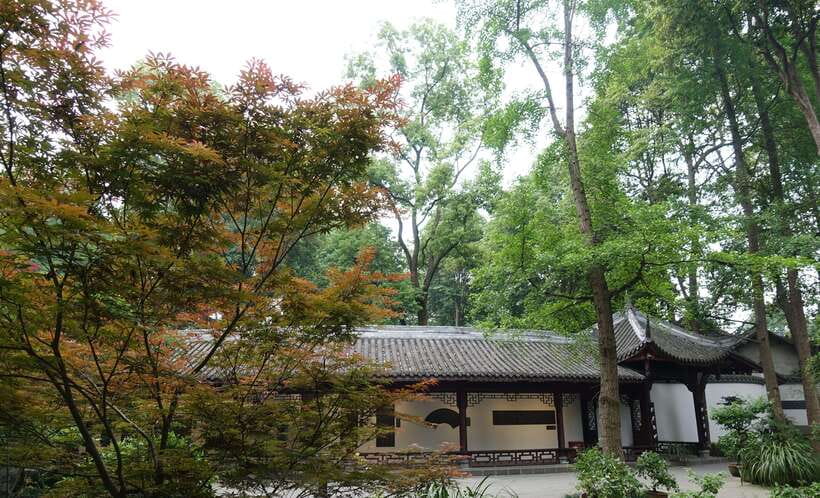
Du Fu reached Chengdu in the winter of 759 AD after fleeing the chaos of the An Lushan Rebellion. With help from friends, he built a thatched hut beside Huanhua Stream the following spring.
He lived here for nearly four years. That period produced more than 240 poems, an astonishing body of work from one address. His writing is valued not only for its craft, but also for its clear view of Tang society. He wrote about hardship, public duty, poverty, family, and the hopes of ordinary people.
That is why Du Fu is often called the Poet Historian. The title does not mean his poems read like dry records. It means they preserve the feel of their age through the eyes of someone who lived through political disorder and social strain.
I find that context useful before entering the grounds. Without it, you may see a pleasant garden with attractive buildings. With it, the site becomes a place tied to a short but important chapter in Chinese literary history.
More Museums in Chengdu:
- Private Chengdu Day Tour: Giant Pandas and Jinsha Site Museum
★ 5.0 · 142 reviews - Sanxingdui Museum+Chengdu Panda Base or Jinsha Site Tour
★ 5.0 · 10 reviews - Sanxingdui Museum Small Group Tour with Optional Panda Base
★ 5.0 · 3 reviews
Entering through the museum gates
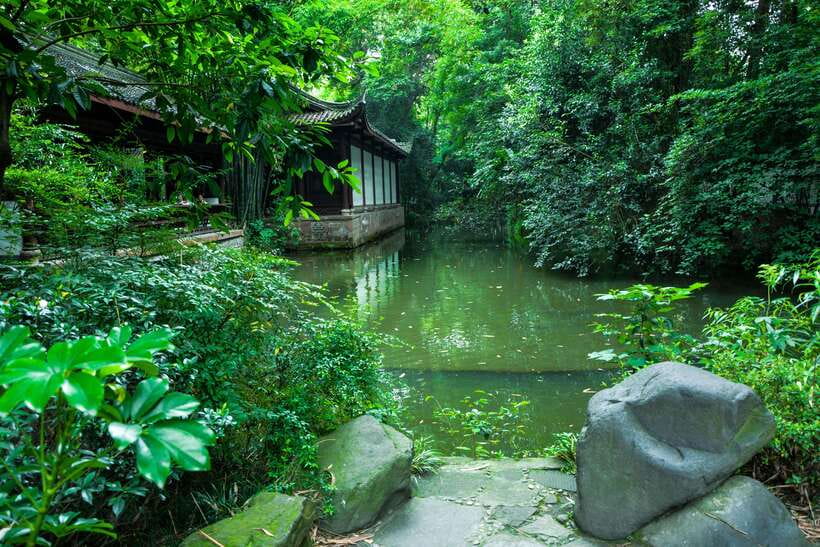
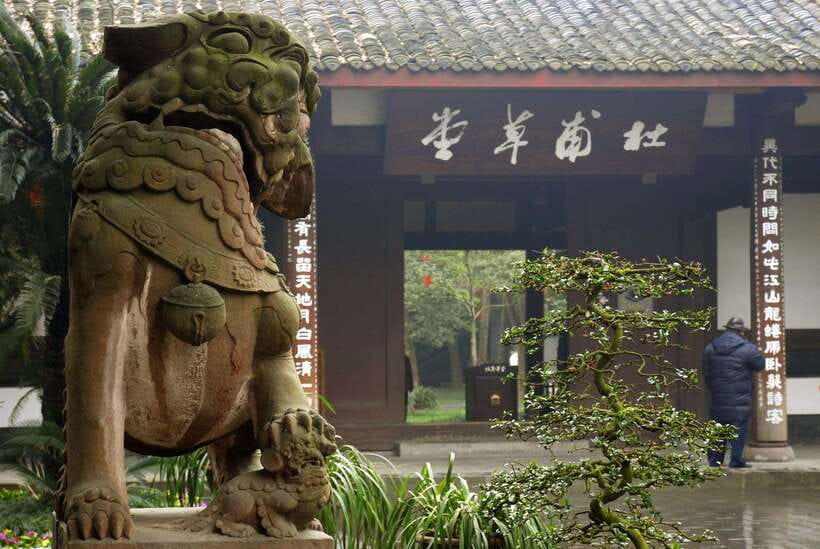
The museum is at 37 Qinghua Road in Chengdu’s Qingyang District. You can enter through any of the main gates, which gives you some freedom when planning the visit around the rest of your day.
Your passport or e-voucher is used for direct verification. Bring your passport, and make sure the passport ID is supplied when booking. No physical ticket is needed.
The ticket is valid for one day, with entry available from 09:00 to 18:00. The supplied information does not give a fixed entry time, so check availability when you reserve. This is useful if your Chengdu schedule needs room for meals, transport, or another museum.
The site covers nearly 300 acres. That matters because this is not a quick stop beside a single memorial. You have a large garden and building complex to cross, so allow enough time to walk without rushing. The ticket description lists a small group limit of 10, but the admission itself does not promise a guide or a scheduled group walk. Treat this as a museum visit with flexible entry.
Following the central axis of the complex
The main buildings follow a central axis, a common pattern in formal Chinese architecture. The sequence includes the Front Gate, Grand Lobby, Poetry History Hall, Chaimen Gate, and Gongbu Shrine.
This arrangement gives the grounds a natural order. Rather than wandering among unrelated structures, you can follow the central line and let each building add another layer to Du Fu’s story.
The corridors and smaller buildings sit to either side. Their symmetry gives the site a measured, formal feel, while the gardens soften the approach. Bamboo groves, streams, and planted paths keep the visit from feeling like a row of indoor exhibit rooms.
I like this balance. The buildings carry the official memory of Du Fu, while the plants and water help you picture why a poet might have wanted to live beside Huanhua Stream. Still, do not expect the entire site to be an untouched Tang Dynasty settlement. Much of what you see reflects later preservation and rebuilding.
The Poetry History Hall
The Poetry History Hall is the central stop. Inside, you can see a statue of Du Fu and plaques inscribed with famous calligraphy.
This is the place to pause if you want the clearest connection between the physical site and Du Fu’s work. The statue gives the poet a human presence, while the calligraphy links the written poem to the visual traditions of Chinese art.
The hall also helps explain why the museum is more than a pleasant former residence. The focus is not simply on where Du Fu slept. It is on how his poetry has been preserved, copied, studied, and honored across generations.
If you read Chinese, the inscriptions will offer more direct value. If you do not, the setting still works as a cultural introduction, but you may want to read a little about Du Fu before arriving. The ticket does not include a named guide, a lecture, or translation service.
A few more Chengdu days worth a look
- Chengdu: Giant Panda Breeding Research Base Ticket
★ 4.5 · 580 reviews - Half-Day Chengdu Cooking Class with a Local Market Visit
★ 5.0 · 465 reviews - Tuktuk Food Tour Through Chengdu’s Local Eats
★ 5.0 · 435 reviews - Private Half-Day Chengdu Panda Breeding Center Tour with Optional Volunteer
★ 5.0 · 353 reviews
The rebuilt Thatched Hut Area
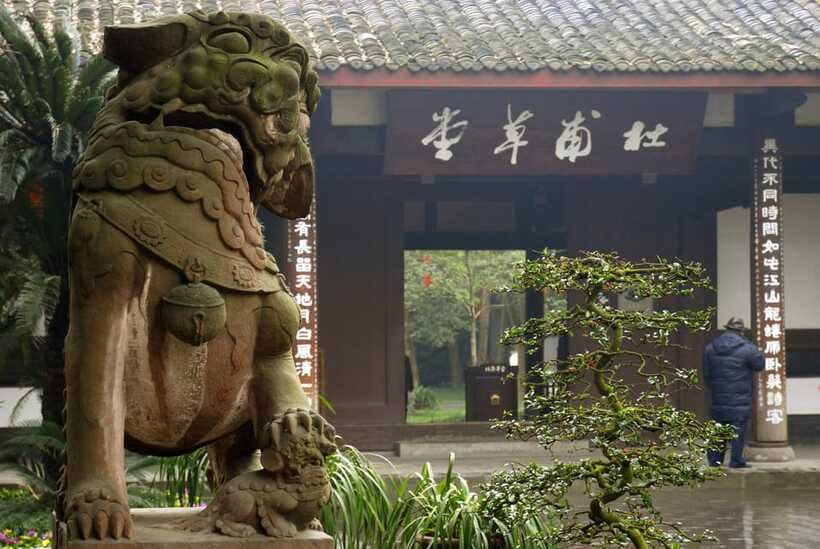
The Thatched Hut Area recreates Du Fu’s rustic dwelling. It is one of the most appealing parts of the visit because it brings the poet’s daily setting down to a simple scale.
Do not expect to see the exact hut from 759 AD. The area is a reconstruction, designed to give you a sense of the home connected with Du Fu’s Chengdu years. Its value comes from the contrast between the formal halls elsewhere in the complex and this modest pastoral space.
The hut also gives the story a useful human angle. Du Fu is often presented through grand titles, calligraphy, and memorial buildings. Here, you can think instead about a person living in a basic home, writing while political conflict shaped the world beyond his garden.
For me, this is the stop that makes the biography easier to picture. It is also a good reason not to rush directly from the entrance to the main hall and leave.
Paying respects at Gongbu Shrine
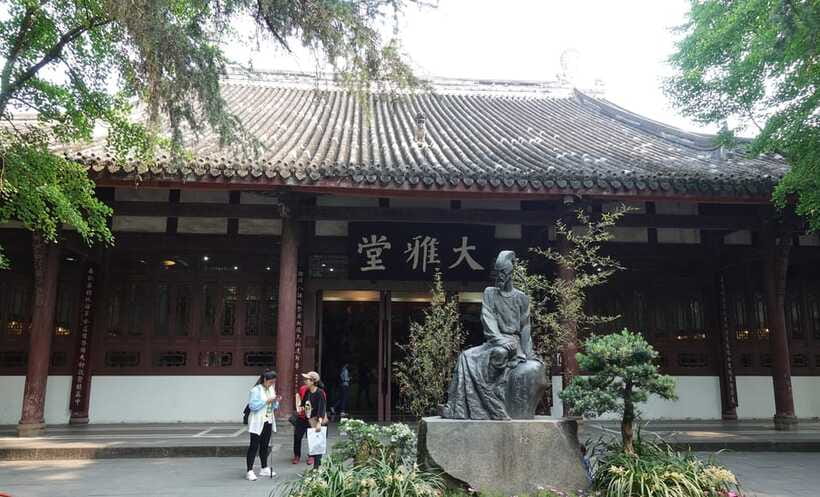
The Gongbu Shrine honors Du Fu alongside Huang Tingjian and Lu You, two other poets who lived in Sichuan.
This shared setting places Du Fu within a wider literary tradition. It shows that the museum is not only about one poet’s biography. It also honors the continuing link between Sichuan and Chinese poetry.
The shrine is an important stop for anyone interested in how literary figures are remembered. Du Fu’s name is presented with the names of later poets, allowing you to see a line of influence and regional connection.
At the same time, the shrine may be less immediately clear if you arrive with no background. The supplied details do not specify English explanations, guided commentary, or interpretation at each building. A little advance reading will help you recognize why the other two poets are included.
Gardens, bamboo, and classical design
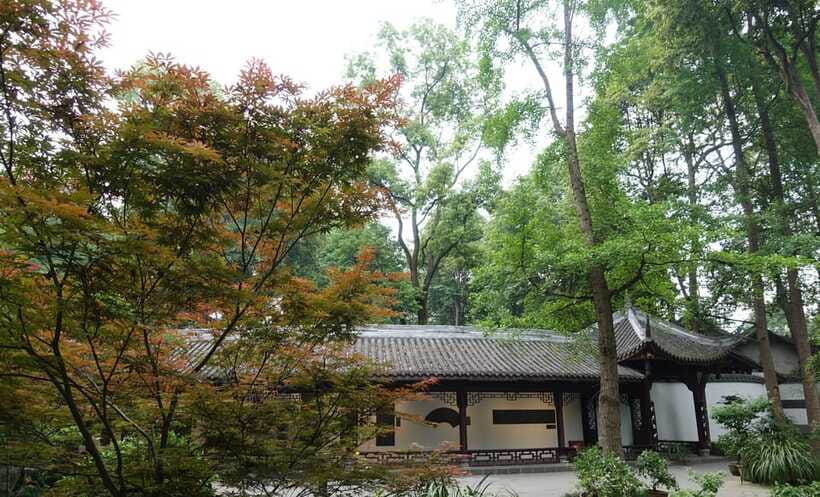
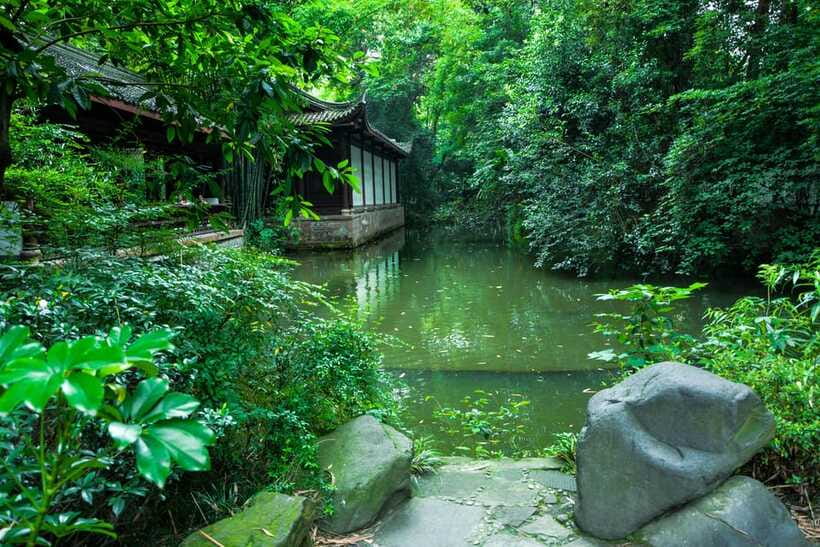
The gardens are a major part of the experience, not decoration added around the museum. Streams, bamboo, corridors, and traditional buildings create a quiet setting that suits the subject.
You can move from a formal hall into a shaded garden, then back toward an architectural courtyard. This change of pace is useful after reading about war, political disorder, and social hardship in Du Fu’s life.
The site preserves architectural features from the Ming Dynasty, dating to around 1500, and the Qing Dynasty, dating to around 1811. These later structures do not place you directly inside Du Fu’s Tang Dynasty home. Instead, they show how later generations created a lasting memorial to him.
That distinction is worth keeping in mind. The site is historically connected to Du Fu, but the buildings you see include later forms and reconstructions. The result is best understood as a memorial museum in a classical garden, not as a perfectly preserved Tang residence.
The museum collection and its value
The museum holds more than 30,000 items. These include old editions, manuscripts, and translations of Du Fu’s poetry.
This collection gives the visit academic weight. You are not only seeing a memorial and a reconstructed hut. You are also entering an institution that preserves material for studying Du Fu’s life and writing.
The collection will matter most to readers of Chinese literature, students, and anyone who wants to understand how poems survive over time. Manuscripts and old editions can show the long process of copying, publishing, translating, and interpreting a poet’s work.
The information provided does not list specific display cases, individual manuscripts, or the languages used in the labels. For that reason, I would not book this ticket expecting a detailed English-language exhibition tour. Think of the collection as a valuable part of the museum’s purpose, with the exact viewing experience depending on the current displays.
The museum was established in 1955 as the Du Fu Memorial Museum. It took its current name in 1985 and was designated a National Key Cultural Relic Protection Unit in 1961. Those dates show that official preservation began long before the site became a standard Chengdu sightseeing stop.
How much time should you allow?
The ticket is valid for one day, and the opening period is 09:00 to 18:00. No fixed visit duration is provided, so you can set your own pace.
I would avoid treating the museum as a ten-minute photo stop. The nearly 300-acre grounds, central buildings, garden paths, shrine, hut, and collection all deserve some attention. You will get more from the visit if you pause in the Poetry History Hall and allow time to walk through the garden sections.
A shorter visit can still work if you focus on the main axis, Poetry History Hall, Gongbu Shrine, and Thatched Hut Area. A longer visit suits anyone who reads poetry, studies Chinese culture, or enjoys classical garden design.
Because the ticket does not specify a guided schedule, your pace is your own. That is convenient, but it also means you are responsible for choosing where to stop and learning the basic story before you arrive.
Is the 15 dollar ticket good value?
At about $15 per person, the admission is reasonably priced for a full-day museum and garden complex. You are paying for access to the entire site, not a single reconstructed building.
The value is strongest if you care about poetry, Chinese history, architecture, or quiet garden spaces. You also receive access to a museum with more than 30,000 items, which gives the ticket more substance than a simple memorial visit.
The value is weaker if you want a personal guide to explain every hall or translate the poetry as you walk. No guide name, guided commentary, or language service is included in the supplied details. You may need to prepare on your own.
Flexible cancellation adds practical value. You can cancel up to 24 hours in advance for a full refund, and the reserve-now, pay-later option lets you hold a place without paying immediately. Those policies are useful when your Chengdu plans are still moving, but the central reason to book should be the museum itself.
Who will enjoy this visit most?
I would choose this for anyone with an interest in Tang poetry or Chinese literary culture. It is also a good fit if you want a calmer cultural stop with gardens and traditional architecture.
The site suits independent visitors because the admission is flexible and valid for one day. You can focus on the areas that interest you instead of following a fixed tour route.
Families may appreciate the open garden setting, though the literary displays will appeal most to older children and adults. Photographers should find plenty of architectural and garden subjects, but the main purpose is cultural rather than purely scenic.
This may not be the best choice if you want a fully explained tour in English, a short list of famous objects, or a tightly timed activity. The museum rewards patience and a little preparation.
Practical booking advice
Use your passport or e-voucher at a main gate. Bring your passport, since passport ID is required when booking and the passport is listed as something to bring.
Check the available date and starting information before you reserve. The visit is listed as valid for one day, with use from 09:00 to 18:00.
The experience provider is Guangzhou Zhiwooyou Travel Agency Co., Ltd. The booking information describes the group type as small, with a limit of 10 participants, but the core inclusion remains admission to Du Fu Thatched Cottage Museum.
I would read a short introduction to Du Fu before arrival. Knowing about his escape from the An Lushan Rebellion, his years in Chengdu, and his 240-plus poems will make the buildings and inscriptions much easier to understand.
Should you book Du Fu Thatched Cottage?
Book it if you want a thoughtful Chengdu visit built around poetry, gardens, and history rather than fast sightseeing. The reconstructed hut, Poetry History Hall, Gongbu Shrine, and large collection give you several ways into Du Fu’s story.
Skip it if you need a guided experience with guaranteed language support or if your schedule allows only a very brief stop. For the right visitor, the $15 price is fair, especially because it covers the full grounds for one day and includes both museum displays and garden areas.
FAQ
Where is Du Fu Thatched Cottage Museum?
It is located at 37 Qinghua Road in Chengdu’s Qingyang District, in southwestern China.
What does the ticket include?
The ticket includes admission to Du Fu Thatched Cottage Museum.
How much does admission cost?
The listed price is $15 per person for an adult ticket.
How long is the ticket valid?
The ticket is valid for one day.
What are the opening hours for entry?
Entry is available from 09:00 to 18:00.
Do I need a physical ticket?
No. You can use your passport or e-voucher for direct verification at any main gate.
Do I need to bring my passport?
Yes. Your passport is listed as something to bring, and passport ID is needed when booking.
Can I cancel the booking?
Yes. You can cancel up to 24 hours in advance for a full refund.
Is there a pay-later option?
Yes. You can reserve your place and pay later, subject to availability.
Newly listed around Chengdu
- Private Chengdu Highlights Day Trip: Panda Base and City from Xi’an by Train★ 5.0 · 4 reviews
- Jiuzhaigou National Park Tickets Booking★ 4.5 · 4 reviews
- Classic 3-Day Jiuzhaigou Private Tour(Transportation+Tickets)★ 5.0 · 8 reviews
- Private Chengdu Highlights Day Trip: Panda Base and City from Chongqing by Train★ 4.5 · 9 reviews
- Huanglong Scenic Spot Admission Ticket★ 4.5 · 4 reviews
- Visiting Chengdu Panda Base in a Half Day★ 5.0 · 4 reviews
- Panda, Leshan, and Emei Mountain 2-day tour★ 5.0 · 4 reviews
- Classsic sichuan Opera at sichuan Provincial Theater★ 5.0 · 4 reviews
Museums, compared.
Tianmen Square, Forbidden City & Royal Museum Tours
Read our review →
Half-Day Mini Group Xian Tour to Terracotta Warriors Museum
Read our review →
Beijing:Jingshan Park (Palace Museum Garden) Ticket
Read our review →
Private Chengdu Day Tour: Giant Pandas and Jinsha Site Museum
Read our review →
Private Xi’an Tour: Terracotta Warriors, Hanyangling Museum, Cave Homes
Read our review →
Beijing Half Day: National Museum of China In-depth Tour with Subway Transfer
Read our review →
Terracotta Warriors Museum Ticket with Professional English-speaking tour guide
Read our review →Browse the lists this tour appears in