
Reviewed · CRAFT WORKSHOPS IN SHANGHAI
Hands On Chinese Cave Murals with Local Expert
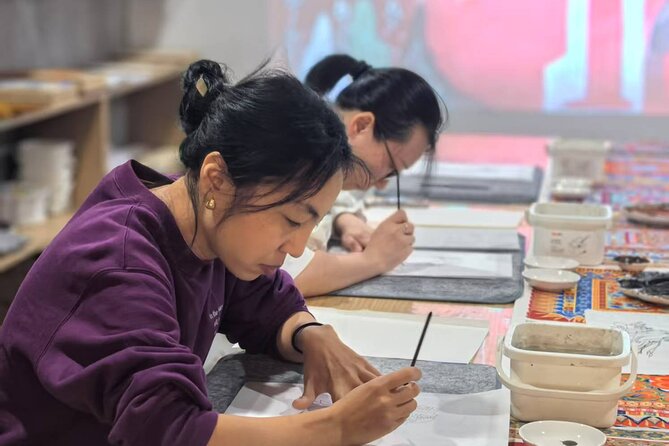
The most appealing part of this Shanghai workshop is its direct connection to Dunhuang mural art. You do not just look at pictures of ancient paintings. You work with mineral pigments, a clay board, brushes, and methods inspired by the murals themselves, then leave with a piece you made by hand.
I like the freedom to choose your subject, from a calm Bodhisattva to a mythical Nine-colored Deer. I also like the patient guidance with color mixing and painting, especially if you want to add a personal touch rather than copy a pattern exactly. The main consideration is time: three hours can feel short if you are hoping to produce a highly detailed mural.
Key points at a glance
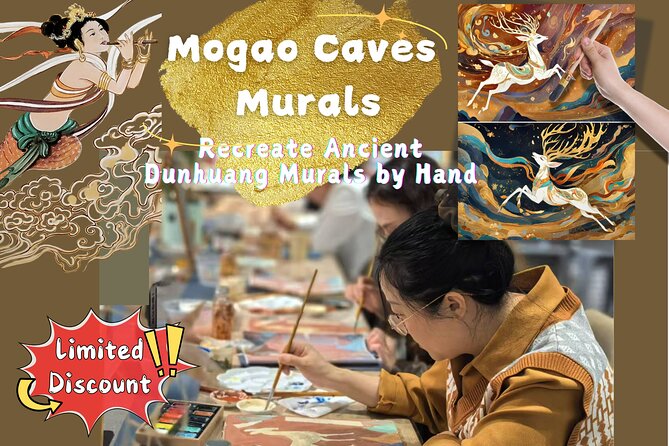
- Choose your own mural subject: Pick from Buddhas, Bodhisattvas, mythical creatures, and other traditional patterns.
- Work with natural materials: Use mineral pigments, clay boards, brushes, and traditional tools inspired by historic methods.
- Learn from a Dunhuang art specialist: The instructor explains the artistic and cultural background while guiding your work.
- Create in a quiet studio: The peaceful classroom suits visitors who prefer a calm cultural activity to a crowded sightseeing stop.
- Take home handmade art: Your finished piece gives the experience a useful souvenir instead of another small factory-made gift.
- Plan around a three-hour session: The activity begins and ends at 515 Yi Shan Lu in Xuhui District, with a maximum of 20 people.
Why Dunhuang mural painting makes a good Shanghai activity
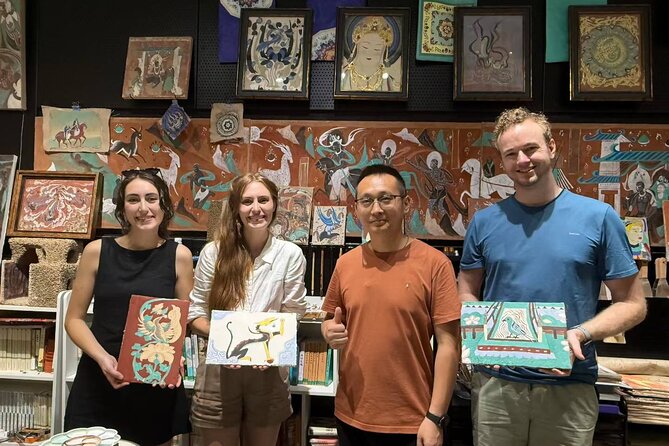
Shanghai is full of major sights, but not every cultural experience needs to involve a long queue or a crowded hall. This workshop gives you several quiet hours to focus on one part of Chinese art, with an instructor nearby to explain what you are doing.
Dunhuang murals are known for Buddhist figures, celestial imagery, decorative patterns, and scenes from Chinese stories. You are not visiting the cave temples themselves here. Instead, you are learning through a small-scale recreation using materials and techniques linked to that artistic tradition.
That difference matters. A museum visit can show you a finished object, while this workshop lets you notice the practical side of the art. You handle pigment, follow lines, build color, and see how a flat board slowly takes shape. It is a slower form of sightseeing, and that slower pace is part of its value.
The setting also gives the experience a reflective quality. The classroom is described as quiet and peaceful, so you can expect a contrast with Shanghai’s busy streets. If you enjoy sketching, crafts, painting, or cultural classes, this is likely to feel more rewarding than a standard photo stop.
More Craft Workshops in Shanghai
- 2-Hour Private Chinese Ink and Brush Painting Workshop in Shanghai
★ 5.0 · 15 reviews - Unlock Chinese Tea: Culture, Science, Tasting & Hands-on Brewing
★ 5.0 · 12 reviews - Zhujiajiao Water Town: Boat Ride, Opt for Hands-on Dumpling Meal
★ 5.0 · 7 reviews
Starting at 515 Yi Shan Lu in Xuhui District
The meeting point is 515 Yi Shan Lu, in Shanghai’s Xuhui District. The activity begins and ends at this same location, which keeps the plan simple. You do not need to arrange a separate drop-off at the end or wonder where the workshop finishes.
The experience is near public transportation, though the supplied details do not specify a particular station, route, or walking time. I would check the route before leaving and allow a little extra time for finding the exact entrance. A mobile ticket is available, so you can keep the booking on your phone rather than printing a voucher.
The maximum group size is 20 people. That is not a private lesson, but it is also not an enormous class. The quality of your session will depend partly on the final number of participants and how much individual help people need. The instructor is expected to guide the group, explain the art, and assist with techniques such as color creation.
This is a good activity to place on a day when you want an indoor break. The duration is about three hours, so it is substantial enough to feel like a real cultural class but short enough to fit alongside other Shanghai plans. Since the experience returns to the meeting point, you can arrange your next stop from the same part of the city.
Choosing between a Buddha, Bodhisattva, or Nine-colored Deer
The first creative decision is your mural pattern. The available subjects include majestic Buddhas, graceful Bodhisattvas, and the Nine-colored Deer, a mythical animal from an old Chinese folktale. These choices offer different moods.
A Buddha design may appeal to you if you want a central spiritual figure with a strong, formal presence. A Bodhisattva can offer a more graceful composition, with flowing details that make the painting feel ornamental. The Nine-colored Deer is a better choice if you prefer a storybook subject or want something less expected than a religious figure.
The range of patterns is useful for mixed groups. One person can choose a solemn Buddhist image while another selects a creature from folklore. You are not locked into a single image chosen by the teacher or the company.
You should ask about the available designs at the start of the class and consider the amount of detail you can comfortably handle. A more complex pattern may take longer to trace and paint. If your main goal is to finish a polished piece within the three-hour session, a design with a clear outline may be easier than one packed with fine decoration.
Working with mineral pigments and a clay board
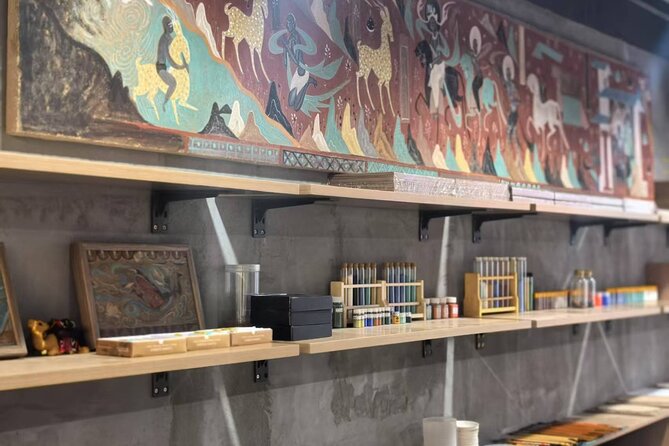
The workshop uses natural mineral pigments, a clay board, and traditional tools. This is one of the strongest reasons to book. You are not simply coloring a printed image with ordinary craft paint. The materials give you a physical sense of how mural painting differs from casual sketching.
Mineral pigments have a particular appeal because they connect the modern class with older artistic practice. The information provided does not specify every pigment or preparation step, so you should not expect a full restoration course. Still, the chance to handle materials linked to historic mural methods adds substance to the activity.
The clay board also changes the feel of the work. A board gives you a firm surface for tracing and painting, while the clay connection recalls the prepared surfaces used in mural traditions. You can expect to work carefully, following the pattern with brushes and building the image through color.
The instructor can help you create colors, which is useful if you want to make small changes to the standard design. One participant wanted a more personal result and received help with color selection. That suggests you can ask for guidance rather than quietly struggle with a shade that does not look right.
Do not treat the class as a race. The pleasure is in the process: placing a line, filling a shape, and watching the picture develop. If you rush, you may lose the calm quality that makes this workshop different from a quick souvenir-painting activity.
Same base, a completely different kind of day out:
- Authentic Local Food Tour in Central Shanghai
★ 5.0 · 1,382 reviews - Zhujiajiao Water Town and Shanghai City Private Day Tour
★ 5.0 · 1,016 reviews - Private Shanghai Full Day City Tour with Old and New Highlights
★ 5.0 · 995 reviews - Shanghai: Hop-on Hop-off Bus Ticket and Optional Attractions
★ 3.4 · 692 reviews
How the three-hour class unfolds
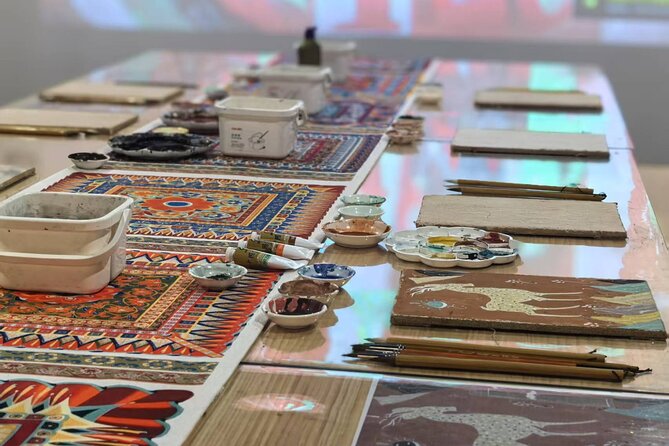
The exact minute-by-minute schedule is not provided, but the structure is clear enough to picture.
You arrive at the Shanghai meeting point, show your mobile ticket, and settle into the classroom. The instructor introduces the Dunhuang tradition and explains the basic approach. This opening is important because the images are not just decorative patterns. Their subjects and forms connect to Buddhist art, Chinese folklore, and long-standing craft methods.
Next, you select a pattern. This is where you can decide how ambitious you want to be. A Buddha, Bodhisattva, or Nine-colored Deer gives you a clear starting point, while the wider selection of traditional designs may offer other options.
You then trace or paint the chosen image on the clay board. The instructor demonstrates how to use the brushes and pigments, and you begin transferring the design. The work calls for attention, but it is not presented as a test of professional painting skill. The aim is to learn through doing.
Color mixing becomes part of the creative process. You can follow the traditional appearance of the pattern or ask for help developing a slightly more personal palette. The instructor’s role is especially useful here, since the right color can change the feeling of the entire image.
As the session continues, you add detail and finish the artwork. The final result will depend on your chosen pattern, pace, and painting experience. You should expect a handmade piece rather than a flawless reproduction. That is part of the charm. Small variations show that you made it yourself.
At the end, the activity returns to the same meeting point. The supplied information does not state how the finished work is packaged or transported, so bring a bag only if you think you will need one for carrying a clay board safely.
The instructor’s role matters here
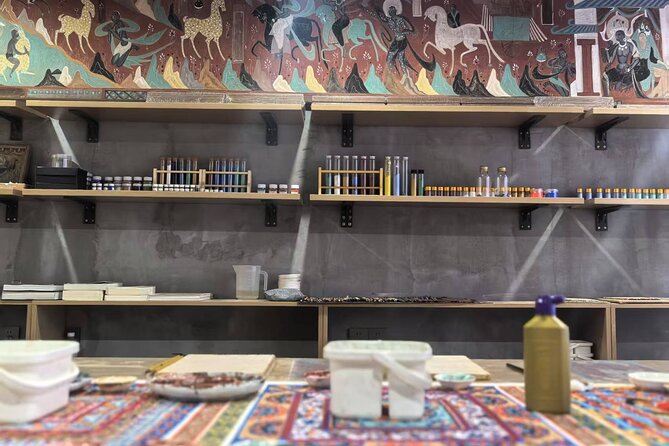
A workshop like this succeeds or fails on the quality of its teaching. The instructor is described as highly skilled in Dunhuang art and culture, and the class includes explanations of the history and cultural background behind the images.
That gives the session more weight than a simple paint-and-take-home craft. You can ask why a figure looks a certain way, how the colors relate to the tradition, or how to handle a tricky part of the pattern. The instructor is also expected to help students individually, including with color creation and personal adjustments.
Patience is particularly important for this kind of activity. A line may not land perfectly, and a color may need changing. The teaching style described here allows room for correction and experimentation instead of making you feel that every brushstroke must be exact.
No instructor name is provided, so you cannot request a particular teacher in advance. What you can reasonably expect is a specialist-led class focused on Dunhuang culture, with practical help as you work.
What the $99 price gets you
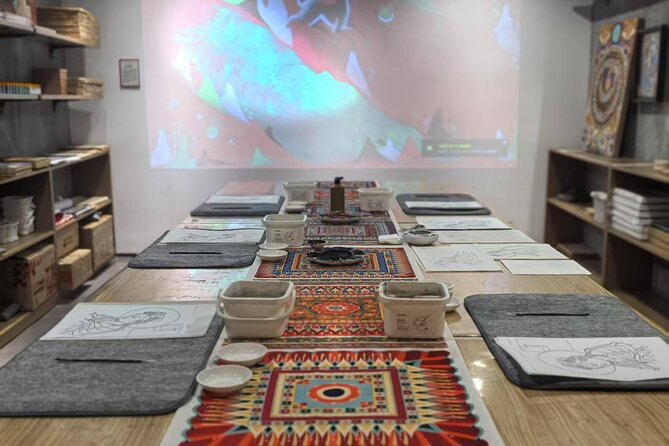
At $99 per person, this is not a cheap drop-in craft session. You are paying for roughly three hours of instruction, the class setting, the pattern, the clay board, mineral pigments, traditional tools, and the finished artwork you create.
The value depends on how actively you take part. If you only want a quick souvenir, the price may feel high compared with buying a small painting in a shop. If you want a guided cultural activity, the calculation looks better. You receive time with an instructor, a hands-on introduction to a major Chinese art tradition, and a personal object that carries a memory of the class.
The price also makes more sense for visitors who value smaller, focused experiences. You are not paying for a long list of sightseeing stops. You are paying for attention, materials, and a chance to work slowly with a specialist.
I would book this for someone who enjoys art classes, cultural traditions, quiet creative work, or meaningful souvenirs. I would hesitate for someone who dislikes sitting still, wants constant sightseeing, or expects to complete a museum-quality replica in one afternoon.
Who will enjoy this workshop most
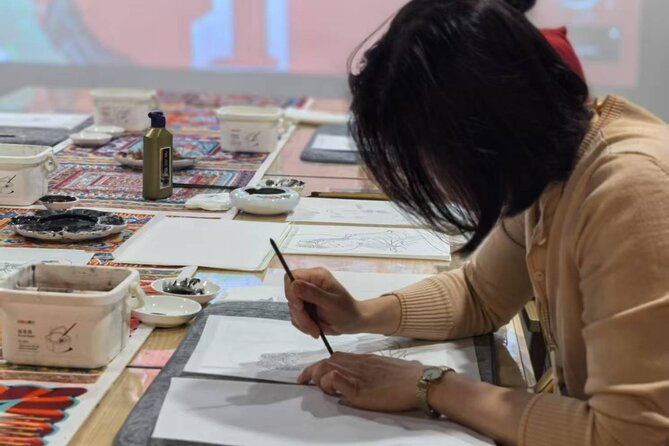
This activity suits adults and older children who can follow instructions and spend time on a detailed project. Most people can participate, and service animals are allowed. The available information does not set a minimum age or describe special support for particular mobility needs, so ask before booking if you have specific requirements.
Couples and friends can choose different designs and compare results at the end. Families may appreciate an activity that gives everyone something to do, though younger children may need help with the careful painting.
Solo visitors also have a good reason to consider it. The work gives you a natural focus, and the class structure makes a cultural activity feel less awkward when you are on your own. You can concentrate on your image rather than rushing through another attraction.
This is not the best pick if you need a very flexible arrival time. The class has a scheduled start, and the cancellation terms require changes at least 24 hours before the experience. Cancel later and the amount paid is not refunded.
A calm souvenir with real personal value
The strongest part of the experience is the finished artwork. A purchased print can be beautiful, but it does not show your choices. Your piece reflects the subject you selected, the colors you used, and the way you handled the brush.
That personal connection is why I prefer this type of souvenir to another mass-produced trinket. The Nine-colored Deer can remind you of Chinese folklore, while a Buddha or Bodhisattva can recall the spiritual side of Dunhuang art. The image becomes tied to a quiet afternoon in Shanghai, not just to a store shelf.
Keep your expectations practical. Handmade work may include uneven lines or small changes from the example. Those marks are not a failure. They are evidence that you took part in the process.
Should you book the Dunhuang mural workshop?
Book it if you want a three-hour cultural class rather than another sightseeing circuit. The expert instruction, natural pigments, clay board, subject choices, and calm studio setting make this a thoughtful way to spend part of a Shanghai day.
The $99 cost is easier to justify if you value teaching and a handmade souvenir. It is less appealing if you mainly want a low-cost activity or have little interest in painting. Check your route to 515 Yi Shan Lu, confirm that the design options suit you, and leave enough time to work without rushing.
For art lovers, curious families, and visitors who want a quieter connection with Chinese culture, I would book it. For everyone else, the question is simple: do you want to make something, or merely see something? This experience is firmly on the making side.
FAQ
Where does the Dunhuang mural workshop begin?
It begins at 515 Yi Shan Lu, Xuhui District, Shanghai, China, 200235.
Where does the activity finish?
The activity ends back at the meeting point at 515 Yi Shan Lu.
How long does the experience last?
The workshop lasts approximately three hours.
What can I paint during the class?
You can choose from traditional mural patterns that include Buddhas, Bodhisattvas, the Nine-colored Deer, and other designs.
What materials are used?
The workshop uses mineral pigments, clay boards, brushes, and traditional tools inspired by historic mural-painting methods.
How many people can join the workshop?
The activity has a maximum group size of 20 participants.
Can I cancel for a refund?
Yes. You can cancel at least 24 hours before the local start time for a full refund. Cancellations or changes made less than 24 hours before the start time are not refunded or accepted.
Newly listed around Shanghai
- shanghai Disney tour★ 5.0 · 12 reviews
- shanghai Disney+shanghai one day city highlights tour (two days)★ 5.0 · 4 reviews
- Zhujiajiao Water Town and Shanghai City Highlights Private Day Tour★ 5.0 · 3 reviews
- Zhujiajiao Water Village & Seven Treasure Town Day Tour from Shanghai★ 4.0 · 8 reviews
- Zhujiajiao Water Town Private Tour with Local Farm Visit and Fruit Picking★ 5.0 · 3 reviews
- Zhujiajiao Water Town Self-Guided Tour with Private Transfer from Shanghai★ 5.0 · 7 reviews
- Xitang Water Town Self-Guided Tour from Shanghai with Private Transfer★ 5.0 · 5 reviews
- Xitang Water Village Sunset Tour with Riverside Dining Experience from Shanghai★ 4.5 · 45 reviews
Craft Workshops in Shanghai, compared.
2-Hour Private Chinese Ink and Brush Painting Workshop in Shanghai
Read our review →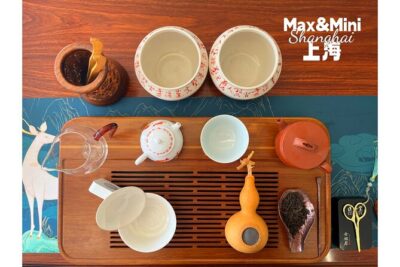
Unlock Chinese Tea: Culture, Science, Tasting & Hands-on Brewing
Read our review →Zhujiajiao Water Town: Boat Ride, Opt for Hands-on Dumpling Meal
Read our review →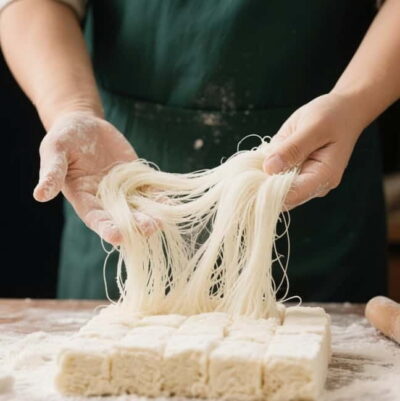
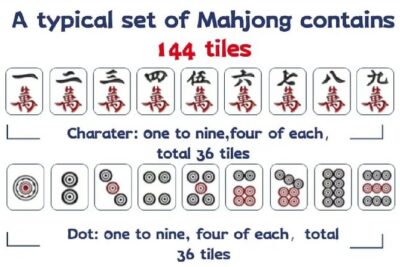
Shanghai Mahjong Experience: Discover Art of Chinese Mahjong
Read our review →Browse the lists this tour appears in