
Reviewed · STREET FOOD TOURS
Hong Kong Street Food Tour with Locals – Dim Sum, Wonton & more
Hong Kong’s best food stories are often found between the big sights. This three-hour walking tour threads through Central and Sheung Wan, stopping for dim sum, char siu, egg tarts, herbal tea, wonton noodles and more. Along the way, your guide connects each bite with Hong Kong’s past, from the opium trade and British rule to postwar trade and modern finance.
I like two things in particular: the food is included, so you can try freely without studying menus, and the local guides explain Cantonese dishes in clear English. Guides such as Summer, Michael, Alice, Stephen and Wind have been singled out for their humor, warmth and local insight. The main drawback is the food focus: seafood and pork appear often, and this is not a suitable choice for vegetarians or people seeking halal food.
Key points
- Dim sum, wonton noodles and char siu: Expect a full meal’s worth of classic Hong Kong food rather than a few token samples.
- Central and Sheung Wan on foot: The route uses markets, old streets, food centers and small shops that are easy to miss on your own.
- Food with context: Learn how trade, migration, British influence and postwar ingenuity shaped dishes such as milk tea and egg waffles.
- A generous afternoon: Many people finish full, so eat lightly beforehand and bring water.
- A social tour: Groups can reach 20 people, with introductions and shared tastings helping strangers mix.
- Good for first-time visitors: The tour gives you a useful food vocabulary and several ideas for later meals.
A walking meal through Central and Sheung Wan
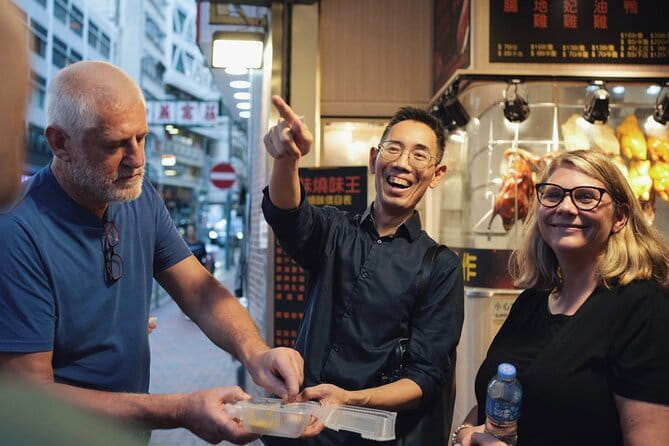
The tour starts at 3 p.m. near Grand Millennium Plaza on Queen’s Road Central, close to public transportation. From there, you walk through an older part of Hong Kong Island, moving between food shops, markets, street corners and cooked-food stalls.
This is not a tour built around one grand restaurant. It is a sequence of small discoveries, with the guide handling the route, ordering and translation. That matters in Hong Kong, where a narrow storefront or a handwritten menu can hold some of the city’s best food, but may not be easy to understand on your first visit.
The pace is broken up by frequent stops. Each listed stop lasts about 15 to 20 minutes, and the full route takes about three hours. You should still expect a moderate amount of walking, with periods spent standing or eating in simple surroundings.
The group can include up to 20 people. That is large enough to create a friendly social mood, but it may feel less personal than a private walk. Several guides are used, including Summer, Michael, Alice, Stephen, Wind, Jasmine, Andy, Isaac and Simeone. The strongest pattern across the guide comments is clear communication, humor and an ability to tie dishes to local history.
More Food Tours in Hong Kong
- Hong Kong’s Tin Hau Hidden Eats Food Tour with 7+ Local Tastings
★ 5.0 · 352 reviews - Small-Group Hong Kong Island Food Tour
★ 5.0 · 343 reviews - Hong Kong Food Tour: Central and Sheung Wan Districts
★ 5.0 · 333 reviews
Wing Lok Street begins with bamboo baskets and dried seafood
The first tasting is har gow, shrimp dumplings steamed in bamboo baskets. The dumpling itself is a good introduction to Cantonese dim sum: delicate wrapper, shrimp filling and a style of eating designed for sharing.
Your guide also explains how dim sum changed over time. The story reaches back to the idea of tea and small snacks for people on the move, then moves forward to modern Hong Kong, where dim sum can be a family meal, a business lunch or a quick bite near an MTR station.
Wing Lok Street also brings you into Hong Kong’s dried seafood trade. You may see products such as shark fin, bird’s nest and cordyceps, items linked with wealth, gifting and Cantonese food traditions. This stop is more about seeing and understanding the market than filling up, and it gives the tour a useful cultural edge.
The seafood trade may not suit everyone. If the sight or discussion of traditional dried seafood makes you uncomfortable, this is worth knowing before you book.
Sheung Wan Market adds milk tea and French toast
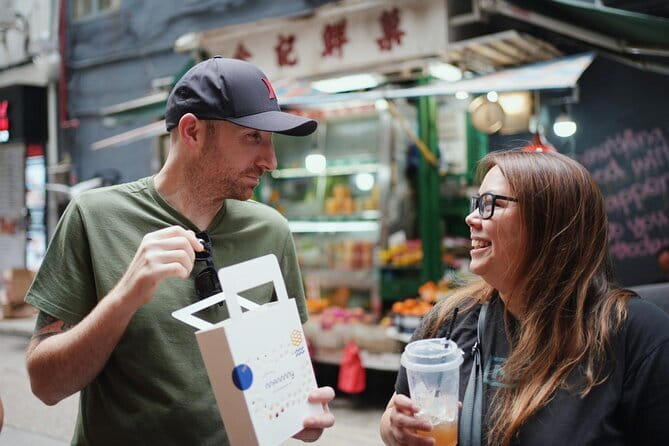
At Sheung Wan Market and Cooked Food Centre, the tour shifts to cha chaan teng food. These casual Hong Kong eateries developed a local style of Western-influenced comfort food, and the tasting includes silky milk tea and crispy peanut butter French toast.
The milk tea is a key Hong Kong drink, with a strong tea base softened by evaporated milk. The French toast shows a different side of the city’s food culture: familiar outside influences reshaped with local ingredients, generous sweetness and a practical postwar spirit.
This stop may feel more substantial than a quick street snack, though the tour includes many sweet and starchy foods. One useful tip is to arrive with a light appetite rather than a completely empty stomach if you struggle with rich food. You will be eating repeatedly over the afternoon.
Bonham Strand West explains Hong Kong’s trading spirit
Bonham Strand West provides a pause from eating and a dose of economic history. The guide explains how the 1953 Korean War trade embargo on China damaged Hong Kong’s trading economy and forced merchants to adapt.
The larger point is that Hong Kong repeatedly reinvented itself. Trade, manufacturing, banking and finance each played a part in the city’s growth. The guide uses the streets around you to connect the old commercial district with the financial center Hong Kong became.
This history is one of the tour’s best features because it keeps the food from feeling like a disconnected checklist. You are not simply trying a dish and moving on. You are hearing why Hong Kong developed the food habits and business culture you see today.
More Street Food Tours in Hong Kong:
- Small Group Kowloon Michelin Rated Street Food and Culture Tour
★ 5.0 · 170 reviews - The 10 Tastings of Hong Kong With Locals: Private Street Food Tour
★ 4.5 · 124 reviews - Kowloon Night Street Food Tour with a Local: Private & Customized
★ 4.5 · 72 reviews - Private Shanghai Evening Street Food Walking and Cruise Tour
★ 5.0 · 123 reviews
Queen’s Road West brings out the char siu
The barbecue pork stop introduces char siu, one of Hong Kong’s most recognizable foods. The focus is on the Cantonese barbecue process, including the glossy exterior and the contrast between caramelized edges and tender meat.
The stop is tied to Possession Point and the arrival of British forces in 1842. That historical setting helps show how colonial rule and Cantonese cooking developed alongside each other, rather than existing as separate stories.
Char siu is also one reason this tour suits people who want a proper taste of local everyday food. It is familiar enough for cautious eaters, but still distinctly Cantonese in its seasoning and preparation.
Pork appears more than once across the route, and seafood is also part of the food culture presented. If you avoid either, ask about suitability before booking. The tour is not designed around substitutions.
Possession Street serves the first dessert
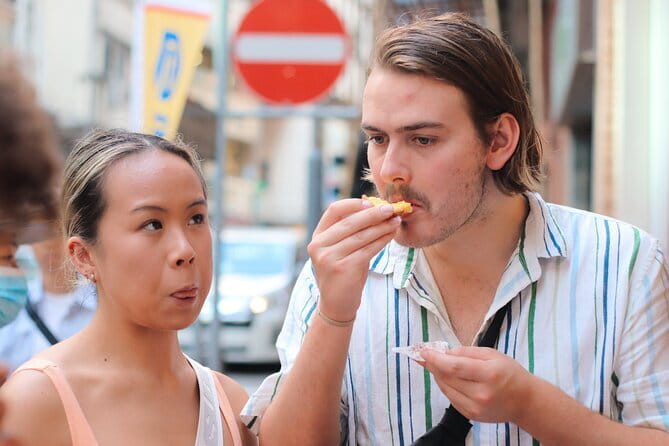
The egg tart is a small pastry with a large place in Hong Kong’s bakery culture. This version is described as a lard-pastry creation developed by Cantonese chefs in the 1920s, with a style distinct from Portuguese custard tarts.
The stop gives you a chance to compare the crisp pastry and smooth custard with egg tarts you may have tried elsewhere. It also highlights how outside influences were adapted locally, rather than copied exactly.
The route contains several sweet or flour-based tastings, including French toast, egg tarts and egg waffles. A visitor who prefers savory food may find the balance a little dessert-heavy, especially if the stops arrive out of traditional meal order.
Herbal tea offers a different taste of Hong Kong
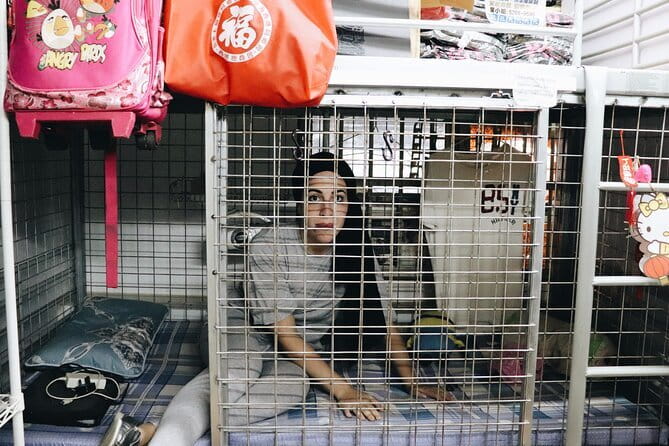
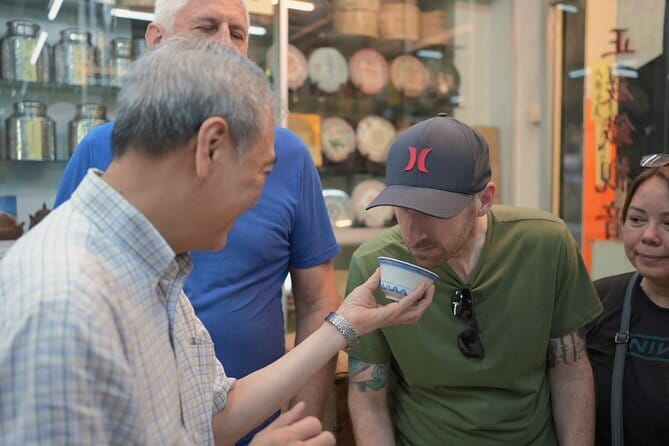
The traditional herbal tea stop is a change of pace. You may try a blend such as Five Flowers tea, linked with the Traditional Chinese Medicine idea of balancing the body and clearing internal heat.
The language around these drinks is cultural rather than medical. You should treat the tea as a traditional food and drink experience, not as a health treatment. The guide explains how shared herbal drinks fit into daily life and how Hong Kong’s hot, humid climate shaped local habits.
This tasting is included, and it adds variety beyond dumplings and pastries. It is also one of the stops where the guide’s translation helps, since the names and purposes of herbal drinks may not be obvious from a shop sign.
Queen’s Road Central finishes the savory course with wonton noodles
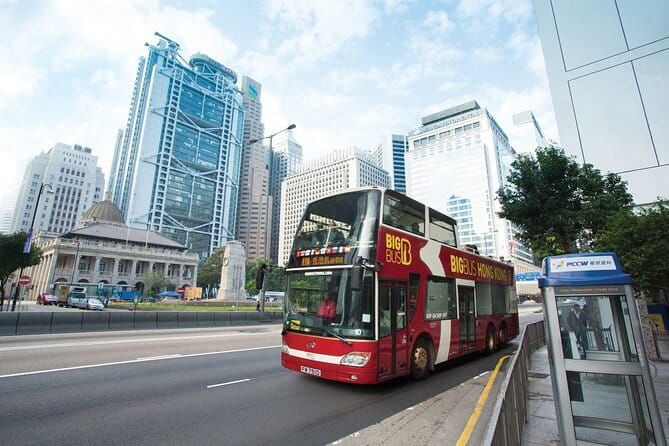
The wonton noodle stop is one of the tour’s central food moments. The dish combines shrimp-filled wontons, noodles and an amber broth made with monkfish. Your guide explains how wonton traditions developed over a long period, including the role of refugee cooks in reshaping the dish for Hong Kong.
The bowl is more filling than the earlier samples and helps turn the afternoon into a proper meal. It is also a useful lesson in texture: springy noodles, soft dumpling wrappers, plump shrimp filling and clear broth all matter.
If you have limited experience with Cantonese food, this is the kind of stop that gives you a reference point for later meals. You can recognize wonton noodles on a menu and understand that different shops may vary the broth, noodles or filling.
Gilman’s Bazaar slows the pace with aged pu-erh
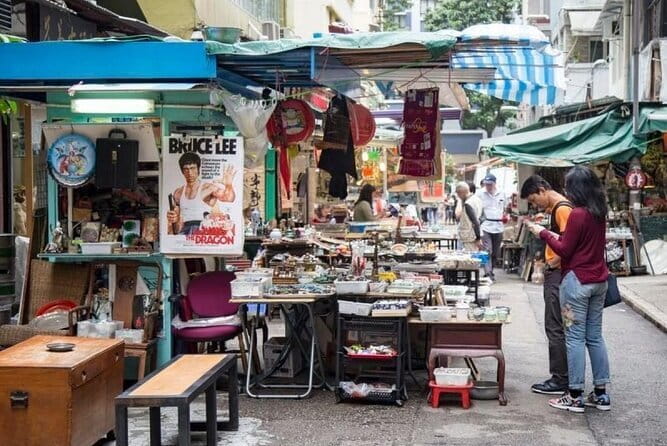
At a Chinese tea house in Gilman’s Bazaar, the focus shifts from quick eating to careful brewing. You may handle aged pu-erh tea cakes valued at around HK$80,000 and see how unglazed clay pots are used for repeated infusions.
The price of the tea cakes is part of the story, showing how age, storage and reputation can shape value in Chinese tea culture. You do not need to be a tea expert to enjoy this stop. The guide explains the ritual and lets you pay attention to aroma, color and changes across several brews.
This is a good counterpoint to the street food. After several bites, a slower drink and a short explanation give the group room to reset. It also makes the tour feel broader than a simple eating route.
Central Market ends with a crisp egg waffle
The final stop is Central Market, where you try Hong Kong’s egg waffle. The snack is known for its crisp lattice shell and softer center, with a shape that makes it easy to share.
The guide connects it with 1950s resourcefulness, when leftover lard and cracked eggs were put to use. Like French toast and milk tea, egg waffles show how Hong Kong cooks turned limited resources and outside ideas into something local.
The tour ends at Central Market, at 93 Queen’s Road Central, between Queen’s Road and Cochrane Street. That location is useful if you want to continue exploring Central afterward, though the route does not include hotel drop-off.
What the $52.51 price gets you
At $52.51 per person, the value depends on how much you eat and how much guidance you want. The price includes the local guide and the tastings, and the route includes enough food to replace a meal for many people.
You are also paying for the planning. The guide chooses the stops, handles language questions and provides background that would take time to assemble on your own. A self-guided afternoon could cost less, but you would need to locate suitable shops, decide what to order and manage Cantonese menus yourself.
The strongest value comes if you are new to Hong Kong or have only a short stay. The tour introduces many classic foods in one afternoon and helps you decide what to seek out later. If you already know Central well and prefer to choose every dish yourself, the fixed route may feel less worthwhile.
Practical details that affect the experience
Wear comfortable shoes. The walking is moderate, but Hong Kong streets can be crowded and the tour includes repeated stops on foot. Bring water, since one food-focused afternoon does not necessarily mean bottled water is supplied.
The tour begins at 3 p.m., making it useful for a first afternoon, a day with a free evening or a long Hong Kong stopover. One person used a nine-hour airport layover for the outing, taking the Airport Express and then continuing to the meeting point. You should allow enough time to reach Central without rushing.
The tour requires favorable weather. If poor weather causes cancellation, you can choose another date or receive a full refund. Otherwise, free cancellation is available up to 24 hours before the start time. Changes or cancellations inside that window are not accepted for a refund.
The activity is not suitable for vegetarians, and halal food is not provided. Seafood and pork are central parts of the route. If you have allergies, raise them before booking. One guide was able to help a person with a tree-nut and peanut allergy, but that should not be treated as a guarantee for every group or stop.
Who should book this food walk
I would choose this tour for a first visit to Hong Kong, especially if you want food and history together. It is also a smart choice for solo visitors, couples and small groups who like meeting other people while eating.
It suits adventurous eaters who want to try familiar classics and a few less familiar drinks and market products. You do not need to be an expert in Chinese cuisine, since the guide explains what you are eating and translates along the way.
I would be more cautious if you are vegetarian, halal, highly selective with seafood or uncomfortable with pork. The route is generous, but its generosity is built around Cantonese dishes that rely on those ingredients.
Should you book it?
Book it if you want a filling introduction to Hong Kong food without spending your first day guessing at menus. The best reasons are the range of tastings, the Central and Sheung Wan route, and the way guides such as Summer, Michael, Alice, Stephen and Wind connect food with the city’s past.
Skip it if you want a carefully ordered restaurant meal, a vegetarian menu or complete control over every stop. For everyone else, arrive hungry but not stuffed, bring water, wear good shoes and treat the three hours as both a meal and a useful orientation to Hong Kong.
FAQ
How long does the Hong Kong street food tour last?
The tour lasts approximately three hours, including walking, food tastings and explanations from the local guide.
What time does the tour start?
The tour starts at 3 p.m.
Where does the tour begin?
The meeting point is Grand Millennium Plaza Garden at Grand Millennium Plaza on Queen’s Road Central in Sheung Wan, Hong Kong.
Where does the tour end?
The tour ends at Central Market, 93 Queen’s Road Central, between Queen’s Road and Cochrane Street.
What food is included?
Tastings may include har gow dim sum, milk tea, peanut butter French toast, char siu, egg tarts, herbal tea, wonton noodles and egg waffles. Tea tasting is also included.
Is the tour suitable for vegetarians?
No. The tour is not suitable for vegetarians, and seafood and pork are important parts of the food served.
Is halal food available?
No. Halal food is not provided on this experience.
How much walking is involved?
A moderate amount of walking is involved. You should have a moderate level of physical fitness and wear comfortable shoes.
What happens if bad weather cancels the tour?
If poor weather causes cancellation, you will be offered an alternative date or a full refund. For normal cancellations, you can receive a full refund if you cancel at least 24 hours before the start time.
More Food & Drink in Hong Kong
- Hong Kong Food Tour: Sham Shui Po District
★ 5.0 · 167 reviews - Hong Kong: Kowloon Street Market & Food Culture Walking Tour
★ 5.0 · 105 reviews - Private Food Tour: Hong Kong Island
★ 5.0 · 78 reviews - Tea Tasting and Pairing Concept Workshop
★ 5.0 · 57 reviews
Newly listed around Hong Kong
- 6 Hour Private Shore Excursion Cruise Ship Pick Up Guided Tour★ 5.0 · 8 reviews
- Hong Kong Disneyland: Non-Stop 2-Day Fun Ticket★ 4.5 · 13 reviews
- Big Bus Hong Kong Panoramic Night Tour by Open-Top Bus★ 3.5 · 53 reviews
- The Dragon’s Back Hiking Tour, Hong Kong★ 5.0 · 54 reviews
- The Authentic Hong Kong – Private Walking Tour★ 5.0 · 55 reviews
- Tea Tasting and Pairing Concept Workshop★ 5.0 · 57 reviews
- Victoria Harbour Yacht Night Cruise – DREAMER:Tourguide & Photos★ 4.0 · 58 reviews
- Organic Xiao Long Bao Soup Dumpling Class & Market Walk★ 5.0 · 62 reviews
Street Food Tours, compared.
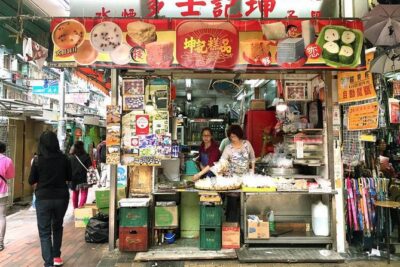
Small Group Kowloon Michelin Rated Street Food and Culture Tour
Read our review →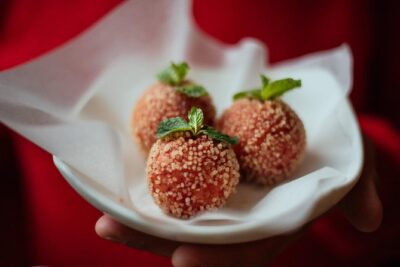
The 10 Tastings of Hong Kong With Locals: Private Street Food Tour
Read our review →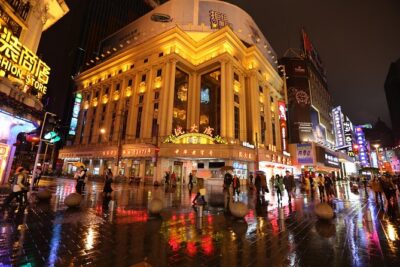
Private Shanghai Evening Street Food Walking and Cruise Tour
Read our review →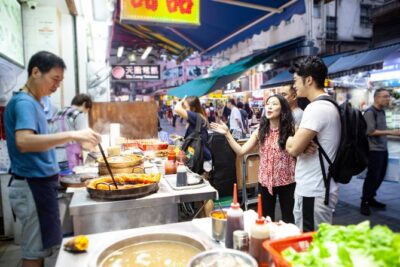
Kowloon Night Street Food Tour with a Local: Private & Customized
Read our review →
Beijing Hutong Food Crawl Delights: Peking duck, Hotpot&More
Read our review →
Off-beaten Route: Shanghai Old Town Discovery&Street Food Tasting
Read our review →
Browse the lists this tour appears in