
Reviewed · CRAFT & CULTURE WORKSHOPS
Mahjong 101 Class for Beginners Workshop
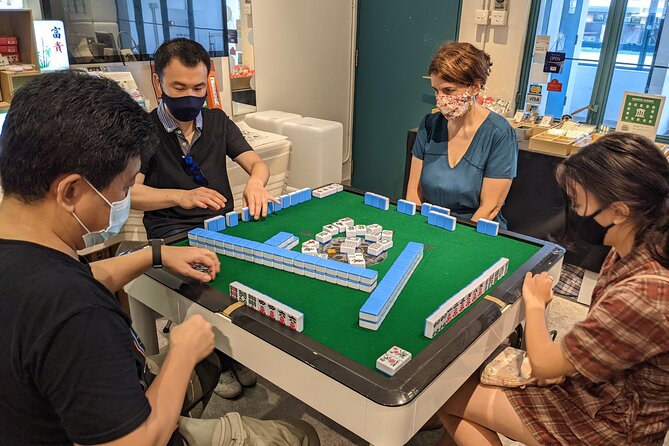
Cantonese mahjong is not just a tile game. At Glocal Mahjong in PMQ, you learn the local version while surrounded by mahjong-themed displays that explain how this familiar Hong Kong pastime fits into daily life and social customs. The two-hour class uses an electronic mahjong table, so the tiles are easy to handle and the lesson can focus on play rather than setup.
I like the small private-group format, since you can ask questions without fighting for the instructor’s attention. I also like the mix of practical play and cultural background. Marco, one of the named instructors, is especially good at explaining how the game began and why it still holds people’s interest.
The main consideration is time. Two hours is enough for a useful introduction, but not enough to turn you into a confident tournament player. The price is also $85.28 per person, so this makes the most sense if you want a hands-on cultural activity, not simply a quick demonstration.
Key points to know before booking
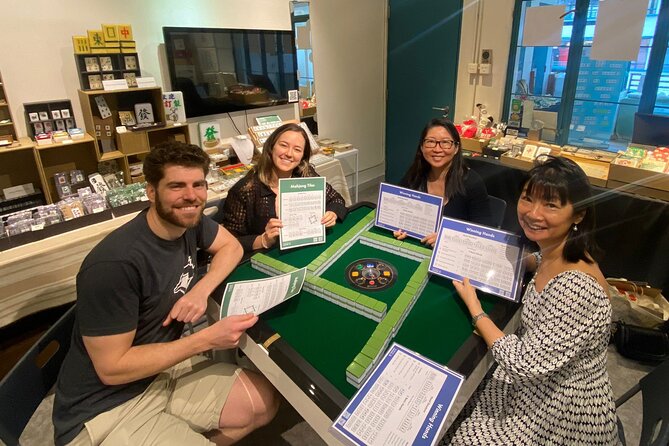
- Cantonese rules: You learn the Hong Kong style of mahjong, including tile recognition, winning a game, etiquette, and basic scoring.
- PMQ setting: The class takes place at Glocal Mahjong, a mahjong shop and small museum inside the restored PMQ complex.
- Electronic table: The provided table helps manage the tiles and keeps the lesson moving for first-time players.
- Private activity: Only your group participates, making it easier to ask questions and practice at your own pace.
- Cultural context: The lesson covers mahjong’s history and its place in Hong Kong life, not just the mechanics of play.
- Two-hour introduction: It is a compact first lesson, best suited to beginners and curious visitors with limited time.
Starting at Glocal Mahjong inside PMQ
Your meeting point is Glocal Mahjong, also written as 一筒 麻雀, in unit S405 on the fourth floor of PMQ at 35 Aberdeen Street in Central. PMQ is a restored historic site with shops, design studios, and cultural spaces, so the class begins in a part of Hong Kong that already rewards a little wandering.
The setting matters. A mahjong lesson in a plain classroom would teach you the rules, but this shop adds a sense of place. Glocal Mahjong functions as both a retail space and a mini mahjong museum, giving you a chance to see the game as part of Hong Kong culture rather than as a set of anonymous playing pieces.
You should allow enough time to find the unit inside PMQ. The property is near public transportation, but the meeting point is on the fourth floor, not directly at a street entrance. If you arrive early, PMQ gives you something useful to do before class, though the activity itself ends back at the same meeting point.
More Craft Workshops in Hong Kong:
- Tea Tasting and Pairing Concept Workshop
★ 5.0 · 57 reviews - Photography Workshop and Photowalk (FIND YOUR DIRECTION)
★ 5.0 · 19 reviews - Introduction to Watchmaking
★ 5.0 · 3 reviews
The first lesson: recognizing 144 possibilities
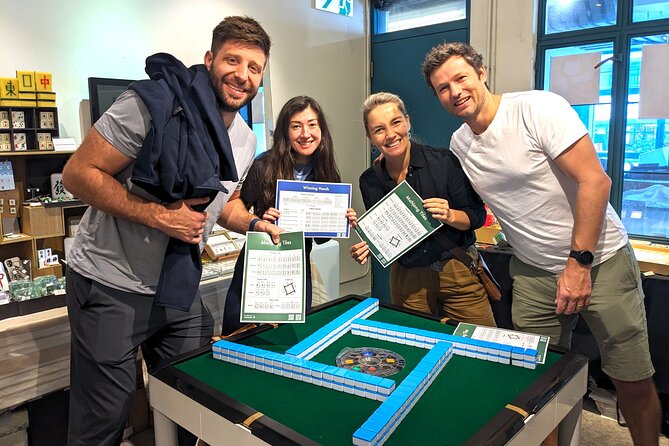
The first task is learning to recognize the tiles. To a newcomer, mahjong pieces can look like a wall of symbols, numbers, and characters. The instructor breaks down the categories so you can tell one tile from another before strategy enters the picture.
That first step is more important than it may sound. Mahjong depends on seeing patterns quickly. If you spend all your time trying to identify a tile, you cannot pay attention to what other players are collecting or decide what to discard.
The class is designed for beginners, so you do not need prior experience. You learn the basic tile groups and how they combine. The goal is not to memorize every possible hand in one sitting. It is to give you enough structure to follow a game and begin making sensible choices.
The electronic table is useful here. It provides the equipment needed for the lesson and reduces the fuss of arranging tiles by hand. That lets the instructor move directly from recognition to play.
Learning how a Cantonese game works
Once the tiles make sense, you move into the basic flow of a Cantonese mahjong game. You learn how players draw, discard, and work toward a winning hand. The class also explains what it means to win, rather than leaving you to guess from the movement around the table.
Cantonese mahjong has its own rules and scoring habits, so this is not simply a generic lesson in a board game. The regional focus gives the experience its strongest cultural value. You are learning a version associated with Hong Kong and southern Chinese traditions, not a universal set of rules that applies everywhere.
You will also see that luck is only part of the story. The tiles you receive matter, but so do the choices you make after the deal. You must decide which tiles to keep, which to discard, and how much information your discards reveal to the other players.
For a first-time player, this is where the game becomes more interesting and more demanding. You may understand the rules before you understand the reasons behind a good move. That is normal. A two-hour class can show you the logic, but repeated play is what builds instinct.
Basic scoring without the usual confusion
Scoring is often the part that frightens beginners away. Mahjong hands can look simple until points, combinations, and winning conditions enter the picture. This lesson covers basic scoring rules, giving you a working foundation without pretending that every calculation will become automatic at once.
The practical benefit is clear. You can finish the class with a better idea of why one hand wins more than another and how certain combinations affect the result. You should not expect a complete scoring reference for every advanced situation, but you will have enough information to understand the stakes of a basic game.
This is also a good place to ask questions. In a larger public class, you might hesitate to stop the lesson when a score makes no sense. Since this activity is private to your group, you can ask the instructor to slow down, repeat a rule, or show another example.
The course description emphasizes basic scoring, and that is the right expectation. If your main goal is advanced competition play, this is only a first step. If you want to sit down with local players and understand what is happening, the material is far more useful.
A few more Hong Kong days worth a look
- Hong Kong: Dolphin Cruise, Big Buddha & Lantau Island Tour
★ 4.2 · 1,512 reviews - Ngong Ping 360: Cable Car Return Tickets & Combos
★ 4.6 · 1,431 reviews - Lantau Island Day Trip – Big Buddha & Tai O
★ 4.5 · 1,328 reviews - Big Bus Hong Kong Open Top Hop-On Hop-Off Sightseeing Tour
★ 4.0 · 1,077 reviews
Etiquette is part of the game
Mahjong is social. You are not simply solving a puzzle on your own. You are playing with other people, watching their choices, managing the pace, and respecting the customs around the table.
The class covers basic etiquette, which adds a valuable local dimension. Rules tell you what is legal. Etiquette tells you how to behave while playing. For a visitor, that distinction can be easy to miss.
You learn why the social side matters and how the game has remained relevant beyond its mechanics. The lesson presents mahjong as a shared activity, one that can bring people together through friendly competition and conversation.
I would especially value this part if you plan to continue playing after Hong Kong. Knowing the basic manners makes it easier to join a game without feeling lost. It also helps you see why mahjong has such lasting appeal in homes, clubs, and community settings.
Marco’s history lesson adds useful context
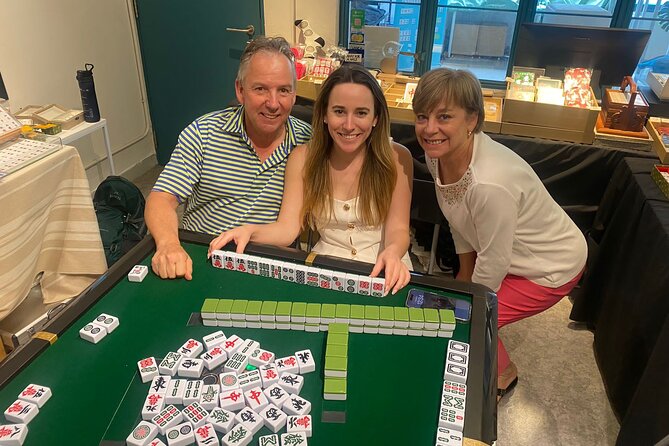
One detail worth noting is Marco’s role as an instructor. His teaching includes background on how the game started, so the class is not limited to instructions such as draw, discard, and count.
That history gives the symbols and rituals more meaning. You begin to understand why mahjong is tied so closely to family gatherings, social time, and local identity. The game is old, but the lesson also looks at modern adaptations and the way mahjong continues to reach new players.
Glocal Mahjong’s larger mission is to make the game accessible to beginners and experienced players alike. For you, that means the class is framed as an introduction to a living tradition, not as a museum talk followed by a staged demonstration.
The balance works well in theory and in practice. You get information, but you also spend time handling tiles and testing what you have learned. That hands-on part is essential. Mahjong is much easier to understand once the rules are attached to actual decisions.
What the electronic table changes
Some people prefer the sound and rhythm of traditional hand-played mahjong. An electronic table offers a different experience. It handles the tile setup and provides a controlled way to teach the game.
For beginners, that is mostly an advantage. You can concentrate on recognizing tiles, following turns, and discussing strategy. You are less likely to lose the thread while the table is being prepared.
The tradeoff is that you may not experience every physical part of a traditional home game. The electronic equipment gives the lesson a modern feel, even as the subject remains deeply traditional. That contrast fits Glocal Mahjong’s interest in both old customs and newer forms of play.
Do not book this expecting a quiet cultural lecture. The point is to participate. You will need to pay attention, make choices, and accept that the first few rounds may feel slow while you work out what each tile means.
Why the private format affects value
At $85.28 per person, the class is not the cheapest activity you can add to a Hong Kong day. Its value comes from the combination of instruction, equipment, cultural explanation, and private access rather than from the two-hour duration alone.
A private activity can be especially worthwhile for couples, families, and small groups with different levels of confidence. One person can ask about scoring while another asks about tile names or etiquette, and the instructor can respond to your group instead of following a fixed lecture.
Group discounts may improve the price for larger parties. Since the listed price is per person, check the final amount for your group before booking. The private format is the key reason to consider it at this rate.
I would compare it with other guided cultural activities in Central. If you want a polished introduction to something strongly connected with Hong Kong life, this offers more participation than a standard sightseeing stop. If you are only mildly curious and dislike games with rules, the cost may feel high for a two-hour lesson.
Who will enjoy this class most
This is a strong fit for first-time players who want a clear introduction without committing to a long course. You do not need to know mahjong in advance, and the lesson covers the basic skills needed to follow a game.
It also suits visitors who have seen mahjong in films, homes, or restaurants and want to understand what is happening. The cultural explanation helps connect the pieces on the table with the wider role of the game in Hong Kong.
Families and small groups may appreciate the private format. Friends can learn together, compete gently, and leave with a shared activity rather than another collection of photographs.
The class is less suitable if you want a fully advanced course. Two hours will not cover every scoring variation or strategic situation. It is also not ideal if you want a purely historical presentation with no participation, since the central purpose is to teach you to play.
Practical details for planning your visit
The activity lasts about two hours and returns to Glocal Mahjong at the end. That makes it easy to place before or after other stops in Central, especially since PMQ itself offers additional places to browse.
The experience is available by mobile ticket, and confirmation is sent within 48 hours of booking, subject to availability. I would avoid leaving this until the last minute, particularly if your Hong Kong schedule is tight.
The activity is described as suitable for most participants and takes place near public transportation. No special skill level is required. The experience is private to your group, though the class still depends on the instructor’s teaching and the group’s willingness to take part.
Free cancellation is available up to 24 hours before the start time for a full refund. Changes or cancellations inside that 24-hour window are not accepted for a refund. The stated policy also says that poor weather can lead to a new date or a full refund, so check the status if conditions are poor on the day.
Should you book the Mahjong 101 class?
Book this if you want a hands-on Hong Kong cultural activity and are willing to spend two hours learning a real game rather than watching a performance. The private format, electronic table, PMQ setting, and Marco’s historical explanation give the class more substance than a quick tourist photo stop.
I would especially recommend it for small groups, curious beginners, and visitors who want an activity that encourages conversation. The $85.28 price is reasonable when you value personal instruction and private access, but less appealing if you only want a short introduction.
Go in expecting a foundation, not mastery. You will learn the tiles, basic winning rules, etiquette, scoring, and the broad strategic ideas that make mahjong so absorbing. If that sounds like the right level, Glocal Mahjong offers a practical way to meet one of Hong Kong’s most recognizable traditions.
FAQ
Where does the Mahjong 101 class take place?
The class takes place at Glocal Mahjong, 一筒 麻雀, unit S405 on the fourth floor of PMQ, 35 Aberdeen Street, Central, Hong Kong.
How long does the activity last?
The class lasts approximately two hours and ends back at the meeting point.
What will I learn during the class?
You will learn to recognize mahjong tiles, understand how to win a game, follow basic etiquette, and apply basic scoring rules. The class also covers mahjong’s history, traditions, modern adaptations, and social role.
Is the activity private?
Yes. Only your group participates in the private tour or activity.
Do I need previous mahjong experience?
No. The class is designed for beginners, and most participants can take part.
Can I cancel for a refund?
You can cancel at least 24 hours before the experience start time for a full refund. Cancellations or changes made less than 24 hours before the start time are not accepted for a refund. If poor weather causes the activity to be canceled, you will be offered another date or a full refund.
Newly listed around Hong Kong
- Full Day Private Trip in Hong Kong( impeccable local )walk tour★ 5.0 · 11 reviews
- Hong Kong Victoria Harbour Sightseeing Cruise Tickets★ 4.5 · 8 reviews
- Hong Kong Guided Dinner + Laser Show Lounge Entry (2023) | 200+ booked★ 3.5 · 7 reviews
- Walking Tour in Hong Kong – Local Experience (New & Best)★ 4.5 · 33 reviews
- Victoria Peak Tram and Sky Terrace 428 Admission Hong Kong★ 4.5 · 33 reviews
- STARLIGHT: Victoria Harbour Night Yacht Tour★ 4.5 · 38 reviews
- Group Vegetarian Food & Cultural Tour★ 5.0 · 16 reviews
- Unveiling Hong Kong Cultural Gems [BRAND NEW 2024]★ 5.0 · 4 reviews
Craft & Culture Workshops, compared.

Xi’an Private Day Tour:Terracotta Army, City Wall, Pagoda&Pottery
Read our review →

Photography Workshop and Photowalk (FIND YOUR DIRECTION)
Read our review →
Half-day Private Mahjong course in Local Tea House
Read our review →2-Hour Private Chinese Ink and Brush Painting Workshop in Shanghai
Read our review →Browse the lists this tour appears in