
Reviewed · WALKING TOURS
Beijing: Peking University Campus Guided Walking Tour
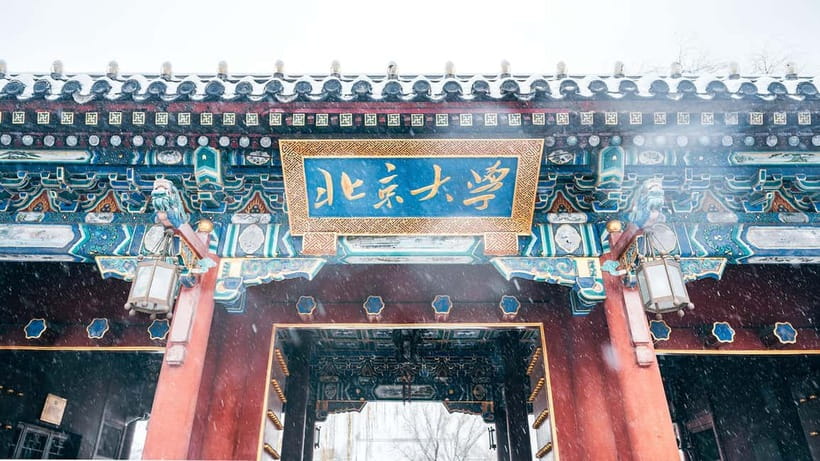
Peking University is not simply a campus with attractive buildings. It is a working center of Chinese scholarship, shaped by old gardens, political change, student traditions, and a long link to Beijing’s imperial past. This two-hour walk takes you from the East Gate to the West Gate, with a current student guide explaining what the landmarks mean rather than merely pointing them out.
I like the focus on Boya Pagoda and Weiming Lake, the classic pair that gives PKU its sense of place. I also like the small-group limit of 10, which should make it easier to ask about student life, the old Yenching University connection, or the symbolism of the gardens. The main consideration is time: two hours is enough for a thoughtful introduction, but not enough to see every corner of this large university.
Key points at a glance
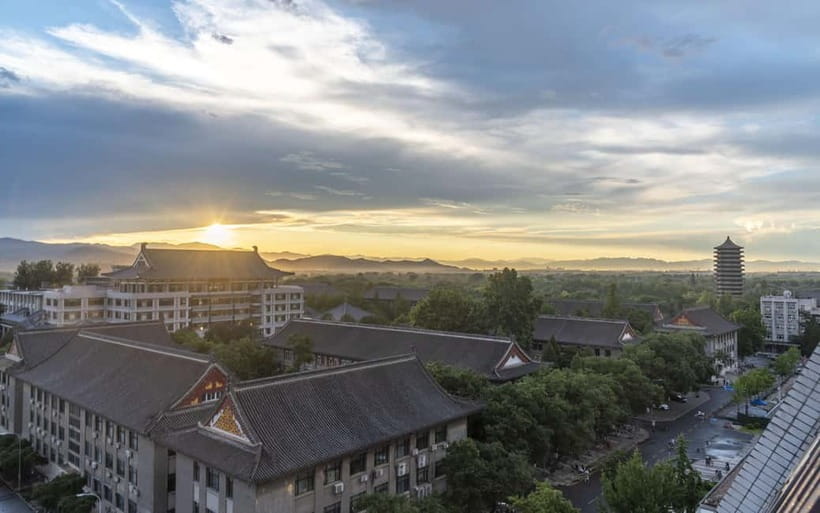
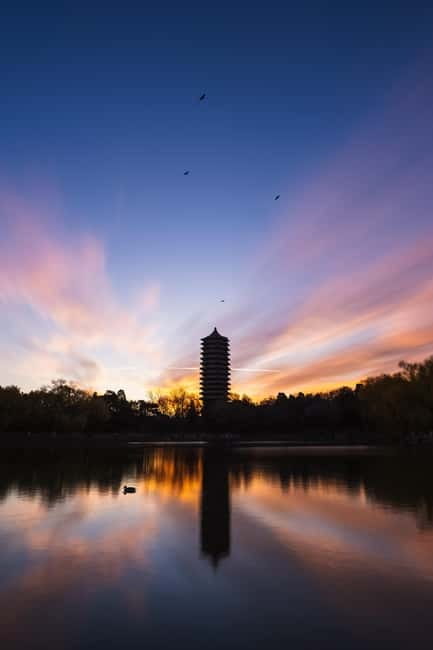
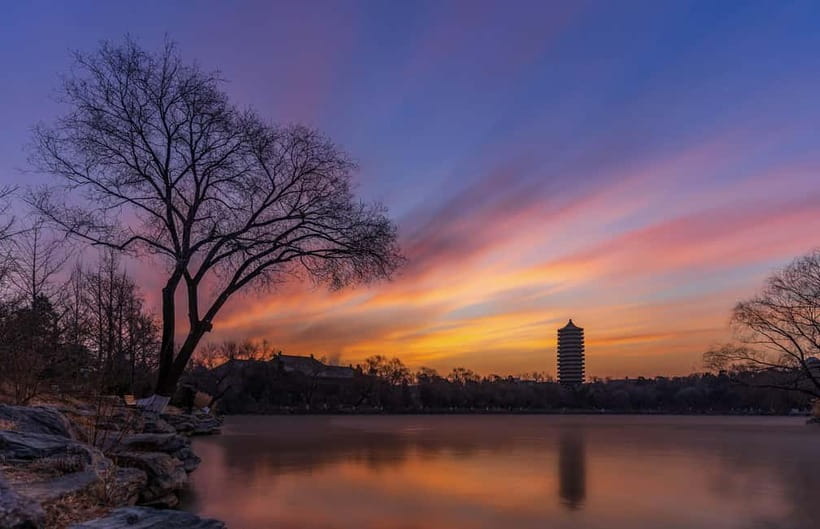
- Boya Pagoda and Weiming Lake: See two of PKU’s best-known sights and learn how they fit into the campus setting.
- A student’s view of PKU: Hear about academic culture, campus traditions, famous alumni, and present-day student life.
- Historic layers: Follow the university’s path from Yenching University to its modern role, with links to Yuanmingyuan and Heshen.
- Traditional design: Look beyond the buildings to understand the meaning of courtyards, gardens, gates, and water.
- A compact walking route: Begin at the East Gate and finish at the West Gate after two hours.
- English and small group: The tour is conducted in English and limited to 10 people.
Why Peking University makes a good walking tour
The appeal of this experience is the setting. Peking University gives you a chance to see a famous Chinese institution as a living place, not only as a name in a guidebook. Students study here, campus routines continue around you, and the old monuments sit beside the facilities of a modern university.
A guide adds useful context. Without one, Boya Pagoda is a photogenic tower, Weiming Lake is a pleasant body of water, and the gates are simply grand entrances. With an explanation of their cultural meaning, the campus becomes easier to read.
You will also hear about PKU’s earlier identity as Yenching University. That past matters because the campus is not a single-period site. Its character comes from several stages of Chinese education and political history, and the tour connects those stages in a manageable way.
The experience should suit you if you like history, architecture, education, or local daily life. It can also help if you are considering a future visit to China as a student, or if you want to understand why PKU carries such weight in Chinese public life.
More Walking Tours in Beijing
- Beijing Hutong Walking Food and Beer Tour at Hidden Restaurants
★ 5.0 · 1,132 reviews - Private Beijing Walking Tour of the Forbidden City with 7 Options
★ 5.0 · 675 reviews - Forbidden City Private Walking Tour with Optional Sights
★ 5.0 · 400 reviews
Meeting the guide at the East Gate
The tour starts at Peking University East Gate, at the stone lion on the right side when you face the entrance. This is a useful meeting point because the instruction is specific. Still, I would arrive early enough to locate the correct lion and settle in before the walking begins.
The tour is offered in English. Henry is the guide named most often in the supplied booking information, and the feedback attached to his tours emphasizes his friendly manner, clear explanations, patience with children, and easy communication. One family specifically appreciated his patience with four children, while another account described him as helping make a long-held wish to see PKU possible.
Those details give you a practical sense of the guiding style. You can expect conversation, questions, and explanations aimed at making the campus understandable. If you are traveling with children, the two-hour length may be easier to manage than a full-day historical tour, though comfortable shoes remain important.
The small group is limited to 10 people. That does not make the walk private, but it should feel more personal than a large procession. You have a better chance to hear near a landmark and ask about student traditions or campus life.
Boya Pagoda and Weiming Lake
Boya Pagoda is one of the visual anchors of the walk. The century-old structure gives the campus an unmistakable old-Beijing feel, especially beside Weiming Lake. The tour treats the pagoda as more than a photo stop, placing it within PKU’s history and design.
Weiming Lake is another major pause. Its water, paths, and surrounding buildings show how the university uses nature as part of the setting for study. The point is not simply that the lake looks pleasant. You will learn how traditional Chinese design links water, gardens, buildings, and movement through space.
This is one of the strongest parts of the walk for anyone interested in photography. Bring a camera, as suggested for the tour, but try to listen before turning every stop into a picture break. The guide’s explanation is what gives the views their meaning.
You should also keep your expectations realistic. The tour does not promise extended free time around the lake, and two hours must cover several landmarks. You may get a good look and useful background rather than a slow, unhurried circuit of every lakeside path.
The Bell Pavilion, Hua Biao, and Qilin statues
The Bell Pavilion adds another historical marker to the route. Bells in Chinese cultural settings can carry links to ceremony, time, learning, and public life. Here, the guide explains the site’s place within PKU rather than leaving you to guess why it matters.
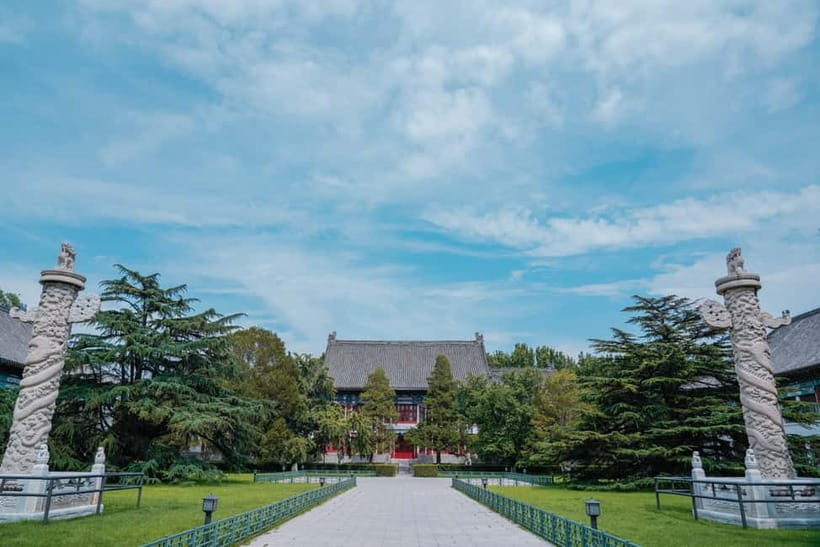
The Hua Biao ornamental pillars and Qilin statues bring in another layer of traditional symbolism. These are the kinds of details that are easy to pass without a guide. Their forms are not random decoration, and the tour uses them to explain how authority, protection, good fortune, and cultural memory can appear in a campus setting.
For me, this is where the walk earns its price. You are not only collecting a list of sights. You are learning how to look at them. A short explanation can turn a statue or pillar from background scenery into a clue about the values the university wants to express.
The exact amount of time at each place will depend on the group and campus conditions. The tour description promises the landmarks and their meaning, but it does not promise a long stop at each one. If you prefer a slow architectural study, you may want to treat this as an introduction rather than a complete campus survey.
Same base, a completely different kind of day out:
- From Beijing: Mutianyu Great Wall Tours with Options
★ 4.9 · 9,216 reviews - Beijing: Forbidden City Tour(Group/Private)-Tickets Included
★ 4.8 · 7,974 reviews - Beijing: T-Square & Forbidden City Group or Private Tour
★ 4.8 · 4,446 reviews - Beijing: Mutianyu Great Wall Daily Tour with Ticket & Lunch
★ 5.0 · 3,056 reviews
The library and Cai Yuanpei’s statue
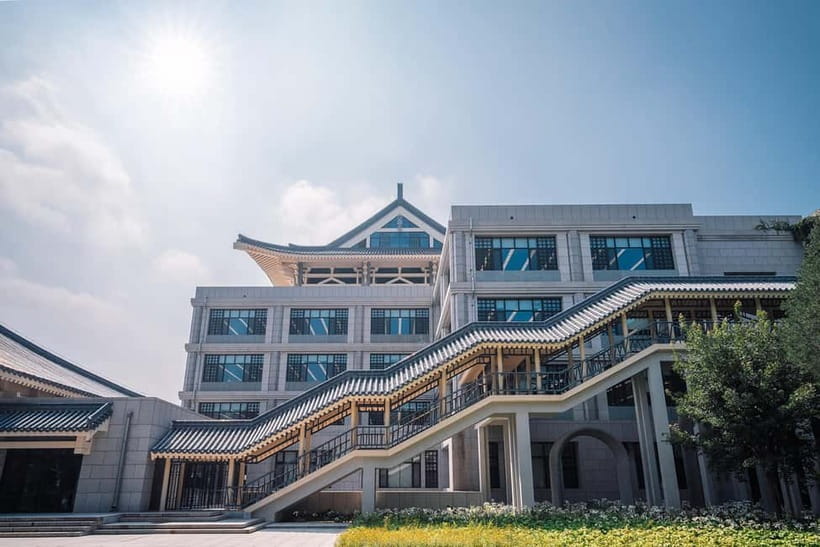
The Peking University Library is one of the tour’s major academic symbols. Its inclusion shifts the focus from old gardens and monuments to the university’s core purpose: scholarship. You will explore the area around this important institution while hearing about PKU’s academic spirit.
The information provided does not specify how much indoor access is available, so I would not book this expecting a lengthy interior library visit. Think of the library as an important campus stop and a chance to connect the physical setting with the work done there.
The Statue of Cai Yuanpei adds a personal figure to the story. Cai Yuanpei was a revolutionary former president of PKU, and the stop gives the tour a way to discuss leadership, education, and the university’s changing role in China.
This is useful context because a university’s story is not only about buildings. It is also about the people who shaped its standards and public identity. A guide can explain why Cai Yuanpei remains important and how his connection fits into PKU’s larger academic story.
Yenching University, Yuanmingyuan, and Heshen
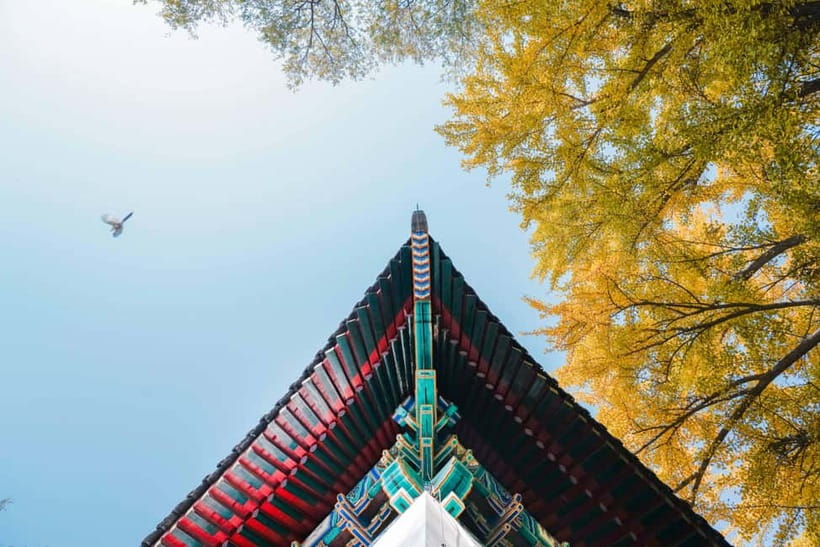
One unusual feature of this walk is its attempt to connect PKU with places and people beyond the immediate campus. You will hear about the university’s roots as Yenching University, its ties to the Old Summer Palace, also called Yuanmingyuan, and its connection to Heshen, the notorious Qing Dynasty official.
These links give the tour more reach than a simple campus orientation. You are not just hearing when a building was made. You are following the way land, politics, education, and reputation overlap in Beijing.
The Heshen reference may be especially interesting if you already know something about Qing history. If not, the guide’s explanation should help place him within the period without requiring you to arrive as a specialist. The same goes for Yuanmingyuan. The tour uses these connections to show that PKU’s setting carries memories from before the university itself.
I appreciate this kind of context because it prevents the campus from feeling sealed off from the rest of Beijing. The university belongs to a city with imperial sites, political upheaval, and changing ideas about education. A short walk can only sketch those connections, but the sketch is likely to make later sightseeing more meaningful.
Reading the traditional Chinese gardens
The gardens and courtyards are not filler between the major stops. Their layout reflects a traditional preference for harmony between nature and scholarship. You will learn to notice the relationship between water, planting, buildings, open space, and the direction of movement.
That does not mean every garden feature has one simple meaning. It means the campus can be read as a planned setting where learning takes place alongside carefully shaped natural elements. The guide’s job is to point out those relationships and explain the ideas behind them.
This is a good part of the tour for architecture lovers, but it also helps anyone who wants a break from standard monument sightseeing. You are looking at how a place feels, how it frames a view, and how buildings guide your attention.
Keep in mind that this remains a walking tour, not a formal architecture course. The explanations will be tied to the route and landmarks. If you want technical detail about construction dates or architectural styles, ask questions as you go.
From the East Gate to the West Gate in two hours
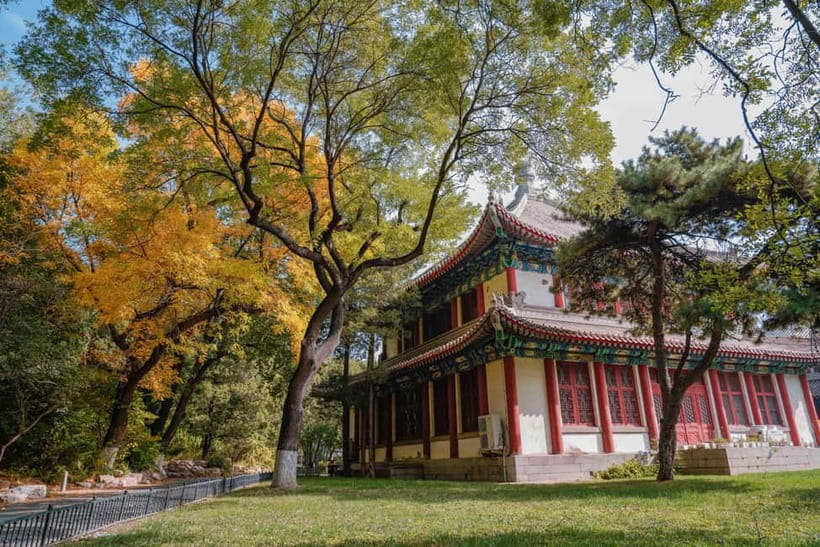
The route is straightforward: meet at the East Gate and finish at the West Gate after about two hours. That point-to-point format can work well in a busy Beijing schedule because you do not need to return to the starting gate.
Transportation to and from the university is not included. You arrange your own way to the East Gate and onward from the West Gate. Plan your wider day around that fact, especially if you have another timed activity afterward.
The campus walk itself requires comfortable shoes. The route includes several landmarks, and the guide may pause often for explanations, but you should still expect to be on your feet for most of the two hours. Bring a camera if you want photos, and keep your hands free enough to follow the guide through the grounds.
The two-hour duration is a sensible middle ground. It is long enough to move beyond a quick introduction, but short enough for families and visitors with a packed Beijing itinerary. The tradeoff is that you will not have unlimited time for quiet sitting, independent wandering, or every academic building.
Is the $39 price fair?
At $39 per person, this is not the cheapest way to walk across a university campus. You are paying for the guide’s explanations, the organized route, English-language communication, and a small group capped at 10.
The value depends on your interests. If you would be satisfied with photographs of the lake and pagoda, you could simply seek out campus views on your own, assuming you can arrange access. If you want to understand the symbols, historical links, and academic culture, the guide makes the visit more useful.
The price also buys efficiency. In two hours, you cover the main landmarks from East Gate to West Gate without having to research the campus in advance or work out how the pieces fit together. For a first Beijing visit, that structure has real value.
The current experience carries a 5 out of 5 score from nine published ratings. The strongest praise centers on Henry’s friendly, clear, patient guiding and his ability to make the visit enjoyable for both adults and children. One important note is that campus visiting hours can limit how much time you have to explore, so do not assume the tour can simply run longer if you want extra stops.
You can cancel up to 24 hours before the start for a full refund, and the reserve-now, pay-later option gives you some flexibility. Those terms are helpful if your Beijing plans are still shifting, but they do not change the basic need to reach the East Gate on time.
Who should book this campus walk?
I would recommend this experience to:
- History fans who want links between PKU, Yenching University, Yuanmingyuan, and Qing-era Beijing.
- Architecture and garden lovers who enjoy design details, courtyards, water, pillars, statues, and planned views.
- Future students and families who want a look at academic culture and everyday campus life.
- Photographers looking for Boya Pagoda, Weiming Lake, and traditional campus details.
- First-time visitors to PKU who want a clear route and an English-speaking guide.
- Families with older children who can handle two hours of walking and listening.
I would think twice if you want a long independent wander or a full academic tour with extensive interior access. The route is focused, time is limited, and transportation is your responsibility.
Should you book the Peking University tour?
Book it if you want to understand why Peking University feels important, not merely take pictures of a famous campus. The combination of Boya Pagoda, Weiming Lake, the Bell Pavilion, traditional gardens, Cai Yuanpei, and the library gives you a well-rounded introduction in a short time.
The best reason to go is the guide’s interpretation. Henry’s repeated high marks for friendly communication, clear explanations, and patience are a useful sign, especially for families. The small group also supports a more direct exchange than a large sightseeing walk.
Skip it if your main goal is unrestricted exploration or a detailed tour of the library interior. For everyone else, $39 is a fair price for a compact English-language introduction to one of Beijing’s most important places of learning.
FAQ
How long does the Peking University walking tour last?
The tour lasts two hours.
Where does the tour start?
It starts at Peking University East Gate, at the stone lion on the right side when facing the gate entrance.
Where does the tour finish?
The tour finishes at Peking University West Gate.
What language is the tour conducted in?
The tour is conducted in English.
How many people are in the group?
The group is limited to 10 participants.
What landmarks are included?
The route includes Boya Pagoda, Weiming Lake, the Bell Pavilion, Hua Biao ornamental pillars, Qilin statues, the Peking University Library, and the Statue of Cai Yuanpei.
Does the tour discuss Yenching University?
Yes. The guide explains PKU’s development from its roots as Yenching University.
Does the tour include transportation?
No. Transportation to and from Peking University is not included.
What should I bring?
Bring comfortable shoes for walking and a camera if you want photographs.
Can I cancel for a full refund?
Yes. You can cancel up to 24 hours in advance for a full refund.
Newly listed around Beijing
- Beijing: Summer Palace Ticket; fast and smooth★ 3.6 · 38 reviews
- Beijing: Summer Palace Entry Ticket★ 3.3 · 3 reviews
- Beijing: Summer Palace Highlight Walking Tour★ 4.8 · 25 reviews
- Beijing: Summer Palace, Sacred Road&Ming Tombs Private Tour★ 5.0 · 8 reviews
- Beijing: Summer Palace 3 Hours Guided Tour with Entry Ticket★ 4.8 · 4 reviews
- Beijing Private Tour: Summer Palace, Panda House and Options★ 5.0 · 21 reviews
- Beijing: Summer Palace Entrance(combo/tour opt)★ 4.7 · 6 reviews
- Beijing Royal Banquet with Chinese culture prefermance★ 5.0 · 3 reviews
Walking Tours, compared.
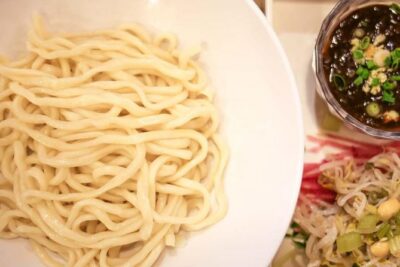
Beijing Hutong Walking Food and Beer Tour at Hidden Restaurants
Read our review →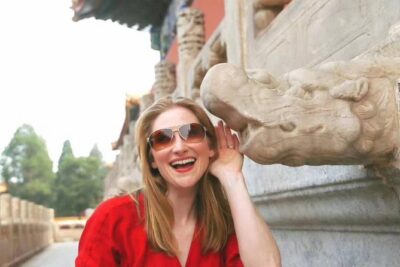
Private Beijing Walking Tour of the Forbidden City with 7 Options
Read our review →
Dark Side of Hong Kong – Kowloon Caged Homes Walking Tour
Read our review →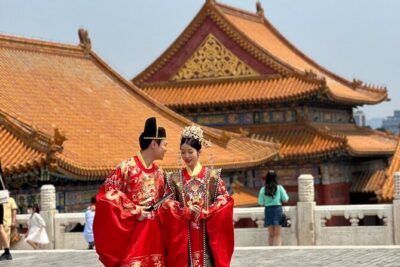
Forbidden City Private Walking Tour with Optional Sights
Read our review →
Introduction to Hong Kong: Central Tip Based Walking Tour
Read our review →
Shanghai Highlights Walking Tour With A Real Local
Read our review →Browse the lists this tour appears in