
Reviewed · MUSEUMS
Beijing Half Day: National Museum of China In-depth Tour with Subway Transfer
Beijing’s National Museum holds a sweeping story of China, from prehistoric pottery and jade dragons to imperial bronzes and Buddhist sculpture. This four-hour private tour gives you a guide to connect the objects, rather than leaving you to wander a huge building with little context.
I like two things here: the guide handles the museum ticket booking, which can be tricky, and the tour keeps its attention on important objects such as the Simuwu Ding, Siyang Fangzun, and Song Dynasty Guanyin. The main drawback is time. The museum is vast, so four hours gives you a strong introduction, not a complete visit.
- Ancient China in two focused hours: See objects ranging from prehistoric relics to the 1911 Revolution.
- A private guide for your group: Only your party takes part, with English-speaking guides including Mike, Cathy, William, Diana, Herbie, and Michael.
- Museum entry arranged for you: This is useful when tickets are difficult to secure independently.
- Hotel pickup at 8:30 a.m. or 1 p.m.: The half-day schedule fits neatly around other Beijing plans.
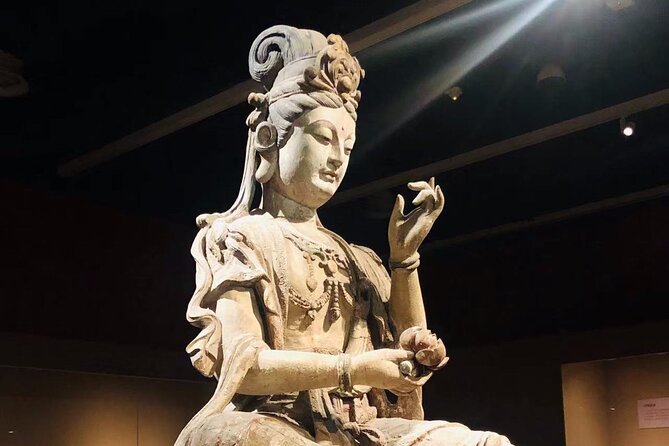
- Buddhist art after the main gallery: Allow about an hour for statues, including a notable painted wooden Guanyin from the Song Dynasty.
- One-way transport included: The tour provides a taxi transfer, while the exact route may use the subway or taxi.
The National Museum, One Building With Five Thousand Years Inside
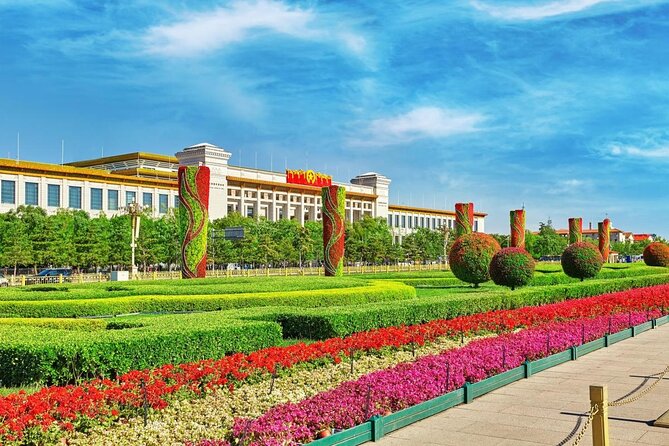
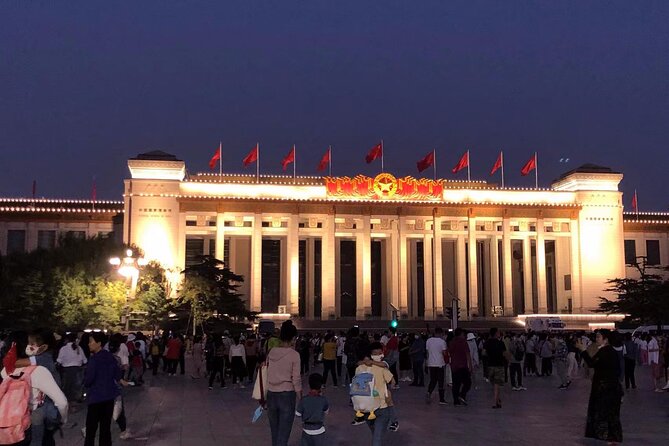
The National Museum of China sits in the heart of Beijing, and its scale can feel almost absurd. You are not entering a small local museum with a tidy trail from room one to room six. You are entering a major national institution with more than 1.4 million relics in its collection and close to 6,000 objects classified as first-class cultural relics.
That number is useful mainly because it tells you what not to expect. No four-hour visit can cover the whole place. The value of this experience is selection. Your guide gives you a route through key displays and explains why certain objects matter.
The private format helps here. You are not tied to a large group or a fixed commentary pace. You can ask why a ritual vessel mattered, how a jade object was made, or what changed between one dynasty and the next. Guides such as Mike and Cathy are repeatedly praised for clear English, patience, and an ability to explain difficult subjects in simple terms.
The tour begins with hotel pickup at either 8:30 a.m. or 1 p.m. You then travel to the museum by subway or taxi, with a one-way taxi transfer listed among the inclusions. Since the transport wording allows for either option, confirm the exact arrangement when you book.
Ancient China: Jade, Bronze, Pottery, and Early Technology
The first major section takes about two hours and focuses on the Ancient China exhibition. This is the heart of the visit, especially if you want a quick but meaningful introduction to Chinese civilization.
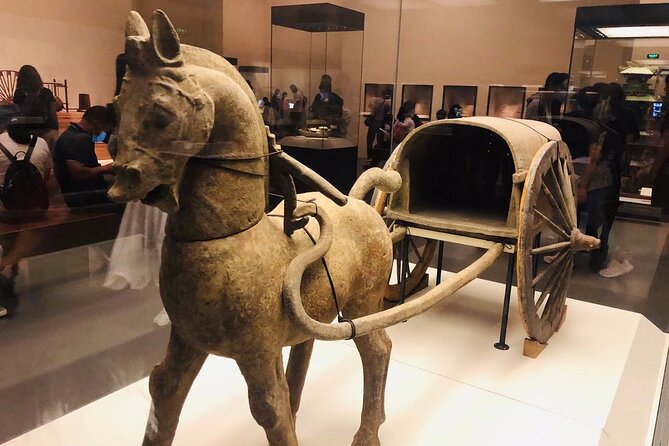
The displays reach from prehistoric periods, including objects associated with periods millions of years ago, through the 1911 Revolution. That is a huge span, but the objects make the timeline easier to grasp. You see everyday items, ritual pieces, weapons, religious art, and objects connected with political power.
One early highlight is painted pottery. Some vessels carry designs that still raise questions about their meaning and use. The point is not simply that they are old. Their shapes and decoration show how much skill and symbolic thought existed long before China’s imperial dynasties.
The jade dragon is another memorable stop. It is often described as China’s first dragon, and it gives you a useful way to think about the long life of dragon imagery in Chinese culture. Your guide can place it in the wider development of jade carving and early belief.
The exhibition also includes an ancient refrigerator dating from about 2,000 years ago. That detail brings the past down to earth. Bronze ritual vessels may command attention, but an early cooling device reminds you that historical objects also reveal practical concerns such as food storage and daily life.
More Museums in Beijing
- Beijing: Tianmen Square, Forbidden City & Royal Museum Tours
★ 4.6 · 1,288 reviews - Beijing:Jingshan Park (Palace Museum Garden) Ticket
★ 4.5 · 185 reviews - Beijing’s Forbidden City with Special Viewing of Treasure Gallery and the Great Wall Ruins at Badaling
★ 4.5 · 24 reviews
The Simuwu Ding and Siyang Fangzun
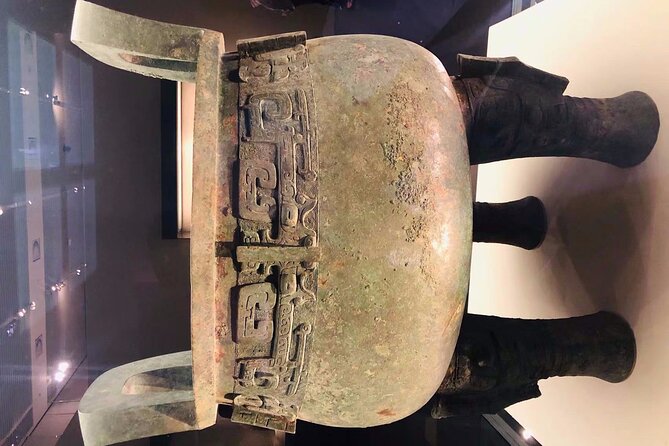
Two major bronze objects deserve special attention. The first is the Simuwu Ding, also called the Hall Treasure. It was unearthed in Henan Province in 1939 and is one of the objects that gives the Ancient China display its force.
A ding was a ritual vessel, but it was not just a cooking pot or serving dish. Its size, decoration, and weight signaled authority. Standing before it, you can begin to see how bronze technology, ceremony, and political power were tied together.
The Siyang Fangzun offers a different visual experience. Its four sheep heads face the four directions, giving the vessel an unusually bold form. A guide can help you notice the design details instead of treating it as one more large bronze object in a crowded case.
These pieces are good examples of why a private guide adds value. Museum labels can tell you an object’s date and material. A strong guide explains how it functioned, why it was made, and what it reveals about the society that produced it.
Sanxingdui and the Challenge of Reading Ancient China
The Sanxingdui material adds mystery and variety to the Ancient China route. This site is known for distinctive objects and a culture that does not fit neatly into the most familiar story of early Chinese dynasties.
You may find masks, unusual forms, and striking designs that look unlike the restrained bronze pieces you have just seen. The important point is not to turn Sanxingdui into a puzzle with one easy answer. It is a chance to see that ancient China included different regional cultures and artistic traditions.
This is where your guide’s explanation matters most. A quick walk through the cases can leave you with a few dramatic images but little sense of place or meaning. Mike, Cathy, and other guides used on this tour are described as able to connect ancient objects with the broader development of Chinese culture.
The gallery can also be crowded. One useful advantage of a guide who knows the museum is route control. A guide can take you to important pieces when a room is busy, adjust the pace, and avoid spending too much time on less important displays.
One Hour With Buddhist Sculpture and Guanyin
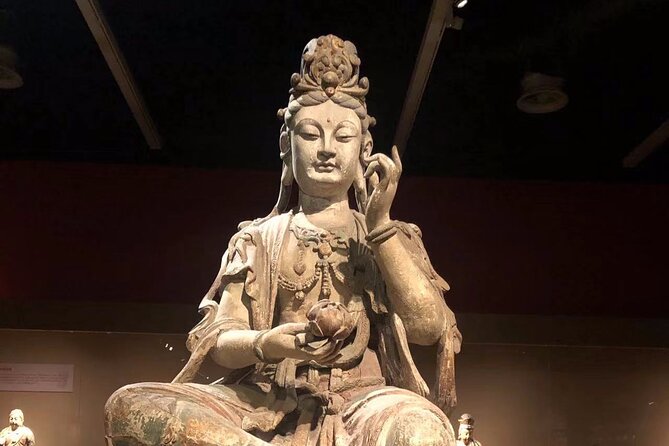
After the Ancient China section, the tour usually spends about an hour in the Ancient Buddha Statue exhibition room. This changes the mood. You move from early ritual objects and bronze technology to religious sculpture, painted surfaces, and expressions intended to convey calm.
The most specific highlight is a painted wooden statue of Guanyin from the Song Dynasty. Guanyin is associated with compassion, and the statue’s quiet expression is part of its appeal. The comparison to the Mona Lisa is a little grand, but it explains why the piece makes such a strong impression. Look closely at the face, posture, and painted finish rather than rushing past it as one more religious figure.
This gallery also gives you a useful lesson in materials. Bronze, stone, and wood age in different ways, and painted wood can preserve a sense of softness that is missing from many hard-surface sculptures. Your guide can point out details that are easy to miss when you are trying to take in an entire room.
The itinerary allows additional museum viewing if time permits, including a food culture exhibition. Do not expect to see every gallery. The National Museum has enough material for several full days, and the four-hour plan works best when you accept that it is a focused introduction.
Same base, a completely different kind of day out:
- From Beijing: Mutianyu Great Wall Tours with Options
★ 4.9 · 9,216 reviews - Beijing: Forbidden City Tour(Group/Private)-Tickets Included
★ 4.8 · 7,974 reviews - Beijing: T-Square & Forbidden City Group or Private Tour
★ 4.8 · 4,446 reviews - Beijing: Mutianyu Great Wall Daily Tour with Ticket & Lunch
★ 5.0 · 3,056 reviews
Why the Guide Makes a Difference
The strongest part of this experience is not simply getting inside the museum. It is having someone shape the visit around a manageable set of objects.
Mike is described as particularly strong on Chinese history and as an entertaining guide who can move from ancient subjects to modern China. Cathy is praised for excellent English, humor, energy, and a friendly manner. William is noted for clear English and broad conversation beyond the exhibits. Diana is described as friendly and good at bringing objects to life, while Herbie is known for being helpful and easy to spend time with.
Guide quality can vary from person to person, so I would not book expecting a particular guide unless the provider confirms one. Still, the repeated strengths are useful: good spoken English, patience, historical knowledge, and the ability to answer questions.
A private guide also lets you set the balance. If you are fascinated by bronzes, you can spend longer with the Simuwu Ding and Siyang Fangzun. If Buddhist art matters more to you, you can ask for more time in that room. If you are new to Chinese history, ask your guide to keep the timeline simple and emphasize the major turning points.
Four Hours, Two Start Times, and a Large Museum
The schedule is straightforward. You meet at your hotel lobby at 8:30 a.m. or 1 p.m., travel to the National Museum, spend roughly two hours in Ancient China, then about one hour with Buddhist sculpture and other selected exhibits.
That leaves some flexibility for transfers, security, orientation, and questions. Do not read the four-hour duration as four full hours of gallery time. The museum is large, and moving through it takes time.
The morning departure is a good choice if you want to keep the rest of your day open. The afternoon departure may suit you if you have already visited another Beijing sight in the morning or prefer a slower start.
Crowds can affect the experience. One account describes the museum as extremely busy, while the guide was still able to work around packed rooms. That is an important practical benefit. A crowded museum can make an unguided visit tiring, especially when you are trying to read labels and find the most important displays at the same time.
Is $114 a Fair Price?
At $114 per person, this is not the cheapest way to enter a Beijing museum. You are paying for a private English-speaking guide, hotel pickup, one-way transport, and ticket booking, not just admission.
The ticket booking is a meaningful part of the value. The museum’s online reservation process can be difficult, particularly because tickets open only seven days ahead and the booking system may be in Chinese. The tour does not guarantee every requested date, but the provider can offer alternatives if the preferred day is unavailable.
The price makes the most sense for you if:
- You have limited time in Beijing.
- You want historical context rather than a self-guided walk.
- You are traveling with family or friends and can share the private guide experience.
- You find Chinese-language ticket systems frustrating.
- You want hotel pickup and help with the route.
It is less compelling if you enjoy spending an entire day in a museum at your own pace or already have strong knowledge of Chinese art and history. In that case, arranging entry yourself and using the museum’s displays independently may cost less, assuming you can secure a ticket.
Group discounts are available, which can improve the per-person value for a larger party. Gratuities are not included and are recommended.
Who Should Book This Half-Day Visit?
I would recommend this tour to first-time visitors who want a clear introduction to China’s long past without giving up a full day. It also suits anyone who finds large museums overwhelming. You get a route, a human explanation, and time to ask questions.
Families may appreciate the short format. Children can lose interest when a museum visit becomes an endless march through galleries, while selected objects such as dragons, animal-headed bronzes, ancient cooling equipment, and expressive Buddha statues give the visit some visual variety.
This is also a useful choice for visitors with a strong interest in Chinese culture but limited time between other Beijing sights. The tour does not try to cover every period equally. It gives the most attention to Ancient China, then adds Buddhist sculpture and perhaps another room.
You should be comfortable with a lot of historical information in a short period. Even with a good guide, the timeline from prehistoric cultures to 1911 is demanding. Take notes, ask for comparisons, and do not hesitate to say when you want a slower explanation.
Booking Details You Should Know
The tour is private, so only your group participates. Most people can take part, and mobile tickets are available. Hotel pickup is included, along with national museum ticket booking and a single-way taxi transfer.
The product title refers to subway transfer, while the inclusion list specifies taxi transfer and the itinerary says subway or taxi. That small mismatch is worth clearing up before the day of your visit, especially if you need a precise transport plan.
Free cancellation is available if you cancel at least 24 hours before the local start time. A cancellation within 24 hours, or a late change, is not refundable. Confirmation is provided when you book.
Should You Book the National Museum Tour?
Book it if you want the National Museum to make sense, not simply to say you entered it. The combination of ticket help, hotel pickup, private guiding, and a focused route is valuable in a huge and sometimes crowded museum.
The best reason to choose it is the guide. Mike, Cathy, William, Diana, Herbie, and Michael are associated with the experience, and the key qualities to look for are clear English, patience, and the ability to explain objects without drowning you in dates.
Skip it if you prefer several unhurried days of independent museum browsing. But for a first visit, a four-hour private introduction gives you the essential ancient galleries, a taste of Buddhist sculpture, and a much better sense of how the objects fit together. At 4.9 out of 5 from 70 ratings and 99 percent recommended, it is a strong option for making a very large museum manageable.
FAQ
How long does the National Museum tour last?
The experience lasts approximately four hours. About two hours focus on the Ancient China exhibition, followed by about one hour in the Ancient Buddha Statue exhibition room and time for transfers and additional viewing.
What time does the tour start?
Hotel pickup is offered at 8:30 a.m. or 1 p.m.
Is hotel pickup included?
Yes. The guide meets you in your hotel lobby.
Is transportation included?
Yes. A single-way taxi transfer is included. The itinerary also states that the guide may travel with you by subway or taxi, so confirm the exact transport arrangement when booking.
Is the museum admission ticket included?
Yes. National Museum ticket booking and admission are included.
Is this a private tour?
Yes. Only your group participates in the activity.
Which parts of the museum will I see?
The main focus is the Ancient China exhibition and the Ancient Buddha Statue exhibition room. If time allows, you may also see other areas, such as the food culture exhibition.
Can I cancel for a full refund?
Yes, if you cancel at least 24 hours before the experience start time. Cancellations or changes made less than 24 hours before the start time are not accepted for a refund.
More Half-Day Trips in Beijing
- Private Half-Day Mutianyu Great Wall Tour including Round Way Cable Car or Toboggan
★ 5.0 · 115 reviews - Half Day Private Tour to Summer Palace in Beijing
★ 5.0 · 101 reviews - Half-Day Private Beijing Hutong Walking Tour with Dim Sum
★ 5.0 · 48 reviews - Half-Day Mini Group Xian Tour to Terracotta Warriors Museum
★ 5.0 · 467 reviews
Newly listed around Beijing
- Beijing: Summer Palace Ticket; fast and smooth★ 3.6 · 38 reviews
- Beijing: Summer Palace Entry Ticket★ 3.3 · 3 reviews
- Beijing: Summer Palace Highlight Walking Tour★ 4.8 · 25 reviews
- Beijing: Summer Palace, Sacred Road&Ming Tombs Private Tour★ 5.0 · 8 reviews
- Beijing: Summer Palace 3 Hours Guided Tour with Entry Ticket★ 4.8 · 4 reviews
- Beijing Private Tour: Summer Palace, Panda House and Options★ 5.0 · 21 reviews
- Beijing: Summer Palace Entrance(combo/tour opt)★ 4.7 · 6 reviews
- Beijing Royal Banquet with Chinese culture prefermance★ 5.0 · 3 reviews
Museums, compared.
Tianmen Square, Forbidden City & Royal Museum Tours
Read our review →
Half-Day Mini Group Xian Tour to Terracotta Warriors Museum
Read our review →
Beijing:Jingshan Park (Palace Museum Garden) Ticket
Read our review →
Private Chengdu Day Tour: Giant Pandas and Jinsha Site Museum
Read our review →
Private Xi’an Tour: Terracotta Warriors, Hanyangling Museum, Cave Homes
Read our review →
Terracotta Warriors Museum Ticket with Professional English-speaking tour guide
Read our review →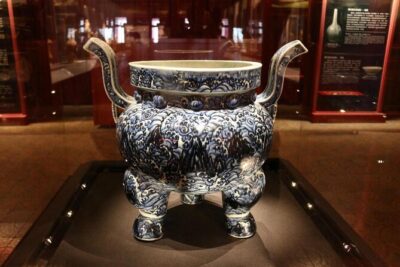
Beijing’s Forbidden City with Special Viewing of Treasure Gallery and the Great Wall Ruins at Badaling
Read our review →Browse the lists this tour appears in