Reviewed · FULL-DAY
Private Full-Day Tour: Shanghai Past and Present
Shanghai changes character every few blocks. This private full-day tour lets you see quiet Ming-era gardens, an active Buddhist temple, old neighborhood homes, colonial waterfront buildings, and modern shopping streets in one carefully packed day. Guide Jack has earned particular praise, and the private format gives your group room to ask questions and set the pace.
I like the contrast between Yuyuan Garden and the Bund, and I like having transport between far-flung sights instead of piecing the day together on the metro. Lunch, admission tickets, and hotel pickup also make the $147.20 price easier to justify. The tradeoff is a busy schedule, with some stops lasting less than an hour and only limited time for serious shopping.
Key points at a glance
- Four centuries of Shanghai in one day: Move from the 1559 Yuyuan Garden to modern Nanjing Road.
- A genuinely private outing: Only your group joins the guide, with hotel pickup and drop-off included within the Middle Ring Zone.
- Strong architectural contrast: Compare 52 European-style buildings along the Bund with Shanghai’s skyscraper-filled Pudong view.
- Useful cultural stops: See jade Buddha images, old Shikumen housing, and the process of turning cocoons into silk thread.
- Good value for a first visit: The price includes transport, lunch, a professional English-speaking guide, and entrance tickets.
- A full but demanding day: The 8:30 am start and eight-hour schedule cover plenty, but leave little room for lingering.
A fast route through Shanghai’s past and present
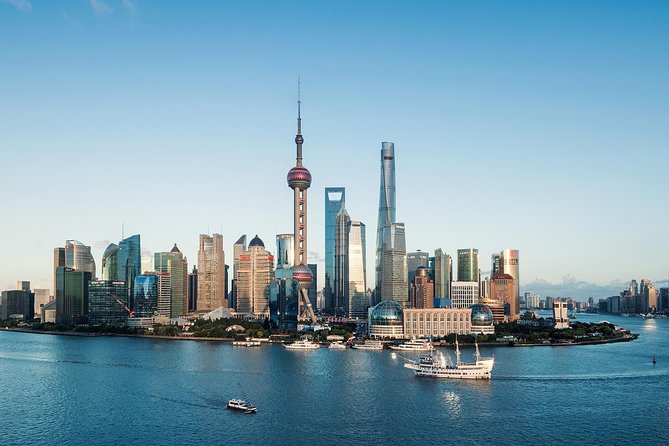
Shanghai began as a fishing village on the Yangtze River delta before becoming a treaty port in 1842. British, French, and American settlements later reshaped the city, leaving behind the grand buildings along the Bund. Modern Shanghai then rose around them, with Pudong’s towers and Nanjing Road’s shopping malls showing the city’s current role as a major economic center.
That story gives the tour a clear purpose. You are not simply ticking off attractions. You are watching Shanghai change from a traditional Chinese city into an international trading center and then into a modern commercial capital.
The day starts at 8:30 am with hotel pickup in an air-conditioned vehicle. Pickup and drop-off are available within Shanghai’s Middle Ring Zone, so check your hotel location before booking. If you stay outside that area, you may need to arrange your own way to the meeting point.
Your guide shares background during the drives, which is useful because several stops make more sense when connected. The private setup also helps here. You can ask why a building looks European, how a Buddhist temple fits into city life, or what happened to the old lane houses without waiting for a large group to catch up.
More full-day trips in Shanghai:
- Private Shanghai Full Day City Tour with Old and New Highlights
★ 5.0 · 995 reviews - Private Full-Day Tour: Incredible Shanghai Highlights
★ 5.0 · 352 reviews - Full-Day Private Guided Tour of Shanghai
★ 5.0 · 211 reviews
Yuyuan Garden: Ming-era calm in Shanghai Old Town
Yuyuan Garden is the most traditional stop on the route. Built in 1559 during the Ming Dynasty, this private garden covers about two hectares and uses the classic Chinese mix of rockeries, ponds, pavilions, bridges, corridors, and carefully framed views.
Give yourself time to look upward and sideways. Chinese gardens are designed around changing views rather than one grand central vista. A corridor may lead you toward a pavilion, while a rockery blocks and then reveals part of a pond. The garden’s scale makes it a good place to hear how educated families once used private gardens for quiet retreat and social life.
The visit is scheduled for about one hour, with admission included. That is enough for a useful introduction, though not enough for an unhurried study of every corner. Yuyuan Garden can also feel crowded, and the narrow paths may slow your group. Your guide’s explanations are particularly helpful here, since the meaning of the shapes, rocks, and buildings is easy to miss if you simply walk through with a camera.
The garden sits in Shanghai’s old quarters, an area that helps connect the attraction to the city’s traditional side. You will not spend the whole day in old Shanghai, so this early stop gives you a strong dose of classical architecture before the route shifts toward temples, industry, and modern streets.
Jade Buddha Temple: two prized images and an active place of worship
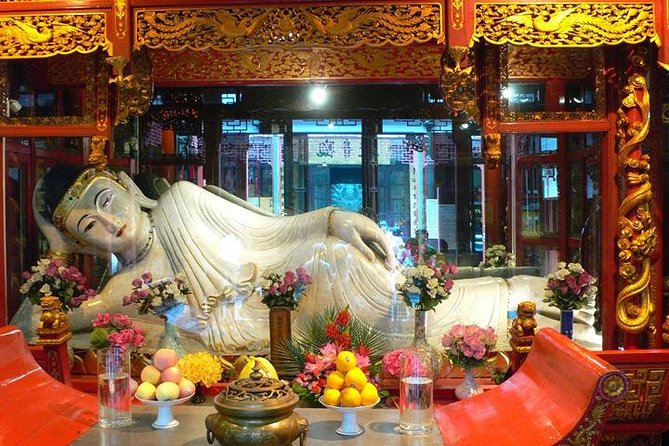
The Jade Buddha Temple was built in 1918 and remains a working Buddhist temple. Its central treasures are two Buddha images brought by sea from Burma. One is carved from pale green jade, while the other is made from white jade and decorated with precious stones.
You visit the halls with your guide for about 40 minutes. That is a short stop, but it keeps the day moving. The temple is not treated as a museum frozen in time. Monks, worshipers, and sightseers use the complex, so you should expect an active religious setting rather than a quiet gallery.
This is one place where respectful behavior matters. Follow your guide’s instructions about where to stand and how to move through the halls. The brief visit will give you the main story and a look at the statues, but it is unlikely to satisfy anyone hoping for extended personal reflection or detailed temple study.
I like the way this stop adds a living part of Shanghai to the day. Yuyuan Garden shows classical design, while the Jade Buddha Temple shows how religious practice remains part of the city’s present life.
Shikumen Museum: a look inside old Shanghai homes
The Shikumen Museum adds a more personal kind of history. Shikumen means stone gate, referring to a style of Shanghai housing built around narrow lanes and stone-framed entrances. Before the 1990s, much of the city’s population grew up in these homes.
You spend about an hour here, including admission. The small Wu Li Xiang exhibition shows old Shanghai home furnishings and gives you a sense of how domestic life worked inside these compact residences.
This stop helps fill a gap between famous monuments. The Bund tells you about trade and foreign influence, while Shikumen homes show how ordinary city life developed in shared neighborhoods. The area has changed with Shanghai’s economic growth, and old housing zones have been adapted into places with bars, tea houses, and entertainment.
The museum may be less visually grand than the garden or waterfront. Its value is in the scale of the story. You get a look at the rooms and objects connected to local families, not just the city’s official landmarks. If you care about architecture and social history, this could be one of the day’s most useful stops.
A few more Shanghai days worth a look
- Authentic Local Food Tour in Central Shanghai
★ 5.0 · 1,382 reviews - Zhujiajiao Water Town and Shanghai City Private Day Tour
★ 5.0 · 1,016 reviews - Shanghai: Hop-on Hop-off Bus Ticket and Optional Attractions
★ 3.4 · 692 reviews - Shanghai Private Tour: Zhujiajiao Water Town and Boat Ride
★ 5.0 · 661 reviews
Lunch and silk: practical culture between major sights
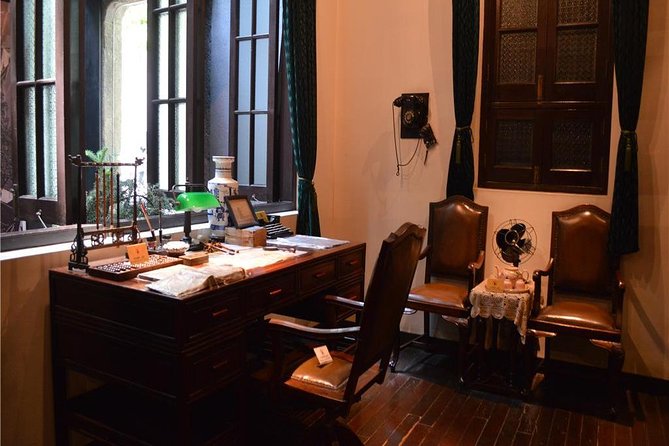
Lunch at a Chinese restaurant is included. Vegetarian and gluten-free options are available if you request them when booking. Since the tour covers eight hours, having lunch arranged keeps the group from losing time searching for a restaurant.
The exact restaurant and menu are not specified, so do not book this tour expecting a named culinary destination. Think of lunch as a convenient meal that supports the sightseeing schedule. Personal expenses are not included, so bring money for anything beyond the provided meal.
The silk reeling mill adds a hands-on industrial element. You watch raw silk being produced from silkworm cocoons and drawn into threads, while your guide explains China’s long silk tradition. This is a useful change of pace after the garden, temple, and museum.
A silk factory visit will appeal most to anyone who likes seeing how a familiar material is made. It also gives the tour a link to China’s trade history. Silk helped connect China with distant markets for centuries, while Shanghai later grew through shipping, finance, and international commerce.
The factory can also feel more commercial than the historic sites. If you dislike shopping-oriented stops, keep your expectations clear. The listed purpose is to watch the reeling process and learn about silk, not simply to browse products.
The Bund: Shanghai’s best architectural contrast
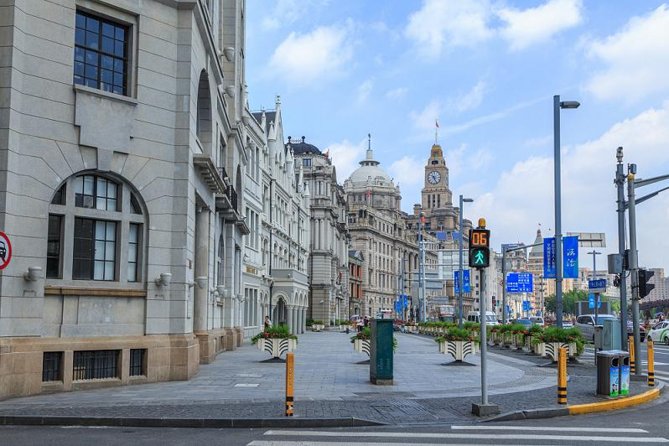
The Bund runs for about 1.5 kilometers along the western bank of the Huangpu River. Its west side forms an open-air architectural display, with 52 preserved European-style buildings tied to Shanghai’s colonial-era trading past.
You spend about an hour here, with no admission fee. The main pleasure is the contrast across the river. Behind you are stone façades, banks, hotels, and former commercial buildings. Across the Huangpu is Pudong, filled with modern towers and the visual symbols of present-day Shanghai.
This is the tour’s clearest past-versus-present moment. You can stand in one place and read several chapters of the city’s story at once. The Bund also gives you space to walk after the tighter paths of Yuyuan Garden and the temple.
The hour should be enough for a walk and photographs, but the waterfront deserves longer if you want to study individual buildings. The schedule does not leave much time for lingering at cafés, visiting interiors, or returning after dark. The description notes that the Bund is especially striking at night, but this tour starts in the morning and ends after eight hours, so you should not assume an evening light display is included.
Nanjing Road: modern Shanghai in half an hour
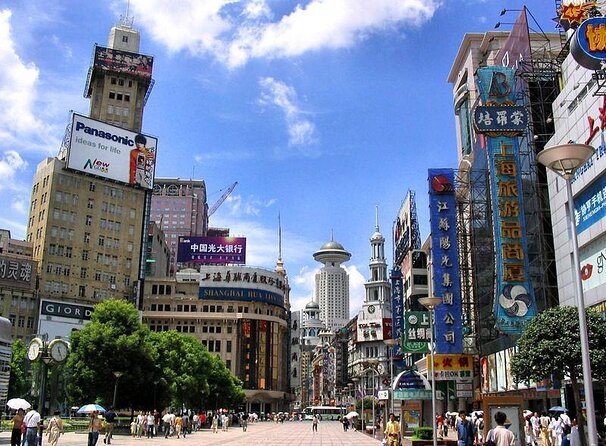
Nanjing Road is Shanghai’s main shopping street and the final major stop. The pedestrian area includes traditional Chinese brands, international boutiques, shopping malls, restaurants, hotels, theaters, and souvenir shops.
The scheduled visit is 30 minutes. That makes it a quick taste of modern commercial Shanghai rather than a serious shopping session. You can stroll, take in the scale of the street, and pick up a small souvenir, but you will not have time to compare many stores.
This short stop works well after the Bund because the two areas show different sides of the same city. The Bund presents Shanghai as a historic international port. Nanjing Road shows the city as a modern retail center filled with domestic and global brands.
If shopping is your main goal, you may want to return on your own after the tour. If you simply want to see the street and understand its place in present-day Shanghai, 30 minutes is enough.
What the $147.20 price really covers
At $147.20 per person, this is not the cheapest way to see Shanghai. The value comes from what is bundled into the day: private transport, hotel pickup and drop-off within the Middle Ring Zone, an English-speaking guide, lunch, and all listed entrance fees.
For a group of two or more, the private format may compare well with paying separately for taxis, admission, and a guide. You also avoid the planning work of joining attractions spread across different parts of the city. That matters in Shanghai, where traffic and distance can eat into a self-guided day.
The price is less attractive if you prefer slow travel, public transport, or choosing your own lunch and museums. The schedule is designed for breadth. You see many important places, but most stops have fixed time limits.
A 4.3 rating based on three reviews is a small sample, so I would not treat it as a final verdict. The clearest praise focuses on the guide, with Jack specifically singled out for providing a very good experience. Your guide’s name and pickup details are sent in the voucher the day before, and the guide will call through your hotel or leave a message about the pickup time the night before.
Who should book this Shanghai day tour?
I would choose this tour for a first visit, especially if you want a broad introduction without managing Shanghai’s transport yourself. It suits couples, families, and small private groups that value a guide’s context and want hotel pickup.
It is also a good match for people with only one full day in the city. You will see traditional gardens, a temple, local housing, silk production, the Bund, and Nanjing Road without spending your limited time on route planning.
Families should note that children must be accompanied by an adult. Most people can participate, and the tour runs near public transport, but the day includes walking through gardens, temple grounds, museum areas, and a pedestrian shopping street.
I would hesitate if you want a relaxed day with long meals, extensive shopping, or detailed visits inside each Bund building. The tour is active and tightly organized. It gives you a broad picture rather than a slow study of one neighborhood.
Free cancellation is available up to 24 hours before the 8:30 am start time. Changes or cancellations inside that window are not refunded, and poor weather may lead to a new date or a full refund.
Should you book it?
Book this tour if you want Shanghai explained as a story of change, from Ming gardens and Buddhist art to silk production, foreign-built waterfront architecture, and modern shopping. The private vehicle, included lunch, and guide-led context make the $147.20 cost reasonable for a packed first day.
Skip it if your priority is independent wandering or a long, leisurely visit to just one or two places. The main strength is range. You see a lot, understand how the pieces connect, and return to your hotel without having to solve Shanghai’s transport puzzle yourself.
FAQ
How long does the tour last?
The tour lasts approximately eight hours and ends with hotel drop-off.
What time does the tour start?
The scheduled start time is 8:30 am.
Is this a private tour?
Yes. Only your group participates in the activity.
Is hotel pickup included?
Yes, hotel pickup and drop-off are included for hotels within Shanghai’s Middle Ring Zone.
Is transportation provided during the tour?
Yes. You travel in a comfortable air-conditioned vehicle.
Is an English-speaking guide included?
Yes. A professional English-speaking guide is included.
Is lunch included?
Yes. Lunch at a Chinese restaurant is included.
Can I request a special meal?
Yes. Vegetarian and gluten-free options are available if you advise the provider when booking.
Are entrance fees included?
Yes. Admission to the listed paid attractions, including Yuyuan Garden, the Jade Buddha Temple, and the Shikumen Museum, is included.
Can children join the tour?
Yes, but children must be accompanied by an adult.
What is the cancellation policy?
You can cancel at least 24 hours before the start time for a full refund. Cancellations or changes made less than 24 hours before the tour are not accepted for a refund. If poor weather causes the tour to be canceled, you will be offered another date or a full refund.
Newly listed around Shanghai
- shanghai Disney tour★ 5.0 · 12 reviews
- shanghai Disney+shanghai one day city highlights tour (two days)★ 5.0 · 4 reviews
- Zhujiajiao Water Town and Shanghai City Highlights Private Day Tour★ 5.0 · 3 reviews
- Zhujiajiao Water Village & Seven Treasure Town Day Tour from Shanghai★ 4.0 · 8 reviews
- Zhujiajiao Water Town Private Tour with Local Farm Visit and Fruit Picking★ 5.0 · 3 reviews
- Zhujiajiao Water Town Self-Guided Tour with Private Transfer from Shanghai★ 5.0 · 7 reviews
- Xitang Water Village Sunset Tour with Riverside Dining Experience from Shanghai★ 4.5 · 45 reviews
- Xitang Water Town Self-Guided Tour from Shanghai with Private Transfer★ 5.0 · 5 reviews
Full-Day, compared.
Beijing Full Day Tours: Tiananmen Sq, Forbidden City, Great Wall
Read our review →
Private Shanghai Full Day City Tour with Old and New Highlights
Read our review →
Beijing Classic Full-Day Tour including the Forbidden City, Tiananmen Square, Summer Palace and Temple of Heaven
Read our review →
Beijing Essential Full-Day Tour including Great Wall at Badaling, Forbidden City and Tiananmen Square
Read our review →
Great Wall of China at Mutianyu Full-Day Tour Including Lunch from Beijing
Read our review →
Private Full-Day Tour: Incredible Shanghai Highlights
Read our review →
Full-Day Small-Group Great Wall Hiking at Jinshanling
Read our review →