Reviewed · BEIJING TOURS
Private Excursion Tour to East Qing Tombs from Beijing
The Eastern Qing Tombs offer something Beijing’s better-known sights often cannot: royal architecture with room to breathe. This huge Qing Dynasty burial complex is quieter than the Ming Tombs, yet its carved gates, spirit roads, underground chambers, and imperial scale make it a serious history stop.
I like two things here. First, your private guide can explain the difference between Qianlong’s tomb and Empress Dowager Cixi’s lavish burial place. Second, hotel pickup, a private air-conditioned car, admission, tolls, and parking are bundled into the price. The main drawback is the long road journey, roughly two hours each way, so this is a full day rather than a quick outing.
Plan on 8 to 9 hours, including about three hours at the tomb complex. The $176 per person price makes the most sense for travelers who value a private guide and door-to-door transport. Lunch is not included, and extra time after nine hours costs more.
Key points to know before booking
- Qianlong’s tomb shows Qing imperial ambition: Expect elaborate stone carving and Tibetan Buddhist details tied to one of the dynasty’s most influential emperors.
- Cixi’s tomb tells a more troubling story: Her burial site reflects enormous wealth, while the later tomb robbery of the 1920s adds a darker chapter.
- The site is quieter than the Ming Tombs: You get a calmer visit and better breathing room for photographs.
- Private transport removes the hardest logistics: Hotel pickup and drop-off, an air-conditioned vehicle, driver, fuel, tolls, parking, and admission are included.
- The drive shapes the day: This is best for people willing to spend much of a day outside central Beijing.
- Guides make the difference: Rita and Cynthia are named guides associated with strong experiences, and the tour is limited to your own group.
Why the Eastern Qing Tombs are worth the long ride
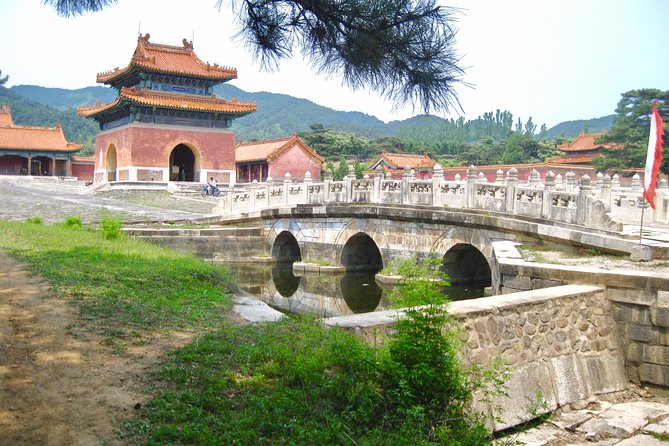
The Eastern Qing Tombs were built for the rulers of China’s final imperial dynasty, the Qing, whose ruling family came from Manchuria in northeastern China. The complex was designed with the splendor of the earlier Ming imperial tombs in mind, so you can expect grand approaches, formal symmetry, carved stone, and architecture meant to project power long after an emperor’s death.
This is not simply a cemetery with a few monuments. It is a large royal burial complex where architecture, religion, rank, and political image all meet. The setting gives you a useful counterpoint to Beijing’s Forbidden City. The palace expresses imperial life at its center; these tombs show how the dynasty wanted imperial authority remembered after death.
I especially like the contrast with the Ming Tombs. The Eastern Qing Tombs are not presented as the city’s main day-trip attraction, and that helps keep the visit calmer. You can take in the formal avenues and carved details without the same pressure to move along with a crowd.
The site is also useful for anyone who wants more than the usual Beijing checklist. If you have already seen the Forbidden City, Temple of Heaven, or Great Wall, the tombs provide a different view of the imperial system. You are looking at burial planning, sacred design, dynastic memory, and the private worlds of rulers who controlled China.
A few more Beijing days worth a look
- From Beijing: Mutianyu Great Wall Tours with Options
★ 4.9 · 9,216 reviews - Beijing: Forbidden City Tour(Group/Private)-Tickets Included
★ 4.8 · 7,974 reviews - Beijing: T-Square & Forbidden City Group or Private Tour
★ 4.8 · 4,446 reviews
The two-hour journey from Beijing
The tour begins with pickup at your Beijing hotel in the morning. You travel in an air-conditioned vehicle with a private driver, and the package includes fuel, tolls, and parking. That arrangement matters because reaching a large historic site outside the city can be awkward without a car.
The drive is the main cost in time. Plan for roughly two hours on the road each way, depending on traffic and your hotel location. That makes the tour a full-day commitment, even though the listed time at the tomb complex is about three hours.
I would not book this as a filler activity between major Beijing sights. The journey is too long for that. Instead, treat it as a focused day trip. Bring water, wear comfortable shoes, and keep your schedule light after you return.
The private format is a real advantage here. You are not joining a large coach group with fixed stops and a guide trying to speak over a crowd. Your own party travels together, and you can ask questions about Qing rulers, burial customs, architecture, and the stories connected to the tombs.
The tour requires smart-casual clothing, and children must be accompanied by an adult. Most people can take part, but the scale of the grounds means you should be ready for walking and outdoor time.
Three hours among Qing royal tombs
The main visit lasts about three hours. That is enough time to see the key royal areas and listen to the guide without turning the day into an exhausting inspection of every corner.
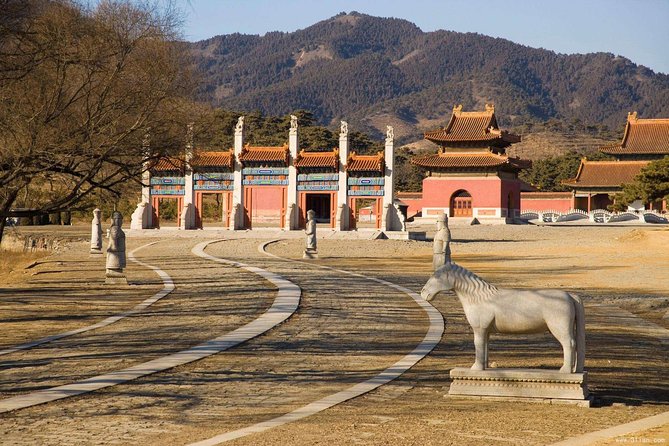
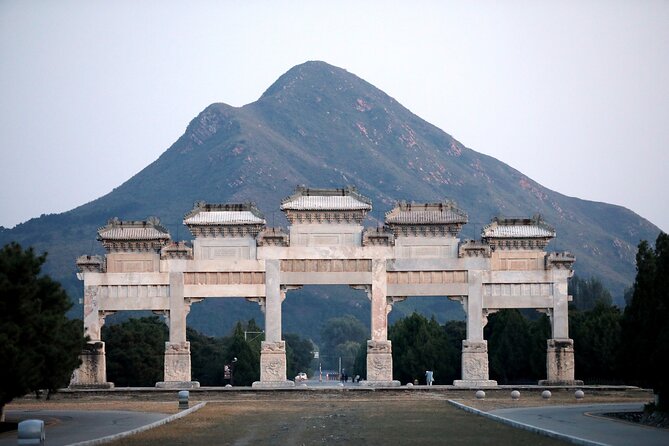
The Eastern Qing Tombs are regarded as the largest and best-preserved surviving tomb complex for Chinese royal families. Their size can be hard to understand from a short description. The organized approaches and monumental structures were created to make the imperial burial grounds feel ordered, protected, and worthy of the dynasty.
As you move through the complex, look for the relationship between open ceremonial space and dense decoration. Large gateways and avenues create a sense of authority, while carved stone and religious motifs add meaning at a closer scale.
Your guide is important because many details are easy to miss. The stonework is not just decoration. It can point to rank, religious belief, imperial taste, and the connection between the ruler and the wider Qing state. A private guide can slow down for the subjects that interest you instead of delivering a fixed speech to strangers.
Two guides named in connection with this experience are Rita and Cynthia. Rita is described as pleasant and well informed, while Cynthia is noted for careful explanations and thoughtful answers. Guide assignments can vary, so you should not assume that either one will lead your group, but the names suggest the sort of personal service the tour aims to provide.
Qianlong’s tomb and the language of power
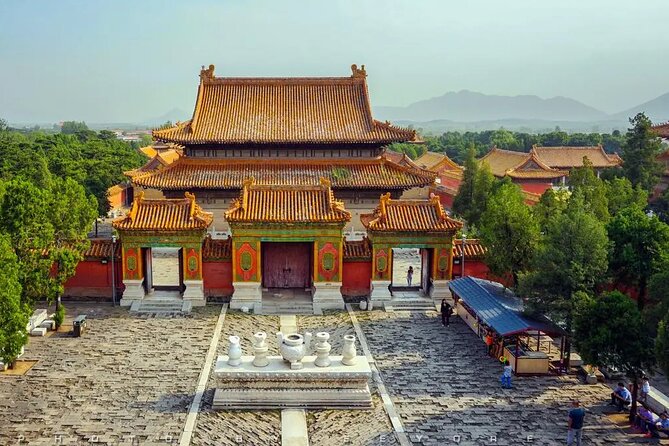
Emperor Qianlong is one of the most important figures connected with the complex. His reign is associated with Qing power at its height, and his tomb reflects the confidence and wealth of that period.
The most striking points here are the stone carvings and the signs of Tibetan Buddhist influence. Those details give the tomb more depth than a simple display of imperial wealth. They show how religious imagery and political authority could work together in a royal burial place.
I would ask your guide to explain the carvings carefully. At a site like this, the visual details can blur together if you only walk past them. A guide can help you notice how the decoration differs from ordinary palace ornament and why Tibetan Buddhist elements appear in the tomb of a Qing emperor.
Qianlong’s burial site is also a good place to consider the dynasty’s relationship with different cultures and religious traditions. The Qing rulers were Manchurian, not Han Chinese, and their imperial identity drew on several traditions. The tomb’s design helps make that fact visible.
Do not expect the same kind of restored palace rooms found in the Forbidden City. The appeal here lies in the solemn architecture, carved surfaces, sacred design, and the sense of a large imperial system extending beyond Beijing’s urban center.
Same base, a completely different kind of day out:
- Beijing: Mutianyu Great Wall Daily Tour with Ticket & Lunch
★ 5.0 · 3,056 reviews - All-Inclusive Tour: Tiananmen Square, Forbidden City, Great Wall
★ 5.0 · 2,873 reviews - MuBus: Mutianyu Great Wall ENG/ESP/RUS Guided Bus Tour
★ 5.0 · 2,361 reviews - 4-Hour Small Group Tour to Forbidden City with Entry Tickets
★ 5.0 · 1,863 reviews
Empress Dowager Cixi and the story beneath the stone
The tomb of Empress Dowager Cixi adds a different tone. Cixi was one of the most powerful women in late Qing China, and her burial place is associated with extraordinary luxury.
That lavishness gives your guide an opening to discuss both her political influence and the way rulers used funerary architecture to display status. The tomb is not only about where she was buried. It also reflects how power, wealth, and public image were presented at the end of the dynasty.
The site has another grim chapter. Warlords robbed the tombs in the 1920s, and that large-scale theft brought wider attention to the complex. This history changes the way you look at the buildings. You are not seeing a perfectly untouched imperial world. You are seeing a place shaped by dynastic collapse, political violence, and the damage that followed.
I like this part of the visit because it keeps the tour from becoming a string of pretty monuments. The tombs carry uncomfortable stories as well as fine carving. Ask about what survived, what was taken, and how the robbery affected the site.
The supplied information does not promise access to every underground chamber or interior area, so do not book expecting a complete look inside every tomb. The safe expectation is a guided visit to the main accessible areas and the chance to understand the most important royal burials.
Why a private guide matters here
A private tour gives you control over the pace and questions. That is especially useful at a site where the meaning is not always obvious from the architecture alone.
You can ask your guide to compare the Qing tombs with the Ming Tombs, explain the Manchurian origins of the Qing rulers, or focus on Qianlong, Cixi, Tibetan Buddhism, or the 1920s robberies. A large group tour may cover those points, but a private format gives you more freedom to follow your own interests.
The private car also helps with comfort. You are not dealing with public transport connections, parking decisions, or finding a taxi back from a remote historic area. Hotel pickup and drop-off simplify the beginning and end of a long day.
The tradeoff is price. At $176 per person, this is not the cheapest way to see the tombs, especially if you are traveling alone. The value improves for a couple, family, or small group that wants a dedicated vehicle and guide rather than a shared excursion. Group discounts may also be available, though the exact saving is not specified.
The price includes admission, so you are not paying separately at the entrance. It also covers the driver, vehicle, fuel, tolls, and parking. Meals, accommodation, tips, and personal expenses are extra.
What the day feels like in practical terms
Your morning begins at your hotel, followed by the drive toward the tomb complex. Once there, expect a guided visit of about three hours. Afterward, you return to Beijing in the same private vehicle.
The schedule leaves little room for an elaborate restaurant lunch unless you arrange one with the operator. Lunch and dinner are not included, so plan accordingly. The tour information does not specify a restaurant stop or meal arrangement, and you should not assume food is part of the day.
Because the tour can extend beyond nine hours, ask about timing if your evening plans are fixed. An extra fee is requested after the nine-hour mark. Traffic is the obvious factor that could affect the schedule, so avoid booking a time-sensitive train, show, or flight soon after the expected return.
Smart-casual clothing is requested. Comfortable footwear is the practical choice, since the complex is large and the experience depends on moving through outdoor ceremonial spaces rather than sitting in one building.
The tour is marked as suitable for most people, and children can participate with an adult. Still, the information does not give detailed mobility guidance. If someone in your group has specific walking or access needs, ask the operator before booking.
How the $176 price compares with the experience
The price is easiest to justify if you place a high value on time, privacy, and explanation. A private vehicle from your hotel is much simpler than piecing together transport to a remote site, and a guide can turn carved stone and formal avenues into a readable story.
The price is less attractive if you only want a quick look at the grounds or if you are comfortable arranging transport independently. The tour spends a large part of the day on the road, and food is not included. Solo visitors may find the per-person cost harder to accept.
For couples and small groups, the calculation changes. You are paying for a private arrangement rather than a seat on a shared bus. Group discounts may make the total easier to manage, but confirm the terms before booking.
The strongest value comes from the combination of three things: a quieter imperial site, a guide who can explain the Qing context, and door-to-door transport. Remove the guide or private car, and the price would be harder to defend. Keep both, and the day becomes a practical way to reach a place that is not as easy to handle on your own.
Who should book this Qing tomb excursion
I would recommend this tour to anyone with a serious interest in Chinese imperial history, Qing politics, architecture, or religious art. It is also a good fit if you have already seen Beijing’s central sights and want a less crowded day outside the city.
Families may appreciate the private format because they can keep together and ask questions without worrying about a large group. Couples and small parties can also make good use of the vehicle and guide.
I would be more cautious if your Beijing visit is very short. With roughly four hours of driving, this excursion takes most of a day. If you have only two or three days in the city, you may prefer to focus on sights closer to the center.
It is also not ideal for anyone who dislikes long car rides or wants a flexible food-focused day. The tombs reward patience, historical interest, and a willingness to spend time with architecture that is solemn rather than lively.
The tour has a 4.9 rating from seven reviews, which is a very positive sign, though the sample is small. The strongest praise centers on the peaceful setting, the scale of the site, the quality of the guides, and the convenience of hotel pickup and return.
Should you book it?
Book this excursion if you want a private, history-centered day and are willing to spend about two hours each way in the car. The Eastern Qing Tombs offer a quieter alternative to the Ming Tombs, with Qianlong’s carved and Buddhist-influenced tomb, Cixi’s luxurious burial site, and the unsettling story of the 1920s robberies.
Skip it if your schedule is tight, if you want included meals, or if the $176 price feels high for a day with substantial driving. For the right reader, though, the private guide and simple transport solve the hardest parts of visiting this remote imperial complex.
Free cancellation is available if you cancel at least 24 hours before the experience start time. Cancellations or changes made less than 24 hours ahead are not refunded or accepted.
FAQ
How long does the Eastern Qing Tombs tour last?
The full excursion lasts approximately 8 to 9 hours. The visit to the Eastern Qing Tombs itself lasts about three hours.
Does the tour include hotel pickup and drop-off?
Yes. Hotel pickup and drop-off in Beijing are included.
Is transportation included?
Yes. The tour includes an air-conditioned vehicle with a private driver, along with gas, tolls, and parking fees.
Is this a private tour?
Yes. Only your own group participates in the private tour or activity.
Is an English-speaking guide included?
Yes. An English-speaking tour guide service fee is included in the price.
Are entrance tickets included?
Yes. Entrance tickets to the Eastern Qing Tombs are included.
Are meals included?
No. Lunch and dinner are not included. Accommodation is also excluded.
What happens if the tour lasts more than nine hours?
An extra fee is requested after nine hours.
Can I cancel for a full refund?
Yes, if you cancel at least 24 hours before the experience start time. Cancellations made less than 24 hours before the start time are not refunded, and changes during that period are not accepted.
Newly listed around Beijing
- Shore Excursion: 2-Day Private Beijing Sightseeing Tour from Tianjin Cruise Port★ 5.0 · 6 reviews
- Private Transfer: Tianjin Xingang International Cruise Home Port to Beijing Hotel★ 5.0 · 6 reviews
- Tianjin Private Day Trip to Forbidden City and Mutianyu Great Wall by Bullet Train★ 5.0 · 5 reviews
- Bullet Train Private Tour: Beijing Tiananmen Square, Forbidden City & Great Wall★ 5.0 · 3 reviews
- Private Great Wall Tour from Tianjin Cruise Port★ 5.0 · 8 reviews
- Private One Way Tianjin Port Transfer to Beijing including Great Wall Sightseeing★ 5.0 · 4 reviews
- Shanghai to Beijing Bullet Train Ticket with Hongqiao Station Transfer★ 5.0 · 5 reviews
- Private Mutianyu Great Wall Tour with Bullet Train Experience★ 5.0 · 3 reviews
Beijing Tours, compared.

Forbidden City Tour(Group/Private)-Tickets Included
Read our review →
Mutianyu Great Wall Daily Tour with Ticket & Lunch
Read our review →
All-Inclusive Tour: Tiananmen Square, Forbidden City, Great Wall
Read our review →
4-Hour Small Group Tour to Forbidden City with Entry Tickets
Read our review →
Beijing Full Day Tours: Tiananmen Sq, Forbidden City, Great Wall
Read our review →