
Reviewed · HARBIN TOURS
Private Customized Harbin City Day Tour by Public Transportation
Harbin is easiest to understand when you connect its grand Russian-era streets, Chinese Baroque lanes, riverfront parks, and everyday public spaces in one day. This private tour lets you choose the mix, then learn the city’s bus and transit system as you go. It is a sightseeing day with a practical bonus: you leave better able to explore Harbin without a guide.
I especially like the custom-built route, since you are not forced to spend a fixed amount of time at every listed stop. I also like the public-transit approach. Your guide does the navigating while you learn how Harbin works, rather than seeing the city only through a vehicle window. The main caution is that the $250 price is per person, so the value depends heavily on your group size and how much guiding you want.
- Choose your own Harbin day: Select a few major sights instead of trying to rush through all 11 options.
- Meet an experienced local guide: Samantha has worked as an English-speaking Harbin guide for 13 years.
- Use public transportation: Transit fees are included, and the route helps you learn the system.
- See several sides of the city: Pair Saint Sophia Cathedral and Central Street with Laodaowai, Jile Temple, or the Songhua River.
- Allow for walking: Comfortable shoes matter, especially if you combine pedestrian streets, parks, and riverfront stops.
- Watch the clock: The standard day is 8 hours. Extra time costs 150 CNY per hour.
A private Harbin day built around your interests
The best feature here is flexibility. The listed sights are choices, not a promise that you will visit every one. That distinction matters. A full day containing the Heilongjiang Museum, Sun Island, Central Street, Laodaowai, Jile Temple, Saint Sophia Cathedral, and the riverfront would be rushed.
Before the day begins, decide what kind of Harbin you want. You might focus on architecture and old neighborhoods, choose parks and river views, or combine major landmarks with a museum. You can also request other places within the city, subject to the guide’s arrangements.
A private format is useful for families, couples, and small groups with different energy levels. You can spend longer at a place that interests you and skip a stop that does not. The tradeoff is simple: a private guide costs more than joining a shared group, but you gain control over the pace and route.
What Samantha adds to the day
The experience is offered by a private tour guide, and Samantha is identified as an English-speaking guide with 13 years of experience guiding in Harbin. Her role is more than pointing out buildings. She helps you move through the city by public transit, explains what you are seeing, and can shape the day around your interests.
That transit element gives the tour lasting value. If you are unfamiliar with Harbin, figuring out buses, stops, and transfers can eat up time. With a guide beside you, you can watch how the system works and gain confidence for later outings.
The guide’s local perspective also helps connect the city’s different periods. Harbin can feel like several cities at once: an old international commercial center, a Chinese city with its own traditions, and a modern urban center along the Songhua River. A good day links those pieces rather than treating each stop as an isolated photo opportunity.
One past customized day also included Unit 731, a difficult site connected with a tragic period in Chinese history. If that subject matters to you, ask about adding it when planning your route. It may not fit alongside every other stop in an eight-hour day.
A few more Harbin days worth a look
- 2-Day Harbin City Private Tour in Your Way in Winter Season
★ 5.0 · 26 reviews - 1-Day Harbin Private Tour
★ 5.0 · 22 reviews - Harbin Winter Warm Clothing Rental
★ 5.0 · 15 reviews
Heilongjiang Museum and Hongbo Square
The Heilongjiang Museum gives you a useful starting point if you want cultural and regional context. You have about an hour here, and admission is free. The museum is closed on Mondays, a key detail if you are planning around a particular day.
Hongbo Square offers a shorter stop of about 30 minutes. It is described as a city transfer square dating from 1900, so it works best as part of a broader central Harbin route rather than as the main reason to book the tour.
These two stops are practical choices for someone interested in Harbin’s civic life and past. If your priority is architecture, you may prefer to use the time at Saint Sophia Cathedral and Central Street. If you want a wider introduction, the museum can provide useful context before you walk through the older parts of town.
Walking Central Street and meeting Saint Sophia Cathedral
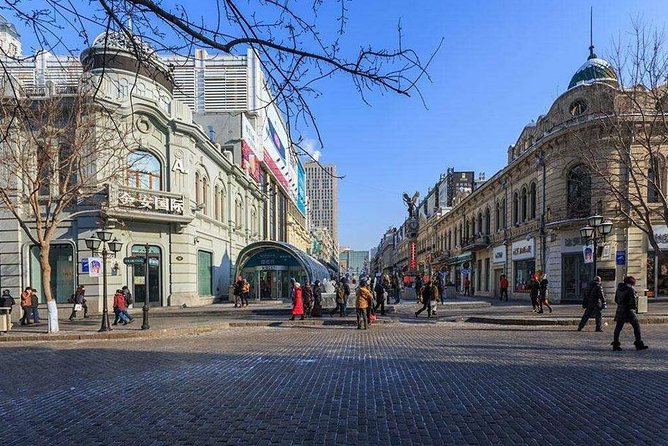
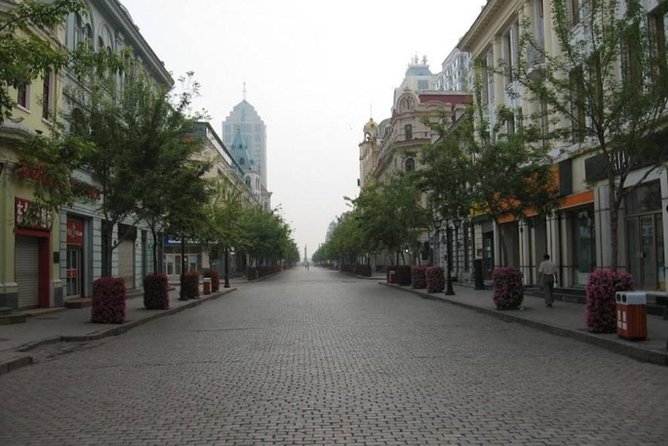
Zhongyang Pedestrian Street, also called Central Street, is one of the core stops. The street dates from 1923 and gives you about an hour to walk, look at the buildings, and take in Harbin’s best-known central shopping corridor.
This is a good place to let the guide explain how the city’s European influences appear in its streets and façades. It is also a place where the pace can get distracted by shops and food, so be clear about whether you want architectural details, free time, or both.
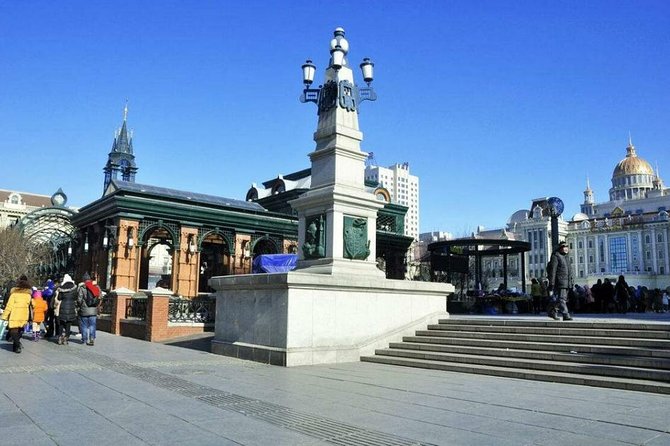
Saint Sophia Cathedral receives about 30 minutes in the proposed plan, with admission not included. The church is described as the largest Eastern Orthodox church in the Far East and became a nationally protected cultural relic in 1996. The city restored it after that designation.
The exterior is a major part of the stop, with the church’s distinctive form helping explain why this is one of Harbin’s most recognizable sights. If you want to go inside, remember that the entry fee is separate. Thirty minutes may be enough for a quick visit, but visitors particularly interested in the building’s interior and religious background may want to negotiate more time by shortening another stop.
Laodaowai and the Temple of Bliss
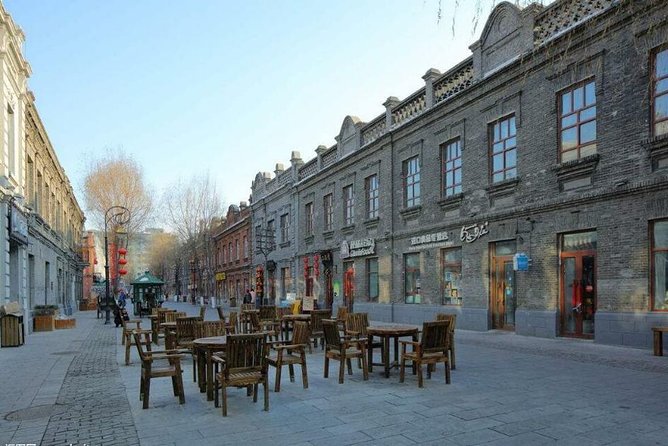
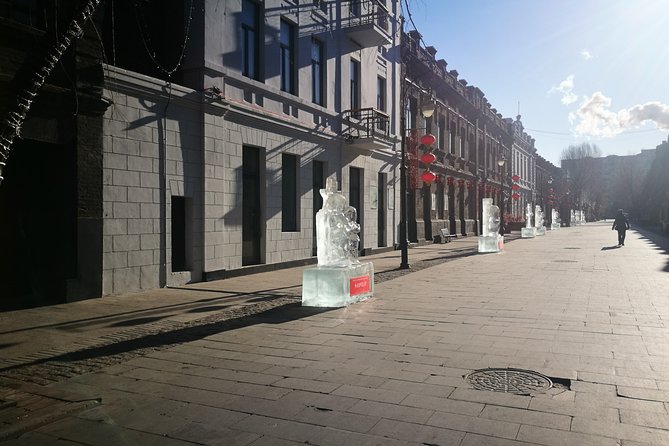
Laodaowai offers a different feel from the grand central streets. This pedestrian area features Chinese Baroque-style buildings and developed as a walking district in the 1920s. It is a strong choice if you want to see how local Chinese urban culture shaped Harbin’s architecture rather than focusing only on its European-looking landmarks.
Plan roughly an hour here. The stop rewards slow walking, close attention to building details, and time for the neighborhood atmosphere. It also gives the day some variety after Central Street.
The Temple of Bliss, or Jile Si, is another option for a culturally focused route. It has an important place in Harbin’s Buddhist community and is also part of the city’s historical and cultural areas. Admission is 10 CNY per person, not included in the tour price.
I would not try to pair every central sight with both Laodaowai and the temple unless you are comfortable with a brisk day. Select Laodaowai for street character and architecture. Select Jile Temple if religious sites and Buddhist culture matter more to you.
More City Tours in Harbin:
- 3-Day Harbin City Private Tour in Your Way in Winter Season
★ 5.0 · 14 reviews - Harbin City Private Day Tour in Your Way in Winter Season
★ 4.5 · 7 reviews - 2-Day Harbin City Private Tour with Ice and Snow Festival with Lunch
★ 5.0 · 4 reviews - Private Half Day City Tour including Russian Town and Harbin Ropeway Ride
★ 5.0 · 3 reviews
Sun Island and the Songhua River
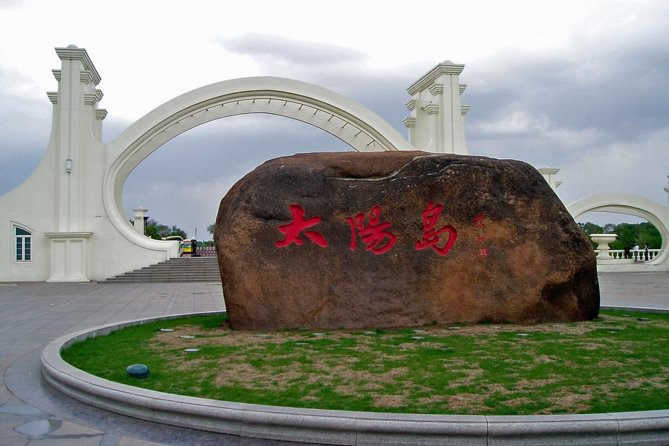
Sun Island, or Tai Yang Dao, is the main green-space choice. The proposed visit lasts about an hour, and admission is free. It is described as a park with flowers and trees, giving you a break from central streets and historic buildings.
The island makes sense for a warmer-season visit or for anyone who wants open space in the middle of a city tour. It is less useful if your main aim is Harbin’s architecture and you have only a short window. Ask the guide about travel time before adding it to a central-city route.
The Songhua River provides several related stops. The Songhua River Bridge is planned for about 30 minutes, while the Flood Control Memorial Tower and Stalin Park each receive about 30 minutes. The river is one of the city’s defining physical features, and the riverfront can be a pleasant place for a scenic walk in summer, with flowers, willow trees, and open views.
The Flood Control Memorial Tower sits beside one of the largest squares near the river. Stalin Park is another riverfront park and a useful place to see how local residents use the waterfront for leisure and exercise. These stops are short, so they work well as part of a river sequence. They are less compelling as isolated destinations reached from the far side of town.
Children’s Park and everyday Harbin
Children’s Park is described as a place where local people exercise and relax. The planned visit is about 30 minutes, making it a small but useful contrast to the headline sights.
I like this option for people who want a glimpse of ordinary city life. It is not a major landmark, and that is precisely the point. You see a public space used by residents rather than another formal attraction built for sightseeing.
The park is best added when your group wants a slower, more local day. If this is your first and only day in Harbin, you may prefer to give the time to Saint Sophia Cathedral, Central Street, Laodaowai, or the museum.
How the public-transit format changes the experience
Transportation fees are included, and the tour uses public transit rather than private transportation. That can make the day feel more connected to daily Harbin, though it also means you should expect transfers, walking, and the normal pace of city travel.
The biggest benefit is practical knowledge. You are not simply moved from hotel to attraction. You can observe how to reach the city’s main areas and may feel more comfortable exploring independently later.
There is a small cost in convenience. Public transit can take longer than a private car, especially when the route crosses several parts of the city. Since the day is limited to eight hours, route planning is important. Ask the guide to group nearby sights together instead of choosing stops only by popularity.
Hotel pickup and drop-off are included. The tour is private, so only your group takes part. Children can join but must be accompanied by an adult, and comfortable walking shoes are a sensible choice.
Is $250 per person a fair price?
At $250 per person, this is not a bargain-priced city orientation. It is a premium private experience, and the value changes with group size. A couple pays much more per person than a family or larger private group would if the total booking structure allows the cost to be spread across the group.
The price includes the private guide, private tour service, public-transit fees, and hotel pickup and drop-off. It does not include food, drinks, or attraction admission. The known paid entries are the Temple of Bliss at 10 CNY per person and Saint Sophia Cathedral, whose admission fee is separate.
I would consider the price reasonable if you value an English-speaking guide, need help building a route, or want to learn the transit system. It is harder to justify if you mainly want transportation between famous sights or are happy to explore Central Street and Saint Sophia Cathedral on your own.
Group discounts are available, so ask about them if you are not booking as a couple. Also protect the eight-hour limit. Overtime costs 150 CNY per hour, and an ambitious route can easily run long if you add extra museums or distant stops.
Planning the right eight-hour route
You should choose three or four main priorities before the day starts. Here are sensible combinations:
- Architecture and central Harbin: Heilongjiang Museum, Central Street, Saint Sophia Cathedral, and Hongbo Square.
- Old neighborhoods and religion: Central Street, Laodaowai, Jile Temple, and Saint Sophia Cathedral.
- River and green space: Sun Island, Songhua River Bridge, Flood Control Memorial Tower, and Stalin Park.
- A broad first look: Central Street, Saint Sophia Cathedral, one old neighborhood, and one riverfront stop.
The key is not to treat every listed place as mandatory. The day descriptions add up to much more than eight hours before you count transfers, meals, and hotel pickup. Food is not included, so you should also allow time to eat and pay for your own meal.
Museums in Harbin are closed on Mondays, so avoid putting the Heilongjiang Museum at the center of a Monday plan. Confirm the final route with the guide in advance, especially if you want a site not listed among the main options.
Who should book this Harbin tour?
I would choose this tour if you have one full day in Harbin and want a flexible introduction rather than a rigid sightseeing circuit. It is especially useful for first-time visitors who want help with public transportation or for families who need a private pace.
It also suits people who care about context. Samantha’s reported experience as a long-serving English-speaking guide can be valuable when you want to understand the city’s architecture, religious sites, parks, and difficult historical subjects rather than simply photograph them.
I would look elsewhere if you prefer a private vehicle, dislike walking, or want a low-cost way to see only one or two landmarks. The public-transit format is part of the point, not just a way to save money.
FAQ
How long does the private Harbin tour last?
The standard private tour lasts 8 hours. An overtime fee of 150 CNY per additional hour applies.
Is hotel pickup and drop-off included?
Yes. Hotel pickup and hotel drop-off are included in the tour.
Are public transportation fees included?
Yes. Transportation fees for the public-transit tour are included.
Are attraction entry tickets included?
No. Food, drinks, and attraction admission are not included. The Temple of Bliss charges 10 CNY per person, and Saint Sophia Cathedral also has a separate admission fee.
Can I choose which Harbin sights to visit?
Yes. The day is customizable, and the listed places are options rather than stops you must all visit. You can choose some of them or request other places within the city.
Can children join the tour?
Yes. Children can participate, but they must be accompanied by an adult. Comfortable walking shoes are recommended.
Should you book it?
Book this tour if you want Harbin explained by a local English-speaking guide and would like to learn how to get around by public transit. The strongest plan combines a few contrasting sights, such as Saint Sophia Cathedral, Central Street, Laodaowai, and the Songhua River, rather than chasing every listed stop.
The $250 per-person cost calls for careful thought, especially for a small group. But if you value a private route, hotel service, local guidance, and the freedom to shape the day, this can be a useful and personal way to get your bearings in Harbin. Confirm your priorities, avoid Monday museum plans, and leave enough room for walking.
Newly listed around Harbin
- Private Half Day City Tour including Russian Town and Harbin Ropeway Ride★ 5.0 · 3 reviews
- Harbin Airport (HRB) : Private Arrival Transfer with Meet & Greet Service★ 5.0 · 3 reviews
- Private Tour to Ice and Snow Festival in Harbin★ 5.0 · 3 reviews
- Private Full Day Transfer Service to Harbin Top Winter Attractions★ 5.0 · 8 reviews
- Harbin Ice and Snow Fairyland Private Day Tour★ 4.6 · 5 reviews
- 1-Day Harbin Private Tour★ 5.0 · 22 reviews
- 2-Day Harbin City Private Tour with Ice and Snow Festival with Lunch★ 5.0 · 4 reviews
- 2-Day Harbin City Private Tour in Your Way in Winter Season★ 5.0 · 26 reviews
Harbin Tours, compared.

2-Day Harbin City Private Tour in Your Way in Winter Season
Read our review →


3-Day Harbin City Private Tour in Your Way in Winter Season
Read our review →
Private Full Day Transfer Service to Harbin Top Winter Attractions
Read our review →
Harbin City Private Day Tour in Your Way in Winter Season
Read our review →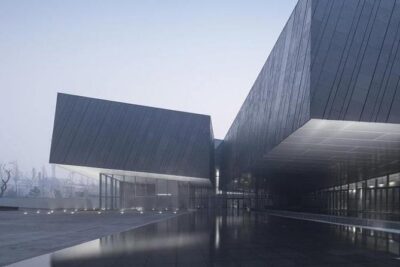
Private Half Day Tour to Unit 731 Museum and Sites in Harbin
Read our review →
Browse the lists this tour appears in