
Reviewed · ANCIENT TOWN TOURS
Pingyao Ancient City Full-Day Walking Tour
Pingyao’s best feature is how much of its old town you can understand on foot. Its low tiled roofs, narrow lanes, courtyard homes, merchant houses, government offices, and thick brick walls still form a working historic town rather than a collection of isolated monuments. A private guide helps you connect those pieces quickly.
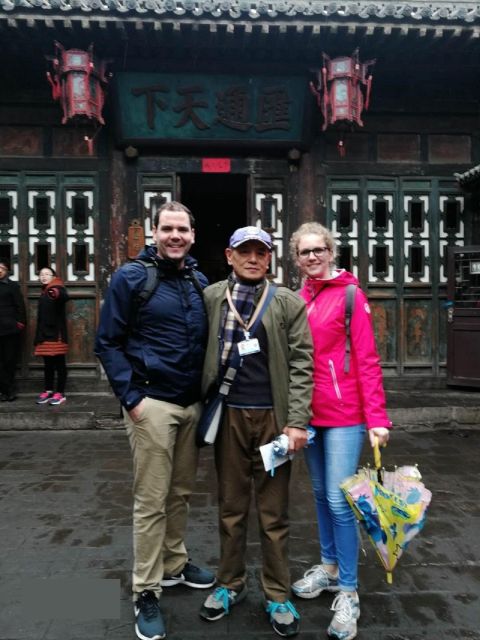
I like the city-wall views and the way the tour explains what you are seeing below, not just the age of the bricks. I also like the personal pace: guides such as Mike have stopped for photos, rest breaks, and lunch advice, while Lisa helped with practical matters such as arranging show tickets. The main drawback is cost: at $229 per group, it is good value for up to six people, but expensive for one or two.
Key points to know before booking
- Six major sights in one walking day: Cover the wall, bank, temple, Ming and Qing Street, yamen, and former armed escort company.
- A private group of up to six: You get direct time with an English-speaking guide rather than following a large crowd.
- Six hours of sightseeing within an eight-hour day: Expect a substantial amount of walking, with time for pauses and lunch.
- Admission costs extra: The city ticket is 125 RMB per person, children pay half price, and the guide enters free.
- Hotel pickup is simple inside Pingyao: The guide meets you in your hotel lobby. If you stay outside the old city, you meet inside the historic area.
- The strongest part is the explanation: Guides have covered architecture, symbols, old city planning, commerce, government, and everyday life in clear English.
Why walking is the right way to meet Pingyao
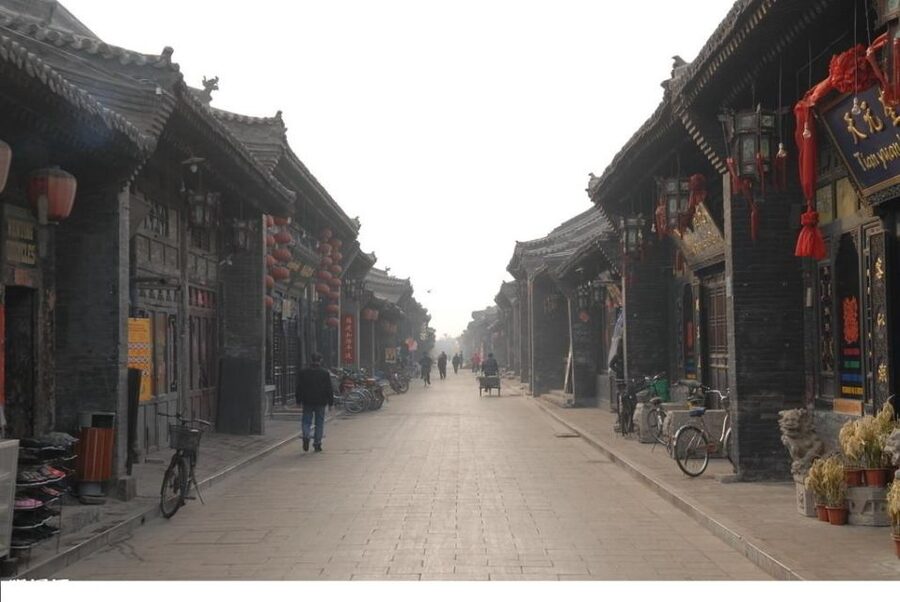
Pingyao is a UNESCO World Heritage Site and one of the best-preserved ancient cities in China. You do not need a vehicle to appreciate its central sights. In fact, walking makes the town easier to read.
The old city is built on a human scale. Narrow streets lead past brick courtyard houses, small shops, ceremonial gates, and preserved Ming and Qing buildings. From the street, you can notice how private homes face inward around courtyards, while commercial buildings open toward the road.
A guide adds the missing background. Without one, you can admire old walls and carved details but miss why the city became important. With the right explanation, Pingyao becomes a place shaped by finance, examination culture, local government, security work, and family life.
The day lasts eight hours, with about six hours listed for sightseeing. That leaves room for meeting up, buying entrance tickets, pauses, and lunch. You should still expect a walking-heavy day. Wear comfortable shoes and plan for regular stops, especially if you want time for photographs.
More Ancient Town Tours in China:
- Half-Day Bike Tour of Shanghai Old Town with Food Tasting
★ 5.0 · 306 reviews - 3-Day Yellow Mountains, Hongcun Village and Tunxi Ancient Street Private Tour
★ 5.0 · 75 reviews - Leshan Giant Buddha and Huanglongxi Ancient Town Day Trip
★ 4.5 · 45 reviews
Starting at the ancient city wall
The city wall is a strong opening because it gives you a quick view of Pingyao as a whole. Built from bricks and stone, it surrounds the old town and lets you look across rows of tiled roofs and down into domestic courtyards.
The low-rise design matters. From above, you can see that historic Pingyao has not been swallowed by modern towers. The wall helps you understand the shape of the town before you spend hours inside it.
Your guide can also explain how the wall relates to the streets and buildings below. This is one of the places where having a private guide makes a real difference. You can stop to ask about the city plan, the construction, or the buildings in view rather than simply walking along a marked route.
Do not expect to walk every inch of the wall. The tour description specifically refers to walking sections, so the exact portion may depend on timing, weather, and your interests. That is useful for a private tour because you can discuss the pace instead of being locked into one fixed schedule.
The wall can also be exposed to sun and wind. Bring water and dress for the season. The views are among the most useful photo opportunities of the day, but the value is not only visual. The wall gives you the town’s structure in one glance.
Rishengchang and the birth of Chinese banking
Rishengchang Exchange Bank is one of the day’s most important stops. It is described as China’s first exchange bank, and its old compound shows why Pingyao became a major center of merchant finance.
This is more than an old commercial building. It helps explain how money moved across a large country before modern banking and electronic transfers. In a place built around merchant trade, safe payment and reliable financial networks were essential.
Look closely at the compound layout and let the guide supply the details. A good explanation turns rooms, courtyards, and offices into a picture of working commerce. The point is not simply that the bank is old. It is that Pingyao’s wealth came from systems of trust, accounting, and long-distance business.
The visit also gives the day a welcome change of focus. The city wall presents defense and town planning. Rishengchang presents finance. You begin to see that Pingyao was not preserved by accident. Its buildings reflect the work that once filled them.
If you enjoy economic or social history, give this stop plenty of attention. If old buildings normally blur together for you, ask your guide to explain how the exchange bank operated and how it connected Pingyao with other parts of China.
The yamen, where local power worked
The Pingyao yamen dates to 1346, during the Yuan Dynasty. A yamen was a government office and residence for the magistrate, who served as mayor, judge, and senior official.
The scale is impressive. The complex once contained more than 300 rooms, including offices, courtrooms, meeting rooms, residential areas, a garden, and a prison. You enter through a ceremonial gate, then move through a compound designed to support both public administration and private life.
This stop gives you a different view of the old city. Rishengchang shows how merchants handled money. The yamen shows how officials handled order, law, taxes, disputes, and administration. The two sites together make Pingyao feel like a complete town, not just a pretty street of old shops.
The yamen may be most useful with a guide because its importance is easy to miss when you are looking only at gates and courtyards. Ask about the magistrate’s role and how the different sections of the complex worked. The guide can help you distinguish official spaces from residential and secure areas.
The drawback is that the yamen is large, and a full visit can take time. You will need to balance detail against the rest of the day. On a private tour, you can tell your guide if you prefer a slower explanation here or more time elsewhere.
More Walking Tours in China:
- Beijing Hutong Walking Food and Beer Tour at Hidden Restaurants
★ 5.0 · 1,132 reviews - Private Beijing Walking Tour of the Forbidden City with 7 Options
★ 5.0 · 675 reviews - Dark Side of Hong Kong – Kowloon Caged Homes Walking Tour
★ 5.0 · 418 reviews - Forbidden City Private Walking Tour with Optional Sights
★ 5.0 · 400 reviews
Ming and Qing Street, where the old town feels lived in
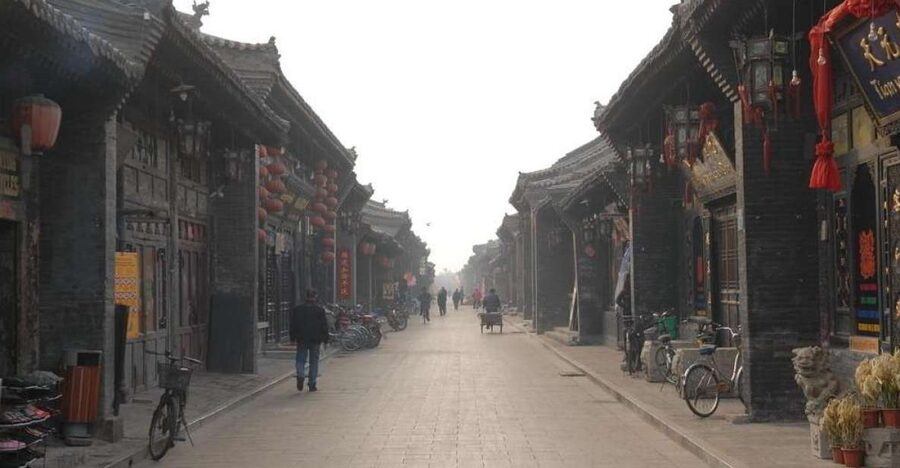
Ming and Qing Street is the most atmospheric part of the walk. Traditional shops and houses line the route, built with brick and stone in the architectural style of those dynasties.
This is where you see how commerce and home life met. Shopfronts face the street, while courtyard homes extend behind them. The narrow lanes make the town feel compact, and the preserved buildings offer a clear contrast with present-day city architecture.
I like this section because it asks less of you than a formal museum. You can watch the street, study signs and doorways, take photographs, and notice how the buildings fit together. Your guide can point out details that you might otherwise pass without a second look.
It is also the part of the day most likely to feel busy. The tour data does not promise quiet streets or a crowd-free visit, so keep your expectations practical. You are coming for the historic setting, but you are still walking through a popular old town with shops and other visitors.
This is a good place to ask questions about ordinary life. The guides have explained old customs, local routines, and the way courtyard housing shaped social life. Those stories can make a narrow lane more interesting than another grand gate.
The Confucian Temple and the road of scholars
The Pingyao Confucian Temple has a carefully planned layout and offers a look at the intellectual side of old Chinese society. Its paths were connected with the annual imperial examinations, and the site recalls the scholars who passed through the system.
One detail makes the visit especially memorable: you can walk along the route once used by the top examination scholars, known as Zhuangyuan. That turns the temple from a quiet architectural site into a place linked with ambition, education, and public service.
Your guide can explain why Confucian learning mattered and how success in the examinations shaped a person’s status. This is valuable context because the temple’s courtyards and gates may not explain themselves to an English-speaking visitor.
The temple also slows the day down. After the commercial energy of the bank and the official scale of the yamen, the ordered layout gives you space to think about the values behind the city’s institutions.
If you are mainly interested in shops and street scenes, this may be a quieter stop. Give it time if you want to understand the ideas that shaped government and family life in imperial China.
The former armed escort company
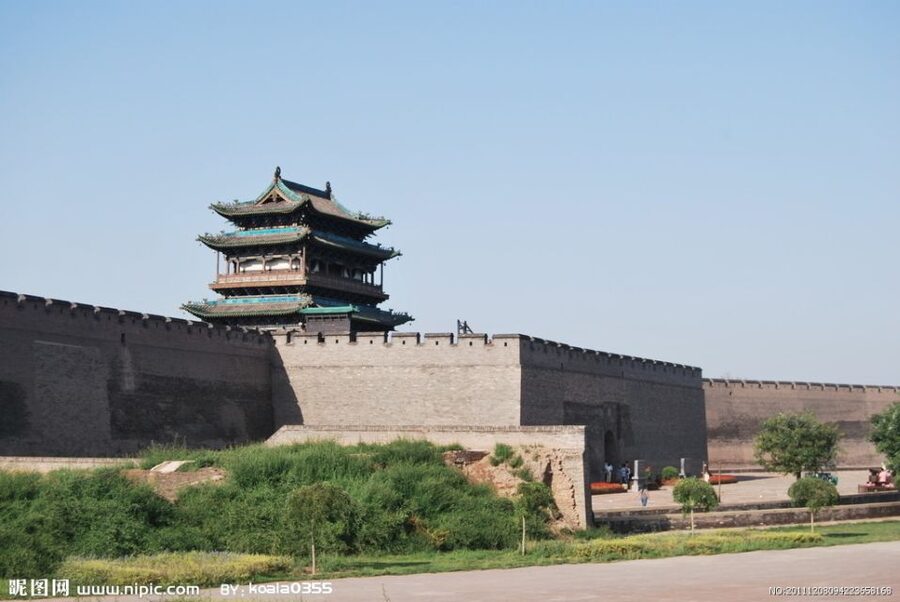
The Ancient Security Guard Company is another unusual stop. It was the only private organization of armed escort in Pingyao’s history and one of the two most famous during the Ming and Qing dynasties.
This site connects directly with the city’s commercial life. Merchants moving valuable goods or money needed protection, and private security groups became part of the business system. The stop helps link Rishengchang’s financial work with the risks of moving wealth across long distances.
It is an easy place to rush through if you focus only on courtyards and displays. Ask your guide how armed escorts fitted into the merchant economy. That question can bring the building’s purpose into focus.
The provided highlights do not list this stop in the short summary, but the detailed tour plan includes it. That means the exact order may vary, and your guide may adjust the route around opening times, your interests, or the pace of the group.
What the private format changes
This is a private tour for up to six people, with an English or Chinese-speaking guide. That format suits you if you want explanations tailored to your interests or if your group has mixed ages and walking speeds.
The strongest practical benefit is flexibility. Guides have stopped for photos, allowed rest breaks, answered repeated questions, and suggested a good restaurant for lunch. One guide also helped with show-ticket arrangements, which is useful if you are trying to fit a performance into your Pingyao stay.
Named guides associated with the experience include Lisa, Grace, Mike, Leo, Johanna, and Joanna. The guide assigned to you may be different, so treat those names as examples of the available guiding team rather than a guarantee.
The English ability and subject knowledge are central to the tour’s value. The guides have explained architecture, symbolism, historical figures, city planning, and daily life. That range matters because Pingyao can otherwise become a sequence of attractive but disconnected buildings.
Pickup is included from a Pingyao hotel lobby if your hotel is inside the old city. If you stay outside the ancient city, you meet the guide inside the old town instead. Transfer is not included, so do not expect a private vehicle to carry you between sights.
Price, tickets, meals, and practical value
The price is $229 per group of up to six. For six people, that works out to about $38 per person before admission, which is a fair price for a full private day with an English-speaking guide. For two people, the same tour costs about $115 per person, and for a solo visitor it becomes a major expense.
Admission is separate. The entrance ticket costs 125 RMB per person, children pay half price, and the guide enters free. The guide helps you buy the tickets on the day, which removes some of the hassle, but you should budget for this extra cost.
Meals are not included. Lunch can be arranged on your own, and the guide can suggest a restaurant. That is a sensible setup because it gives you control over timing and food choices, but bring money and do not assume lunch is part of the quoted price.
Hotel accommodation and transfers are also not included. The pickup wording applies to meeting the guide, not to transportation from another city or a complimentary ride around Pingyao.
Free cancellation is available up to 24 hours in advance for a full refund, and you can reserve now and pay later. Those terms are useful if your China schedule may change, but check the starting-time availability before committing to a particular day.
Who will get the most from this day
I would choose this tour if you have only one full day in Pingyao and want the town explained rather than simply photographed. It is also a strong match for first-time visitors who want the main historic sites without spending hours working out the route.
Families and small groups should benefit from the private format. You can pause when a child is tired, spend longer at a favorite building, or keep moving if the group is eager for the next stop.
It suits history, architecture, culture, and photography fans especially well. The city wall offers broad views, Ming and Qing Street supplies street scenes, and the bank, temple, yamen, and escort company each reveal a different part of Pingyao’s past.
I would think twice if you dislike long walks, prefer to explore alone, or are traveling solo on a tight budget. You can certainly see the old city independently, and the admission fee still applies even when you hire a guide.
Should you book the Pingyao walking tour?
Book it if you are sharing the cost with several people and want a focused day that connects Pingyao’s wall, finance, government, education, security, and street life. The private format, flexible pace, and strong English guidance are the main reasons to choose it.
For one or two people, compare the price with your own interest in guided interpretation. If you want to understand why the city looks the way it does, the guide adds real value. If you mainly want to wander, shop, and take photos, independent exploration may be enough.
Either way, plan for six hours on foot, budget 125 RMB per adult for admission, and wear shoes that can handle old streets and wall walks. For a small group with one full day in Pingyao, this is a practical way to see the major sites without losing the human stories behind them.
FAQ
How long does the Pingyao walking tour last?
The full experience lasts eight hours, with about six hours set aside for sightseeing in Pingyao Ancient City.
Where does the guide meet me?
If your hotel is inside Pingyao Ancient City, the English-speaking guide meets you in the hotel lobby. If your hotel is outside the old city, you meet inside the historic area.
Is transportation included?
No. The tour includes guide pickup at the stated meeting point, but transfers are not included.
How much is the entrance ticket?
The admission ticket costs 125 RMB per person. Children pay half price, and the tour guide enters free. The guide helps you buy the tickets on the tour day.
Is lunch included?
No. Meals are not included. The guide can help you find a restaurant during the day.
Can I cancel the booking?
Yes. You can cancel up to 24 hours in advance for a full refund. You can also reserve now and pay later.
More Full-Day Trips in China
- Beijing Full Day Tours: Tiananmen Sq, Forbidden City, Great Wall
★ 5.0 · 1,634 reviews - Private Shanghai Full Day City Tour with Old and New Highlights
★ 5.0 · 995 reviews - Beijing Classic Full-Day Tour including the Forbidden City, Tiananmen Square, Summer Palace and Temple of Heaven
★ 4.0 · 610 reviews - Beijing Essential Full-Day Tour including Great Wall at Badaling, Forbidden City and Tiananmen Square
★ 4.5 · 609 reviews
Newly listed around China
- Glass Bridge,Yuanjiajie Avatar Mountain&Tianzi Mountain day tour★ 5.0 · 30 reviews
- 1-Day Zhangjiajie National Forest Park(Avatar) and Tianmen Mountain Private Tour★ 5.0 · 5 reviews
- All Included Classic Private Day Tour for Avatar & Tianzi Mount★ 5.0 · 16 reviews
- VIP Mini Group:Avatar Mountains & Tianmen Mountain & Glass Bridge★ 5.0 · 5 reviews
- Yuanjiajie Avatar and Tianzi Mountain and Rice Field Village Tour★ 5.0 · 4 reviews
- 5-Day Private Zhangjiajie Ultimate Experience Tour★ 5.0 · 6 reviews
- Tianmen Mountain National Forest Park Tickets★ 5.0 · 3 reviews
- Zhangjiajie Tianmen & Glass Bridge Private All-Inclusive Tour★ 5.0 · 26 reviews
Ancient Town Tours, compared.
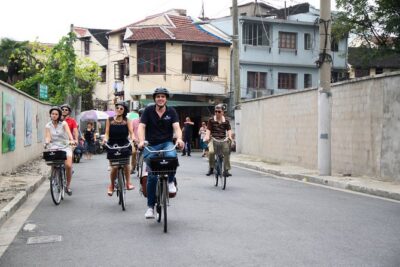
Half-Day Bike Tour of Shanghai Old Town with Food Tasting
Read our review →
3-Day Yellow Mountains, Hongcun Village and Tunxi Ancient Street Private Tour
Read our review →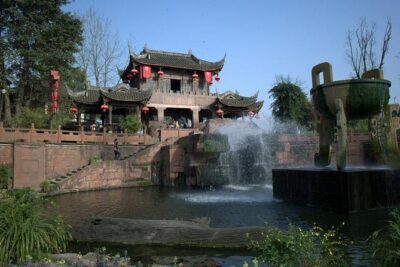
Leshan Giant Buddha and Huanglongxi Ancient Town Day Trip
Read our review →
1-Day Mt. Huangshan Tour with Optional Hongcun & Xidi Village
Read our review →
Xi’an Full Day Sightseeing Tour – Shaanxi History Museum, Big Wild Goose Pagoda, Ancient City Wall
Read our review →
3-Hour Shanghai Yu Garden &Old Town Private Tour with Tea Tasting
Read our review →
Off-beaten Route: Shanghai Old Town Discovery&Street Food Tasting
Read our review →Browse the lists this tour appears in