
Reviewed · HUTONG TOURS
Hutong Walking Tour: Discover Real Beijing without Crowds
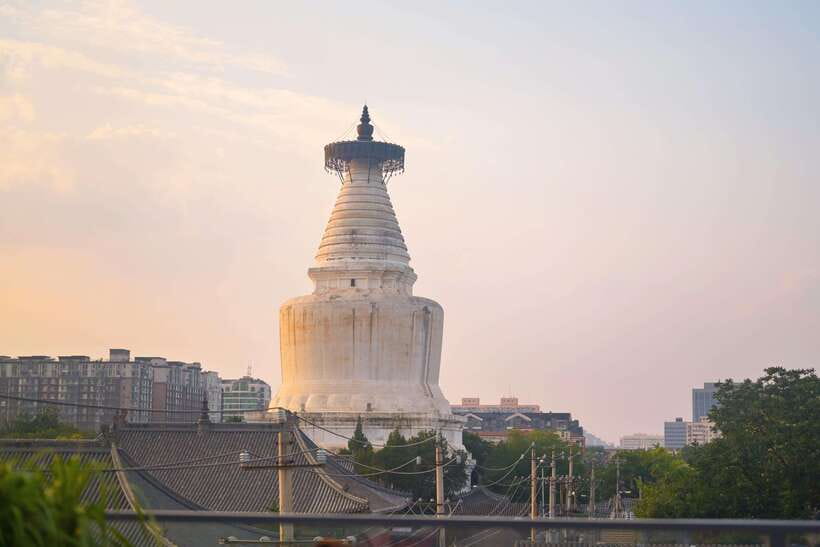
Beijing’s best introduction may be found away from its grandest sights. This 2.5-hour walk from Xisi Station moves between quiet hutongs, temples, a cathedral, old courtyards, and modern city life. Guides Dee, Tracy, and Heidi explain what you are seeing instead of simply pointing at it.
I like the small groups of up to eight and the useful mix of religion, architecture, daily life, and urban change. I also like the final local drink, which may be a herbal sour-plum drink enjoyed from a rooftop café. The main thing to know is that only about half the tour takes place in hutongs, so this is not a narrow-alley walk from start to finish.
Key points
- Small-group setting: With no more than eight people, the walk can feel personal and questions are welcome.
- A thoughtful route: You visit Guangji Temple, a cathedral, Zhuanta Hutong, the Palace of Ancient Monarchs, and Miaoying Temple.
- Useful city context: Guides explain courtyard homes, Chinese architectural design, religious sites, and how Beijing has changed.
- A local finish: The included Beijing drink may be plum juice with Chinese herbs, served at a café or rooftop terrace.
- Good first-day choice: You receive restaurant, shopping, and sightseeing suggestions that can help shape the rest of your Beijing stay.
- Expect real walking: The route covers about 3 kilometers and is not suitable for wheelchair users or people with mobility impairments.
Why this walk gives you a better start in Beijing
Beijing can be hard to read at first. Grand imperial buildings, wide avenues, modern offices, temples, churches, and narrow residential lanes all sit within the same city. This walk helps you connect those pieces.
The route begins at Xisi Subway Station, Exit D, then heads into an area where old Beijing is still visible in ordinary streets and working neighborhoods. You are not simply moving from one famous monument to another. You are looking at how people live, worship, work, and adapt as the city changes around them.
That makes this a smart first or second activity in Beijing. Several guides, including Tracy, Dee, and Heidi, have been praised for explaining architecture and customs in a way that helps you notice details later at the Forbidden City and other major sights.
The experience costs $49 per person. That is not the cheapest way to spend two and a half hours in Beijing, but the price includes the guide, the Palace of Ancient Monarchs entrance fee, and a traditional drink. For a small group with an English-speaking guide, that is reasonable, especially if you use the restaurant and sightseeing advice afterward.
More Walking Tours in Beijing
- Beijing Hutong Walking Food and Beer Tour at Hidden Restaurants
★ 5.0 · 1,132 reviews - Private Beijing Walking Tour of the Forbidden City with 7 Options
★ 5.0 · 675 reviews - Forbidden City Private Walking Tour with Optional Sights
★ 5.0 · 400 reviews
Starting at Xisi and reading old Beijing
Meet at Xisi Station, Exit D. Since transportation is not included, you make your own way there by subway or taxi, but the station makes the starting point fairly practical.
The first part of the walk introduces the contrast that shapes the whole experience. Ancient hutongs and traditional buildings appear close to the modern financial center. Your guide explains how Beijing’s urban design has changed, rather than treating the old neighborhoods as frozen museum pieces.
This is one of the tour’s strongest ideas. A hutong is not just a pretty lane for photographs. It is part of a wider residential pattern built around courtyard homes, known as siheyuan. The arrangement of entrances, walls, courtyards, and roof details reflects older ideas about family life, privacy, status, and order.
You may also hear how redevelopment has affected these areas. The tour does not promise an untouched version of Beijing, and that is useful. You get a more honest look at the meeting point between preservation and modern city growth.
Guangji Temple and Beijing’s religious life
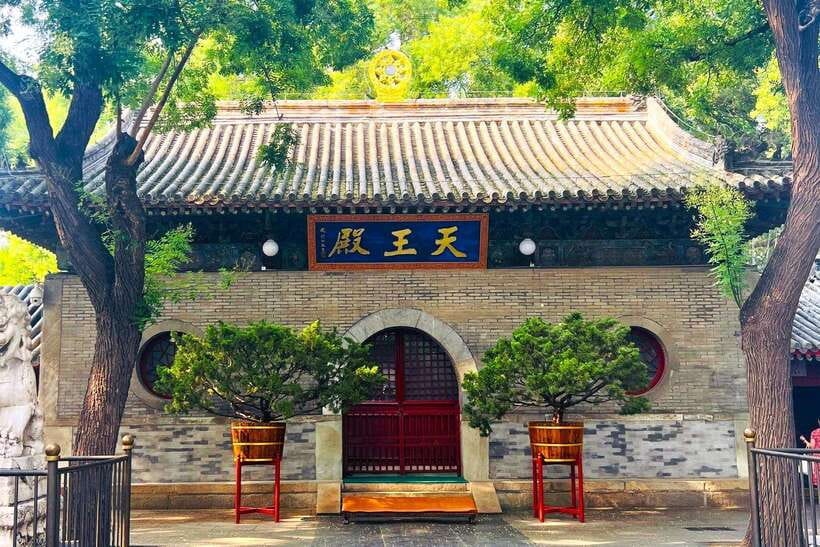
Guangji Temple is one of the early stops, with a guided visit. Temples can be difficult to understand if you simply walk in, glance at the statues, and leave. A guide can explain the purpose of the space and point out details in the architecture and decoration that you might otherwise miss.
The pace here is important. The walk is not designed as a long religious studies lecture. Instead, the temple gives you a practical way to understand how worship and local life fit into Beijing’s older neighborhoods.
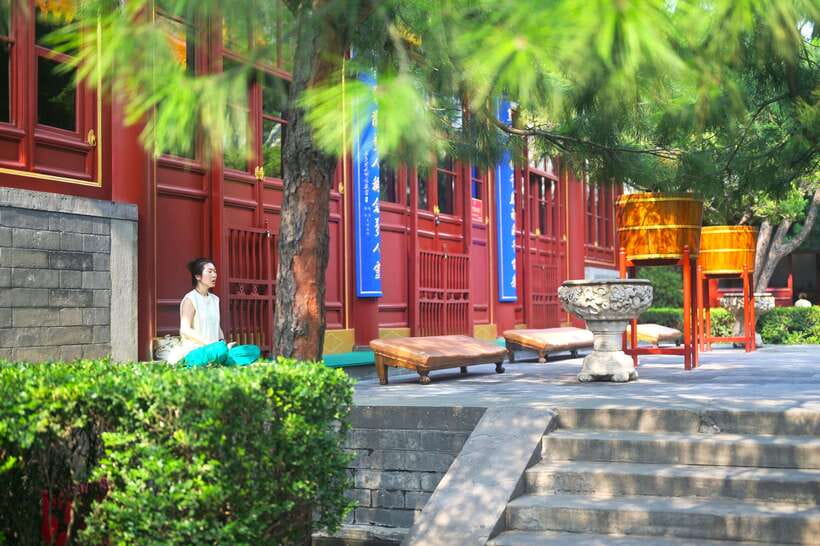
The tour also visits Miaoying Temple later in the route. Seeing more than one religious site lets you compare settings and styles. One visitor particularly valued the Buddhist temple as a calm place in the middle of the city. You should still remember that these are active religious spaces, not just attractions, so dress and behave respectfully and ask before taking close photographs of people.
A cathedral beside traditional Beijing
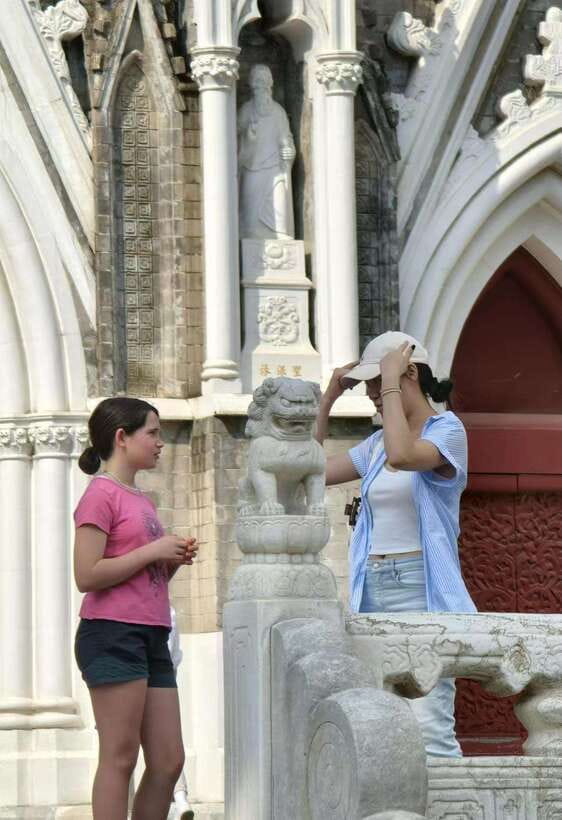
The Church of the Saviour, Beijing adds a different layer to the route. Its presence alongside temples and hutongs shows that Beijing’s religious story is broader than imperial ceremony and Buddhism.
Your guide provides context for the building and its place in the city. For you, the value is in the comparison. Within a short walking route, you can see how different religious traditions use space, decoration, entrances, and interiors.
This stop also helps prevent the tour from becoming a single-theme hutong stroll. The route is designed to show several sides of Beijing, including the city’s older religious and architectural mix.
More Hutong Tours in Beijing:
- Temple Heaven, Summer Palace, Lama Temple, Hutong Bus Tour
★ 4.7 · 319 reviews - Temple of Heaven, Summer Palace, Lama Temple, Hutong Tours
★ 5.0 · 311 reviews - Beijing Private Hutong Food Walking Tour
★ 5.0 · 299 reviews - The Hutong Experience by Bike
★ 5.0 · 163 reviews
Zhengyang Bookstore and local culture
Zhengyang Bookstore is listed as a visit and shopping stop. This is a chance to pause over books and local cultural material rather than rushing through another monument.
A small shop or bookstore can offer a different view of the city. Instead of only seeing Beijing through imperial landmarks, you are given a window into how history and local identity are presented today. The guide can also help you understand what you are looking at and may suggest other places to shop or eat.
Do not expect a long shopping session. The tour remains a walking experience, and this stop is one part of a route with several visits. Still, it is a useful change of pace.
Zhuanta Hutong and the everyday city
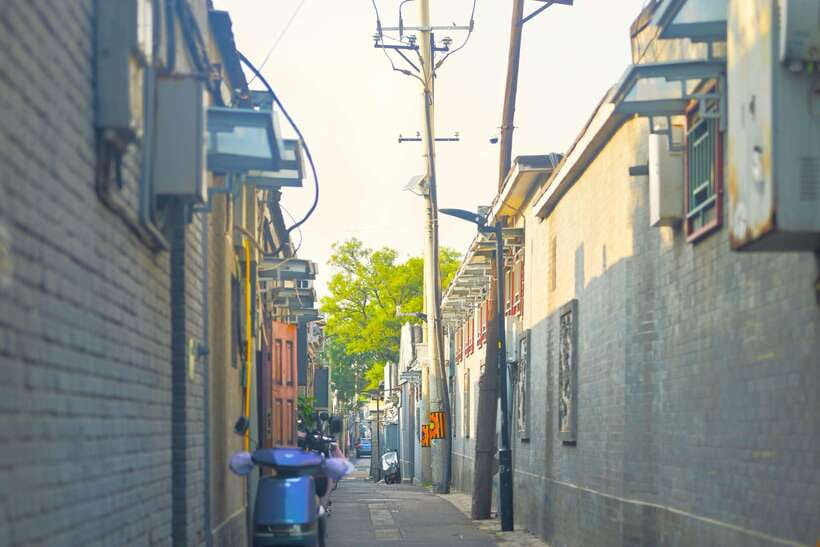
Zhuanta Hutong is where the walk feels most closely tied to the classic image of old Beijing. You pass through a traditional neighborhood and get a sense of the narrow lanes, courtyard homes, and everyday rhythm that large sightseeing routes often miss.
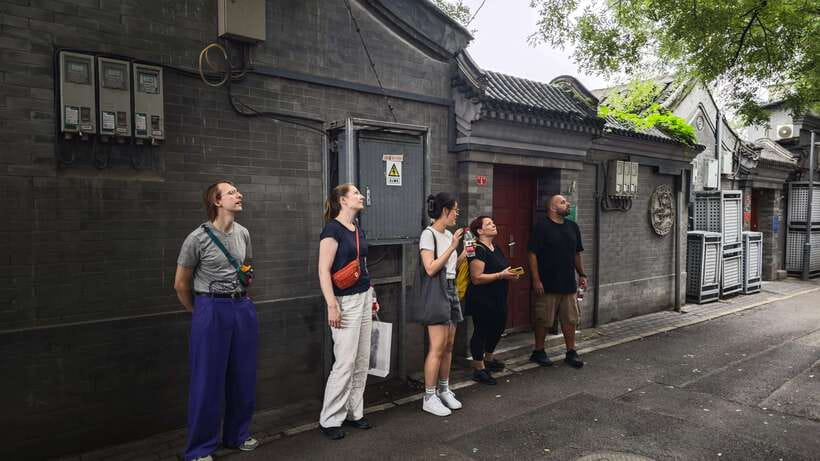
This is also where you need to be considerate. People live here. Keep your voice down, avoid photographing residents without permission, and do not block entrances. The tour specifically asks you to respect local privacy, and that is not a minor point.
The route gives you access to places that can be hard to find on your own, but it does not turn the neighborhood into a stage set. You may see ordinary homes and local activity rather than a polished attraction. That is the point, though it also means conditions can be less tidy or predictable than at a major monument.
The Palace of Ancient Monarchs
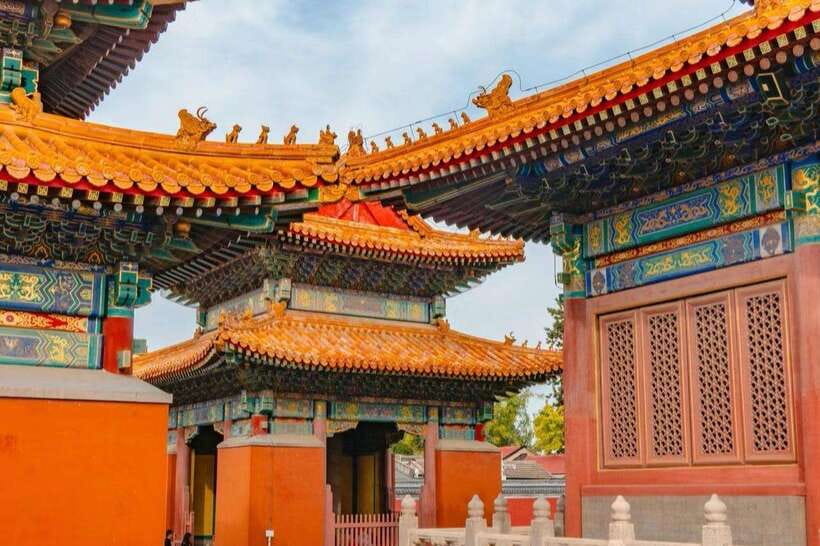
The Palace of Ancient Monarchs, also called the Emperors Temple of Past Dynasties, is both a guided visit and a photographic stop. The entrance fee is included, but the site is closed on Mondays, so check the operating day before booking.
This stop adds an imperial and ceremonial layer to the tour. The buildings and layout help you understand how earlier dynasties remembered rulers and used architecture to express authority. Your guide can connect details here with symbols and design elements you may later see in the Forbidden City.
That connection is one reason I would schedule this walk before a major imperial palace visit. You arrive at those larger sites with a better eye for symmetry, courtyards, rooflines, gates, and the meaning behind formal spaces.
The café break and Beijing’s traditional drink
The café stop is more than a rest break. It gives you time to sit down, ask questions, and get practical advice for the rest of your trip.
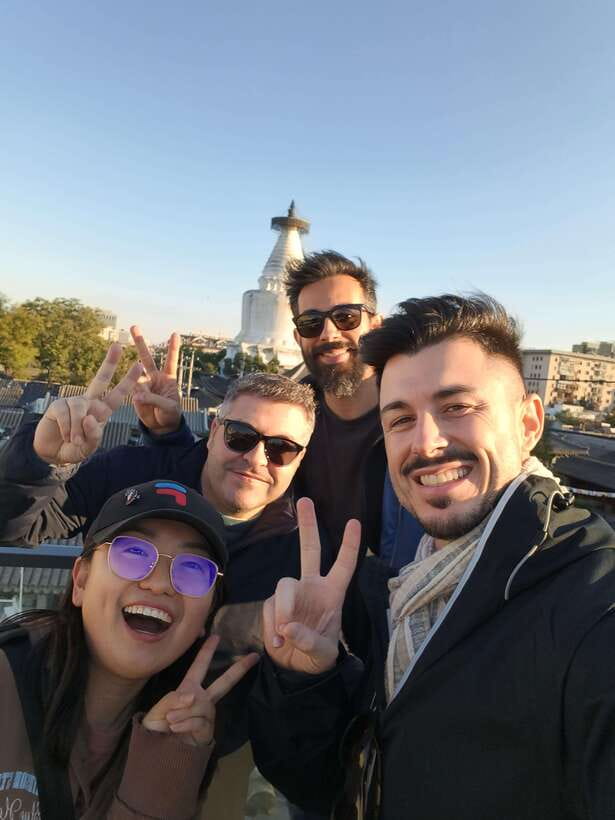
The included drink is described as a traditional Beijing beverage. Past visitors have enjoyed iced tea, coffee, and a sour-plum drink with Chinese herbs, so the exact drink or serving setting may vary. One memorable version took place on a rooftop terrace overlooking old Beijing, while another included a traditional Chinese medicine clinic and its café.
That uncertainty is worth noting. You should expect a complimentary local drink, but not assume a particular beverage, rooftop view, or café arrangement every time.
The stop can also be useful if you want help choosing where to eat or shop. Dee and Tracy are specifically praised for offering suggestions, while Heidi has also been noted for sharing food recommendations. These tips can be more valuable than a generic list because you can explain what you like and ask about places near your hotel or next stop.
Miaoying Temple and the final stretch
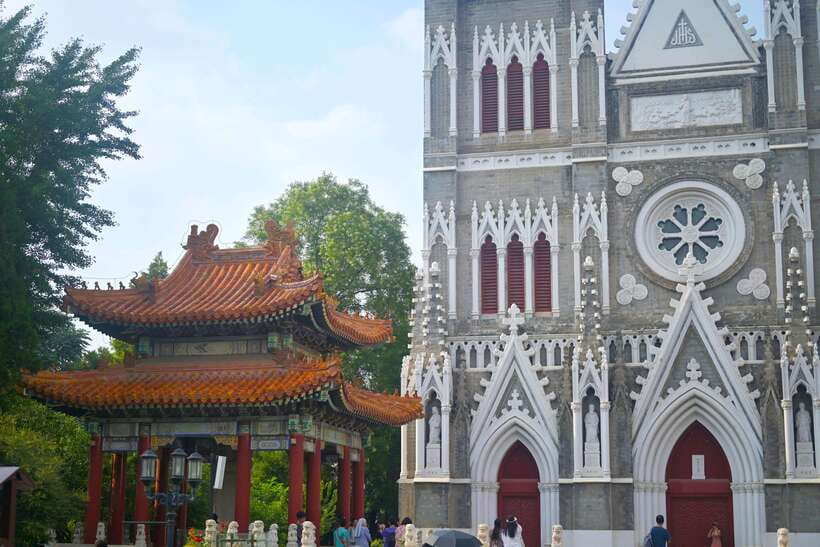
Miaoying Temple is the final major sight, with time for photographs and a guided visit. It gives the tour another chance to connect architecture, religion, and city history.
By this point, you have seen several different kinds of spaces: residential lanes, a bookstore, temples, a cathedral, and a historic palace site. Miaoying Temple helps bring those threads together. Your guide can explain how older buildings survive within a rapidly changing capital and why their design matters.
The tour finishes at 410 Funei Street. You are not returned to the subway station, so plan your onward route before the walk ends. The finish is useful for continuing into the neighborhood, but you should allow time to orient yourself if you have a fixed reservation afterward.
What the guides add to the experience
The guide is the main reason to book this rather than walk the route alone. Dee is often noted for her friendly manner, careful pacing, and practical suggestions. Tracy has been praised for explaining Chinese architecture, history, and daily life in clear English. Heidi is described as patient and good at keeping children interested.
The guides speak English and Chinese. Their approach appears conversational rather than scripted, and small groups make it easier to ask about anything that catches your attention.
This flexibility matters. If you are curious about courtyard design, Chinese medicine, religious practice, or how local residents use the hutongs, you can shape part of the discussion around your interests. The walk may also operate with one guide or, on some occasions, include trainee guides.
Families can enjoy the tour, but keep the walking distance in mind. The route covers around 3 kilometers, with stops and explanations along the way. It is not suitable for wheelchair users or people with mobility impairments, and anyone with knee, balance, or stamina concerns should choose carefully.
Timing, comfort, and practical details
Set aside the full two and a half hours, and wear comfortable shoes. Beijing weather can be hot and sunny, so bring water, sunscreen, and a hat. The walk takes place outdoors for much of the time, even though you enter several buildings.
Smoking is not allowed. In the hutongs, keep noise modest and respect residents’ privacy. The route includes old lanes and different types of buildings, so you should not expect every surface to feel as smooth or spacious as a modern sightseeing path.
The tour allows free cancellation up to 24 hours before the start and offers reserve-now, pay-later booking. Those terms are useful if your Beijing plans may shift, but the main practical check is the Monday closure of the Palace of Ancient Monarchs.
Is $49 good value?
At $49, this is best judged as a small-group guided introduction, not as a simple neighborhood stroll. You are paying for interpretation, local access, several entrance visits, a drink, and advice that can improve the rest of your stay.
The value is strongest if you are new to Beijing, want more context than a guidebook provides, or prefer quiet historic areas to packed headline sights. It is also a sensible choice before visiting the Forbidden City because the guide introduces architectural symbols and older city planning.
The value is weaker if you want two and a half hours entirely inside hutongs, dislike walking, or prefer to explore independently. About half the time is spent at temples, the church, the palace site, the bookstore, and other local attractions. That variety is a strength for some people and a drawback for others.
Should you book this Beijing walk?
I would book it for a first day in Beijing, especially if you want help understanding the city before tackling its largest imperial sights. The route gives you ordinary neighborhoods, religious buildings, courtyard architecture, and practical local advice without the pressure of a large group.
Choose another activity if your priority is a pure hutong tour or a short, low-effort outing. For everyone else, the combination of small-group guiding, less crowded historic places, and the final traditional drink makes this a useful and personal way to get oriented.
FAQ
Where does the Hutong Walking Tour begin?
It begins at Xisi Subway Station, Exit D, specifically at the southwest side of the exit.
How long is the tour?
The walking tour lasts 2.5 hours and covers about 3 kilometers.
Is the Palace of Ancient Monarchs entrance included?
Yes. The entrance fee is included, but the Palace of Ancient Monarchs is closed on Mondays.
What languages are available?
The tour is offered in English and Chinese, with a live guide.
Is the tour suitable for wheelchair users?
No. The activity is not suitable for wheelchair users or people with mobility impairments.
What should I bring?
Bring comfortable shoes, water, sunscreen, and a hat. You should also be ready for changing weather conditions and respect the privacy of people living in the hutongs.
Newly listed around Beijing
- Shore Excursion: 2-Day Private Beijing Sightseeing Tour from Tianjin Cruise Port★ 5.0 · 6 reviews
- Private Transfer: Tianjin Xingang International Cruise Home Port to Beijing Hotel★ 5.0 · 6 reviews
- Tianjin Private Day Trip to Forbidden City and Mutianyu Great Wall by Bullet Train★ 5.0 · 5 reviews
- Private One Way Tianjin Port Transfer to Beijing including Great Wall Sightseeing★ 5.0 · 4 reviews
- Bullet Train Private Tour: Beijing Tiananmen Square, Forbidden City & Great Wall★ 5.0 · 3 reviews
- Private Great Wall Tour from Tianjin Cruise Port★ 5.0 · 8 reviews
- Shanghai to Beijing Bullet Train Ticket with Hongqiao Station Transfer★ 5.0 · 5 reviews
- Private Mutianyu Great Wall Tour with Bullet Train Experience★ 5.0 · 3 reviews
Hutong Tours, compared.
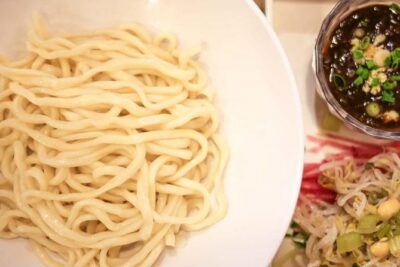
Beijing Hutong Walking Food and Beer Tour at Hidden Restaurants
Read our review →
Temple Heaven, Summer Palace, Lama Temple, Hutong Bus Tour
Read our review →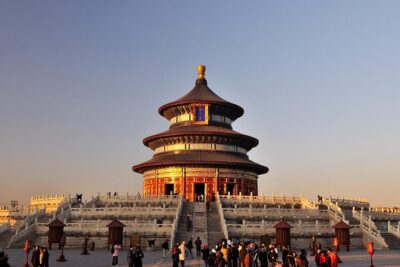
Temple of Heaven, Summer Palace, Lama Temple, Hutong Tours
Read our review →
Beijing City Walk: Explore Hutongs Life and Old Beijing
Read our review →Browse the lists this tour appears in