
Reviewed · SHENZHEN TOURS
Historia and Entertain Tour of the Youngest City of China
Shenzhen’s story begins at Luohu Port, where this young city first faced Hong Kong across the border. From there, guide Timo Xu connects border trade, politics, business, and bold construction projects to show how Shenzhen changed in roughly 40 years.
I like the small group of up to seven, which suits the tour’s conversational style. I also like the chance to hear local stories that are easy to miss on a standard sightseeing route, plus a snack stop at a traditional restaurant when time and weather allow.
The main drawback is time. Two hours is enough for a brisk introduction, but not a full tour of Shenzhen. At $40 per person, the value depends on how much you want history and conversation rather than a long list of major sights.
Key points to know before you book
- Luohu Port sets the scene: Start where Shenzhen’s modern story took shape through its connection with Hong Kong.
- Timo Xu leads in English: His background in Hong Kong, Shenzhen, engineering, and finance gives the talk a business and civic angle.
- The route links several districts: Expect Luohu, Futian, Huaqiang District, Citizen Plaza, and a low hill with a city view.
- Food is a possible extra: A local snack stop may be included in the route, but you pay for food yourself.
- The group stays small: With no more than seven people, you can ask questions and shape the conversation.
- This is a history walk with transport: Transportation fees are included, but the exact mix of walking and riding can depend on timing and conditions.
Why Shenzhen makes a good history walk
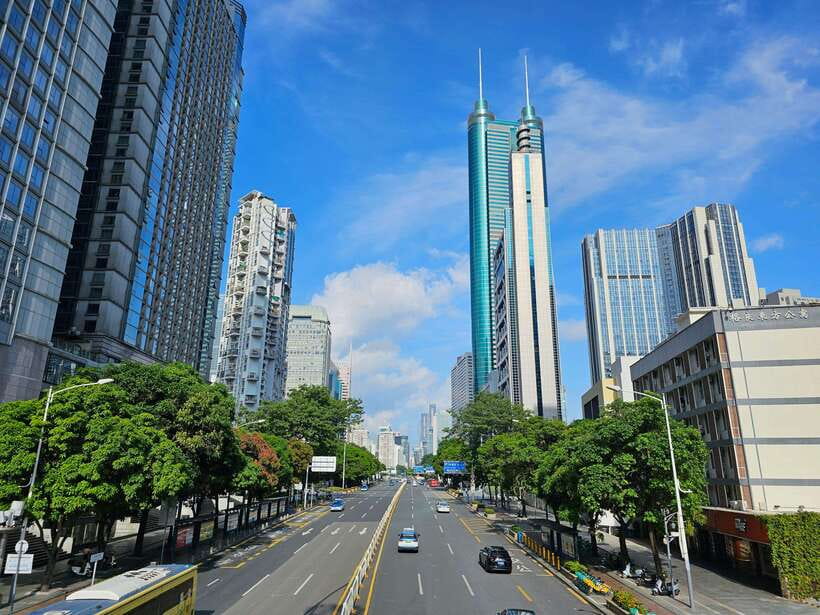
Shenzhen can look like a city that appeared overnight. Wide roads, tall towers, shopping districts, and polished public spaces can make its past hard to picture. This tour works by putting that change at the center of the experience.
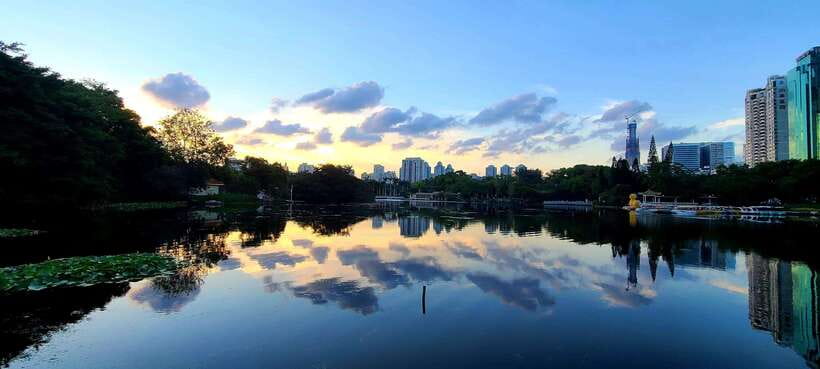
Timo describes how parts of Luohu and Futian were once associated with fields and lakes. Today, those same areas contain some of the city’s busiest commercial and civic zones. That contrast gives you a useful frame for everything you see.
I like this approach because Shenzhen is not mainly a city of old monuments. Its important story is often found in transport links, new buildings, land prices, company headquarters, and government decisions. You need someone to explain why an ordinary-looking junction or tower matters.
The tour also places Shenzhen in a wider setting. You hear about its links with Hong Kong and Beijing, including the political and economic forces that helped shape the city. The aim is not just to show you a skyline. It is to explain why the skyline exists.
A few more Shenzhen days worth a look
- Shenzhen Tech Tour: Explore the Future
★ 5.0 · 49 reviews - Customizable Private Shenzhen Tour with Local guide and Car
★ 5.0 · 48 reviews - Shenzhen Private Flexible Day Tour with Guide and Driver Service
★ 5.0 · 41 reviews
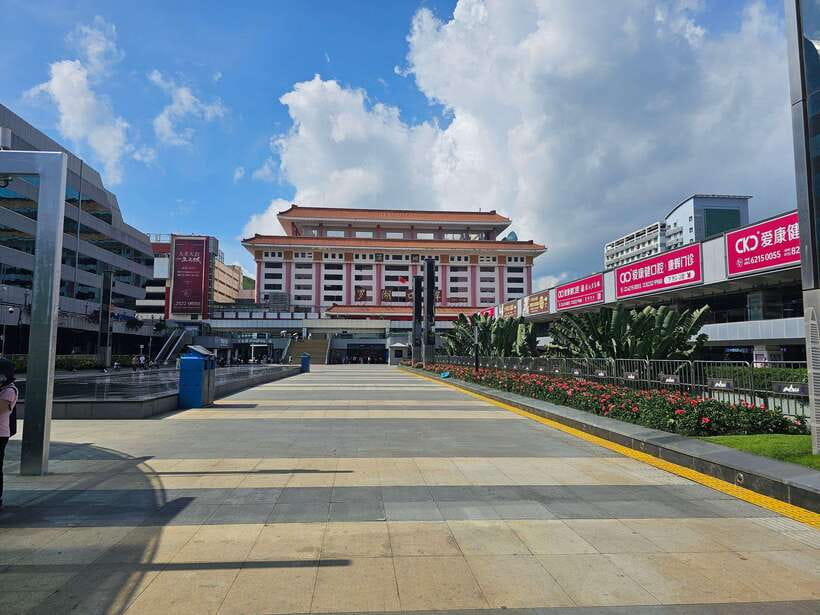
Starting at Luohu Port and the Hong Kong connection
The meeting point is the Starbucks at China Bank Garden, at No. 1006 Fuzhong 1st Road in Futian District. In Chinese, the address is 深圳市福田区 福中一路1006号 星巴克(中银花园店). Check the Chinese address carefully if you need to show it to a driver or ask for directions.
From there, the route heads into the story of Luohu Port. Luohu was one of only two land ports in China, making it an important gateway between mainland China and Hong Kong. That fact helps explain why the area became so important to Shenzhen’s early development.
You are not simply ticking off a border crossing. The point is to understand how movement between Shenzhen and Hong Kong affected trade, work, business, and the city’s identity. Timo’s five years working in both Hong Kong and Shenzhen give him a personal connection to this part of the story.
This stop should appeal to you if you enjoy places where geography and politics meet. It may be less satisfying if you expect to spend a long time inside a major attraction. The tour uses Luohu as a starting point for explanation, not as a museum visit.
Buildings that marked a sudden change
As the route continues, Timo points out buildings and city views connected with Shenzhen’s early rise. Some structures once shocked people across China because they represented a new scale of construction and economic ambition.
The exact buildings you focus on can depend on the day’s timing and route, so you should think of this section as a guided reading of the city rather than a fixed list of interiors. Timo uses stories, maps, and visual aids to help you connect what you see now with earlier stages of development.
That is useful in a city where construction can hide the past. A tower may look like just another office building until you learn what it represented when it was built. A broad civic area may seem ordinary until you hear that the surrounding land was once far less developed.
I especially like the way this part should appeal to people interested in urban change and business history. Timo works in the IPO field during the day, and that background gives the tour a practical link to companies, entrepreneurs, land value, and commercial growth.
Huaqiang District and the price of a square meter
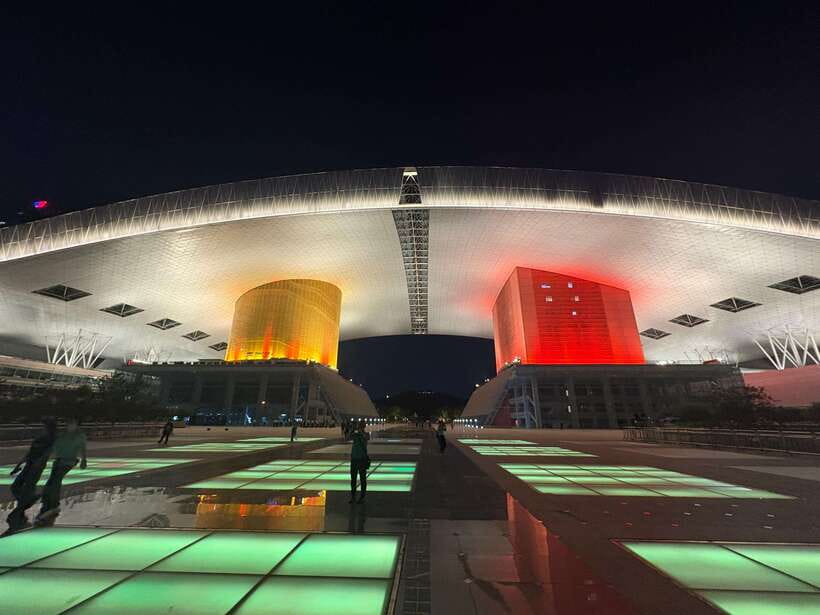
The route includes Huaqiang District, an area known for intense commercial activity and expensive leases. Timo uses the district to explain how much value can be created in a small amount of space.
You will walk streets where the meaning of the city is measured not only in buildings, but also in business density and commercial opportunity. The tour looks for traces connected with companies, entrepreneurs, and public figures, giving you a more human angle than a simple discussion of property prices.
Huaqiang also helps explain why Shenzhen attracts so much attention. The city’s story is not only about government planning. It is also about people who built companies, found markets, and made use of the city’s special position near Hong Kong.
This stop may be the most rewarding part for anyone curious about technology, commerce, finance, or modern Chinese cities. If your main interest is ancient architecture or traditional neighborhoods, you may find less here to hold your attention.
The tour does not include a shopping allowance or souvenirs. That is useful to know, since Huaqiang can tempt you to turn a history walk into a shopping trip. The focus is on the district’s role in the city, not on arranging purchases.
More City Tours in Shenzhen:
- Zhujiajiao Water Town and Shanghai City Private Day Tour
★ 5.0 · 1,016 reviews - Private Shanghai Full Day City Tour with Old and New Highlights
★ 5.0 · 995 reviews - Hong Kong Day Tour: City Landmarks & Highlights
★ 4.5 · 798 reviews - Xi’an in A Day: Terracotta Army+City Highlights+Family Lunch
★ 4.9 · 304 reviews
Futian, Citizen Plaza, and the modern city center
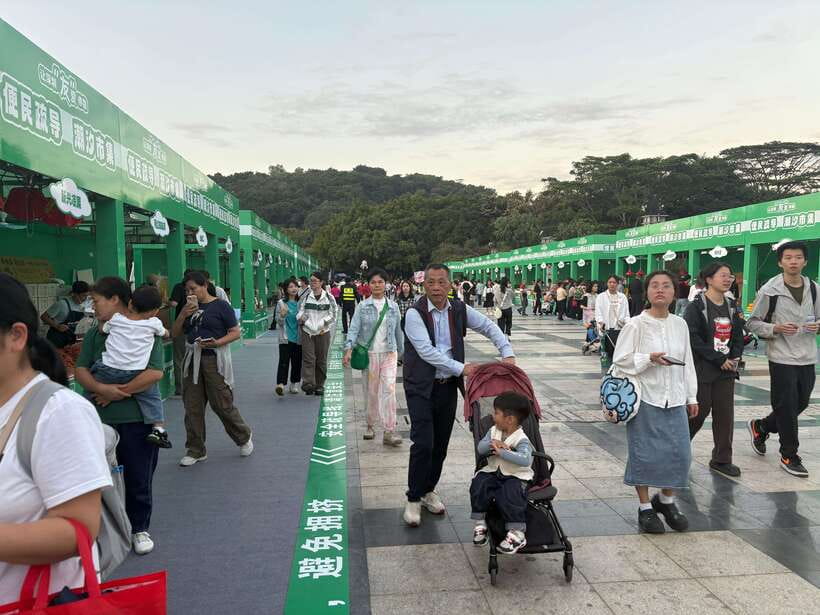
The tour also covers Futian, one of Shenzhen’s key central areas. Citizen Plaza offers a strong visual way to understand the city’s scale and civic ambitions.
From a modern public space, it can be difficult to imagine the area as fields and lakes only a few decades ago. Timo uses that contrast to show how quickly Shenzhen changed and how much planning went into its central axis.
This is where the title youngest city of China becomes more than a slogan. You see a city whose identity was built in recent memory, rather than preserved from a distant past. The result is a different kind of sightseeing. You are looking for evidence of acceleration, not ruins.
I would pay close attention here if you want to understand how public spaces, government buildings, business districts, and transport routes fit together. Timo’s use of maps and visual material is helpful because the city can be hard to read from street level.
The drawback is that a two-hour tour cannot give Futian a full treatment. You will get a framework, not every detail. If you want a long architectural walk, a full-day city tour would make more sense.
A low hill for a wider view
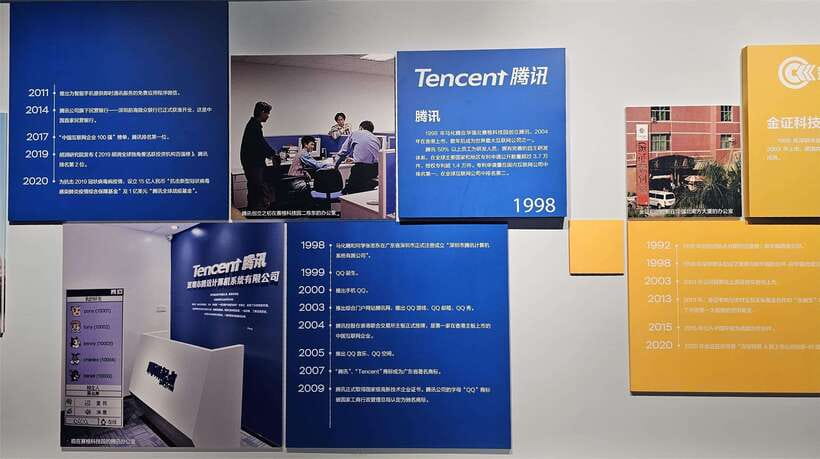
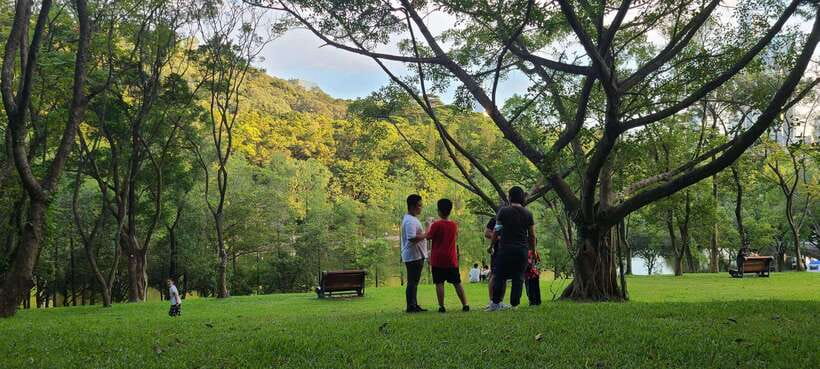
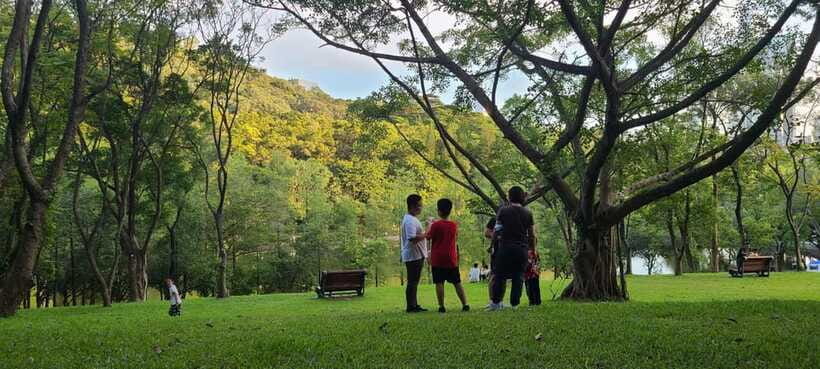
One portion of the experience includes a walk up a park and a hill. The hill is described as not very high, but you should still be ready for some walking and a short climb.
The reward is a bird’s-eye view of the city axis and Shenzhen’s spread of towers and major districts. This view helps pull the earlier stories together. From ground level, individual buildings can feel disconnected. From above, you get a clearer sense of how the districts relate.
This is also a good point for conversation. Timo can connect the view with the city’s development, its relationship with Hong Kong, and the role of national policy. One participant particularly valued the lively discussion during the climb and the view from the top.
The hill is not a major mountain hike, and the tour is not sold as an outdoor adventure. Still, weather and comfort matter. Wear shoes you can walk in, especially if you want to enjoy this part rather than rush it.
Local food adds a useful pause
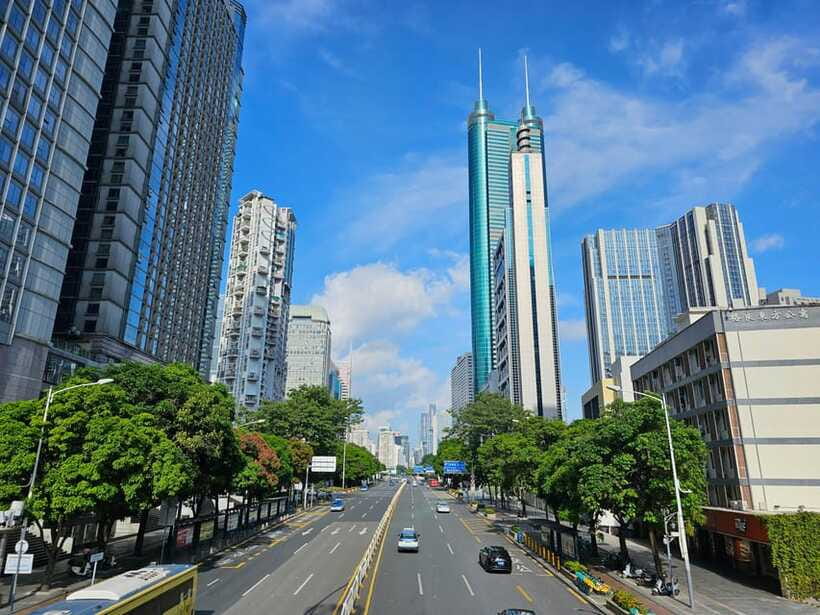
Food is part of the experience, but it is not included in the $40 price. Depending on the weather and available time, Timo may stop at a traditional and local restaurant for a snack.
That small pause matters because food can connect the city’s modern story with daily life. You get a chance to taste something local while asking questions in a less formal setting. It also breaks up the history talk and keeps the two-hour route from feeling like a lecture.
Do not book this expecting a full food tour. The stop is flexible, and the food cost is your responsibility. If you have dietary needs or a strong preference for particular dishes, ask Timo before the tour rather than assuming the snack will be arranged around you.
The included recommendation list adds value after the walk. It covers restaurants, bars, cocktails, and live music venues, giving you ideas for continuing your Shenzhen stay. That list may matter more than the snack itself if you have several days in the city.
Timo’s guiding style and what it means for you
Timo Xu is the central reason this tour works. He has engineering and finance degrees, has worked in Hong Kong and Shenzhen for five years, and currently works in the IPO progress of companies. At spare time, he guides with a clear interest in travel and the city’s past.
His style is personal and discussion based. You can expect history mixed with contemporary examples and stories from his own experience. He is also interested in meeting people from different countries, so the tour is designed as a conversation rather than a one-way speech.
The strong praise for Timo focuses on his hospitality, friendliness, empathy, and passion. One person who wanted cultural context instead of shopping found the tour especially well suited to that goal. Another appreciated the way he used maps and visual aids to explain Shenzhen’s growth.
That does not mean every minute will be packed with famous sights. The tour’s value rests heavily on the guide’s ability to explain what you are seeing. If Timo’s style matches your interests, the experience can feel personal and useful. If you prefer independent wandering with plenty of free time, you may find the format too guided.
The tour is given in English. The small group, capped at seven, should make it easier to ask about topics that interest you, from Hong Kong relations to business growth or the meaning of a particular district.
Is $40 a fair price for two hours?
At $40 per person, this is not the cheapest way to see Shenzhen. The price includes the guide, transportation fees, and the recommendation list, but not food or souvenirs.
The key question is what you are buying. You are paying for a focused explanation of Shenzhen’s development, a small group, an English-speaking guide with local work experience, and a route that links several parts of the city. You are not paying for long visits inside attractions or a large meal.
One Spanish-speaking participant gave the guide five stars but felt the cost was high for the amount seen and done. That is a fair caution. In two hours, you cover a lot of ideas, but the physical sightseeing remains fairly compact.
I see the price as reasonable for a visitor who values context and conversation, especially on a first visit to Shenzhen. It is less attractive if your priority is quantity, extensive walking, or included food. The tour earns its price through Timo’s interpretation, not through expensive admissions.
Free cancellation up to 24 hours before the start and reserve-now, pay-later booking make it easier to fit into a changing schedule. The activity page asks you to check starting times because the exact availability can vary.
Who should choose this Shenzhen experience?
I would choose this tour if you:
- Want to understand how Shenzhen grew so quickly
- Prefer stories about people, policy, business, and daily life
- Are interested in the link between Shenzhen and Hong Kong
- Like asking questions in a small group
- Want an English tour led by someone with experience in both cities
- Prefer cultural context to shopping-focused sightseeing
- Have only two hours and want a clear introduction
I would think twice if you:
- Want a long food tour
- Expect many ticketed attractions
- Prefer ancient sites and preserved historic streets
- Need a slow pace with little walking
- Want food and drinks included in the price
- Prefer to explore without a guide
Should you book it?
Book it if Shenzhen feels confusing and you want someone to explain the forces behind its rise. Timo’s strongest qualities are his warmth, personal experience, and ability to connect Luohu, Futian, Huaqiang, Hong Kong, and Beijing in one short story.
Skip it if you judge value mainly by the number of sights visited. Two hours passes quickly, the food is extra, and the tour may feel expensive for a compact route.
For the right person, this is a smart first look at Shenzhen. You leave with a way to read the city, not just a set of photographs.
FAQ
How long does the tour last?
The tour lasts two hours.
What is the price?
The price is $40 per person.
Who guides the tour?
The guide is Timo Xu, who has worked in Hong Kong and Shenzhen for five years and holds engineering and finance degrees.
What language is the tour given in?
The tour is given in English.
How many people can join?
The group is limited to seven participants.
Where is the meeting point?
The meeting point is Starbucks at China Bank Garden, No. 1006 Fuzhong 1st Road, Futian District. The Chinese address is 深圳市福田区 福中一路1006号 星巴克(中银花园店)。
What places are included in the route?
The route includes Luohu Port, Huaqiang District, Futian, Citizen Plaza, and a park and low hill with a city view.
Is food included in the price?
No. A snack stop at a traditional local restaurant may be included depending on weather and time, but you pay for food yourself.
What else is included?
The tour includes the guide, transportation fees, and a list of recommendations for restaurants, bars, cocktails, and live music venues.
Newly listed around Shenzhen
- 1 day Car Hire in Shenzhen with Driver (10 hours)★ 3.0 · 5 reviews
- ShenZhen: Tallest Building with Luxury Meal on Highest Floor★ 4.7 · 7 reviews
- Private Shenzhen Evening Tour With Shenzhen Top Scenic Spots★ 4.5 · 8 reviews
- Shenzhen Private Flexible Day Tour with Guide and Driver Service★ 5.0 · 41 reviews
- Shenzhen Self-Guided Tour with Private Car and Driver Service★ 5.0 · 10 reviews
- Shenzhen Tech Tour: Robotaxi, Drone Delivery & Innovation Demos★ 5.0 · 18 reviews
- Customizable Private Shenzhen Tour with Local guide and Car★ 5.0 · 48 reviews
- Private Shenzhen Day Tour from Hong Kong★ 5.0 · 18 reviews
Shenzhen Tours, compared.

Customizable Private Shenzhen Tour with Local guide and Car
Read our review →
Shenzhen Private Flexible Day Tour with Guide and Driver Service
Read our review →
Shenzhen Tech Tour: Robotaxi, Drone Delivery & Innovation Demos
Read our review →
From Hong kong to Shenzhen tour with Flexible Itinerary / English
Read our review →
Shenzhen Self-Guided Tour with Private Car and Driver Service
Read our review →
Shenzhen Private Day Tour with Car Service Tech+Culture+Shopping
Read our review →Browse the lists this tour appears in