
Reviewed · GUANGZHOU TOURS
Guangzhou: Textile Hub and Garment Factory Half-day Tour
Guangzhou’s Zhongda Textile Hub shows you how fabric can move from a stall to a finished garment with startling speed. In about two hours, you’ll walk through textile shops, see how patterns and materials are handled, and visit a small factory where workers sew clothing piece by piece. I like the direct access to factory owners and the chance to see the supply chain at street level, not behind a showroom window. I also like the focus on how small businesses cooperate, since that explains far more about China’s production speed than a polished industrial park would.
The tradeoff is the setting. This is a fast, crowded urban area with many e-scooters, narrow working spaces, and plenty of walking. It is not a calm sightseeing tour, and the two-hour schedule leaves little room for lingering. If you want a practical look at fashion production, though, the pace is part of the lesson.
Key points at a glance
- Fabric to finished clothing: Follow the steps from textile selection to patterns, labels, packaging, and sewing.
- Zhongda Textile Hub: Walk through one of Guangzhou’s most concentrated textile markets with an English-speaking industry guide.
- Small factory access: See workers sewing garments and watch how patterns are laid out on fabric.
- Useful business contacts: Speak directly with order takers and garment factory owners.
- Small-group format: The group is limited to 10 people, which makes questions and conversation easier.
- Fast, physical outing: Bring comfortable shoes and prepare for busy streets, e-scooters, and a lot of walking.
Why Zhongda explains Guangzhou’s China Speed
The most useful part of this experience is the setting. Zhongda is not presented as a single factory with a neat visitor route. It is a dense textile cluster where fabric sellers, order takers, small workshops, packaging suppliers, and garment producers operate close together.
That proximity matters. If a clothing business needs a different fabric, a revised label, a new pattern, or a small production change, the people involved can communicate and respond quickly. The tour uses this physical closeness to explain how garments can move through several stages in roughly 48 hours.
You will not simply hear that production is fast. You will see the connections that make it possible. Shops are packed close together, and the working system depends on many independent businesses coordinating without one central company directing every step.
For anyone working in sourcing, retail, fashion, or supply chain management, that is the real subject of the tour. The cloth itself is interesting, but the larger lesson is how a dense network can reduce delays.
More half-day trips in Guangzhou:
- Private Half-Day Guangzhou City Tour with Pickup
★ 5.0 · 4 reviews - Half-Day Mini Group Xian Tour to Terracotta Warriors Museum
★ 5.0 · 467 reviews - Half-Day Chengdu Cooking Class with a Local Market Visit
★ 5.0 · 465 reviews
Starting at Zhujiang International Textile City
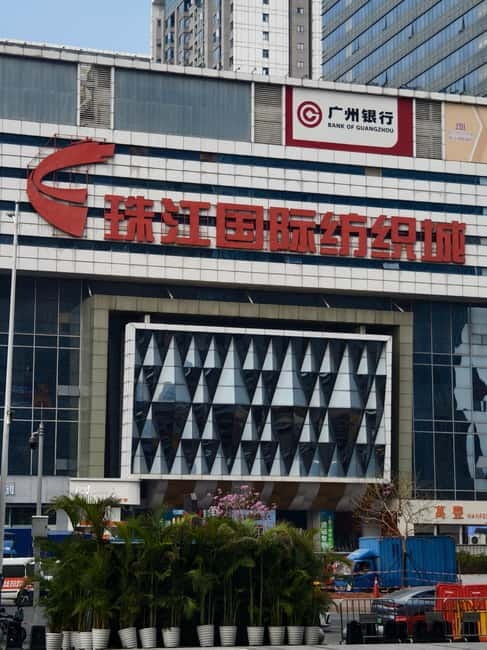
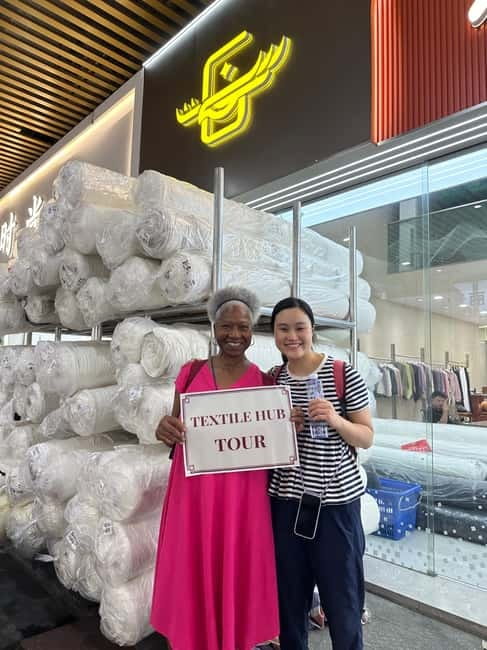
The meeting point is the main entrance of Area A at Zhujiang International Textile City, written in Chinese as 珠江国际纺织城A区正门. Look for the shop called 恒泰超泓. Your guide will wait in front of it with a Textile Hub Tour sign and the Authentic Tour Asia company name.
This detail matters because the textile district can feel confusing at first. It is a busy commercial area rather than a single clearly marked attraction. Have the Chinese meeting point saved on your phone, and allow time to identify the correct entrance.
If you use Didi, enter 海珠合生新天地 as the destination. That shopping mall is directly across the street from the meeting point. By subway, take Line 11 to Yijing Lu Station, or 逸景路站, and use Exit C. From there, walk west for about 10 minutes along the main road, with your back to the morning sun.
The guide begins by helping you read the area. That orientation is important. Without it, the shops, signs, rolls of fabric, and passing scooters can blur into one large market. With an industry guide, you can focus on what each business does and how the pieces fit together.
Inside the textile market, where choices happen quickly
The first guided portion takes place around the textile hub. You can expect to see fabric sources and learn how buyers compare materials for different garments. The experience is not limited to admiring bolts of cloth. It connects fabric choice to the later work of cutting, sewing, labeling, and packing.
That makes this stop useful for beginners. If you are starting a fashion business, you may understand that fabric matters, but not yet know how a material choice affects the rest of production. The guide can help explain the role of different fabrics and how buyers make decisions before a garment reaches the sewing room.
A particularly useful part of the route is the attention to the less glamorous pieces of production. Clothing requires more than fabric and thread. You may see how labels are made and how boxes are prepared for finished orders. These details are easy to overlook online, yet they form a real part of the supply chain.
The market is also where you begin to see the advantage of concentration. A buyer can compare sources without traveling across a distant industrial zone. An order taker can connect a request with the right workshop. That does not mean every order is simple, but the distance between decisions and production is short.
For a sourcing professional, bring questions about minimum orders, fabric choices, production timing, and how changes are handled. The tour is designed for direct conversation, so you will get more from it if you arrive with a few practical questions rather than treating it as a passive walk.
Through urban villages and the working side of production
The route also enters urban village areas, where workers live and work close to the businesses serving the textile trade. This is an important part of the experience because it gives you a look at the human structure behind fast orders.
The point is not to treat the area as a photo stop. It helps explain how flexible labor supports small production runs and quick changes. When orders shift, workers and small workshops can adapt without the fixed structure of a large factory.
You should expect a close, active environment. The tour information warns that there will be plenty of walking and many e-scooters. Pay attention when crossing or moving between shops. Comfortable shoes are essential, and smoking is not allowed during the activity.
This section may be less comfortable than a formal factory tour. Space can be tight, the pace can be quick, and the working setting is not arranged for visitors. That is also its value. You get a more honest sense of how production fits into daily urban life.
The tour is not suitable for wheelchair users, so mobility needs should be considered before booking. The route involves walking through a busy district rather than moving between accessible visitor facilities.
A few more Guangzhou days worth a look
- Guided Cycle Tour of Guangzhou
★ 5.0 · 164 reviews - Customised Private Guangzhou City Tour with Flexible Itinerary
★ 5.0 · 107 reviews - Private Guangzhou Full Day City Tour with Old and New Highlights
★ 5.0 · 62 reviews - Reputable Private Guangzhou Tour Guide Service by Xaq
★ 5.0 · 60 reviews
Inside a small garment factory
The factory visit is the strongest part for anyone who wants to understand how clothing is actually made. You can see staff sewing garments piece by piece, rather than viewing only completed samples.
The process includes more than the sewing machines. You may see how designers’ patterns are sent in and laid out on fabric before workers begin cutting and assembling the pieces. That moment helps connect the design stage to the physical work of production.
You can also learn how a small factory receives orders and organizes its response. The factory owner may explain the work directly and show you the production rooms. That personal access is unusual compared with a standard factory visit, where visitors often remain behind a viewing line and receive a general explanation.
The factory is not presented as a grand manufacturing plant. Its smaller scale is the point. You can see how a compact operation handles orders, adapts to requirements, and works with the surrounding textile network.
If you sew as a hobby, this stop should be especially engaging. You can watch familiar steps take place at commercial scale, including the movement from pattern layout to cutting and sewing. If you work in fashion, the visit gives you practical context for conversations with suppliers and production partners.
Keep your expectations realistic. A two-hour tour cannot show every stage of every garment, and the exact factory activity may vary with current orders. The experience gives you a working example and a clear explanation of the system, not a full factory audit.
Meeting order takers and factory owners
The personal conversations are a major reason to choose this tour. You are encouraged to speak with order takers and factory owners rather than simply following a guide through the market.
That direct contact can help you understand how business is handled at a local level. You may learn how a request is passed along, how production partners cooperate, and how a factory responds when an order changes. The system relies on self-driven collaboration instead of one central manager controlling the whole chain.
For someone looking for business partners, this is more useful than a general lecture. You can ask questions in context, while standing in the places where fabric is sold and clothing is produced. The tour does not promise a supplier contract, but it can help you understand the kinds of relationships and services available in the district.
The English-speaking guide acts as the bridge. Ceciliaye is one guide specifically praised for explaining the clothing process and answering questions. A small group of no more than 10 people also helps. You will have a better chance to ask something specific than you would in a large coach group.
Communication is central to the value of this tour. If you need a visit focused on a particular product category, tell the operator in advance. One booking was adapted to include a cosmetic factory visit, showing that the agency may be able to adjust a plan when time and local arrangements allow. Do not assume every request can be added, but it is worth asking.
What the two-hour schedule really gives you
Two hours is short for a subject as broad as textiles, but it works for a focused introduction. The route has two guided sections of about one hour each, beginning and ending at Zhujiang International Textile City.
The first hour centers on the textile cluster and the way fabric sources connect with production. The second takes you toward the working side of garment making, including urban village areas and a small factory. The exact secret stops are not named in advance, so the route can remain flexible.
That flexibility is useful in an active district. A factory may be working on different orders from one day to the next, and the guide can shape the visit around what is available. The drawback is that you cannot plan around a named factory or guaranteed product type.
You should arrive ready to keep moving. This is not the kind of tour where you spend 20 minutes in one comfortable showroom. The pace lets you cover more ground, but you will need to listen while walking and stay alert in crowded areas.
Is $89 a fair price?
At $89 per person, this is more expensive than a simple market walk, but it offers more than sightseeing. The price includes an expert industry guide, the guided route, hands-on understanding of the production system, access to fabric sources, and introductions to garment factory owners.
I see the strongest value for people who work in fashion, retail, manufacturing, sourcing, or supply chain management. One useful contact or one clear lesson about production may justify the cost for a business visitor. The small group also adds value because your questions are part of the experience.
For a casual tourist, the calculation is different. If you only want to browse fabric or see a colorful market, you may find the price high for a two-hour activity. You are paying for interpretation and access, not just entry to the district.
Private transportation, meals, and drinks are not included. You arrange your own way to the meeting point and back. Since the route ends where it begins, you can continue exploring Guangzhou from the textile district after the tour.
The activity allows free cancellation up to 24 hours before the start for a full refund, and you can reserve now and pay later. Those options help if your Guangzhou plans are still shifting.
Who should book this experience?
I would choose this tour if you are building a fashion business, researching suppliers, managing production, studying supply chains, or simply curious about how mass-market clothing reaches customers.
It is also a good fit for a serious sewing hobbyist. The factory visit can make familiar ideas such as patterns, fabric layout, and sewing easier to understand at a larger scale.
You may not enjoy it as much if you want a relaxed cultural walk, a polished showroom, or a long stop at each location. The tour is focused on business systems and production speed. It also requires comfort with walking through crowded streets.
The small-group format helps people with specific interests. Before you go, write down the questions you want answered. Ask about material choices, order handling, labels, boxes, pattern layouts, or how small factories respond to changes. The more focused your questions, the more useful the conversations will be.
Practical advice for a smoother visit
Wear comfortable shoes. That is the most important preparation, since the route includes a lot of walking through a busy district.
Keep your belongings secure and stay close to the guide around e-scooters and moving deliveries. The activity is not suitable for wheelchair users, and smoking is not allowed.
Use the Chinese meeting details rather than relying only on the English name. Zhujiang International Textile City Area A, the 恒泰超泓 shop, and the Textile Hub Tour sign are the clearest markers.
Give yourself time to reach the meeting point. The subway walk from Yijing Lu Station takes about 10 minutes after Exit C, while the Didi destination is the mall across the street. Starting in the right place matters because the textile area is dense and easy to misread.
Should you book the Guangzhou Textile Hub tour?
Book it if you want to understand how fabric, labor, small factories, and order handling work together in Guangzhou. The factory access, conversations with owners, and close look at patterns, labels, boxes, and sewing give the tour real substance.
For business-minded visitors, $89 can be a sensible investment in local context and possible connections. For casual sightseers, it is worth booking only if the production side of fashion genuinely interests you.
Go prepared for noise, walking, quick movement, and imperfect working spaces. If that sounds appealing rather than inconvenient, this compact tour offers a useful view of Guangzhou’s textile economy that you would be unlikely to get from online research alone.
FAQ
How long does the Guangzhou Textile Hub tour last?
The tour lasts two hours. It includes two guided sections of about one hour each and returns to Zhujiang International Textile City.
Where does the tour begin and end?
It begins and ends at the main entrance of Area A at Zhujiang International Textile City, or 珠江国际纺织城A区正门.
How do I find the meeting point?
Look for the shop called 恒泰超泓 at the traffic light intersection. The guide will be in front of it with a Textile Hub Tour sign and the Authentic Tour Asia company name.
What is the easiest Didi destination?
Enter 海珠合生新天地 in Didi. The shopping mall is directly across the street from the meeting point.
Which subway station should I use?
Take Line 11 to Yijing Lu Station, or 逸景路站. Use Exit C and walk west for about 10 minutes along the main road.
Is the tour offered in English?
Yes. The tour includes a live English-speaking guide.
Is the tour suitable for wheelchair users?
No. The tour involves a lot of walking through a busy textile district and is not suitable for wheelchair users.
Newly listed around Guangzhou
- Day Tour learning Kung Fu and Lion Dance in Bruce Lee’s Hometown★ 5.0 · 7 reviews
- Seven Star Crag and Dinghu Mountain private day tour from Guangzhou★ 5.0 · 5 reviews
- Private flexible Guangzhou City Sightseeing Tour with Dim-Sum Tasting★ 5.0 · 5 reviews
- Private Tour: Guangzhou City Sightseeing Including Yuexiu Park★ 3.5 · 3 reviews
- Private Historical Tour: Guangzhou City Sightseeing Including Lunch★ 4.5 · 24 reviews
- All Inclusive Kaiping Diaolou Heritage Private Day Trip from Guangzhou★ 5.0 · 5 reviews
- Private Guangzhou Night Tour VIP Cruise and Dim-Sum Dinner Option★ 5.0 · 4 reviews
- 4-Hour Private Tour for Layover Travellers via Guangzhou Airport★ 5.0 · 3 reviews
Guangzhou Tours, compared.
Customised Private Guangzhou City Tour with Flexible Itinerary
Read our review →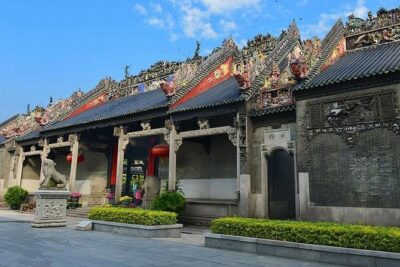
Private Guangzhou Full Day City Tour with Old and New Highlights
Read our review →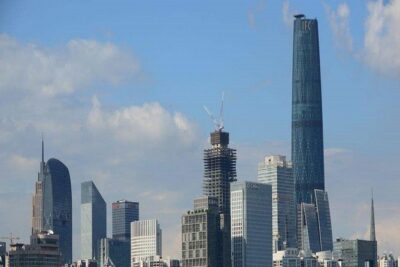
Reputable Private Guangzhou Tour Guide Service by Xaq
Read our review →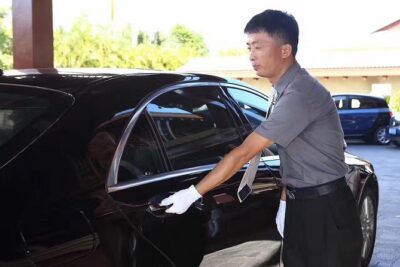
Guangzhou Baiyun Airport Guangzhou Hotels:Private with Meet & Great Service
Read our review →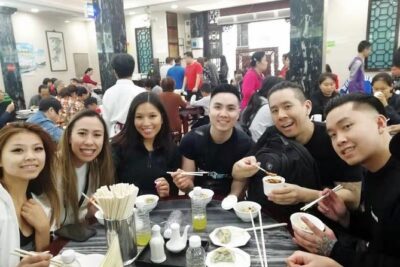
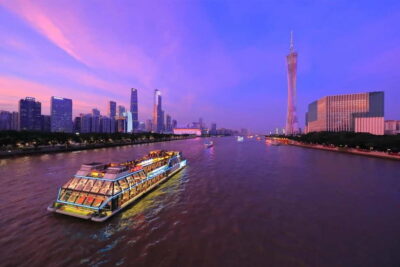
Pearl River 1-hour Night Cruise (Optional Piers)
Read our review →
Custom Private Guangzhou Tour with Local Guide and Private Car
Read our review →Browse the lists this tour appears in