
Reviewed · NANJING TOURS
Confucius Temple and Imperial College Entrance Ticket
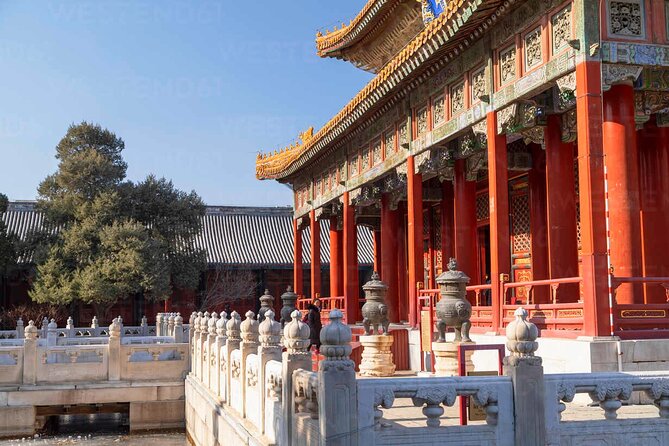
Beijing’s Temple of Confucius and Guozijian Museum offers a quiet look at how education and government worked in imperial China. The temple dates to 1302, while the neighboring imperial college was built in 1306. Together, they form a compact historical stop near the Lama Temple.
I like the low price and the freedom to explore at your own speed. I also like the English signs and displays, which make an unguided visit practical. The main caution is the digital ticket system: one booking for two people once produced a QR code problem at the entrance, so keep the supplier’s contact number handy.
Key points to know before booking
- Two historic sites in one visit: See the Temple of Confucius and the former Guozijian imperial college.
- A short walk from the Lama Temple: Pair both sites with one of Beijing’s best-known Buddhist temples.
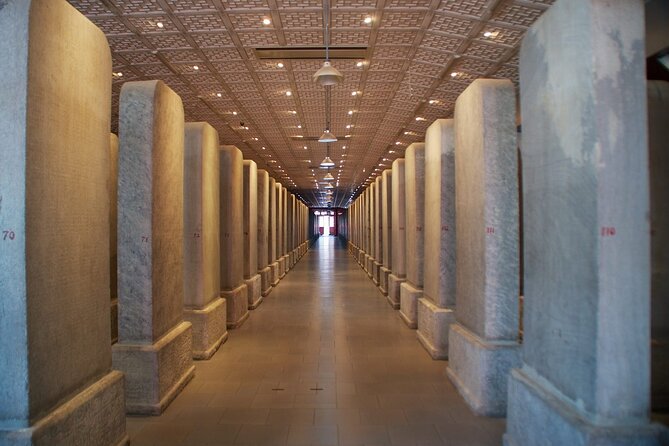
- Stone steles record exam success: Hundreds of carved tablets list scholars who passed the Imperial Examination.
- Independent or guided visit: English information supports self-guided touring, while an English-speaking guide is available with the related option.
- Allow two to three hours: You can read the displays at a steady pace rather than rushing through.
- Low-cost admission: At $8 per person, the ticket is a modest addition to a Beijing sightseeing day.
Why this small Beijing complex matters
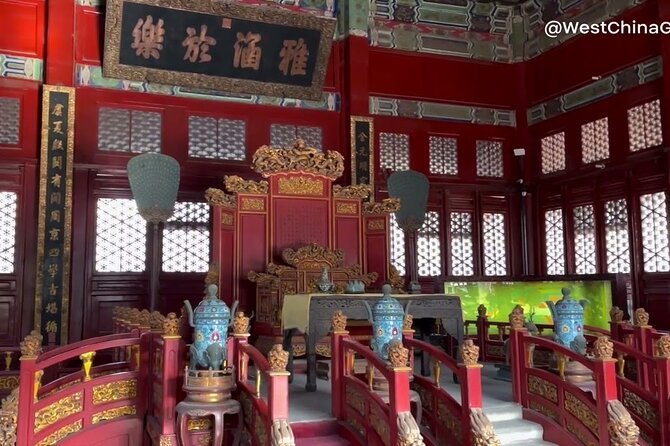
The Temple of Confucius is not simply a place to admire old roofs and courtyards. It shows the importance imperial China placed on learning, discipline, and official examinations.
Confucius was honored here by government officials, who came to offer sacrifices and pay respect to his teachings. The temple was built in 1302, making it an important Yuan dynasty site, and it continued to serve its religious and ceremonial role through the Ming and Qing periods.
Next door, the Guozijian was the imperial college. This was where the highest level of state education took place. The college formed part of the system that prepared scholars for government service, a path that could change a family’s fortunes and shape the administration of the empire.
I find the pairing especially useful because the two buildings explain different sides of the same idea. The temple honors the teacher and the moral tradition. The college represents the students, examinations, and official careers built around that tradition.
The complex is also a good counterpoint to Beijing’s grander sights. The Forbidden City and the Great Wall are major attractions, but they can feel enormous and demanding. Here, the story is more focused. You can take your time with the carvings, halls, and stone records without trying to cover a huge area.
A few more Nanjing days worth a look
- Flexible Private Nanjing City Highlights Day Tour
★ 5.0 · 59 reviews - All Inclusive Nanjing City Private Day Tour with Tailor-Made Highlights
★ 5.0 · 17 reviews - Half-Day Private Customized Nanjing City Tour
★ 5.0 · 17 reviews
Starting near the Lama Temple
The Temple of Confucius and Guozijian Museum are just a short walk from the Lama Temple, making this an easy pairing if you are already in the area. The experience is listed as near public transportation, so you can fit it into a day of independent sightseeing without needing a private vehicle.
That location matters. Beijing sightseeing often involves crossing long distances, and a short walk between two cultural sites saves both time and energy. You can visit the Lama Temple first, then move to the Confucian complex for a very different view of Chinese tradition.
The nearby location also gives you flexibility. You do not need to treat this as a full-day guided excursion with a fixed route. The ticket is valid for a one-day experience, and the site itself generally suits a two to three-hour visit if you read the displays and take time in the courtyards.
You will need to pay attention to the ticket delivery schedule. The admission tickets are sent five days before the travel date. That is useful to know if you are planning a tightly organized Beijing itinerary, since the ticket is not necessarily in your inbox immediately after purchase.
Entering the Temple of Confucius
The temple is the emotional center of the visit. Its purpose was to honor Confucius, the philosopher whose teachings shaped Chinese education, government, family life, and social conduct for centuries.
As you move through the site, look for the statues, carvings, and scholarly references that connect the buildings to that tradition. The details are not only decorative. They reflect a society that treated learning as a public duty and academic achievement as a route into official life.
The Temple of Confucius in Beijing is described as the second largest Confucian temple in China, after the temple in Qufu, Confucius’s hometown. That gives the site a wider context. You are not visiting an isolated neighborhood shrine, but one of the country’s major places for honoring Confucius.
The temple’s age is another reason to slow down. It was originally built in 1302, and the grounds preserve layers from the Yuan, Ming, and Qing dynasties. You might find yourself paying as much attention to the arrangement of the buildings and stonework as to the individual objects.
For many visitors, this will be the more immediately appealing part of the complex. The temple offers visual details, ceremonial spaces, and a clear connection to Confucian worship. If you prefer buildings and carvings to long written explanations, start here before spending more time at the college.
Reading the stone steles
The stone steles are among the most distinctive features of the visit. These carved tablets record the names of scholars who passed the Imperial Examination.
That may sound like a simple list, but it tells you a great deal about imperial society. Success in the examination system could open the door to government service. The names carved into stone preserve the achievements of people who reached that goal, turning academic success into a permanent public record.
The steles also make the educational story personal. Instead of thinking only about abstract dynasties and institutions, you can look at the names of individuals who completed the demanding path toward official status.
You will get more from these records if you take time to read the English explanations around them. An independent visit works well here because you can pause as long as you like. One person may want to study the inscriptions, while another may prefer to move on to the next courtyard.
The site has English instructions and exhibits throughout, so you do not need a guide to understand the basic story. Still, the names and examination system can be difficult to place without context. If that subject interests you, the optional English-speaking guide may add useful explanation.
More entry tickets in Nanjing:
- 4-Hour Small Group Tour to Forbidden City with Entry Tickets
★ 5.0 · 1,863 reviews - Beijing: Tiananmen Square Registration Service(Ticket)
★ 4.5 · 1,704 reviews - Ngong Ping 360: Cable Car Return Tickets & Combos
★ 4.6 · 1,431 reviews - Beijing: The Temple of Heaven or Summer Palace Entry Ticket
★ 4.6 · 1,286 reviews
Inside the former imperial college
Beside the temple, the Guozijian Museum occupies the former imperial college, originally constructed in 1306. This was the educational side of the complex, where the state’s highest academic institution once operated.
The museum helps explain how the imperial education system worked. Rather than treating education as a private matter alone, the government used learning and examinations to select officials. The college therefore connects classrooms, scholarship, political power, and public service.
You can expect several scholarly halls, stone inscriptions, and displays about the old education system. The material is well suited to visitors who want more than scenic photographs. It explains why Confucian thought remained so important to the state and why examination success carried such weight.
The college is also where the visit becomes more intellectually focused. The temple gives you ceremony and visual atmosphere. The museum gives you institutional context. Together, they make a stronger stop than either building would be on its own.
Plan to read. The complex is not simply a place to walk through quickly, take a few pictures, and leave. English information is available throughout, and the displays reward a slower pace. Two to three hours is a sensible allowance if you want to understand what you are seeing.
Self-guided visit or English-speaking guide
You have two practical ways to use the ticket. The basic experience allows you to explore independently. The related guided option includes an English-speaking tour guide.
I would choose the self-guided visit if you enjoy reading at your own pace and already know a little about Confucius or imperial examinations. The English instructions make this realistic, and the compact size means you can move between the temple and college without losing the thread of the story.
A guide is more useful if Chinese history is new to you or if you want the meaning behind the steles and ceremonial spaces explained as you go. The supplied information does not name a specific guide, so you should not book this expecting a particular person.
The guided option may also suit a private group that wants to ask questions. The activity is described as private, meaning only your group participates. That gives you a more personal format than a large shared tour, though the ticket-only version is already simple to manage without a guide.
The key point is that you are not forced into a guided schedule. That flexibility helps keep the cost low and lets you decide how much interpretation you want.
What the $8 price delivers
At $8 per person, this is one of the easier cultural additions to a Beijing itinerary. The ticket covers entrance to both the Temple of Confucius and Guozijian Museum, not just one building.
The value is strongest if you are willing to spend two or three hours reading and looking closely. If you rush through in 30 minutes, the ticket still gets you inside, but you will miss much of what makes the complex worthwhile.
The price does not include a guide unless you select the related option. That is not a flaw, but it matters when comparing this with a more structured history tour. You are paying primarily for access, while the museum’s English material supplies much of the basic interpretation.
Group discounts are available, which may lower the per-person cost for larger parties. Since the experience is private when a private option is selected, it can work well for families or friends who want to visit together without joining strangers.
I see this as a good-value ticket for a half-day cultural stop. It is especially useful on a day when you are already visiting the Lama Temple. You get two distinct sites in the same neighborhood for a small outlay.
The QR code issue to prepare for
The main practical concern is the digital admission process. A booking for two people once produced two QR codes, but only one worked at the entrance.
The issue was resolved because a guard understood the situation and allowed both people to enter. That was fortunate, but you should not rely on luck. Check both codes as soon as you receive them, and keep the supplier’s contact phone number available during your visit.
The tickets are sent five days before the travel date, so use that window to confirm that the names, number of tickets, and QR codes look correct. If something seems wrong, contact the provider before you reach the entrance rather than waiting until you are standing at the gate.
This is a small administrative point, but it can make a difference when you are working around Beijing’s opening hours and transport connections. The ticket itself is inexpensive. A failed code should not be allowed to disrupt the rest of your day.
Who will enjoy this visit most
I would recommend this experience to you if you like history presented through buildings, inscriptions, and institutions rather than through a long walking route.
It suits:
- First-time Beijing visitors who want a smaller historical site near the Lama Temple
- Students and families interested in education, government, and Confucian thought
- Independent sightseers who prefer English signs and self-paced touring
- Private groups that may want to add an English-speaking guide
- Visitors looking for a reasonably priced cultural activity lasting two to three hours
It may be less satisfying if you want a major landmark with dramatic scale or a fully narrated tour included in the base price. The site’s appeal depends on your interest in learning, examinations, and carved records. The steles and museum displays will matter more to you than grand panoramic views.
That is not a weakness. It simply means you should book it for its subject, not because it is another famous photo stop.
Cancellation, timing, and useful planning details
Free cancellation is available up to 24 hours before the experience start time for a full refund. Changes or cancellations made less than 24 hours before the start time are not accepted for a refund, and the cut-off follows local Beijing time.
Most people book about 15 days ahead, but the ticket delivery note is more important for your planning. Expect the tickets five days before the visit date.
The activity is listed as suitable for most participants, with public transportation nearby. It is a one-day experience, although the actual time you spend inside is up to you. I would keep two to three hours free, especially if you plan to read the English displays.
Should you book the Temple of Confucius ticket?
Book it if you want an affordable, focused look at imperial education and you are already planning to visit the Lama Temple. The two sites sit close together, and the Temple of Confucius and Guozijian Museum give you a different side of Beijing from the usual palace and wall attractions.
The strongest reasons to go are the combination of temple and college, the hundreds of examination-related stone steles, and the useful English information throughout the site. The option to visit independently keeps the experience flexible, while a guide is available if you want more explanation.
I would skip it only if your schedule is extremely tight or your main interest is grand architecture rather than historical institutions. For $8, though, it is a sensible choice for a thoughtful two to three-hour stop. Check your QR codes, save the contact number, and give the displays enough time to speak for themselves.
FAQ
Where is the Temple of Confucius and Guozijian Museum?
It is in Beijing, a short walk from the Lama Temple. The area is also near public transportation.
What does the entrance ticket include?
The ticket includes admission to the Temple of Confucius and Guozijian Museum. An English-speaking guide is included only if you select the related guided option.
How long should I plan for the visit?
The experience lasts about one day in booking terms, but you can expect to spend roughly two to three hours at the site if you read the English displays and examine the stone records.
Are guided tours available?
Yes. You can select an option with an English-speaking tour guide. The basic visit can also be done independently because English instructions and exhibits are available throughout the complex.
When will I receive the tickets?
The tickets are sent five days before the travel date.
Can I cancel for a full refund?
Yes, provided you cancel at least 24 hours before the experience start time. Cancellations or changes made less than 24 hours before the start time are not refunded.
Newly listed around Nanjing
- Nanjing Private Flexible Day Tour with Professional Guide and Driver Service★ 5.0 · 4 reviews
- Nanjing Self-Guided Day Tour with Private Car and Driver Service★ 5.0 · 4 reviews
- Flexible Private Nanjing Independent Tour★ 5.0 · 3 reviews
- Half-Day Nanjing Purple Mountain Private Tour in Your Way★ 5.0 · 3 reviews
- All Inclusive Amazing Nanjing City Highlights Private Day Tour★ 5.0 · 4 reviews
- Nanjing:Must-See Attractions in One Day+Customized Itinerary★ 5.0 · 3 reviews
- Nanjing By Night: Qinghuai River Cruise with Authentic Dining Experience★ 5.0 · 5 reviews
- Nanjing Private Day Tour of The Republic Era with Lunch★ 5.0 · 5 reviews
Nanjing Tours, compared.
Flexible Private Nanjing City Highlights Day Tour
Read our review →
All Inclusive Nanjing City Private Day Tour with Tailor-Made Highlights
Read our review →
Private Flexible Nanjing City Day Trip from Shanghai by Bullet Train
Read our review →
Private Day Tour to Niushoushan Cultural Park in Nanjing
Read our review →
6-Hour Private Tour of Xiaoling Tomb,City Wall & Memorial Hall
Read our review →
Nanjing Professional and Private Tour Guide Service
Read our review →Browse the lists this tour appears in