Reviewed · TICKETS
Beijing:Drum and Bell Towers Entry Ticket- Cultural Treasure
Beijing’s Drum and Bell Towers are not just old buildings to photograph. They were the city’s official timekeeping center for centuries, with drums marking dusk and a great bell announcing morning. The 63-ton Ming bell and the Drum Tower’s former set of 25 drums give this visit real substance.
I like the efficient skip-the-ticket-line entry and the English guide, which helps you understand what you are seeing without hiring a private guide. I also like the location beside Beijing’s hutongs, where you can turn a short monument visit into a more local walk and stop for food nearby.
The main catch is the price. At $13 per person, this booking may cost more than buying a ticket at the site, so you are paying for advance arrangements, e-tickets, and convenience. The staircases are also steep and long, which makes the towers unsuitable for visitors with limited mobility.
Key points to know before you go

- Two historic towers in one visit: Your ticket covers both the Drum Tower and Bell Tower.
- A 63-ton ancient bell: The Ming-era bell is the largest and heaviest feature of the visit.
- About two hours: You have enough time to see both buildings and read the English guide at a sensible pace.
- Useful hutong location: The towers sit next to traditional Beijing lanes, with nearby restaurant suggestions included in the English brochure.
- Passport details are required: You must provide your passport name, passport number, and date of birth for the reservation.
- Steep staircases: The towers require climbing long, steep stairs and are not suitable for people with reduced mobility.
Why Beijing’s two towers mattered

The Drum and Bell Towers sit at the northern end of Beijing’s central axis. This is an important location, since the axis links several of the city’s major historic sites and gives the towers a formal place in the old capital.
The first versions were built during the Yuan Dynasty, from 1206 to 1368. The towers continued their timekeeping role through the Ming and Qing dynasties. Before clocks and public time displays, the sound from these buildings helped organize daily life across Beijing.
The system was simple but memorable. A drum announced dusk, while a bell marked morning. The towers were not only architectural landmarks. They were part of the city’s daily routine, and their signals helped people know when the gates opened, when the day began, and when the city settled for the night.
You can appreciate this more if you give yourself time to look beyond the rooflines. The buildings are examples of the formal architecture used for imperial-era capital cities, with their position and scale carefully planned. The Bell Tower sits slightly farther north than the Drum Tower, an unusual detail that is easy to miss if you are rushing from one entrance to the other.
The full historic complex covers 12,597 square meters and is protected at the national level. That does not mean the visit takes all day. Two hours is a practical amount of time for the towers, the explanatory material, and a short look at the nearby streets.
A few more Beijing days worth a look
- From Beijing: Mutianyu Great Wall Tours with Options
★ 4.9 · 9,216 reviews - Beijing: Forbidden City Tour(Group/Private)-Tickets Included
★ 4.8 · 7,974 reviews - Beijing: T-Square & Forbidden City Group or Private Tour
★ 4.8 · 4,446 reviews
Entering the Drum Tower and seeing the old drums
The Drum Tower is usually the more visually immediate part of the visit. Its purpose is easy to grasp because the building once held 25 drums. The drums were used to mark time, giving the structure a strong connection to the old rhythm of Beijing.
You can expect to climb stairs to reach the upper level. The ascent is steep and fairly long, so wear comfortable shoes and take your time. This is one of the most important practical points about the experience. The ticket may be simple to use, but the buildings themselves are not physically easy for everyone.
At the top, focus on the relationship between the structure and the city around it. The tower’s height gives you a different view of Beijing than street level does, while the surrounding hutong area provides a useful contrast to the formal architecture of the monument.
The Drum Tower can be especially rewarding if you read the English guide as you go. The included material is textual and visual rather than a spoken tour, so you control the pace. You can pause over the historical notes, then spend a few minutes looking at details in the building instead of moving with a group.
Do not expect a full museum-style program with a personal guide explaining every object. A live guide and an audio guide are not included. This is a self-guided heritage visit, best suited to people who enjoy setting their own pace and reading a little along the way.
The Bell Tower and its 63-ton centerpiece
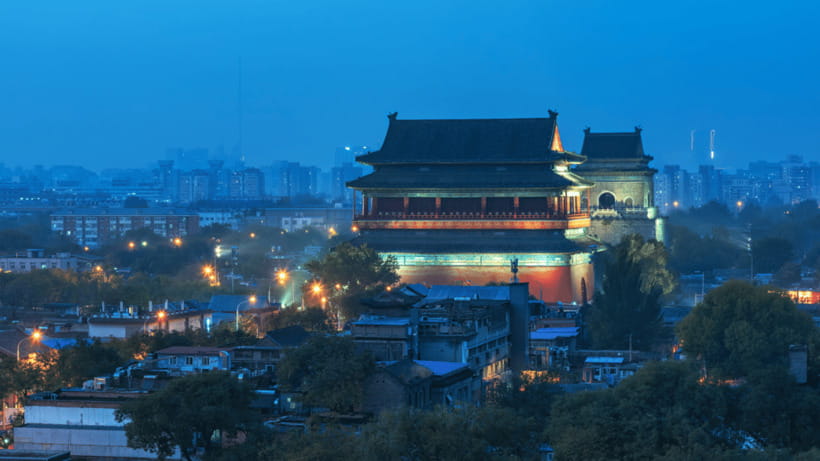
The Bell Tower is the quieter and more dramatic half of the experience. Its great bell was cast during the Yongle era of the Ming Dynasty, from 1403 to 1424. Weighing 63 tons, it is known as the King of Ancient Bells in China.
That weight gives the building a sense of purpose. This is not simply a decorative bell hung in an old hall. It was built to carry sound across the capital, and its scale helps you understand why the Bell Tower was such an important civic structure.
The Bell Tower sits slightly north of the Drum Tower. This small difference in position is one of the unusual features of the complex and helps explain why the two buildings should be treated as a pair rather than as two unrelated stops.
Again, expect stairs. The towers are historic structures, not modern visitor centers designed around lifts and broad ramps. If you have mobility concerns, check carefully before booking. One of the clearest practical warnings is that the stairways are steep, long, and not suitable for reduced mobility.
For many people, the Bell Tower is the highlight because of the bell’s size and age. For others, the Drum Tower’s former collection of 25 drums may offer a clearer link to everyday life in old Beijing. Seeing both lets you understand the complete morning-and-evening time system.
Making the most of the included English guide

The English textual and visual guide is a useful part of this booking. It gives you context without requiring a scheduled tour or a particular language group. This matters in Beijing, where some historic sites can be difficult to understand if you only have time for photographs.
The guide also includes information about the surrounding hutongs and suggestions for local restaurants nearby. That can turn the towers into the start of a larger neighborhood visit rather than a stand-alone stop.
I would read the material before entering, then return to the relevant sections inside each tower. A few minutes of preparation will help you notice the connection between the buildings, the old timekeeping system, and the surrounding city plan.
The format has limits. There is no named live guide, no audio guide, and no personal commentary. If you want stories delivered as you walk, this is not the right product. If you prefer independence and want a written reference in English, the guide is practical.
This arrangement also works well for visitors who do not want to join a large group. You can move through the towers at your own speed, stop for photographs, and spend more time at the bell or drums without waiting for a guide to finish speaking.
More entry tickets in Beijing:
- 4-Hour Small Group Tour to Forbidden City with Entry Tickets
★ 5.0 · 1,863 reviews - Beijing: Tiananmen Square Registration Service(Ticket)
★ 4.5 · 1,704 reviews - Beijing: The Temple of Heaven or Summer Palace Entry Ticket
★ 4.6 · 1,286 reviews - Beijing Forbidden City Ticket Booking (Optional: guide service)
★ 5.0 · 1,263 reviews
Adding the hutongs to a two-hour visit
The towers are next to Beijing’s hutong neighborhoods, which are among the most useful places to continue after the monument. These traditional lanes offer a more ordinary view of the city than the grand imperial sites.
The experience itself does not include a separate hutong walking tour. Still, the location makes it easy to add one on your own, and the included brochure gives suggestions for nearby streets and restaurants.
I would allow the advertised two hours for the towers, then add extra time if you want to explore the neighborhood. The towers are compact enough to visit without spending a full day, but their position makes them a good anchor for a half-day in northern central Beijing.
This is also where the $13 price becomes easier to assess. If you only want the cheapest possible admission, buying locally may offer better value. If you are visiting during a busy period and want your entry arranged in advance, the booking service can be worth the extra cost.
One booking made during China’s Golden Week was handled with the tickets, QR codes, and English brochure sent well ahead of the visit. That is useful during major holiday periods, when queues and demand can be higher. The service is less compelling if you are comfortable arriving early, buying directly, and managing the admission process yourself.
How the ticket process works
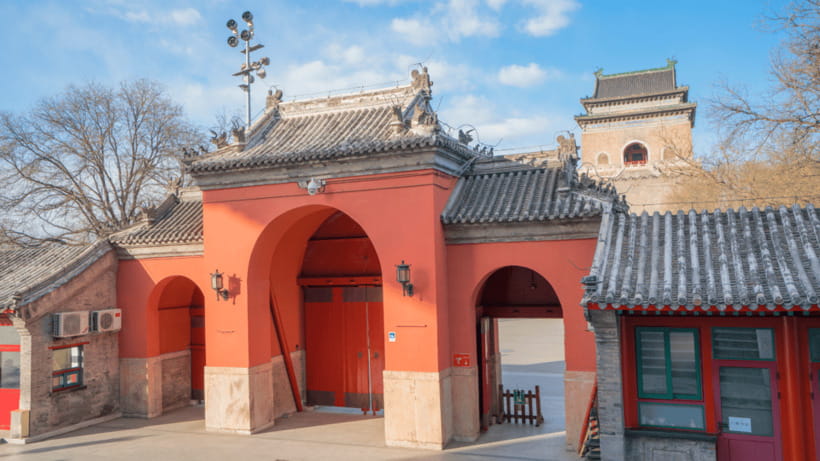
After booking, you must provide your passport name, passport number, and date of birth. The reservation is made three days before the visit, and the e-tickets are then sent by email or WhatsApp if the booking is successful.
You enter both towers directly with the supplied e-tickets. The booking is designed to let you skip the ticket line, which is the main practical benefit beyond the admission itself.
Keep your passport or ID card with you. The booking information specifically lists it as something to bring, and the ticket reservation is tied to your submitted identity details.
The activity offers free cancellation up to 24 hours before the visit for a full refund. It also allows you to reserve now and pay later, which is handy if your Beijing plans are still shifting. Check the available start times before committing, since the total visit is listed as two hours.
Is $13 a fair price?
The direct admission price at the site may be lower than $13, and that is the main value concern. One booking comment specifically described the price as excessive compared with buying at the entrance. You should take that seriously.
Still, price is not the only factor. You are paying for advance reservation work, a skip-the-line arrangement, an English guide, and e-ticket delivery through email or WhatsApp. During a crowded travel period, those services can save time and reduce uncertainty.
I would book this option if you are visiting during a major holiday, have limited time, or do not want to manage Chinese ticket procedures on your own. I would skip it if your schedule is flexible and you are focused on paying the lowest possible admission price.
The 4.5 rating from 13 verified bookings suggests a generally strong experience, but the small number of ratings means you should not treat it as a guarantee. The most consistent strengths are the smooth ticket delivery, the English material, and the chance to combine the towers with the hutongs.
Who will enjoy this visit most?

This experience suits history-minded visitors, architecture fans, and first-time visitors who want a manageable Beijing attraction outside the largest palace compounds. The buildings explain an important part of city life in a way that does not require a full-day commitment.
It is also a good choice for independent visitors. You get the two admissions and written material, then decide how long to spend at each tower and whether to continue into the surrounding lanes.
Families with older children may appreciate the clear theme of the visit. The giant bell, the former set of 25 drums, and the old morning-and-evening time system are easy ideas to explain. The stairs may be tiring for young children, though, so plan at a relaxed pace.
This is not the best pick for anyone seeking a guided cultural performance, a detailed lecture, or a fully accessible attraction. There is no live or audio guide, and the stairways are a real physical hurdle.
Should you book the Drum and Bell Towers?

Book it if you want a short, meaningful historical stop and value having your tickets arranged before you arrive. The Ming bell, old drums, central-axis location, and nearby hutongs give you more to think about than the modest visit length suggests.
I would especially consider it during China’s busiest holiday periods, when advance tickets and direct e-tickets may save time. The English guide is another solid reason to choose this option if you want context without hiring a private guide.
Skip the booking if the $13 price feels too high for two historic buildings and you are comfortable buying admission on site. Also skip it if steep stairs or limited mobility will make the visit difficult.
For the right visitor, this is a compact and worthwhile piece of old Beijing. It gives you a clear story, a striking bell, a pair of important buildings, and an easy starting point for exploring the hutongs.
FAQ
What does the ticket include?
The ticket includes entry to both the Bell Tower and the Drum Tower, plus an English textual and visual guide.
Is a live tour guide included?
No. A live guide is not included, and there is no audio guide.
How long does the experience take?
The listed duration is two hours. This gives you time to visit both towers and use the included guide.
What information is needed to reserve the tickets?
You must provide your passport name, passport number, and date of birth.
How will I receive the tickets?
After a successful reservation, the e-tickets are sent by email or WhatsApp. You can enter the towers directly with the supplied e-tickets.
What should I bring?
Bring your passport or ID card.
Can I cancel the booking?
Yes. You can cancel up to 24 hours in advance for a full refund.
Is the visit suitable for people with reduced mobility?
The towers have steep and fairly long staircases, so the visit is not suitable for people with reduced mobility.
Newly listed around Beijing
- Shore Excursion: 2-Day Private Beijing Sightseeing Tour from Tianjin Cruise Port★ 5.0 · 6 reviews
- Private Transfer: Tianjin Xingang International Cruise Home Port to Beijing Hotel★ 5.0 · 6 reviews
- Tianjin Private Day Trip to Forbidden City and Mutianyu Great Wall by Bullet Train★ 5.0 · 5 reviews
- Private One Way Tianjin Port Transfer to Beijing including Great Wall Sightseeing★ 5.0 · 4 reviews
- Bullet Train Private Tour: Beijing Tiananmen Square, Forbidden City & Great Wall★ 5.0 · 3 reviews
- Private Great Wall Tour from Tianjin Cruise Port★ 5.0 · 8 reviews
- Shanghai to Beijing Bullet Train Ticket with Hongqiao Station Transfer★ 5.0 · 5 reviews
- Private Mutianyu Great Wall Tour with Bullet Train Experience★ 5.0 · 3 reviews
Tickets, compared.
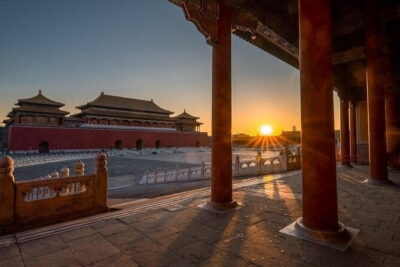
4-Hour Small Group Tour to Forbidden City with Entry Tickets
Read our review →

Ngong Ping 360: Cable Car Return Tickets & Combos
Read our review →
The Temple of Heaven or Summer Palace Entry Ticket
Read our review →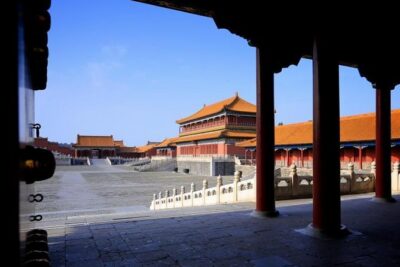
Beijing Forbidden City Ticket Booking (Optional: guide service)
Read our review →
Mutianyu Gt Wall Trip, Depart 8-10am Bus w/ Tickets
Read our review →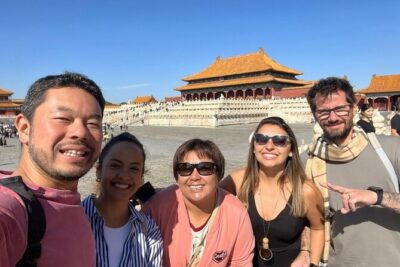
Forbidden City&T-Square Small GroupTours w/ ticket(Eng/Esp Guide)
Read our review →