
Reviewed · HUTONG TOURS
Beijing Hutongs Walking Tour
Beijing’s grand palaces tell only part of the city’s story. This hutong walking tour takes you into the older residential lanes, where gray courtyard houses, mature trees, narrow passages, and everyday neighborhood life offer a sharper sense of how Beijing once worked. The pace is easy, and the small group keeps the walk personal.
I like the chance to see traditional courtyard homes connected with Chinese history, including the former residence of Empress Wanrong. I also like the guide-led context, from old Chinese timekeeping to the fate of the last emperor. The main drawback is that the walk is short, and one scheduling mix-up reported by a participant shows why you should arrive early and make sure you are standing at the exact meeting point.
Key things to know before booking

- The walk begins at Nanluoguxiang metro station: Meet at Exit E of Nanluoguxiang Station on Line 6 or Line 8.
- Mao’er Hutong is the historical center of the route: This old lane contains notable buildings and stories linked to Beijing’s past.
- Empress Wanrong’s former residence is a photo stop: You see the exterior area known as the Empress’s Mansion.
- The tour connects old lanes with Houhai’s waterway: The route visits a narrow channel joining Qianhai and Houhai.
- The group can include up to 15 people: That is small enough for questions, though not the same as a private walk.
- The price is $30 per person: For 90 minutes to two hours with an English-speaking guide, the value is strongest if you want historical explanation rather than only a self-guided stroll.
Why Beijing’s hutongs are worth your time
Hutongs are traditional lanes lined with courtyard homes. They sit beyond the imperial buildings that dominate many first visits to Beijing, and they show a more ordinary side of the city’s past. Instead of moving from one grand monument to another, you walk through the older residential fabric that shaped daily life.
The route begins around Nanluoguxiang, an area associated with Beijing’s Yuan Dynasty layout. The lane’s gray courtyards and old trees give you an immediate visual lesson in traditional local architecture. You are not simply looking at a historic building from behind a barrier. You are walking through a network of lanes designed around neighborhood life and shared space.
I find this type of walk especially useful early in a Beijing visit. A guide can explain what you are seeing before you encounter similar courtyards elsewhere. The city becomes easier to read: a narrow lane is not just a shortcut, and a plain gray wall may mark a courtyard with a long connection to Beijing’s political and social past.
The experience is also a useful change of pace. Beijing can feel enormous, formal, and traffic-heavy. A hutong walk slows things down. You have time to look at rooflines, entrances, trees, and the changing relationship between old homes and the modern city.
More Walking Tours in Beijing
- Beijing Hutong Walking Food and Beer Tour at Hidden Restaurants
★ 5.0 · 1,132 reviews - Private Beijing Walking Tour of the Forbidden City with 7 Options
★ 5.0 · 675 reviews - Forbidden City Private Walking Tour with Optional Sights
★ 5.0 · 400 reviews
Starting at Nanluoguxiang Station
The meeting point is the south end of Nanluoguxiang, at Exit E of Nanluoguxiang metro station. The station is served by Line 6 and Line 8, which makes the start practical if you are already using Beijing’s subway system.
The instructions identify the meeting area in Chinese as 南锣鼓巷南口 or 南锣鼓巷地铁站E出口. Save those characters on your phone. They can be useful if you need to ask for directions or confirm that you are at the correct exit.
The stated start time is 10:00 a.m. I would arrive with a comfortable margin. The walk has a maximum group size of 15, and a reported disagreement over a missed meeting shows that timing matters. The guide said the group waited at the meeting point and left after the participant arrived late, while the participant said the guide did not appear. That conflicting account is a good reason to arrive early, keep your phone available, and confirm your exact position before the start.
You receive a mobile ticket and confirmation when booking. The guide is English-speaking, and Roy is identified as one guide associated with this experience. If Roy leads your walk, you can expect clear English and an interactive approach that includes questions and short quizzes about Beijing and Chinese history.
Nanluoguxiang and the old courtyard pattern
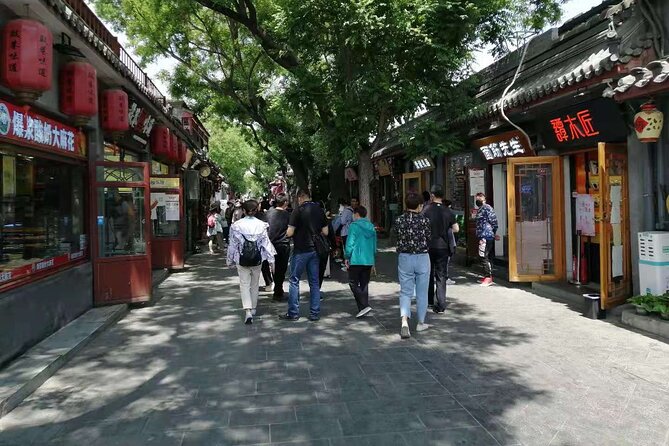
Nanluoguxiang brings you into one of the best-known hutong areas in central Beijing. Its importance here is not only visual. The lane helps explain how Beijing’s older neighborhoods were organized around courtyard homes rather than apartment blocks.
The buildings described along the route are vernacular courtyard houses, generally gray in color and often set beside old trees. These details may sound modest, but they are exactly what makes the walk useful. You get a look at the materials, scale, and layout that distinguish traditional Beijing residential architecture from the imperial complexes nearby.
A guide adds value by pointing out things you might pass without noticing. The tour description promises discussion of Chinese timekeeping and the fate of China’s last emperor, so expect the commentary to move between daily life and major political events. That range is helpful. You are not limited to a list of dates or famous names.
Nanluoguxiang can also be a popular area, so the relaxed atmosphere may vary depending on the day and time. The tour gives you a route through the hutong area, but it does not promise a completely empty lane. The benefit is that you have a guide helping you understand the setting instead of trying to decode it alone.
Mao’er Hutong and stories behind the facades
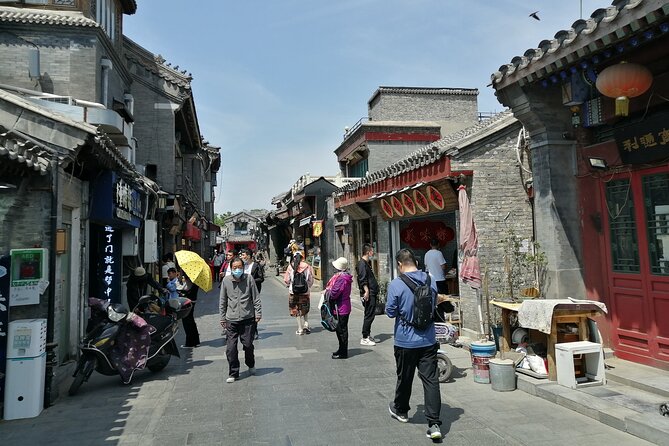
From Nanluoguxiang, the walk continues along Mao’er Hutong. This is where the route becomes more story-focused. The lane contains notable buildings and personal histories, giving the guide a chance to connect architecture with the people who once lived there.
The most specific stop is the former residence of Empress Wanrong, Puyi’s empress, known here as the Empress’s Mansion. The stop is used for photographs, so you should think of it as an exterior viewing point rather than a full museum visit. Admission is not included, and no separate interior visit is promised.
That distinction matters. If you want access to lavish rooms, formal exhibits, or a long palace tour, this walk will not provide it. If you want to see how a major historical figure’s former home fits into an ordinary-looking hutong lane, the stop is more revealing.
The story of Wanrong and Puyi also gives the guide a natural way to discuss the end of imperial China. The route does not isolate the last emperor in a palace setting. Instead, it places that history among residential lanes and courtyard homes. That contrast is one of the strongest ideas in the walk.
More Hutong Tours in Beijing:
- Temple Heaven, Summer Palace, Lama Temple, Hutong Bus Tour
★ 4.7 · 319 reviews - Temple of Heaven, Summer Palace, Lama Temple, Hutong Tours
★ 5.0 · 311 reviews - Beijing Private Hutong Food Walking Tour
★ 5.0 · 299 reviews - The Hutong Experience by Bike
★ 5.0 · 163 reviews
The channel between Qianhai and Houhai
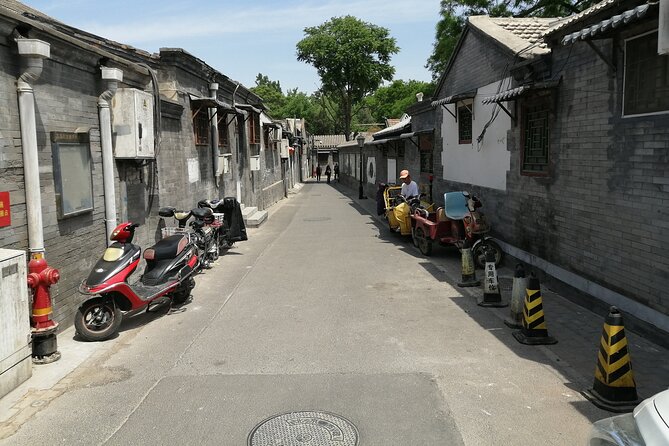
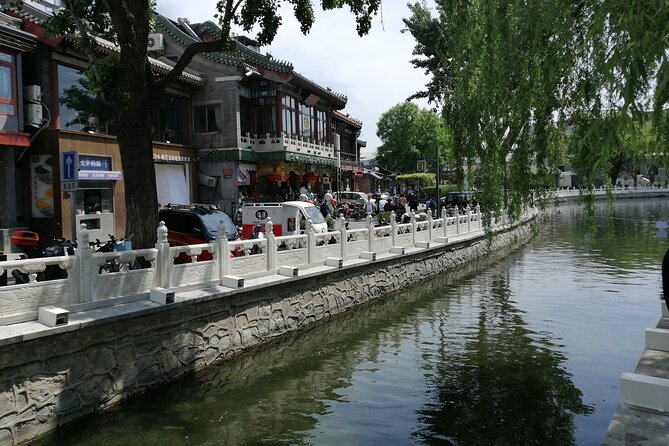
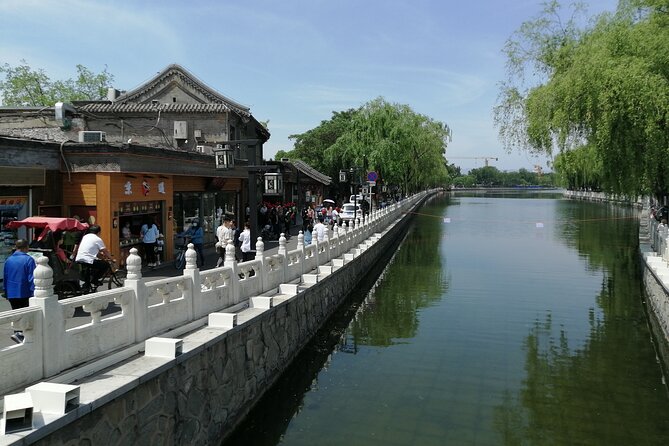
The route continues toward a narrow channel linking Qianhai Lake and Houhai Lake. This portion changes the feel of the walk. After the enclosed lanes and gray courtyard walls, the waterway offers a more open setting and helps you understand how Beijing’s historic central districts connect.
The description identifies this as a visit to the narrow channel, not a boat trip or a lakeside cruise. You should expect to walk beside or near the water and hear about the area from the guide. The experience remains a walking tour, with no admission ticket included for this part.
The waterway also gives the route a satisfying sense of movement. You begin in the hutongs, follow old lanes and stories, and finish near one of Beijing’s best-known historic districts. The walk is not simply a loop around one lane.
The stated end information needs a little care. One section identifies Houhai as the end area, while the directions say the tour finishes at the Drum Tower. Treat the Drum Tower as the practical finishing point, with Houhai and the nearby waterway part of the final section. If you have a tight appointment afterward, ask the guide to confirm the exact final location at the start.
Finishing near the Drum Tower
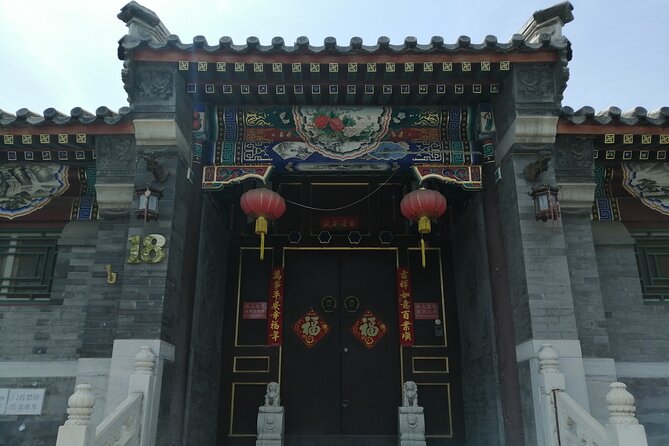
The Drum Tower gives the walk a clear endpoint and another link to traditional Beijing timekeeping. The tour description specifically mentions Chinese timekeeping, so this is likely to be part of the historical explanation as you approach the end.
The route information also refers to the Bell and Drum Towers, though the finishing instruction specifically names the Drum Tower. The available details do not promise entry into either tower, so plan on seeing the area as part of the walking route rather than assuming an interior visit.
Finishing near the Drum Tower is useful for planning the rest of your day. You can continue exploring the surrounding historic district, return by public transport, or arrange a meal nearby. The guide does not provide a meal, transport after the walk, or included admissions, so those parts remain up to you.
What $30 gets you
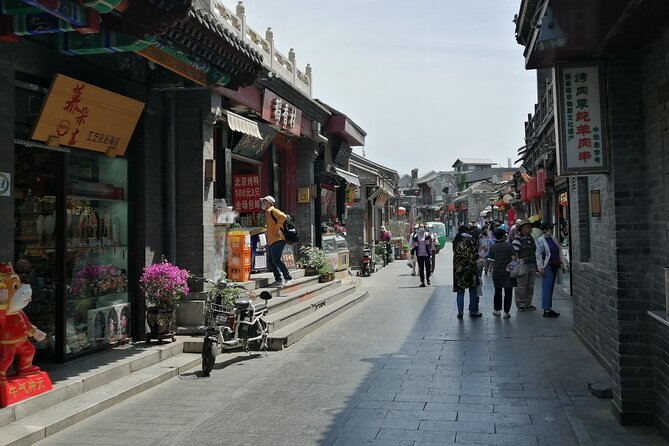
The price is $30 per person. That covers the English-speaking guide, the guided walk, and the explanations along the route. It does not include admission tickets, and the experience does not list food, drinks, or private transportation.
For 90 minutes to two hours, the value depends on what you want from Beijing. If you only want to wander through Nanluoguxiang and take photographs, you can explore parts of the area without paying for a guide. The $30 becomes more worthwhile if you want someone to explain the courtyard pattern, connect Mao’er Hutong with imperial history, and help you make sense of the route to Houhai and the Drum Tower.
A maximum of 15 people is a reasonable size for a neighborhood walk. It should allow questions without the cost of a private guide. Still, the experience will feel different with four or five people than with a full group of 15. One account describes Roy speaking clear English and explaining the hutongs well, while another describes an engaging guide who used questions to keep the group involved. Those are the qualities I would look for here: clear explanation, good pacing, and a willingness to stop when the group has questions.
The overall rating is 4.8 from 22 ratings, with 95 percent recommending the experience. That is a strong record, but the sample is not large. I would read it as a positive sign rather than a guarantee that every departure will be perfect.
Who will get the most from this walk
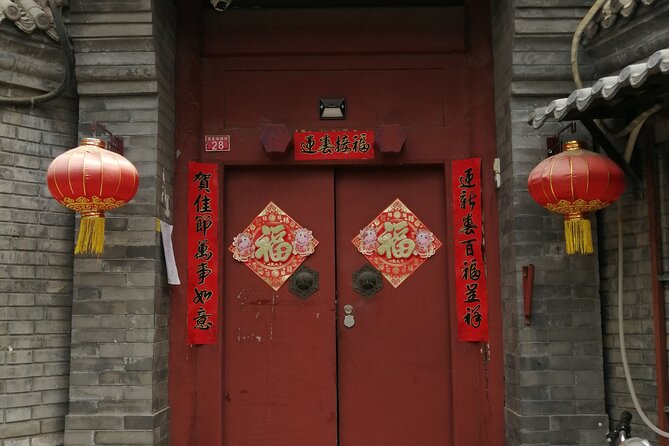
This tour suits you if you want a gentle introduction to Beijing’s residential history. It is a good first-day or early-trip activity because it helps you understand the city beyond the Forbidden City, Tiananmen Square, and other major imperial sites.
It also works well for anyone who prefers explanation to a checklist of sights. The guide’s stories about timekeeping, Puyi, Wanrong, and courtyard homes give the walk a clear theme. You are not expected to know much in advance.
The short length makes it easy to fit around other plans. You will not give up an entire day, and the 10:00 a.m. start leaves the afternoon open. The pace is described as relaxed, which should suit people who want time for photographs and questions.
I would be more cautious if you need a fully private experience, guaranteed interior access, or a route designed around mobility requirements. Most participants can take part, and service animals are allowed, but the available information does not describe the walking surface, stairways, seating, or the exact accessibility of each lane.
Practical advice for a smoother morning
Arrive early at Exit E of Nanluoguxiang Station. Keep the Chinese meeting-point name, 南锣鼓巷南口, available on your phone, and do not rely only on recognizing the general neighborhood.
Wear comfortable walking shoes. The tour lasts up to two hours and moves through lanes, courtyards, and the area around Houhai. The pace is relaxed, but this is still a walking experience rather than a seated talk.
Bring a phone with the mobile ticket ready. Since the walk includes outdoor stops and a photo opportunity, you should also be prepared for changing weather, although no weather-specific equipment is listed.
Ask at the beginning where the group will finish. The directions point to both the Houhai area and the Drum Tower, with the Drum Tower named as the final point. Confirming this early will help if you have a restaurant booking or another timed visit.
Free cancellation is available up to 24 hours before the start time. Cancellations or changes made inside that window are not refunded, and the activity requires a minimum number of participants. If the operator cancels for that reason, you are offered another date or experience, or a full refund.
Should you book the Beijing Hutongs Walking Tour?
Book it if you want a short, guided look at Beijing’s older residential lanes, especially if this is your first visit. The route combines Nanluoguxiang, Mao’er Hutong, Empress Wanrong’s former residence, the Qianhai and Houhai waterway, and the Drum Tower area. That is a useful amount of context for $30.
The strongest reasons to go are the courtyard architecture, the personal stories connected with Mao’er Hutong, and the chance to ask an English-speaking guide questions as you walk. The main cautions are the short format, no included admissions, the possible variation in group size, and the need to be exact about the meeting point.
I would choose this walk over a longer bus tour if you want to see how old Beijing feels at street level. I would skip it only if you already know the hutongs well, need private guiding, or want extensive interior visits. Arrive early, confirm the endpoint, and you should get a useful introduction to a side of Beijing that grand monuments cannot show.
FAQ
Where does the Beijing Hutongs Walking Tour begin?
The tour begins at the south entrance of Nanluoguxiang, at Exit E of Nanluoguxiang metro station. The station is served by Line 6 and Line 8.
What time does the tour start?
The stated start time is 10:00 a.m.
How long does the walking tour last?
The experience lasts approximately 1 hour 30 minutes to 2 hours.
What places are included on the route?
The route includes Nanluoguxiang, Mao’er Hutong, the former residence of Empress Wanrong, a narrow channel connecting Qianhai and Houhai, and the Drum Tower area.
Is an English-speaking guide included?
Yes. An English-speaking guide is included. Roy is identified as a guide associated with the experience.
Are admission tickets included?
No. Admission tickets are not included.
How large can the group be?
The tour can have a maximum of 15 participants.
Can I cancel for a full refund?
Yes, if you cancel at least 24 hours before the experience’s start time. Cancellations or changes made less than 24 hours in advance are not refunded.
Newly listed around Beijing
- Shore Excursion: 2-Day Private Beijing Sightseeing Tour from Tianjin Cruise Port★ 5.0 · 6 reviews
- Private Transfer: Tianjin Xingang International Cruise Home Port to Beijing Hotel★ 5.0 · 6 reviews
- Tianjin Private Day Trip to Forbidden City and Mutianyu Great Wall by Bullet Train★ 5.0 · 5 reviews
- Bullet Train Private Tour: Beijing Tiananmen Square, Forbidden City & Great Wall★ 5.0 · 3 reviews
- Private Great Wall Tour from Tianjin Cruise Port★ 5.0 · 8 reviews
- Private One Way Tianjin Port Transfer to Beijing including Great Wall Sightseeing★ 5.0 · 4 reviews
- Shanghai to Beijing Bullet Train Ticket with Hongqiao Station Transfer★ 5.0 · 5 reviews
- Private Mutianyu Great Wall Tour with Bullet Train Experience★ 5.0 · 3 reviews
Hutong Tours, compared.

Beijing Hutong Walking Food and Beer Tour at Hidden Restaurants
Read our review →
Temple Heaven, Summer Palace, Lama Temple, Hutong Bus Tour
Read our review →
Temple of Heaven, Summer Palace, Lama Temple, Hutong Tours
Read our review →


Beijing City Walk: Explore Hutongs Life and Old Beijing
Read our review →Browse the lists this tour appears in