Reviewed · TICKETS
Beijing: YuanMingYuan Park (Garden of Gardens) e-Ticket
Yuanmingyuan is one of Beijing’s most moving historic sites: a vast imperial garden where calm lakes and flowers meet the broken remains of a palace destroyed in 1860. I like the mix of grand Qing Dynasty design and European-style architecture, and I like that the $9 ticket gives you room to explore at your own pace. You get an English text and visual guide, too.
The main catch is size. This is a big park, and you can easily spend four and a half hours here without seeing everything. There is no live guide or audio guide, so you need to bring your passport or ID card, follow the written material, and accept that some of the ruins are scattered far apart.
Key points for planning your Yuanmingyuan visit

- A royal garden from the 18th century: Yuanmingyuan was created as a Qing Dynasty retreat for emperors, with lakes, bridges, pavilions, and formal gardens.
- Ruins with a painful story: Foreign troops destroyed and looted much of the palace in 1860 during the Second Opium War.
- Eastern and Western design together: The park once included traditional Chinese gardens and Western-style marble buildings.
- Allow at least four hours: The grounds are so large that a quick visit will show only a small part of the site.
- Independent touring: Your ticket includes an English textual and visual guide, but not a live guide or audio commentary.
- Good value at $9: The low admission price works well if you want a full day in a major historic park rather than a tightly managed tour.
Why Yuanmingyuan feels different from Beijing’s restored palaces
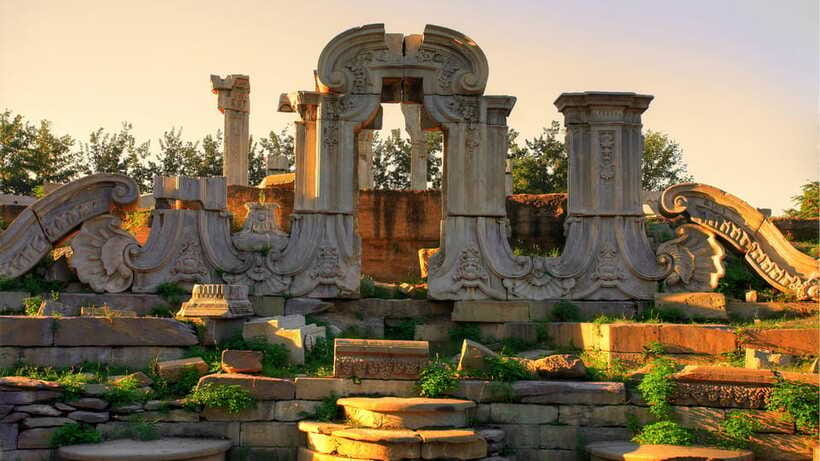
Many Beijing sights present imperial China through polished halls, repaired roofs, and carefully arranged courtyards. Yuanmingyuan gives you something less tidy and, in some ways, more powerful. Here, the missing buildings are part of the experience.
The park was built in the 18th century during the Qing Dynasty as a royal retreat. It was not simply one palace surrounded by a garden. It was a huge collection of gardens, waterways, pavilions, halls, bridges, and ornamental spaces designed for imperial life and leisure.
The name often translated as the Garden of Gardens reflects the site’s scale and ambition. The grounds combined traditional Chinese garden principles with areas influenced by European design. That unusual blend is one reason I find Yuanmingyuan more interesting than a standard palace visit.
You will not see a complete royal complex today. Instead, you move through a large park where water, plants, open paths, and scattered ruins share equal billing. That makes the experience quieter and less predictable, but it also means you need patience and a sensible plan.
A few more Beijing days worth a look
- From Beijing: Mutianyu Great Wall Tours with Options
★ 4.9 · 9,216 reviews - Beijing: Forbidden City Tour(Group/Private)-Tickets Included
★ 4.8 · 7,974 reviews - Beijing: T-Square & Forbidden City Group or Private Tour
★ 4.8 · 4,446 reviews
The Qing imperial retreat and its careful design
Yuanmingyuan was created to reflect the taste and power of the Qing court. Its gardens were arranged around water and framed views, with bridges and pavilions placed to make the setting feel composed from different angles.
The eastern Chinese garden tradition valued suggestion. A pond, a rock, a covered walkway, or a distant pavilion could create a scene that felt larger than the space itself. At Yuanmingyuan, those ideas were combined with grand royal construction and, in some areas, Western-inspired buildings.
The Western-style section is especially important because it shows how the Qing court adopted outside artistic ideas without abandoning Chinese garden design. Marble structures and formal arrangements once provided a striking contrast with the winding water features and more impressionistic scenery elsewhere in the park.
You should arrive ready to look beyond individual buildings. The value is in the relationship between the remaining stones, the water, the trees, and the open spaces. Even when a structure has disappeared, the setting can help you understand how the garden was meant to work.
What the ruined palace tells you about 1860
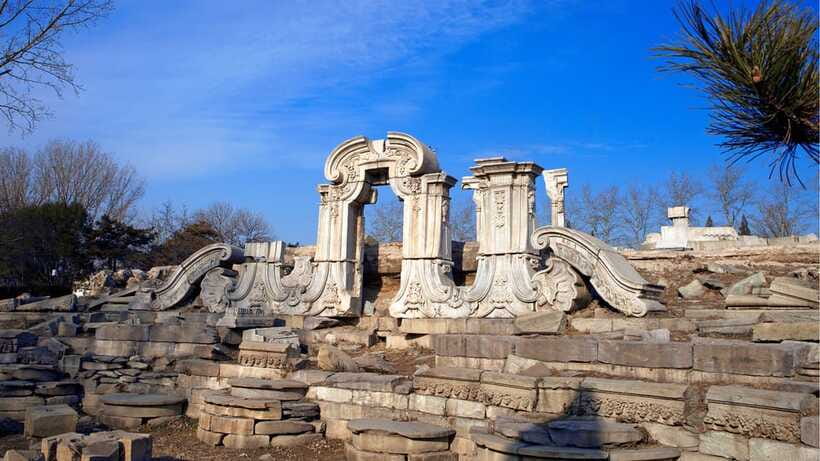
Yuanmingyuan’s beauty is inseparable from its destruction. In 1860, during the Second Opium War, foreign troops looted and burned the palace. The loss was not limited to architecture. Priceless objects, artworks, and imperial possessions were also taken or destroyed.
The ruins are therefore more than attractive old stones. They carry a national memory of military defeat, cultural loss, and foreign intervention. You may find the site less comfortable than a restored palace because the damage has not been smoothed away.
That is precisely why I think it deserves time. The broken sculptures and overgrown remains ask you to think about what is absent. A restored hall can show you how a palace looked. Yuanmingyuan also shows you what war can remove.
The site does not offer a single, simple story. It is a place of imperial luxury, artistic exchange, military conflict, and cultural remembrance. Your English guide can help give the ruins some context, but you should expect to do a little of the interpreting yourself.
How to use the English visual guide
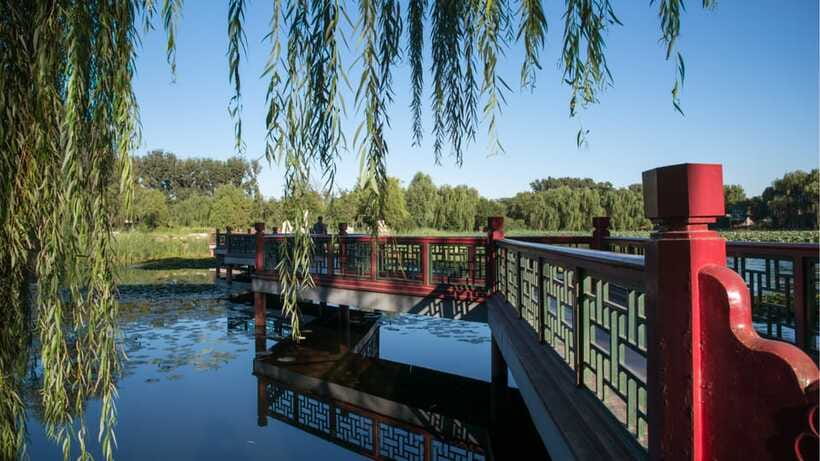
The admission includes an English textual and visual guide. This is useful because the park has no live guide and no audio guide included. The written material can help you connect scattered ruins with the palace complex that once occupied the site.
Take time to check that the e-ticket and guide open correctly before you set off. Panda, the local organizer, is known for sending the ticket details and PDF guide and for resending them when a customer cannot find the files. That kind of practical help matters more here than it would at a small attraction.
Still, this is not a guided tour. Nobody will walk you from one section to the next, explain every building, or adjust the visit to your interests. If you enjoy reading at your own pace, that is a benefit. If you want a flowing story from an expert, you may find the experience too quiet.
Use the guide as a framework rather than trying to read every line while walking. Stop at the parts that interest you, then let the park itself do some of the work. The combination of short historical notes and visual references should make the ruins easier to understand.
More entry tickets in Beijing:
- 4-Hour Small Group Tour to Forbidden City with Entry Tickets
★ 5.0 · 1,863 reviews - Beijing: Tiananmen Square Registration Service(Ticket)
★ 4.5 · 1,704 reviews - Beijing: The Temple of Heaven or Summer Palace Entry Ticket
★ 4.6 · 1,286 reviews - Beijing Forbidden City Ticket Booking (Optional: guide service)
★ 5.0 · 1,263 reviews
A realistic route through the huge park
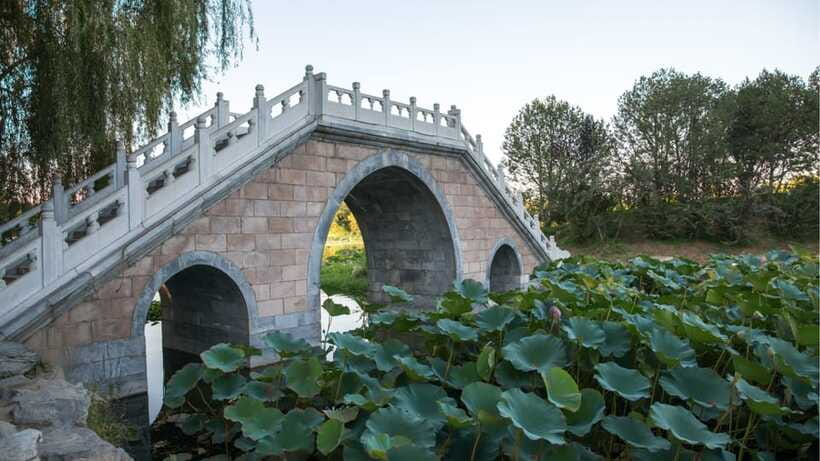
The supplied admission is valid for a one-day visit, and that matters. Yuanmingyuan is not an attraction you should squeeze between several appointments unless you are satisfied with a brief look.
Begin with the areas that matter most to you rather than attempting to cover every path. If your priority is imperial history, focus on the main remains and the sections linked to the palace’s destruction. If you prefer garden scenery, give more time to the ponds, bridges, plants, and open views.
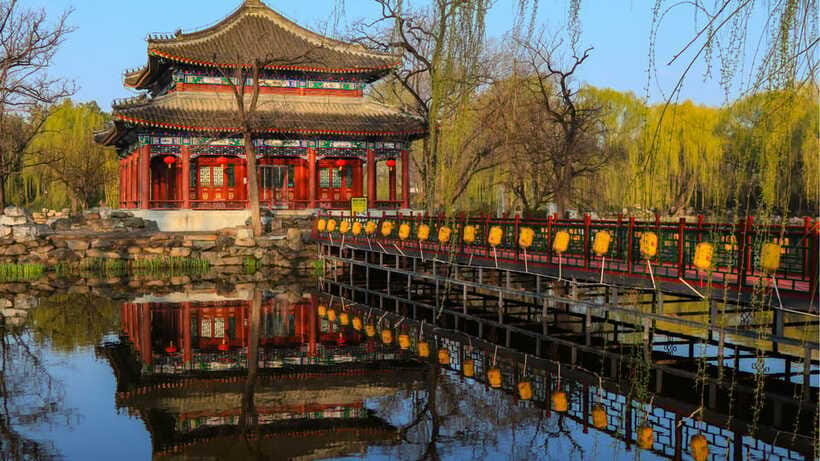
The park includes large bodies of water and attractive water plants. One particularly appealing feature is the display of large water lilies in summer. These natural details soften the mood of the ruins and show why the site was prized as a garden as well as a royal residence.
As you walk, expect changes in atmosphere. One section may feel open and bright, while another is more shaded and enclosed. A ruined wall or broken column can appear with little warning among the greenery. The lack of a perfectly preserved route is part of the character, but it can also make orientation difficult.
One visitor needed more than four and a half hours just to tour the basic park and still did not see everything. I would treat that as a useful warning, not an exact timetable. Your pace, stops, and interest in reading will affect the day, but you should plan generously.
Why the ruins are worth the walking
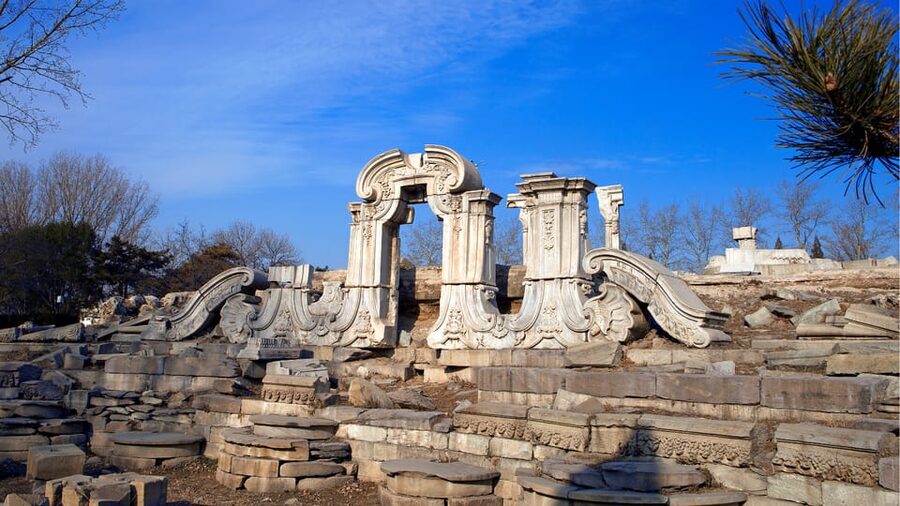
The main reward is not a single spectacular interior. It is the gradual feeling of moving through a lost royal world.
You might pause beside a lake and picture the imperial garden before the destruction. A bridge may lead toward an area where little survives. A fragment of a Western-style building can make you reconsider the usual image of Chinese palace architecture.
That contrast gives Yuanmingyuan its character. It is not only Chinese tradition, and it is not simply European influence placed in China. The site shows how the Qing court brought different visual ideas together in a setting designed for imperial pleasure.
The ruins also reward slower observation. Look at how surviving stonework relates to the paths and water. Notice how plants soften damaged structures. The park can feel melancholy, but it is not bleak. Nature continues to shape the place, and the result is often quiet and beautiful.
I would not choose this experience if your main goal is a fully restored palace with clear interiors and many intact rooms. I would choose it if you want a more reflective visit, with space to think and room to wander.
How the $9 price works for different budgets
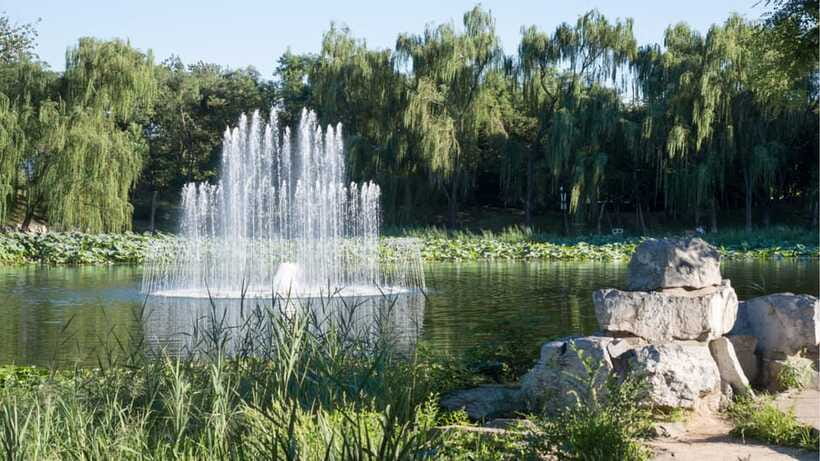
At $9 per person, the admission is easy to justify for anyone interested in Beijing’s imperial past. You are paying for access to a very large historic park, not for a short photo stop.
The value improves if you use most of the day. A hurried visit makes the ticket feel less rewarding because the park’s size is one of its central features. If you can give Yuanmingyuan several hours, the price compares well with the amount of scenery and history available.
The ticket alone does not cover a live guide or audio guide. That keeps the cost down, but it also shifts responsibility to you. You will need to read the English guide, decide which areas matter most, and keep track of your route.
I see the $9 ticket as a good choice for independent sightseers, history fans, and repeat visitors who want something beyond Beijing’s most famous palace courtyards. Families and casual sightseers may also enjoy it, but younger children could find the walking and scattered ruins less engaging unless the water and open spaces hold their attention.
Practical tips before you go
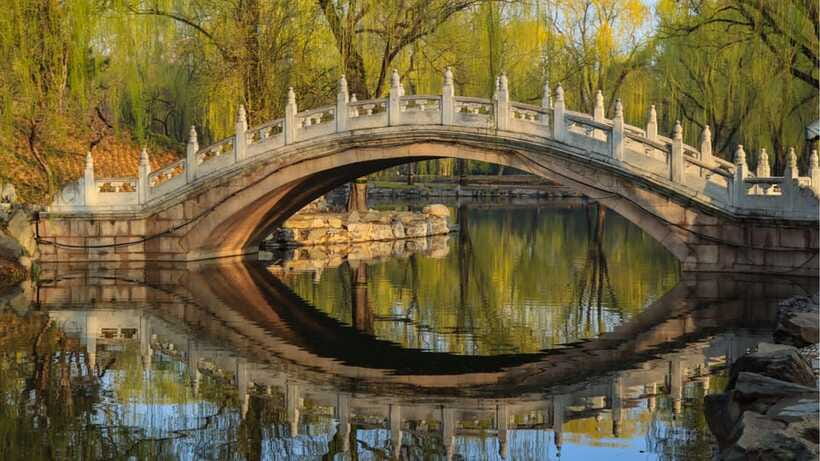
Bring your passport or ID card. It is specifically required information for this activity, so do not treat it as an optional extra.
Save the e-ticket and English PDF guide somewhere easy to find on your phone. If the files do not appear, Panda can resend them, but sorting this out before arrival will save time.
Wear comfortable shoes and plan for a long walk. The park is very large, and the basic ticket does not mean you can see it quickly. Give yourself time for pauses beside the water and at the main ruin areas.
A summer visit can be especially pleasant if you want to see the large water lilies. At the same time, plant displays and weather can affect how comfortable the walk feels. Bring whatever personal protection you normally need for a full day outdoors, though the supplied information does not specify particular facilities or services.
Do not expect a boat ride or other extra activity to be part of this ticket. A visitor had trouble arranging a boat experience because it required WeChat, and there was not enough time to set it up. The basic admission is for the park itself, so treat any separate activity as an optional addition requiring its own arrangements.
Cancellation is flexible: you can cancel up to 24 hours before the visit for a full refund. You can also reserve now and pay later, which helps if your Beijing schedule is still changing.
Who will enjoy Yuanmingyuan most
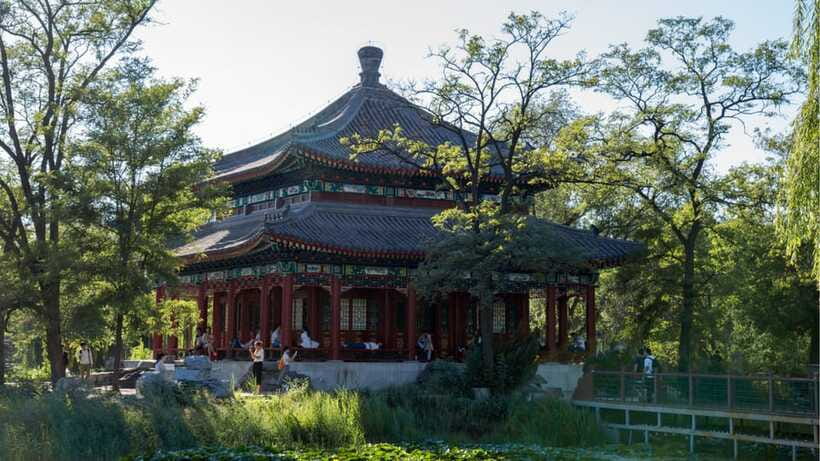
I would recommend Yuanmingyuan to anyone who likes history with visible scars. The ruined palace gives you more to think about than a perfectly restored building, especially if you are interested in the Second Opium War and the cultural impact of foreign intervention.
It is also a good fit for garden lovers. The ponds, bridges, plants, and changing views prevent the visit from becoming a sequence of damaged walls. In summer, the water lilies add a particularly attractive touch.
Independent visitors will get the most from the format. You can spend extra time where you want, skip sections that interest you less, and use the English guide at your own pace.
I would be cautious about recommending it to someone with only a short window in Beijing. The park is large, and one Danish visitor found that there was not much visible history in the areas they saw. That reaction makes sense if you expect every part of the site to contain grand ruins. You need to choose your route carefully and understand that gardens and open spaces make up much of the experience.
Should you book the Yuanmingyuan e-ticket?
Book it if you want a low-cost, self-guided day among Qing Dynasty gardens, lakes, and damaged imperial buildings. The combination of natural beauty and difficult history gives the visit real weight, and the English text and visual guide provide enough structure for an independent outing.
Skip it if you want a live expert, a compact attraction, or a fully restored palace with clear indoor exhibits. Yuanmingyuan rewards time and curiosity more than speed.
For $9, it is a strong value when you can give it at least several hours. Save the ticket and guide, bring your passport or ID card, wear good shoes, and accept that getting a little lost is part of the day.
FAQ
What is Yuanmingyuan Park?
Yuanmingyuan, also called the Old Summer Palace, is a large Qing Dynasty royal garden in the Beijing area. It includes lakes, pavilions, gardens, and the remains of palace structures destroyed in 1860.
What does the $9 ticket include?
The price includes admission to Yuanmingyuan Park and an English textual and visual guide.
Is a live guide included?
No. The activity does not include a live tour guide.
Is an audio guide included?
No. An audio guide is not included. You receive written and visual English material instead.
How long should I plan for the visit?
The activity is described as lasting one day. The park is very large, and it can take more than four and a half hours to tour the basic grounds without seeing everything.
What should I bring?
Bring your passport or ID card. You should also keep your e-ticket and English guide available on your phone.
Can I cancel for a refund?
Yes. You can cancel up to 24 hours in advance for a full refund.
Can I reserve now and pay later?
Yes. The activity allows you to reserve your place and pay later.
Does the ticket include a boat ride?
No boat ride is included in the basic admission. Some extra activities may require WeChat, according to the practical information provided.
Newly listed around Beijing
- Shore Excursion: 2-Day Private Beijing Sightseeing Tour from Tianjin Cruise Port★ 5.0 · 6 reviews
- Private Transfer: Tianjin Xingang International Cruise Home Port to Beijing Hotel★ 5.0 · 6 reviews
- Tianjin Private Day Trip to Forbidden City and Mutianyu Great Wall by Bullet Train★ 5.0 · 5 reviews
- Bullet Train Private Tour: Beijing Tiananmen Square, Forbidden City & Great Wall★ 5.0 · 3 reviews
- Private Great Wall Tour from Tianjin Cruise Port★ 5.0 · 8 reviews
- Private One Way Tianjin Port Transfer to Beijing including Great Wall Sightseeing★ 5.0 · 4 reviews
- Shanghai to Beijing Bullet Train Ticket with Hongqiao Station Transfer★ 5.0 · 5 reviews
- Private Mutianyu Great Wall Tour with Bullet Train Experience★ 5.0 · 3 reviews
Tickets, compared.

4-Hour Small Group Tour to Forbidden City with Entry Tickets
Read our review →

Ngong Ping 360: Cable Car Return Tickets & Combos
Read our review →
The Temple of Heaven or Summer Palace Entry Ticket
Read our review →
Beijing Forbidden City Ticket Booking (Optional: guide service)
Read our review →
Mutianyu Gt Wall Trip, Depart 8-10am Bus w/ Tickets
Read our review →
Forbidden City&T-Square Small GroupTours w/ ticket(Eng/Esp Guide)
Read our review →