
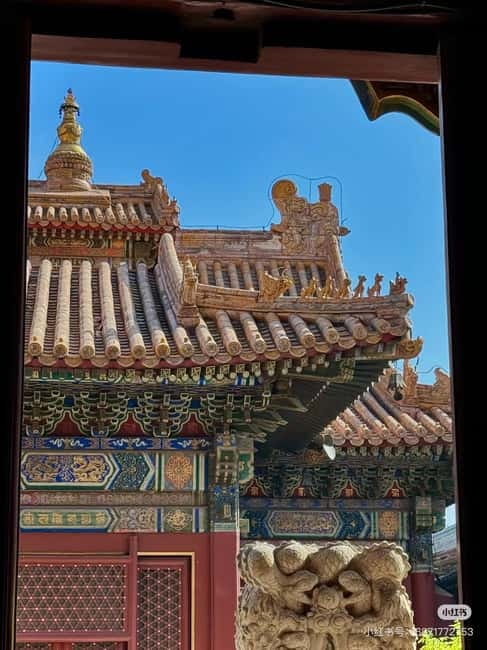
Reviewed · LAMA TEMPLE TOURS
Beijing: Yonghe Lama Temple Tickets with guide (optional)
Beijing’s Yonghe Lama Temple is more than a quick photo stop. Its courtyards tighten as you move north, the halls grow taller, and the complex gradually shifts from imperial Chinese design toward the visual world of Tibetan Buddhism. The scale is impressive, but the details reward a slower look.
I like the pre-booked admission, which saves you from dealing with ticket sales at the entrance. I also like the chance to choose an English-speaking guide and small group, especially if you want help making sense of the temple’s halls and religious symbols. The main catch is timing: entry stops at 4:30 PM from April through October and at 4:00 PM from November through March, so a late visit can be rushed.
Key points to know before you go
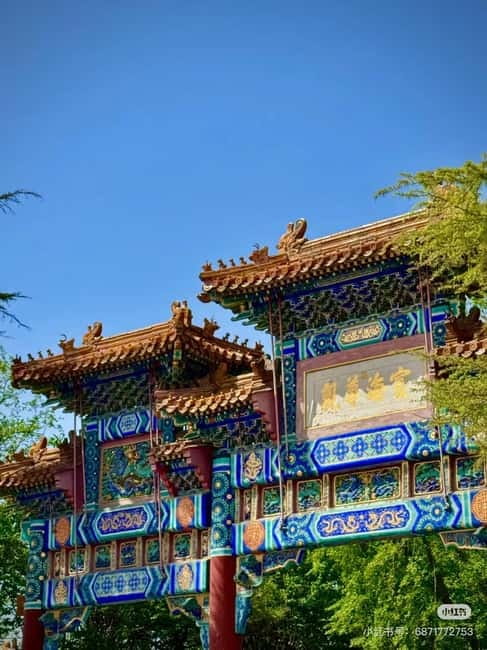
- Three archways lead into a large Qing Dynasty temple complex, giving the visit a strong sense of arrival.
- Five main halls and more than 1,000 rooms make this far bigger than a single shrine.
- Tibetan Buddhist features meet Chinese imperial architecture, with Han, Manchu, Mongolian, and Tibetan influences.
- Yonghe Lama Temple Station on Beijing Subway Line 5 is the simplest stated transport option.
- The $12 price covers admission and an information service fee, with an English guide and small-group format available.
- Bring your passport, and remember that wheelchair access is not suitable for this activity.
Why Yonghe Lama Temple deserves time in Beijing
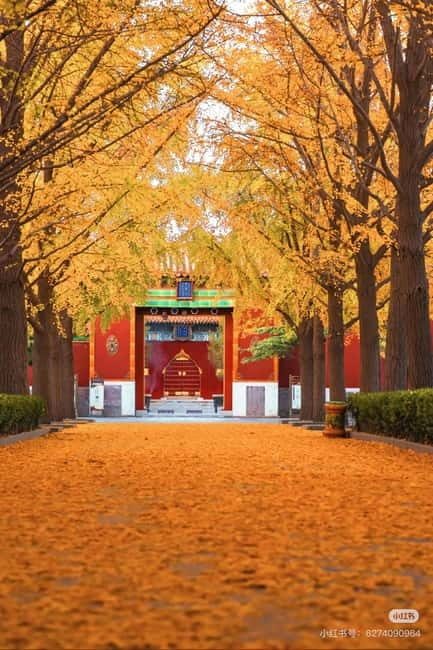
Yonghegong Lama Temple sits at No. 12 Yonghegong Street in Beijing’s Dongcheng District. It began in 1694, during the reign of the Qing emperor Kangxi, and later became the highest-ranking Buddhist temple in the late Qing period.
That background matters because the temple is not simply a collection of old halls. It reflects several cultures that shaped the Qing imperial world. You’ll see traditional Chinese architectural planning alongside Tibetan Buddhist forms, with cultural influences connected to Han, Manchu, Mongolian, and Tibetan communities.
The complex covers about 66,400 square meters. That is a lot of ground for a place that many visitors treat as a short stop. I would allow enough time to move through the courtyards without racing from one building to the next, especially if you want to look at rooflines, gateways, drums, bells, and the changing proportions of the halls.
The most interesting design feature is the northward progression. The courtyards become narrower, while the halls rise in height. The result is a route that feels increasingly grand as you continue, rather than a flat series of buildings with no clear order.
More Lama Temple Tours in Beijing:
- Temple Heaven, Lama Temple, Summer Palace & Peking Duck Bus Tour
★ 5.0 · 377 reviews - Temple Heaven, Summer Palace, Lama Temple, Hutong Bus Tour
★ 4.7 · 319 reviews - Temple of Heaven, Summer Palace, Lama Temple, Hutong Tours
★ 5.0 · 311 reviews
Getting there through Yonghe Lama Temple Station
The stated metro route is simple: take Beijing Subway Line 5 and get off at Yonghe Lama Temple Station. The temple address is No. 12 Yonghegong Street, in the Dongcheng District.
That makes this a practical sight to add to a day of central Beijing sightseeing. You do not need to arrange a separate transfer service according to the information provided, and the subway gives you a clear reference point for planning your arrival.
I would not cut your timing too close to the admission deadline. The grounds are open from 9:00 AM, but the closing time changes with the season:
- From April 1 through October 31, the temple is open until 5:00 PM. Last admission is 4:30 PM, and the grounds are cleared by 5:00 PM.
- From November 1 through March 31, the temple is open until 4:30 PM. Last admission is 4:00 PM, and the grounds are cleared by 4:30 PM.
The supplied information also says that entry ends at 4:00 PM in one general note, but the detailed seasonal hours specify 4:30 PM for summer and autumn. Use the detailed seasonal schedule when planning, and arrive earlier rather than relying on the final half hour.
Passing the three archways
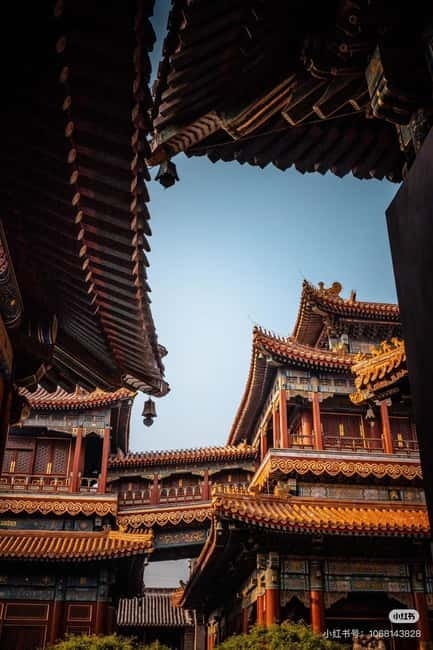
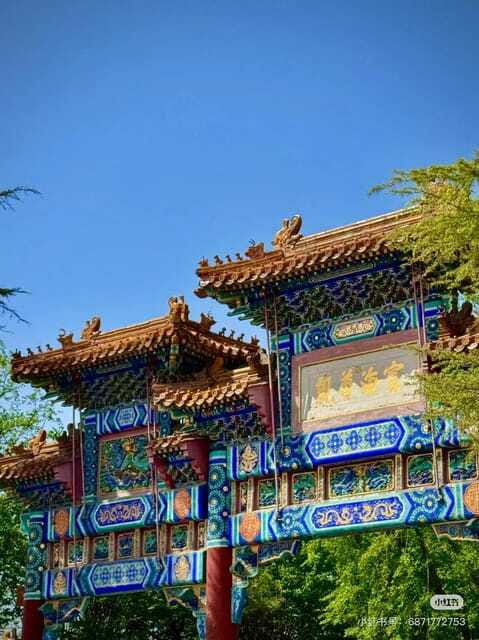
Your visit begins with the temple’s three distinctive archways. These gateways help separate the busy Beijing street outside from the ordered courtyards within.
They are not just decorative entrance points. In traditional Chinese temple design, gateways establish the sequence of the site. Here, they introduce a long north-south layout that becomes more imposing as you continue.
This is one place where a guide can be useful. A ticket gets you inside, but an English-speaking guide can help explain how the temple’s layout reflects its religious and imperial importance. The activity allows a small-group format, which should suit you if you want some direction without joining a large crowd.
No guide’s name is provided, so you should not book expecting a particular named guide. The useful point is the language option: English assistance is available, subject to the selected format.
The main halls and the gradual shift north
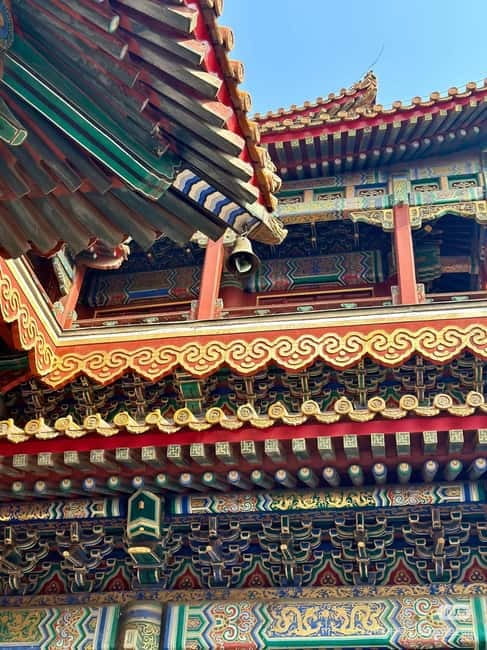
After the entrance area, the complex opens into a chain of courtyards and important buildings. The named structures include Zhaotai Gate, the Bell Tower, the Drum Tower, Yonghe Gate, the Grand Hall, Yongyou Hall, the Hall of the Wheel of the Dharma, and the Pavilion of Ten Thousand Blessings.
The route is not described as a fixed timed itinerary, so treat these as the principal features you can encounter rather than promises of a scripted stop-by-stop performance. The value lies in seeing how the buildings work together.
The Bell Tower and Drum Tower mark the ceremonial character of the complex. They also add vertical features to a site otherwise organized around courtyards and halls. Yonghe Gate carries you farther into the temple, while the Grand Hall, also called the Hall of Great Buddha, gives the central section its main focus.
As you walk north, pay attention to the change in scale. The courtyards narrow and the halls become taller. That design creates a feeling of increasing importance, with the route pulling your attention toward the later buildings.
I like this kind of layout because it rewards movement. You are not looking at one famous object and leaving. The architecture guides you through a sequence, and each courtyard changes the view of what comes next.
A few more Beijing days worth a look
- From Beijing: Mutianyu Great Wall Tours with Options
★ 4.9 · 9,216 reviews - Beijing: Forbidden City Tour(Group/Private)-Tickets Included
★ 4.8 · 7,974 reviews - Beijing: T-Square & Forbidden City Group or Private Tour
★ 4.8 · 4,446 reviews - Beijing: Mutianyu Great Wall Daily Tour with Ticket & Lunch
★ 5.0 · 3,056 reviews
Tibetan Buddhism within traditional Chinese design
Yonghe Lama Temple is especially valuable if you want to see how Tibetan Buddhism appears within a Chinese architectural setting. The temple’s identity comes from the blend rather than from one style alone.
Traditional Chinese features shape the gates, courtyards, rooflines, and broad axial layout. Tibetan Buddhist influence appears in the religious purpose, artistic details, and the later halls. The complex also reflects the Qing period’s links among Han, Manchu, Mongolian, and Tibetan cultures.
You do not need specialist knowledge to appreciate this. Start with the simple question of how each building looks and feels different from the one before it. Notice the balance between formal Chinese planning and the more specifically Tibetan Buddhist character of the temple as you move toward the northern end.
An English guide may help put those contrasts into words. Without one, the pre-booked ticket still gives you access to the full setting, but you will need to rely more on your own reading of the architecture and any information available on site.
Yongyou Hall, the Wheel of the Dharma Hall, and the Pavilion of Ten Thousand Blessings
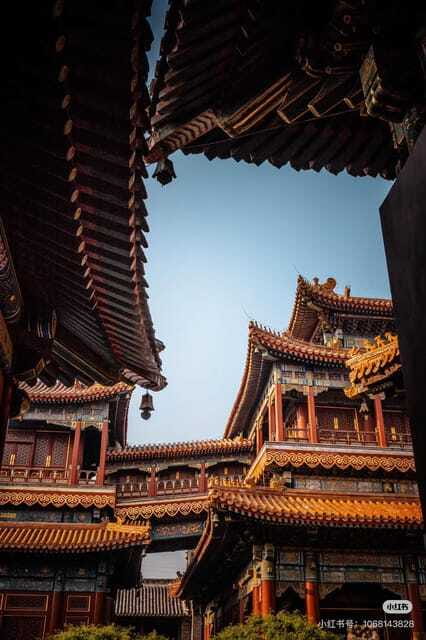
The northern buildings give the visit its grand finish. Yongyou Hall, the Hall of the Wheel of the Dharma, and the Pavilion of Ten Thousand Blessings are among the complex’s key structures.
The names alone point to the temple’s Buddhist purpose. The Hall of the Wheel of the Dharma is particularly useful for understanding that this is an active religious site, not only a Qing-era architectural display. At the Pavilion of Ten Thousand Blessings, the rising scale of the route reaches its fullest effect.
The information provided does not specify individual artifacts, statues, or interior viewing rules, so I would avoid arriving with a fixed checklist of objects. Instead, focus on the relationship among the halls, courtyards, and gateways. The broad complex is the main attraction.
Because the site includes more than 1,000 rooms, you will not see every room in a single visit. That is not a flaw. It means the official highlights give you a useful structure, while the actual pace depends on how much time you spend looking and listening.
Is the $12 price good value?
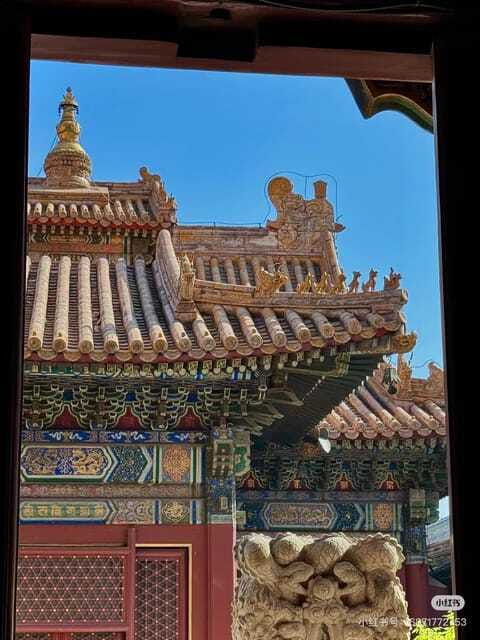
At $12 per person, this is a modest-cost way to visit one of Beijing’s major religious and architectural sites. The value is strongest if you care about seeing the temple without spending time sorting out admission at the entrance.
The included package covers the Yonghegong Lama Temple ticket and an information service fee. An English-speaking guide and small-group arrangement are available, which can make the price more worthwhile if you want context instead of simply walking through the courtyards.
If you already know a great deal about Qing architecture and Tibetan Buddhism, you may prefer the ticket on its own, if that is the option offered when you book. If you want someone to explain the layout and cultural mix, the guide option is the better use of your money.
The activity also offers free cancellation up to 24 hours before the visit and reserve-now, pay-later booking. Those terms are useful when your Beijing schedule may change, though you still need to check the available starting time before committing.
Timing, clothing, and practical limits
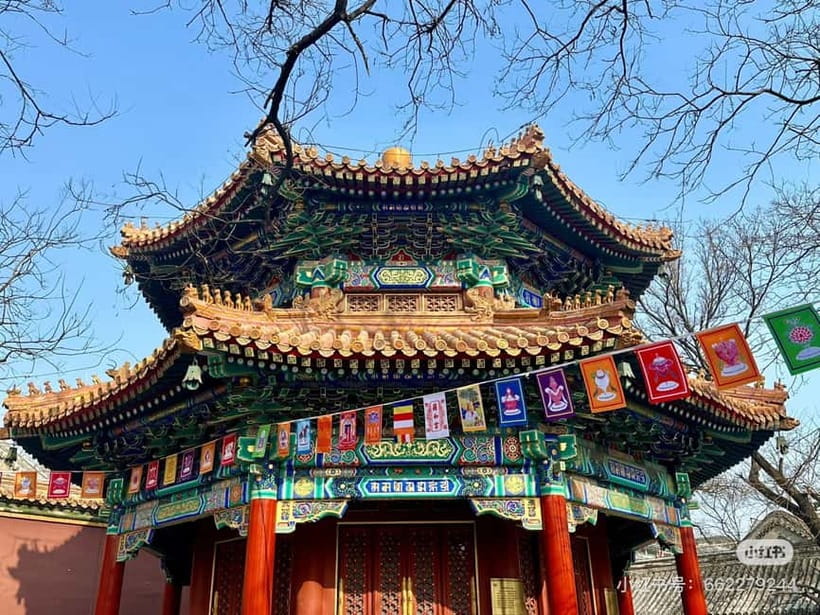
The experience is valid for one day, with availability shown during booking. It is not presented as a multi-day pass or a general Beijing sightseeing ticket.
Bring your passport. Alcohol, drugs, and making fires are not allowed. These rules are straightforward, but checking your bag before leaving your hotel saves time at the entrance.
The activity is not suitable for wheelchair users. That is an important limitation, not a minor footnote, given the large complex and the need to move through multiple courtyards and halls.
You should also dress for a temple visit rather than treating this as a quick indoor attraction. The information does not specify a formal dress code, but respectful behavior is appropriate in an active Buddhist setting.
Who should choose the guided option?
Choose the English-guided format if you want help understanding the contrast between Tibetan Buddhism and Chinese architectural planning. It is also a good fit if you prefer a small group to a completely independent visit.
The ticket-focused option may suit you better if your main goal is to see the gateways, halls, and courtyards at your own pace. You can stop for photographs, spend longer at a favorite building, or move quickly if your day is packed.
Families and first-time visitors to Beijing may appreciate the clear structure of a pre-booked ticket. Architecture fans should make time for the gradual shift in scale from south to north. Visitors with limited mobility should look for a different activity because this experience is specifically marked as unsuitable for wheelchair users.
Should you book Yonghe Lama Temple with a guide?
Book this experience if you want a simple, low-cost way to enter Yonghe Lama Temple and you value an English explanation of what you are seeing. The pre-booked ticket removes one small piece of hassle, while the available small-group guide can give the buildings a clearer purpose.
Skip it if you need wheelchair access, plan to arrive near closing time, or want a fully detailed specialist tour with a named guide. No individual guide is identified, and the information does not promise a fixed length or a detailed scripted route.
For most visitors who have a place in their Beijing schedule for religious architecture, this is a sensible choice. Arrive early, bring your passport, use Line 5 to Yonghe Lama Temple Station, and give the courtyards enough time to unfold.
FAQ
Where is Yonghe Lama Temple located?
Yonghe Lama Temple is at No. 12 Yonghegong Street in Beijing’s Dongcheng District, in northern China.
How can I reach the temple by metro?
Take Beijing Subway Line 5 and get off at Yonghe Lama Temple Station.
What are the temple’s opening hours?
From April 1 through October 31, it is open from 9:00 AM to 5:00 PM, with last admission at 4:30 PM. From November 1 through March 31, it is open from 9:00 AM to 4:30 PM, with last admission at 4:00 PM.
What does the $12 price include?
The price includes the Yonghegong Lama Temple admission ticket and an information service fee.
Is an English-speaking guide available?
Yes. The activity lists an English live tour guide, and a small-group format is available.
What should I bring?
Bring your passport.
Is the temple suitable for wheelchair users?
No. The activity is listed as unsuitable for wheelchair users.
Newly listed around Beijing
- Shore Excursion: 2-Day Private Beijing Sightseeing Tour from Tianjin Cruise Port★ 5.0 · 6 reviews
- Private Transfer: Tianjin Xingang International Cruise Home Port to Beijing Hotel★ 5.0 · 6 reviews
- Tianjin Private Day Trip to Forbidden City and Mutianyu Great Wall by Bullet Train★ 5.0 · 5 reviews
- Bullet Train Private Tour: Beijing Tiananmen Square, Forbidden City & Great Wall★ 5.0 · 3 reviews
- Private Great Wall Tour from Tianjin Cruise Port★ 5.0 · 8 reviews
- Private One Way Tianjin Port Transfer to Beijing including Great Wall Sightseeing★ 5.0 · 4 reviews
- Shanghai to Beijing Bullet Train Ticket with Hongqiao Station Transfer★ 5.0 · 5 reviews
- Private Mutianyu Great Wall Tour with Bullet Train Experience★ 5.0 · 3 reviews
Lama Temple Tours, compared.
Temple Heaven, Lama Temple, Summer Palace & Peking Duck Bus Tour
Read our review →
Temple Heaven, Summer Palace, Lama Temple, Hutong Bus Tour
Read our review →
Temple of Heaven, Summer Palace, Lama Temple, Hutong Tours
Read our review →

Beijing Historical Tour II including Summer Palace, Lama Temple & Panda Garden
Read our review →
Beijing Lama temple ticket; #1 efficacious; limited Discount
Read our review →
Panda House, Temple of Heaven, Lama Temple, Summer Palace & Lunch
Read our review →Browse the lists this tour appears in