Reviewed · HALF-DAY
Half-Day Private Tour of Shanghai Jewish Sites
Shanghai’s Jewish story is one of the city’s most unexpected chapters. During World War II, about 30,000 European Jews fled to China, and many made their home in Hongkou. This private tour connects that story to Ohel Moishe Synagogue, Huoshan Park, and several European-style buildings downtown.
I like the personal format and the included air-conditioned ride, especially if you want to make sense of Hongkou without sorting out local transport. I also like that the schedule includes real time at the Museum for Jewish Refugees. The main drawback is the short length: three and a half hours gives you a useful introduction, but not a slow, detailed study of every site.
Key points at a glance
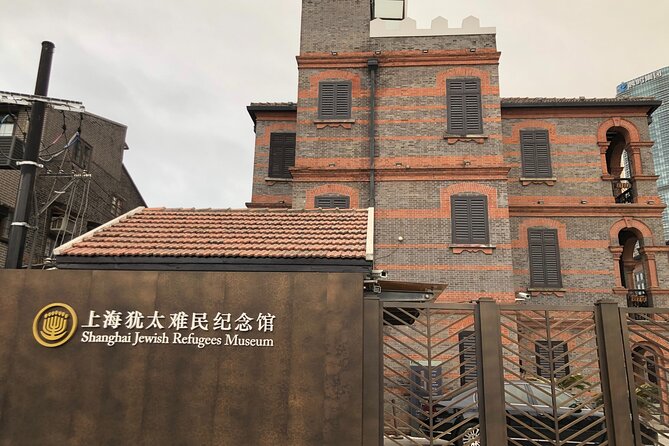
- Ohel Moishe Synagogue: Visit the former spiritual center of Shanghai’s Jewish community, now home to the Museum for Jewish Refugees.
- Hongkou District: See the neighborhood where many European Jewish refugees settled during World War II.
- Huoshan Park: Pause at the Monument in Memory of Jewish Refugees in a quieter outdoor setting.
- European-style Shanghai: Finish downtown at Fairmont Peace Hotel and Moller Villa.
- Private transport: Ride in an air-conditioned vehicle with round-trip pickup from hotels within the Middle Ring Freeway.
- Guide-led context: An English-speaking guide helps link the buildings, streets, and refugee story together.
Why Shanghai’s Jewish story belongs on your itinerary
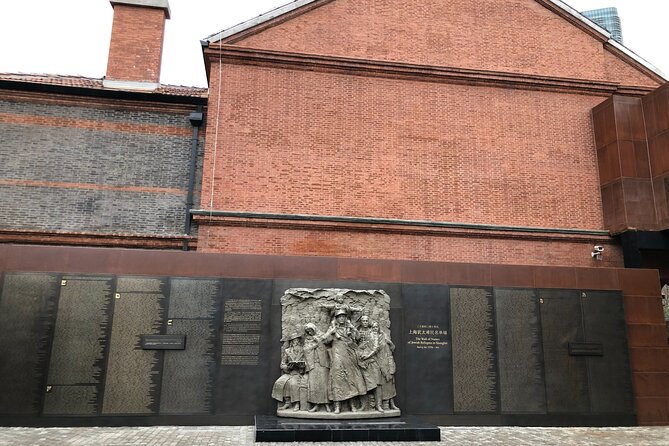
Shanghai is often presented through its skyline, riverfront, shopping streets, and old Chinese neighborhoods. This tour takes you into a less obvious chapter: the city’s role as a refuge for Jews escaping Europe at the beginning of World War II.
About 30,000 Jews arrived in Shanghai during that period. Many settled in Hongkou, a district that became the center of the city’s Jewish community. The tour is useful because it does not treat that history as a collection of unrelated buildings. Your guide brings together religious life, neighborhood history, memorials, and the European influence visible in central Shanghai.
I would choose this tour if you want a focused introduction rather than a full day devoted to museums. The private setup also matters. You can ask questions, set the pace within the three-and-a-half-hour schedule, and spend more time at the museum if that is the part that interests you most.
The format is especially good for a first visit to Shanghai. You get a clear historical thread, then return downtown to see two grand buildings that help explain the city’s international past. It is not only a Jewish history tour, but Jewish history provides its main purpose and shape.
More half-day trips in Shanghai:
- Half-Day Bike Tour of Shanghai Old Town with Food Tasting
★ 5.0 · 306 reviews - Shanghai: Half-Day Biking and Local Food Tour
★ 4.9 · 170 reviews - Half-Day Private Zhujiajiao Water Town Tour with Boat Ride from Shanghai
★ 5.0 · 144 reviews
Ohel Moishe Synagogue and the Museum for Jewish Refugees
The central stop is Ohel Moishe Synagogue, which served as the spiritual heart of Shanghai’s Jewish community. Today, it houses the Museum for Jewish Refugees, making this the most important stop for understanding what happened to the people who arrived in Hongkou.
You should plan to pay close attention here. The building gives the story a physical setting, while the museum adds the personal and historical detail. Instead of hearing only a broad account of migration, you can connect the community’s religious life with the wider refugee experience.
One specific strength of this tour is the chance to spend meaningful time in the museum. Jesse, one of the guides associated with the experience, was specifically praised for allowing plenty of museum time. That is useful information if you are choosing between a quick photo stop and a tour that gives the subject proper attention.
The museum is also where the private format can pay off. If you have questions about the refugees, the synagogue, or the Hongkou neighborhood, you can raise them as you go. In a large group, a museum visit can feel hurried. Here, your own group can benefit from direct access to the guide.
The practical limitation is that the tour description does not promise a precise amount of time at each stop. The total tour lasts about three hours and thirty minutes, so the museum visit shares the clock with transport, Huoshan Park, Fairmont Peace Hotel, and Moller Villa. If the museum is your main reason for booking, tell your guide early that you want to give it serious attention.
Walking through Hongkou’s Jewish past
Hongkou is more than a backdrop. It is the district where most of Shanghai’s Jewish refugees settled, and seeing the area helps you understand how a community could form within a much larger Chinese city.
Your guide leads you through the district and explains the connection between the synagogue and the people who lived nearby. The value here is not just seeing an address on a map. You are placing the refugee story in the streets of Shanghai, where daily life, worship, and survival took place side by side.
The supplied information does not promise a long walking route or list every street visited. You should therefore think of Hongkou as a guided area visit rather than a strenuous walking tour. Still, a moderate level of physical fitness is required, so expect some movement between stops and enough walking to explore the sites.
This part will suit you if you like history with a sense of place. It may be less satisfying if you want a long, detailed neighborhood walk focused on architecture or present-day local life. The tour’s purpose is more specific: showing how Hongkou fits into Shanghai’s Jewish wartime story.
Huoshan Park and its refugee memorial
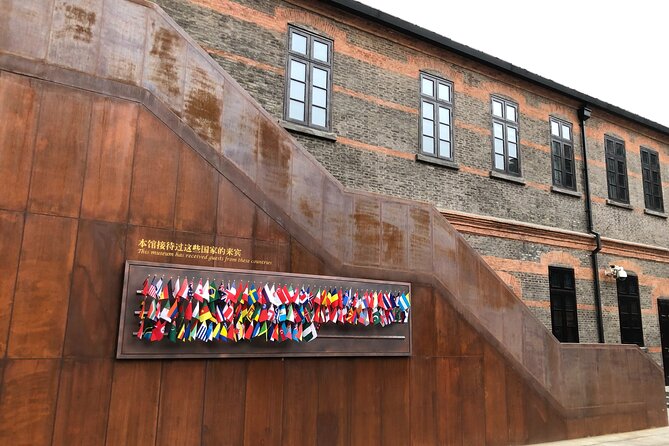
Huoshan Park offers a quieter change of pace after the synagogue and museum. The park is home to the Monument in Memory of Jewish Refugees, which gives the history a simple outdoor focal point.
I like the contrast between the indoor museum and this open-air memorial. At the synagogue, you absorb information and examine the community’s past. At Huoshan Park, you have a moment to pause and consider the people behind the numbers.
Do not expect a major attraction with a long list of activities. The park is included for its connection to the Jewish refugee story and for the memorial itself. That makes it a meaningful stop, but a brief one for many people.
Your guide’s explanation is important here because a monument can be easy to pass without context. The tour connects the memorial to the broader story of the refugees who settled in Hongkou. Without that background, the stop might seem modest. With it, the park becomes part of the same historical route rather than a random detour.
A few more Shanghai days worth a look
- Authentic Local Food Tour in Central Shanghai
★ 5.0 · 1,382 reviews - Zhujiajiao Water Town and Shanghai City Private Day Tour
★ 5.0 · 1,016 reviews - Private Shanghai Full Day City Tour with Old and New Highlights
★ 5.0 · 995 reviews - Shanghai: Hop-on Hop-off Bus Ticket and Optional Attractions
★ 3.4 · 692 reviews
Fairmont Peace Hotel and Moller Villa
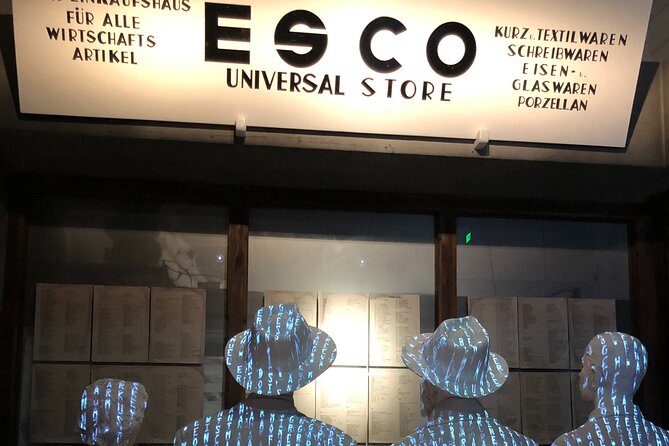
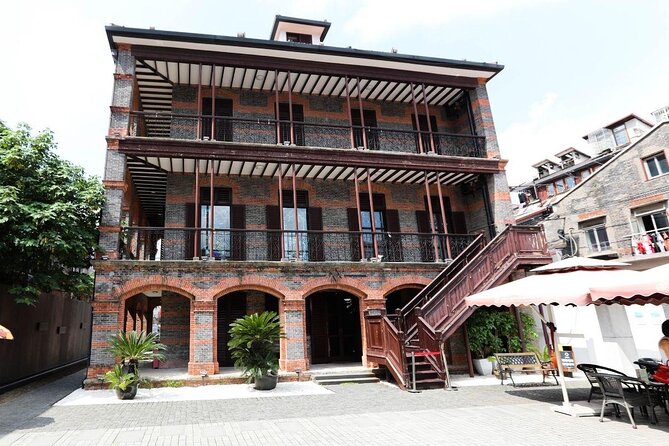
After Hongkou, the tour returns to downtown Shanghai for two European-style landmarks: Fairmont Peace Hotel and Moller Villa. These buildings broaden the tour beyond religious history and show the architectural side of Shanghai’s international past.
Fairmont Peace Hotel is one of the city’s best-known historic hotels, and its inclusion gives you a look at the grander side of old Shanghai. Moller Villa adds another distinct European-style setting. Together, the two stops provide a visual counterpoint to the synagogue, museum, and Hongkou neighborhood.
The information provided does not state that the tour includes interior admission to both buildings. Treat them as scheduled points of interest, with the exact viewing arrangement determined by the guide and the day’s timing. If you are hoping to explore every room inside, confirm that before booking.
These final stops work well for people who want a broader Shanghai story. The tour begins with Jewish community history, then moves through a district shaped by refugees, and finishes with architecture that reflects the city’s international connections. It is a compact route, but the subjects are varied enough to keep the afternoon from feeling repetitive.
What the private format really adds
This is a private activity, so only your group participates. That changes the feel of the tour more than the word private might suggest.
You do not have to match the pace of a large group or wait for strangers at every stop. You can ask your own questions, and you can tell the guide when a particular subject deserves more explanation. For a museum and memorial tour, that flexibility is valuable.
The private format is also helpful if your group has mixed interests. One person may be focused on Jewish history, another on Shanghai architecture, and another on the practical story of how refugees built a life in a new city. A personal guide can adjust the conversation more easily than a fixed group presentation.
The tradeoff is price. At $96, this is not the cheapest way to spend three and a half hours in Shanghai if you are traveling alone. It becomes more attractive when two or more people share the cost, since the private vehicle and guide serve the whole group. Group discounts are offered, but the exact terms are not specified, so check the final booking price.
Pickup, vehicle, and timing
Round-trip hotel transfer is included for hotels within Shanghai’s Middle Ring Freeway. That removes one of the main practical headaches of visiting Hongkou, especially if you are unfamiliar with Shanghai’s transport system or have limited time in the city.
The vehicle is air-conditioned, a welcome feature in Shanghai’s warm or humid weather. The ride also lets you move between Hongkou and downtown without arranging separate taxis or public transport.
Pickup coverage is not universal. If your hotel is outside the Middle Ring Freeway, do not assume transfer is included. Confirm your location before booking, since the stated pickup area is a specific condition of the tour.
At about three hours and thirty minutes, the tour fits neatly into a half-day plan. You could schedule it in a morning or afternoon, then leave time for another Shanghai activity. Keep in mind that traffic and the number of questions your group asks can affect how relaxed the route feels. A private tour gives you control, but it cannot make the city’s roads move faster.
Cost, value, and who should book
The $96 price needs to be judged against what is included: a private guide, an English-speaking guide, an air-conditioned vehicle, and round-trip transfer from eligible hotels. You are paying for historical interpretation and convenience, not simply admission to a set of buildings.
I see the best value for couples, families, or small groups who want a focused subject and do not want to manage transport themselves. Splitting the cost makes the private arrangement more reasonable, especially if the group enjoys asking questions and spending time at the museum.
Solo visitors should compare the price with their own priorities. If you are deeply interested in Jewish history, the guide and museum time may justify the cost. If you mainly want to see famous Shanghai buildings, a general city tour could cover more ground for the same half-day.
The tour requires a moderate level of physical fitness, and children must be accompanied by an adult. All participants need to provide passport name, passport number, expiry date, and country at booking. That requirement is easy to overlook, so have those details ready.
Free cancellation is available if you cancel at least 24 hours before the start time. Cancellations or changes made less than 24 hours in advance are not accepted for a refund.
What to expect from the guide
Your English-speaking guide is the key to the tour. The buildings matter, but the connections between them matter more. Ohel Moishe Synagogue, the museum, Huoshan Park, Fairmont Peace Hotel, and Moller Villa tell a coherent story only when someone explains how they fit together.
Jesse was specifically praised for being wonderful and for allowing substantial time at the Jewish Museum. The driver was also praised, which matters because the ride is part of the package rather than an afterthought.
Guide quality can vary by departure, so I would not book solely on the expectation of having Jesse. Still, the structure of the tour gives an attentive guide plenty to work with. Ask questions, especially at the museum and memorial, and use the private setting to shape the discussion around your interests.
Should you book the Shanghai Jewish Sites tour?
Book it if you want a short, focused look at Shanghai’s Jewish refugee history, especially if the Museum for Jewish Refugees is high on your list. The private vehicle, English-speaking guide, and hotel pickup make the logistics easy, while Hongkou gives the story a real setting.
I would also recommend it for history-minded families and small groups who value a personal guide over a packed sightseeing schedule. The museum and Huoshan Park are the strongest historical stops, while Fairmont Peace Hotel and Moller Villa add architectural variety.
Skip it if you want a full-day exploration, extensive walking, or a broad survey of all Shanghai attractions. Three and a half hours goes quickly, and the tour cannot cover every Jewish site or every part of Hongkou.
For the right group, $96 is a fair price for a private, guided introduction. Just confirm that your hotel falls within the Middle Ring Freeway, prepare passport details for everyone, and tell your guide that you want enough time at the museum.
FAQ
How long does the tour last?
The tour lasts approximately three hours and thirty minutes.
What sites are included?
The route includes Ohel Moishe Synagogue and the Museum for Jewish Refugees, Huoshan Park and its Monument in Memory of Jewish Refugees, Fairmont Peace Hotel, and Moller Villa.
Is hotel pickup included?
Round-trip transfer is included from hotels within Shanghai’s Middle Ring Freeway.
What type of vehicle is used?
Transportation is provided in an air-conditioned vehicle.
Is the tour private?
Yes. Only your group participates in the activity.
Is an English-speaking guide included?
Yes. An English-speaking guide is included.
What information is needed when booking?
You must provide the passport name, passport number, expiry date, and country for all participants.
Can I cancel for a full refund?
Yes, if you cancel at least 24 hours before the experience start time. Cancellations or changes made less than 24 hours before the start time are not accepted for a refund.
Newly listed around Shanghai
- shanghai Disney tour★ 5.0 · 12 reviews
- shanghai Disney+shanghai one day city highlights tour (two days)★ 5.0 · 4 reviews
- Zhujiajiao Water Town and Shanghai City Highlights Private Day Tour★ 5.0 · 3 reviews
- Zhujiajiao Water Village & Seven Treasure Town Day Tour from Shanghai★ 4.0 · 8 reviews
- Zhujiajiao Water Town Private Tour with Local Farm Visit and Fruit Picking★ 5.0 · 3 reviews
- Zhujiajiao Water Town Self-Guided Tour with Private Transfer from Shanghai★ 5.0 · 7 reviews
- Xitang Water Town Self-Guided Tour from Shanghai with Private Transfer★ 5.0 · 5 reviews
- Xitang Water Village Sunset Tour with Riverside Dining Experience from Shanghai★ 4.5 · 45 reviews
Half-Day, compared.
Half-Day Mini Group Xian Tour to Terracotta Warriors Museum
Read our review →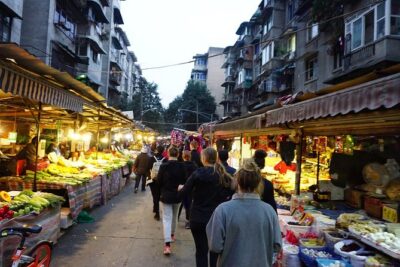
Half-Day Chengdu Cooking Class with a Local Market Visit
Read our review →
Private Half-Day Chengdu Panda Breeding Center Tour with Optional Volunteer
Read our review →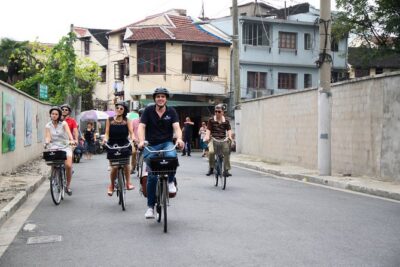
Half-Day Bike Tour of Shanghai Old Town with Food Tasting
Read our review →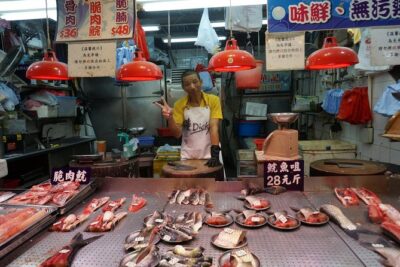
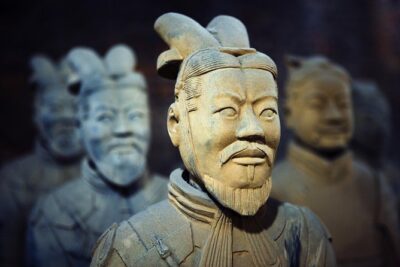
Private Half-Day Tour of Xi’an Terracotta Warriors
Read our review →