
Reviewed · WATER TOWN TOURS
4-Hour Food Tour in Qibao Water Town from Shanghai by Subway
Qibao is where this tour earns its keep: you leave central Shanghai by subway and arrive among canals, stone bridges, old lanes, temples, and food stalls. The best part is not simply eating. It is having a guide such as Queena, Alana, Vicky, or Berlin explain what to order and help you enter small local shops with confidence.
I like the small-group format, capped at 15 people, and the chance to try up to eight snacks rather than just one or two famous dishes. I also like the closing tea tasting, which gives the outing a calm finish after the busy food stops. The main drawback is the price, $94.94 per person, which is a serious amount for a three-hour food walk, especially if you are comfortable using Shanghai’s subway and ordering food on your own.
Key points at a glance
- Qibao by subway: Meet at the Shanghai Urban Planning Exhibition Center near People’s Square, then ride public transportation with your guide.
- Up to eight tastings: Expect a changing mix of Chinese snacks, including dumplings, rice dishes, fried cakes, tofu, and sweet treats.
- Old-town setting: Walk beside canals, cross stone bridges, and see Ming and Qing-era buildings along Qibao Old Street.
- Tea ceremony finish: The food stops end with Chinese tea in a picturesque tea house.
- Optional foot massage: Add a one-hour Chinese foot massage, bringing the total outing to about four hours.
- Morning or afternoon choice: The schedule works for an early start or a later half-day plan.
Why Qibao works so well for a food tour
Shanghai has no shortage of food tours, but Qibao gives this one a clear sense of place. The old town is part of greater Shanghai, yet its lanes feel removed from the city center. Canals run through the district, stone bridges provide easy photo stops, and old buildings line Qibao Old Street.
The setting matters because you are not eating in a restaurant selected only for convenience. You are walking through the area where food shops, souvenir stores, temples, and everyday local life share the same narrow streets. The tour takes you into the southern part of Old Street, where snack shops are concentrated.
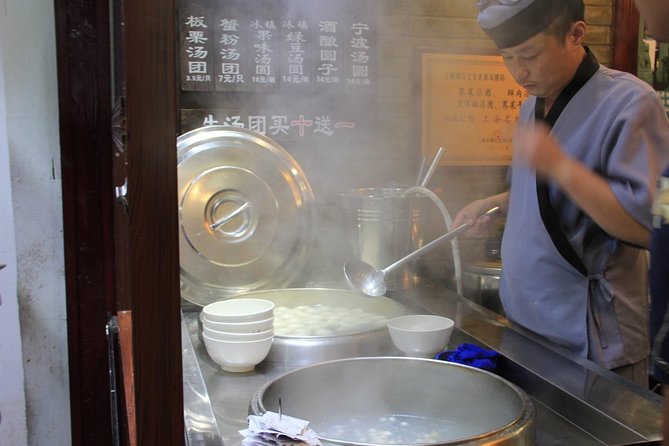
You should not expect a carefully plated tasting menu. This is street food and small-shop eating, with flavors and textures that can be unfamiliar. That is exactly where a local guide helps. Guides explain what each item is, point out the classic choices, and make ordering less awkward when English is limited.
More Food Tours in Shanghai
- Authentic Local Food Tour in Central Shanghai
★ 5.0 · 1,382 reviews - Eat Like A Local: Shanghai Night Food Tour
★ 5.0 · 616 reviews - Half-Day Bike Tour of Shanghai Old Town with Food Tasting
★ 5.0 · 306 reviews
Meeting at People’s Square and taking the subway
The tour begins at the Shanghai Urban Planning Exhibition Center, at 100 Ren Min Da Dao near People’s Square. You are responsible for reaching this centrally located meeting point, but subway tickets are included once the group sets off.
The subway ride is part of the experience, not just a transfer. You get a practical look at how Shanghai connects its central districts with older communities on the edge of the city. You also avoid the uncertainty of road traffic, although you should still allow enough time to reach People’s Square before departure.
Morning and afternoon departures are available. I would choose the morning if food is your main goal and you want to start hungry. One helpful tip from the food itinerary is simple: do not eat a large breakfast before the morning departure. There can be a lot to sample.
The afternoon option suits you if you want a slower start or plan to spend the morning in central Shanghai. Keep in mind that the tour ends back at the original meeting point, so the return trip is built into the schedule.
Walking Qibao Old Street, bridges, and temple lanes
Once you arrive, the guide leads you along Qibao Old Street. The walk is not a formal architecture lecture, but the old buildings and canals provide useful context for the food stops. Ming and Qing architectural features give the lanes their character, and the stone bridges are natural places to pause for photos.
The tour also includes the Qibao Temple area. This adds variety to an outing that could otherwise become one long snack crawl. You can look at the religious site, ask questions about local customs, and then return to the food streets with a better sense of the neighborhood.
Qibao is not a silent open-air museum. Shops sell souvenirs, people move through the lanes, and the streets can feel busy. Comfortable shoes are important because the walking takes place on old streets and around canals. The tour operates in all weather, so bring suitable clothing and rain protection when the forecast looks uncertain.
One guide, Alana, has even helped participants during heavy rain by buying umbrellas. That is the kind of practical care that can make a wet afternoon manageable, though you should not rely on the tour providing weather gear.
The food stops: what you may taste
The precise food lineup can vary, but the tour includes up to eight traditional specialties. That wording is worth noting. You are not guaranteed every item listed in an online description, and the number of tastings may depend on the day, the shops, and your appetite.
The foods associated with this experience include:
- Soup dumplings and crab-meat dumplings
- Fried dumplings
- Bamboo rice
- Sweet Haitang cake
- Red bean sweet cakes
- Taro fried cakes
- Glutinous rice ball soup
- Spicy tofu
- Spicy small potatoes
That is a broad range. You move from savory dumplings and rice to sweets, soups, fried snacks, and spicy dishes. The variety makes the price easier to justify than a tour built around a single famous dish.
Soup dumplings are a useful early introduction to local eating habits. They require a little care, since the filling and broth are hot, and a guide can show you how to approach them. Fried dumplings offer a different texture, with a crisp exterior rather than a delicate steamed skin.
Bamboo rice is one of the foods that has received particular praise from the people who took this outing, along with fried dumplings. The combination gives you a good contrast: one dish is fragrant and substantial, while the other is crisp and savory.
The sweet dishes provide a break from the stronger flavors. Haitang cake, red bean cakes, and taro cakes bring soft, sticky, or lightly sweet textures that may be new to you. Glutinous rice ball soup is another gentle change of pace, especially after fried food.
Spicy tofu and spicy small potatoes are useful if you enjoy heat, but you should tell the guide about your preferences and dietary needs when booking. The tour asks you to provide specific dietary requirements in advance. It is best to be direct, since the experience is built around shared local dishes rather than a private custom menu.
More Water Town Tours in Shanghai
- Zhujiajiao Water Town and Shanghai City Private Day Tour
★ 5.0 · 1,016 reviews - Shanghai Private Tour: Zhujiajiao Water Town and Boat Ride
★ 5.0 · 661 reviews - Shanghai: Zhujiajiao Private Tour w/ Boat Ride & Garden
★ 5.0 · 460 reviews - From Shanghai: Private Zhujiajiao Tour with Boat Ride
★ 5.0 · 334 reviews
Why a guide changes the food experience
You can visit Qibao without a tour, but food ordering can be the hard part. Menus and signs may not be in English, and it is easy to pass a good shop without knowing what makes it worth stopping for.
A guide takes care of that uncertainty. Vicky has been praised for handling logistics from subway tickets to deciding which foods to try. Alana is described as patient and accommodating, particularly when participants needed help choosing unfamiliar dishes. Berlin has also been noted for explaining both the food and Chinese culture in clear English.
The strongest benefit is not speed. It is confidence. You can try a local snack without worrying that you have misunderstood the ingredients or ordered something unsuitable. Guides also answer questions as you walk, so the food is connected to the place instead of becoming a random series of bites.
The small-group limit of 15 is helpful here. It is still possible to become separated in narrow lanes, but the group is small enough for personal attention. If you want a private, quiet tasting with a great deal of time at each shop, this is not that. It is an active group outing through a working old town.
Ending with Chinese tea
After the food stops, the tour settles into a tea tasting. Several participants have singled out the tea ceremony as a memorable part of the day, and I can see why. Qibao’s food streets can be crowded and energetic, so sitting down with tea gives the experience a proper pause.
Tea also broadens the tour beyond eating. Your guide can explain how tea fits into Chinese daily life and hospitality, while you get a chance to ask questions that may not arise while standing at a food stall.
Do not treat the tea tasting as a full cultural workshop. The tour is only three to four hours, and food remains the main focus. Still, it is a well-chosen ending. You finish with conversation and ceremony rather than rushing straight from the last snack to the subway.
The optional one-hour foot massage
You can upgrade the outing to include a one-hour Chinese foot massage. Without that option, the walking and tasting portion lasts about three hours. With it, the total duration is about four hours.
This addition makes sense if you have spent the morning sightseeing or expect your feet to be tired after walking around Shanghai. It also gives you a relaxed ending, though it changes the character of the outing from a compact food tour into a longer half-day activity.
I would choose the massage if you have flexible plans afterward. If you are trying to fit Qibao between a museum reservation and an evening dinner, skip it and keep the tour to its shorter format. The foot massage is an option, not part of the basic inclusion.
What the $94.94 price includes
At $94.94 per person, this is not a bargain subway ride with a few samples. The cost includes a local guide, subway tickets, food tastings, and tea. The foot massage is included only if you select that option.
The value depends on what you need. If you can find Qibao on your own, speak enough Chinese to order comfortably, and are happy sampling one or two things, you may find the price high. You are paying for access to multiple tastings plus interpretation, not simply for transportation.
For a first visit to Shanghai, the value is stronger. You get a guided neighborhood outing, a meal-sized collection of snacks, local transport, cultural explanation, and a tea stop in one package. The small group also saves you from the trial and error of finding good shops on your own.
Hotel pickup and drop-off are not included. You must get to People’s Square and return there at the end. That is a minor inconvenience if you are staying in central Shanghai, but it matters if your hotel is far away or you have luggage.
Who should book this Qibao outing
I would recommend this tour to you if you want to eat local food but do not want to negotiate every order alone. It is also a good fit if you have already seen central Shanghai and want a half-day change of scenery without arranging a complicated trip.
Food-focused visitors should come hungry. The variety can add up quickly, especially on a morning departure. You should also be open to unfamiliar textures and flavors. This is not the right choice if you want to select every dish yourself or avoid all fried, sweet, spicy, or glutinous foods.
Families can participate, but children must be accompanied by an adult. Most people can take part, and service animals are allowed. Comfortable footwear is the practical requirement.
The tour is also a good match for older family members who would benefit from a guide handling the food and route, though the group does involve walking. If someone in your party needs frequent rests, tell the guide early. The pace can be adjusted in some situations, but the exact route and timing cannot be guaranteed.
Weather, timing, and practical limits
The tour runs in all weather. Qibao’s canals and old lanes can be pleasant in light rain, but wet stone surfaces and crowded walkways make comfortable shoes even more important. Carry rain protection when needed, since the outing does not move entirely indoors.
Allow for roughly three hours of food and walking, or four hours with the foot massage. The meeting point and end point are the same, which helps with planning. Do not schedule a tight connection immediately afterward, especially if you are unfamiliar with Shanghai’s subway system.
Free cancellation is available if you cancel at least 24 hours before the start time. Changes made within 24 hours are not accepted, and the amount paid is not refunded for a late cancellation. That rule matters most if your Shanghai schedule is still uncertain.
Should you book the Qibao food tour?
Book it if you want a guided introduction to everyday Chinese snacks, a historic water-town setting, and the ease of having someone manage subway tickets and ordering. The consistently strong rating of 4.9 from 34 ratings and 100 percent recommendation support the tour’s appeal, especially for its friendly guides, food variety, and tea finish.
Skip it if $94.94 feels too steep for a short outing, or if you prefer exploring independently. Qibao can be visited without a guide, and the included food is not a substitute for a full restaurant meal.
For most first-time visitors, I would book the morning departure, eat lightly beforehand, wear good walking shoes, and tell the guide about dietary needs in advance. Add the massage only if you have time to spare. That plan gives you the best balance of food, local transport, old-town scenery, and a relaxed tea ending.
FAQ
Where does the Qibao food tour begin?
The tour begins at the Shanghai Urban Planning Exhibition Center, 100 Ren Min Da Dao, near People’s Square in Huangpu District, Shanghai.
How long does the experience last?
The walking and food tour lasts about three hours. If you select the one-hour Chinese foot massage, the total duration is about four hours.
Is transportation included?
Subway tickets are included. Hotel pickup and hotel drop-off are not included, and the tour begins and ends at the People’s Square meeting point.
How many foods will I try?
The tour includes up to eight food tastings. Possible specialties include dumplings, bamboo rice, Haitang cake, red bean cakes, taro cakes, glutinous rice ball soup, spicy tofu, and spicy potatoes.
Are morning and afternoon departures available?
Yes. You can choose a morning or afternoon departure when booking.
What happens if I need to cancel?
You can receive a full refund if you cancel at least 24 hours before the experience start time. Cancellations or changes made less than 24 hours before the start time are not accepted for a refund.
More Food & Drink in Shanghai
- Late Night Food Tour in the Shanghai’s French Concession
★ 5.0 · 260 reviews - Shanghai: Half-Day Biking and Local Food Tour
★ 4.9 · 170 reviews - Biking Real Shanghai& Enjoy Local Food
★ 4.5 · 141 reviews - Private Shanghai Evening Street Food Walking and Cruise Tour
★ 5.0 · 123 reviews
Newly listed around Shanghai
- shanghai Disney tour★ 5.0 · 12 reviews
- shanghai Disney+shanghai one day city highlights tour (two days)★ 5.0 · 4 reviews
- Zhujiajiao Water Town and Shanghai City Highlights Private Day Tour★ 5.0 · 3 reviews
- Zhujiajiao Water Village & Seven Treasure Town Day Tour from Shanghai★ 4.0 · 8 reviews
- Zhujiajiao Water Town Private Tour with Local Farm Visit and Fruit Picking★ 5.0 · 3 reviews
- Zhujiajiao Water Town Self-Guided Tour with Private Transfer from Shanghai★ 5.0 · 7 reviews
- Xitang Water Village Sunset Tour with Riverside Dining Experience from Shanghai★ 4.5 · 45 reviews
- Xitang Water Town Self-Guided Tour from Shanghai with Private Transfer★ 5.0 · 5 reviews
Water Town Tours, compared.

Zhujiajiao Water Town and Shanghai City Private Day Tour
Read our review →
Shanghai Private Tour: Zhujiajiao Water Town and Boat Ride
Read our review →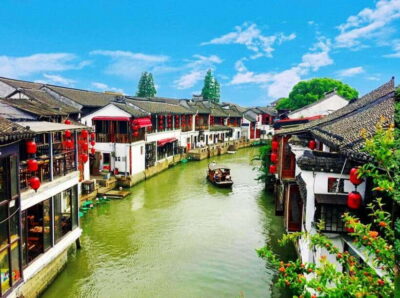
Suzhou and Zhouzhuang Water Village Day Trip from Shanghai
Read our review →
Yu Garden, Old Street, Bund & Zhujiajiao Water Town Bus Tour
Read our review →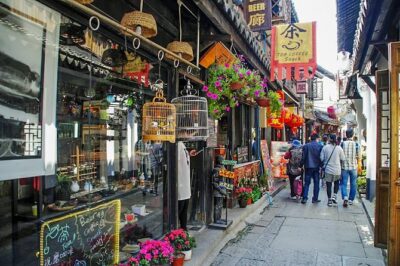
Zhujiajiao Water Town Private Tour with Boat Ride
Read our review →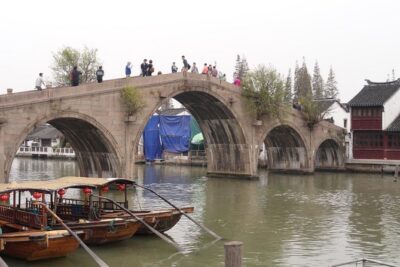
Shanghai Day Tour to Zhujiajiao Water Town, Yu Garden, Bazaar, Bund
Read our review →Browse the lists this tour appears in