

Reviewed · HONG KONG TOURS
Small-Group Tour: Hidden Gems of Old Hong Kong island
Montane Mansion is the eye-catching start to this tour, but the real pleasure comes from moving through ordinary Hong Kong by ding ding tram, wet market, and narrow local streets. You see the city as a lived-in place, not just a collection of famous viewpoints.
I like the mix of small-group attention and everyday culture, especially the family-run slipper shop and the included bowl of wonton noodles. The main caution is price: at $118.08, this is a costly three-hour walk, so you need to value the guide and local access, not just the food and transport.
Key points at a glance
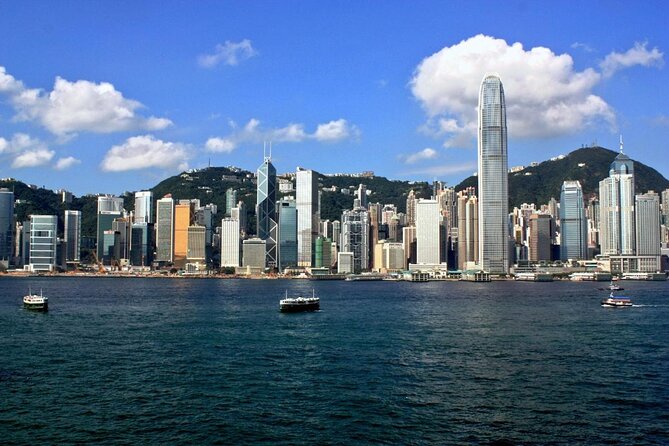
- Montane Mansion in Quarry Bay: See one of Hong Kong’s most striking apartment complexes from close range.
- Chun Yeung Street market: Walk through a working wet market where local residents still shop.
- Ding ding tram rides: Use Hong Kong’s old-fashioned double-decker trams to connect the stops.
- Handmade Chinese slippers: Visit a family shop making embroidered slippers in Hong Kong since 1960.
- Goose Neck Bridge ritual: Watch a traditional petticoat beating service in Causeway Bay.
- Wonton noodles to finish: Sit down for a bowl of noodles and one beverage at a family-run shop.
Why this tour takes you beyond postcard Hong Kong
This is a tour about small details. You are not spending three hours ticking off the Peak, the Star Ferry, and the skyline. Instead, you follow a guide through Quarry Bay, North Point, and Causeway Bay, with public transport doing much of the connecting.
That route matters. Hong Kong’s character changes quickly from one district to the next. Montane Mansion shows the dense residential side of the city. Chun Yeung Street brings you into the daily shopping routine. The slipper shop points to a craft that is now hard to find. Causeway Bay finishes the trip with a traditional service and a simple local meal.
The group limit is eight people. That is small enough for you to ask questions without shouting over a crowd, and it gives the guide a better chance to keep everyone together on busy streets. Previous guide names connected with this experience include Lyona and Kenniess, both described as friendly and attentive in the available feedback, but guide assignment can vary.
The tour lasts about three hours and ends at Causeway Bay MTR station. It is best for you if you want context and conversation as you walk. If you prefer a quiet self-guided stroll or want to spend a long time taking photographs at each stop, the fixed schedule may feel rushed.
A few more Hong Kong days worth a look
- Hong Kong: Dolphin Cruise, Big Buddha & Lantau Island Tour
★ 4.2 · 1,512 reviews - Ngong Ping 360: Cable Car Return Tickets & Combos
★ 4.6 · 1,431 reviews - Lantau Island Day Trip – Big Buddha & Tai O
★ 4.5 · 1,328 reviews
Starting in Quarry Bay at Montane Mansion
The day begins at 11 a.m., with the tour meeting in Quarry Bay. The detailed schedule also refers to the guide meeting you at your hotel at 10:30 a.m. Because those instructions do not match perfectly, confirm your pickup point and time when you book. The stated meeting point is Quarry Bay, and the tour finishes at Causeway Bay MTR station.
You reach Quarry Bay MTR station and begin with Montane Mansion, a group of five connected buildings. The architecture is the first major visual jolt of the day. High-rise housing presses in from every side, creating the enclosed, geometric setting that makes this part of Hong Kong so distinctive.
The stop lasts about 20 minutes and costs nothing beyond your tour price. That short visit is enough to understand the scale and design, but not enough for an extended photography session. Please remember that this is a residential complex, so you are looking at a functioning home for local residents, not a purpose-built attraction.
This stop has become more familiar to photographers in recent years. Still, the experience can feel less crowded than Hong Kong’s headline sights, and your guide can explain what you are seeing rather than leaving you to guess at the buildings and courtyards.
I like this opening because it gives you an immediate sense of how tightly Hong Kong is built. It also sets up a useful contrast with the next part of the walk, where the focus shifts from architecture to shopping and street life.
Riding the ding ding to North Point
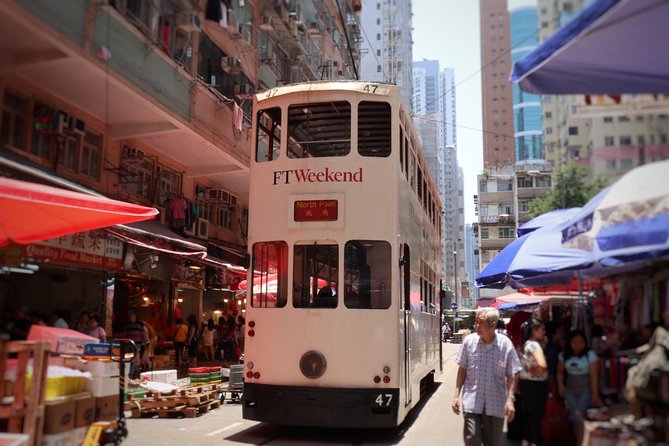
From Quarry Bay, you take the ding ding tram toward North Point. Hong Kong’s trams are a practical part of the tour, not simply a photo prop. You ride above street level in a double-decker carriage while the city passes at a slower pace than it would from a taxi or MTR train.
The tour includes the cost of the tram fare and double-decker bus fare according to the supplied details. One piece of feedback described transport payment as a problem, and the operator acknowledged that the fare should have been covered but was missed by the guide. I would carry a small amount of money or an Octopus card anyway, then confirm what is included before setting out.
The tram ride helps break up the walking. It also lets you see how quickly the districts change. You move from the apartment blocks of Quarry Bay toward North Point, where the streets feel more focused on local commerce.
The tour requires a moderate level of fitness. You should expect several walks between stops, street crossings, time on your feet, and the normal crowding of central Hong Kong. Comfortable walking shoes are essential. This is not a good choice if you need a slow pace or frequent seated breaks.
Shopping for daily life on Chun Yeung Street
Chun Yeung Street is the longest stop, at about 45 minutes. This is a wet market with shops on both sides of the street, and local residents still use it for everyday purchases.
The appeal is not a single grand sight. It is the chance to see the practical rhythm of a neighborhood market. You might notice produce, food shops, narrow storefronts, and the close contact between sellers, shoppers, and passing trams. The street retains a local feel, which makes it one of the most useful parts of the tour for understanding how Hong Kong functions beyond its polished shopping centers.
The guide gives this stop shape. Without local direction, you might simply walk through, take a few pictures, and miss what makes the street important. With a guide, you can ask about the market, the area, and the everyday customs that are easy to overlook.
Forty-five minutes is a sensible amount of time. It gives you enough room to walk the street without turning the visit into a rushed glance. Still, remember that this is a working market. Keep your belongings close, do not block shop entrances, and ask before photographing people or stalls.
For me, this is the most useful kind of sightseeing. You are not just looking at old buildings. You are seeing where people shop and how a neighborhood remains part of daily life.
Same base, a completely different kind of day out:
- Big Bus Hong Kong Open Top Hop-On Hop-Off Sightseeing Tour
★ 4.0 · 1,077 reviews - Hong Kong Day Tour: City Landmarks & Highlights
★ 4.5 · 798 reviews - Hong Kong International Airport Plaza Premium Lounge Access
★ 3.5 · 787 reviews - Hong Kong Disneyland Park Tickets
★ 4.6 · 522 reviews
A five-minute stop for Hong Kong-made slippers
The group then visits a family-run Chinese embroidery slipper shop in North Point. The business began in 1960 and continues to offer handmade slippers made in Hong Kong.
The scheduled visit lasts only five minutes. That tells you what to expect: a brief introduction to the shop and its craft, not a full demonstration or a long shopping session. The stop is still worthwhile because it connects the tour with a local product that is increasingly difficult to find.
The embroidered slippers offer a compact lesson in changing Hong Kong. Small family businesses and hand production have a harder time surviving in a city with high costs and limited space. Seeing the shop gives you a chance to support a local maker, though buying something is not required by the tour details.
If you enjoy crafts, ask the guide how the slippers are made and what distinguishes the designs. If shopping is not your interest, the stop will be quick enough not to weigh down the day.
Causeway Bay and the Goose Neck Bridge ritual
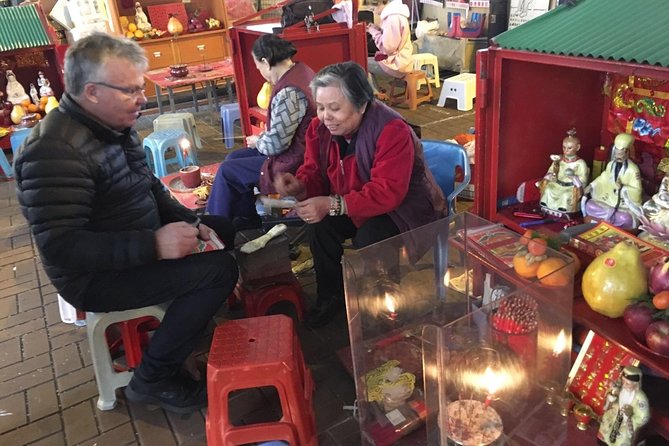
You take the ding ding again toward Causeway Bay, one of the city’s busiest areas. The tour stops at Goose Neck Bridge for about 25 minutes.
Here, you watch petty person beating, a traditional service in which practitioners use shoes or other tools to symbolically beat away bad influences or troublesome people. The experience includes one session. It is an unusual cultural encounter, and the tour provides a setting where you can learn what the ritual means rather than simply passing by and wondering about the crowd.
The activity is not included as a general admission ticket because there is no standard attraction entrance, but one petty person beating is listed as included in the tour. The precise wording is unusual, so ask the guide how the included session works if this part matters to you.
Causeway Bay can feel much more intense than North Point. You are back among major roads, heavy foot traffic, and dense commercial streets. That contrast is part of the point. The tour shows you an old custom in the middle of a modern shopping district, where tradition and present-day city life share the same pavement.
Wonton noodles in a family-run shop
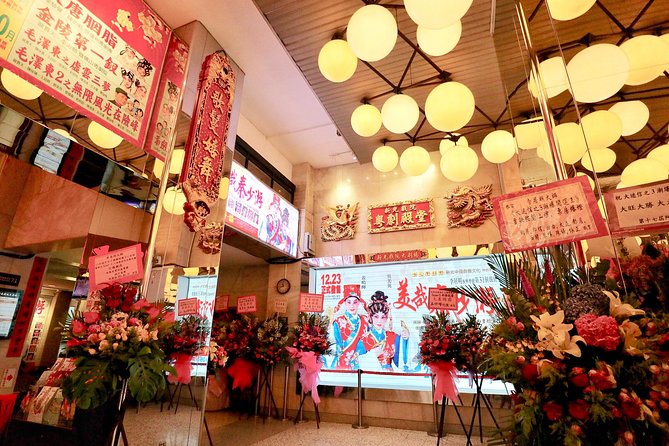
After the walking and tram rides, you sit down at a traditional family-run noodle shop. The meal includes one bowl of wonton noodles, one type of beverage, and bottled water. Vegetarian food is available if you request it when booking, and you should also report other dietary requirements in advance.
Wonton means a small dumpling filled with ingredients such as meat or seafood, served here with noodles and broth. The meal is modest, but it gives the tour a proper finish. You are not stopping at a generic chain or receiving a token snack while standing up. You get time to rest your feet and sample a familiar Cantonese dish in a local setting.
The food is also where the price question becomes important. A bowl of noodles and a drink do not, on their own, justify $118.08. The value comes from the complete package: a licensed English-speaking guide, a tiny group, several included tram rides, access to places that can be hard to interpret alone, and the time saved working out the route.
One piece of feedback called the price too high and felt the included meal was limited. That is a fair concern. If you are mainly looking for lunch and transport, book independently. If you want a guide to connect the market, architecture, craft, ritual, and food, the cost is easier to defend.
The meal is subject to availability and may change. You should treat it as a simple local tasting, not a full food tour.
What the $118.08 price really buys
At $118.08 per person, this sits in the expensive range for a three-hour walking experience. The group cap of eight helps explain some of the cost. A guide can give more personal attention to a small group, answer questions, and manage the route without the feel of a large coach excursion.
The included items are:
- A licensed English-speaking guide
- One bowl of wonton noodles
- One beverage with the meal
- One bottle of water per person
- Ding ding tram fares
- Double-decker bus fare
- One petty person beating session
Other transport, food, and drinks are not included. The tour begins in Quarry Bay and ends at Causeway Bay MTR station, so you need to handle your own travel to the start and onward journey after the finish.
I would book this for the local access, not for the number of inclusions. The guide is the key purchase. If you are comfortable navigating Hong Kong, reading signs, and finding the market and slipper shop yourself, you may consider the cost high. If you have limited time and want a structured route through several districts, the fee may save you effort and provide much better context.
Group discounts may be available. The experience is often booked well ahead, with an average lead time of about 66 days, so it is sensible to reserve early if your dates are fixed.
Who will enjoy the pace and who should skip it
I would recommend this tour to you if you:
- Want local neighborhoods instead of only major sights
- Like walking, street markets, and public transport
- Enjoy learning about small businesses and customs
- Prefer a group of no more than eight people
- Want a guide to explain what you are seeing
- Are happy with a simple noodle meal rather than a full food itinerary
I would hesitate if you:
- Have trouble standing or walking for several hours
- Want a slow photography tour
- Dislike wet markets or crowded city streets
- Expect a large meal or extensive tastings
- Feel $118.08 is too much for a short tour
- Prefer to explore without a fixed schedule
Wear comfortable shoes and bring water, even though one bottle is supplied. The tour runs as planned except during a Red or Black storm warning or Typhoon Signal 8 or higher. In poor weather, the operator offers another date or a full refund.
Free cancellation is available up to 24 hours before the start time. Cancellations or changes made later are not accepted for a refund.
Should you book the Old Hong Kong island walk?
Book it if you want Hong Kong explained through its neighborhoods, not just displayed from a lookout. The combination of Montane Mansion, Chun Yeung Street, the handmade slipper shop, the petty person beating ritual, and wonton noodles gives you a useful cross-section of old and current city life.
I especially like the market, tram rides, and small craft shop. They give the tour its purpose. The main weakness is the price, and you should confirm the meeting time and transport arrangements because the supplied details contain a small inconsistency.
For a first visit with limited time, this can be a strong choice if you value a personable guide and a carefully linked route. For confident independent walkers, it may be better value to visit the areas on your own and spend the savings on a longer meal.
FAQ
Where does the tour start?
The stated meeting point is Quarry Bay in Hong Kong, near Quarry Bay MTR station. The detailed timing also refers to hotel pickup at 10:30 a.m., while the meeting information gives an 11 a.m. start. Confirm the exact meeting arrangement when booking.
Where does the tour end?
The tour ends at Causeway Bay MTR station.
How long does the experience last?
The tour lasts approximately three hours.
How many people are in the group?
The group has a maximum of eight travelers.
Is the tour conducted in English?
Yes. A licensed English-speaking guide conducts the tour.
Is food included?
Yes. The tour includes one bowl of wonton noodles and one type of beverage at a family-run noodle shop. Bottled water is also provided.
Is a vegetarian option available?
Yes. A vegetarian option is available, but you must request it when booking. You should also provide any other dietary requirements in advance.
What happens if the weather is poor?
The tour operates as scheduled except during a Red or Black storm warning or Typhoon Signal 8 or above. If poor weather causes cancellation, you are offered a different date or a full refund.
Newly listed around Hong Kong
- Full Day Private Trip in Hong Kong( impeccable local )walk tour★ 5.0 · 11 reviews
- Hong Kong Victoria Harbour Sightseeing Cruise Tickets★ 4.5 · 8 reviews
- Hong Kong Guided Dinner + Laser Show Lounge Entry (2023) | 200+ booked★ 3.5 · 7 reviews
- Walking Tour in Hong Kong – Local Experience (New & Best)★ 4.5 · 33 reviews
- Victoria Peak Tram and Sky Terrace 428 Admission Hong Kong★ 4.5 · 33 reviews
- STARLIGHT: Victoria Harbour Night Yacht Tour★ 4.5 · 38 reviews
- Group Vegetarian Food & Cultural Tour★ 5.0 · 16 reviews
- Unveiling Hong Kong Cultural Gems [BRAND NEW 2024]★ 5.0 · 4 reviews
Hong Kong Tours, compared.
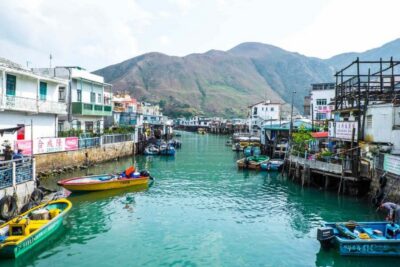
Dolphin Cruise, Big Buddha & Lantau Island Tour
Read our review →
Ngong Ping 360: Cable Car Return Tickets & Combos
Read our review →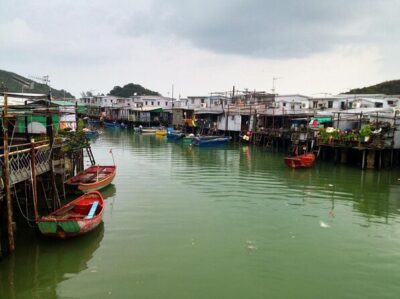
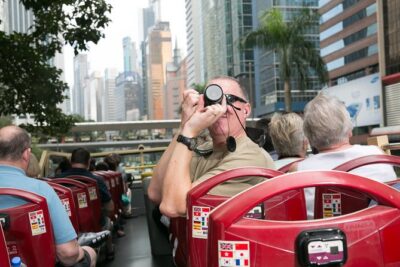
Big Bus Hong Kong Open Top Hop-On Hop-Off Sightseeing Tour
Read our review →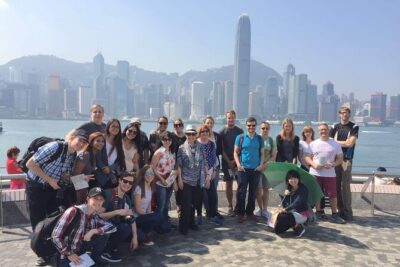
Hong Kong Day Tour: City Landmarks & Highlights
Read our review →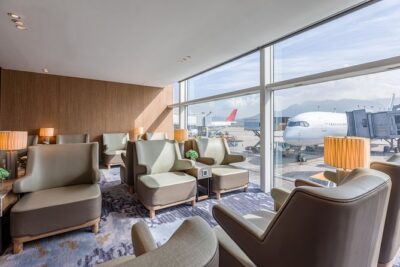
Hong Kong International Airport Plaza Premium Lounge Access
Read our review →

Ngong Ping 360 Cable Car Ticket on Lantau Island
Read our review →Browse the lists this tour appears in