
Reviewed · HONG KONG TOURS
Small-Group Tour: The best bites of Hong Kong Island
Hong Kong’s best food lessons often happen on ordinary streets, and this Wan Chai walk puts you right in the middle of them. You’ll start with brunch at a cha chaan teng, then move through a wet market, small food stalls, Blue House, and Pak Tai Temple. I especially like the small group of eight or fewer and the way the food stops connect with local life rather than sitting apart from it.
I also like the mix of familiar and less obvious tastes: milk tea, pineapple bun, egg tart, roast pork belly, barbecue pork, and mini egg puffs. The main caution is dietary flexibility. A vegetarian option is available, but one vegetarian participant may need to skip some of the food tastings.
Key points at a glance
- A full Hong Kong-style brunch: Sample milk tea or mixed milk tea and coffee, French toast, pineapple bun with fresh butter, breakfast sandwiches, and other morning specialties.
- Four food stops: Expect tastings at the cha chaan teng and three family-run food stalls or bakeries.
- Wan Chai beyond the towers: The route includes a traditional wet market, Blue House, and Pak Tai Temple.
- A genuinely small group: The maximum is eight people, making it easier to ask questions and keep up in tight market spaces.
- Useful local guidance: Guide Kenniess has helped visitors understand Hong Kong food and even pointed them toward the famous villain-hitters after the walk.
- Simple timing: Meet at Wan Chai MTR at 10:30am, walk for about three hours, and finish back at the meeting point.
Why this Wan Chai food walk works
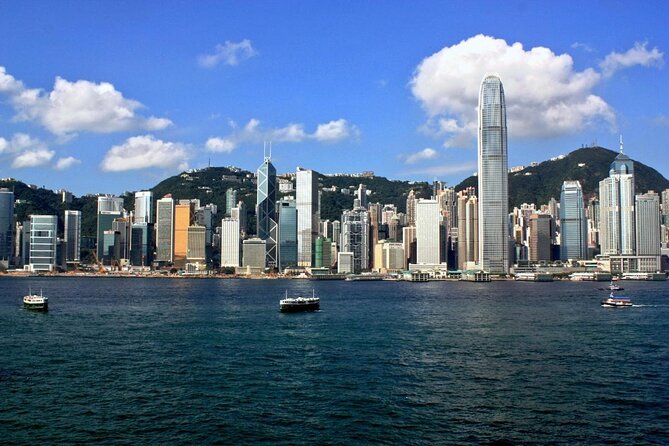
Wan Chai is often associated with office towers, nightlife, and crowded main roads. This tour takes a more grounded route through the neighborhood, where food shops, old buildings, temples, and markets sit close together.
The strongest part is the connection between eating and place. A pineapple bun is not just a sweet snack here. A wet market is not simply a stop for photographs. The guide explains how these places fit into daily life, so you gain a better sense of how Hong Kong eats, shops, and preserves its past.
The tour also keeps things manageable. A group of eight is small enough for a guide to speak with everyone, and it matters when you are standing in a compact café or walking through a market aisle. You are not left trying to hear a long speech from the back of a crowd.
At about $131.20 per person, this is not a cheap breakfast. You are paying for four tasting stops, drinks, an English-speaking guide, neighborhood interpretation, and a carefully arranged route. The value is strongest if you want a quick introduction to Hong Kong food and do not want to guess which stalls are worth your time.
A few more Hong Kong days worth a look
- Hong Kong: Dolphin Cruise, Big Buddha & Lantau Island Tour
★ 4.2 · 1,512 reviews - Ngong Ping 360: Cable Car Return Tickets & Combos
★ 4.6 · 1,431 reviews - Lantau Island Day Trip – Big Buddha & Tai O
★ 4.5 · 1,328 reviews
Starting with brunch at a cha chaan teng
Meet your guide at Wan Chai MTR at 10:30am. Beginning at the station is practical, since you can reach the meeting point by public transport and avoid spending part of the tour waiting for hotel pickup.
The first stop is a cha chaan teng, the Hong Kong-style café that serves quick, filling food at almost any hour. Here, the tasting works more like a small brunch than a single bite. You may sample milk tea or mixed milk tea and coffee, Hong Kong-style French toast, a pineapple bun with fresh butter, breakfast sandwiches, and other morning dishes.
Milk tea is one of the essential tastes to try in Hong Kong. It is smooth, strong, and tied to the city’s café culture. Mixed milk tea and coffee gives you another local variation, useful if you want to compare the drinks rather than simply order a standard coffee.
Hong Kong-style French toast is also different from the plain breakfast toast many visitors expect. The pineapple bun is another key stop. Despite its name, it does not contain pineapple. The name refers to the cracked, golden top, which resembles the fruit. Fresh butter inside makes it especially filling, so you may want to pace yourself before the later tastings.
This first meal sets the tone for the walk. You get the chance to ask your guide how these cafés fit into Hong Kong life, and you have enough food to make the morning feel substantial. If you eat a large breakfast before meeting the group, you may find the opening stop harder to enjoy.
Seeing the wet market in working order
Between tastings, you visit a traditional wet market. These markets sell poultry, live fish, and fresh meat, along with fresh food for everyday cooking. The floors need frequent washing, which explains the name.
This is not a polished food hall designed for visitors. You should expect a market that may be wet, smelly, and fishy. That is part of the point. It gives you a look at how fresh ingredients are bought and handled, rather than presenting Hong Kong food only as finished dishes in restaurants.
The market may be the most useful stop for understanding the city’s food culture. You can see the practical side of local shopping and hear why freshness matters so much. The guide’s presence helps you take in the scene respectfully and understand what you are seeing.
There is also a comfort issue to consider. If you dislike strong smells, raw seafood, or the sight of live animals, this stop may be challenging. The description makes clear that the market is a working place, not a sanitized attraction. Wear comfortable shoes and be ready for damp floors.
The family-run stalls and Hong Kong classics
The next food stops take you to three family-run tasting stalls. This is where the tour moves from café breakfast to classic savory and sweet foods.
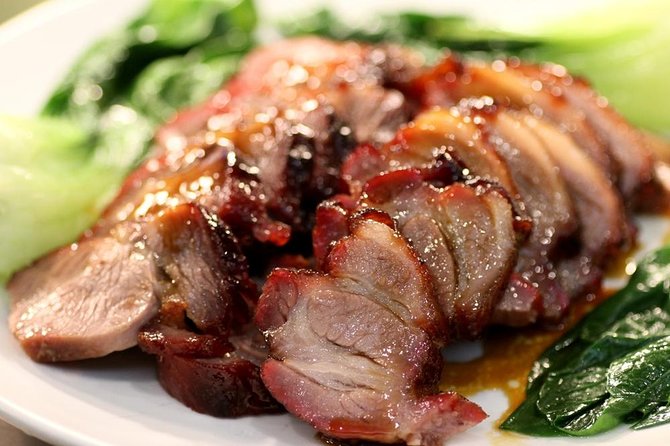
Roast pork belly and barbecue pork bring two familiar Hong Kong flavors to the table. The roast pork belly is valued for its balance of meat and crisp exterior, while barbecue pork offers a sweeter, glazed profile. Small samples are useful here because the dishes can be rich, especially after brunch.
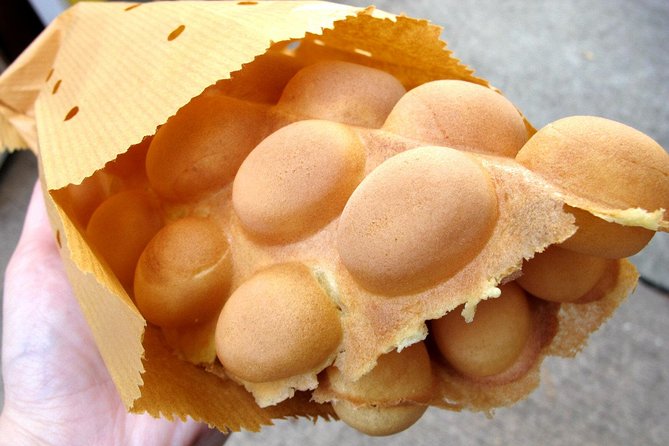
You also taste mini egg puffs, a popular Hong Kong snack with crisp, rounded pieces and a soft center. Their small size makes them easy to try even if you are already full. An egg tart from a local bakery provides a final sweet note and gives you a chance to compare bakery food with the café dishes from earlier.
The useful feature of these stops is their scale. You are not being sent to one large restaurant for a set menu. You are trying selected foods from small businesses, with the guide explaining what to look for and why each item matters.
The exact order and selection may change depending on what is available. That is normal for a food walk built around local stalls. You should think of the tasting list as the planned style of the experience, not a guarantee that every bite will appear in precisely the same form.
Same base, a completely different kind of day out:
- Big Bus Hong Kong Open Top Hop-On Hop-Off Sightseeing Tour
★ 4.0 · 1,077 reviews - Hong Kong Day Tour: City Landmarks & Highlights
★ 4.5 · 798 reviews - Hong Kong International Airport Plaza Premium Lounge Access
★ 3.5 · 787 reviews - Hong Kong Disneyland Park Tickets
★ 4.6 · 522 reviews
Blue House and Wan Chai’s changing past
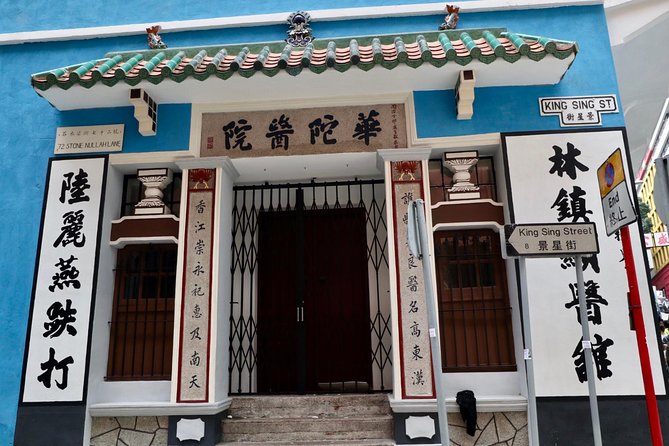
Blue House adds a strong architectural and historical break to the eating. The building was the original site of Hong Kong’s first hospital in the 1870s. The government acquired it in the 1970s, and its outer walls were painted blue, giving the building its familiar name.
Blue House is also linked with local martial arts history. During the 1960s and 1970s, Kung Fu master Wong Fei Hung had a student named Lam Sai Wing, who opened a Kung Fu studio there with his nephew.
The building now houses the Hong Kong House of Stories, which is open to visitors. That gives you more than a quick look at a colorful façade. You can connect the building with the people and activities that shaped it.
I like this stop because it prevents the tour from becoming a three-hour eating schedule. Food remains the main thread, but the buildings explain the neighborhood around it. You also get a better sense of how older structures survive as Wan Chai changes.
Pak Tai Temple and the final walk
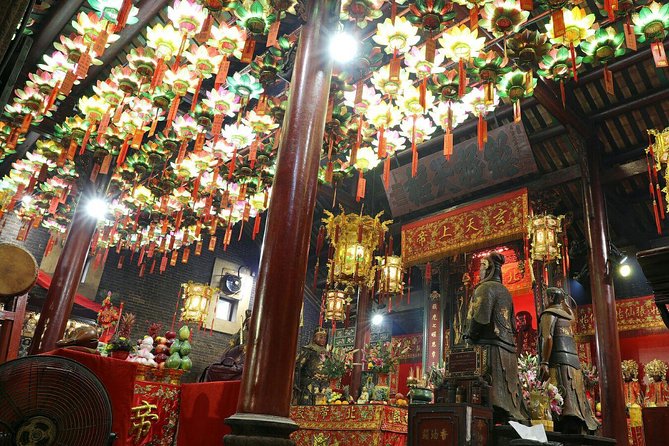
The last major stop is Pak Tai Temple, built in 1863. It is a Taoist temple with three halls, and the main hall contains a three-meter copper image of Pak Tai. Images of Lung Mo, the Dragon Mother, sit on either side.
The temple is listed as a Grade 1 historical building by Hong Kong’s Antiques Advisory Committee for permanent preservation. That designation matters because it shows the building is not simply an old stop added to a walking route. It has formal protection and lasting cultural importance.
You do not need to be an expert in Taoism to appreciate the visit. The temple gives the tour a quieter ending after the market and food stalls. Pay attention to the layout and the details in the main hall, and let the guide explain what you are seeing.
Afterward, your guide walks you back to Wan Chai MTR, where the activity ends. This makes it easy to continue exploring Hong Kong on your own. Since the tour finishes at the starting point, you do not need to arrange a second pickup or work out where to leave the group.
What the small group changes
The maximum group size is eight. That is a meaningful advantage in Wan Chai, where streets and food businesses can feel tight even without a large tour party.
A small group gives you more room to ask about ingredients, ordering habits, building details, and local customs. It also reduces the chance that you will miss the guide’s explanation while standing near a noisy road or crowded market stall.
The guide can keep the pace fairly personal. You may have more chance to explain dietary needs, ask for follow-up suggestions, or clarify something you do not understand. One guide named Kenniess has also helped visitors find the famous villain-hitters after the tour, a useful example of the sort of local direction you can ask for once the official walk ends.
The limitation is that a small-group tour is still a group tour. You follow a set meeting time and route, and the food choices are organized for the whole party. If you prefer to linger at every stall or choose each dish yourself, an independent food crawl may suit you better.
Dietary needs, walking, and comfort
Vegetarian food can be arranged if you advise the provider when booking. Still, you should not assume that every tasting will have a direct vegetarian replacement. The planned food includes pork and other meat-based items, so a vegetarian participant may need to sit out some snacks.
Specific dietary requirements should also be provided in advance through the booking form. This is especially important for allergies, since the experience moves through several different food businesses rather than one kitchen.
The tour lasts about three hours and includes walking through Wan Chai, market areas, food stalls, historic buildings, and a temple. Most people can participate, but you should wear comfortable shoes and be prepared for the wet market’s damp conditions.
There is no hotel pickup or drop-off. You meet at Wan Chai MTR and return there at the end, so the experience works best for anyone already staying in Hong Kong and comfortable using public transportation.
Is $131.20 a fair price?
At $131.20, the cost is high if you judge it only by the amount of food. You could spend far less ordering individual snacks on your own.
The price makes more sense when you count the full package: four tasting locations, drinks at the cha chaan teng, bottled water, an English-speaking guide, a small group, and a route that combines food with Wan Chai’s cultural sites. You also save the time and uncertainty involved in finding suitable stalls yourself.
I would see this as an orientation tour rather than a bargain meal. It is a good first-day choice if you want local food context before exploring on your own. It is less compelling for someone who already knows Hong Kong’s cafés and markets and wants a large meal for the lowest possible cost.
Group discounts may be available, and children aged 0 to 6 can join free for every two paying adults, with a maximum of two free children. That can improve the value for a small family, though the food and market setting may not hold every young child’s attention for the full three hours.
Who should book this Wan Chai experience?
I would recommend it to first-time visitors who want a fast, friendly introduction to Hong Kong food. It is also a good fit if you like local markets, small businesses, and historic buildings more than formal sightseeing.
Food-focused visitors should appreciate the range. You get drinks and breakfast foods, savory roast meats, bakery items, and sweet snacks in one morning. The route also gives you enough background to recognize these foods later when you order independently.
This is a sensible choice for solo visitors and couples who want company without joining a large coach group. It also suits anyone who feels unsure about entering a wet market or ordering from a small stall alone.
I would hesitate to recommend it to strict vegetarians unless the provider confirms the available substitutions. I would also think twice if you dislike strong market smells, need a completely private schedule, or want a tour built around a long sit-down meal.
Should you book it?
Book this Wan Chai walk if you want food, local context, and a manageable introduction to the neighborhood in one morning. The best reasons are the small group, the variety of tasting stops, and the chance to connect familiar foods with places such as Blue House and Pak Tai Temple.
Skip it if your main goal is simply to eat as much as possible for the least money. For most first-time visitors, though, the combination of brunch, market life, family-run stalls, and historic Wan Chai makes the price easier to justify. Cancel at least 24 hours before the 10:30am start for a full refund, and note that poor weather can lead to a rescheduled date or refund.
FAQ
Where does the tour start?
It starts at Wan Chai MTR station in Hong Kong at 10:30am.
Where does the tour finish?
The tour ends back at the Wan Chai MTR meeting point.
How long does the experience last?
The walking tour lasts approximately three hours.
How large is the group?
The tour has a maximum of eight travelers.
What food and drinks are included?
The experience includes four food tasting locations, drinks at a cha chaan teng, and bottled water. Tastings may include milk tea or mixed milk tea and coffee, Hong Kong-style French toast, pineapple bun with fresh butter, breakfast sandwiches, roast pork belly, barbecue pork, mini egg puffs, and egg tarts.
Is a vegetarian option available?
Yes. A vegetarian option is available, but you must advise the provider when booking. Some snacks may still be unavailable for vegetarian participants.
Can I cancel for a refund?
Yes. You can cancel at least 24 hours before the local start time for a full refund. Changes or cancellations made less than 24 hours in advance are not accepted, and poor weather may result in a different date or a full refund.
Newly listed around Hong Kong
- Full Day Private Trip in Hong Kong( impeccable local )walk tour★ 5.0 · 11 reviews
- Hong Kong Victoria Harbour Sightseeing Cruise Tickets★ 4.5 · 8 reviews
- Hong Kong Guided Dinner + Laser Show Lounge Entry (2023) | 200+ booked★ 3.5 · 7 reviews
- Walking Tour in Hong Kong – Local Experience (New & Best)★ 4.5 · 33 reviews
- Victoria Peak Tram and Sky Terrace 428 Admission Hong Kong★ 4.5 · 33 reviews
- STARLIGHT: Victoria Harbour Night Yacht Tour★ 4.5 · 38 reviews
- Group Vegetarian Food & Cultural Tour★ 5.0 · 16 reviews
- Unveiling Hong Kong Cultural Gems [BRAND NEW 2024]★ 5.0 · 4 reviews
Hong Kong Tours, compared.
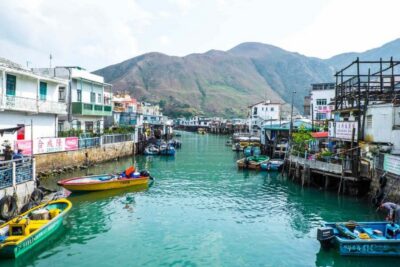
Dolphin Cruise, Big Buddha & Lantau Island Tour
Read our review →
Ngong Ping 360: Cable Car Return Tickets & Combos
Read our review →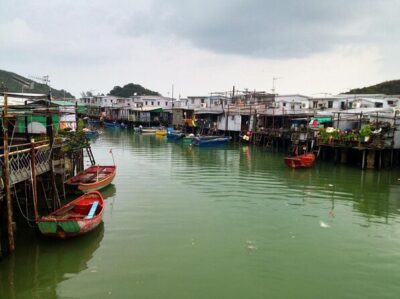
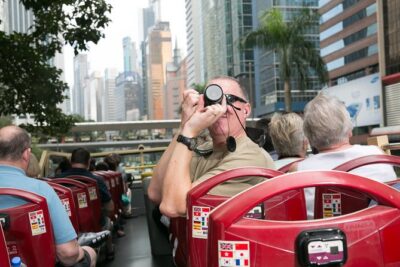
Big Bus Hong Kong Open Top Hop-On Hop-Off Sightseeing Tour
Read our review →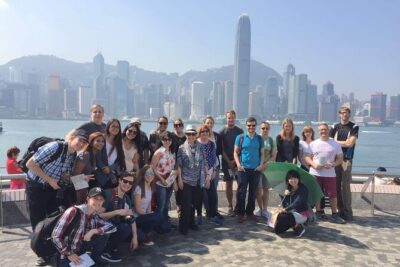
Hong Kong Day Tour: City Landmarks & Highlights
Read our review →
Hong Kong International Airport Plaza Premium Lounge Access
Read our review →
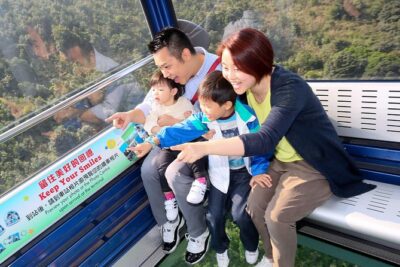
Ngong Ping 360 Cable Car Ticket on Lantau Island
Read our review →Browse the lists this tour appears in