
Reviewed · FOOD & DRINK
Small-Group Hong Kong Island Food Tour
Hong Kong’s best food often hides behind plain signs, crowded counters, and menus you cannot read. This four-hour tour takes you into those local rooms, beginning with trolley-served dim sum in Sheung Wan and ending with egg tarts in Wan Chai. The food is the main event, but the walk also explains how Cantonese cooking met British habits.
I like the small group of no more than nine, which makes cramped restaurants easier to manage, and I like the route itself: dried seafood shops, an old market, the Mid-Levels Escalator, and a ride on the Ding Ding tram. The main drawback is that you should arrive very hungry, and the tour is not suitable for vegetarians, people avoiding gluten, or anyone with a seafood allergy.
Key points at a glance
- Five major food tastings: Try dim sum, wonton noodle soup, Hong Kong milk tea, char siu with rice, and a traditional egg tart.
- Local settings: Eat at family-run restaurants and visit shops in Sheung Wan and Wan Chai that can feel difficult to approach alone.
- Food with context: Learn how Guangzhou cooking, British rule, Chinese medicine, and post-1950s Western influence shaped Hong Kong eating habits.
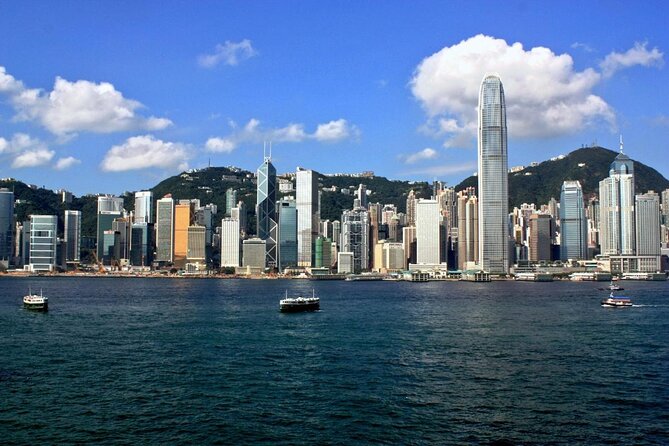
- A useful city introduction: The route links Sheung Wan, Central and Western District, the Mid-Levels Escalator, the Ding Ding tram, and Wan Chai.
- English-speaking guides: Ivy, Andy, Mel, Alex, and Sinclair have all led this experience, with a strong focus on food, local customs, and city life.
- A filling morning: The tour begins at 9:30 am and includes enough food to replace breakfast and possibly cover part of lunch.
Why this Hong Kong food tour works
At $115.52 per person, this is not a cheap breakfast crawl. You are paying for more than a plate of dim sum. The price covers a guide, several substantial tastings, access to old family-run eateries, a tram ride, and help with the small practical hurdles that can make Hong Kong food intimidating.
I see the value most clearly if this is your first visit to Hong Kong. A guide can explain what you are eating, help you order, find seats, handle language gaps, and show you how local food fits into the city’s past. You also get a quick orientation to Hong Kong Island, rather than spending four hours in one neighborhood.
The route is active but not built around a long hike. You move through markets and sloped streets, use the Mid-Levels Escalator, and take the electric tram toward Wan Chai. Bring comfortable shoes and leave breakfast alone. The warning to arrive hungry is serious.
More Food Tours in Hong Kong
- Hong Kong’s Tin Hau Hidden Eats Food Tour with 7+ Local Tastings
★ 5.0 · 352 reviews - Hong Kong Food Tour: Central and Sheung Wan Districts
★ 5.0 · 333 reviews - Hong Kong Street Food Tour with Locals – Dim Sum, Wonton & more
★ 5.0 · 226 reviews
Sheung Wan starts with trolley-served dim sum
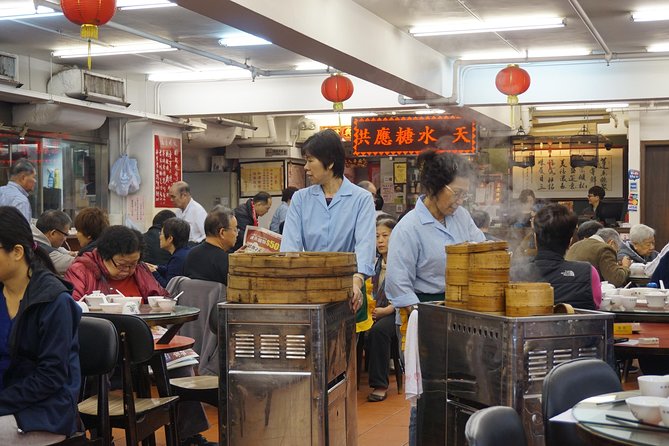
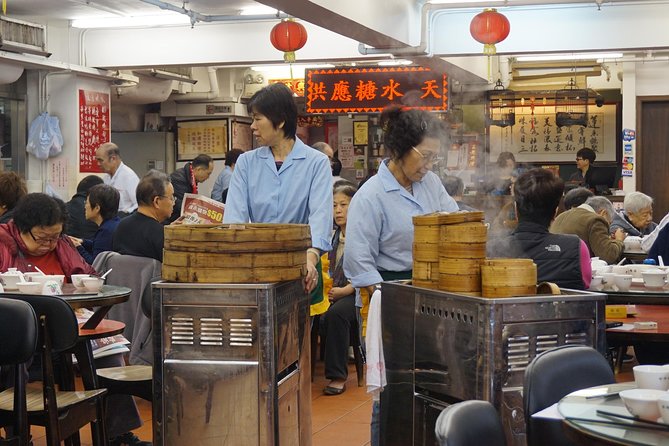
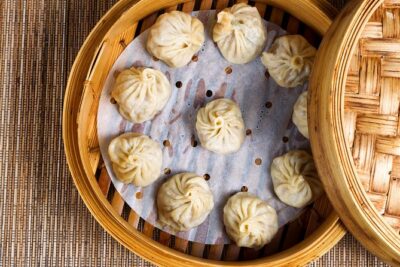
Meet at 28 Des Voeux Road West in Sheung Wan at 9:30 am. The first stop is an old tea house with nearly a century of history, where dim sum, or yum cha, is served from a trolley.
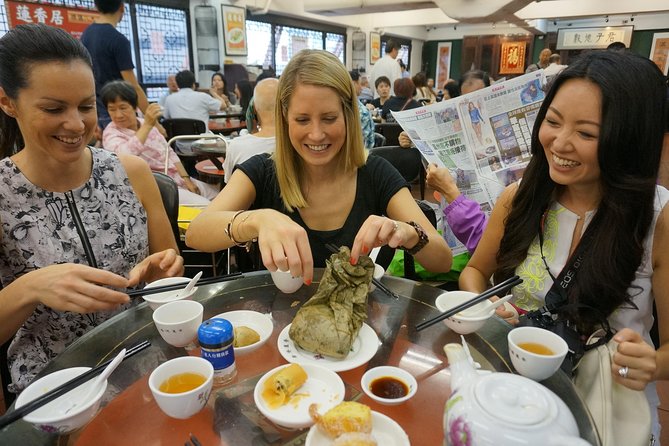
This is a good opening because it shows you how a traditional Hong Kong breakfast feels. The room is lively and crowded, and the trolley service gives the meal a sense of movement. You do not simply receive a neat tasting plate. You choose from what is being wheeled around, with your guide helping explain the dishes.
Dim sum is also a useful introduction to Cantonese food. Small portions, steamed items, savory fillings, and tea are meant to be shared. If you have never eaten this way, your guide can make the process less awkward.
The stop lasts about 50 minutes and includes admission. It is likely to be one of the more substantial parts of the morning, so pace yourself. There is still noodle soup, roast meat, sweets, and an egg tart ahead.
Dried seafood, tea sweets, and old Sheung Wan
After dim sum, the tour moves through Sheung Wan’s dried seafood area, known locally as Seafood Street. The stop lasts about 20 minutes and gives you a look at ingredients used in Chinese cooking and traditional tonics.
This is not a food tasting in the same way as the restaurants. Instead, it helps you understand the strong connection between food, health, and Chinese medicine. Dried seafood shops can be unfamiliar to first-time visitors, and a guide gives you a way to ask questions without guessing what you are seeing.
Next comes Kai Fat Tea, a small shop in a narrow Sheung Wan lane. It has sold tea, assorted candies, and fruit-based Chinese sweets for more than 30 years. You can try traditional preserved sweets here, which provide a sharp change from the savory breakfast.
The tour also includes visits to a family-run soy sauce producer, a Chinese medicine shop dating from the 1940s, and a dried seafood shop. These short visits add texture to the morning. You see the everyday businesses that support Hong Kong cooking, rather than only visiting restaurants built for sightseeing.
Graham Street Market and the working city
Graham Street Market has more than a century of history and is one of the route’s best places to see ordinary food shopping. Stalls sell fresh vegetables and live seafood, and the street offers a quick view of how ingredients move from market to kitchen.
The scheduled stop is only about 10 minutes, so do not expect a long market tour. Its value is in the contrast. You have just eaten prepared dishes, and now you can see the raw ingredients and shopkeepers that form the daily food system.
The route also passes Gough Street and parts of Central and Western District. These streets mix older Chinese businesses, colonial-era buildings, boutiques, restaurants, and small alleys. You get a sense of how quickly Hong Kong changes from one block to the next.
A guide can point out details you might miss while trying to keep up with traffic and street signs. The best part of this section is not a single attraction. It is the connection between the food on your table and the neighborhood around it.
Same base, a completely different kind of day out:
- Hong Kong: Dolphin Cruise, Big Buddha & Lantau Island Tour
★ 4.2 · 1,512 reviews - Ngong Ping 360: Cable Car Return Tickets & Combos
★ 4.6 · 1,431 reviews - Lantau Island Day Trip – Big Buddha & Tai O
★ 4.5 · 1,328 reviews - Big Bus Hong Kong Open Top Hop-On Hop-Off Sightseeing Tour
★ 4.0 · 1,077 reviews
The Mid-Levels Escalator gives your legs a break
The Mid-Levels Escalator covers about 800 meters and rises roughly 135 meters toward Conduit Road. The tour includes a 15-minute stop around the escalator.
This is a practical bit of sightseeing during a food tour. Hong Kong Island is hilly, and the escalator gives you a quick ride through the changing streets of Central. It also connects the food stops to the next part of the route without making the morning feel like a restaurant-to-restaurant shuttle.
The route includes a visit near Tai Kwun, the restored Central Police Station compound, which now contains heritage, art, performances, and lifestyle spaces. The tour does not present this as a full Tai Kwun visit, so treat it as part of the passing city view rather than a separate museum stop.
Wonton noodles show how simple food gets precise
The next major food stop is a family-run restaurant dating from the 1960s and recommended by the Michelin Guide. Here you taste wonton noodle soup, one of Hong Kong’s defining comfort foods.
The bowl is simple: noodles, wontons, broth, and a few carefully handled ingredients. That simplicity is the point. There is nowhere for poor technique to hide, and your guide can explain what makes a local bowl different from a generic noodle soup.
This is one of the tastings I would pay close attention to, especially if you plan to eat your way through Hong Kong after the tour. Notice the texture of the noodles, the size and filling of the wontons, and the balance of the broth. Several guides, including Ivy and Sinclair, have been praised for explaining not only the ingredients but also the habits and customs around the food.
The restaurant may feel cramped or less polished than a modern dining room. That is part of the appeal, but it also means this experience is not designed around spacious seating or a slow, private meal.
Hong Kong milk tea carries the British connection
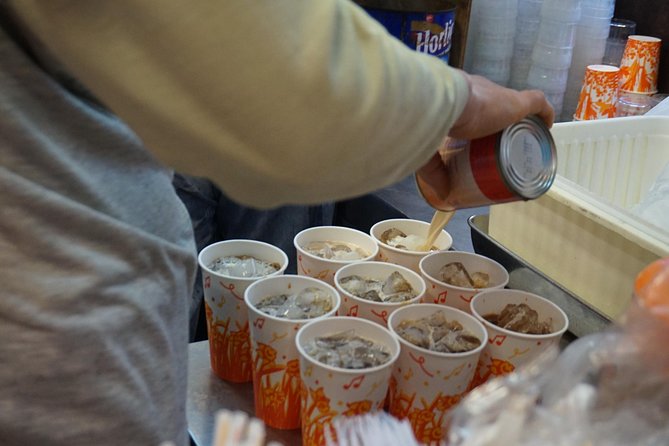
A cup of Hong Kong milk tea follows the savory stops. This drink is one of the clearest reminders of the city’s British influence, adapted into a local form and woven into daily life.
The milk tea stop works best as a cultural pause. You have already heard about Cantonese cooking and Chinese ingredients, and now you see how colonial rule affected ordinary eating and drinking. The tour also discusses Western influences from the 1950s, when Hong Kong’s food culture continued to change.
Do not expect this to be a large drink or a full café break. It is a tasting and a lesson in the same cup. If you normally take tea without milk or sugar, this is still worth trying because it is tied closely to Hong Kong’s café culture.
Ride the Ding Ding to Wan Chai
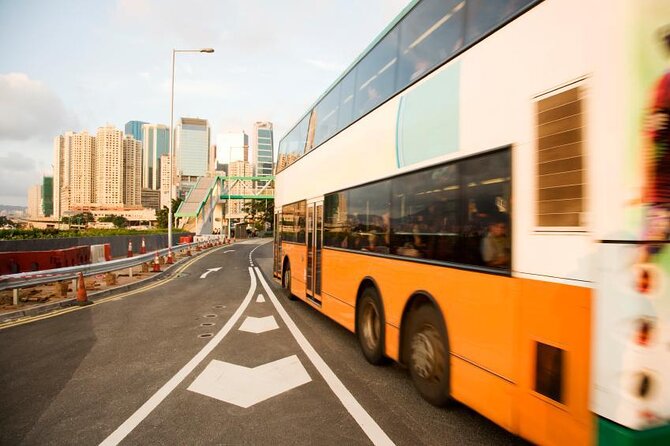
The Hong Kong tramway, known as the Ding Ding, began operating in 1904 under British rule. The double-decker electric trams remain one of the city’s most recognizable forms of transport, and the tour uses one to reach Wan Chai.
The ride lasts about 20 minutes. It breaks up the walking and gives you a moving view of Hong Kong Island at street level. You are not just being transported between tastings. The tram helps connect the British-era story you have heard over tea with the city you can see outside the window.
The tour information lists the tram ride as included, but the detailed description also says the tram fare is at your own expense. Confirm this small point when booking. It should not change your decision, but it is better to know how the ride is handled.
Wan Chai brings char siu and roast meat
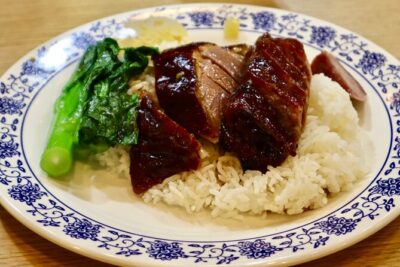
In Wan Chai, you visit another family-run restaurant dating to the Qing dynasty period before the 20th century. It is known for English char siu, or roast meat, served with rice and homemade sauces.
This is a satisfying contrast to the lighter dim sum and soup. Expect a plate built around roasted meat, rice, and sauce, with a mix of traditional roast meats. The stop lasts about 15 minutes, so the meal is part of the larger tasting rather than a leisurely restaurant visit.
The restaurant is recommended by the Michelin Guide, but the appeal here is not ceremony. It is the chance to taste a dish that has been refined through generations while sitting in a place used for everyday eating.
If you are sensitive to rich or fatty foods, take smaller portions early in the morning. The guide generally makes sure the group gets enough food, but you control how much you eat at each stop.
Egg tarts finish the morning on a sweet note
The final food stop is a bakery on Hennessy Road with about 60 years of local history. It is associated with a former Hong Kong governor and is known for dan tat, the Cantonese egg tart.
The egg tart is a Chinese version of the English custard tart, making it a neat final lesson in the exchange between British and Cantonese food traditions. After dim sum, noodles, roast meat, tea, and preserved sweets, the custard offers a softer finish.
The bakery stop lasts about 10 minutes. It is short, but the egg tart is easy to understand and easy to remember. If you find one you love, make a note of the bakery location so you can return on your own.
The tour ends in Wan Chai, with a stop near Southorn Playground. This public recreation area gives you a final look at everyday neighborhood life, with people resting, playing sports, and eating during a work break.
What the guides add to the experience
The guide can make or break a food tour, especially when restaurants are small and the food is unfamiliar. This experience is conducted in English, and guides named in the tour feedback include Ivy, Andy, Mel, Alex, Sinclair, and Jane.
Ivy is especially good for visitors who want food explanations mixed with recent Hong Kong history. Andy has been praised for keeping groups well fed and adding practical help along the route. Mel is a useful choice for anyone who enjoys questions and a flexible pace, while Sinclair is known for adding local folklore and cultural details.
You are not guaranteed a particular guide, so book this for the route and format rather than for one named person. Still, the repeated strength of the guiding team is important. Good food is easy to find in Hong Kong. Getting into the right small restaurant, understanding the menu, and learning why a dish matters is the harder part.
Who should book, and who should skip it
I would choose this tour if you want a strong first look at Hong Kong Island and prefer local restaurants to polished tourist dining rooms. It suits solo visitors, couples, and small groups who enjoy trying several foods in one morning.
It is also a good fit if you want cultural context without spending a full day in a museum. The route combines food, markets, transport, old districts, Chinese medicine, tea, and British influence in a compact four-hour format.
Skip it if you need a vegetarian, gluten-free, or seafood-free menu. The experience is not suitable for children aged five and under, and a private food tour is recommended for younger children. The small group size is capped at nine people, but the tour still involves shared restaurant settings, walking, and a fast-moving schedule.
Free cancellation is available if you cancel at least 24 hours before the 9:30 am start time. Changes or cancellations inside that window are not accepted for a refund, and the tour requires a minimum number of participants.
Should you book the Hong Kong Island food tour?
Book it if you want to eat your way from Sheung Wan to Wan Chai while learning how Cantonese, British, and local working-class food traditions shaped the city. The strongest reasons are the old restaurants, the wide range of tastings, the tram ride, and the guide’s help with places you might not enter alone.
At $115.52, the value depends on how much you want interpretation and access rather than just food. If you only want inexpensive meals, explore on your own. If you want a well-organized morning that gives you a working knowledge of Hong Kong’s food culture, arrive hungry and book it.
FAQ
Where does the tour begin?
It begins at 28 Des Voeux Road West in Sheung Wan, Hong Kong Island.
What time does the tour start?
The tour starts at 9:30 am and lasts approximately four hours.
Where does the tour end?
The tour ends in Wan Chai, Hong Kong.
How many people can join the tour?
The maximum is nine participants per booking and per tour group.
What food is included?
The tastings include dim sum, wonton noodle soup, Hong Kong milk tea, char siu or other roast meat with rice, egg tarts, and traditional dried fruit sweets.
Is the tram ride included?
The included features list a Ding Ding tram ride, while the detailed tour information says the tram fare is at your own expense. Confirm this point with the provider before departure.
Is the tour suitable for vegetarians or people with food allergies?
No. The tour is not suitable for vegetarians, people following a gluten-free diet, or people with seafood allergies.
Can children join?
The tour is not suitable for children aged five and under. A private food tour is recommended for younger children.
Newly listed around Hong Kong
- 6 Hour Private Shore Excursion Cruise Ship Pick Up Guided Tour★ 5.0 · 8 reviews
- Hong Kong Disneyland: Non-Stop 2-Day Fun Ticket★ 4.5 · 13 reviews
- Big Bus Hong Kong Panoramic Night Tour by Open-Top Bus★ 3.5 · 53 reviews
- The Dragon’s Back Hiking Tour, Hong Kong★ 5.0 · 54 reviews
- The Authentic Hong Kong – Private Walking Tour★ 5.0 · 55 reviews
- Tea Tasting and Pairing Concept Workshop★ 5.0 · 57 reviews
- Victoria Harbour Yacht Night Cruise – DREAMER:Tourguide & Photos★ 4.0 · 58 reviews
- Organic Xiao Long Bao Soup Dumpling Class & Market Walk★ 5.0 · 62 reviews
Food & Drink, compared.

Authentic Local Food Tour in Central Shanghai
Read our review →
Beijing Hutong Walking Food and Beer Tour at Hidden Restaurants
Read our review →
Hong Kong’s Tin Hau Hidden Eats Food Tour with 7+ Local Tastings
Read our review →
Hong Kong Food Tour: Central and Sheung Wan Districts
Read our review →
Hidden Gems Guided Food Tour with Beer and Tastings
Read our review →Browse the lists this tour appears in