
Reviewed · FOOD & DRINK
Private Food Tour: Hong Kong Island
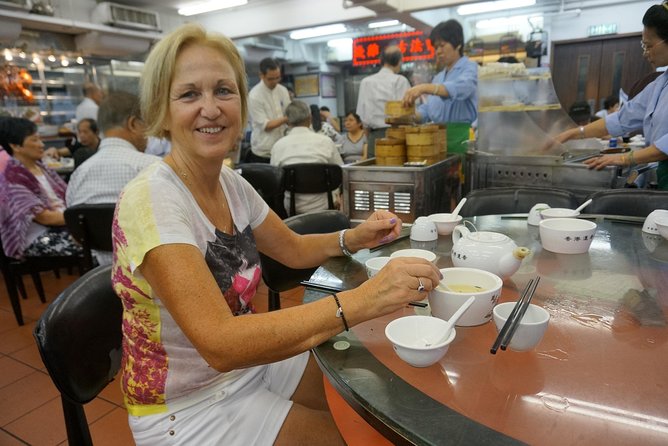
Hong Kong’s best food often appears in plain rooms, narrow shops, and busy neighborhood restaurants rather than polished dining rooms. This private tour takes you from a nearly century-old dim sum hall in Sheung Wan to a family-run noodle shop, a roast-meat restaurant, and a bakery known for egg tarts.
I like the local food focus and the way the route connects meals with Hong Kong’s Chinese and British past. I also like the private format. Guides such as Andy and Mel can adjust the pace and explain what you are eating, rather than leaving you to guess your way through an unfamiliar menu.
The main consideration is the price: $236.69 per person is a serious outlay for four hours of food and walking. The tour is also not suitable for vegetarians, people avoiding gluten, or anyone with a seafood allergy, and you will need to pay separately for the tram ride.
Key points to know before booking
- Five substantial tastings: Expect dim sum, wonton noodle soup, milk tea, mixed roast meats with rice, and an egg tart, plus sweets and local snacks.
- A private route through old Hong Kong: Sheung Wan, Central, the Mid-Levels Escalator, the Ding Ding tram, and Wan Chai all fit into one outing.
- A useful first-day introduction: The food stops come with stories about Cantonese cooking, British influence, markets, tea, and everyday city life.
- Come hungry: The tour begins with dim sum and continues through several filling stops, so breakfast beforehand is a bad plan.
- Public transport is part of the day: Hotel pickup does not mean a private vehicle. You still walk and use Hong Kong’s public transport system.
- Best for flexible eaters: Seafood, meat, wheat-based noodles, dairy or tea, and pastry all play a role in the menu.
Why this private food tour works well in Hong Kong
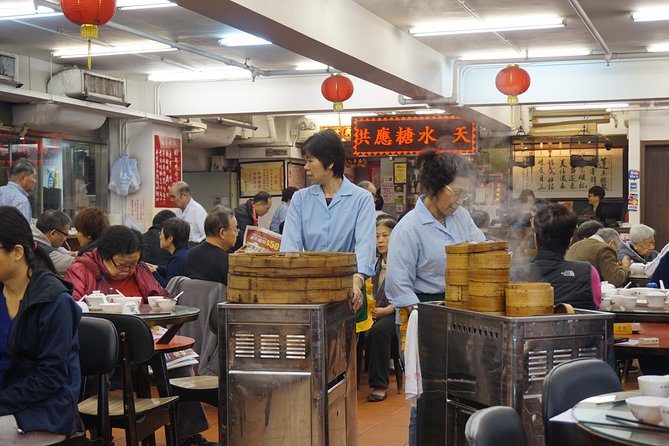
Hong Kong can feel hard to read at first. Streets change quickly from office towers to old tenements, traditional shops, shrines, wet markets, and tiny eateries. A food tour gives you a practical way into that mix because eating is not an extra activity here. It is part of how the city works.
I like that this tour does not simply shuttle you between famous restaurants. It begins in Sheung Wan, a neighborhood where old Chinese businesses sit beside newer shops and cafés. From there, the route passes dried seafood stores, tea merchants, markets, historic streets, and restored heritage sites before reaching Wan Chai.
The private setup matters. You are not tied to the needs of a large group, and the guide can explain a dish at your pace. The tour has been led by guides including Andy and Mel. Andy is described as having very strong English and a comfortable pace, which is useful if you want plenty of background without being rushed. Mel has handled family groups and customized tours, including arrangements for people visiting Hong Kong during a cruise stop.
This is not a cooking class, and it is not a gourmet restaurant crawl. It is a walking introduction to ordinary Cantonese food and the city districts where that food belongs.
More Food Tours in Hong Kong
- Hong Kong’s Tin Hau Hidden Eats Food Tour with 7+ Local Tastings
★ 5.0 · 352 reviews - Small-Group Hong Kong Island Food Tour
★ 5.0 · 343 reviews - Hong Kong Food Tour: Central and Sheung Wan Districts
★ 5.0 · 333 reviews
Sheung Wan begins with dim sum by trolley
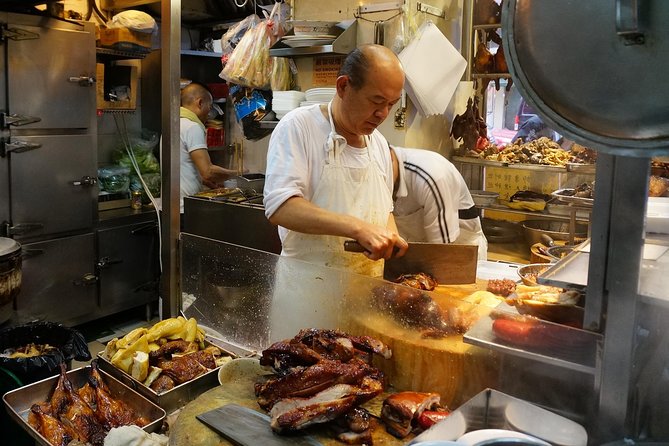
Meet your guide at 28 Des Voeux Road West in Sheung Wan, or arrange the available pickup option. The first food stop is a traditional tea house for yum cha, the classic Hong Kong dim sum meal.
The restaurant has a history reaching back nearly 100 years, and dim sum is served from a trolley. That detail matters. You can see dishes moving through the room and choose from what is available rather than ordering from a long menu filled with unfamiliar names.
Expect a variety of dim sum rather than one single plate. This is the meal that gives you the clearest picture of Cantonese breakfast culture: small portions, shared at the table, with tea and plenty of activity around you.
I would make this the reason to book an early start. The tour specifically advises you not to eat breakfast beforehand, and that is sensible. Dim sum is followed by noodles, roast meat, and dessert, so you want a real appetite.
The drawback is that a trolley-style restaurant can be lively and quick-moving. If you need a very slow, quiet meal, this may not be your ideal setting. For most people, though, the room itself is part of the lesson.
Dried seafood and traditional shops in Sheung Wan
After dim sum, you walk through the old Sheung Wan area, including Seafood Street, the stretch of Des Voeux Road West known for dried seafood merchants.
Dried seafood is used in Cantonese cooking and in traditional tonics. Shops here display ingredients that may be unfamiliar to you, and the guide can explain how these products fit into local food traditions. Even if you never buy anything, the storefronts provide a sharp contrast with Hong Kong’s modern shopping districts.
The route also includes a stop at Kai Fat Tea, a small tea shop on a narrow road. It sells tea, assorted candies, and Chinese sweets made with fruit and other natural ingredients. This is a short visit, but it adds range to the tour. You are not only eating finished dishes. You are also seeing the ingredients, snacks, and shops that shape everyday food habits.
The same part of the walk may take you past a Chinese medicine shop and the city’s oldest wet market. These stops help explain why food shopping in Hong Kong is so visible and so close to the street. You might see fresh produce, seafood, dried goods, and prepared snacks within a few blocks.
Wonton noodles and the discipline of a simple dish
The next major tasting is wonton noodle soup at a family-run shop dating from the 1960s. The restaurant has been recommended in the Michelin Guide, but the appeal here is not fancy presentation. Wonton noodles are simple on paper. The quality depends on the broth, noodles, wonton filling, and the cook’s control of each part.
This is a good dish for understanding Hong Kong’s preference for precision. There are no layers of elaborate decoration to distract you. The bowl needs to be balanced, and a small difference in texture or seasoning can change the whole meal.
Your guide can also help you understand what makes the local version different from noodle dishes you may already know. That sort of explanation is especially useful if you are unfamiliar with Cantonese food and would otherwise treat the bowl as just another soup.
By this point, the meal is becoming substantial. You have had dim sum, sweets, and noodles, so plan your appetite carefully. The instruction to skip breakfast is not a throwaway tip.
Same base, a completely different kind of day out:
- Hong Kong: Dolphin Cruise, Big Buddha & Lantau Island Tour
★ 4.2 · 1,512 reviews - Ngong Ping 360: Cable Car Return Tickets & Combos
★ 4.6 · 1,431 reviews - Lantau Island Day Trip – Big Buddha & Tai O
★ 4.5 · 1,328 reviews - Big Bus Hong Kong Open Top Hop-On Hop-Off Sightseeing Tour
★ 4.0 · 1,077 reviews
Milk tea connects Cantonese and British food culture
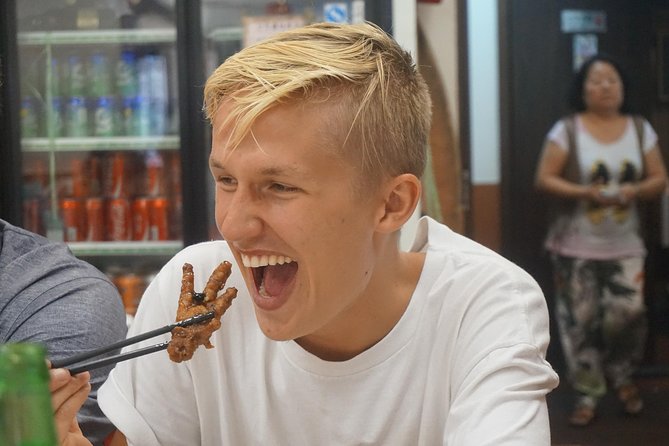
A cup of traditional Hong Kong milk tea follows. Milk tea is one of the clearest reminders that the city’s food culture developed through both Chinese and British influence.
The drink is common across Hong Kong, but its place in daily life is more important than its novelty. It is the sort of beverage you can encounter in casual cafés and local eating places, not only on a special food tour.
I like this stop because it gives you a pause between heavier dishes. It also gives the guide a natural opening to explain how outside influence was adapted into local habits rather than simply copied.
If you dislike tea or dairy, ask about the drink before booking. The included menu is built around a traditional version, and substitutions are not specified.
Graham Street Market and Central’s old streets
The route continues through Central and its surrounding streets, including Graham Street Market. With more than a century of history, the market offers a look at daily shopping rather than a staged cultural display.
You can expect food stalls selling items such as vegetables and live seafood. The street is sloped, and the route through Sheung Wan and Central includes walking on uneven or inclined streets. Most people can take part, but comfortable shoes are a smart choice.
Gough Street adds a different side of the district. Its colonial-style buildings, small boutiques, restaurants, and quieter pace show how quickly Hong Kong’s neighborhoods can change from one block to the next. Tai Kwun, the restored former Central Police Station compound, may also appear along the route, bringing heritage and contemporary cultural spaces into the same walk.
The Mid-Levels Escalator is another useful city landmark. The ride lasts about 15 minutes and covers roughly 800 meters, carrying you above the streets toward the Mid-Levels. It is both a transport system and a way to watch local life pass by without another steep climb.
These sights are not separate museum visits with long indoor stops. They are pieces of the route, so your time at each place may be brief. That keeps the tour moving, but it also means you should not book it expecting an in-depth visit to every location.
The Ding Ding tram ride adds local character
One of the most enjoyable transitions comes when you board the Hong Kong Tramways, known locally as the Ding Ding. The electric tram system began operating in 1904 and uses double-decker trams.
The ride is at your own expense, so bring a little cash or another suitable way to pay. It is not a private vehicle transfer. You share the tram with local passengers and see the city from street level, which is exactly why this part is useful.
The tram links the walking sections and carries you toward Wan Chai. It also gives your feet a short break. Since the tour combines several neighborhoods in about four hours, that break helps keep the pace manageable.
Do not expect a long scenic ride with a reserved seat. The tram is public transport, and conditions can change. Still, it is a better way to cross part of Hong Kong Island than moving between food stops in a sealed vehicle.
Wan Chai finishes with roast meats and egg tart
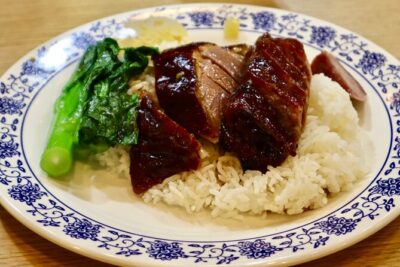
In Wan Chai, the food takes another turn at a family-run restaurant with roots reaching back to the Qing dynasty. The specialty is English roast meat, including char siu, served with rice and homemade sauces.
The menu includes a mixture of traditional roasted meats. This is a filling course and one of the most useful tastings for comparing Cantonese flavors: sweet, savory, roasted, and sauce-based elements all appear on the same plate.
Wan Chai itself is worth seeing. Old tenement buildings, newer restaurants, bars, hidden temples, and fashionable shops share the district. The tour may also pass Southorn Playground, a public recreation area where people gather, exercise, take a break, and eat while watching the activity around them.
Dessert comes at a local bakery on Hennessy Road. The final tasting is an egg tart, called dan tat in Cantonese. It is a Chinese interpretation of the English custard tart, and the bakery has operated for about 60 years. The pastry was also a personal favorite of a former Hong Kong governor.
This is a smart ending. The egg tart is familiar enough to be approachable but still clearly tied to Hong Kong’s own food culture. It also gives you a light, sweet finish after the heavier roast-meat course.
What the $236.69 price really covers
At $236.69 per person, this is not a budget eating day. You are paying for a private guide, a planned route, multiple tastings, local transport guidance, and the ability to shape the pace around your own group.
The included food is substantial: assorted dim sum, wonton noodles, milk tea, roast meats, egg tart, candies, and local snacks. The tour also takes you through several districts and explains the city’s food traditions along the way. For a first visit, that combination can save you time and reduce the uncertainty of ordering in unfamiliar restaurants.
The value is strongest for couples, families, or small groups who want personal attention. It is less compelling if your main goal is simply to eat as much as possible for the lowest cost. Hong Kong has plenty of inexpensive food, and you could order many of these dishes yourself for far less.
You should also remember that the tour lasts about four hours and finishes in Wan Chai rather than returning to Sheung Wan. Hotel pickup, when arranged, still means walking and using public transport. A five-hour option is the one identified as including pickup, so check the exact booking choice before paying.
Who should book this food tour
I would recommend it for first-time visitors who want food, neighborhoods, and practical city orientation in one morning or afternoon. It also suits cruise passengers with limited time, since a private guide can help organize the route and transportation. Families with adult children may appreciate the flexible pace and the chance to eat at several kinds of local businesses.
It is a good fit if you want context with your meal. You will hear about Cantonese cooking, British influence, markets, tea, traditional shops, and the way old districts fit beside modern Hong Kong.
I would not choose it if you are vegetarian, gluten-free, allergic to seafood, or uncomfortable with meat and seafood displays. The food plan is built around dim sum, wonton noodles, roast meats, and traditional local ingredients, so dietary restrictions could limit much of the tour.
Free cancellation is available up to 24 hours before the start time. After that, the payment is not refunded, and late changes are not accepted.
Should you book it?
Book this tour if you want an efficient, personal introduction to Hong Kong Island and are happy to pay for guidance, context, and a full series of tastings. The strongest parts are the old Sheung Wan start, the dim sum trolley, the family-run noodle and roast-meat shops, and the Ding Ding ride to Wan Chai.
Skip it if you prefer independent food hunting, need a low-cost outing, or have dietary restrictions that conflict with the menu. For everyone else, bring an empty stomach, comfortable shoes, and a camera. The food is the hook, but the real value is learning how Hong Kong’s neighborhoods, transport, and eating habits fit together.
FAQ
How long does the private food tour last?
The tour lasts approximately four hours.
Where does the tour begin?
The standard meeting point is 28 Des Voeux Road West in Sheung Wan, Hong Kong Island. Directions are sent after booking.
Where does the tour end?
The tour finishes in Wan Chai, with an egg tart served as the final dessert.
What food is included?
Included tastings are assorted dim sum, traditional milk tea, wonton noodle soup, mixed barbecue meats with rice, and an egg tart. Assorted candies and local snacks are also included.
Is the Ding Ding tram ride included in the price?
No. The tram ride is at your own expense.
Is hotel pickup available?
Pickup can be arranged, but it remains a walking tour using Hong Kong’s public transport system rather than a private car tour. Hotel pickup and drop-off are not included unless you book the five-hour option that specifically includes pickup.
Is the tour suitable for vegetarians or people with food allergies?
No. The tour is not suitable for vegetarians, people following a gluten-free diet, or people with seafood allergies.
Can I cancel for a full refund?
Yes, if you cancel at least 24 hours before the local start time. Cancellations or changes made less than 24 hours before the tour are not refunded.
Newly listed around Hong Kong
- 6 Hour Private Shore Excursion Cruise Ship Pick Up Guided Tour★ 5.0 · 8 reviews
- Hong Kong Disneyland: Non-Stop 2-Day Fun Ticket★ 4.5 · 13 reviews
- Big Bus Hong Kong Panoramic Night Tour by Open-Top Bus★ 3.5 · 53 reviews
- The Dragon’s Back Hiking Tour, Hong Kong★ 5.0 · 54 reviews
- The Authentic Hong Kong – Private Walking Tour★ 5.0 · 55 reviews
- Tea Tasting and Pairing Concept Workshop★ 5.0 · 57 reviews
- Victoria Harbour Yacht Night Cruise – DREAMER:Tourguide & Photos★ 4.0 · 58 reviews
- Organic Xiao Long Bao Soup Dumpling Class & Market Walk★ 5.0 · 62 reviews
Food & Drink, compared.
Authentic Local Food Tour in Central Shanghai
Read our review →
Beijing Hutong Walking Food and Beer Tour at Hidden Restaurants
Read our review →
Hong Kong’s Tin Hau Hidden Eats Food Tour with 7+ Local Tastings
Read our review →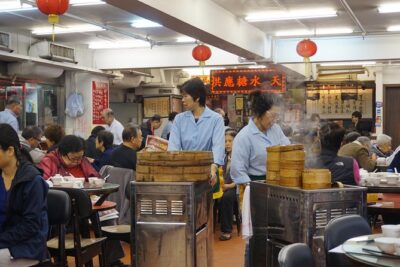
Hong Kong Food Tour: Central and Sheung Wan Districts
Read our review →Browse the lists this tour appears in