
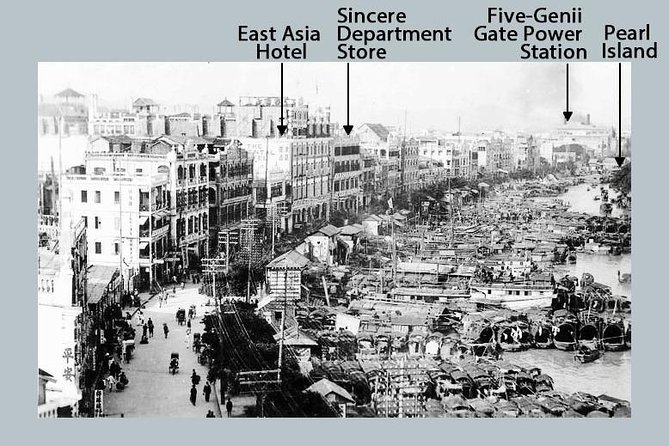
Reviewed · FOOD & DRINK
5-Hour Sai Kwan Walking Tour with Unique Food Tasting
Guangzhou’s Sai Kwan district is best understood on foot, with a plate of dim sum in front of you and old Cantonese streets unfolding around you. This five-hour private tour links several local sights that are easy to miss on your own, from the foreign buildings of Shamian Island to the traditional medicine stalls and neighborhood lanes of Liwan.
I like the flexible private format, especially for first-time visitors with only a short stay. I also like the way food is used as a doorway into local life, with dim sum at the start and a regional dessert later on. The main drawback is cost: at $71.80 per person, you still pay separately for food, drinks, transportation, and admission where applicable. English communication may also require patience, since one guide was described as speaking softly and not always clearly.
What makes this five-hour walk worthwhile
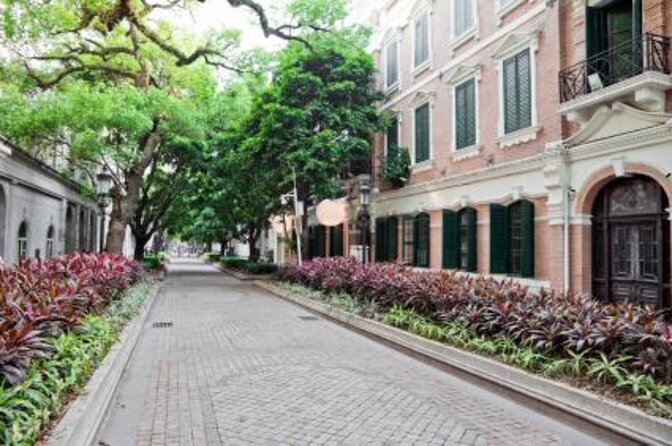
- Dim sum begins the day: Your first stop is a local neighborhood restaurant near Tianzi Wharf, where lunch gives the tour a distinctly Cantonese start.
- Shamian tells Guangzhou’s trade story: You’ll walk among the former foreign concessions and hear about Canton’s old trade connections and the Opium War.
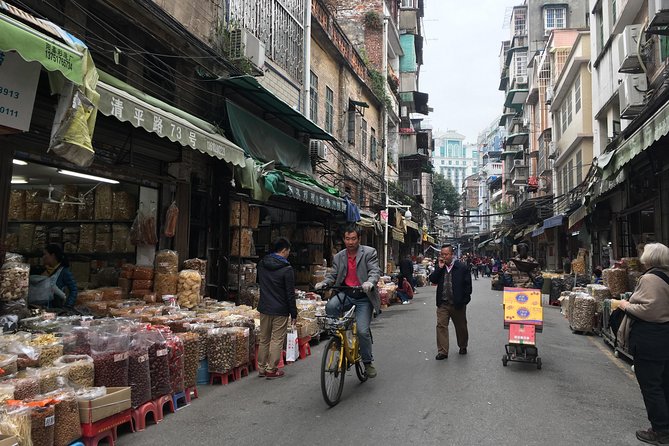
- Food and traditional medicine share the route: The Qingping Medicine Market offers a look at Chinese medical traditions, while Shangxiajiu adds local sweets and street life.
- The private guide can adjust the pace: Janvi and the tour team can shape the route around your interests, with personalized attention rather than a fixed large-group schedule.
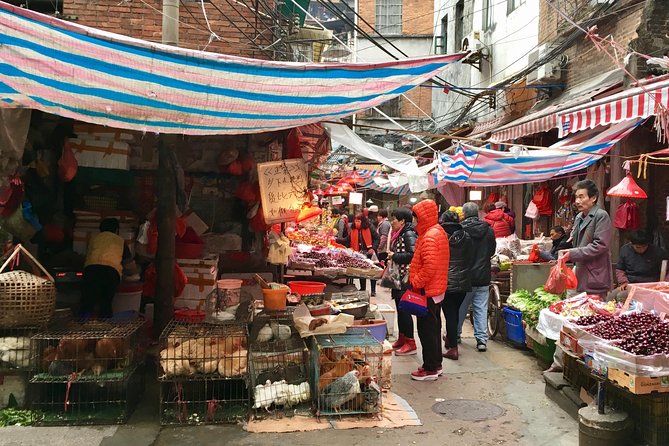
- The final stretch is the most local: Old lanes, a wet market, Liwan Lake Park, and a Taoist temple give you a look at everyday Guangzhou beyond the headline sights.
- The tour ends near a Metro station: The finish is at Zhongshanba station on Metro Line 5, which is useful if you plan to continue exploring independently.
Starting with dim sum near Tianzi Wharf
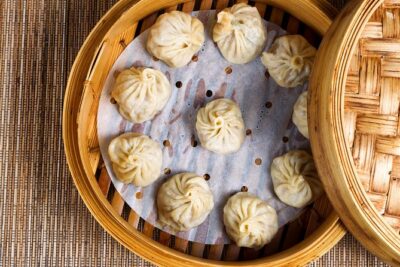
The tour starts at 11:00 a.m. and opens with about an hour of dim sum at a local neighborhood restaurant near Tianzi Wharf. That timing works well: you get a proper meal before the longer walk, and Cantonese food becomes part of the cultural explanation rather than a separate add-on.
Dim sum can include a wide range of small savory and sweet dishes, but the exact food is not specified in advance. That means you should treat this as a chance to try local specialties with guidance, not as a fixed tasting menu. Food and drinks are not included in the tour price, so carry enough cash or another accepted payment method for your meal and later tastings.
The food stop is also where the value of a private guide can show. If you are unfamiliar with Cantonese dining, you can ask what a dish is, how it is eaten, or which items are most typical. The tour is designed around local food, but you should expect to pay separately for every dish you order.
The meeting information needs a little care. The listed starting point is 68 Beijing Road in Yuexiu District, while the included features mention hotel meet-up and central Guangzhou hotel transfers. Confirm the exact pickup plan when you book, particularly if you expect Janvi or another guide to meet you at your hotel. If you use the listed meeting point, allow time to get there before 11:00 a.m.
More Walking Tours in Guangzhou:
- Old Guangzhou Backstreet Alley Local Market Walking Private Tour
★ 5.0 · 18 reviews - Guangzhou Walking Tour To Explore The Old Xiguan Area
★ 5.0 · 17 reviews - Beijing Hutong Walking Food and Beer Tour at Hidden Restaurants
★ 5.0 · 1,132 reviews
Shamian Island and the story of old Canton
After lunch, the route moves to Shamian Island for about 30 minutes. This is a short stop, but it adds useful context to the rest of the day. The guide explains the island’s foreign concessions and Guangzhou’s role in older trade networks, including the conflicts connected with the Opium War.
Shamian is different from the neighborhood streets visited later. Here, the focus is on the colonial-era setting and the way foreign commercial interests shaped the city. You will have time to walk and look around, but not enough for an extended architectural tour or a long museum visit.
I like this stop because it prevents the day from becoming only a food crawl. Guangzhou’s dishes make more sense when you understand the city as a major port and trading center. The 30-minute slot is practical for a five-hour tour, though anyone who wants a detailed architectural study of Shamian may find it brief.
The walking is generally manageable for most people, but this is not a seated sightseeing tour. You will be outside for much of the experience, and the tour operates in all weather. Wear comfortable shoes and dress for Guangzhou’s conditions on the day you go.
A look inside the Qingping Medicine Market
The Qingping Medicine Market takes about 30 minutes. Here, you learn about traditional Chinese medicine and the claimed effects or uses of items sold in the market. It is a good stop for anyone curious about how traditional health practices appear in daily commercial life.
This is not presented as a medical consultation, and you should not treat the guide’s explanations as medical advice. The value is cultural and observational: you get to see a market connected with Chinese medicine and ask questions about the products and traditions behind it.
The stop may be especially interesting if you have already encountered Chinese medicine in pharmacies or markets but have not understood what you were looking at. The guide can provide a bridge between unfamiliar products and the broader cultural setting. Still, the information supplied does not promise purchases, demonstrations, or medical treatment, so keep your expectations focused on learning and looking.
Shangxiajiu’s shops, streets, and local dessert
The tour spends about an hour walking along Shangxiajiu Pedestrian Street. This is one of the day’s main food and shopping sections, with a local dessert tasting included as part of the route. Again, food and drinks are extra, so the $71.80 price does not cover every item you sample.
Shangxiajiu gives you a different feel from Shamian Island. Instead of a compact historic enclave, you are walking through a major pedestrian shopping area tied to everyday Cantonese life. The guide helps point out local food and explains what you are seeing, which can make a busy commercial street more readable.
The dessert stop is a useful contrast to the dim sum lunch. You are not limited to one meal or one style of Cantonese cooking, and the day gives you several small chances to taste something new. If you have dietary restrictions or strong dislikes, tell the guide early so the flexible itinerary can be adjusted where possible. The tour information does not provide a specific dessert or allergy policy, so do not assume every item will suit you.
This part of the route can also be the most tiring for anyone who prefers quiet streets. You have already eaten and walked through Shamian and the medicine market, and one more hour on foot may feel long in hot or wet weather. The private format helps because you can discuss the pace with your guide.
More Food Tours in Guangzhou:
- Private Guangzhou Food Tour Michelin Restaurant&Local Food Market
★ 5.0 · 32 reviews - Guangzhou Evening Food Tour Through Local Neighborhood
★ 5.0 · 19 reviews - Private flexible Guangzhou City Sightseeing Tour with Dim-Sum Tasting
★ 5.0 · 5 reviews - Guangzhou: Food Tour – Eat Like Local + Rice Roll Workshop
★ 5.0 · 4 reviews
Old lanes, a wet market, and Liwan Lake Park
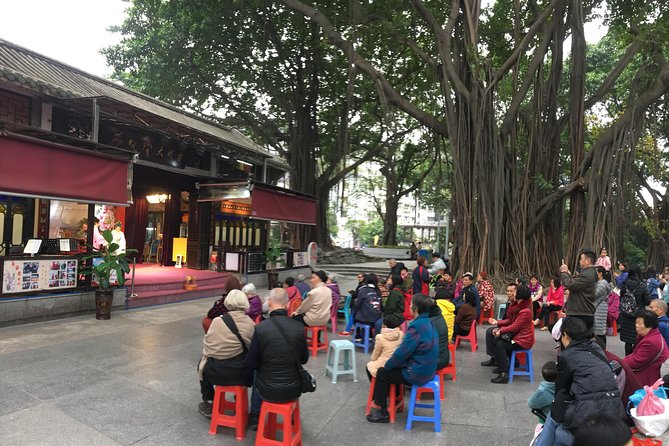
The final two hours are devoted to old-town streets, a wet market, Liwan Lake Park, and a Taoist temple. This is the broadest part of the experience and arguably the section with the strongest connection to ordinary Guangzhou life.
The old lanes take you away from the standard sightseeing circuit. You might see details of neighborhood life that are easy to miss from a vehicle or on a tightly scheduled group excursion. The tour description specifically points to the wet market as an important part of Guangzhou life, so the guide’s explanations should help you understand why these markets still matter to local communities.
The wet market may not suit everyone. It can be visually intense, and the tour does not frame it as a polished attraction. That is also its value. You are seeing a working part of the city rather than a display prepared only for tourists. Keep an open mind, follow the guide’s instructions, and remember that the route is designed for cultural context rather than comfort at every moment.
Liwan Lake Park offers a change of pace after the market and narrow streets. The route allows you to see a public green space connected with local recreation and neighborhood routines. The details of the park visit are not fixed, so the amount of time spent there may depend on the day’s pace and your interests.
The final Taoist temple adds a spiritual and historical element. The supplied details do not name the temple or list ceremonies, opening times, or special features, so you should not expect a formal religious program. You can expect to explore the site with the guide and learn more about Chinese life and culture as the walk comes to an end.
What the private format really adds
This is a private activity, meaning only your own group participates. That matters more here than it would on a simple landmark visit because the route combines food, markets, history, and neighborhood walking. You can ask questions without holding up a large group, and the itinerary can be adjusted to your interests.
Janvi is associated with the experience, and one account describes Janvi meeting the group at its hotel and adapting the tour to suit them. That is a real advantage if you want more time with food, more history, or a slower pace. You should confirm who your guide will be and the pickup details after booking, since the information does not promise that Janvi personally leads every departure.
The main communication issue is English clarity. One account describes the guide’s English as imperfect, while another notes that the guide spoke too softly for everyone to hear. This does not rule out a good experience, but you should be ready to ask for repetition and stay close during explanations. A private group makes that easier than a large tour, but it remains a consideration if detailed historical commentary is your top priority.
Is $71.80 a fair price?
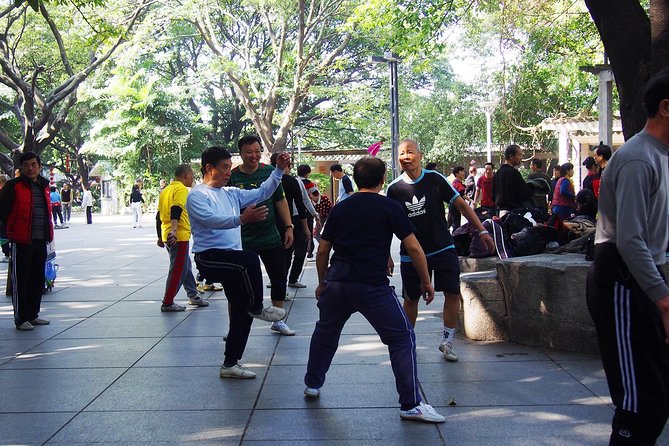
The price is $71.80 per person. It covers a local guide, hotel meet-up, a unique souvenir, and a five-hour private experience. It does not include food and drinks, personal expenses, transportation to and from attractions, or admission tickets where needed.
The price makes the most sense for two or more people who value privacy and route flexibility. A private guide across five hours can be useful in Guangzhou, especially when you want to combine several districts and food stops without working out every connection yourself. If you are traveling alone, the per-person cost may feel high once you add meals and other expenses.
You should also budget for the food tasting. The tour includes opportunities to try dim sum and a local dessert, but you choose and pay for the items separately. This gives you control over what you eat, though it means the final cost is higher than the headline price.
Transportation deserves attention. The tour ends at Zhongshanba station on Metro Line 5, but transportation to and from attractions is not included. The mention of hotel transfers applies to central Guangzhou hotels and should be confirmed in advance. Ask exactly where the guide will meet you and how the group will move between stops.
Who will enjoy this route most?
I would recommend this tour to a first-time Guangzhou visitor who wants food, history, and neighborhood life in one half-day. It suits you especially well if you prefer a personal guide to a large group and want the freedom to ask questions or adjust the pace.
It is also a good match if you have limited time. Five hours gives you a useful introduction to several parts of western and central Guangzhou without requiring a full day. You will not master every district, but you will get a practical sense of how food, trade, medicine, religion, markets, and public parks fit together.
The tour is less suitable if you want a quiet, highly polished sightseeing experience or a fully prepaid food tour. Food costs extra, some walking takes place on ordinary neighborhood streets, and communication may sometimes be less smooth than with a guide who speaks fluent, projecting English.
The minimum age is 15. Children must be accompanied by an adult. The tour is not recommended for pregnant participants or people with back problems, and most people can participate otherwise. Since it runs in all weather, bring suitable clothing and shoes rather than relying on perfect conditions.
Booking, timing, and cancellation details
Confirmation is sent within 48 hours of booking, subject to availability. The tour begins at 11:00 a.m., lasts about five hours, and is near public transportation. It finishes at Zhongshanba station, making it possible to continue your day by Metro Line 5.
Free cancellation is available if you cancel at least 24 hours before the local start time. Changes or cancellations made less than 24 hours before the start are not accepted for a refund.
The experience is booked well ahead on average, around 62 days in advance. That is useful planning information if your Guangzhou dates are fixed, especially because the activity is private and subject to availability.
Should you book the Sai Kwan walking tour?
Book it if you want a flexible introduction to Guangzhou built around local food and ordinary city life. The strongest parts are the private format, the range of stops, the local dessert and dim sum opportunities, and the final walk through old streets, a wet market, Liwan Lake Park, and a Taoist temple.
Think twice if you want all food and transport included, need polished English commentary, or dislike long walks in changing weather. For the right person, the $71.80 price buys more than a list of sights: it buys five hours of context and a guide who can help you make sense of places you might otherwise pass without understanding.
FAQ
How long does the Sai Kwan walking tour last?
The tour lasts approximately five hours.
What time does the tour start?
The scheduled start time is 11:00 a.m.
Where does the tour start?
The listed starting point is 68 Bei Jing Lu in Yuexiu District, Guangzhou. Hotel meet-up is included for central Guangzhou hotels, so confirm the exact meeting arrangement after booking.
Where does the tour end?
The tour ends at Zhongshanba station on Metro Line 5 in Liwan District.
Is this a private tour?
Yes. Only your group participates in the activity.
Are food and drinks included in the price?
No. Food and drinks are not included. You pay separately for the dim sum, dessert, and any other food or drinks you choose.
What sights are included?
The route includes dim sum near Tianzi Wharf, Shamian Island, Qingping Medicine Market, Shangxiajiu Pedestrian Street, old neighborhood streets, a wet market, Liwan Lake Park, and a Taoist temple.
Can the tour be canceled for a full refund?
Yes, if you cancel at least 24 hours before the experience’s local start time. Cancellations made less than 24 hours before the start are not refunded.
Newly listed around Guangzhou
- Day Tour learning Kung Fu and Lion Dance in Bruce Lee’s Hometown★ 5.0 · 7 reviews
- Seven Star Crag and Dinghu Mountain private day tour from Guangzhou★ 5.0 · 5 reviews
- Private flexible Guangzhou City Sightseeing Tour with Dim-Sum Tasting★ 5.0 · 5 reviews
- Private Historical Tour: Guangzhou City Sightseeing Including Lunch★ 4.5 · 24 reviews
- Private Tour: Guangzhou City Sightseeing Including Yuexiu Park★ 3.5 · 3 reviews
- All Inclusive Kaiping Diaolou Heritage Private Day Trip from Guangzhou★ 5.0 · 5 reviews
- Private Guangzhou Night Tour VIP Cruise and Dim-Sum Dinner Option★ 5.0 · 4 reviews
- 4-Hour Private Tour for Layover Travellers via Guangzhou Airport★ 5.0 · 3 reviews
Food & Drink, compared.
Authentic Local Food Tour in Central Shanghai
Read our review →
Beijing Hutong Walking Food and Beer Tour at Hidden Restaurants
Read our review →
Hong Kong’s Tin Hau Hidden Eats Food Tour with 7+ Local Tastings
Read our review →
Hong Kong Food Tour: Central and Sheung Wan Districts
Read our review →Browse the lists this tour appears in