
Reviewed · BULLET TRAIN DAY TRIPS
One day tour to downtown Tianjin from Beijing by high speed train
Tianjin makes an easy second-city trip from Beijing, but the best reason to go is the sharp change in character: old foreign concession streets, Chinese temples and markets, riverfront squares, and a palace tied to China’s last emperor. I especially like that Cindy Zhang guides the day and that the route covers a lot without asking you to arrange Tianjin transport yourself.
I also like the mix of history and ordinary city life, from Jiefang North Road and Jingyuan to a Tianjin jianbing snack. The main catch is the long day and the extra CN¥118 return train fare, which is not included in the advertised $234 price.
Key points at a glance
- A full Tianjin sampler in 11 hours: You see former concession streets, palace rooms, shopping lanes, riverfront sights, and a famous Ferris wheel.
- Cindy Zhang leads the day: Her strong local knowledge and easy, chatty style are useful when the city’s architecture and political past need explaining.
- The train saves planning time: Hotel transfers in the defined Beijing area and Tianjin transportation are included.
- Jingyuan links Tianjin to China’s last emperor: The former residence of Puyi gives the day a more personal historical focus.
- The tour mixes major sights with local food: Lunch is included, and Italian Style Street is a chance to try Tianjin jianbing.
- Budget for the return ticket: The second-class train fare back to Beijing is paid separately at CN¥118 per person.
Why Tianjin makes sense as a day from Beijing
Tianjin is close enough to reach by high-speed train, yet it feels different from Beijing. Its identity grew around the Haihe River and the foreign concessions that developed after the port opened to outside powers. That gives the city an unusual mix of Chinese tradition and European-style streets.
This tour is built around that contrast. In one day, you move from Jinwan Plaza and the Century Clock to former French and British concession buildings, then on to Tianhou Palace, a street of traditional shops, and Jingyuan, where Puyi lived from 1929 to 1931.
I like the route because it does not treat Tianjin as only an architecture stop. You get streets, food, a palace, a river walk, and a look at how the city functions today. The drawback is that each stop is fairly short. You get a useful first look, not a slow, detailed stay in every district.
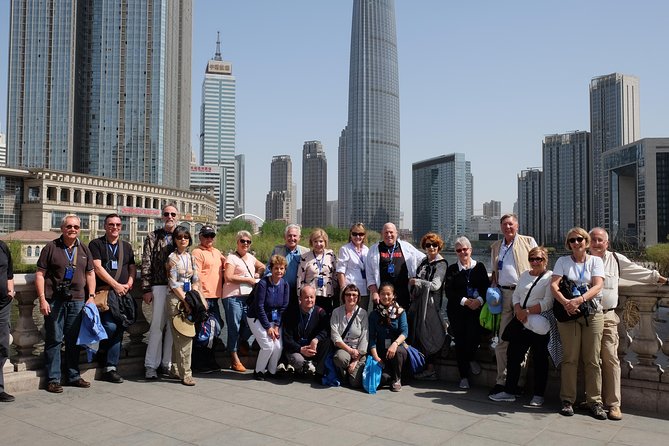
The group is limited to a maximum of 20 people. That is small enough to make guiding practical, though the pace can still feel brisk because the day covers so much ground.
More Bullet Train Day Trips in Beijing:
- Beijing: Xi’an Terracotta Tour by Train-All Tickets Included
★ 5.0 · 27 reviews - Beijing Great Wall Private Day Tour from Shanghai by Bullet Train
★ 5.0 · 25 reviews - 2-Day Beijing Private Tour Including Great Wall from Shanghai by Bullet Train
★ 5.0 · 12 reviews
The early train and Tianjin’s riverfront arrival
The day begins with a high-speed train from Beijing, departing at about 9:00 a.m. Hotel pickup is offered in a defined area, but the meeting point and end point are Beijing South Railway Station. If your hotel falls outside the pickup area, you may need to pay an extra transfer fee or make your own way to the station.
Beijing South is an important detail. Give yourself enough time to reach the station and handle the departure process. The tour removes the need to organize the Tianjin train and city transport on your own, but you still need to follow the meeting instructions carefully.
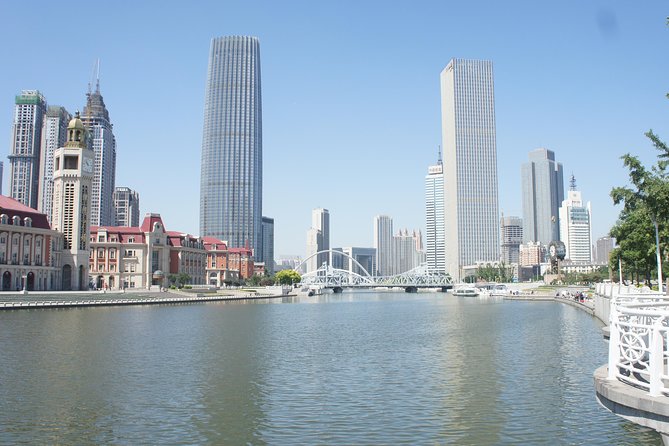
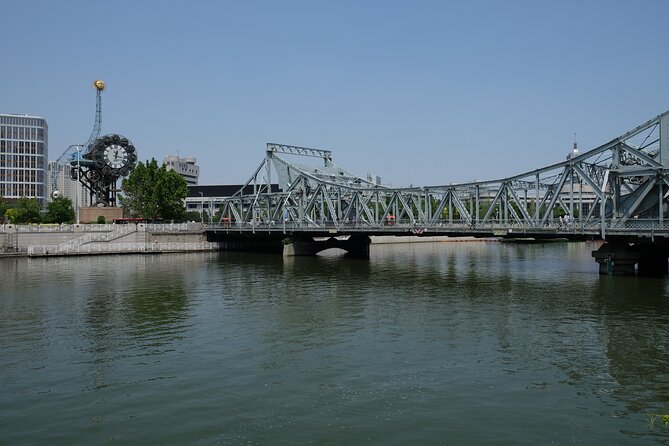
Arrival at Tianjin Railway Station brings you straight to the Haihe River area. In roughly 15 minutes, you see Jinwan Plaza, Liberation Bridge, the Century Clock, and the river. This is a quick orientation rather than a long visit, but it sets up the city well. Tianjin’s grand public spaces and bridges make more sense once you see how closely the city is tied to the water.
Jiefang North Road and the foreign concession past
The longest early stop is Jiefang North Road, with about 80 minutes devoted to the former French and British concession areas. Today, the road is known as Tianjin’s financial street, but its older buildings reveal the city’s complicated port history.
You pass historic structures connected with the foreign presence, including a Qing Dynasty post office, clubs, barracks, consulates, and foreign company buildings. The value here comes from the guide’s explanation. Without context, the streets can look like a pleasant collection of old façades. With Cindy Zhang pointing out what the buildings were used for, the road becomes a record of trade, administration, finance, and foreign influence.
This is one of the places where a guide matters most. Cindy is described as knowing the streets and buildings very well, and her friendly, conversational approach should make the walking portion easier to follow. If you enjoy architecture and political history, this may be the strongest part of the morning.
It is still a walking stop, so comfortable shoes and a moderate level of fitness matter. The tour does not promise extended interior visits along the road. Much of the experience is seeing the streets and buildings from outside while listening to the story behind them.
Five Great Avenues and the Little White Building area
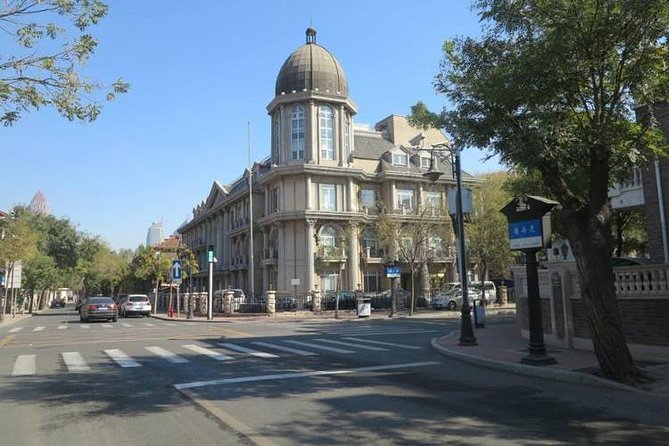
The next stop is Xiaobailou, or Little White Building, an area that was especially prosperous around a century ago. The Five Great Avenues form a traditional residential quarter made up of five east-west streets.
This district offers a different view of Tianjin from Jiefang North Road. There, the focus is finance and formal institutions. Here, the appeal is the pattern of residential streets and the western-style buildings that reflect the city’s early twentieth-century connections.
You also see Keissling, one of the four western restaurants in China identified in the tour description. The stop lasts about 30 minutes, so expect a look at the area rather than a full architectural walk. I would pay attention to the guide’s comments here, since the historical setting is more interesting than any single building.
The short timing is both useful and limiting. It keeps the day moving, but you will not have much free time to wander down every avenue or linger over photographs.
More Day Trips in Beijing:
- Mutianyu Great Wall and Summer Palace Private Day Trip with Lunch
★ 5.0 · 209 reviews - Private Custom Tour or Private Tour: Beijing in One Day
★ 4.5 · 119 reviews - Private Beijing Day Trip: Mutianyu Great Wall and Ming Tombs
★ 5.0 · 114 reviews - Full Day Trip Mutianyu Great Wall, Forbidden City, Tiananmen Sq.
★ 5.0 · 110 reviews
Italian Style Street and a taste of Tianjin
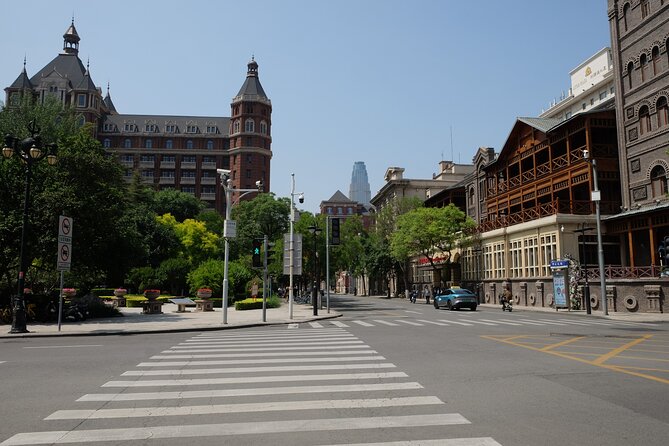
Italian Style Street occupies the center of the former Italian concession. It has been turned into a recreational district with places to shop, eat, and drink, while retaining historic buildings and an Italian-influenced appearance.
You have about 50 minutes here. One practical reason to look forward to this stop is food. Tianjin jianbing, a Chinese crepe, is a local snack you can try in the area. Lunch is included separately, but the jianbing gives you a chance to sample something tied to everyday Tianjin food culture.
I like this stop because it breaks up the history-heavy morning. You are not only looking at preserved buildings. You also see how an old concession district is used now. Still, Italian Style Street is a developed shopping and dining area, so it may feel more polished and commercial than the older lanes around Ancient Culture Street.
Ancient Culture Street beside Tianhou Palace
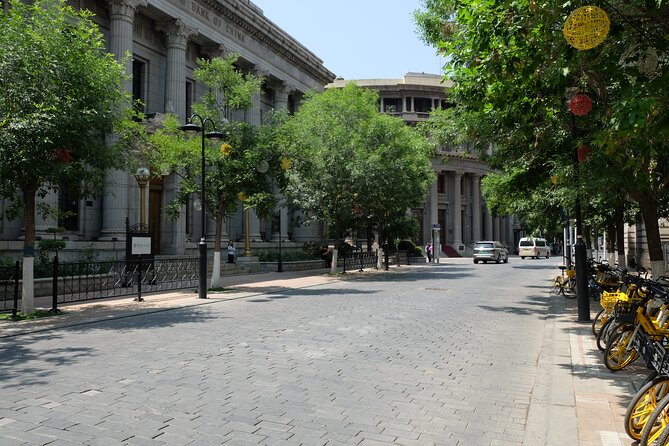
Ancient Culture Street, or Gu Wenhua Jie, brings the tour back to a more traditional Chinese setting. It runs beside Tianhou Palace, described as Tianjin’s earliest building, and sits near the confluence of three rivers, the place associated with the city’s beginnings.
The street is designed in a traditional style and works as a shopping area as well as a cultural stop. You get about 50 minutes here, with admission included. Look for the contrast with the concession districts: the architecture, the temple setting, and the kinds of shops all point to a different side of Tianjin.
This is a useful place to keep your expectations realistic. A traditional-style shopping street can include plenty of commercial activity, and the schedule does not allow for a long temple visit or extended browsing. I would use the time to get a sense of the setting, see Tianhou Palace, and enjoy the change of pace.
The Tianjin Eye and the Haihe River
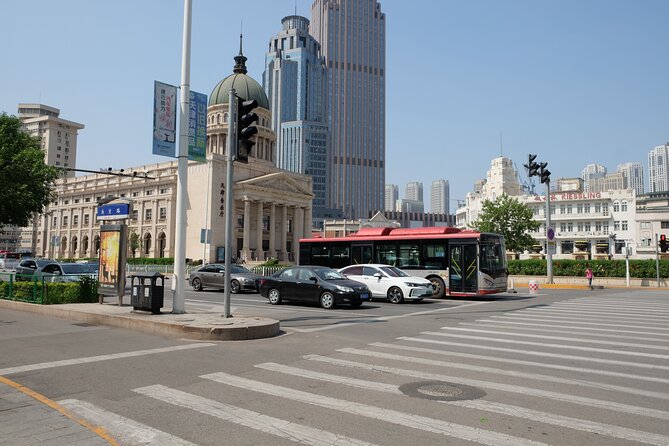
The Tianjin Eye is a Ferris wheel built on a bridge across the river. The tour does not include a ride. Instead, you stop for about 10 minutes at a good viewpoint to see it and take photographs.
That short stop is enough for a landmark photo, especially since the Ferris wheel’s position over the river makes it easy to recognize. It is not a major activity, so you should not book this tour expecting a full amusement attraction visit.
Later, the Haihe Cultural Square gives you about 40 minutes beside the river. You can walk along the waterfront, look at the river views, and watch local life before returning to Tianjin Railway Station. This final riverside section is a sensible way to end the sightseeing portion. It gives you a quieter pause after the streets and museums, though the return to Beijing is still ahead.
Jingyuan Palace and Puyi’s Tianjin years
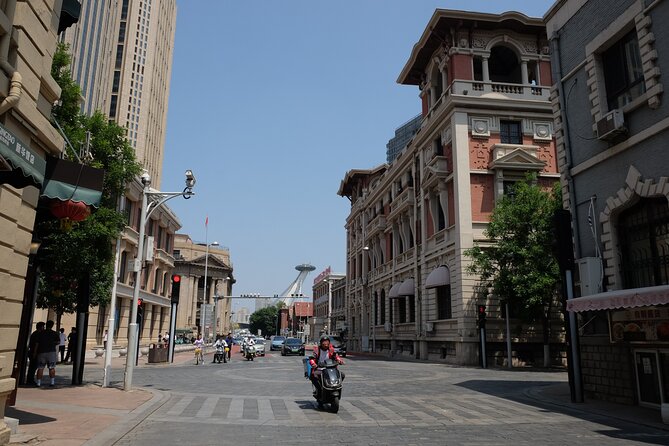
Jingyuan, also called Jing Garden, is the most focused historical attraction on the route. It was the former residence of Puyi, the last emperor of China, who lived there for two years from 1929 to 1931.
You spend about an hour here, and admission is included. That makes Jingyuan a better value point than several of the brief outdoor stops, since you have enough time for the residence and its story to register.
Puyi’s life is often told through his years as emperor, but Jingyuan shows a later chapter, when he was living in Tianjin. The house gives the history a more intimate scale. Instead of only hearing about dynasties and political change, you see the setting connected with one person’s unsettled life after the end of imperial rule.
Cindy’s background is especially useful here. Her historical explanations are one of the reasons to choose a guided day rather than simply taking the train and walking around Tianjin alone. The palace is easier to appreciate when you understand why Puyi was there and what the residence represented.
Porcelain House and Heping Road
The Heping Road section adds two more city sights. First comes the Porcelain House, a French-style building decorated with porcelain pieces, vases, and ornaments. It is visually unusual and makes a good contrast with the restrained historic façades seen earlier in the day.
The tour then continues around Heping Road and Binjiang Road, a traditional pedestrian shopping area. The total stop lasts about 30 minutes, so you should expect an outside look at the Porcelain House and a short walk through the shopping streets rather than a long shopping break.
This is another example of the tour’s broad range. Tianjin can be formal, imperial, traditional, commercial, and eccentric within the same day. You may find the compressed schedule a little tiring, but it prevents the day from becoming a single long walk through one type of district.
What the $234 price really covers
At $234, the tour is not a low-cost independent day trip. The price makes more sense if you value structure and help with the complicated parts of the journey.
Included are hotel transfers within the defined area, transportation in Tianjin, a guide, lunch, and admission to Jingyuan. The return train ticket is separate and costs CN¥118 per person for a second-class seat. That extra charge matters when you compare the total cost with arranging the trip yourself.
The tour also saves you from sorting out local transport between nine different stops. You do not need to work out how to connect the railway station with Jiefang North Road, the Five Great Avenues, the cultural street, Jingyuan, and the riverfront. For a first visit to Tianjin, that convenience has real value.
The price is easiest to justify for people who want history explained and a fixed plan. If you are comfortable buying train tickets, using local transport, and choosing only two or three districts, an independent visit may cost less. You would also have more time in each place.
The guide makes the schedule work
Cindy Zhang is central to the experience. Her role is not only to move the group from one stop to the next. She explains Tianjin’s past, identifies buildings along the former concession streets, and connects places such as Jingyuan and the Haihe waterfront to the city’s wider story.
The feedback about her is unusually consistent: she is described as friendly, responsive, chatty, and well versed in Tianjin’s history. One specific strength is her familiarity with the city’s streets and buildings. That matters on Jiefang North Road and the Five Great Avenues, where a guide can point out details you might otherwise walk past.
A personable guide also helps during a packed day. There are many short stops, train timing to respect, and a group to keep together. You should still expect a structured pace rather than a private, spontaneous exploration.
Who should book this day trip?
I would recommend it to you if you are staying in Beijing for several days and want to add one more Chinese city without giving up a night. It suits first-time visitors to Tianjin who want an overview of its concession architecture, traditional center, imperial connection, and riverfront.
It is also a good fit if you prefer a guide’s explanation to reading plaques or managing transport. The maximum group size of 20 keeps the format more manageable than a very large coach tour.
You may want another plan if your priority is slow photography, long museum visits, shopping, or sitting down for extended meals. The day runs for about 11 hours and covers a lot of ground. Moderate physical fitness is required, and the itinerary leaves little room for independent detours.
Free cancellation is available up to 24 hours before the start time. Changes or cancellations inside that window are not accepted for a refund. The tour also depends on good weather and a minimum number of participants, with a different date or full refund offered if the operator cancels for those reasons.
Should you book the Beijing to Tianjin train tour?
Book it if you want a guided first look at Tianjin, value a planned route, and are happy with a busy day. The combination of former concessions, Ancient Culture Street, Jingyuan, local food, and the Haihe River gives you a genuine sense of the city’s mixed character.
Before paying, add the CN¥118 return train fare to the advertised price and confirm whether your hotel falls within the pickup area. If those details work for you, Cindy Zhang’s local expertise and the efficient transport plan make this a practical way to see Tianjin from Beijing.
FAQ
How long does the Beijing to Tianjin tour last?
The experience lasts approximately 11 hours. The train returns to Beijing South Railway Station at about 7:40 p.m.
Where does the tour start and finish?
The stated meeting point is Beijing South Railway Station. The activity ends back at the same meeting point.
Is hotel pickup included?
Hotel transfers are included within a defined area. Pickup outside that area may require an additional payment.
Is the return train ticket included in the $234 price?
No. The second-class return train ticket costs CN¥118 per person and can be paid on the tour day.
What meals are included?
Lunch is included. You can also try Tianjin jianbing, a Chinese crepe, during the stop at Italian Style Street.
Which admission ticket is included?
Admission to Jingyuan, also called Jing Garden, is included. Ancient Culture Street also lists admission as included.
Who guides the tour?
The guide is Cindy Zhang. The tour includes guide service in Beijing and Tianjin.
How large is the group?
The maximum group size is 20 people.
Can I cancel for a full refund?
Yes, if you cancel at least 24 hours before the experience start time. Cancellations or changes made less than 24 hours before the start are not refunded.
Newly listed around Beijing
- Beijing: Summer Palace Ticket; fast and smooth★ 3.6 · 38 reviews
- Beijing: Summer Palace Entry Ticket★ 3.3 · 3 reviews
- Beijing: Summer Palace Highlight Walking Tour★ 4.8 · 25 reviews
- Beijing: Summer Palace, Sacred Road&Ming Tombs Private Tour★ 5.0 · 8 reviews
- Beijing: Summer Palace 3 Hours Guided Tour with Entry Ticket★ 4.8 · 4 reviews
- Beijing Private Tour: Summer Palace, Panda House and Options★ 5.0 · 21 reviews
- Beijing: Summer Palace Entrance(combo/tour opt)★ 4.7 · 6 reviews
- Beijing Royal Banquet with Chinese culture prefermance★ 5.0 · 3 reviews
Bullet Train Day Trips, compared.
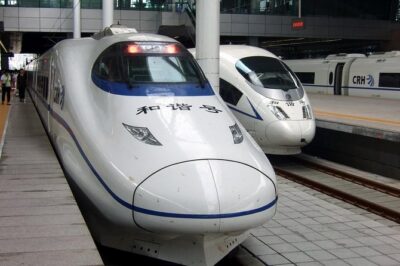
Suzhou Private Day Trip from Shanghai with Bullet Train Option
Read our review →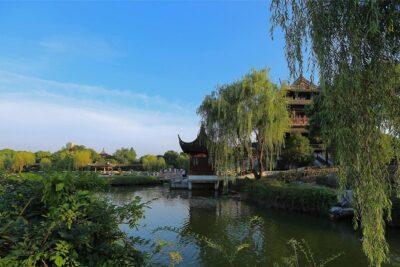
Private Suzhou Day Trip from Shanghai by Bullet Train with All Inclusive Option
Read our review →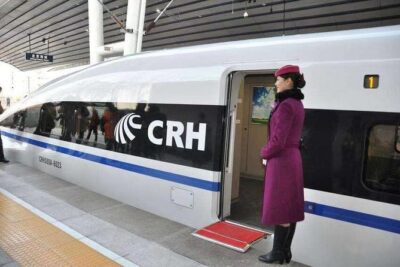
Beijing to Xi’an See Terracotta Warriors with Bullet Train Round Trip Transfer
Read our review →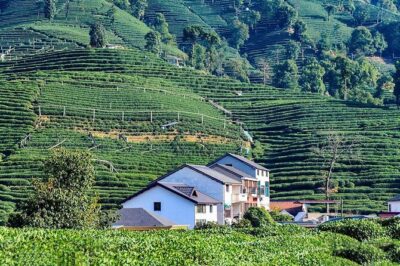
Flexible Hangzhou Private Tour from Shanghai by Bullet Train
Read our review →
Private Guided Tour to Hangzhou by Bullet Train
Read our review →Browse the lists this tour appears in