
Reviewed · LAMA TEMPLE TOURS
Beijing: Lama Temple, Confucius Temple and Guozijian Museum
The largest attraction here is the 54-foot Maitreya Buddha, carved from one Nepalese sandalwood log at Beijing’s Lama Temple. You’ll also move from active Buddhist worship to the quieter world of Confucian learning, then walk through hutong lanes where old Beijing still feels close at hand.
I like the way this tour links three places that are easy to treat as separate sights: religion, education, and ordinary neighborhood life. I also like the private format, since guides such as Anne, Cassie, Mike, Ranee, and Aurora have been praised for clear English and lively explanations.
The main consideration is pace. Four hours gives you a useful introduction, but not a long, leisurely visit to every courtyard or hutong. If you choose the version without a private car, you’ll also arrange your own transport after pickup and at the end.
Key points
- One enormous wooden Buddha: See the 54-foot Maitreya figure carved from a single Nepalese sandalwood log.
- A working place of worship: Watch people burn incense and carry out temple rituals rather than visiting only a silent historic site.
- Two linked centers of learning: Visit the Temple of Confucius and the former Imperial College, founded in 1306.
- Private four-hour format: Travel with an English-speaking guide and shape questions around your own interests.
- Hutong life after the monuments: Walk quiet lanes and finish near Wudaoying Hutong, where you can continue exploring.
- Transport choice: Use a taxi or subway, or pay for the private-car option for door-to-door convenience.
Lama Temple and the Buddha carved from one log
Your guide meets you in your hotel lobby, holding a sign with your name. From there, you head to Lama Temple by taxi or subway unless you have selected the private transfer option.
That opening arrangement is practical in Beijing, where getting across town can take more thought than the sightseeing itself. A private car is the easy choice if you want to save time or prefer not to deal with subway directions. The taxi or subway option costs less in logistical terms, but you’ll need to stay organized after the tour because hotel drop-off is not included without the private-car choice.
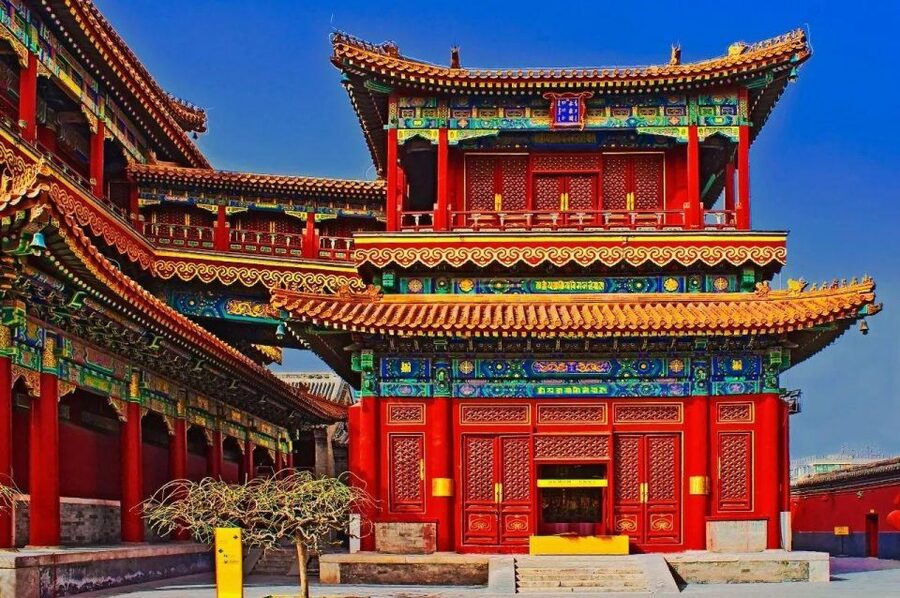
Lama Temple, also called Yonghe Temple, is the emotional center of the visit. Your guide leads you through a sequence of courtyards and halls, pointing out Buddhist statues and explaining the meaning behind them. The value here is not simply seeing painted roofs and incense burners. You get help reading the scene around you.
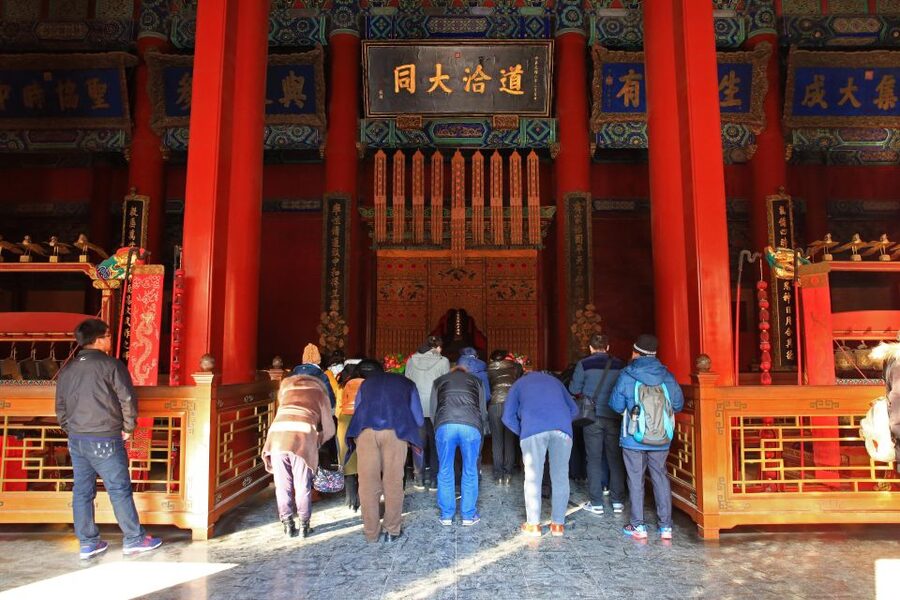
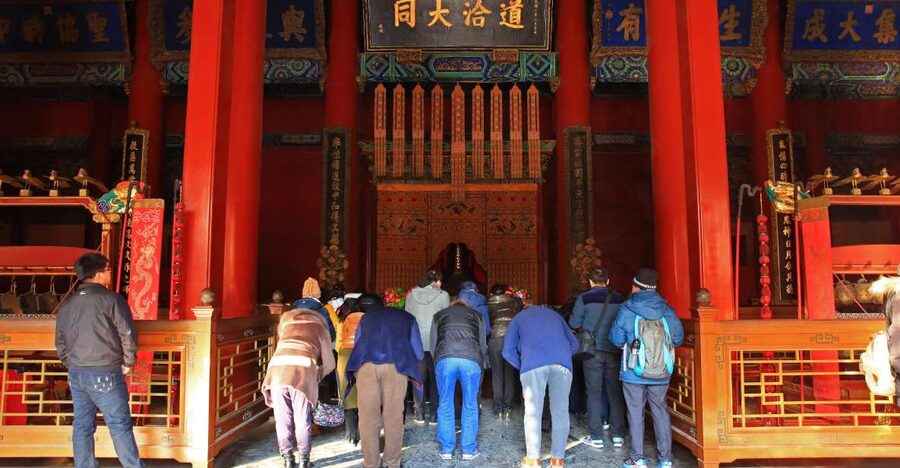
People still come to worship at the temple. You may see incense being offered and visitors moving through the halls in a way that makes clear this is an active religious place, not just a preserved monument. Your guide can explain what you are seeing and place Chinese religious practice in a wider cultural setting.
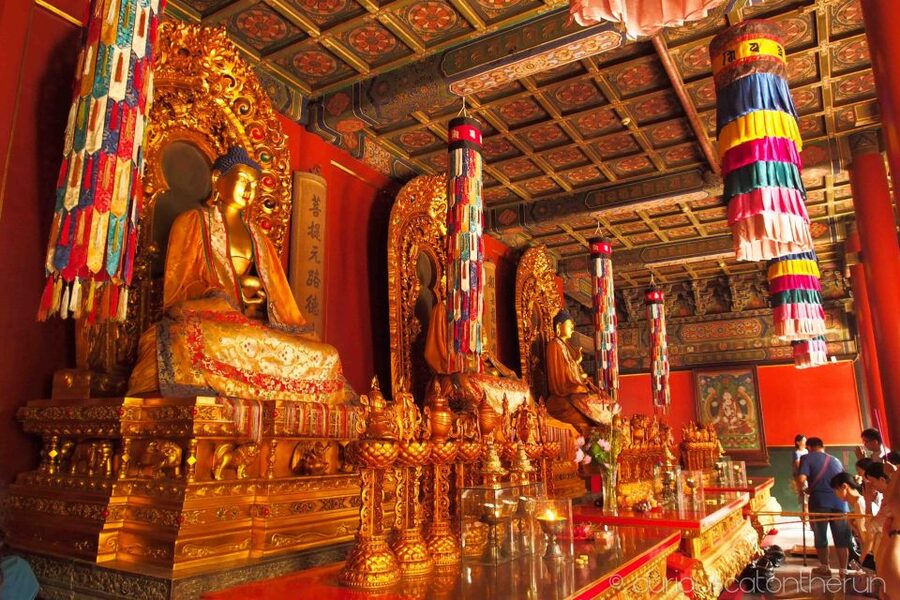
The great moment comes at the hall containing the Maitreya Buddha. The statue is described as 54 feet high and carved from one precious white sandalwood log brought from Nepal. It is presented as the largest wooden Buddha in the world. Even without a long lecture, the scale makes an impression: look up and let your eyes follow the figure from its base to the high ceiling.
This is also where a guide earns the fee. A large statue can be a quick photo stop when you visit alone. With a guide, you can ask why Maitreya is represented in this form, how the statue was made, and how worshippers use the hall. The supplied guide feedback repeatedly points to clear explanations, strong storytelling, and patient answers. Anne was praised for handling a crowded day while keeping the visit organized, and Cassie was singled out for making the experience joyful and easy to understand.
The temple can be busy, so don’t expect every courtyard to feel quiet. That is part of the point, though. The movement of worshippers gives the place life and helps you understand that Beijing’s religious buildings are still used, not simply displayed.
More Museums in Beijing
- Beijing: Tianmen Square, Forbidden City & Royal Museum Tours
★ 4.6 · 1,288 reviews - Beijing:Jingshan Park (Palace Museum Garden) Ticket
★ 4.5 · 185 reviews - Beijing Half Day: National Museum of China In-depth Tour with Subway Transfer
★ 5.0 · 70 reviews
A quiet walk to the Temple of Confucius
After Lama Temple, you walk through a hutong lane toward the Temple of Confucius and Guozijian Museum. This short transfer is one of the tour’s best design choices. Instead of jumping into another vehicle, you move from the temple complex into a neighborhood setting and begin to see how Beijing’s major monuments sit beside ordinary streets.
The lanes offer a change of scale. Lama Temple gives you tall halls, courtyards, incense, and monumental religious sculpture. The hutong brings you closer to walls, gates, narrow passages, and daily routines. Your guide explains the background of the streets and points out how hutong life developed around these historic institutions.
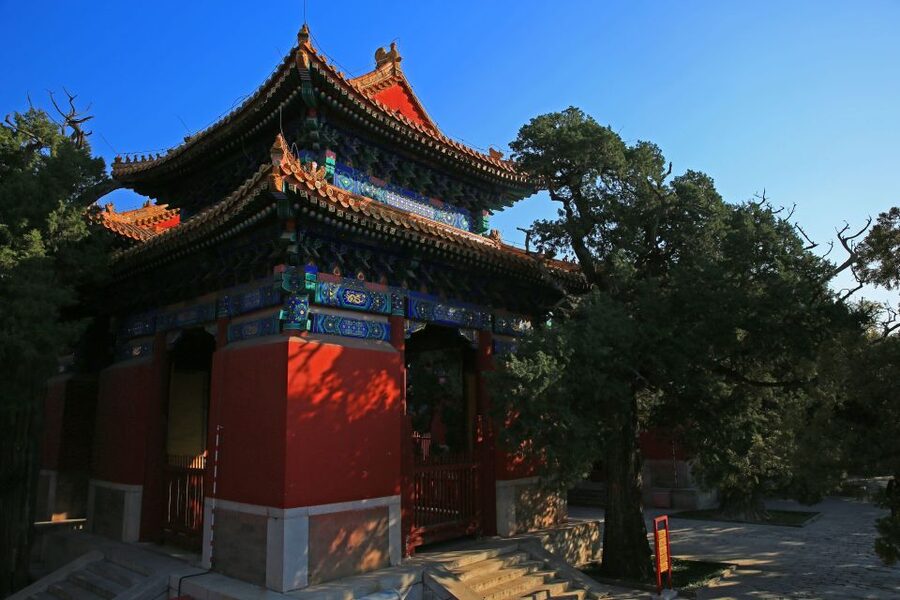
The Temple of Confucius gives the tour a different mood. Here, the focus shifts from Buddhist devotion to Confucian teaching, scholarship, and respect for learning. The visit works best when you pay attention to that contrast. You are not simply collecting another old building. You are seeing two influential systems of thought in neighboring compounds.
Your guide also takes you into the Imperial College, now presented as the Guozijian Museum. The complex was built in 1306 by the grandson of Kublai Khan and served as the supreme academy during the Yuan, Ming, and Qing dynasties. That makes it an important stop for understanding how education and government worked in imperial China.
The college was not just a school in the modern sense. Its position at the top of the educational system reflects the close link between study, official service, and political authority. Expect your guide to connect the buildings with the stories of scholars and the role of Confucian values in public life.
This section may appeal most if you enjoy context more than spectacle. The Lama Temple offers the largest visual surprise, while the Confucius Temple and Imperial College reward attention to explanation. One guide, Mike, was praised for making Chinese culture and ways of thinking understandable and entertaining. That kind of interpretation matters here because the significance of the buildings is not always obvious from their courtyards alone.
Hutong lanes and a look at local life
The final part is a walk through hutong alleys near the two institutions. The tour explains the history of Beijing’s hutong streets and gives you a chance to consider how people lived in these compact neighborhoods.
The word hutong can bring to mind a single postcard image of old Beijing, but this walk is more useful than that. It shows the relationship between grand institutions and the close-packed residential areas around them. You’ll see the city at street level, where the experience is less about major monuments and more about layout, entrances, lanes, and the rhythm of local life.
The walk is also a good counterweight to the temple visits. You are given time to look around rather than being led from one indoor hall to another. Keep your attention on the smaller details, such as the shape of the alleys and the way the neighborhood connects with the historic sites.
The tour ends in this area. You can continue on to Wudaoying Hutong, and the guide can suggest how to reach your next destination. That flexibility is useful if you want to turn the four-hour visit into a longer afternoon. It also means the tour does not force you back to your hotel at the end.
You can choose to add a dim sum meal. The supplied details do not specify the restaurant, menu, or length of the meal, so I would treat this as a convenience option rather than the main reason to book. The core tour already has a clear shape: Buddhist worship, Confucian education, and hutong life.
What the four-hour private format gives you
This is a private group tour with an English-speaking guide. That makes it a better fit for people who want to ask questions than for those who prefer to move silently at their own speed.
A private guide can adjust the explanation to your interests. If you care about religion, you can spend more time discussing worship at Lama Temple. If imperial education interests you, you can ask for more context at Guozijian. If you mainly want to understand Beijing’s neighborhoods, the hutong walk gives you a natural place to focus.
The four-hour length is long enough to connect the sites without taking your whole day. It is also short enough to fit around other Beijing plans. The tradeoff is that the schedule will feel focused. You’ll see the main courtyards, halls, and lanes, but you should not expect an exhaustive museum visit or a slow photographic study of every corner.
The guide quality is especially important in a short tour. Several guides have received strong praise for their English, patience, organization, and storytelling. Ranee was described as making the visit pleasant, while Aurora was praised for explaining details in an easy-to-understand way. Those comments point to the part of the experience you cannot judge from a map: the quality of the person bringing the sites to life.
You should still remember that the named guides are not necessarily guaranteed for every departure. The booking information identifies an English-speaking live guide, but the guide assigned to you may be different.
More Lama Temple Tours in Beijing:
- Temple Heaven, Lama Temple, Summer Palace & Peking Duck Bus Tour
★ 5.0 · 377 reviews - Temple Heaven, Summer Palace, Lama Temple, Hutong Bus Tour
★ 4.7 · 319 reviews - Temple of Heaven, Summer Palace, Lama Temple, Hutong Tours
★ 5.0 · 311 reviews - Beijing: Lama Temple (Yonghe Temple) Admission Ticket
★ 4.8 · 297 reviews
Is $80 a fair price?
At $80 per person, the tour is not the cheapest way to visit these sites. You are paying for more than entrance tickets. The price includes hotel pickup, admission, a private group, and an English-speaking guide. If you choose the private-car option, private transfer is included with that selection.
I consider the price reasonable if you value explanation and convenience. Lama Temple, the Temple of Confucius, and Guozijian are close enough to combine, but understanding their different roles takes effort. A guide saves you from treating the stops as a series of attractive courtyards with unfamiliar names.
The value is strongest for a first visit to Beijing, especially if you have limited time. You get a clear introduction to religion, imperial education, and hutong neighborhoods in one half-day. The price is less attractive if you already know the sites well or prefer to use public transport and read background information on your own.
Check the transport choice carefully. Without the private car, transfer and hotel drop-off are not included. You can use a taxi or subway to reach the first stop, but you’ll need to handle your onward journey after the walk. That is not difficult if you are comfortable finding your way around Beijing, but it is worth including in your planning.
The booking terms are flexible: you can cancel up to 24 hours before the tour for a full refund, and you can reserve now and pay later. Starting times depend on availability, so check the schedule before building the rest of your day around it.
Who should book this Beijing tour?
I would choose this tour if you want a guided introduction to Beijing’s cultural foundations rather than a checklist of imperial sights. It suits first-time visitors, couples, families, and small private groups who want to ask questions as they go.
It is particularly useful if the difference between Buddhism, Confucianism, and imperial education is unclear to you. The tour places those subjects close together and gives you a simple way to compare them.
You should also consider it if you want a taste of hutong life without committing to a full-day neighborhood walk. The final lanes add a human scale to the temples and academy, and you can continue at Wudaoying Hutong after the guide leaves.
I would look elsewhere if your priority is a completely unstructured afternoon, extensive museum time, or a long food tour. The four-hour schedule has a clear route and several important stops. Its strength is focus, not freedom.
FAQ
How long does the tour last?
The tour lasts four hours. Starting times depend on availability.
Where does the tour begin?
Your English-speaking guide meets you in the lobby of your hotel, holding a sign with your name.
How do I reach Lama Temple?
You can go by taxi or subway, or choose the private-car option. Private transfer is included only when you select the related private-transfer option.
Does the tour include admission tickets?
Yes. Entrance fees are included.
Is hotel drop-off included?
Hotel drop-off and transfer are not included if you choose the option without a private car. The tour ends in the hutong area, and your guide can suggest how to reach your next destination.
Can I cancel or pay later?
You can cancel up to 24 hours in advance for a full refund. You can also reserve now and pay later.
Should you book it?
Book this tour if you want a well-shaped four-hour introduction to Beijing’s religious, educational, and neighborhood life. The huge sandalwood Buddha is the visual highlight, but the real value comes from seeing it alongside the Temple of Confucius, Imperial College, and the hutong lanes.
The private format and strong guide record make the $80 price easier to justify, especially if this is your first time in Beijing. Choose the private-car option for the simplest logistics. Choose the basic option if you are comfortable arranging your own transport and want to keep the cost focused on the guide, admissions, and walking experience.
Newly listed around Beijing
- Beijing: Summer Palace Ticket; fast and smooth★ 3.6 · 38 reviews
- Beijing: Summer Palace Entry Ticket★ 3.3 · 3 reviews
- Beijing: Summer Palace Highlight Walking Tour★ 4.8 · 25 reviews
- Beijing: Summer Palace, Sacred Road&Ming Tombs Private Tour★ 5.0 · 8 reviews
- Beijing: Summer Palace 3 Hours Guided Tour with Entry Ticket★ 4.8 · 4 reviews
- Beijing Private Tour: Summer Palace, Panda House and Options★ 5.0 · 21 reviews
- Beijing: Summer Palace Entrance(combo/tour opt)★ 4.7 · 6 reviews
- Beijing Royal Banquet with Chinese culture prefermance★ 5.0 · 3 reviews
Lama Temple Tours, compared.
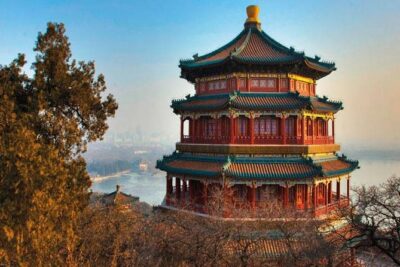
Temple Heaven, Lama Temple, Summer Palace & Peking Duck Bus Tour
Read our review →
Temple Heaven, Summer Palace, Lama Temple, Hutong Bus Tour
Read our review →
Temple of Heaven, Summer Palace, Lama Temple, Hutong Tours
Read our review →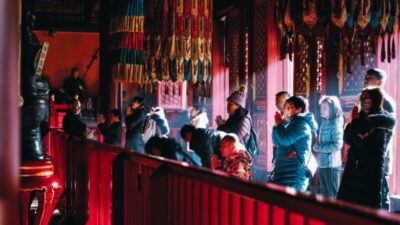

Beijing Historical Tour II including Summer Palace, Lama Temple & Panda Garden
Read our review →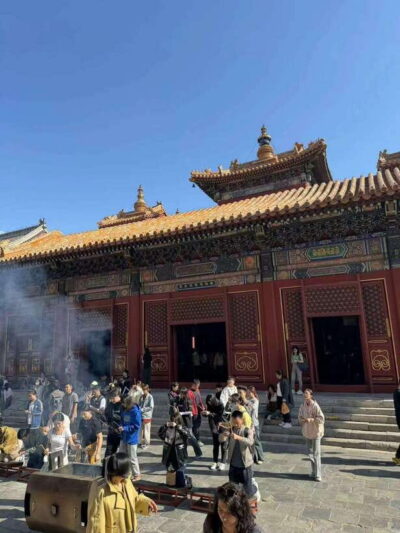
Beijing Lama temple ticket; #1 efficacious; limited Discount
Read our review →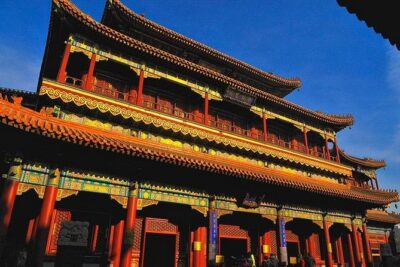
Panda House, Temple of Heaven, Lama Temple, Summer Palace & Lunch
Read our review →Browse the lists this tour appears in