
Reviewed · YUNGANG GROTTOES TOURS
Datong Yungang Grottoes and Hanging Monastery 1-day from Beijing by Train
Datong packs two of China’s most unusual historic sights into one long day. The Yungang Grottoes hold more than 51,000 Buddhist statues carved between 460 and 525 AD, while the Hanging Monastery clings to a cliff on wooden supports. The new bullet train makes this ambitious trip possible in about 12 hours.
I like the smooth two-hour train ride each way, which saves you from a long road transfer. I also like the private format and the quality of the English commentary, especially with a guide such as Star, who is praised for clear local history and careful time management. The main drawback is the early start and tight schedule, with little room for delays.
Key points at a glance
- Two-hour bullet train each way: Datong is far more practical from Beijing than it once was.
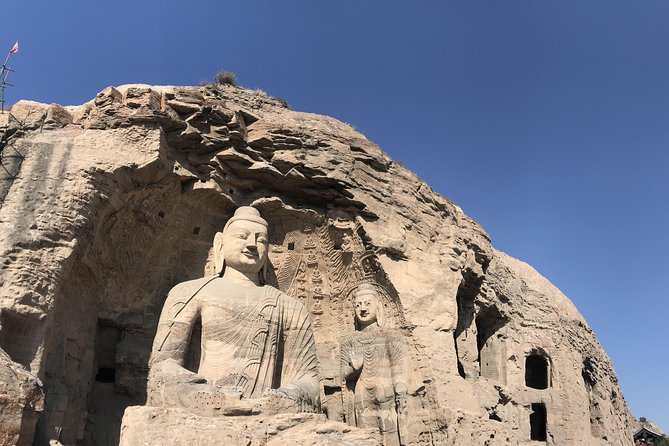
- Yungang’s 51,000-plus statues: You see one of China’s great surviving centers of early Buddhist cave art.
- A cliffside temple with three faiths: The Hanging Monastery brings Buddhism, Taoism, and Confucianism together in one small complex.
- Private guiding in Datong: Your group has its own guide and support team rather than joining a large mixed party.
- Shanxi-style lunch: You get a taste of local food that is different from what you commonly find in Beijing.
- Peak-season warning: From March through October, reserve the Hanging Monastery at least a week ahead and prepare for possible queues.
Why Datong works as a one-day trip from Beijing
For years, Datong felt too far away for a sensible day trip from Beijing. The bullet train changes that calculation. The ride takes about two hours each way, so much of the day is spent seeing the sights rather than sitting in a vehicle.
It is still a full day. The tour lasts about 12 hours, and the early departure is part of the bargain. You need enough energy for two major sites, a train journey in both directions, and a schedule that cannot absorb much wasted time.
I see this as an efficient choice if you have an extra day in Beijing and want something beyond the capital’s imperial buildings and city streets. You reach Shanxi, see two major historic sites, and return without changing hotels.
The private setup matters here. Datong’s attractions are spread out, and the day depends on getting from the train to the grottoes and then on to the Hanging Monastery at a useful pace. Your own guide and vehicle arrangement make the day easier to manage than attempting the same route alone.
More Yungang Grottoes Tours in Datong:
- Beijing to Datong See YunGang Cave, Hanging Temple (Bullet Train)
★ 5.0 · 39 reviews - Beijing:Bullet Train Tour to Hanging Temple&Yungang Grottoes
★ 5.0 · 16 reviews - Datong: Yungang Grottoes Entrance Ticket Only
★ 4.9 · 12 reviews
The bullet train sets the tone
The train is one of the strongest parts of the plan. A two-hour ride each way is long enough to rest, but short enough to preserve the day. The ride has also been described as smooth and quiet, useful when the schedule begins early.
Exact departure and meeting details are confirmed after booking, subject to availability. Pickup is offered, and the meeting information lists daily operating hours from 7:00 AM to 11:30 PM. Treat those hours as a broad operating window, not as a promise that every departure will begin at the same time.
I would not book this as a lazy day. The train makes Datong reachable, but it does not make the itinerary relaxed. You are choosing speed and access over a slow regional visit.
The payoff is variety. In one day, you move from enormous Buddhist cave carvings to a compact temple built into a cliff. The contrast keeps the schedule interesting, even when the clock is working against you.
Yungang Grottoes: China’s great early Buddhist caves
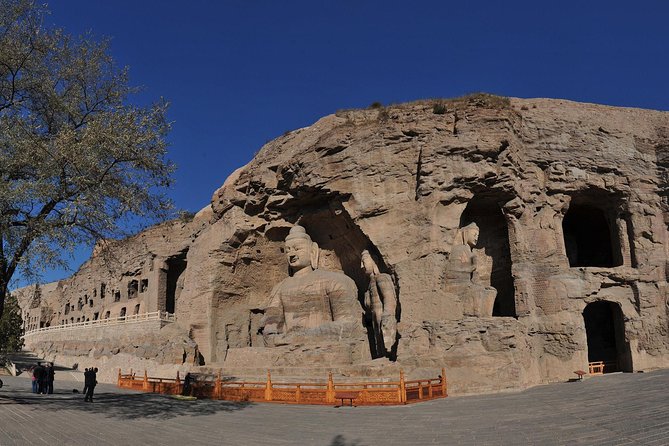
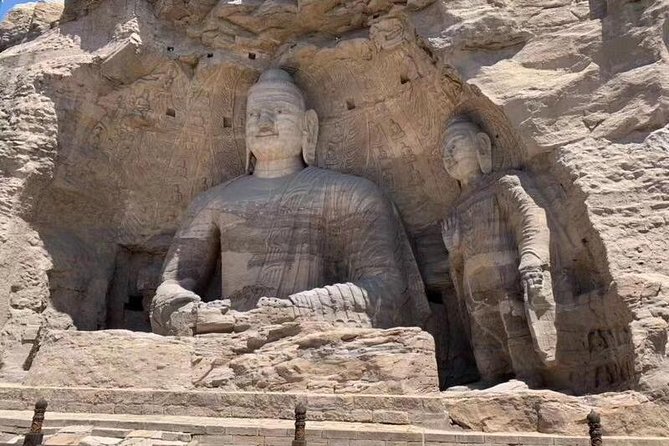
The Yungang Grottoes are the first major stop and receive about two hours. That is enough time for a focused visit, though not enough to inspect every cave closely. The site includes 252 grottoes and more than 51,000 Buddha statues and smaller figures.
These carvings date from the Northern Wei period, mainly between 460 and 525 AD. Their importance goes beyond age. The site shows Buddhist artistic ideas from south and central Asia blending with Chinese traditions under imperial sponsorship.
That context helps you read the stone. You are not simply walking past rows of old statues. You are seeing a period when Buddhism was taking firm root in China and artists were adapting religious images, styles, and symbols to local tastes.
Some caves are huge and visually forceful. Others reward a closer look at details in the carved surfaces. Your guide’s role is especially useful here because the scale can overwhelm you. Without explanation, it is easy to remember only a series of dark openings and large figures.
The site has UNESCO World Heritage status, recognized for its early Chinese Buddhist cave art and the meeting of Asian and Chinese traditions. A good guide can connect the formal title to what you are actually seeing: imperial support, religious devotion, skilled stonework, and centuries of survival.
Two hours requires choices. Do not expect a slow study of all 252 grottoes. Instead, use the time to focus on the most important caves and ask questions as you go. A guide fluent in English can turn a large archaeological site into a clear story rather than a blur of numbers.
The grottoes are also the stop where the tour feels most substantial. The Hanging Monastery is striking because of its position, but Yungang gives you a larger body of art and history to consider. If Buddhist sculpture interests you, this is likely the day’s main reward.
Shanxi lunch brings a local change of pace
The day includes a taste of Shanxi-style food, which gives the excursion a local flavor beyond the monuments. Shanxi cooking is not simply Beijing food served somewhere else. The point is to try a regional style that you are unlikely to encounter in the same way during an ordinary Beijing sightseeing day.
The supplied details do not specify the restaurant, dishes, or whether every meal cost is itemized separately, so you should confirm those points when booking. What is clear is the intention: lunch is part of the regional experience, not just a quick break between attractions.
I like this pause because it gives the day some balance. After two hours among the grottoes, a local meal offers a chance to rest and let the guide explain more about Shanxi culture before the next stop.
Do keep the schedule in mind. This is not a food tour, and lunch needs to fit around the Hanging Monastery reservation. The meal is best understood as a useful local sample rather than the main reason to book.
More Bullet Train Day Trips in Datong:
- Suzhou Private Day Trip from Shanghai with Bullet Train Option
★ 5.0 · 366 reviews - Private Suzhou Day Trip from Shanghai by Bullet Train with All Inclusive Option
★ 5.0 · 283 reviews - Beijing to Xi’an See Terracotta Warriors with Bullet Train Round Trip Transfer
★ 5.0 · 238 reviews - Flexible Hangzhou Private Tour from Shanghai by Bullet Train
★ 5.0 · 220 reviews
The Hanging Monastery: spectacular, compact, and time-sensitive
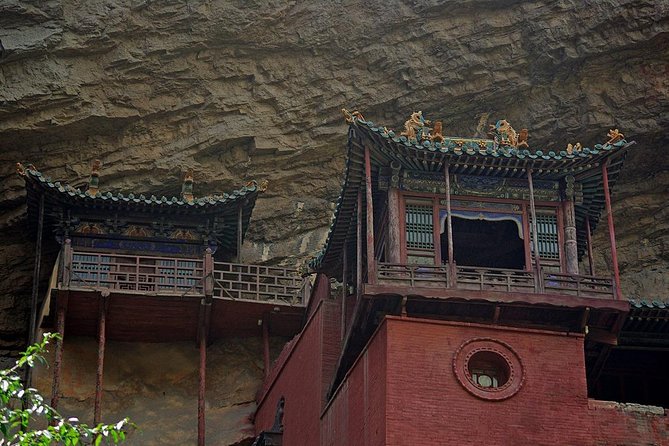
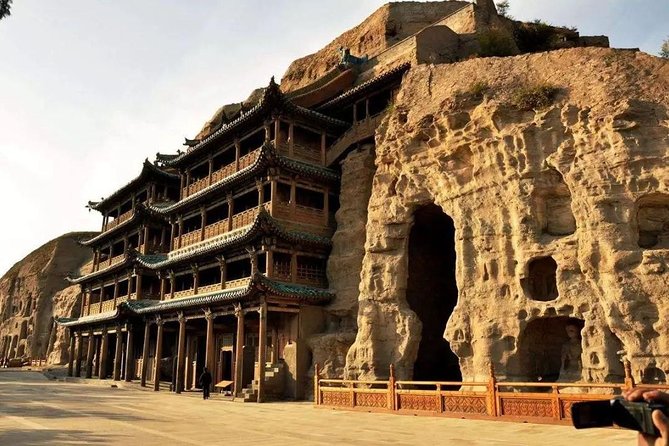
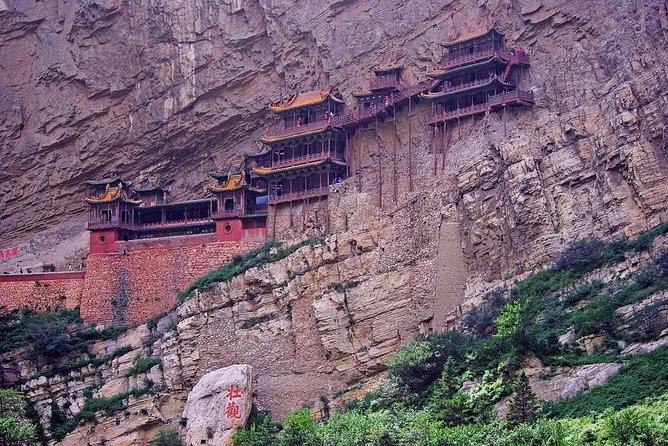
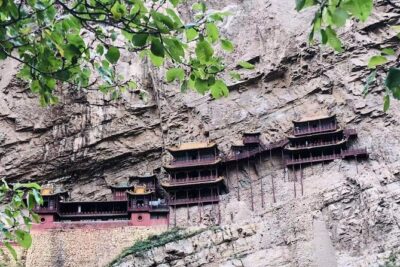
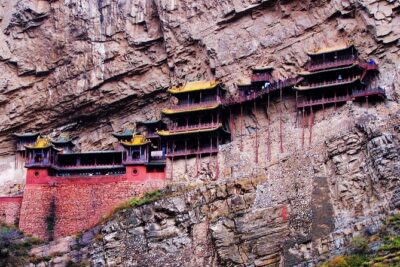
The Hanging Monastery, also called Xuankong Temple, is about an hour from the itinerary. It is described as roughly 1,500 years old and built into a sheer cliff near Datong.
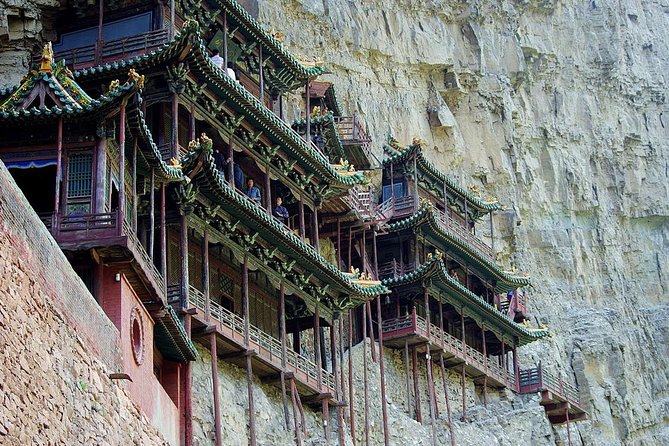
Its appeal is immediate. The temple appears to cling to the rock face, supported by wooden beams set into the cliff. The surrounding rock helps protect it from the weather, and the unusual construction gives the site its name and fame.
The complex is also unusual in religious terms. Buddhism, Taoism, and Confucianism are represented together in one temple. That combination gives the visit more meaning than a quick photo stop. You are looking at a place where several Chinese traditions share one historic setting.
The practical issue is access. From March through October, visitor numbers are high, and advance reservations of at least one week are required. Reservations are competitive, so this is not a sight to leave until the last minute.
If the wait to enter exceeds 1.5 hours, the recommended approach is to view the temple from below instead. That may sound like a compromise, but it can be the sensible choice on a one-day trip. The cliffside view is the key visual feature, and losing most of the afternoon in a queue could put the return journey at risk.
This is where the private format and an experienced timekeeper help. The guide can explain the situation and help you make a practical decision. Still, no guide can remove peak-season demand, so you should accept that entry is not equally certain at all times of year.
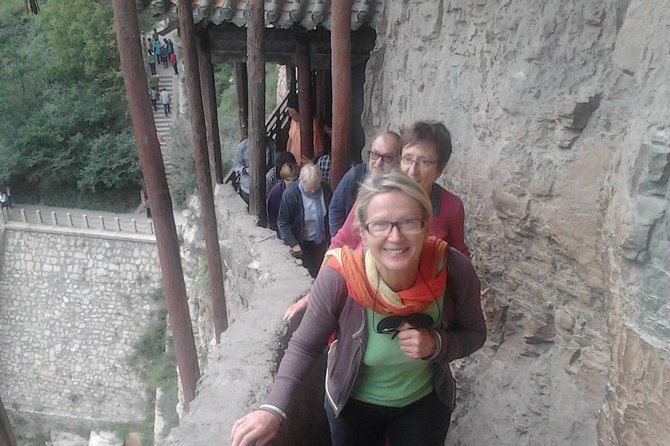
The temple visit is also less comfortable for anyone uneasy with heights or narrow historic structures. The supplied information does not give detailed accessibility guidance, so ask before booking if that is a concern. Most people can take part, but the site itself is built on a cliff rather than arranged like a level museum.
What the guide adds to the day
The guide can make or break a packed cultural excursion. One guide named Star receives particular praise for professional service, fluent English, strong local history, and careful time management.
That combination matters. At Yungang, you need someone who can explain why the carvings matter without burying you in dates. At the Hanging Monastery, you need someone who can keep an eye on the clock and help you decide how to handle a long entry line.
The guiding is private, so your group can ask questions and set a comfortable pace within the limits of the day. You are not waiting for a large party to finish photographs or listening to a commentary aimed at the lowest common denominator.
The guide also helps with the cultural gap between Beijing and Datong. This is not just another Beijing attraction moved to a different address. Shanxi has its own food traditions, historic setting, and local identity. An English-speaking guide gives those differences a chance to register.
Do note the difference between an informed guide and unlimited time. Even the best commentary cannot make a 12-hour schedule feel unhurried. The value is in making each hour count.
Is $399 per person good value?
At $399 per person, this is an expensive day trip. The price deserves a careful look, especially for solo visitors or couples comparing it with independent train travel.
You are paying for more than admission. The package combines the bullet-train journey, private touring, an English-speaking guide in Datong, transportation between sights, admission tickets, and a planned route through two difficult-to-combine destinations. It also removes much of the work involved in coordinating a long day across cities.
The private format is the biggest value point. If you split the cost among a larger private group, the price becomes easier to justify. Group discounts are offered, so ask how the rate changes with your party size.
Independent travel could cost less, but it would require arranging the train, local transport, entrance tickets, timing, and the Hanging Monastery reservation. You would also lose the benefit of having Star or another English-speaking guide explain the sites in context.
I would not call this the cheapest way to see Datong. I would call it a time-saving option for people who value structure and interpretation more than keeping every expense low. The price makes the most sense if Datong is a priority but you do not want to spend a night there.
Admission is included at both named attractions. That simplifies the day, though you should still confirm the complete cost breakdown, including lunch and any group discount, before paying.
Who should book this Datong day trip?
This tour suits you if you have one spare day in Beijing and want a major cultural outing outside the capital. It is especially useful if you prefer a private guide, need English commentary, and do not want to build the route yourself.
It is a good match for visitors interested in Buddhist art, historic architecture, religious traditions, and unusual engineering. Yungang offers the stronger art and archaeology visit. The Hanging Monastery supplies the dramatic setting and the unusual meeting of three faiths.
You should think twice if you dislike early starts, long days, or fixed schedules. The excursion is not designed for lingering over one cave or waiting casually for a temple entry slot.
Families and mixed-interest groups may appreciate the variety, though the cliffside temple may not suit everyone. Most people can participate, but detailed accessibility information is not provided, so ask specific questions before reserving.
The tour has a small review base, but the praise is consistent on the points that matter most: smooth train travel, strong guiding, and the value of seeing both sites in one day. I would place more weight on those practical details than on the perfect rating alone.
Booking advice before you commit
Book as early as you can if your dates fall between March and October. The Hanging Monastery requires advance reservations during the busy season, with at least one week recommended, and availability is competitive.
Confirmation is sent within 48 hours of booking, subject to availability. Because the day depends on train seats and site access, do not assume that your preferred date is final until confirmation arrives.
The cancellation policy is generous if your plans change: cancel at least 24 hours before the start time for a full refund. Changes or cancellations inside that window are not accepted for a refund.
Ask about the exact pickup point, train departure, lunch arrangements, group discount, and the plan if the Hanging Monastery queue exceeds 1.5 hours. These questions are not fussing over small print. They tell you how the day will actually feel.
Should you book it?
Book this trip if you want Datong’s two headline sights without spending a night away from Beijing. The bullet train removes the worst travel barrier, the private guide adds useful context, and the route gives you both major Buddhist art and one of China’s most startling historic buildings.
I would skip it if you want a slow, flexible day or if $399 feels too high for a single excursion. For the right visitor, though, the cost buys something valuable: a hard-to-organize route handled by a private team, with a guide such as Star helping you make the most of every hour.
FAQ
How long does the Datong day trip last?
The experience lasts approximately 12 hours, including the train journey from Beijing to Datong and the return trip.
How long is the bullet-train ride?
The bullet train takes about two hours each way between Beijing and Datong.
Are the Yungang Grottoes admission tickets included?
Yes. Admission to the Yungang Grottoes is included.
Is admission to the Hanging Monastery included?
Yes. Admission to the Hanging Monastery is included.
Is this a private tour?
Yes. Only your group participates, with a dedicated team working with you.
Is an English-speaking guide provided?
Yes. The tour includes an English-speaking guide in Datong. A guide named Star is specifically associated with clear English commentary and careful time management.
What happens if the Hanging Monastery queue is very long?
During peak season, if the on-site wait exceeds 1.5 hours, viewing the temple from below is recommended instead of waiting to enter. Advance reservations of at least one week are required and competitive from March through October.
More 1-Day Tours in Datong
- Lantau Island Day Trip – Big Buddha & Tai O
★ 4.5 · 1,328 reviews - Suzhou and Zhouzhuang Water Village Day Trip from Shanghai
★ 4.0 · 426 reviews - Mutianyu Great Wall and Summer Palace Private Day Trip with Lunch
★ 5.0 · 209 reviews - Shanghai One Day City Private Tour by German-Speaking Guide
★ 4.9 · 180 reviews
Newly listed around Datong
- Private Tour Datong Hengshan Hanging Temple Yungang Grottoes★ 5.0 · 4 reviews
- Datong Private Self-guided Tour with Chartered Car★ 5.0 · 10 reviews
- Private Datong Day Tour Arranged by Local Tour Guide Nancy★ 5.0 · 46 reviews
- Datong: Temples and Grottoes day tour with tickets options★ 3.1 · 7 reviews
- Datong: Transfer or Tour to Yungang Grottoes&Hanging Temple★ 4.4 · 4 reviews
- Datong:HangingTemple&Grotto Private Car with Entrance ticket★ 4.8 · 11 reviews
- Pingyao Ancient City Scenic Area Pass Ticket Only★ 4.7 · 6 reviews
- Datong Classic Day Tour★ 5.0 · 13 reviews
Yungang Grottoes Tours, compared.
Beijing to Datong See YunGang Cave, Hanging Temple (Bullet Train)
Read our review →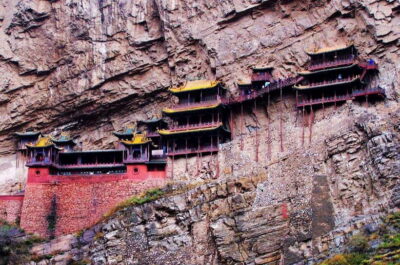
Bullet Train Tour to Hanging Temple&Yungang Grottoes
Read our review →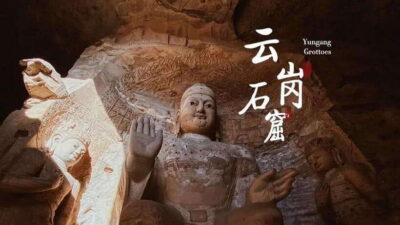
Private 2-Day Datong from Beijing with Yungang Grottoes
Read our review →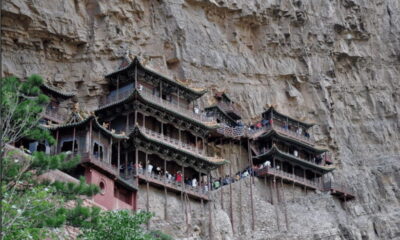
Transfer or Tour to Yungang Grottoes&Hanging Temple
Read our review →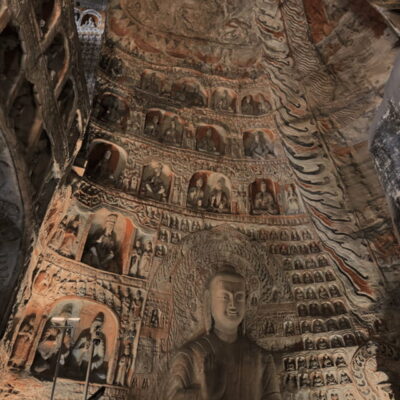
Private Tour Datong Hengshan Hanging Temple Yungang Grottoes
Read our review →Browse the lists this tour appears in