
Reviewed · LAMA TEMPLE TOURS
Beijing Private Religious Tour: White Cloud Temple, Lama Temple, Niujie Mosque
Beijing’s religious story comes into focus when you visit four very different places in one day: a Buddhist temple, an imperial Confucian academy, a Daoist sanctuary, and the city’s grandest mosque. This private tour gives each stop about an hour, with a guide connecting the buildings to China’s beliefs, government, folklore, and daily life.
I like the private car and hotel pickup, since Beijing’s sights are spread across the city and the day includes several transfers. I also like the included lunch and prepaid admission, which keep the day simple and avoid small costs piling up.
The main catch is pace. Four major sites in eight hours leaves enough time for a useful introduction, but not for a slow, detailed visit to every hall. You should also watch the clock, since an extra fee applies after eight hours.
Key points to know before booking
- Four faith traditions in one day: Visit Buddhist, Confucian, Daoist, and Islamic landmarks.
- A private guide and driver: Your group travels in an air-conditioned vehicle rather than joining a larger tour.
- Clear English explanations: Guides named Peter and Stephen are praised for easy-to-follow talks and Chinese folklore.
- Lunch is included: A Chinese meal at a local restaurant is part of the day.
- About eight hours door to door: Pickup and drop-off at your hotel are included, with an 8:30 am start.
- Flexible plan: The route can be adjusted for your interests, weather, or unexpected conditions.
What this Beijing religion tour is really about
This is not a general sightseeing loop with a few temples added for decoration. The appeal is the contrast between China’s major traditions and the way they shaped public life.
At Lama Temple, you begin with Tibetan Buddhism in a grand imperial setting. At the Confucius Temple and Guozijian Museum, the subject shifts from worship to education and government. White Cloud Temple introduces Daoism, with its ancestral role and temple customs. Niujie Mosque then brings Islamic life into the story of Beijing.
That range makes the tour useful early in a Beijing visit. You get a framework for understanding ideas that appear elsewhere, from imperial buildings to family shrines and public ceremonies. Your guide can also adjust the amount of time spent on history, architecture, belief, or local stories.
The tour begins at 8:30 am with pickup in your hotel lobby. Since the day involves four stops and several drives, an early start matters. The private format also means you are not waiting for a large group to gather at every doorway.
More Lama Temple Tours in Beijing:
- Temple Heaven, Lama Temple, Summer Palace & Peking Duck Bus Tour
★ 5.0 · 377 reviews - Temple Heaven, Summer Palace, Lama Temple, Hutong Bus Tour
★ 4.7 · 319 reviews - Temple of Heaven, Summer Palace, Lama Temple, Hutong Tours
★ 5.0 · 311 reviews
Lama Temple, Beijing’s famous Buddhist complex
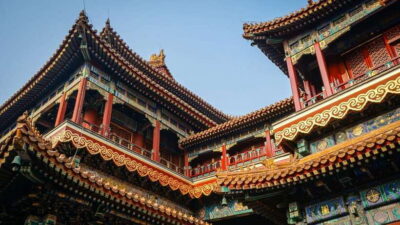
The first stop is Lama Temple, also called Yonghegong. It is described as Beijing’s best-known Buddhist temple and one of the city’s largest and most influential.
Your included hour here is enough to see the main character of the complex and hear how Buddhism developed in China. The guide can place the temple within Beijing’s wider religious story rather than leaving you to guess what each building means.
This is likely to be one of the more visually striking stops. The site is known for colorful temple spaces, and the name itself is familiar to many people planning a Beijing visit. Starting here also gives the day an immediate sense of place before you move to the more academic Confucian site next door.
Still, one hour is a firm limit. If you want a long, quiet examination of each hall, this schedule may feel brisk. I would use this stop to listen closely to the guide’s explanation and note which areas you would like to revisit independently.
The tour includes the admission ticket, so you do not need to handle payment at the entrance. That small convenience matters on a day with four paid sites.
Confucius Temple and Guozijian Museum
Next comes one of the most useful pairings on the tour: the Temple of Confucius and the Guozijian Museum.
These are connected places, but they represent different parts of imperial China. The Guozijian was an ancient university complex where scholar-officials were trained. The Confucius Temple was used to honor and worship Confucius, whose ideas influenced education, public conduct, family life, and the imperial system.
I like this stop because it keeps the tour from becoming a parade of religious buildings. Confucianism shaped government and schooling even when it was not practiced like Buddhism, Daoism, or Islam. Seeing the academy beside the temple helps explain how learning and public service were tied together.
Your guide’s role is especially important here. Architecture alone will not tell you why an old school complex mattered so much. Guides Peter and Stephen are specifically praised for clear English explanations, and Stephen is also noted for telling Chinese fables and folklore. That storytelling can help make an institutional subject easier to follow.
The allotted hour gives you a focused introduction rather than a complete museum study. If Confucian thought is your main interest, tell the guide early. The itinerary is flexible, and the operator says it can be adjusted around personal interests, weather, or unexpected conditions.
White Cloud Temple and Daoist tradition
After the central Buddhist and Confucian sites, the tour drives to White Cloud Temple, also called Baiyunguan.
This is one of the Three Great Ancestral Courts of the Quanzhen school of Daoism. It was first founded in the mid-eighth century and carries the traditional title The First Temple under Heaven. Those details give the stop real weight within Daoist history.
The experience here is different from the imperial academy. You are learning about a living religious tradition, its institutions, and its role in Chinese culture. The guide can explain how Daoism differs from Buddhism and Confucianism, while also showing where these traditions have overlapped in Chinese life.
The itinerary lists a Daoist temple fair, though the provided schedule does not give a date or guarantee that a fair will be taking place during your visit. Treat that wording with caution and ask your guide what is happening on the day.
Again, the visit lasts about an hour. That is enough for a guided look, but not necessarily enough to see every corner at an unhurried pace. I would pay attention to the guide’s stories here. Stephen’s skill with Chinese fables and folklore would be particularly useful at a Daoist site, where stories can make abstract ideas easier to remember.
A few more Beijing days worth a look
- From Beijing: Mutianyu Great Wall Tours with Options
★ 4.9 · 9,216 reviews - Beijing: Forbidden City Tour(Group/Private)-Tickets Included
★ 4.8 · 7,974 reviews - Beijing: T-Square & Forbidden City Group or Private Tour
★ 4.8 · 4,446 reviews - Beijing: Mutianyu Great Wall Daily Tour with Ticket & Lunch
★ 5.0 · 3,056 reviews
Niujie Mosque and Beijing’s Muslim community
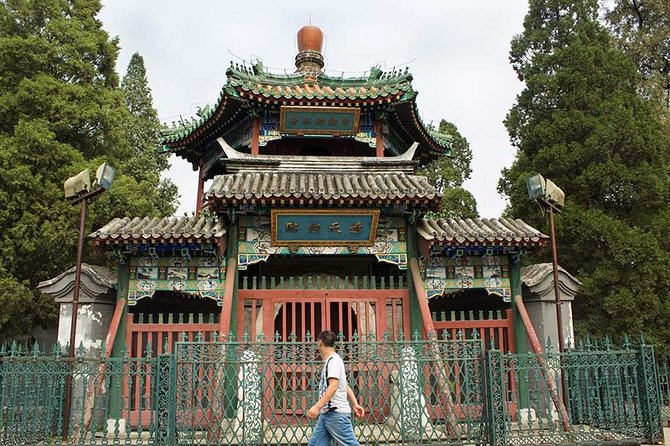
The last major stop is Niujie Mosque, described as one of China’s oldest and most important mosques and the largest mosque in Beijing.
This is a valuable final stop because it widens the picture of Chinese religious life. After Buddhist, Confucian, and Daoist sites, you see an Islamic institution with its own long place in Beijing. The mosque is not just another historic building. It is an important place of worship for the city’s Muslim community.
Your guide can help you notice the difference between the mosque and the earlier temples. The visit also gives the tour a broader social purpose: Beijing’s story includes multiple faiths, not one single tradition.
The schedule provides about one hour here and includes admission. As with any religious site, follow your guide’s instructions about appropriate conduct and access. The supplied information does not specify a dress code or prayer schedule, so ask the guide on the day if you need current details.
Ending at Niujie Mosque gives the day a strong sense of range. You have moved from imperial Buddhist architecture to Confucian education, Daoist tradition, and Islamic worship, all within Beijing.
The private car makes the long route easier
The vehicle is not just a perk. It is the practical backbone of this experience.
You are driven between each destination, with pickup and drop-off at your hotel. The package includes an air-conditioned vehicle, private driver, fuel, tolls, and parking fees. You do not need to arrange separate taxis or work out a multi-stop public transport route.
That matters because the four sites are not presented as one compact complex. A private car reduces the friction between visits and lets the guide focus on the story rather than on navigation.
The tour is private, so only your group participates. This is useful if you want to ask questions, request more time at one site, or shift the emphasis toward Daoism, Confucianism, or Islamic history. It also makes the day more comfortable for families and small groups.
The tradeoff is that private tours can feel less social than a shared group outing. You are paying for control and convenience, not for meeting other people.
Lunch and the real value of $144
The price is $144 per person. That is not a bargain-basement Beijing excursion, but it includes a substantial list of services: an English-speaking guide, private driver, air-conditioned vehicle, fuel, tolls, parking, entrance tickets, hotel pickup and drop-off, and a Chinese lunch at a local restaurant.
For an eight-hour private day, the price makes the most sense for people who value time and simple logistics. If two or more people share the booking, the private vehicle and guide become easier to justify. Group discounts are available, though the exact reduction is not specified.
Lunch is a practical inclusion rather than a reason to book the tour by itself. You get a local Chinese meal without having to stop and plan a restaurant during a tightly scheduled day. The supplied details do not specify the menu, so tell the operator about any food concerns when you book.
Gratuities for the guide and driver are not included. Accommodation and dinner are also outside the price. Keep those separate when working out your full daily budget.
What the guide can add to the day
The guide can make or break a tour built around religious sites. Labels and buildings only go so far. You need someone who can explain why a temple mattered, how Confucian education worked, and how the traditions relate to Chinese society.
Peter is praised for complete explanations in clear English, and Stephen is praised for clear talks, kindness, and a strong store of Chinese fables and folklore. You may not receive either guide, but their strengths show what to look for: ask questions, request context, and tell the guide which tradition interests you most.
The best version of this tour will not rush through dates and names. It will help you compare the four stops. Buddhism may be presented through temple practice, Confucianism through education and government, Daoism through its ancestral courts, and Islam through the mosque’s place in Beijing’s religious life.
The route is flexible, so use that option. If one stop matters most to you, say so at the beginning rather than waiting until the final hour.
Who should book this private Beijing tour?
I would recommend it to first-time Beijing visitors who want a guided introduction to several belief systems in one day. It also suits families, older visitors, and small groups who prefer a private vehicle over a complicated series of transfers.
It is a good choice if you want history explained in plain English. The named guides are especially praised for clarity, and one guide’s folklore stories add a human touch beyond standard dates and facts.
You may want a different plan if you prefer slow photography, long museum visits, or extended time at a single temple. Four one-hour stops create variety, but the schedule does not promise deep exploration of each place.
Children can participate, but they must be accompanied by an adult. A child rate applies only when sharing with two paying adults.
Practical booking advice
The tour starts at 8:30 am, and confirmation is provided when you book. It is often reserved about 10 days ahead, so do not leave it until the last minute if this is important to your schedule.
Free cancellation is available if you cancel at least 24 hours before the start time. Cancellations or changes made inside that window are not accepted for a refund.
The itinerary can change for your interests, the weather, or unexpected conditions. The tour is planned for eight hours, and an extra fee is requested after that point. Keep the final part of the day free rather than booking a fixed evening activity immediately afterward.
Should you book it?
Book this tour if you want an efficient, private introduction to Beijing’s religious and intellectual traditions, with transport, tickets, lunch, and hotel service handled for you. The strongest reasons are the unusual four-part theme, the private guide, and the chance to hear clear explanations and Chinese folklore rather than simply walk through buildings.
Skip it if your priority is spending half a day at one temple or exploring independently. For most small groups, though, $144 per person is a fair price for eight hours of guided sightseeing and private transport, especially when you value a smooth route across the city.
FAQ
What sites are included in the tour?
The tour visits Lama Temple, the Temple of Confucius and Guozijian Museum, White Cloud Temple, and Niujie Mosque.
How long does the tour last?
The tour lasts about eight hours. An extra fee is requested if the tour runs beyond eight hours.
What time does the tour start?
The listed start time is 8:30 am, with the guide and driver meeting you in your hotel lobby.
Is hotel pickup and drop-off included?
Yes. Hotel pickup and drop-off are included, along with transportation between the sites.
Is lunch included?
Yes. A Chinese lunch at a local restaurant is included. Dinner is not included.
Is this a private tour?
Yes. Only your group participates, and the tour includes a private driver and an English-speaking guide.
Can the itinerary be changed?
Yes. The itinerary can be adjusted for your personal interests, weather, or unexpected conditions.
Newly listed around Beijing
- Shore Excursion: 2-Day Private Beijing Sightseeing Tour from Tianjin Cruise Port★ 5.0 · 6 reviews
- Private Transfer: Tianjin Xingang International Cruise Home Port to Beijing Hotel★ 5.0 · 6 reviews
- Tianjin Private Day Trip to Forbidden City and Mutianyu Great Wall by Bullet Train★ 5.0 · 5 reviews
- Bullet Train Private Tour: Beijing Tiananmen Square, Forbidden City & Great Wall★ 5.0 · 3 reviews
- Private Great Wall Tour from Tianjin Cruise Port★ 5.0 · 8 reviews
- Private One Way Tianjin Port Transfer to Beijing including Great Wall Sightseeing★ 5.0 · 4 reviews
- Shanghai to Beijing Bullet Train Ticket with Hongqiao Station Transfer★ 5.0 · 5 reviews
- Private Mutianyu Great Wall Tour with Bullet Train Experience★ 5.0 · 3 reviews
Lama Temple Tours, compared.
Temple Heaven, Lama Temple, Summer Palace & Peking Duck Bus Tour
Read our review →
Temple Heaven, Summer Palace, Lama Temple, Hutong Bus Tour
Read our review →
Temple of Heaven, Summer Palace, Lama Temple, Hutong Tours
Read our review →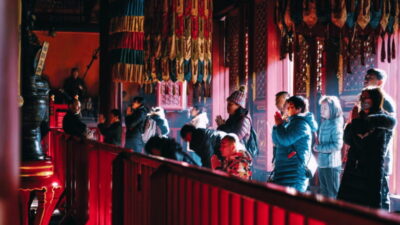

Beijing Historical Tour II including Summer Palace, Lama Temple & Panda Garden
Read our review →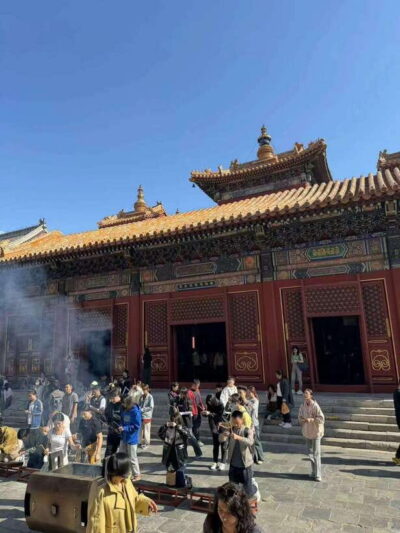
Beijing Lama temple ticket; #1 efficacious; limited Discount
Read our review →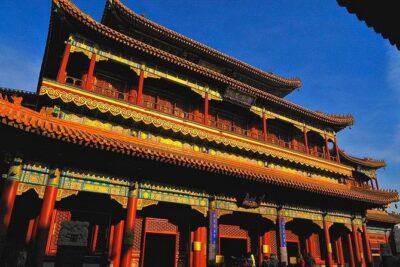
Panda House, Temple of Heaven, Lama Temple, Summer Palace & Lunch
Read our review →Browse the lists this tour appears in