
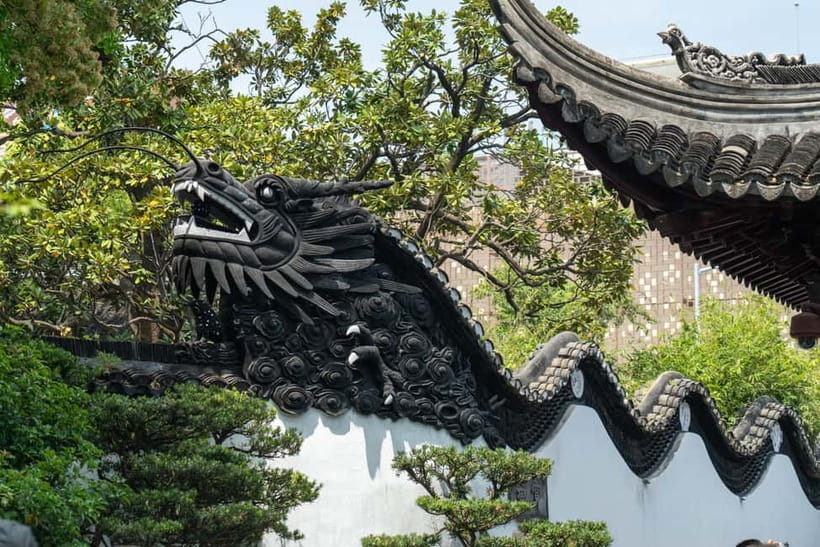
Reviewed · YU GARDEN TOURS
Shanghai: Yuyuan, City God Temple Old City Tour-Tip Based
Shanghai’s old city comes alive on foot, especially around the City God Temple, where Taoist customs, folk beliefs, zodiac figures, gardens, food stalls, and daily shopping all crowd into a compact walk. This tour gives you a useful local guide to that mix instead of leaving you to guess what the temple buildings mean. I like the visit to a traditional medicine shop and the stop at the 9 Zig-Zag Bridge and Mid-Lake Pavilion. I also like the small group, which makes it easier to ask questions and get practical Shanghai tips.
The main trade-off is pace and access. You cover several stops in two hours, so some explanations will be brief, and the route is not suitable for people with mobility impairments. Bring comfortable shoes, secure your belongings, and expect a busy old-city setting rather than a quiet garden stroll.
Key points to know before booking
- Taoist customs made easier to understand: Learn how the City God Temple connects Taoism, folk religion, wishes, festivals, and everyday beliefs.
- A useful stop for herbal medicine: Visit Tonghan Chuntang and sample a traditional Chinese medicinal herb known as the king of herbs.
- A compact two-hour route: See old streets, temple halls, garden scenery, a smallware market, and Ancient City Park without giving up a full day.
- Guide Jie gets special praise: Her clear English, warm manner, and broad cultural perspective make the tour especially appealing to first-time visitors.
- Small group, practical advice: With no more than 10 participants, you can ask about food, sights, customs, and the rest of your Shanghai plans.
- Tip-based pricing: The $2.36 booking price is remarkably low, but you should understand the tour’s tip-based format before you reserve.
Why Shanghai’s old city makes a good first walk
Shanghai is often introduced through its skyscrapers, modern shopping streets, and grand waterfront views. Those parts matter, but the old city near Yuyuan shows another side of town. Here, narrow streets and old religious buildings sit close to shops, markets, medicinal stores, and homes.
I like this tour because it does not treat the area as a single postcard attraction. You move between several layers of local life. One stop may explain a temple god, while the next shows a garden bridge, an old-style shop, or the kind of small products people buy in the neighborhood.
The experience is also short enough to fit into a busy Shanghai schedule. Two hours gives you a clear introduction without taking over your morning or afternoon. The route has enough variety to keep it moving, though you should not expect a long, detailed museum-style lecture at every stop.
The guide leads in English, and the group is limited to 10 people. That size matters in the old city, where crowded lanes and temple courtyards can make a large group awkward. It also gives you a better chance to ask about your zodiac animal, local customs, or where to go next.
More City Tours in Shanghai
- Zhujiajiao Water Town and Shanghai City Private Day Tour
★ 5.0 · 1,016 reviews - Private Shanghai Full Day City Tour with Old and New Highlights
★ 5.0 · 995 reviews - 4-Hour Flexible Private Shanghai City Tour
★ 5.0 · 235 reviews
Meeting at Yuyuan Garden Metro Exit 1
The meeting point is Yuyuan Garden Metro Station Exit 1, written in Chinese as 豫园站1号口. Metro Lines 10 and 14 serve the station, making this a practical starting point if you are crossing Shanghai by public transport.
Look for the red umbrella. That is the identifying marker for the meeting group. If you use a taxi, show the driver the Chinese location: 豫园(1号出口), Shanghai’s Huangpu District. Having the Chinese address ready is sensible, since English names can be less useful on the street.
Pay attention to the exit number. The tour information also references another exit in the address details, but the meeting instructions clearly ask you to arrive at Exit 1. I would allow enough time to get out of the station, orient yourself, and find the red umbrella without rushing.
This is a walking tour, not a vehicle tour. Wear shoes that can handle uneven pavement and a steady two-hour route. Keep your phone, wallet, and other belongings close, particularly around busy shopping lanes.
Yuyuan Old Street and the changing old city
The first guided section takes about 30 minutes around Yuyuan Old Street. This is a good place to begin because it shows how Shanghai’s old city works as a lived-in district, not just a historic display.
You will hear about the area’s past and see how residents’ living spaces have changed over time. That detail is valuable because the old city can otherwise seem like a collection of restored façades and tourist shops. A guide helps connect the streets to the people who have lived and worked here.
The route also introduces the Chinese 12 Zodiac animals. Each animal appears in its own costume, giving you a visual way to learn the zodiac cycle and ask about your own sign. This is one of the more approachable parts of the walk, especially if you are new to Chinese customs.
I would treat this section as orientation rather than a full architectural tour. The old street area can be crowded, and the point is to understand the setting before moving into the religious and garden stops. If you want perfect photographs of every building, the group pace may feel quick.
Tonghan Chuntang and the king of herbs
The stop at Tonghan Chuntang lasts about 20 minutes and focuses on traditional Chinese medicine. You will visit a traditional medicine shop and sample a medicinal herb described as the king of herbs.
That small tasting is more useful than a simple shop visit because it gives you a direct sensory link to the subject. Traditional medicine can be difficult to understand from signs alone. Seeing the shop, hearing how herbs fit into Chinese culture, and trying a sample make the topic more concrete.
The guide can also explain the place of herbal remedies in everyday beliefs and practices. Keep your expectations measured, though. This is an introduction, not a medical consultation or a treatment session. You should not treat the sample as medical advice.
I like this stop for another reason: it adds a practical, less polished side of the neighborhood. A garden or temple can feel removed from ordinary life. A medicine shop shows a working tradition that still has a place in the city.
More Yu Garden Tours in Shanghai:
- Best of Shanghai Day Tour, including Jade Buddha Temple & Bund & Yuyuan Garden
★ 4.0 · 338 reviews - Shanghai: Yu Garden Admission Ticket
★ 4.6 · 260 reviews - Yu Garden, Old Street, Bund & Zhujiajiao Water Town Bus Tour
★ 4.7 · 244 reviews - Shanghai Day Tour to Zhujiajiao Water Town, Yu Garden, Bazaar, Bund
★ 5.0 · 162 reviews
City God Temple and Shanghai’s folk religion
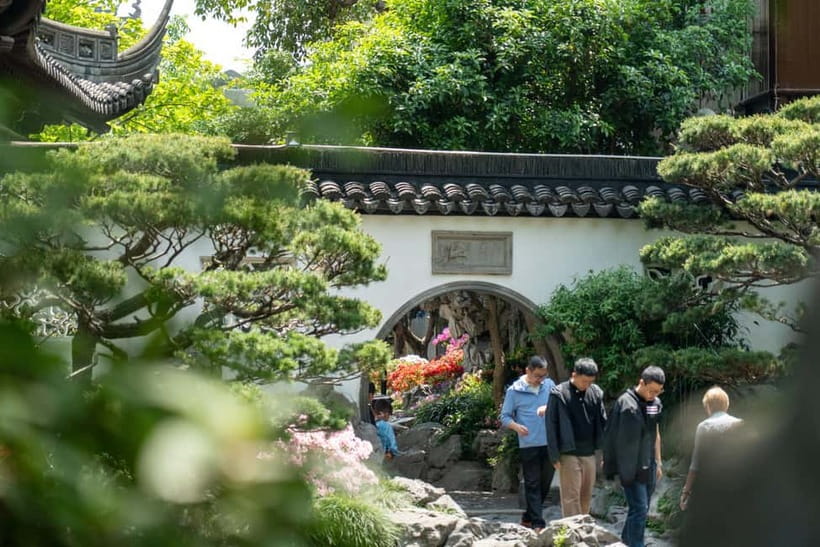
The City God Temple receives the longest section of the walk, about 40 minutes. That makes sense. It is the main cultural focus, and the guide uses it to explain Taoism, folk religion, common beliefs, rituals, and celebrations in China.
You will learn about the important gods connected with the temple and the ways people make wishes or take part in local customs. You may also have the chance to make a wish during the visit. The zodiac discussion continues to have more meaning here, since the animals are not presented as random decorations but as part of a wider cultural system.
I appreciate the balance this kind of explanation can offer. Religious sites in China can be confusing if you only look at the architecture. A guide can explain what worshippers are doing, why certain figures matter, and how Taoist traditions overlap with folk beliefs.
The temple area is also one of the busiest portions of the route. Expect people, shops, and plenty of visual distractions. Keep your belongings secure and stay close enough to hear the guide. Smoking is not allowed on the activity.
The guide’s personality matters most here. Jie has been praised for clear English, strong preparation, humor, and a warm way of explaining Chinese culture. She also draws on experience with different cultures, which can help her explain local customs in terms that make sense to an international audience.
The 9 Zig-Zag Bridge and Mid-Lake Pavilion
The Lake Pavilion Tea House section lasts about 20 minutes and includes the scenic garden area, the 9 Zig-Zag Bridge, and the Mid-Lake Pavilion. This is the most restful part of the walk.
The zig-zag design is not just a pretty feature. The turns slow your movement and change the views as you cross. It gives you a chance to take photographs, watch the water, and enjoy a break from the tight streets around the temple.
The Mid-Lake Pavilion adds another classic garden view. The tour uses the area to explain the garden and its place in old Shanghai, rather than sending you off for a long tea ceremony. The word tea house is part of the stop, but the supplied details do not promise a full tea tasting or meal, so book this as a guided garden visit.
This section may appeal most if you want a calmer contrast to the temple. It is still a short visit, and the garden may be busy. The charm comes from the setting and the guide’s explanation, not from having a large amount of free time.
Browsing Yuyuan Garden’s smallware market
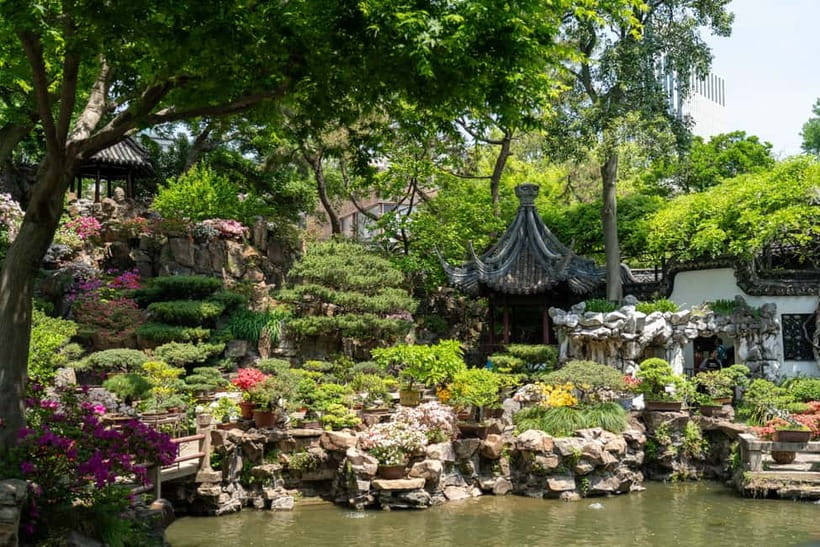
The next 20-minute stop is around Yuyuan Garden Smallware. Here you can browse a Shanghai small product market and look at local craftsmanship.
This part gives the tour a useful shopping angle without turning it into a dedicated retail trip. You might find small objects, craft items, or other everyday products, but the provided information does not promise particular goods or fixed prices. I would browse with curiosity rather than arrive with a shopping list.
Markets also show how tourist areas and local commerce overlap. Some parts may feel designed for visitors, yet they still offer a quick look at the kinds of products sold around this historic district. The guide can help you understand what you are seeing and offer tips for the rest of your time in Shanghai.
The main drawback is that 20 minutes is not long. If you want to compare prices carefully or shop at length, you will need to return on your own. During the tour, keep the focus on seeing the area and learning how it fits into the old city.
Ending at Shanghai Ancient City Park
The walk finishes at Shanghai Ancient City Park. Ancient relics and a peaceful setting provide a quieter end to the route.
I like the choice of finish. After temple crowds, market lanes, and garden paths, a park gives you a moment to slow down and sort out what you have seen. It also leaves you in a useful position to continue exploring Huangpu on your own.
The park is not presented as a full guided excursion in its own right. Instead, it works as the closing point, where old remains and open space meet. You should use the final minutes to ask the guide for recommendations, especially if you still need ideas for food, shopping, or nearby sights.
Personal suggestions are one of the tour’s strongest practical features. The guide can tailor advice to your interests, and the small group makes these questions easier than they would be on a large coach outing.
What the $2.36 price really means
At $2.36 per person, the advertised booking price is extremely low for a two-hour guided walk in central Shanghai. You are paying very little upfront for an English-speaking guide, cultural explanations, a small group, and a route through several major old-city sights.
The tour is tip based, so the low price should not be treated as the full measure of what the guide earns or what the experience costs. If you value the walk, plan your budget with the tip-based format in mind.
The value is strongest if you are staying near Yuyuan, want a clear introduction to the area, and prefer a personal walking tour to exploring without context. It is less suitable if you want a private guide, a long visit inside every attraction, or a slow photography walk.
The tour includes group photos at attractive landmarks, but it does not list entrance fees, meals, or a full tea service as included features. The focus is guiding, explanation, and local orientation.
Who will enjoy this two-hour walk
I would recommend this experience to first-time Shanghai visitors who want to understand the Yuyuan area rather than simply take photographs. It suits people interested in Taoism, folk religion, Chinese zodiac customs, traditional medicine, gardens, and local markets.
It is also a good choice for solo visitors and couples who like asking questions. A maximum of 10 participants keeps the group manageable and gives the English-speaking guide room to respond.
Families with older children may find the zodiac animals and temple customs easy entry points into Chinese culture. The medicine stop adds something different from the usual garden-and-temple route.
You should think twice if walking is difficult. The experience is not suitable for people with mobility impairments, and the route includes streets, market areas, temple grounds, and garden paths. Comfortable shoes are essential.
The tour also may not suit you if you dislike busy public places or prefer a private, quiet experience. The old city is an active part of Shanghai, and the temple and shopping areas can be crowded.
Should you book the Yuyuan Old City tour?
Book it if you want a short, affordable introduction to Shanghai’s old city, with religion, medicine, gardens, markets, and practical advice all in one route. The City God Temple explanation is the central reason to go, while the herbal shop, zodiac animals, and 9 Zig-Zag Bridge give the walk useful variety.
Jie is an especially good guide choice if she is leading your departure. Her clear English, humor, cultural background, and personal approach have made the experience appealing to people from several countries.
Skip it if you need step-free access, plenty of time at each sight, or a private itinerary. For everyone else, the small group and low upfront cost make this a sensible way to get your bearings in Yuyuan before exploring the neighborhood on your own.
FAQ
Where does the tour meet?
Meet at Yuyuan Garden Metro Station Exit 1, written as 豫园站1号口, in Shanghai’s Huangpu District. Look for the red umbrella.
Which metro lines serve the meeting point?
Yuyuan Garden Metro Station is served by Metro Lines 10 and 14.
How long does the tour last?
The guided walking tour lasts two hours.
What language is the tour conducted in?
The live tour guide speaks English.
How large is the group?
The tour is limited to 10 participants.
What places are included on the route?
The route includes Yuyuan Old Street, Tonghan Chuntang, the City God Temple of Shanghai, the Lake Pavilion Tea House area, Yuyuan Garden Smallware, and Shanghai Ancient City Park.
Is the tour suitable for people with mobility impairments?
No. The experience is listed as unsuitable for people with mobility impairments. Comfortable walking shoes are recommended.
Can I cancel and receive a refund?
You can cancel up to 24 hours in advance for a full refund. You can also reserve now and pay later.
Newly listed around Shanghai
- Din Tai Fung Dinner and VIP Class River Cruise Experience in Shanghai★ 5.0 · 31 reviews
- Beijing to Shanghai Bullet Train Ticket with South Railway Station Transfer★ 5.0 · 11 reviews
- Shanghai: Yu Garden with Entry Tickets(optional)★ 4.5 · 28 reviews
- Shanghai: Yu/Yuyuan Garden Entry Ticket–E ticket★ 4.4 · 24 reviews
- Shanghai: Zhujiajiao Water Town with Calligraphy Experience★ 5.0 · 17 reviews
- Shanghai: Yu Garden Entry Ticket with PDF Guidebook★ 4.1 · 45 reviews
- Shanghai: Wild Animal Park Ticket★ 4.9 · 43 reviews
- Shanghai: The Marine Wonders at Shanghai Ocean Aquarium★ 4.5 · 16 reviews
Yu Garden Tours, compared.
Best of Shanghai Day Tour, including Jade Buddha Temple & Bund & Yuyuan Garden
Read our review →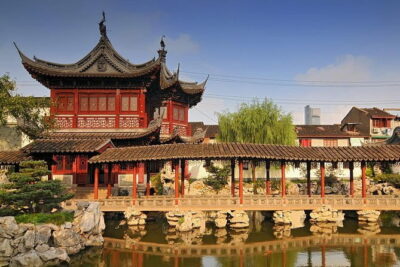
Yu Garden, Old Street, Bund & Zhujiajiao Water Town Bus Tour
Read our review →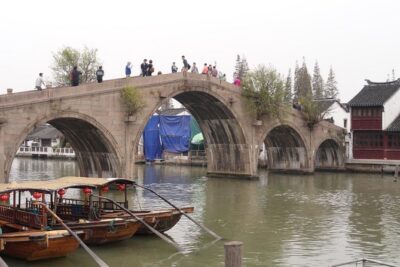
Shanghai Day Tour to Zhujiajiao Water Town, Yu Garden, Bazaar, Bund
Read our review →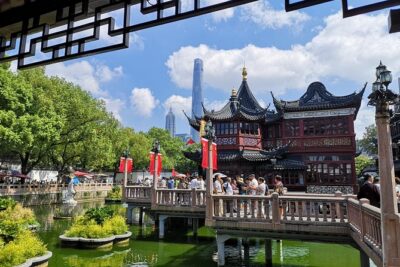
Private Yu Garden, The Bund, French Concession, Pudong Half-Day Tour
Read our review →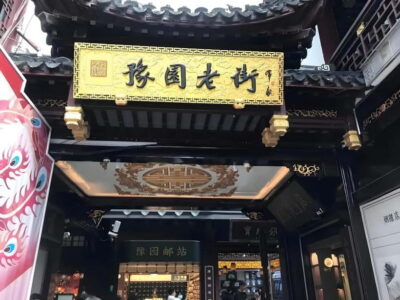


Browse the lists this tour appears in