
Reviewed · SHOWS & PERFORMANCES
4 Days Lhasa Impression Small Group Tour
Lhasa packs Tibet’s biggest spiritual sights into a short, well-organized visit. You’ll see the Potala Palace, walk the pilgrim circuit around Jokhang Temple, and watch the energetic monk debates at Sera Monastery, all with a local Tibetan guide and a small group.
I like the included airport or train-station transfer and the three nights of lodging, since getting settled at altitude is easier when the practical pieces are handled. I also like the group size, capped at 12, and the chance to meet the guide over a welcome dinner. The main drawback is time: four days gives you a strong first look, but not much room for delays or extra sights.
Key points to know before booking
- Potala Palace and Jokhang Temple arrive early in the schedule: You reach Lhasa’s most important historic and religious sites on the main sightseeing day.
- Sera’s monk debates are timed for the afternoon: The visit is planned around the debate period, usually from 3 to 5 p.m.
- Dadong Village adds a rural side trip: The ancient Tibetan village lies about 25 kilometers southwest of central Lhasa.
- Your group stays small: The maximum is 12 people, which should make questions and group movement easier.
- The Tibet Permit is part of the preparation: You need to provide passport and China visa copies at least 20 days before departure.
- The $509 price covers the core package: Lodging, breakfasts, listed entrance tickets, permits, transfers, guide service, insurance, and a welcome dinner are included, but transport to Lhasa and most lunches and dinners are not.
What four days in Lhasa really gives you
This is a compact introduction to Lhasa rather than a leisurely Tibet journey. You spend three nights in a three-star hotel, with sightseeing concentrated into two full days between arrival and departure. That format works well if you are adding Lhasa to a longer China trip or want a guided first visit without arranging permits, transfers, hotels, and tickets yourself.
The package costs $509 per person based on double occupancy. That is a useful value when you add up the permit work, airport or railway transfers, three breakfasts, four major sightseeing stops, guide service, transport by van or minibus, and the hotel. You still need to budget for your own flight or train to Lhasa, lunch, most dinners, tips, and a single-room supplement if you are not sharing.
The small-group setup matters here. A group of 12 is large enough to keep the cost down but much easier to manage than a full coach. Past guide assignments have included Pasang, Tsedon, Tseyang, Lobsang, Lopsong, and Lukpa. The strongest praise has focused on guides who explain Tibetan history and Buddhist traditions clearly, keep the schedule moving, and solve small problems along the way.
More Shows in Tibet:
- Red Theatre Beijing Acrobatic Show Tickets
★ 4.9 · 461 reviews - Shanghai: Circus World ERA Theatre Acrobatics Ticket
★ 4.9 · 283 reviews - Shanghai Circus World: ERA2 Intersection of Time Acrobatics Show
★ 4.5 · 235 reviews
Arrival day: transfer from the station or airport
On day one, a Tibetan guide meets you at the airport or train station and takes you to your hotel in central Lhasa. The transfer includes transport in a comfortable van or minibus, with an experienced local driver and fuel covered.
The drive is more than a simple ride into town. The route gives you views of the Yarlung Tsangpo River and the open scenery around Lhasa. The published schedule does not promise a major sightseeing stop on this first day, so think of it as an arrival and settling-in day rather than a tour day.
That is a sensible arrangement for a short visit. You can check in, meet the group, and get used to the schedule before the main sightseeing begins. The welcome dinner takes place at a local restaurant when the group members meet in Lhasa. Lunch and later dinners are your responsibility, so ask the guide for practical suggestions if you want help choosing local food.
Your hotel is three-star accommodation with breakfast included each morning. Rooms are based on twin sharing. If you want a private room, a supplement applies and depends on availability.
Potala Palace: Lhasa’s great first sight
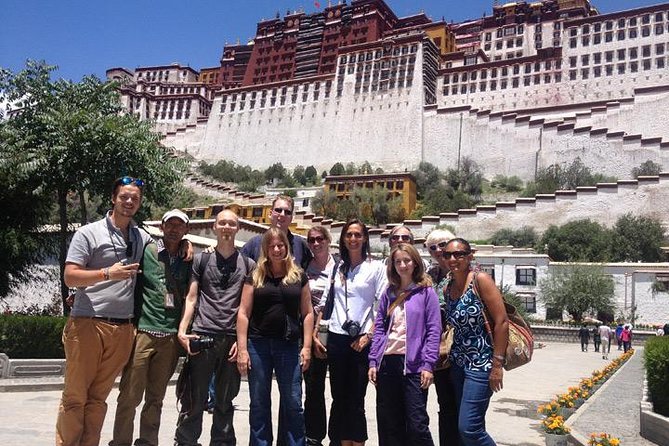
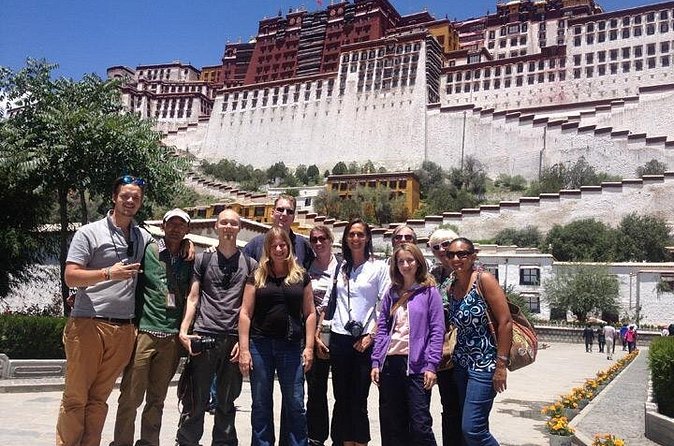
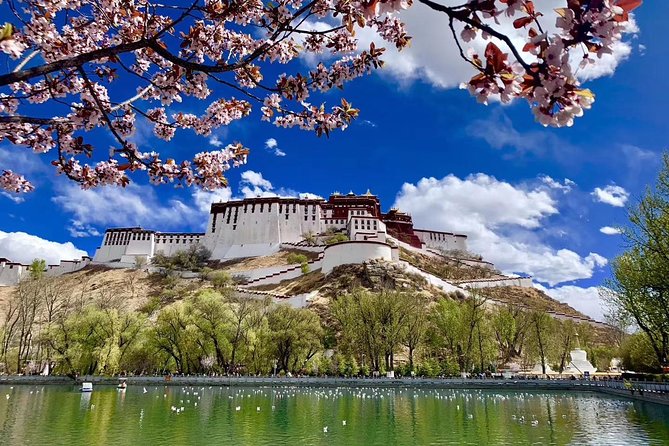
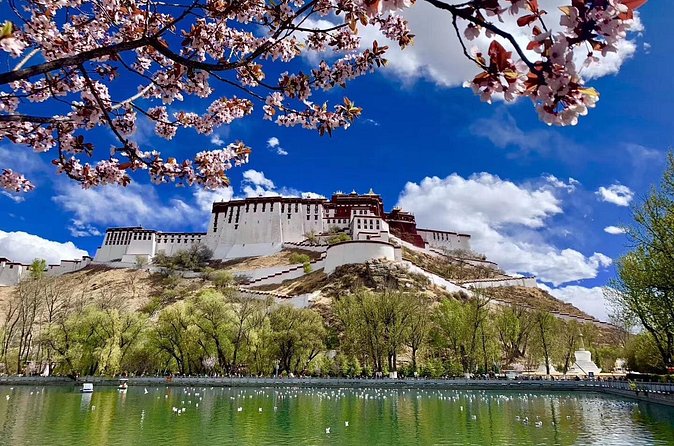
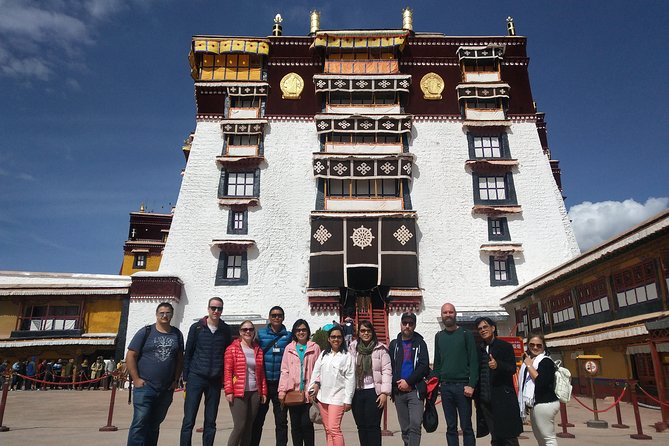
The second day starts with Potala Palace, the former winter palace of the Dalai Lama. The palace began use in the seventh century under Tibet’s 33rd great king, giving the site a direct link to the early political and religious history of the city.
The visit lasts about 90 minutes. That is enough to see the main interior areas included in the route, but it is not an open-ended museum visit. Potala Palace is a major stop, so you should expect a structured visit and a steady pace.
This is the place where a local guide can make the biggest difference. The palace is not just a grand building on a hill. Its rooms, religious objects, and collections connect Tibetan government, Buddhist practice, and the Dalai Lama institution. A guide can help you understand what you are seeing rather than leaving you to look at unfamiliar objects without context.
The tour information gives two different signals about admission tickets. The day-by-day description says admission is not included, while the inclusions list says entrance fees for all listed sites are covered. Since this affects the real cost, confirm the ticket arrangement with Tibet Vista before you go. The general package description indicates that the listed entrance fees are included.
Jokhang Temple and the Barkhor circuit
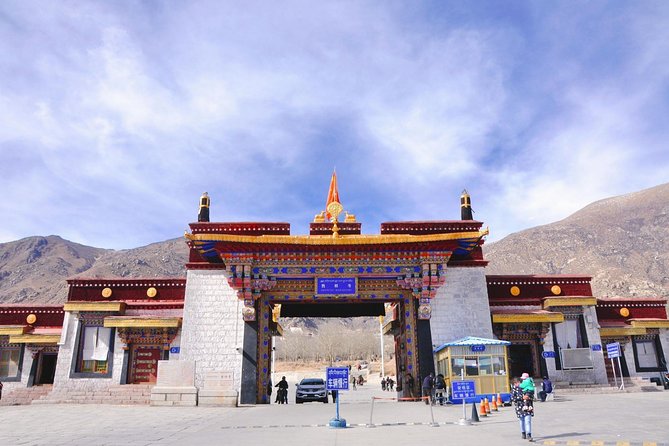
After lunch, you visit Jokhang Temple for about 90 minutes. The temple was founded in the seventh century by the same 33rd great king associated with Potala Palace. Inside, the central highlight is a statue of Buddha Sakyamuni shown at age 12.
Jokhang is especially valuable because the visit is not only about architecture or display cases. It is a working religious site, and the surrounding Barkhor area is used by pilgrims and local worshippers. You should treat the visit with care, follow the guide’s instructions, and allow the setting to speak for itself.
Barkhor Street surrounds the temple and provides a change of pace after the formal temple visit. The scheduled portion lasts about 30 minutes, but the area connects directly to the religious life around Jokhang. You can walk part of the kora, the ritual circuit around a sacred building or mountain, alongside pilgrims and local people.
The route also includes the old market area and a chance to taste Tibetan tea with local people in a tea house. This is one of the most human parts of the program. Potala Palace gives you scale and ceremony, while Barkhor lets you see how religion remains part of ordinary city life.
The short scheduled visit is the main limitation. Thirty minutes is enough for a first walk, but not enough for a slow market wander or extended tea-house stop. If you value unhurried street time, you may want to ask whether the guide can suggest additional free time after the formal program.
More four-day trips from Tibet:
- 4 Days Lhasa City Essential Group Tour
★ 5.0 · 25 reviews - 4-Day Zhangjiajie Tour to All Highlight Attractions with VIP Lift
★ 5.0 · 74 reviews - 4D3N Yangtze River Cruise: Chongqing to Yichang by Century Cruise
★ 4.5 · 11 reviews - 4D3N Yangtze River Victoria Cruise: Chongqing to Yichang
★ 4.4 · 9 reviews
Dadong Village and Drepung Monastery
Day three moves beyond central Lhasa. The morning visit includes Dadong Village, described as an old Tibetan village about 25 kilometers southwest of downtown. The village is well protected and surrounded by mountain scenery, giving you a look at rural life beyond the major religious monuments.
The combined morning stop is listed at about four hours. That makes it the longest sightseeing block of the tour. It should appeal to you if you want more than a checklist of famous buildings. A village visit brings a different scale to the trip, with traditional surroundings and a quieter setting than the center of Lhasa.
The schedule groups Dadong Village with Drepung Monastery, although the day description gives the stop heading as Drepung Monastery. Drepung is one of Tibet’s three great Gelug monasteries, and its position in the program gives you a chance to see how monastic life fits into the wider story of Tibetan Buddhism.
Because the day includes a village and monastery, expect some driving. The included minibus or van keeps the route practical, but this is not a purely walkable day. The small group helps when boarding and leaving the vehicle, and the guide can provide context during the trip between sites.
Sera Monastery and the afternoon debates
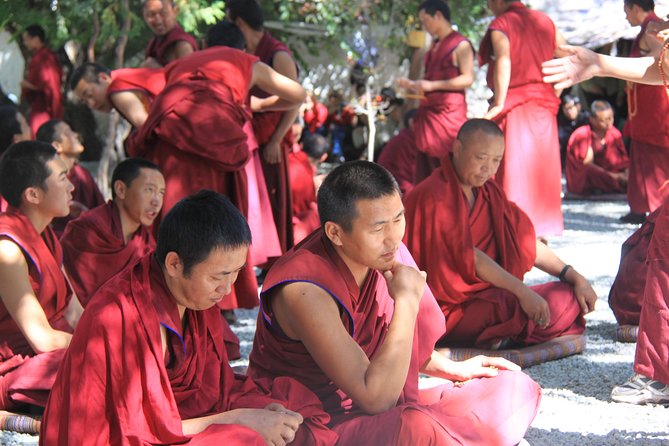
In the afternoon, the group visits Sera Monastery for about two hours. Sera is another of the three great Gelug monasteries, and its best-known feature is the monks’ debate session, usually held from about 3 to 5 p.m.
The timing is one of the smartest parts of the schedule. You are not simply visiting a monastery when it is quiet and empty. If the debate is taking place as planned, you can watch monks use gestures, questions, and quick exchanges as part of their religious study.
For many people, this will be the most memorable activity of the four days because it shows Buddhism as an active practice rather than only a subject in a historic building. The two-hour visit gives you enough time for the debate and a look at the monastery, though the exact amount of debate time can depend on the day’s schedule.
Guide quality matters here. A well-prepared guide can explain what the gestures mean and place the debate within Tibetan monastic education. Guides such as Tsedon have been praised for detailed explanations of Buddhist customs and history, while Pasang, Lobsang, Lopsong, and Lukpa have also received strong personal praise for clear guidance and attentive service.
Day four: departure and the permit limit
The final day is for leaving Tibet by air or train. The program states that the Tibet Permit is limited for this tour, so you are expected to depart at the end of the four-day arrangement.
Airport and railway drop-off can be arranged through the supplier, but the description asks you to contact them if you need this service. Do not assume that a departure transfer is automatically scheduled in the same way as your arrival pickup. Confirm the time, location, and cost before the final day.
The activity begins at 9 a.m., but the arrival and departure portions depend on your transport schedule. Give the operator your full flight or train details and allow enough time for the transfer. If you hope to stay longer in Tibet, you need a separate arrangement and possibly another tour rather than simply extending this booking.
Permits, visas, and the planning deadline
The Tibet Travel Permit and other necessary permits are included, but the paperwork requires advance planning. Book at least 20 days before departure so the operator has time to obtain the permit. You must provide a passport copy and a copy of your China L visa at least 20 days before the trip.
The correct visa process depends on your route into Tibet. If you fly from Kathmandu, do not apply for a China L Visa in advance. You need to apply for a Tibet Group Visa through the China Embassy in Kathmandu with help from a local travel agency, using an invitation letter from the tour supplier.
If you fly or take a train to Lhasa from another city in China, you need to apply for a China L Visa through the Chinese Embassy in your home country. Your confirmation voucher provides the supplier’s contact information so you can send the required documents.
Confirmation arrives within 48 hours of booking, subject to availability. This is not a last-minute product. The 32-day average booking window makes sense given the permit requirements, and you should not buy your transport to Lhasa until the operator confirms the arrangements you need.
What is included, and what still costs extra
The package covers the main structure of the trip:
- Tibet Travel Permit and other required permits
- Airport or train-station pickup and Lhasa transfer
- Transport by comfortable van or minibus
- English-speaking Tibetan guide
- Three nights of twin-share hotel accommodation
- Three breakfasts
- Welcome dinner
- Drinking water
- Listed entrance tickets, according to the inclusions section
- Tourist accident and casualty insurance
- Platform service fee
You pay separately for your flight or train to Lhasa, lunches, most dinners, tips for the guide and driver, and any single-room supplement. The inclusion of a welcome dinner is useful because it gives the group a natural first meeting, but it does not turn the package into a full-board tour.
The ticket wording deserves special attention. Since the daily schedule marks several admission tickets as not included while the main inclusions list says all listed entrance fees are covered, get written confirmation before departure. That small check protects the value of the $509 price.
Who should book this Lhasa tour
I would choose this trip if you want the major Lhasa sights with the hard paperwork and transport handled for you. It suits a first visit, a short stop added to a wider China itinerary, and anyone who prefers a local guide to explain Buddhist customs and Tibetan history.
It also suits people who like a little variety. You get a palace, a major temple, a market and pilgrimage route, an old village, two monasteries, and a structured chance to watch monk debates. The program is not limited to grand monuments.
I would hesitate if you want a slow, flexible stay. The schedule is tight, the permit limits the visit to four days, and there is little free time built in. It may also feel rushed if you want long market walks, independent meals, or extra monasteries.
The cancellation terms are strict close to departure. You receive a full refund if you cancel at least six full days ahead, a 50 percent refund if you cancel two to six full days ahead, and no refund for cancellations less than two full days before the start time.
Should you book the 4 Days Lhasa Impression tour?
Book it if you want a practical first taste of Lhasa and value a local Tibetan guide, included permits, central hotel accommodation, and a small group. The best parts are the carefully timed Sera visit, the contrast between Barkhor’s living religious activity and Potala Palace’s grand scale, and the extra stop at Dadong Village.
Skip it if you want a longer Tibet journey or plenty of independent time. Four days is enough to see the essential Lhasa sights, but it is a sampler. Confirm the entrance-ticket wording and departure transfer before paying, then arrange your China visa, passport copies, and Tibet Permit well in advance.
FAQ
How long is the tour?
The tour lasts approximately four days and includes three nights in Lhasa.
What time does the tour start?
The listed start time is 9 a.m. Arrival pickup depends on whether you reach Lhasa by air or train.
What sites are included in the sightseeing schedule?
The route includes Potala Palace, Jokhang Temple, Barkhor Street, Dadong Village, Drepung Monastery, and Sera Monastery.
Is transportation from the airport or train station included?
Yes. Pickup and transfer service from the Lhasa airport or train station to the city is included. Departure drop-off can be arranged through the supplier, so confirm those details before the final day.
Are meals included?
Three breakfasts and a welcome dinner are included. Lunches and other dinners are not included.
How far in advance do I need to book?
You should book at least 20 days before departure so the supplier can obtain the Tibet Permit. Passport and China visa copies must also be provided at least 20 days before the trip.
Newly listed around Tibet
- Panorama Multi Day Tour in Tibet★ 5.0 · 3 reviews
- 9 Days Lhasa Gyantse Shigatse Everest Namtso Group Tour★ 4.0 · 21 reviews
- 6 Days Lhasa Gyantse Shigatse Group Tour★ 5.0 · 12 reviews
- 4 Days Lhasa City Essential Group Tour★ 5.0 · 25 reviews
- 15 Days Mt Everest and Mt Kailash Kora Pilgrimage Group Tour★ 4.5 · 17 reviews
- Private Guided Day Tour Potala Palace and Sera Monastery★ 5.0 · 22 reviews
- 8 Day Tibet Classic Tour★ 5.0 · 5 reviews
- 8 Days Lhasa Gyantse Shigatse Mt Everest Group Tour★ 5.0 · 52 reviews
Shows & Performances, compared.
Shanghai Circus World: ERA2 Intersection of Time Acrobatics Show
Read our review →
Red Theatre Beijing Acrobatic Show Tickets Official Booking
Read our review →
Sichuan Opera Shu Feng Yan Yun Evening Show Ticket
Read our review →
Great Tang Dynasty Night Show & Dumpling Meal Option
Read our review →
Royal Banquet with Chinese Cultural Performance
Read our review →Browse the lists this tour appears in